Expat Life

Food and Friends – 27 Hours in Madrid

One of the many nice things about living in Valencia is how easy it is to escape for a quick jaunt to exciting destinations. For example, just two hours on a high-speed train, and we can immerse ourselves in the vibrancy of Madrid – a city that feels like it’s always awake and always hungry. So, when our good friends, Richard and Sheila, proposed an overnight adventure in Spain’s capital, we grabbed the morning train to spend 27 hours eating and drinking together.

Hitting the Ground Running

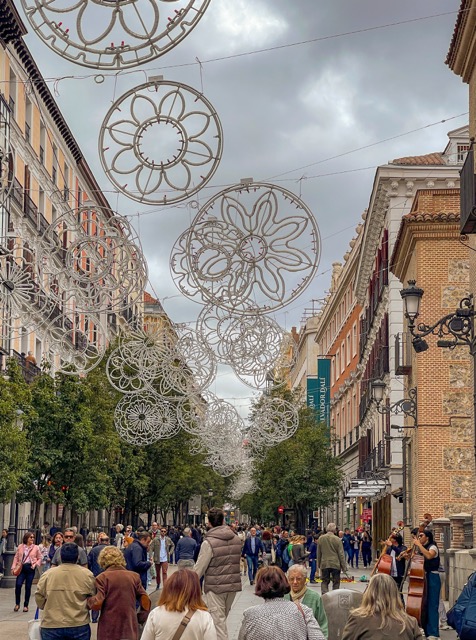
Arriving in Madrid’s Chamartin Station at about noon, we hopped on the Metro which is conveniently located inside the station. Emerging from the Metro a dozen stops later, we were greeted by a lovely treelined plaza in the Sol barrio (neighborhood), the pulsing center of old Madrid. Every street seems to lead to a plaza, lined with bars and cafes. After checking into our hotel, we met up with Richard and Sheila, checked on Traci & Dave’s ETA (they flew into Madrid that morning from the U.S.), and bounced out the door to start our culinary adventure.
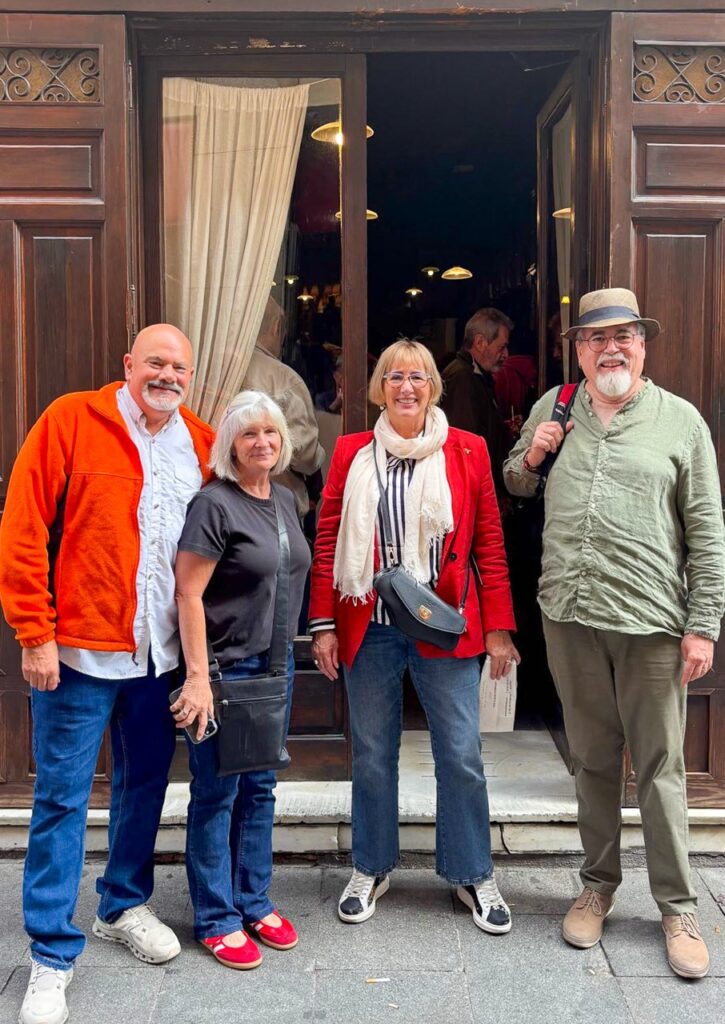
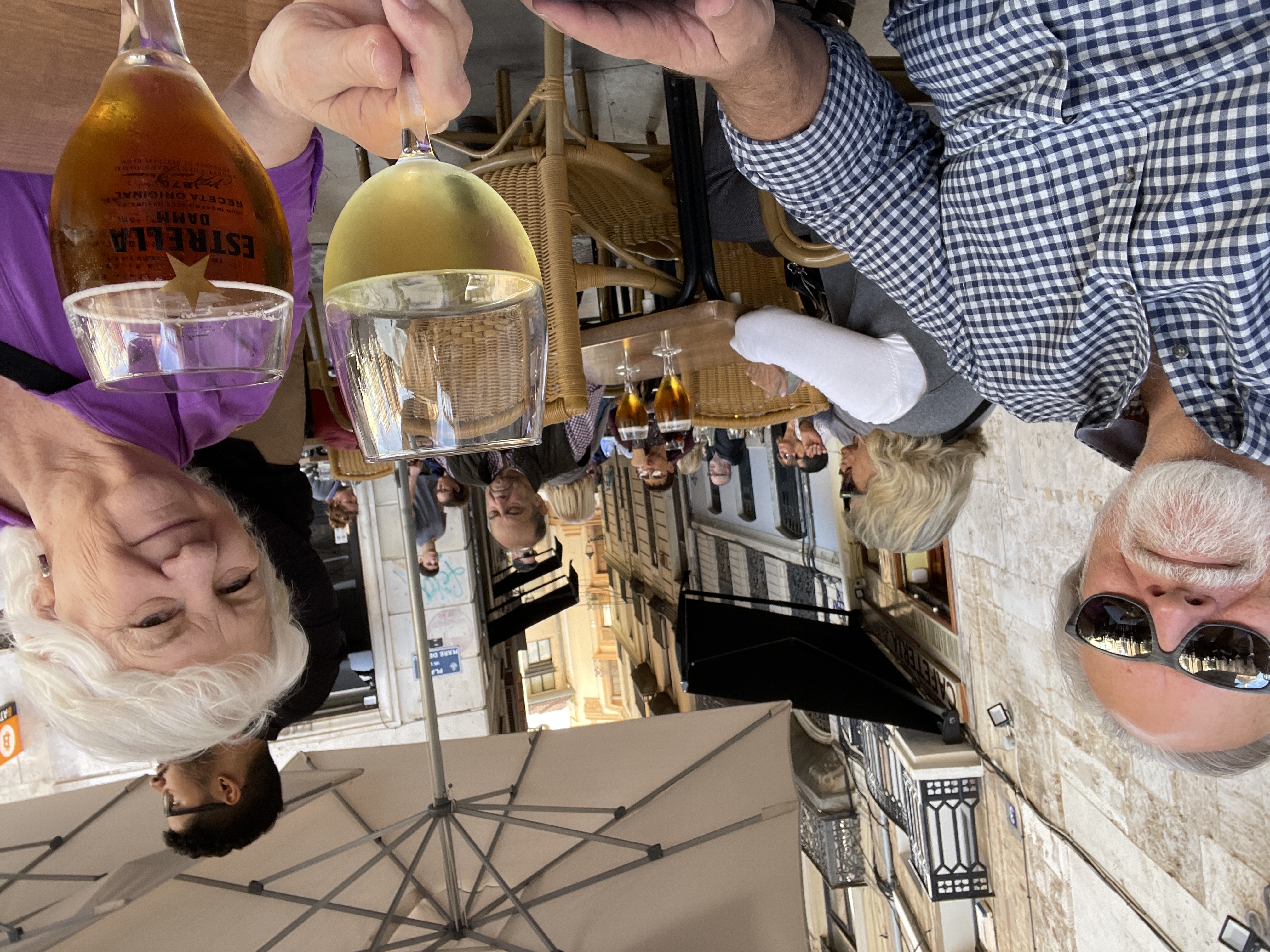
Valencia Friends: Dave, Traci, Sheila & Richard

We split up for lunch. The guys met another friend, Richard (from Malaga), and went for a hearty, old-school experience at Casa Amadeo (https://www.caracolesdeamadeo.com) in the La Latina barrio – a tavern where the menu showcases traditional Spanish dishes. Their signature dish, caracoles, are tender snails served in a rich smoky broth, which one soaks up with chunks of bread. The feast also included small cubes of deep-fried pork belly known as Torezznos, thick slices of Morcilla Burgos, an artisan black pudding sausage, Zarajos Fritos which consists of lamb intestines wrapped around a stick, then marinated and fried in olive oil. Traditional croquetas and patatas bravas rounded out the meal. Everything was washed down with glasses of cerveza, a couple of bottles of Rioja Crianza, and finally, a glass of orujo blanco (a pomace brandy from northern Spain) to settle their stomachs.

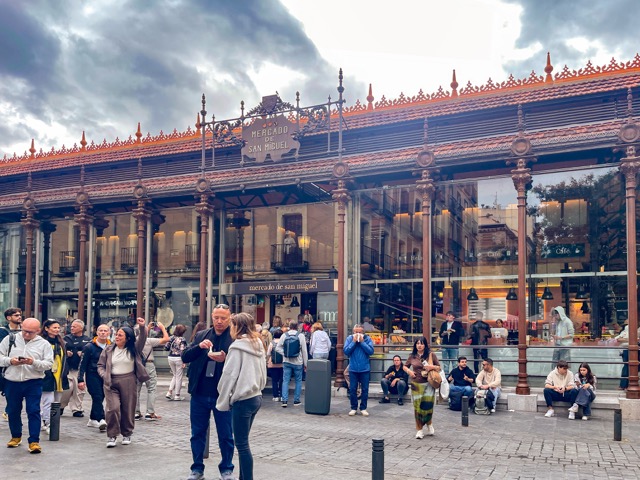
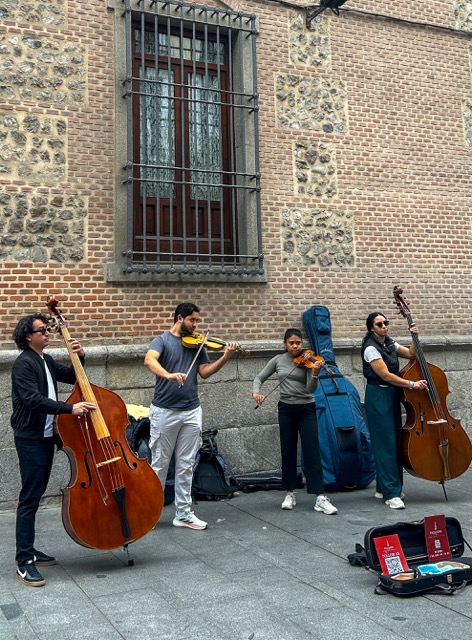
Meanwhile, the girls wandered over to Mercado de San Miguel, (https://mercadodesanmiguel.es) the famous food market just off Plaza Mayor. Originally built in 1916 and known for its stunning cast iron and glass architecture, a diverse array of Spanish cuisine is offered in more than 30 stalls. As always, the mercado was full of tourists snapping photos of every tapas plate in sight. We sampled a few as we balanced our tiny plates and soaked up the chaos. Afterwards, we strolled through Plaza Mayor where musicians played, kids chased pigeons, and plenty more tourists snapped photos.
A brief siesta was just what was needed to prepare for the evening ahead.

Vermouth and Dinner Like Locals

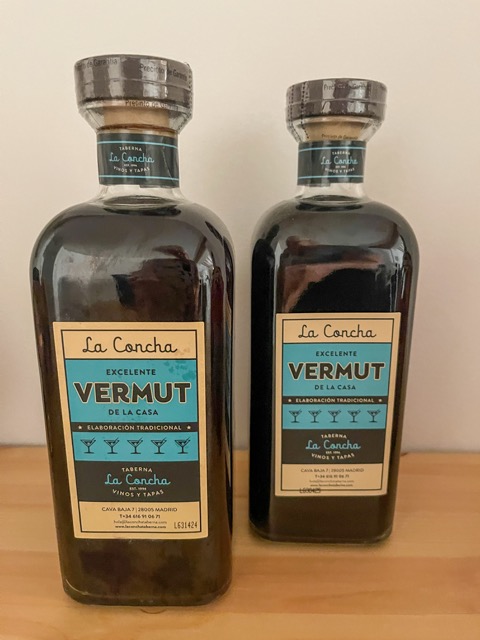
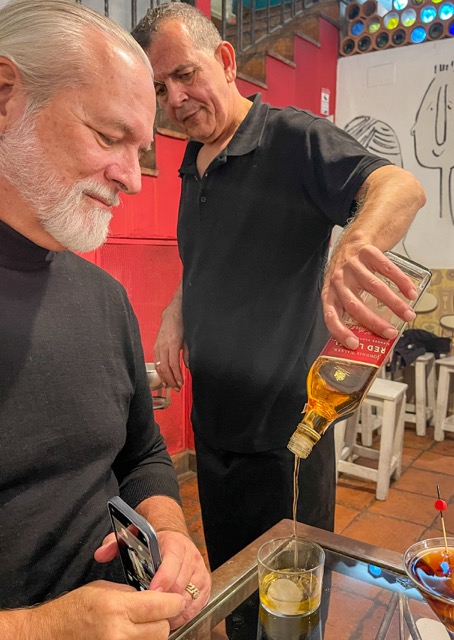
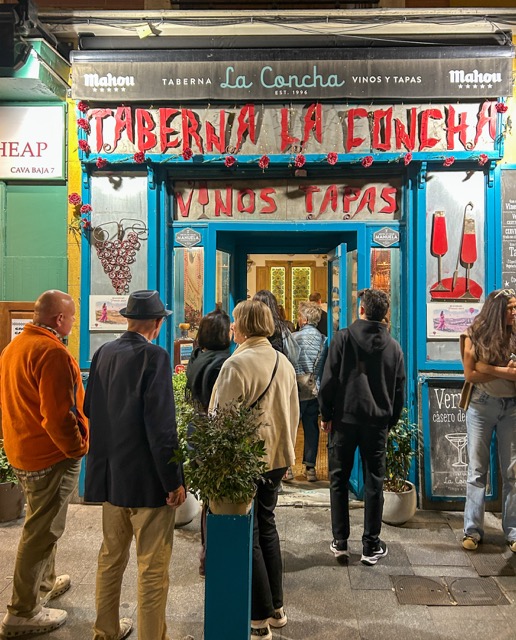
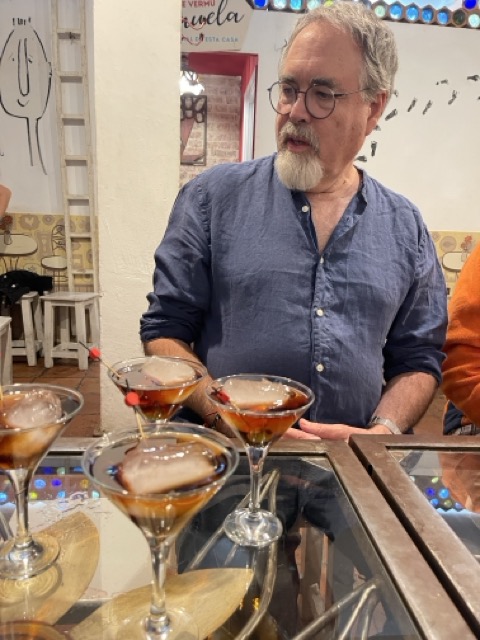
La Concha (http://www.laconchataberna.com), a cozy bar tucked into Calle de la Cava Baja, was our meeting spot for a pre-dinner aperitif. Everyone except Ed ordered vermouth which was prepared at the table by first spritzing some gin into our ice filled martini glasses. The house-made vermouth was poured over the ice, and this delicious concoction was topped off with a drizzle of Campari. Sweet, spicy and perfectly Madrid.
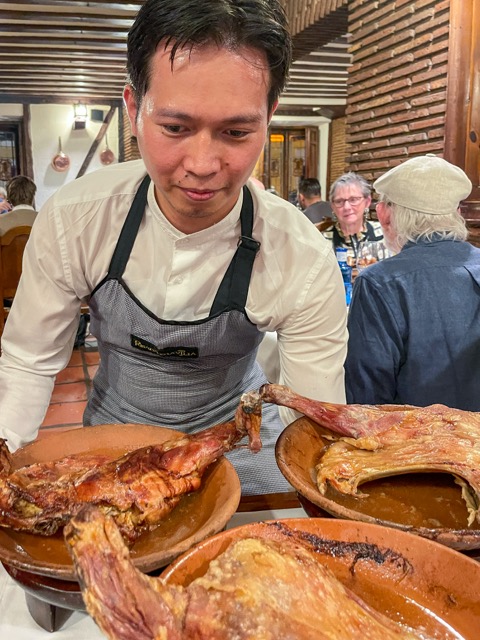
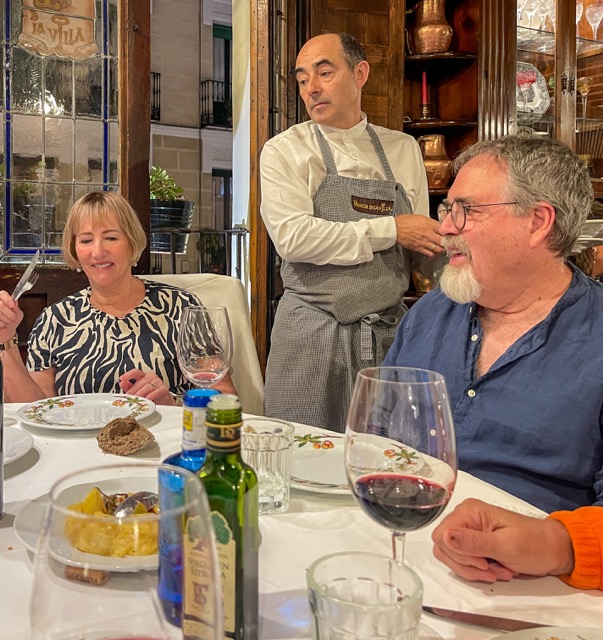
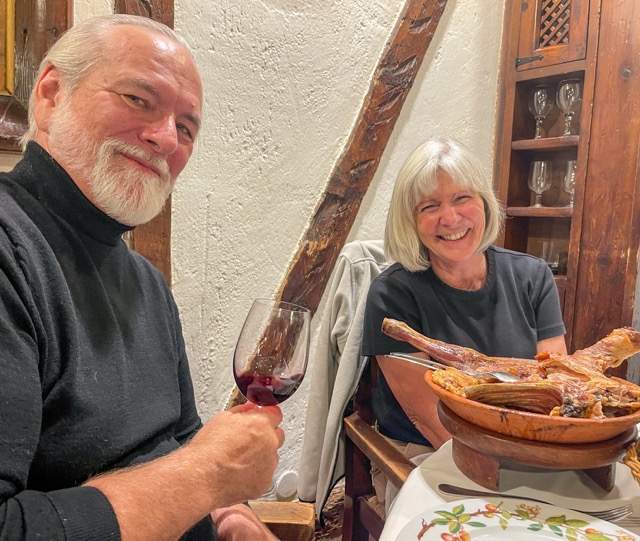
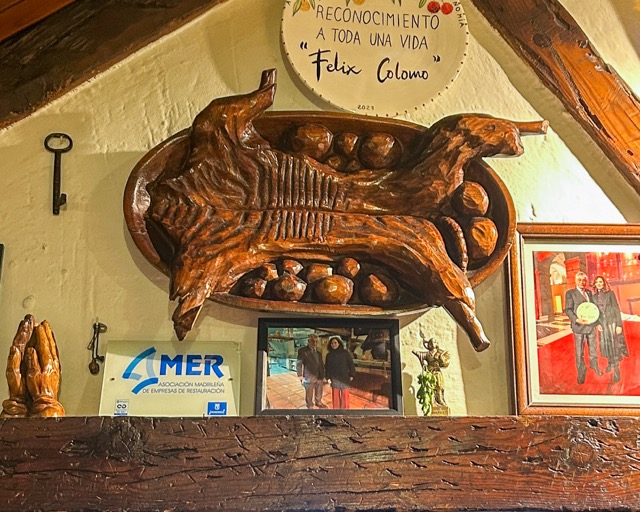
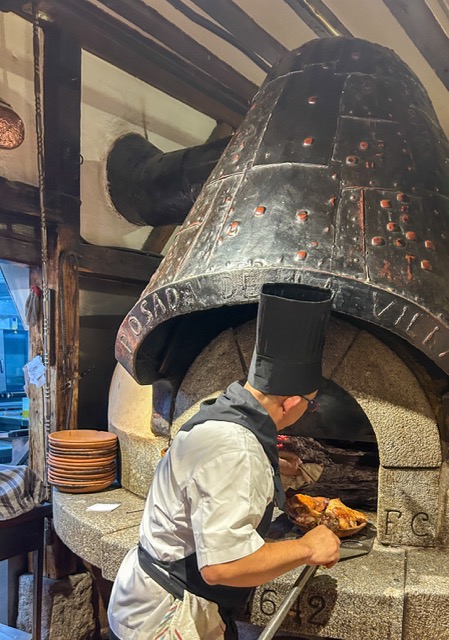
Feeling refreshed and relaxed, we headed to dinner at Posada de la Villa (https://www.posadadelavilla.com), a historic restaurant that has been feeding locals for centuries. Inside, the smell of roasting lamb fills the air, thanks to the wood-fired oven that has been burning since the 1600s. We feasted like kings: crispy-skinned suckling lamb that fell apart with the touch of a fork, golden croquetas, grilled vegetables, delicious bread, and a couple of bottles of Ribero del Douro Tempranillo from Pradorey Winery (one of Spain’s best red wine regions). It was nearing midnight by the time we made it back to our hotel for a good night’s sleep – feeling a bit more like Madrileños.
Slow Morning

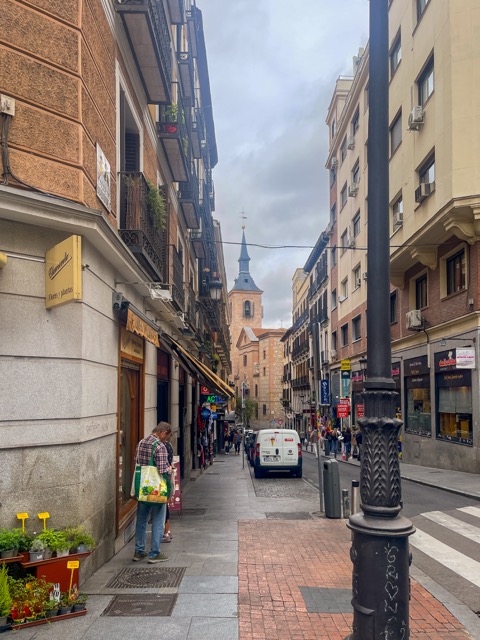
Day two involved a cup of coffee with our friends before Ed and I took a leisurely walk through the neighboring barrios of Gran Via and Malasaña. We met up once more for a quick lunch at an Asian fusion restaurant before heading to the train station for our return to Valencia.
More Madrid is Needed

After just 27 hours, we were sated, tired, happy, and a little more in love with Madrid. The beauty of being just two hours away is that we can come back anytime. And the next time? We just might stay a little longer. Come on over to España and we’ll explore Madrid together!

Food and Friends – 27 Hours in Madrid Read More »

Sometimes I just need a day to be easy.

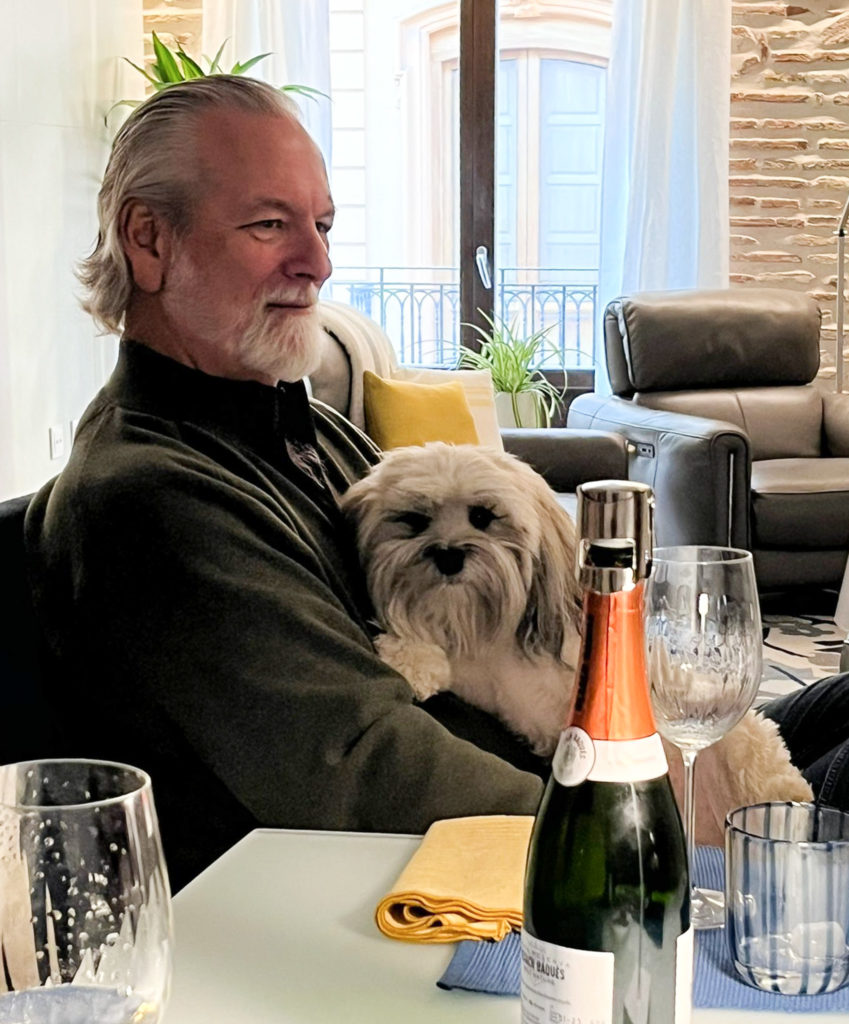
It’s a wonderful thing that there are so many expats in Valencia. We have met interesting people and made good friends. Heather and Jim are a lovely couple who moved to Valencia just a few weeks before us, also from Northern California, so we immediately had some things in common. (They also have an adorable pup, Elsa, that Ed has fallen in love with.) During a lunch get-together at our place a couple of weeks ago, as we discussed some of the challenges of expat life, Heather commented, “Sometimes, I just need a day to be easy.” Well said! I couldn’t agree more.

Last year, I wrote a few emails (now blog posts) describing some of our funny and sometimes frustrating expat experiences: the bank account adventure, peanut butter shopping, and the challenge of finding the right size bed sheets.

WATER, PLEASE

Expat life continues to be challenging. As you know, we moved to a new apartment recently. And as you might imagine that process provided ample opportunities for interesting expat experiences. The water was turned off in our new apartment because the previous tenant had neglected to pay the bill. Getting it turned back on was like the experience of opening a bank account – it took four trips to the water utility’s office to get it done. To be fair, our move date was January 4 and that’s still holiday time in Spain. Many businesses close over the holidays, including the offices of the building owner from whom we needed a very specific document to take to the water utility. Rental agreement in hand, Ed learned of this additional requirement at his first visit. Next, someone came in from their holiday vacation to get the necessary document. The first time it was the wrong document, so now he’s made three trips.

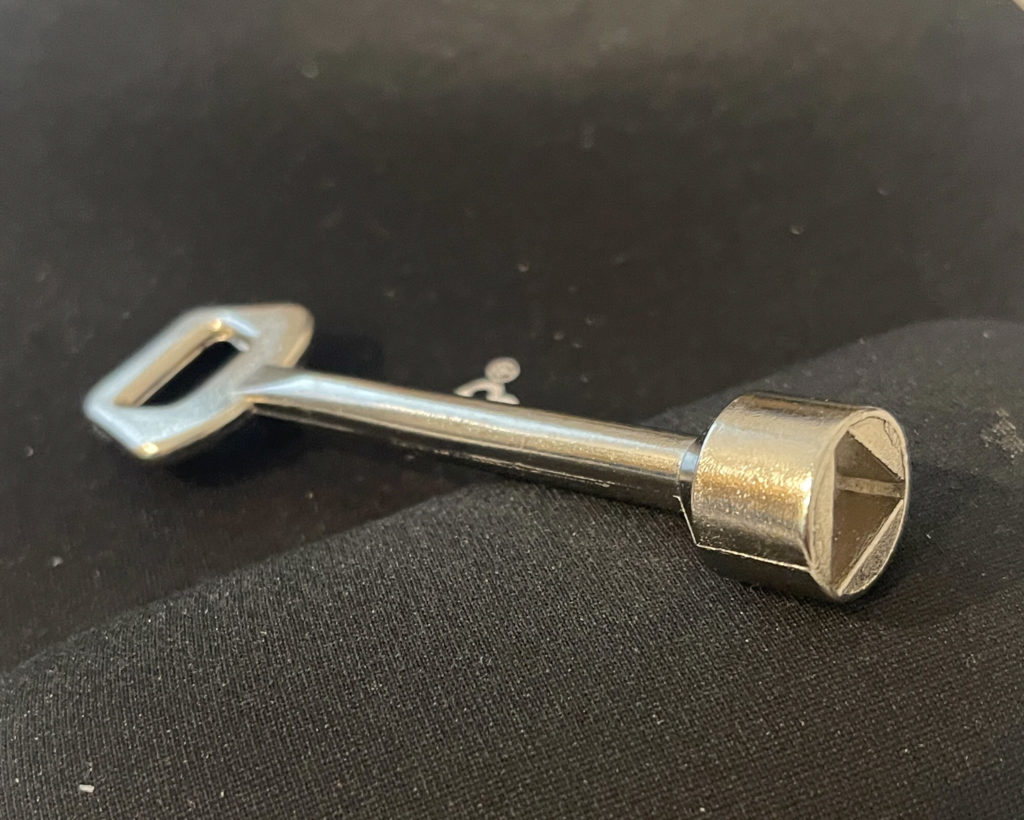
Then, it turns out the water utility needed a photo of the water meter which is in a locked room. The realtor said he could have someone come open the door OR we could buy a “standard triangle key” and open it ourselves. Ed went to a hardware store and asked for such a key and the response was “por el agua”? Si, por el agua. A proud owner of his very own triangle key, Ed got the photo and headed out for another trip to the water utility office. Four trips (a half hour walk each way) and one triangle key later, we had water.

IT TAKES A VILLAGE (OF REALLY NICE PEOPLE)

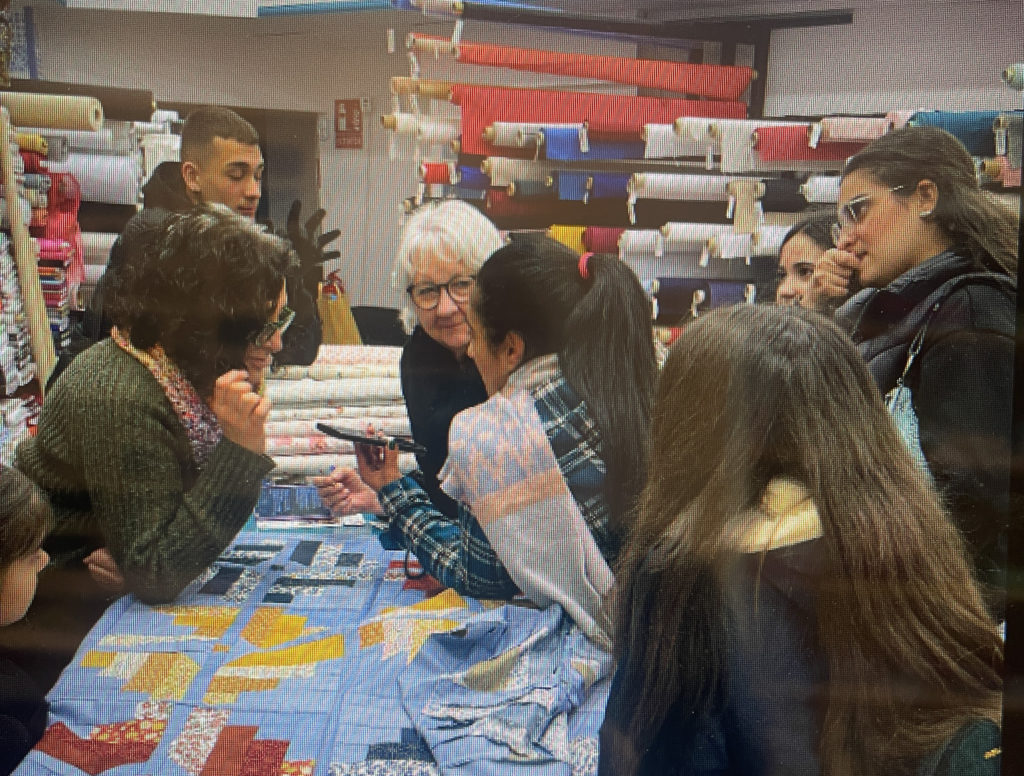
I’ve been doing some sewing and after piecing together a small wall hanging sized quilt, I needed to find a quilter. I had done this once when we were here last year and went back to the same little shop only to discover it had closed. The internet wasn’t much help, and I was just about to ship my little project to the quilter I’ve used in the U.S., which is a slow and expensive option. Then, one day we were walking by a fabric store, and I noticed a beautiful quilt hanging in the window. I went in to ask if they provided quilting services. The lovely woman in the store spoke zero English. I tried to use my limited Spanish, but we ended up communicating through Google Translate. Eventually, she called the quilter that provides the service and we attempted to have a three-way Google Translate conversation. We made a little progress, but it was very slow and frustrating for all of us. After about twenty minutes of this comedy routine, another customer came into the store. She was a 40ish woman who had 5 young girls with her. They all tried to help, but none of them spoke much English. Finally, the woman called her 12-year-old son who is fluent in English (but knows nothing about quilting, of course). I told him what I wanted, he told his mother and the shopkeeper in Spanish what I had said, the shopkeeper relayed the information to the quilter who was still on the phone. Round and round we went. Eventually, we got it done and everyone hugged before saying “Buenas Tardes! Adios!”

KITCHEN ROBOTS?

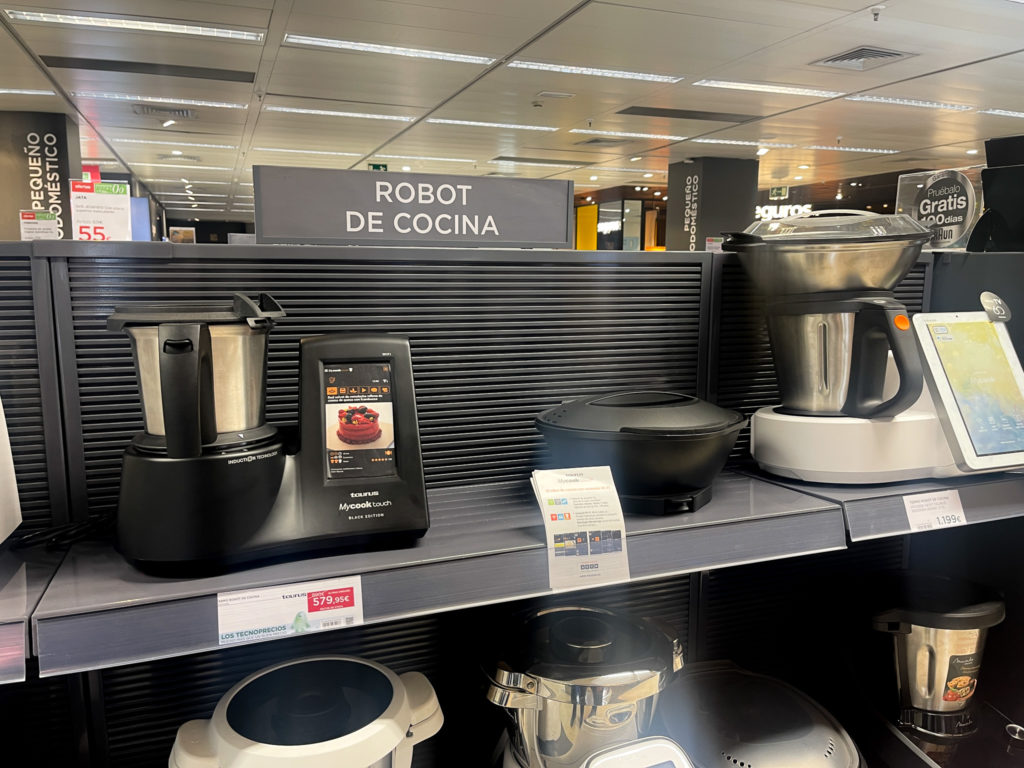
We decided we need a blender and/or food processor and looked at the options one day when we were in the mega-store, El Cortes Ingles. (Remember the 30+ immersion blenders from a previous post?) Well, we couldn’t find a food processor. We did find several “robot de cocina“ contraptions to choose from. I’m not sure what a kitchen robot is but they’re quite expensive. We didn’t feel up to the challenge and ordered a food processor/blender combo on Amazon.com. Easy.

COMMUNICATING ABOUT HEALTHCARE STUFF

We have had a few encounters with the health care system here (fortunately nothing too serious) and that can be a bit stressful. It’s not too difficult to find a doctor who speaks some English, but often the office staff don’t speak much, if any. Typically, I begin these encounters with the best of intentions. I prepare and practice my question in Spanish. Whew! I’m so proud of myself! Then, the other person responds, and I can understand somewhere around 30-50% of what is said. Yikes! This isn’t ordering lunch; this is healthcare stuff. I should say that I don’t expect everyone to speak English and my Spanish is getting better, but as Heather said, sometimes I just need the day to be easy.

At one healthcare encounter, I was proud of myself when I said, “Tengo una cita en enero pero no recuerdo el día ni la hora.” The receptionist responded, “Su tarjeta de seguro, por favor.” I handed her my insurance card and easily understood when she told me, “Tu cita es el 18 de enero a las dos de la tarde.”

Phone calls can be overwhelming. When I get an automated greeting or message, it’s nearly impossible to understand what’s being said because they talk so fast. I went back to the fabric store one day to pick up my finished quilt and while in the store my phone rang. It was a Spanish number and when I answered I was listening to a recorded message spoken in Spanish – fast Spanish. I knew it had something to do with a healthcare appointment, but had no idea if they were confirming, cancelling, or changing the appointment. Nor did I know if I was supposed to DO something – like “press 1” to confirm. I turned on speaker phone and asked Ed to listen along with me, but still no entiendo (sort of like no comprende). It was a stressful moment, and I was on the verge of a mini meltdown (silly, I know, but little things start to pile up). A young man who was in the fabric store came to the rescue. He came to my side and quietly told me that they were just confirming my appointment and there was nothing I needed to do. I thanked (and hugged) him too!

SPAINIVERSARY

On February 3, we celebrated our one year anniversary of residency in Spain. This means that our TIE cards are expired. TIE stands for “Tarjeta de Identidad de Extranjero” and it’s a card that contains all your identity details and is proof that you are a Spanish resident. As recommended, we submitted our applications for renewal in early December, 60 days in advance. Now, we wait for the Valencia bureaucracy. We’ve heard that it can take between 2-6 months to get approval. After that, we go back to the police department where they check fingerprints, photos, and issue a new card. Then, there’s the fact that we can only stay in Spain for 90 days after the TIE expires (until May 3). We have some travel plans coming up and we can move about Europe with our U.S. passports. However, I’m not sure what happens after May 3. Worst case scenario, we get back to Valencia in late May from our trip to Greece and they don’t let us back into Spain. Unlikely, but something to ponder over a glass of wine.

FRIENDS AND NICE PEOPLE

Two things make all of this so much easier than it might otherwise be. First, as I mentioned above, we have some wonderful expat friends to commiserate and trade stories and tips with. Second, Valencianos are kind, patient, and eager to help. It’s a caring and gentle culture. People are patient with one another (even with expats), and they just seem happy. Happy to be alive. Happy to be together. Happy to help.

I have a sentence that I’ve committed to memory. Gracias por su paciencia mientras aprendo español.I say it often.

Sometimes I just need a day to be easy. Read More »
¡Feliz Año Nuevo!

CHRISTMAS SPANISH STYLE

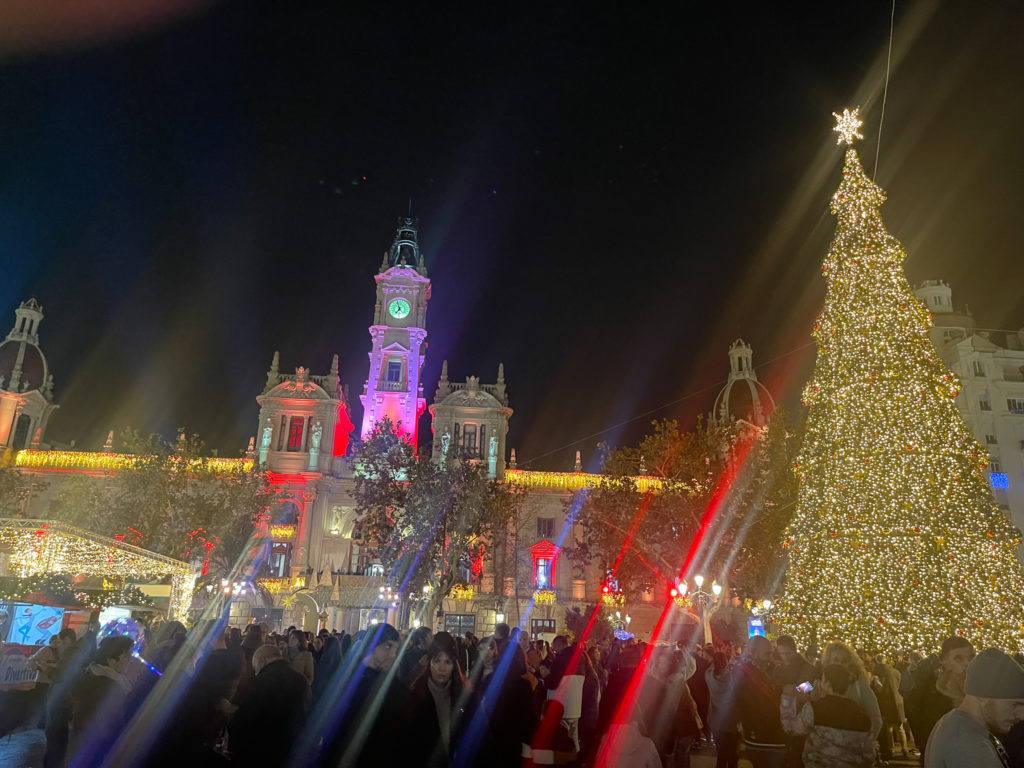
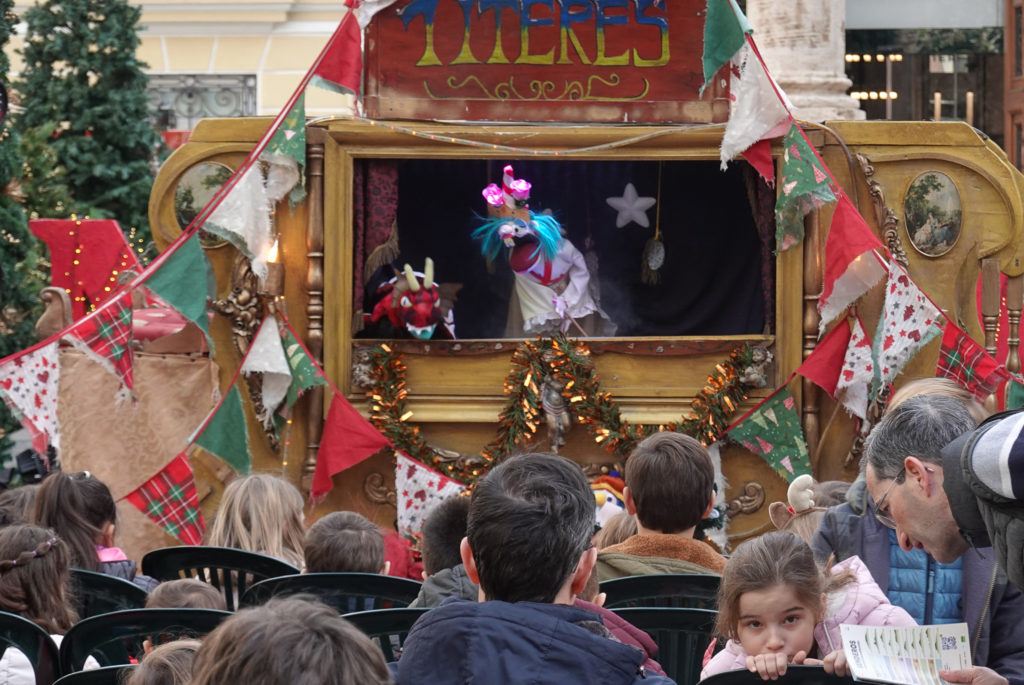
Whew! Yesterday, the holiday season in Valencia finally came to an end with the exchange of gifts celebrating the arrival of the Magi. Experiencing the holidays in Spain for the first time has been magical. From the numerous festive lights around the city to the lively Christmas markets, puppet shows, and live music, there’s been much holiday cheer. The Spanish traditions involving joyous gatherings with family and friends have been a delight to observe and participate in. The warmth of the people and the rich cultural heritage truly made our first holiday season in Spain a cherished experience.

THE ARRIVAL OF THE WISE ONES

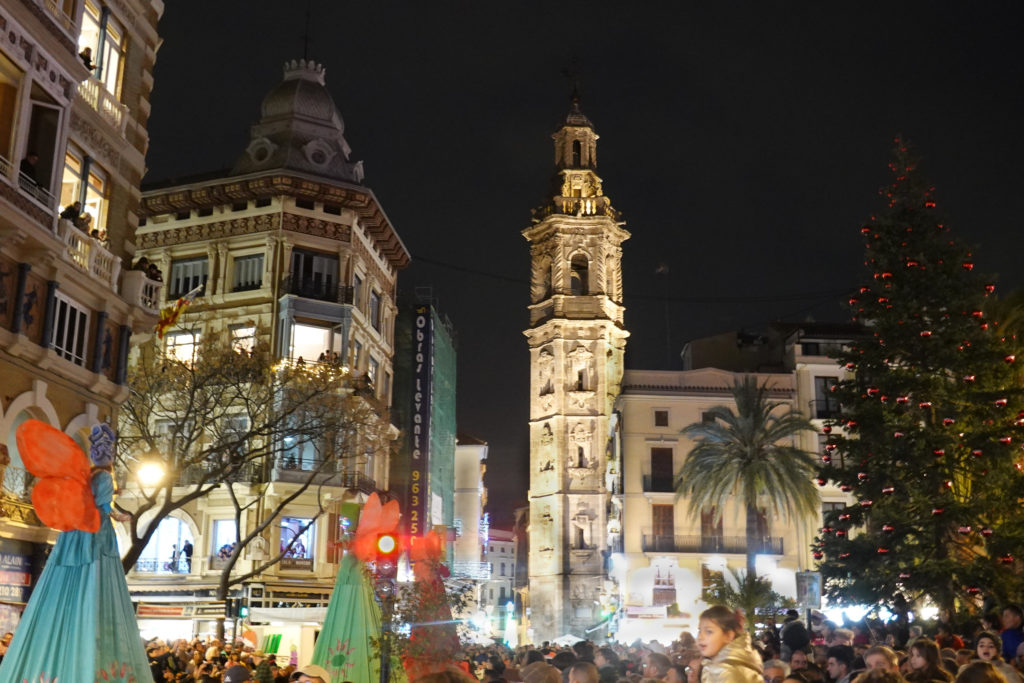
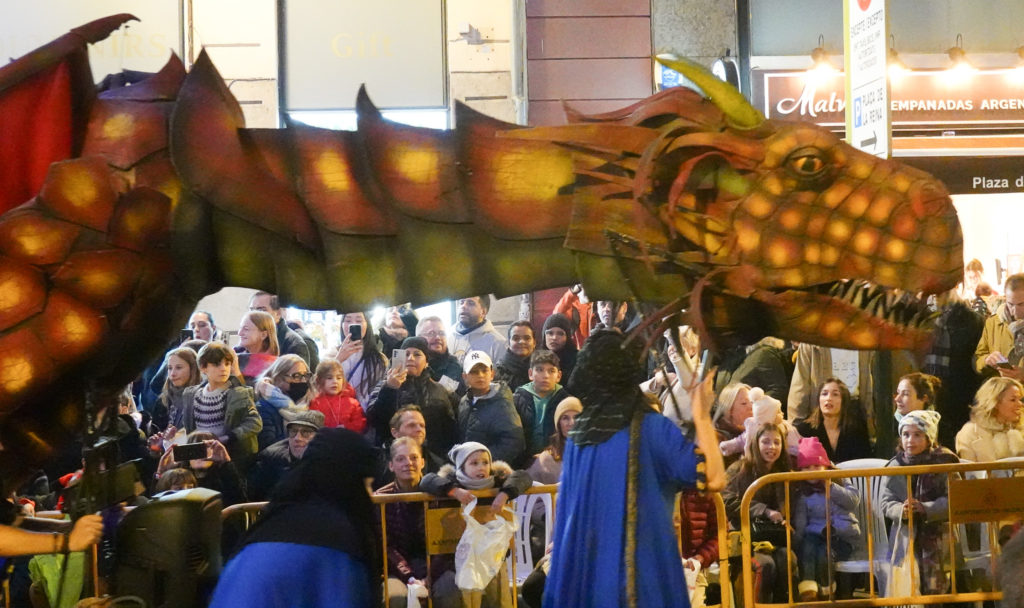
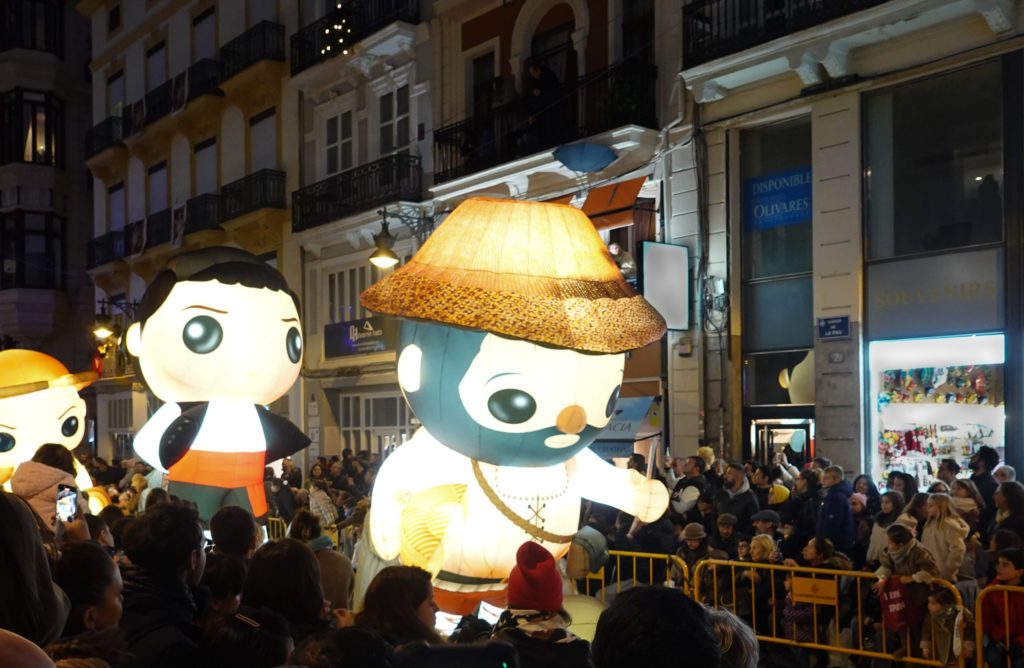
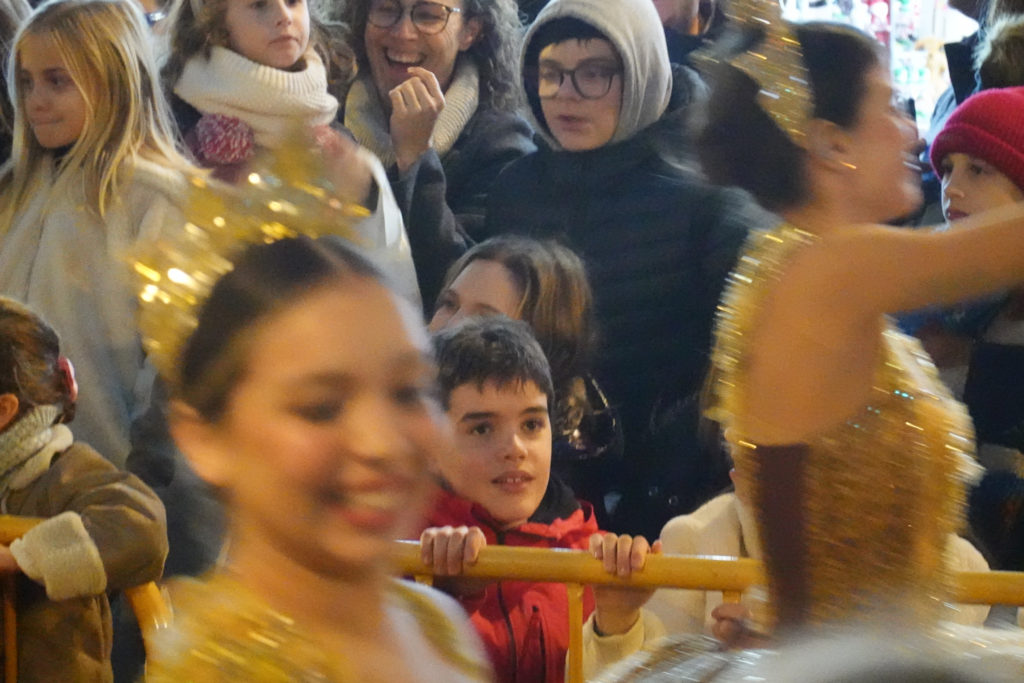
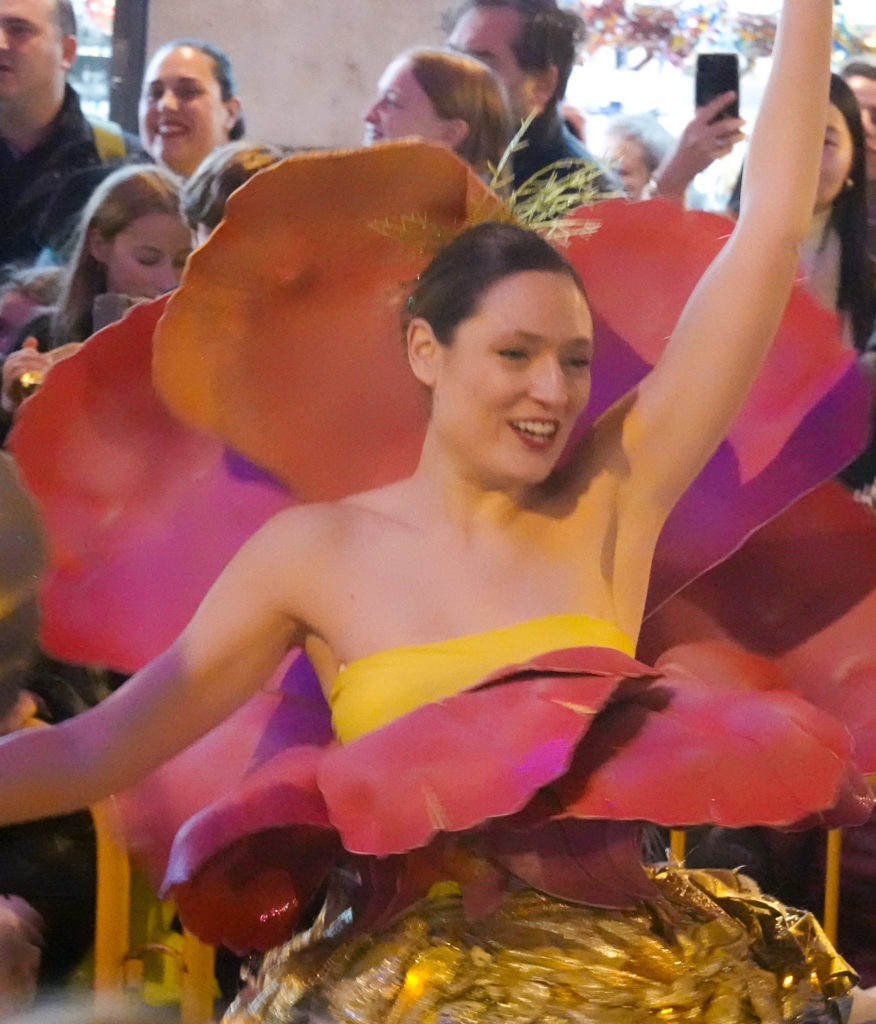
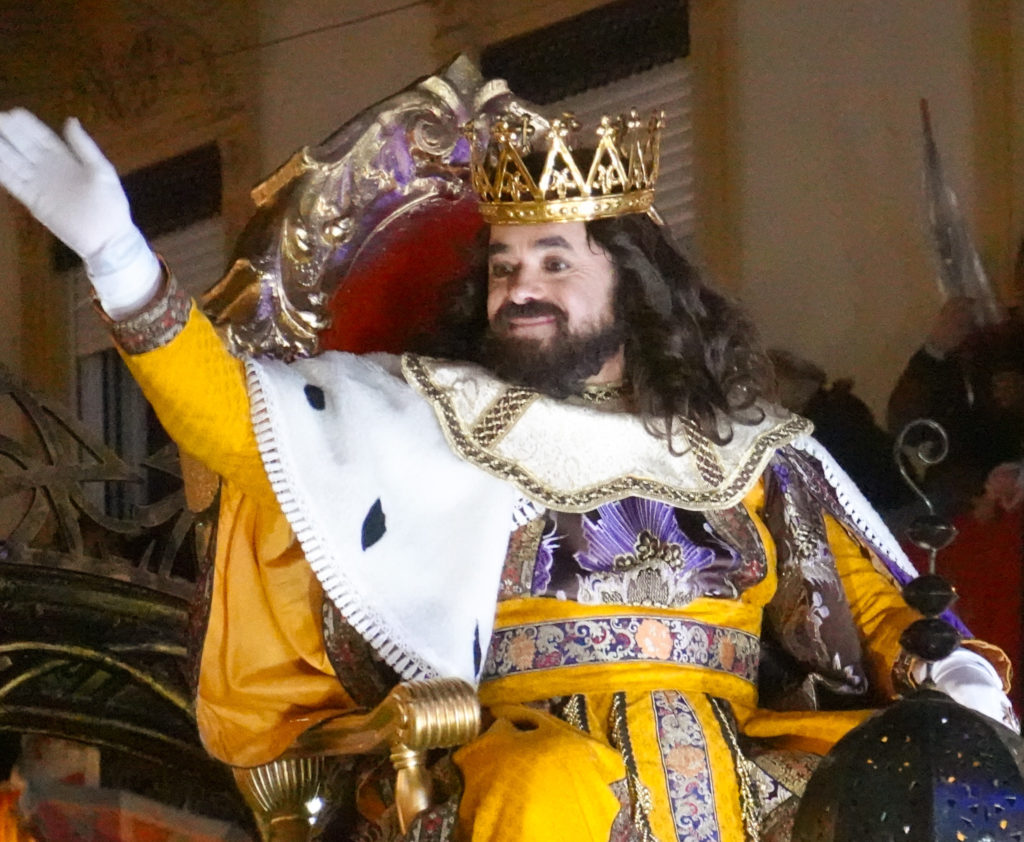
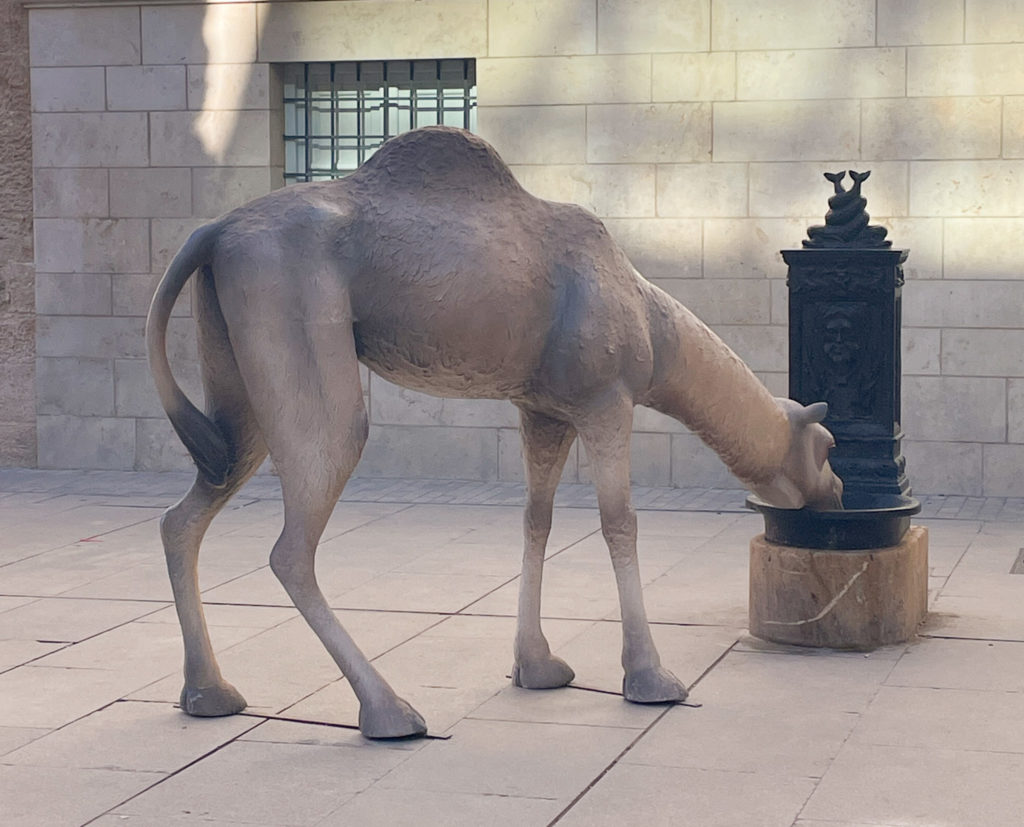
In Spain, Christmas doesn’t wind down after Christmas Day. It stretches joyfully on until El Día de los Reyes (the Day of the Kings) on January 6. On the evening before the big day, the much-anticipated arrival of Melchior, Gaspar, and Balthazar by boat at Valencia’s Mediterranean harbor is followed by a spectacular parade that winds through the city with the Kings robed in their regal attire. Of course, historically the Kings arrived on camel.  But today they arrive on horses in Madrid and by boat in Barcelona, and in one small village they arrive by hang-glider. Maybe next year we’ll check that out!

Handfuls of candy are thrown wildly to the delight of the children with some holding umbrellas upside down to catch as many sweets as possible. The procession ends at Plaza Ayuntamiento (Town Hall square) with dance, music and, of course, fireworks!

Santa isn’t such a big deal here. Rather, the spirit of generosity and joy, popularly represented in the U.S. by Santa Claus, is provided by the Three Wise Men. Every year as Christmas approaches, Spanish children write letters to the Kings to let them know if they have behaved well throughout the year. Naughty children will receive just a piece of coal (which is a sugary sweet).  

Having watched the Three Kings parade through town, children rush home to prepare for the next day. Because the kings have travelled a long distance, the children leave water, Turrón and milk (and sometimes cognac!) for the kings and their camels. Turrón, found in abundance in Spain at Christmas time, is a delicious nougat that is made  from honey, sugar, egg white and toasted almonds. The children also clean their shoes and place them out to be filled by gifts from the kings.

ON THE MOVE AGAIN

Amid the holiday season, we moved! I know, it’s hard to believe that we’ve moved again. I’ll spare you the rationale and just provide you with our new address.

Calle Serranos, 10
Puerta 3
Valencia, Valencia 46003
España

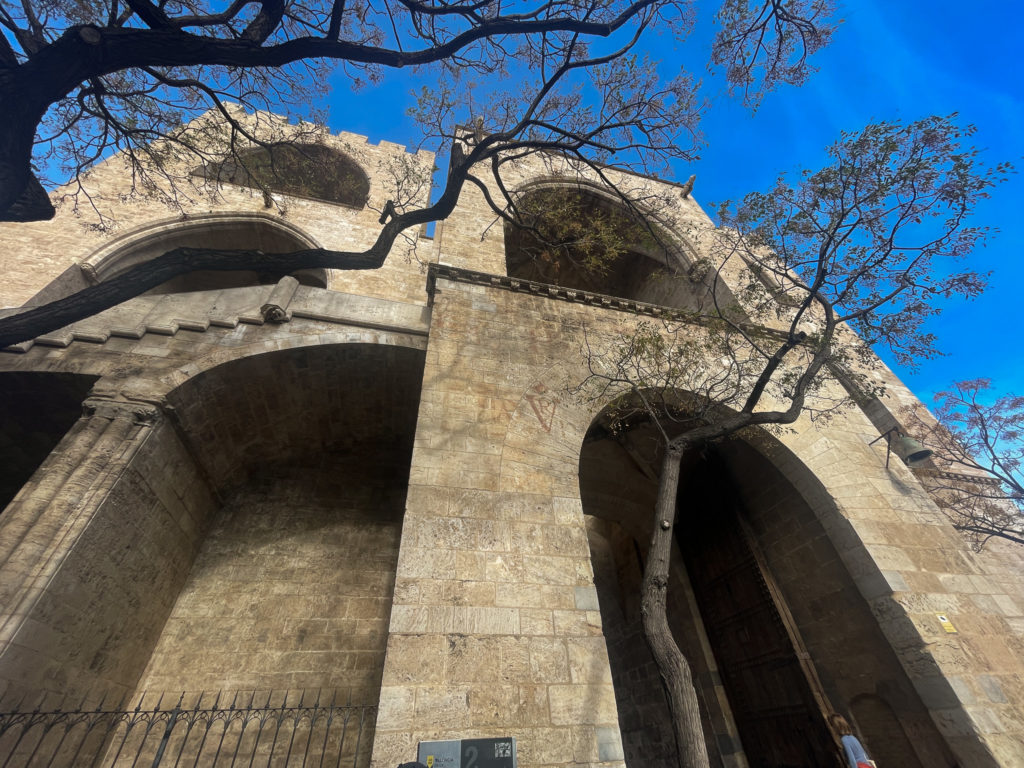
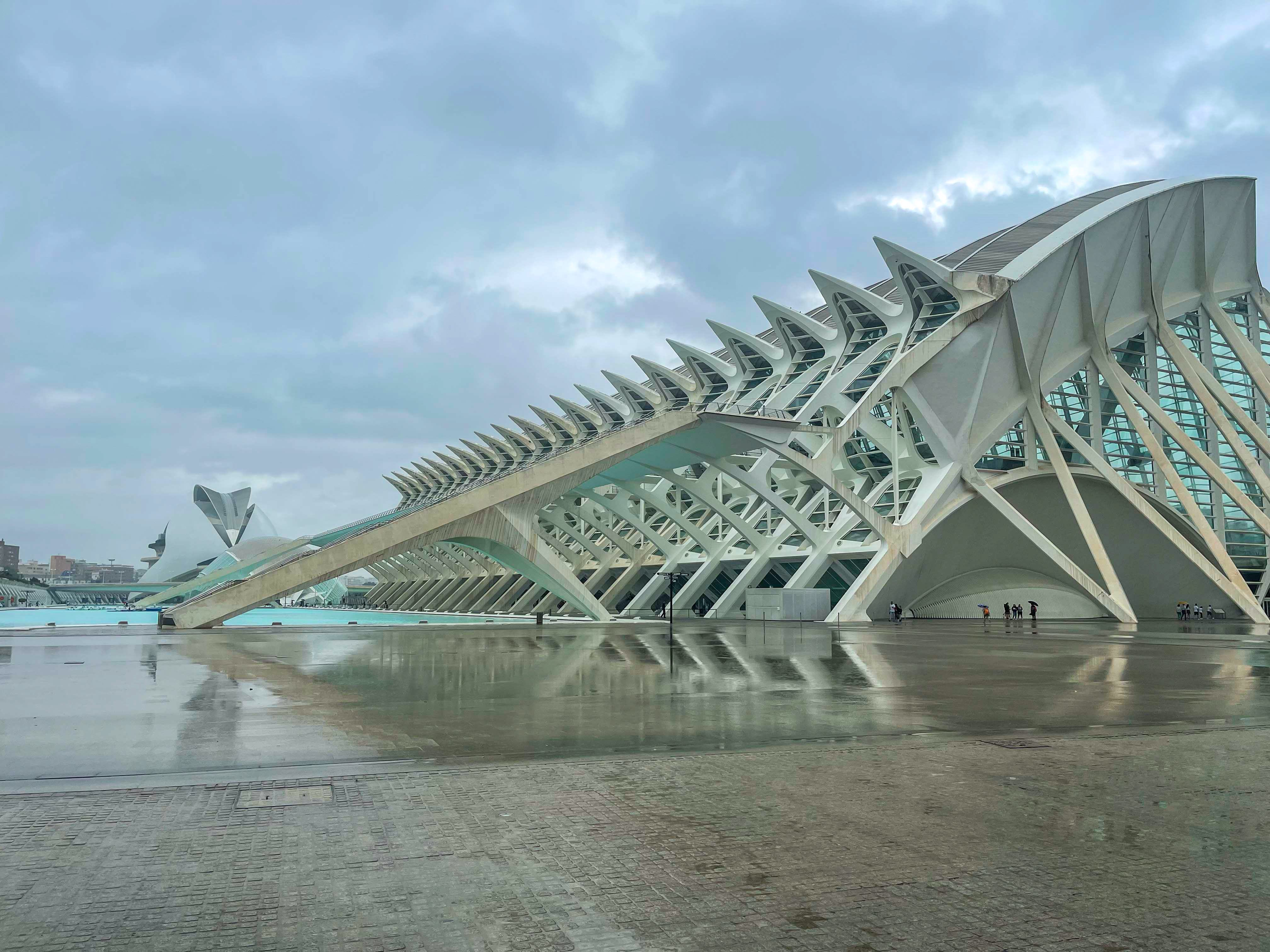
Our new place is on the border of the El Carmen and La Seu neighborhoods in the Ciutat Vella (Old City). Our street, Calle Serranos, is named after the “Torres de Serranos” (Serranos Towers), a limestone clad, Gothic structure originally built to defend the city and serve as the primary entrance. Construction on the Serrano towers began in 1392 and these towers were one of twelve gates of the ancient walls that surrounded Valencia.

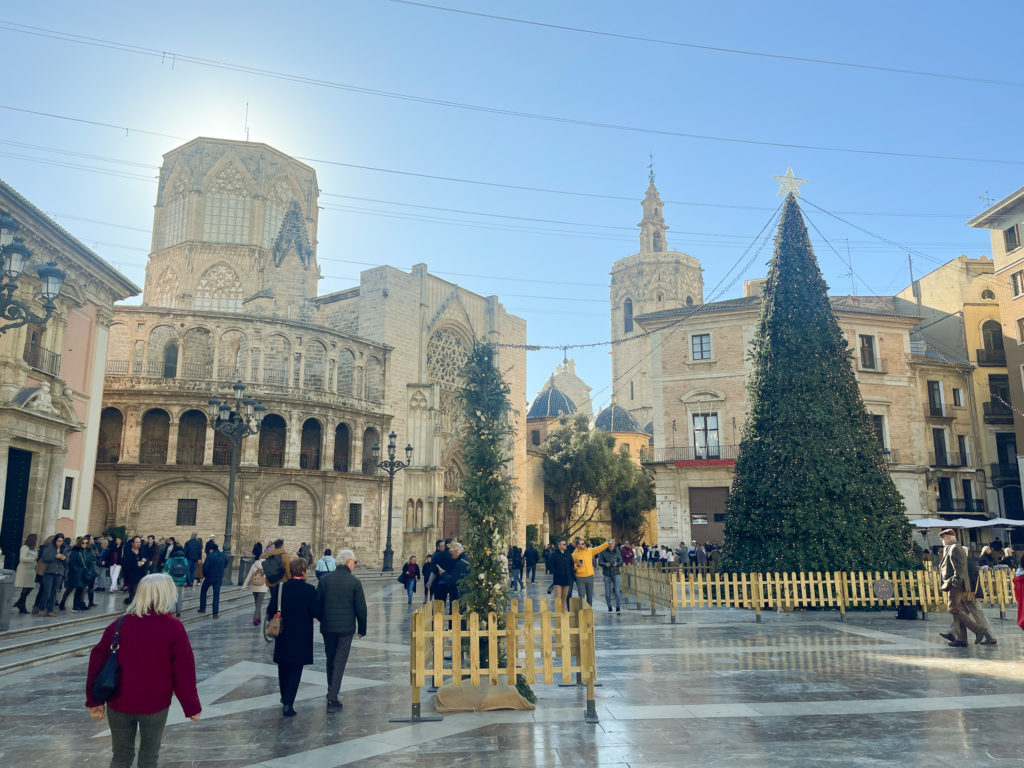
Just around the corner from our new place is the beautiful Plaza de la Virgen. This completely pedestrian plaza is the historic center of the city, home to one of Valencia’s Cathedrals (built in the 13-15th centuries). The cathedral is built on the site that was once the Roman Forum of Valencia.

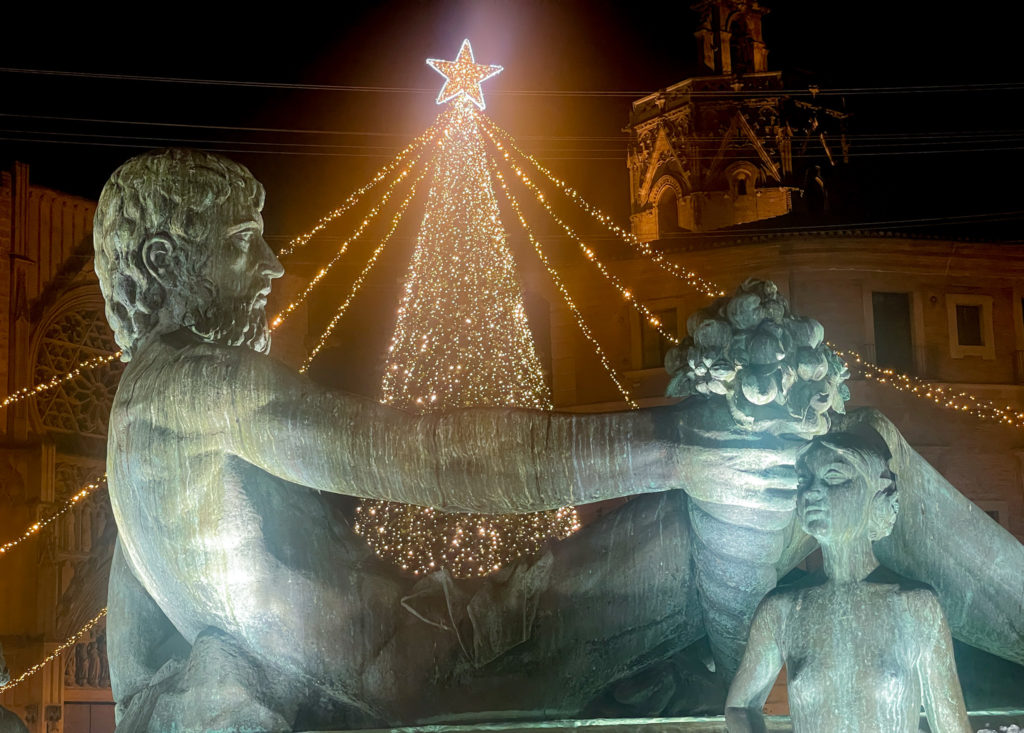
In addition to numerous cafes, the plaza is home to a wonderful fountain and statue of a comfortably reclining Neptune (my bud). Neptune represents the Río Turia while the eight lovely women surrounding him symbolize the eight primary irrigation channels flowing from the river to support the rich agricultural production that has characterized the region for hundreds of years.

We LOVE our new neighborhood and invite you all to come check it out!

We wish you all very Happy New Year and a year filled with many moments of laughter and love. Cheers to a fantastic 2024!

¡Feliz Año Nuevo! Read More »
¡FÚTBOL!

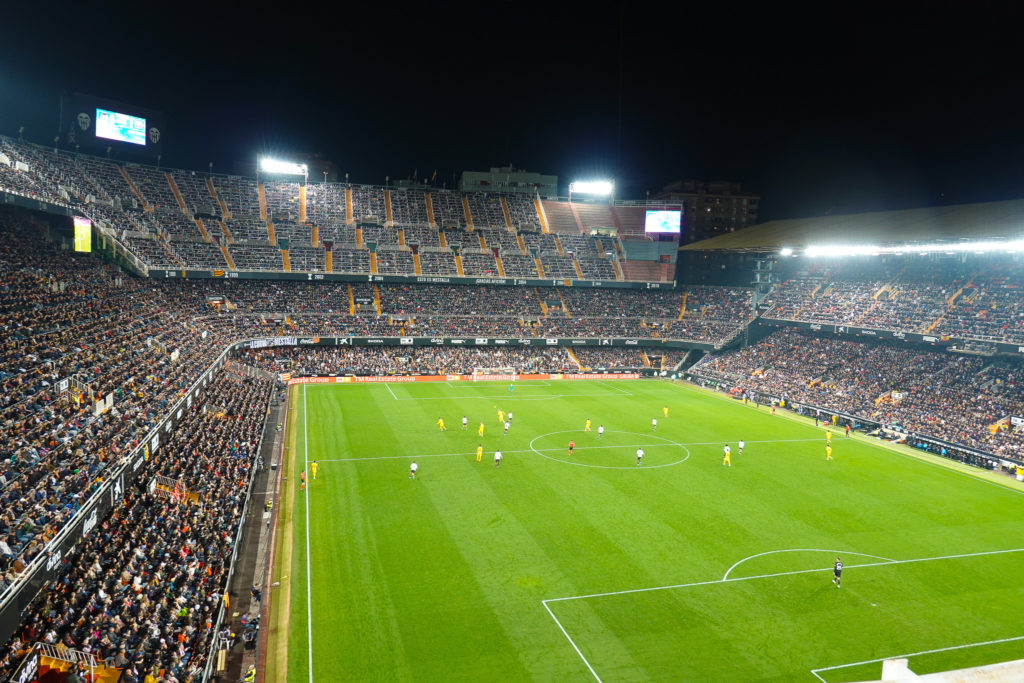
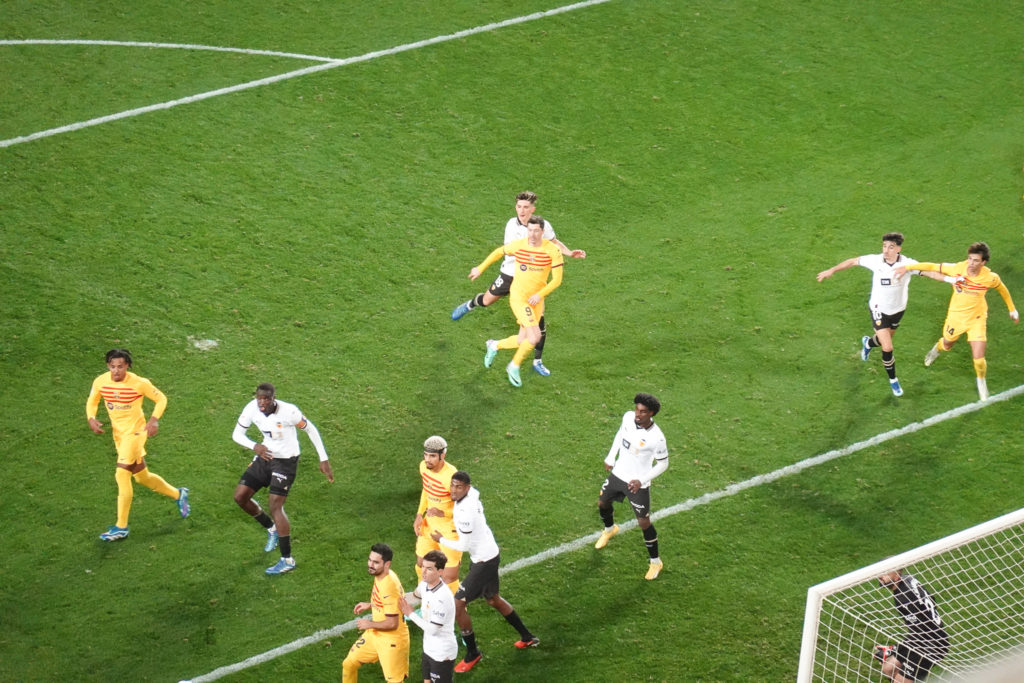
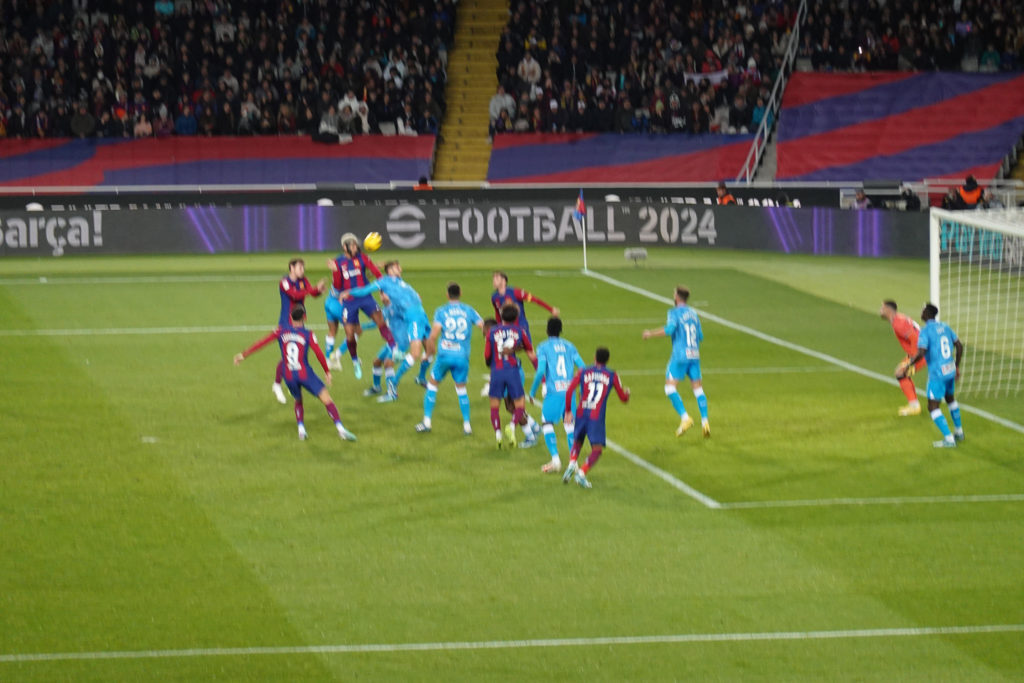
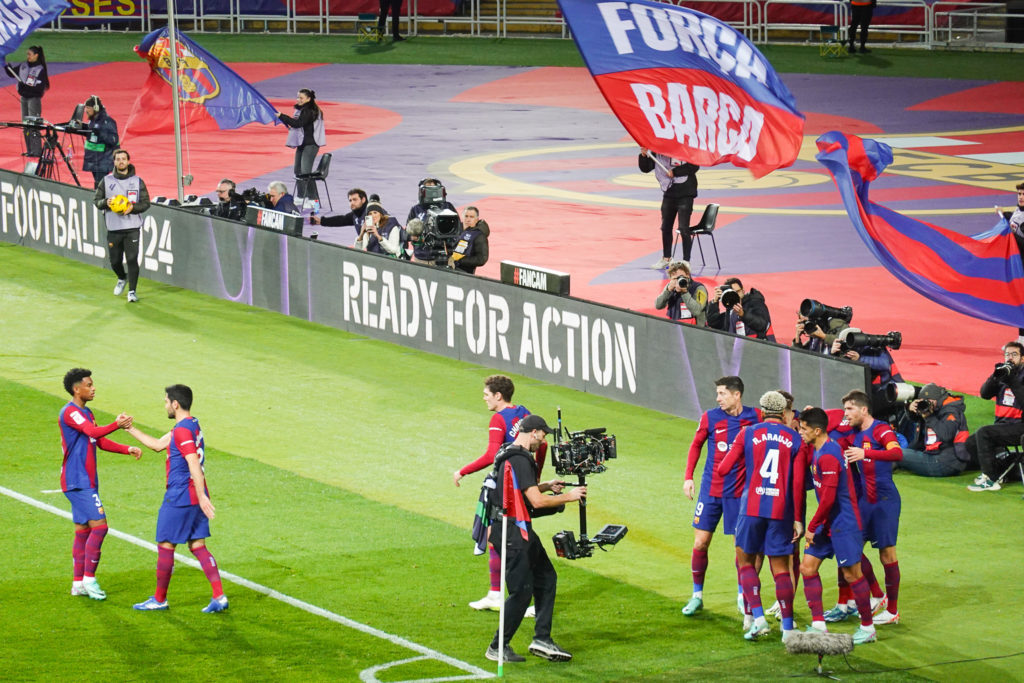
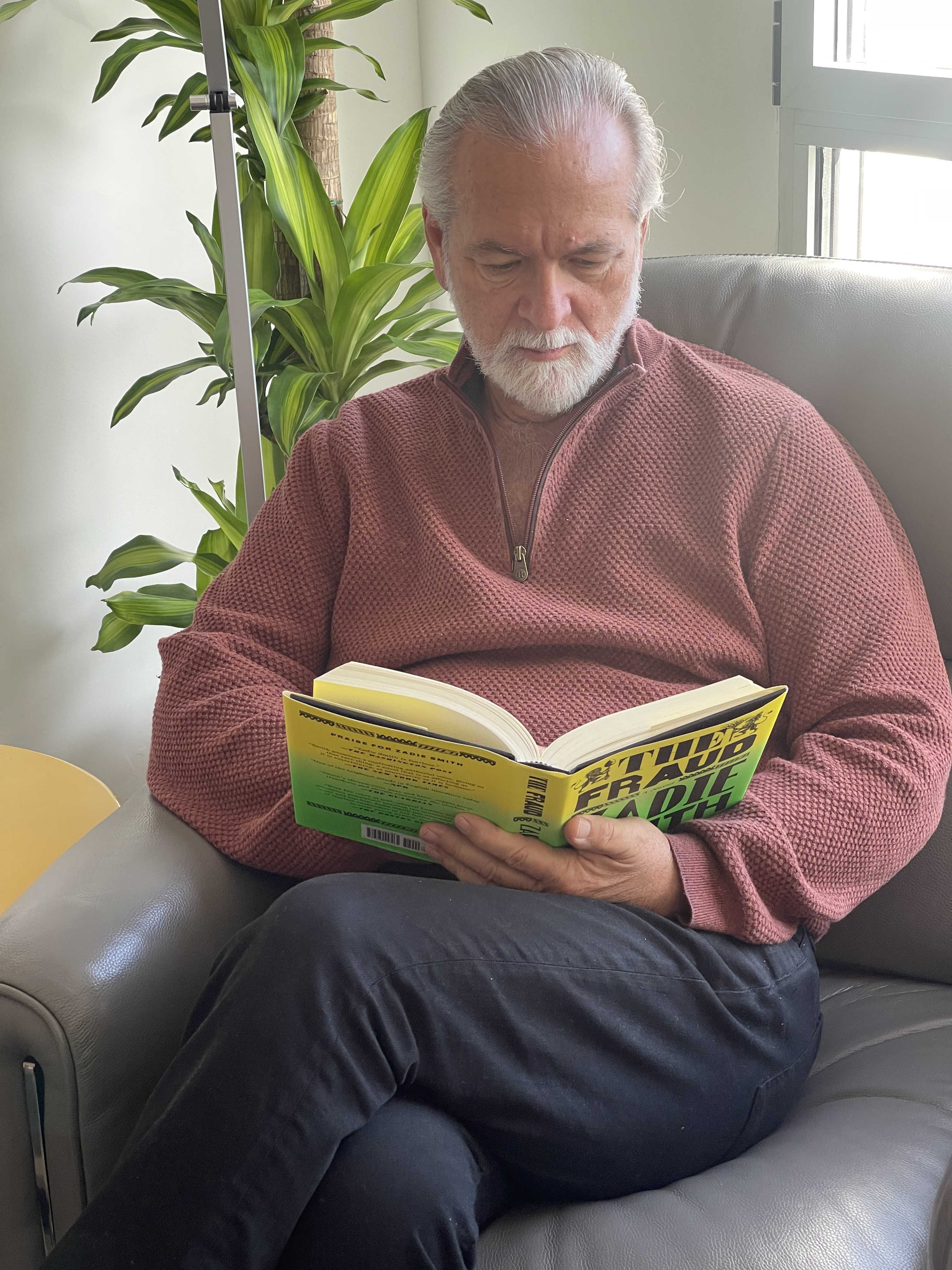
It’s been a very special holiday season for Grandfather Noble. On a recent Sunday night, I wandered through the Valencian night, bundled up against the winter cold, to the old concrete monolith that is Estadi de Mestalla. I took my seat in a completely packed stadium just after 9:00 PM for a clash between FC Barcelona and Valencia CF with the chants and singing of the hometown crowd echoing throughout the city. (Valencia managed a draw.) Just three nights later, Bonnie accompanied me to Barcelona’s temporary home at Estadí Olímpic as they confronted a must win match with a UD Almeria team sitting last in the standings. (Barcelona eked out a rather unsatisfactory 3-2 win.)

Two Barca games in one week!!

This is retirement heaven.

Those of you who know me well will be aware that I am endlessly fascinated by the game America insists on calling soccer. It is by far the most popular team sport on the planet, and both the origin, and pinnacle of competition, are in Europe. La Liga, the Spanish professional futból league is largely acknowledged to be second only to the British Premier League for quality of play and talent. The top two teams in Spain – Real Madrid and Barcelona – are giants among the world’s soccer clubs. I have been a Barcelona fan for nearly two decades since first hearing of a teenager named Leo Messi that was setting the futból world on fire.

My love of the game was planted very early – long before most Americans had heard of the game that obsessed the rest of the world. Among the many blessings of an idyllic childhood, was a male teacher in my elementary school who saw fit to introduce soccer to us during the physical education portion of our day. This strange notion of a game played only with the feet made immediate, intuitive sense to my adolescent self and I was firmly ensconced in the role of goalkeeper on that long ago playground. That seed moldered, almost forgotten, until the boy became a father eager to introduce his sons to the pleasures and lessons of team sports. A decade had passed, and soccer had become fashionable among the more well informed and progressive parents. Ahem.

 Armed with a wonderfully virtuous motive – my sons’ well-being – I threw myself into the task of educating myself on the art of coaching youth soccer teams. (Gratification of my competitive nature may have played some role here, possibly. Well, sure. But come on, right?) I read. I attended seminars. I took on field coaching lessons. And I coached. In short, I immersed myself in the tactical elements of the game and strategies for teaching it. I was intense, focused, and damned good at it. Also, probably a pain the ass to the other parents. So, there was that.

That seed planted by a grade school teacher flowered into fourteen years of coaching my sons in youth soccer that will always be among my most treasured life experiences. It also cemented my love of the game and an appreciation for all the nuance and beauty of the sport. Played at the highest levels, it combines the artistry and athleticism of NBA basketball, with the cerebral tactics of NFL football on a field that is large enough to gracefully accommodate both. But what is most compelling are the moments of sudden, soul wrenching drama. The passion of fans for their fútbol team is unlike anything I have experienced in other sports. They live and breathe the successes and failures of their team – be it the local community, their ethnic region, or the entire nation. Indeed, “fútbol is life.”

¡FÚTBOL! Read More »
Let’s meet at the River

“Quedamos en el río” is a phrase that is often heard in Valencia but if you are a tourist or a newcomer you might find it difficult to actually locate this mysterious river.

“GREEN LUNGS”

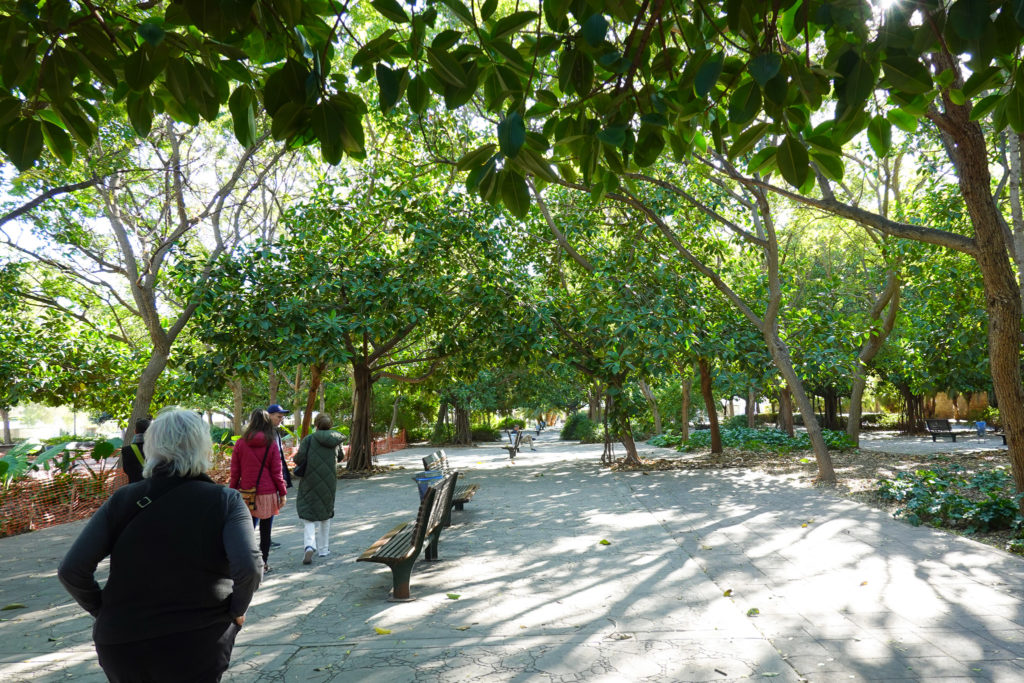
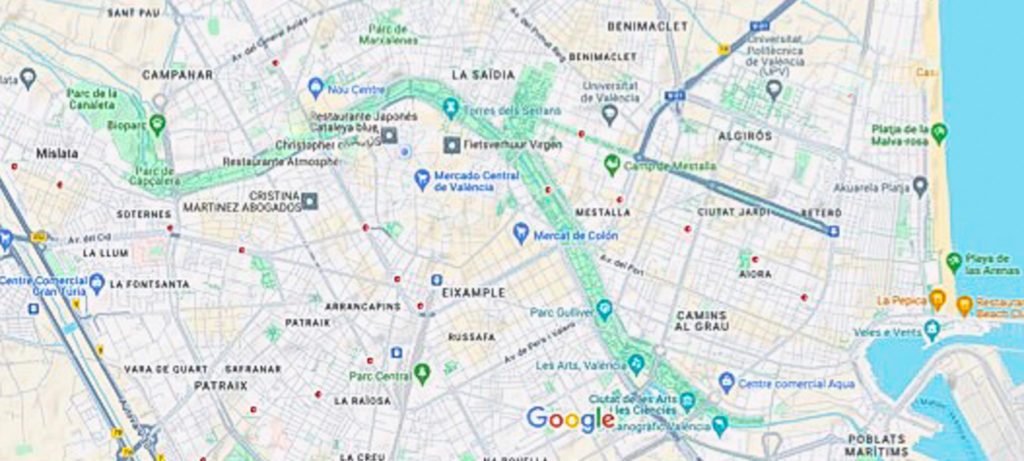
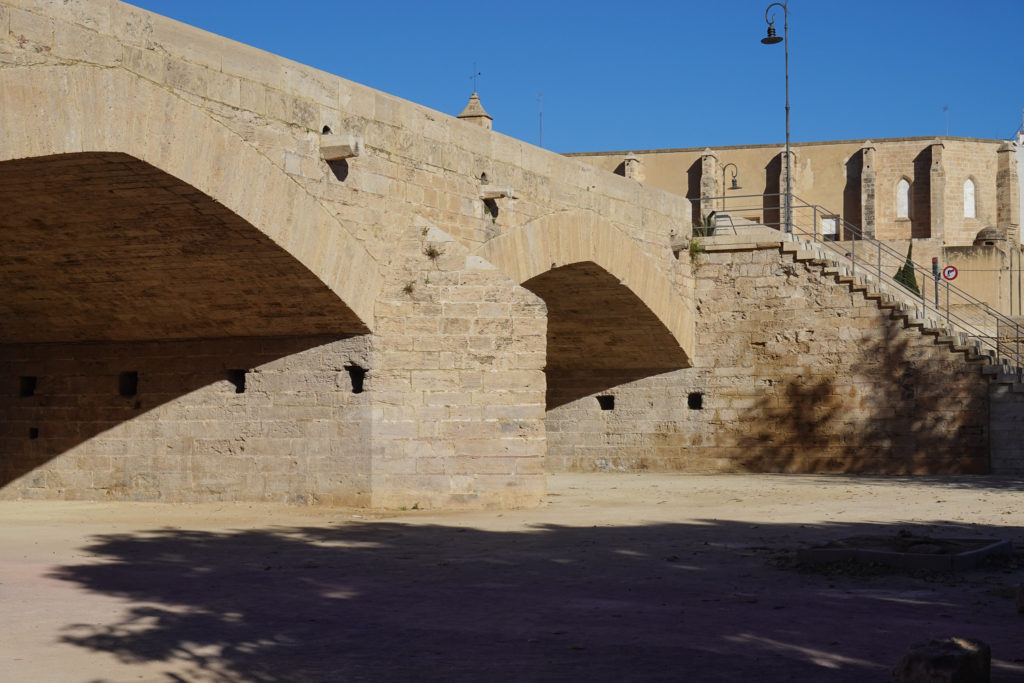
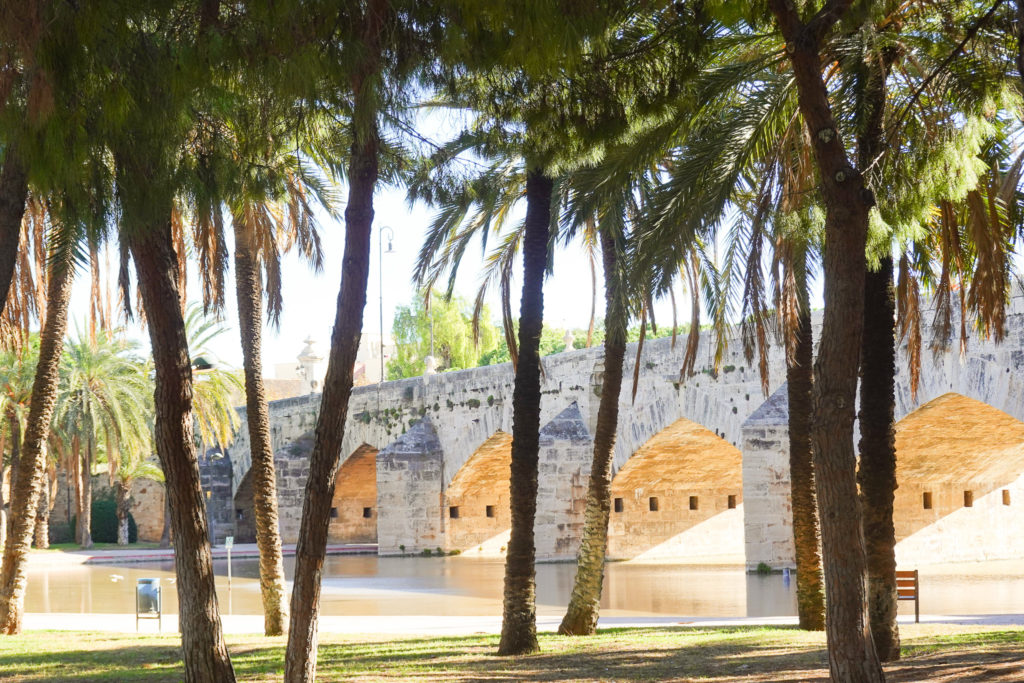
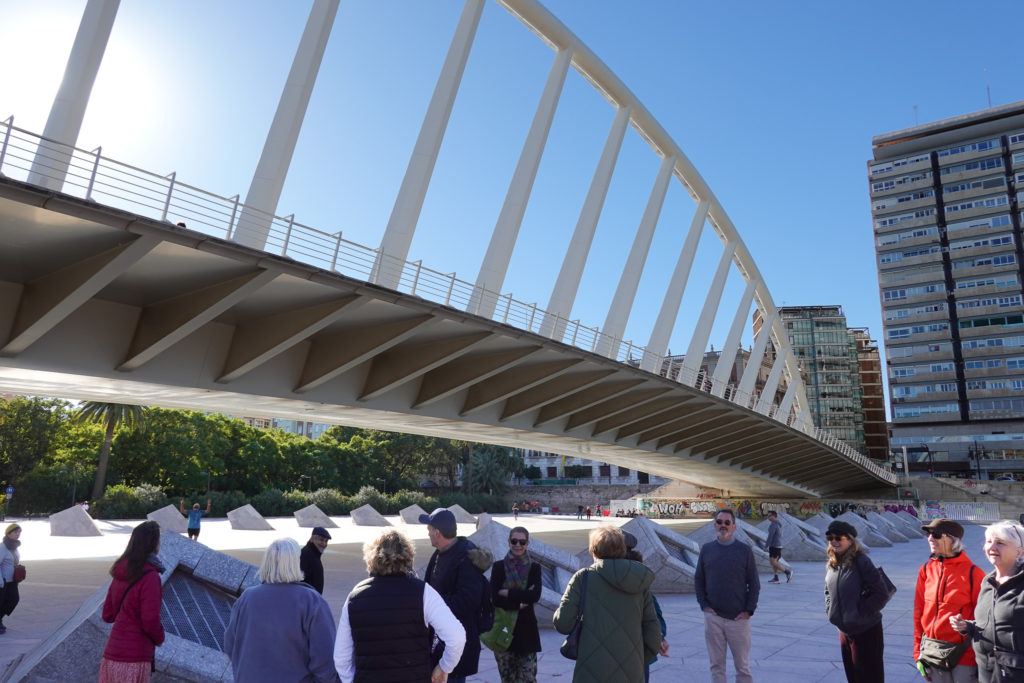
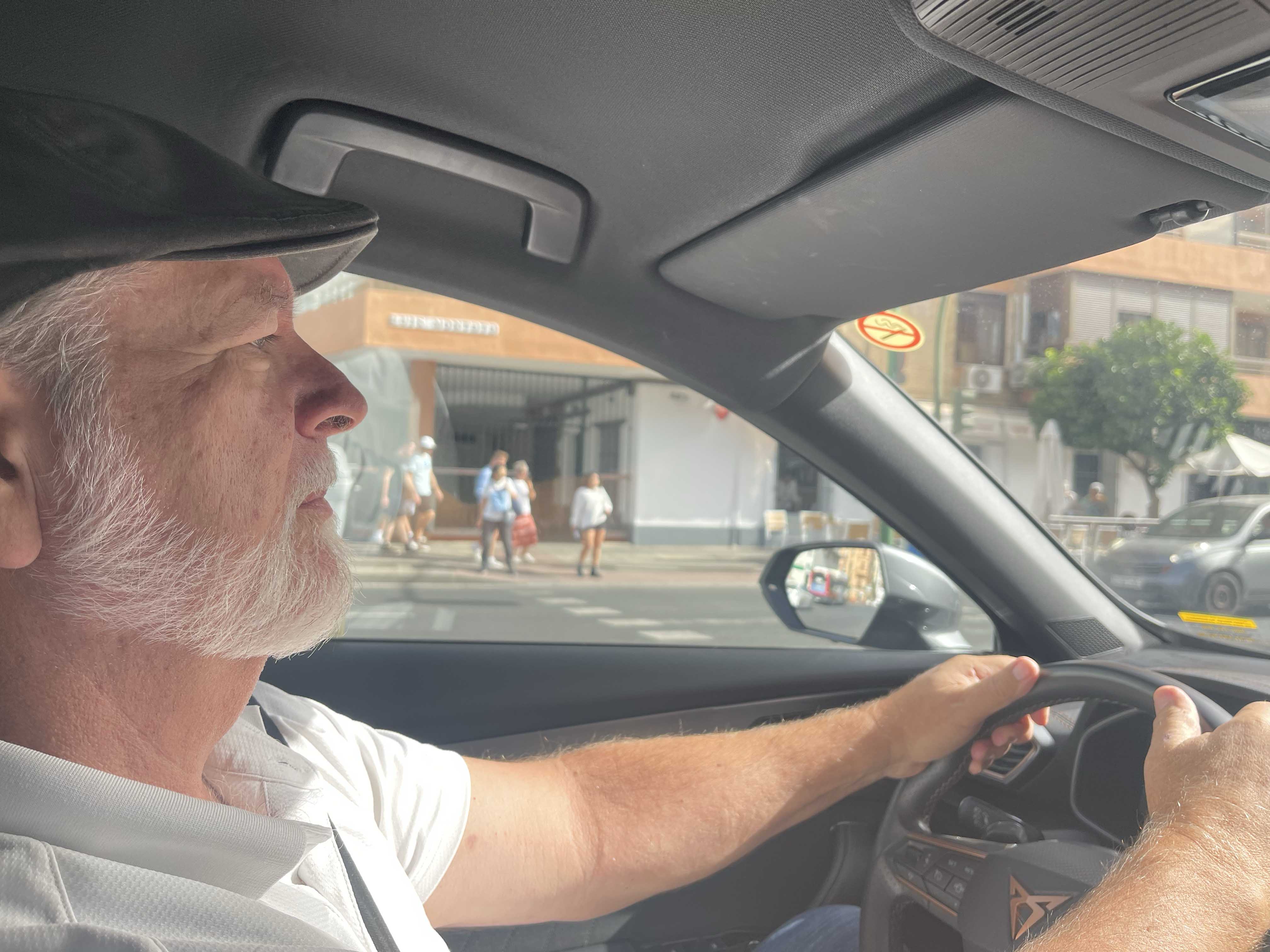
We had a delightful walking tour right here in València this week! We spent a few hours walking along the Turia and learning about some of the many bridges that cross it. The Jardínes de Turia is a huge park that winds through the heart of the city. At 9 kilometers (5 miles) in length, it is the largest urban park in Spain.

Once a river, it is now a green space that is referred to as the “green lungs” of Valencia. There’s a wonderful mix of cycling, jogging, and walking paths, playing fields, trees, fountains, lawns, playgrounds, and cafes. The Turia Gardens end near the Mediterranean Sea, beside the pools of the La Ciudad de las Artes y las Ciencias (City of Arts and Sciences). More on that amazing place another time! 

A LITTLE HISTORY

In 1957, Valencia experienced a devastating flood that forever changed the city’s relationship with the Turia River. Nearly three quarters of the city was inundated by floodwater and over 60 people lost their lives. The following year, the city embraced a plan to divert the river around its western outskirts to the Mediterranean Sea.

A park wasn’t the city leadership’s first idea—in an effort to alleviate traffic congestion, they envisioned an elaborate highway system through the heart of the City. But by 1970 the citizens pushed back and protested the highway proposal under the motto “The bed of Turia is ours and we want green!” By the end of the decade, the City approved legislation to turn the riverbed into a park and commissioned a master plan in 1982. The plan created a framework for the riverbed and divided it into 18 zones. Currently, all but one of the zones has been developed.

https://metropolismag.com/projects/how-valencia-turned-crisis-river-into-park/

Once Spain recovered its democracy in 1975, the municipality of Valencia decided to turn the empty riverbed into a park. The first sections were officially opened in 1986.

AMAZING BRIDGES

As for the bridges, they are architectural wonders, each with its own story and design. There are eighteen bridges that cross the Turia and they are from different periods and various architectural styles. Five of the bridges are quite old having been built between the early 15th and 17th centuries. Oldest is the Puente de la Trinidad (1402) which was built in the Gothic style on the remnants of a Moorish bridge made of wood.

Then, there’s the striking and very modern bridge designed by the famous architect Santiago Calatrava (a native of Valencia).

We’re definitely planning to spend more time in the beloved Jardínes de Turia!

Let’s meet at the River Read More »
THE BOOK REVIEW

READING TIME

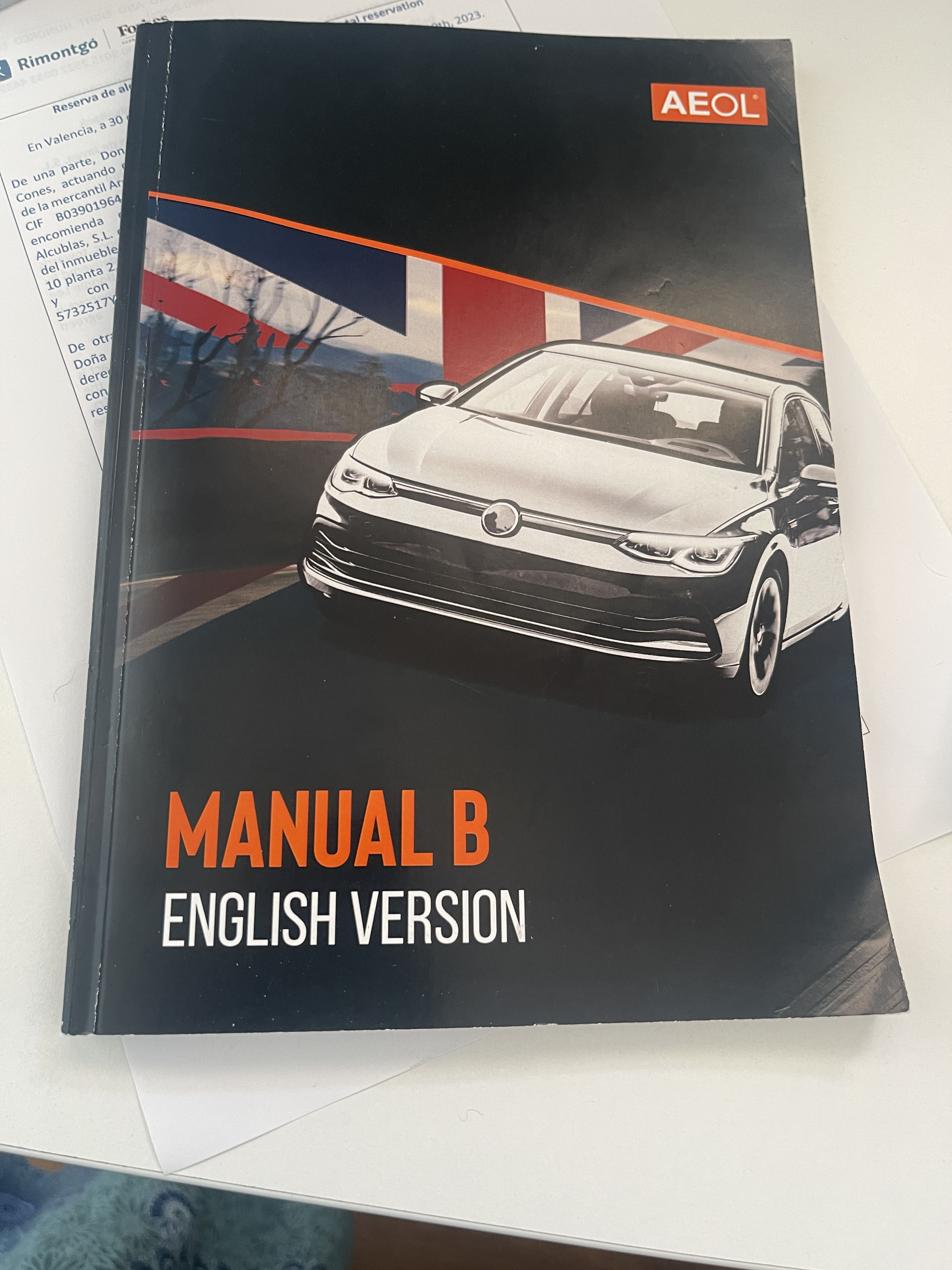
One of the pleasures of retirement is to allow myself time to read with a minimum amount of guilt for not doing something productive. I’m currently reading Zadie Smith’s newest novel “The Fraud”. She’s a writer I have been enraptured by from the moment I picked up her earliest work. Just gob smacked. How to explain such talent? Maturity? Depth? I think she was about 22 years old at the time. As I am a perfectionist – with all the inherent tendencies to procrastinate and equivocate and generally avoid attempting projects that risk coming up short of my own standards – reading Smith obliterated any aspirational shreds I might have been harboring around writing fiction myself. I knew at my core I did not have that kind of talent, let alone the soul.

Regarding “The Fraud”, I recently read a lengthy essay in the London Review of Books commenting on Smith’s intentional inverting of the traditional form of the novel as broad commentary on the fiction of the nineteenth century. And, how she is subverting this and that convention, packing juicy little historical easter eggs into the details for the academics to uncover and pontificate about. Perhaps. And while I can see and appreciate some of this nuance, please. Just read the woman’s prose.

She had arrived at Elm Lodge on the twenty-third of April, 1830. Ever after she marked the day in her heart. No language attended it. No conscious ritual. If asked what the date meant to her she would have spoken the truth and called it St. George’s Day and denied attaching any personal significance to it. But somewhere deeper, past language, it was marked. A cluster of sensations. The climbing rose. Frances in the doorway. That first, unmistakable, impression of her goodness. The feeling of walking down grassy Willesden Lane, early in the morning, plucking wildflowers out of the hedgerows and trying to appreciate them. The happiness of knowing she would turn round and walk back to a house of steamed rags and strung-up rabbits, drying linens and chubby baby ankles, small hands with food on them, the smell of bacon, fruit cakes wrapped in cloth, the swampy whiff of pea soup, and simplest chords of Bach played clumsily but with good humor. All of this warm human sacred business she had almost forgotten existed.

– Zadie Smith, The Fraud, 2023

It sometimes feels that I took too long to finally accept retirement. So much I had nearly forgotten existed.

DRIVING SCHOOL

We are continuing the process of acculturating Valenciano norms. I tend to have a romantic notion about “living as a local” which it is increasingly obvious will always be very limited in reality. It turns out, however, that just navigating the fundamental requirements of Spanish society brings with it a shift in perspective and appreciation for the culture. For example, I’ve embarked on a journey to acquire a Spanish driver’s license. Now as an American, you may wonder how this could be characterized as a journey. How big a deal can it be if you’ve been driving all your life? Ahem.

It turns out the Spanish take awarding the privilege of operating a motor vehicle in their country quite seriously. My status as a safe driver for over 52 years counts for exactly nothing. And, as a resident of Spain for more than six months, neither my U.S. nor international driver’s licenses count for squat. I am required to begin again, from the beginning, like a teenager.

Attending a state regulated driving school is mandatory for all “new” drivers. The format and protocol are the same no matter which school you attend. You must take and pass a state administered written exam. When you have successfully completed the written test, you must take and pass an actual driving test with a state examiner. The proctored, written exam consists of 30 questions. You must score a 90% or better to pass. Each individual exam is randomly generated by a computer from a database of 3,000 questions, so to prepare for the written exam, the first phase of driving school involves answering 3,000 questions. Correctly. No, that’s not a typo. I am in the process of taking 100 practice exams of 30 questions each. And I must go back and correct every error when I have finished. Only when I have successfully completed this phase, will the driving school schedule my first attempt at the state exam. (My driving school is called “El Cid”. I have visions of Charlton and Sophia every time I sit down to work on this thing.)

I’m 10% done with the 3,000 questions.

How this process becomes interesting – and relevant to the cultural aspects I referenced earlier – is the contrast with our expectations in Los Estados Unidos. My first instinct was to say, “well, the Spanish laws and regulations are just far more detailed and comprehensive than in the U.S.” But as I thought about it, I realized that our U.S. laws and regulations are at least as complex, it’s just that we don’t really expect everyone to learn them all. For example, trucks in the U.S. are required to have certain signs and symbols on them that indicate weight, size, contents, etc., but we don’t expect the average driver to know and understand their meaning. (Missed multiple questions on the meaning of a square versus a rectangle symbol.) Perhaps it’s just that I haven’t taken a driving exam for over five decades and today’s new U.S. drivers are subjected to more rigor than I was. (Not really buying this based on my experience on U.S. roads.) So, one conclusion I have reached is that Spanish society simply expects more from its citizens, as in total mastery of their driving laws, not just a passing familiarity.

So far, I’m averaging 4 – 5 errors per exam. Obviously not good enough. Some of the errors can be attributed to the awkward syntax of translated questions. And some, just don’t seem to translate. It turns out, for example that “stopping distance” and “braking distance” are not synonymous, though I cannot for the life of me discern the difference. In other cases, it’s just a different way of thinking. Imagine tossing a cigarette butt out of a car window resulting in points against your driving record. One regulation I would love to see more often in the US is minimum speed rules. I’ve also missed a couple of questions regarding the rules for herding animals along the roadways – a skill I am almost certain to need at some point in life, right? For some strange reason, helmets are not required on bicyclists during “extremely hot weather”. Missed that one.

An on it goes. Just 2,700 to go. It’s all quite humbling.

THE BOOK REVIEW Read More »
WHY SPAIN?

When moving to Spain was in the planning stage, Maggie asked me “Why Spain instead of California?” It was a good question, but my answer was not a good one. I think I said something about the cost of living being less. While that’s true, and an important factor now that we’re approaching Ed’s retirement, there’s much more to say about Spain and about life in Valencia. Reflecting on the experience of living in Valencia for the last three months, these are the things that help me to better answer Maggie’s question.

PEOPLE ARE FRIENDLY

We have found Spanish people to be friendly and welcoming. It’s more than just friendly. They are kind and eager to help, even to strangers. Numerous times we’ve witnessed people coming to the aid of someone who has dropped something. This happened to Ed one day when he was coming home with groceries. A novice at pushing a wheeled cart around cobblestone streets, he lost his grip, the cart tipped over, and produce was scattered about the street. A young woman walking toward him rushed over to help him pick things up. We’ve seen people help a mother trying to carry a stroller up a flight of stairs, strangers on the street always willing to help with directions. Spanish people seem to always have time to help one another.

NO ONE IS IN A HURRY

Spaniards seem to take their time, deliberately, to appreciate the world and people around them. At first, this can be frustrating (e.g., while waiting in line, waiting to be served, waiting for a scoop of gelato), but it hasn’t taken long to adjust. I find myself following their example – take a breath, wait patiently for my turn, prioritize relationships over schedules, take time to help others, relax and enjoy each day. Live to enjoy life.

LA SOBRAMESA

It is considered normal for people to talk with family and friends after a meal, often for hours. If you reserve a table for dinner, it’s yours for the evening. The assumption is that you will spend lots of time during and after the meal talking with one another. This is such an ingrained part of the culture that there’s even a word for it – sobremesa.

LIFE ON THE STREET

People are always out and about. There are plazas, large and small, around every corner. People gather to mingle with neighbors and friends all day and especially in the evening. There are numerous restaurants, cafes, and bars within walking distance of everyone’s home. Socializing outside seems to reinforce an already strong sense of community.

SAFETY

Talking about being out and about, we’re comfortable walking around the city day and night. There’s very little violent crime here and it’s very comfortable to walk about at any hour. Valencia, just like many other cities in Spain, is ranked among the safest cities in Europe.

HAVING FUN

The Spanish love to celebrate. There’s often a celebration going on in the city. Parades, fancy traditional dresses, marching bands, fireworks, and firecrackers are all a frequent occurrence around Valencia. It’s the same everywhere we travel in Spain. There was the Aste Nagusia in Bilbao last August which celebrates Basque culture; the 20th anniversary of a Drag Queen Festival in Las Palmas, Gran Canaria (Canary Islands) in February; the festival of Sant Jordi (Saint George) in Tarragona and throughout Catalonia in April; and the Seville Flamenco Festival last October. It’s all about enjoying life today, together. Carpe diem!  

NOT SO MUCH MACHISMO

If there’s a family walking around the city, it will almost always be the man who is pushing the stroller, holding an infant, and holding hands with young children. Men are openly affectionate, including with one another. Hugs, a kiss on each cheek, and laughter seem to be a part of nearly every greeting. We were sitting in a small sidewalk café one day and a group of young men began to gather at the table next to us. Each time someone new arrived, they all got up and to embrace and kiss the newcomer, sometimes multiple times and with lots of laughter. It turns out it was a group of friends celebrating the marriage engagement of one of them.

A little research on this topic: On Jan. 1, 2021, Spain became the first country in the world to give mothers and fathers the same parental leave: 16 weeks, non-transferable and fully paid. A law passed in 2005 was the start of what one can only call a domestic revolution in the country. Spanish MPs drew up a marriage contract for use in civil ceremonies, which obliges men to share household chores and caring for children and older family members. Failure to do this could affect terms of any divorce settlement, with reduced access rights to children.

DIVERSITY

It may be different in small villages, but in Valencia, it’s a live and let live culture. People here are accepting of people from all walks of life. Just be yourself, relax and enjoy life. We experience that here every day. For example, LGTBQ+ rights are not only practiced in everyday life but also celebrated. Our favorite little sidewalk coffee shop (in the mornings) and bar (at night) is openly gay-friendly (signs on the window) and frequented by all sorts of people – straight, gay, families, elderly.

A little research on this topic: The Spanish equality ministry (yes, that’s for real) recently launched a campaign to combat the beauty ideals that pile pressure on women. The message? Come and enjoy the beach just as you are, however you are.  The campaign slogan is “diverse bodies, free of gender stereotypes, occupying all spaces.”

Changing your gender became legal in 2006. Same-sex marriage has been legal since 2005, making Spain the 3rd country in the world to allow it. Same-sex adoption has been legal in Spain since 2005. Since 1995, prejudice against sexual orientation and gender identity in the housing sector has been illegal. Spain banned hate speech targeting sexual orientation and gender identity in 1995. An act of violence motivated by one’s sexuality and gender identity has been considered a hate crime since 1995. LGBTQ+ discrimination in the workplace due to sexual orientation has been illegal in Spain since 1994. Since 1977, members of the LGBTQ+ community can openly serve in the military.

PRIORITIES

People here just seem happy. I always tell Ed; these Spanish people have a good life. They don’t need a large home (not many have one) or a high-paying job (salaries are low) to enjoy life. Instead, they find happiness in the company of others, enjoying a beer and good conversation as they sit outdoors at a bar or sidewalk café on a sunny day, enjoying sobremesa after dinner, participating in countless celebrations and fiestas. An expat friend went shopping for a new summer wardrobe last year and after buying several items at a small shop in Valencia, the proprietor of the shop closed for the day. Apparently, she was satisfied with the amount of money she’d made that day and opted to spend time with family and friends rather than working for the rest of the day.

FUTURE THINKING

Spain, extremely vulnerable to climate change, is working hard to address this. Most Spaniards see addressing climate change as the biggest challenge facing us today. While this is not something you see every day on the city streets and at the cafes, even a cursory read of the Spanish news and government actions, reveal a strong commitment to sustainability and protecting the environment. These are serious topics in Spain.

A little research on this topic: In Spain, there are over 70 million acres of protected land. That’s nearly a third of Spain’s terrestrial space and about 12% of the marine surface areas. 81% of Spanish people say they are in favor of stricter measures imposing changes on people’s behavior. 89% say they want to replace short-distance flights by fast, low-polluting trains in collaboration with neighboring countries. 70% would welcome a tax on products and services that contribute most to global warming.

It’s not paradise. There are serious problems to address. The 2008 global financial crisis sharply exacerbated both food insecurity and poverty and the impact is still evident today. Also, Spain was no exception to the devastation of the Covid-19 pandemic. There does, however, seem to be a government that is working to address these issues. And people here are happy…happy to be alive, happy to be Spanish.

We are thrilled and honored to be able to live here, to experience Spanish culture, and as always, to learn and to grow. 

P.S. We’re back to the U.S. as of Sunday, May 14 and while it was difficult to leave our new home in Valencia, we’re looking forward to spending time with our stateside family and friends.

WHY SPAIN? Read More »
NOT A CHALLENGE

It’s no secret that we’re foodies! We’re having such a great time discovering the food scene in Valencia.

EXPAT LIFE DAY #75

Previously, I’ve shared some of the challenges of expat life in Valencia – buying peanut butter, opening a bank account, acquiring a Spanish phone number, buying bed sheets, and (of course!) communicating in Spanish. This time, I’d like to share one aspect of expat life in Valencia that has not been the least bit challenging. Let’s talk about food, specifically eating out. I’ve read that there are 6000 restaurants in Valencia. Let’s say a quarter of them meet our standard of “good to really good food.” If we eat out 10 times a week (I know that sounds like a lot, but to be clear, this includes breakfast, lunch, and dinner), we’d be able to try all 1500 or so eateries in about 6 months. To do so, we’d need to remain in Valencia that entire time and have no repeats. I’ll admit, that might be a bit of a challenge, even for us. But don’t worry, we’re off to a good start!

ETHNIC FOOD!

In addition to lots of Spanish food (more on that next time), we’ve sampled a few of the many ethnic restaurants in Valencia. So far, we’ve had wonderful meals at couple of French bistros, a great Thai restaurant, a Moroccan café, a Chinese restaurant, a tiny Sushi bar, and a Mexican street taco joint, to name a few. And the Italian food here is amazing! (it seems there a lot of Italians living in Spain.) Oh yeah, and we have found two places that serve the best hamburgers ever. Our current list of places to try includes Peruvian, Ukrainian, Persian, and Indian restaurants…all within walking distance!

See what I mean? The biggest dining challenge we face is deciding where to eat next. 

WHEN TO EAT?

One other relatively minor dining challenge is timing. Here’s the deal – lunch is normally served from 1:30PM to 4PM and dinner from 9PM to 11:30PM. There are a few restaurants that are open all day, but those are typically in tourist areas and let’s just say they’re not always serving the best food. Reservations are a must, even at lunch because Valencians LOVE to eat out. We’re adjusting just fine…lunch at 2, siesta around 3:30, Ed starts work about 5 and finishes around 9-10, just in time for dinner.

If our timing is a bit off, there’s always the tapas bars to save the day. We can quench our hunger while waiting for the restaurants to open with a snack of tapas since many of the tapas bars are open from 11AM to Midnight without the siesta break. At least we don’t have to worry about starving.

NOT SO EXPENSIVE

You might be wondering if we’re going to spend our life savings on eating and drinking. I suppose that could happen, but it will take a while here in Valencia. A glass of wine is €2-4 (at the current exchange rate that comes to about $2.50-4.50), and a nice bottle of wine is €5-7. Beer and café con leche are €1-2, street tacos are €3 each, and one of those awesome burgers is a bit pricy at €10-12.

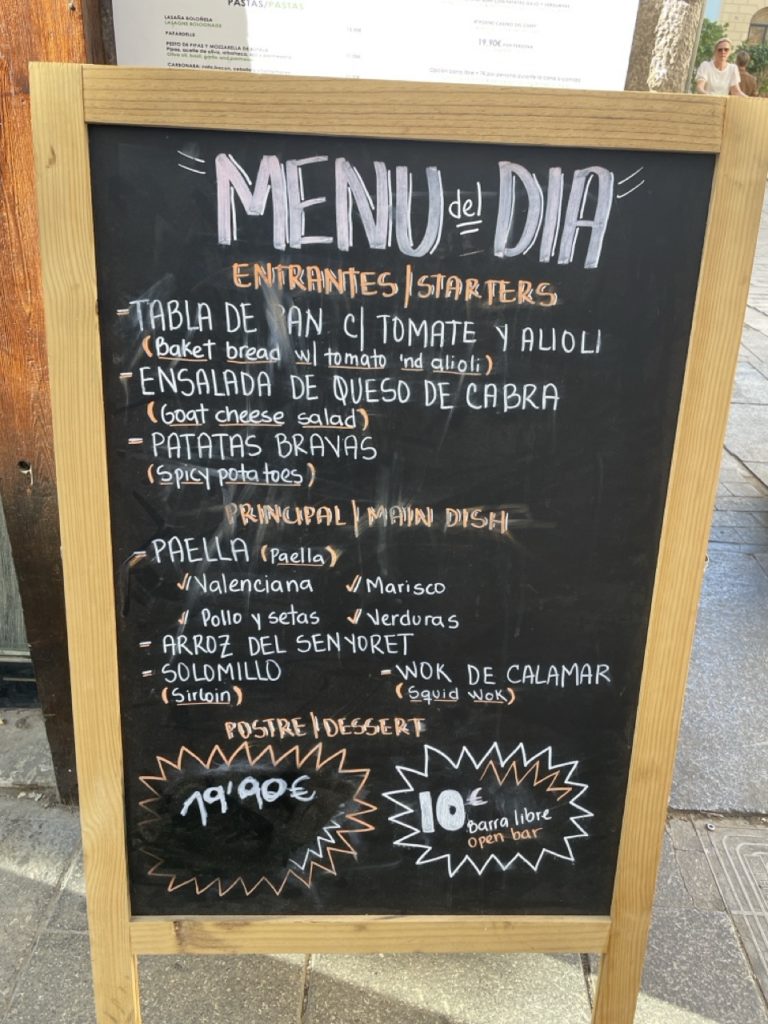
MENU DEL DIA

One of the best deals around is menú del día which is offered at midday (typically the largest meal of the day in Spain). Siesta, as I’ve mentioned once or twice, is the traditional work break from 1:30 to 4:30PM. Basically, just imagine that the restaurants work when no one else does (during siesta and after the working hours) and they rest (as in close their doors) when everyone else is at work. It’s a nice arrangement for everyone. All this to say, menú del día is a wonderful midday repast. These menus often include a starter, main course, dessert, wine, bread, and coffee and sometimes you even get a “chupito” to finish off (that’s a shot of some tasty digestivo type liquor). To get the best deal, it’s important to pay attention to small details. For example, the difference between “o” and “y” as in Postre y Café or Postre o Café. The “y” is better of course because then it means dessert AND coffee. Prices for the menú del día range from 8 Euros to around 15 Euros. Of course, some of the high-end restaurants charge more, but there are plenty of good options in the €8-15 range. So, we’re not too worried about breaking the bank!

 ¡Que Aproveche la Comida!  (Spanish version of Bon Appétit).

NOT A CHALLENGE Read More »
SHOP TIL YOU DROP

Buenas! (shortcut for Buenos Días, Buenos Tardes, Buenos Noches…a sweet and simple way to say “Hello” at any time of the day.) We had wonderful visit with Mark and Shannon during Valencia’s crazy annual festival – Las Fallas. Ed has some thoughts to share about that wild experience, but that’s another post for another day. Stay tuned. In the meantime, we’ve embraced the “shop til you drop” approach to life as an Expat.

Expat day #53

Mark & Shannon in Valencia!

El Corte Inglés is a Madrid-based department store chain (largest in Europe) with a big presence throughout Spain. The Valencia store is in two separate buildings – one is household stuff, the other clothing and personal care items. The El Corte Inglés household goods store feels like our second Valencian home. The six floors contain everything you could possibly imagine, and it can be a bit overwhelming. One day, I was looking for an iron and found the iron section in two rows – steam irons on one row, dry irons on the other. My decision to buy a plancha de vapor narrowed the options down to about 30. That’s right, 30 different steam irons to choose from. On our way out with my new iron, we passed the row displaying immersion blenders – 28 different brands.

It’s been a busy time in Valencia! We were so thrilled to have Mark and Shannon visit us for a week. We enjoyed sharing our new city with them. The week they were here was the final week of Valencia’s annual festival – Las Falles. Wow! What an experience that was! It’s difficult to describe the scene and the experience – think Mardi Gras on massive steroids with lots of firecrackers. Stay tuned for Ed’s insights about this amazing event.

Learning to Shop

We’ve made good progress making a home here. The new mattress is comfy, and the sheets fit! We make and receive calls using our Spanish phone numbers. We have a debit card to draw Euros from our Spanish bank account. We moved out of the temporary rental and are settling into our new place. Of course, this has required lots of shopping. Our three main shopping options have included El Corte Inglés, various el Chinos, and Amazon (still trying to wean myself). Each provide plenty of opportunity for learning!

Another item on my shopping list was a throw – you know, those small, decorative blankets we throw over the sofa. I thought I’d have to consult Google Translate to be sure the clerk didn’t think I was planning to toss a sofa somewhere. Instead, I looked around and saw the word “manta” on signs above blankets for the bed and I came up with “¿Tienes una manta pequeña?” It worked! (I’m so proud of myself for this small accomplishment, but also for finding that upside down question mark using my keyboard just now.) El Corte Inglés can be mentally exhausting. Fortunately, there’s a taxi stand just outside to make getting the goods home a breeze and a glass of wine to enjoy at one of numerous cafes near our new place.

Lastly, the Amazon shopping experience is a familiar one but does contribute to my goal of becoming more proficient at communicating in Spanish. Amazon’s Spain website allows me to shop and purchase items in English, but all the follow-up emails regarding purchases and delivery status are in Spanish. Then, there’s the process of navigating the Amazon app in Spanish to open the delivery locker in the nearby small supermercado.  

CHINA STORES

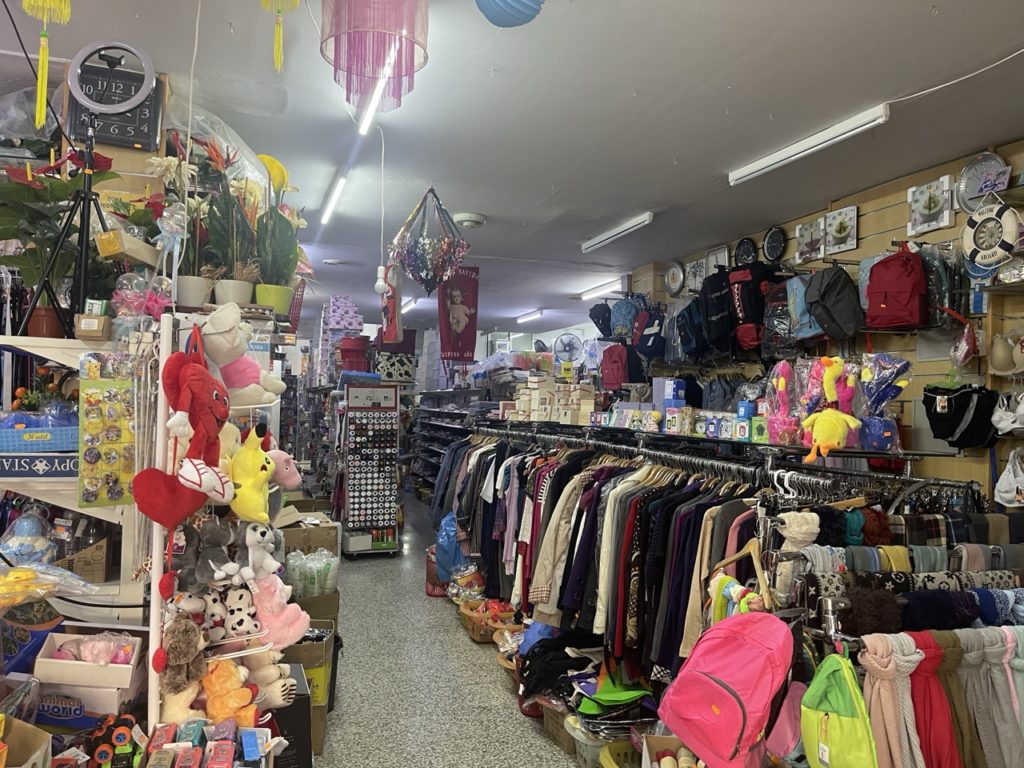
Shopping option #2 – el Chino. When we were here last September, there was a store we walked past every day that seemed like a version of a Dollar Store in the U.S. Lots of cheap stuff, all made in China. Some of our expat friends mentioned shopping at the “China Stores” and I wasn’t sure how I felt about using this term – if felt pejorative and disrespectful. Now, I’ve shopped in a few of these stores and learned a bit about them. Usually they’re called something like “Chino Bazaar” or “Asia Bazaar” but locals refer to them as “el Chino.”  They’re everywhere – so far, I’ve found four el Chinos within a 5-minute walk from our apartment. They vary in size, and all are absolutely stuffed with every conceivable item you can think of.

Some interesting background…until relatively recently, there were no convenience stores in Spain. Retail had always been a highly regimented and regulated affair: you bought your newspapers from the newspaper stand; your cigarettes (and bus passes?) from the tobacco store; medicine from the pharmacy; bread and milk at the grocer’s – or more recently, the supermercado (supermarket); etc. There are thousands of these little shops all over Valencia, and they have similar opening and closing hours. Typically, they are open from 10am to 1:30pm and from 5.30pm to 8.30pm (lunch is at 2 and is followed by siesta). While shops in the tourist areas are an exception, it’s not uncommon to find even supermarkets closed for 2-3 hours every afternoon. Don’t worry, we’re learning to enjoy siesta time!

Anyway, back to the el Chinos. It would have been almost impossible to find a Chinese person in Spain prior to the 1980s. (General Franco’s dictatorship wasn’t too keen on communist China.) Since the early 2000’s, identifying a need, Chinese immigrants have dedicated themselves to the opening of these stores. They are all owned and staffed by Chinese families who sometimes speak a little Spanish and usually no English. These stores have been a game changer for Spain. There are often rumblings in the press about how success of these stores’ rests on sweatshop labor practices. But, their products, and especially the very low prices, are very popular. So, the el Chino is now a feature of Spanish life.

The el Chino store has three main characteristics: it stocks a little bit of everything; it is not luxuriously outfitted (let’s just say they don’t invest much in appearances); and it hardly ever closes (definitely not for siesta). Inside the el Chino things are often somewhat ramshackle. Also, being open all the time, reinforces the stereotype that exists among the Spanish of the hardworking Chinese. In fact, in Spain, the phrase for killing yourself working is “trabajando como un chino” (working liking a Chinese).

PLAN B

This week brings more adventure. In addition to our regular visit to El Corte Inglés, we have an appointment at the Police Department to get fingerprinted for our residence card, cocktail hour with a big group of expat friends, and we leave for a 12-day get-away to Italy on Friday!

Adiós, hasta la próxima.

SHOP TIL YOU DROP Read More »
IT’S THE LITTLE THINGS

It’s the little things that can get you sometimes, right? Life as an expat is full of those little things…from banks to beds!

EXPAT DAY #34

First, to wrap up the bank account saga, I’d like to announce that after three trips to the bank, we have succeeded! The most curious thing about this experience is that we finally opened an account WITHOUT giving the bank any money. That means, of course, that at our initial bank balance was zero. However, because we were convinced by the person assisting us that we needed to buy a renter’s insurance policy, the first annual premium was automatically deducted from our account within minutes. This meant we were overdrawn on our first day of having a Spanish bank account. Kind of upsetting, but we were told not to worry; it won’t matter for a few days and there won’t be any fees. Crazy, right?

SPEAKING SPANISH

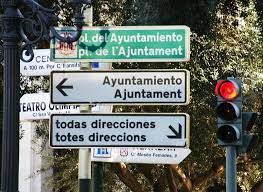
Did I mention there are two languages spoken in Valencia? Spanish (Castilian) of course, and Valencian which is a dialect of Catalan which is spoken in the autonomous community of Catalan, including Barcelona. (Valencia is in the autonomous community of Valencia.) All that to say that the word “plaza” in Spanish is “plaça” in Valencian. Likewise, street is “calle” (Castilian) or “carrer” (Valencian) – just a little confusing at times!

We’ve been working at improving our Spanish but hadn’t quite processed the need to learn Valencian as well. The local government makes sure it emphasizes the use of Valencian. For example, all signs and announcements are in Valencian, with Spanish translations underneath in smaller type. New street signs have the Valencian name for street (carrer), but older street signs (with the Spanish names) are only replaced when necessary. So, it’s common to see streets and squares referred to with their Castilian name, their Valencian name, or both. A bit of a challenge at times, but we’re getting the hang of it.

BEDS ARE COMPLICATED

We’re in the process of furnishing and setting up our new apartment. Our address is: Plaza Músico López-Chávarri, 5, piso 3, puerta 6, Valencia, 46003. That’s a lot to remember and spit out when someone asks about our address.

The priorities for getting our new place set up are: 1) setting up a place for Ed to work and 2) having a place to sleep. I’m working on the sleeping situation. There is a bed in the apartment, so you’d think this would be easy – buy bedding, wash it, assemble, lie down. Not so fast. I measured the bed to be sure I knew what size sheets to buy. My little tape measure told me the mattress is 55” x 78” which is not quite a U.S. queen (60×80). OK, maybe we can work with that if Ed remains on his 1/3 of the bed per our long-standing arrangement. Next, my handy-dandy calculator on my phone converted this mattress size to 139 x 198 centimeters. I Googled “bed sizes in Spain” and here’s that I got: “In Spain, standardized lengths are 180, 190 and 200 cm. Standardized widths are 80, 90, 105, 120, 135, 150 or 180 cm.” Seriously? Do we need so many options? As you can see, a width of 139 and length of 198 isn’t an option. UGH! It turns out the mattress is a not-so-comfortable IKEA product which resulted in the purchase of a new mattress – 150 x 200 cm (59 x 78 inches). This better – a more comfortable mattress and 4 more inches. I’ll even split those extra inches evenly with Ed!).

IT’S THE LITTLE THINGS Read More »
Scroll to Top