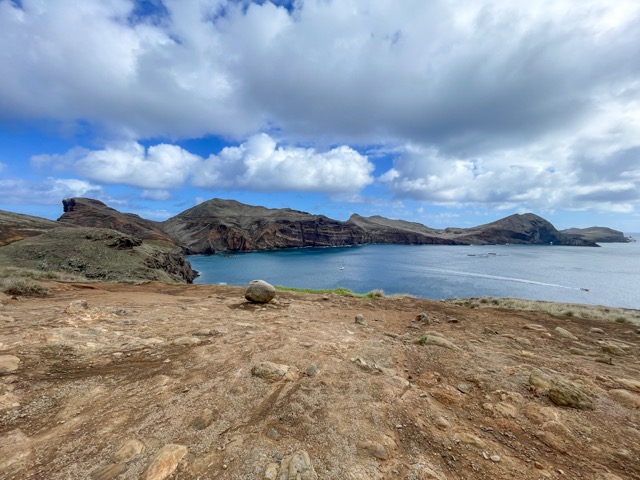
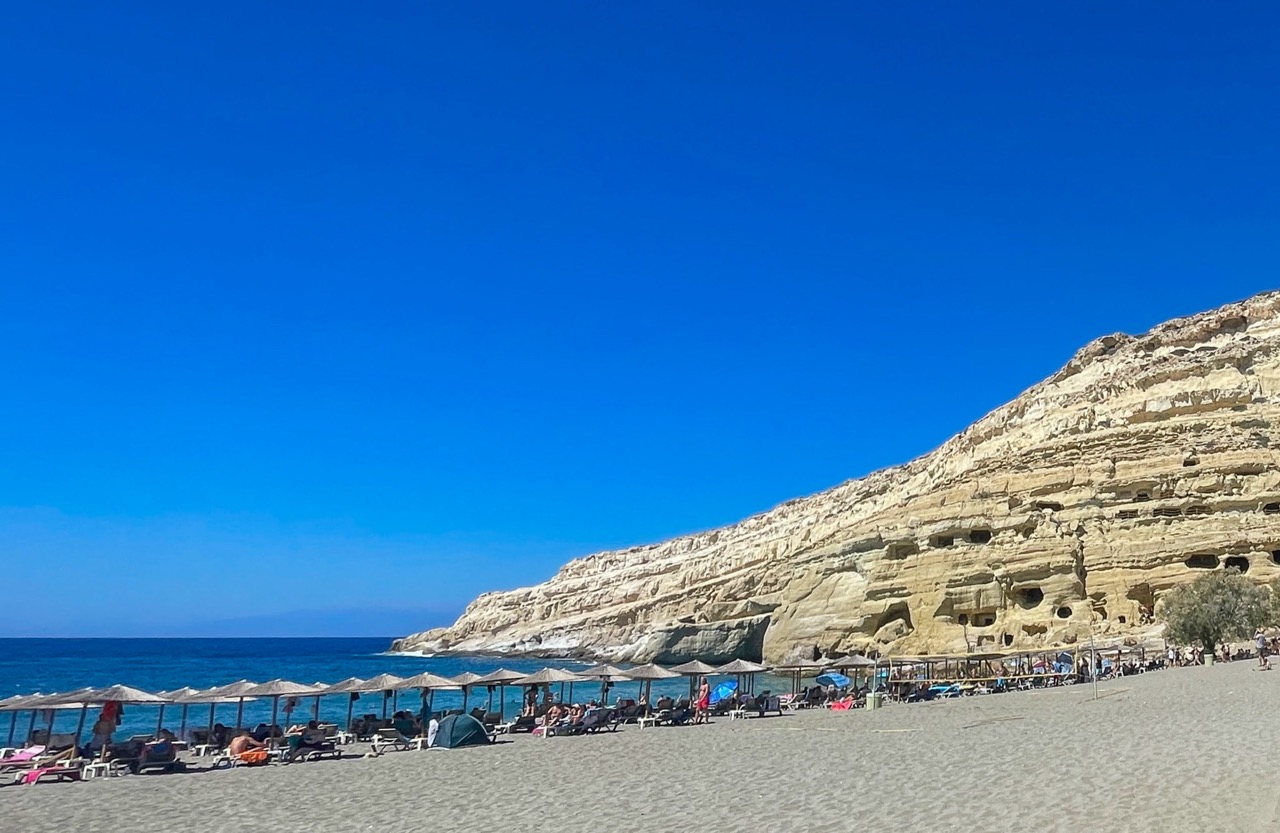
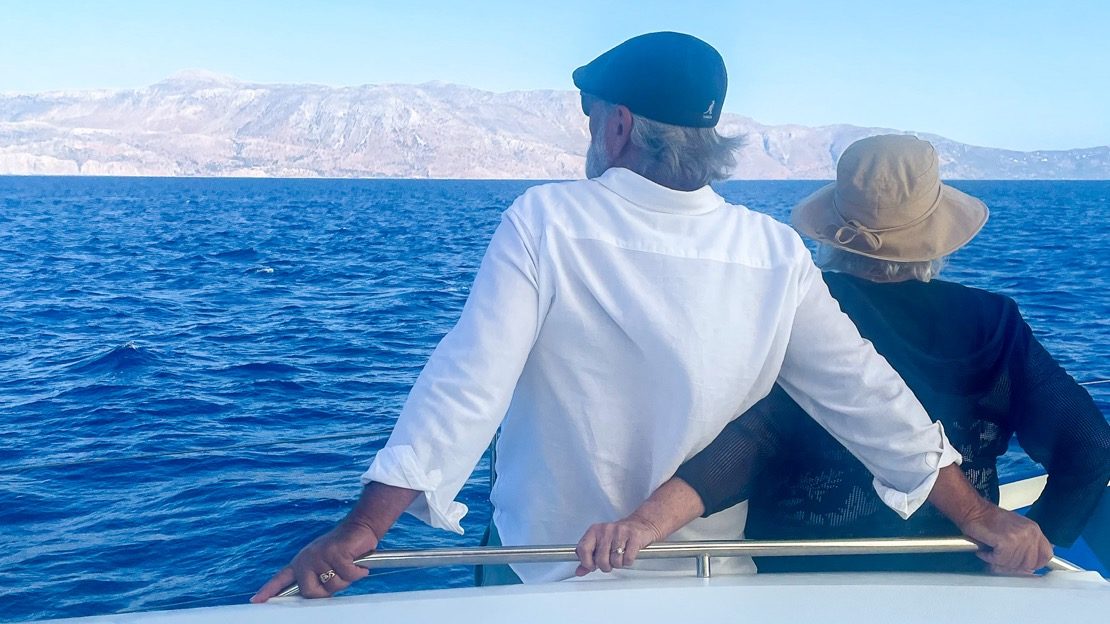
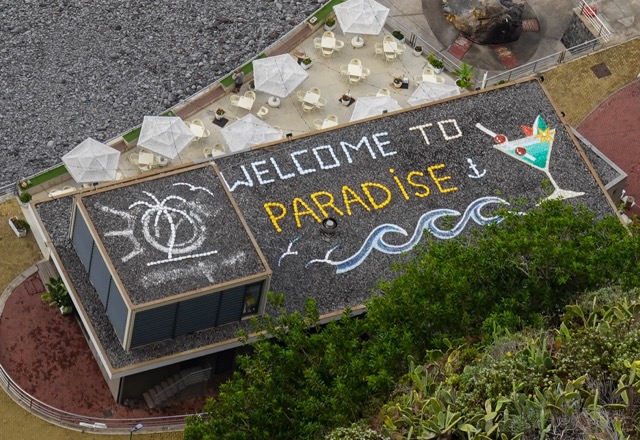
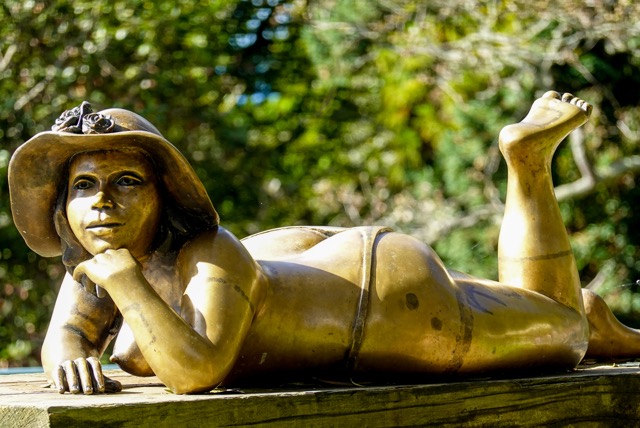
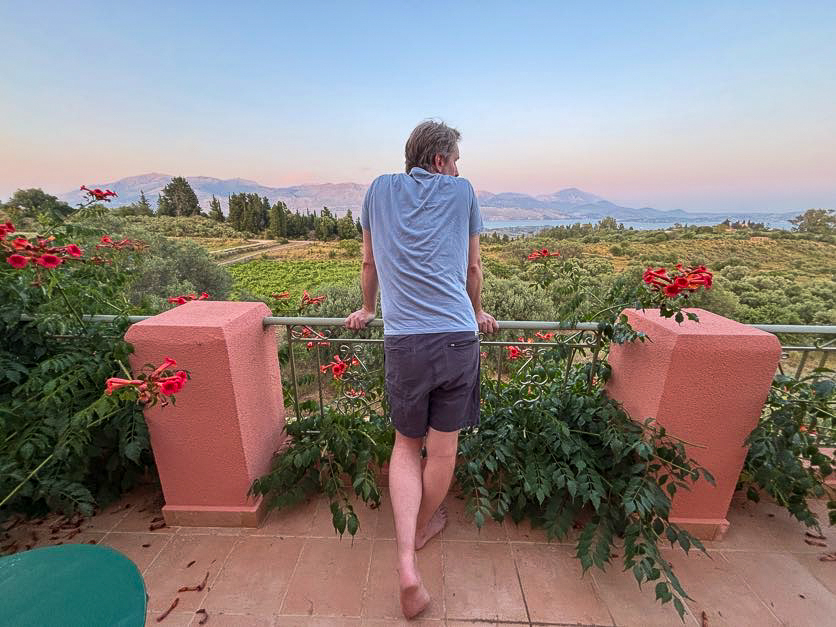
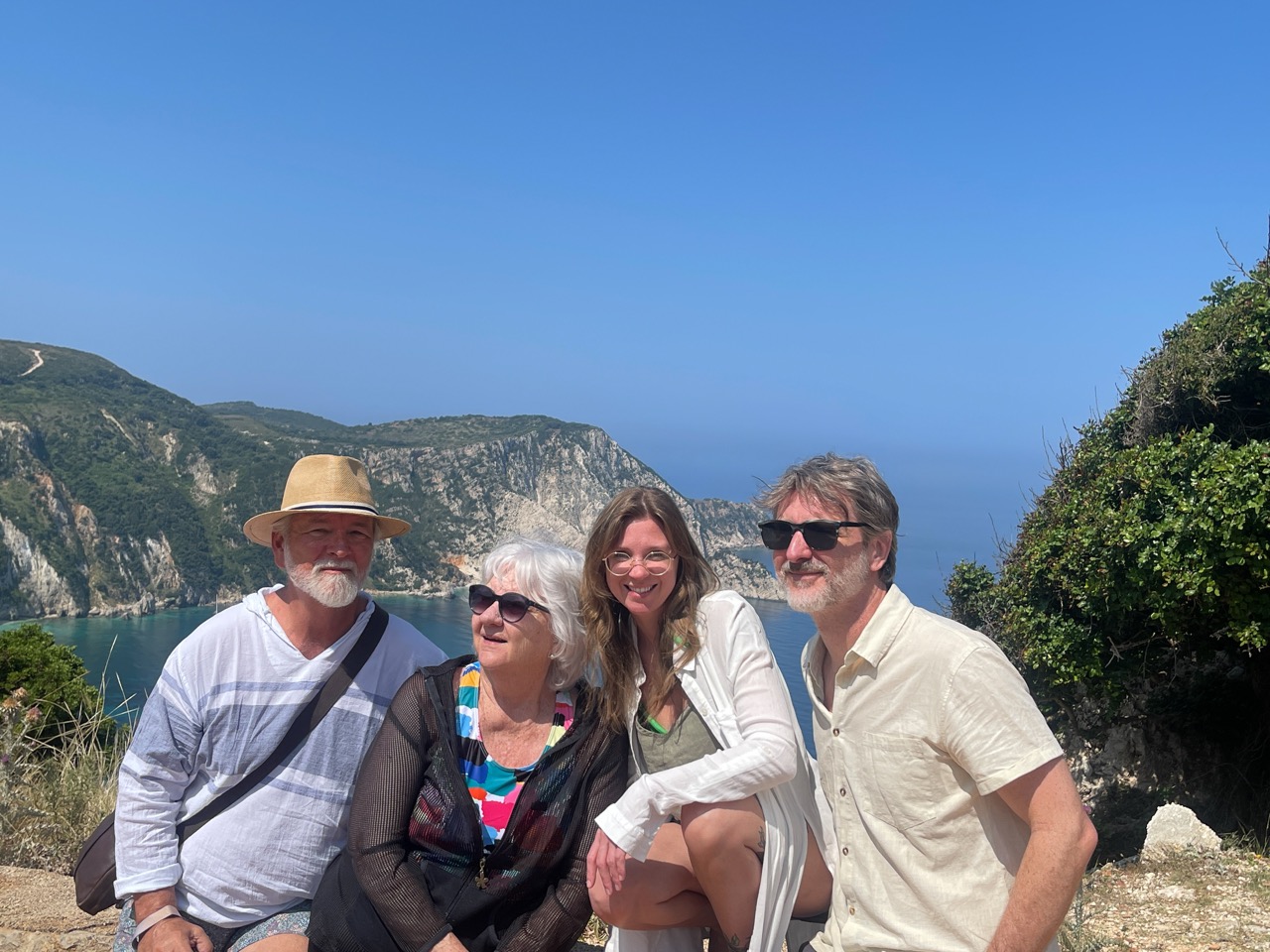
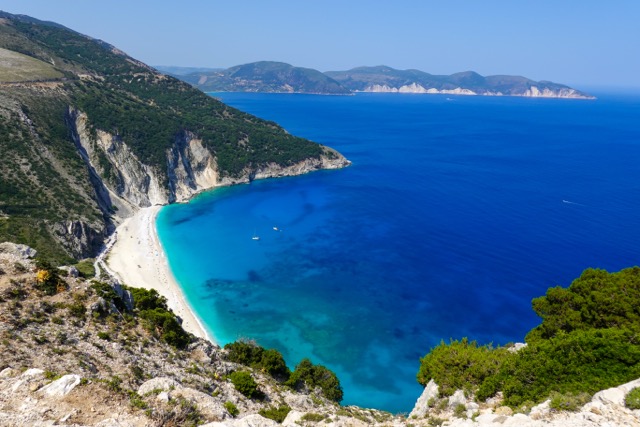
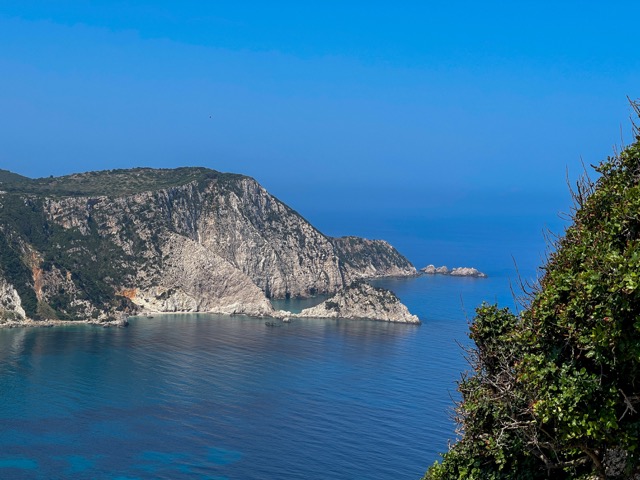
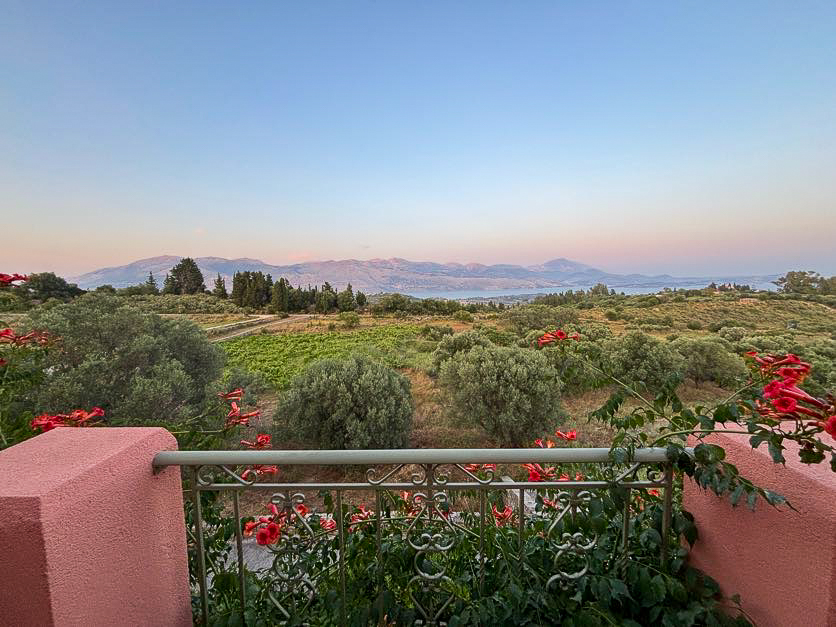
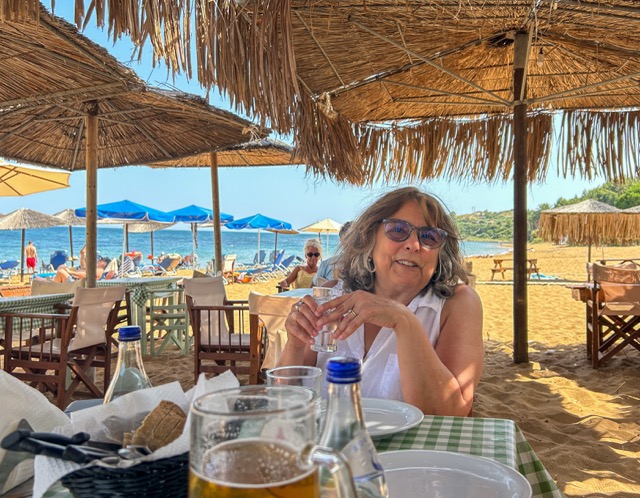
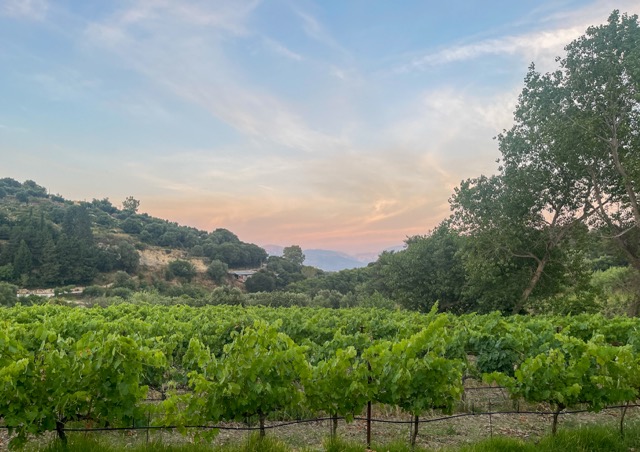
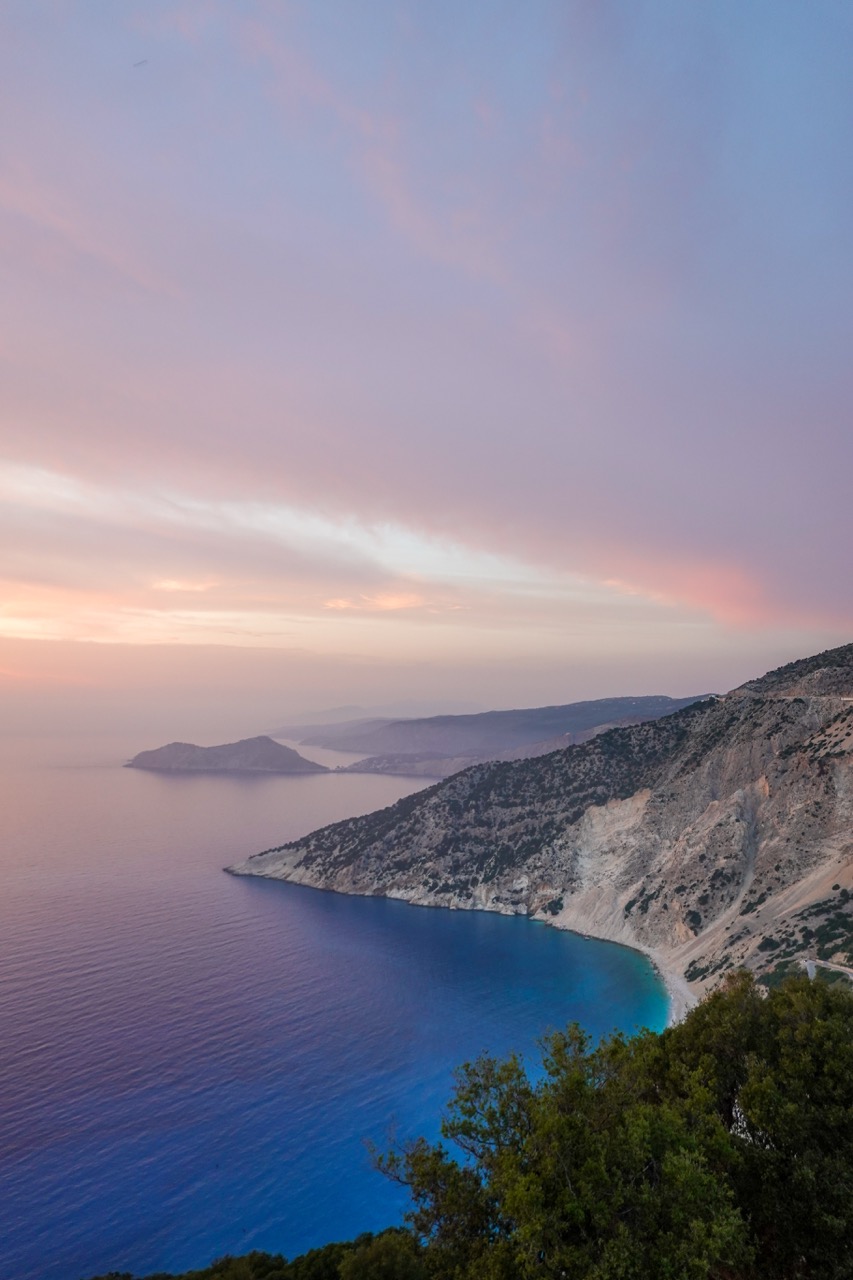
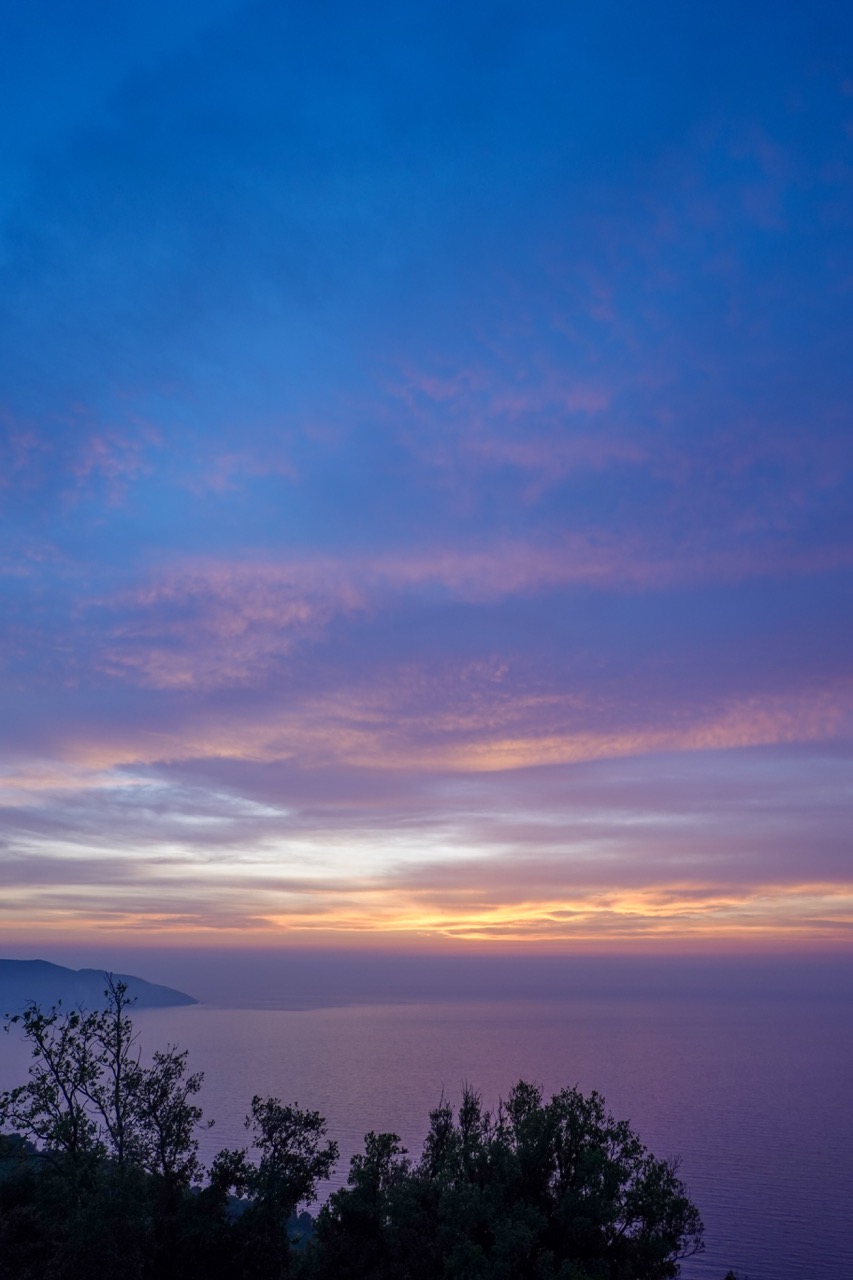
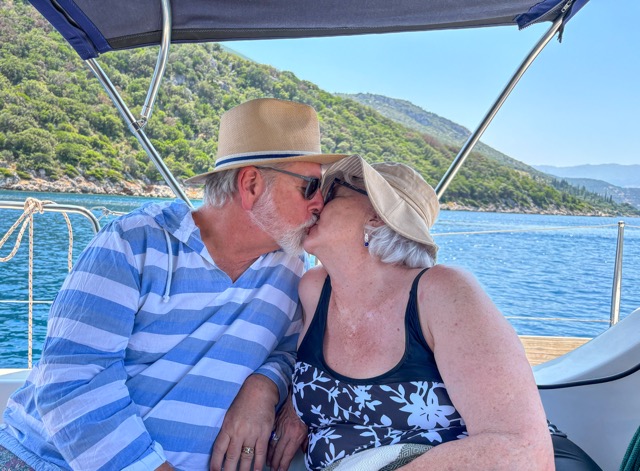
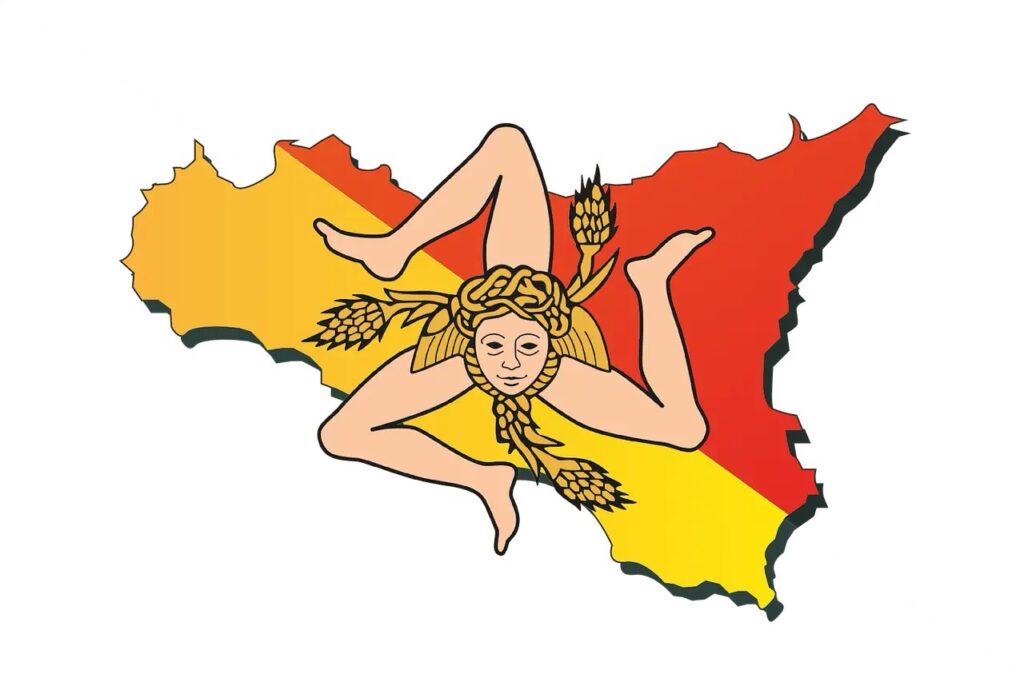
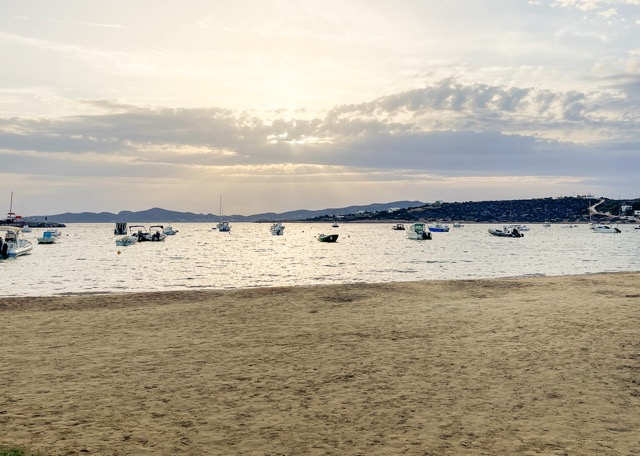
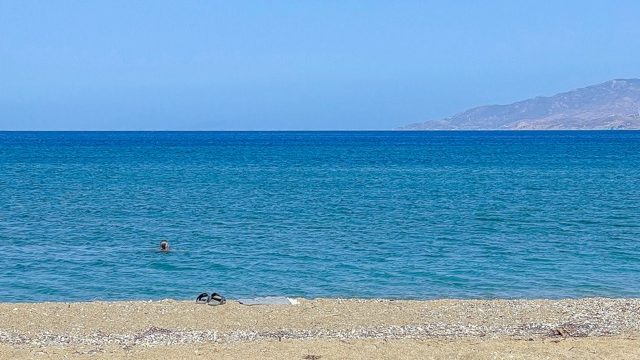
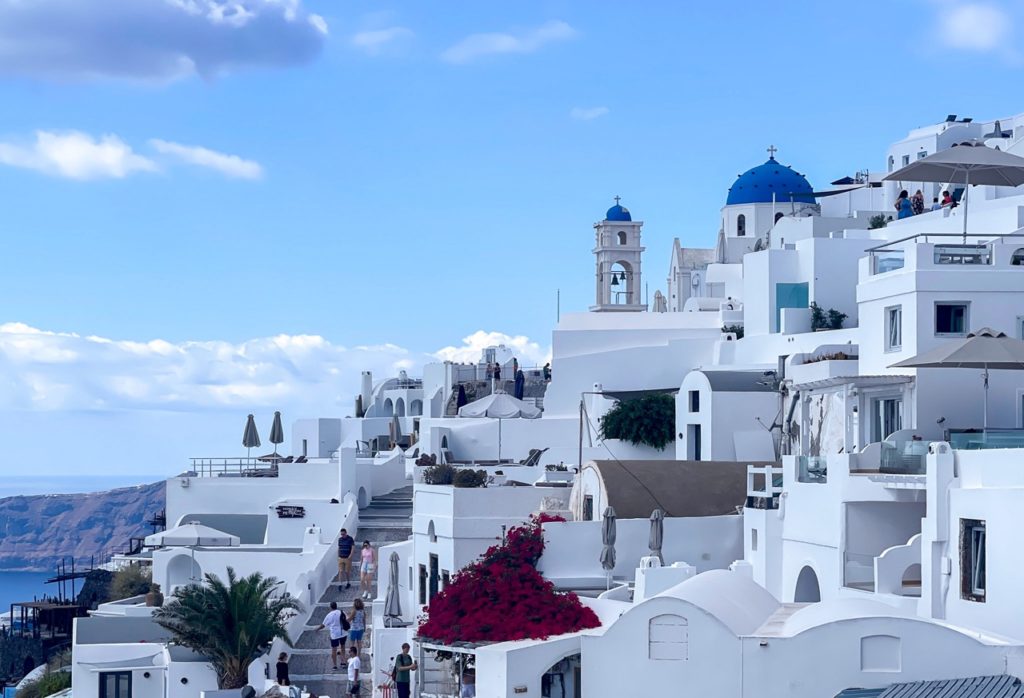
My last post about our trek to Madeira got me thinking. About islands. About why they call to us the way they do. Islands somehow manage to feel adventurous and peaceful at the same time. They are remote yet intimate. They invite both exploration and stillness. A speck on the map becomes, for a while, an entire world.
“When we contemplate the whole globe as one great dewdrop, striped and dotted with continents and islands, flying through space with other stars all singing and shining together as one, the whole universe appears as an infinite storm of beauty.“
John Muir
At Home in California
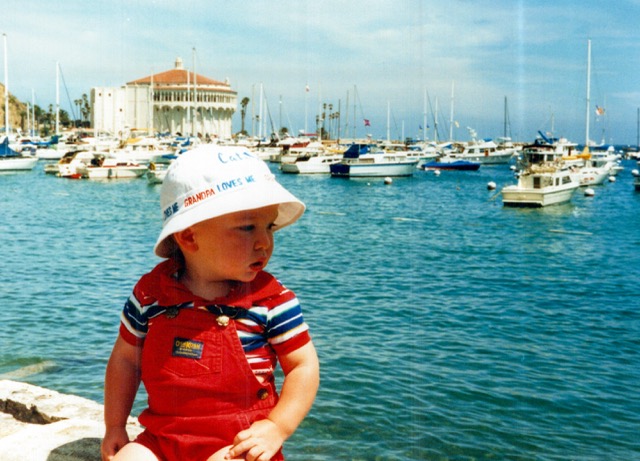
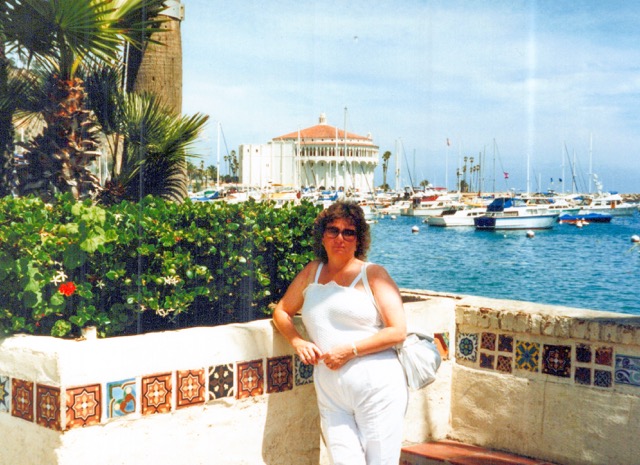
Santa Catalina was the first island we visited together and I’m thinking it was sometime in the 1970s. And I know we’ve been to Coronado Island a time or two. There doesn’t seem to be any photographic evidence of these island adventures and while the details have softened with time, the feelings have not. Sunlight on water, the sense of being just far enough from the mainland to feel removed from the ordinary—those impressions remain. Years later, we returned to Catalina with our children. I remember wonder, and the shared experience of discovering something beautiful together.
Westward Bound
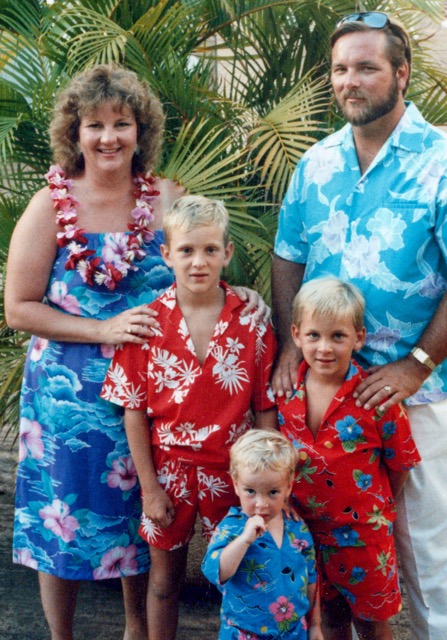
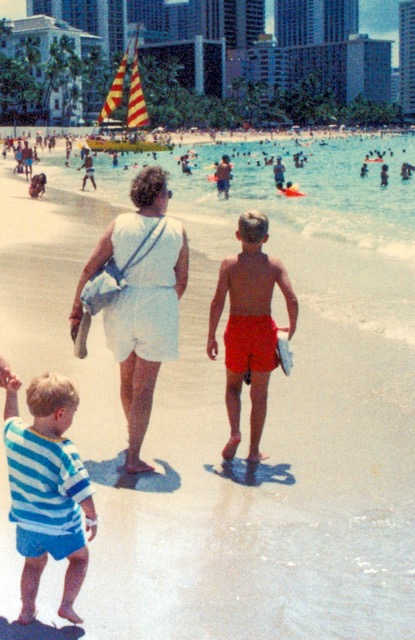
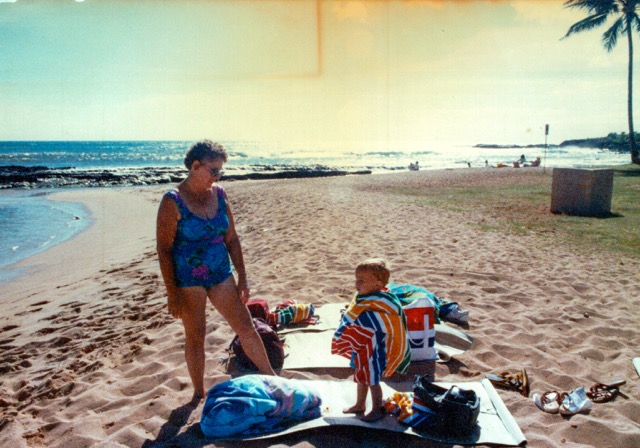
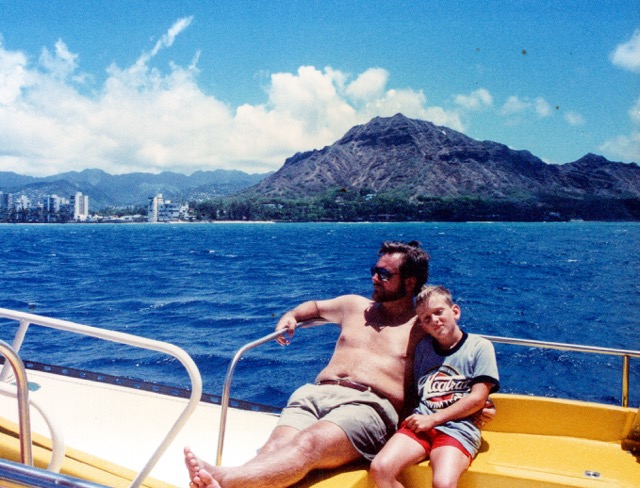
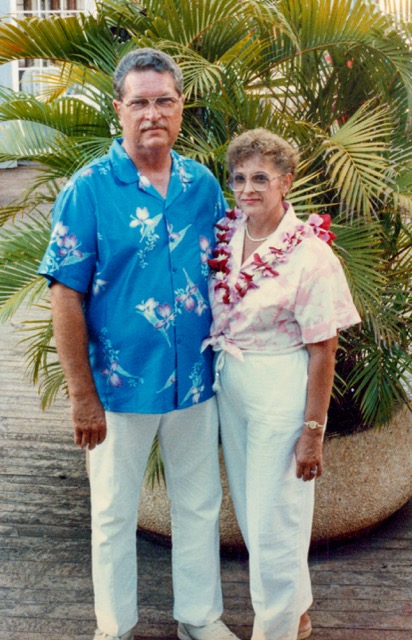
Hawaii followed, and with it a dreamscape of color and motion—palm trees swaying in warm breezes, surf rolling in endless rhythms, bright hibiscus against deep blue skies. There is an ease to island life there that seeps into your bones. Days feel lighter. Smiles come quicker. It is impossible not to feel changed by that kind of natural generosity.
North, East and South
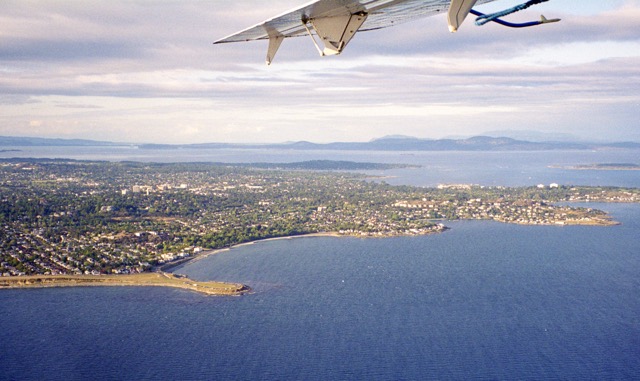
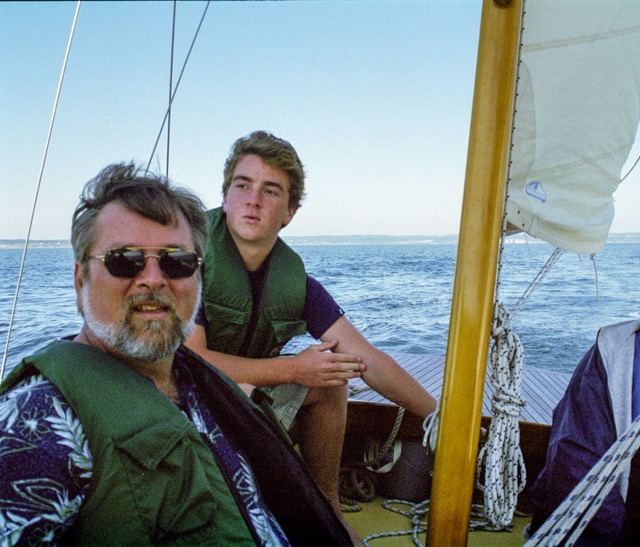
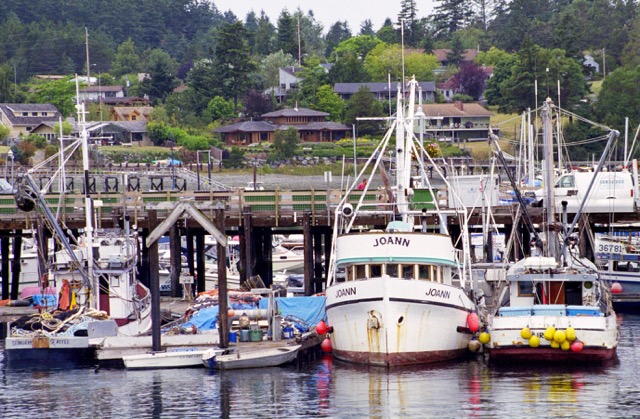
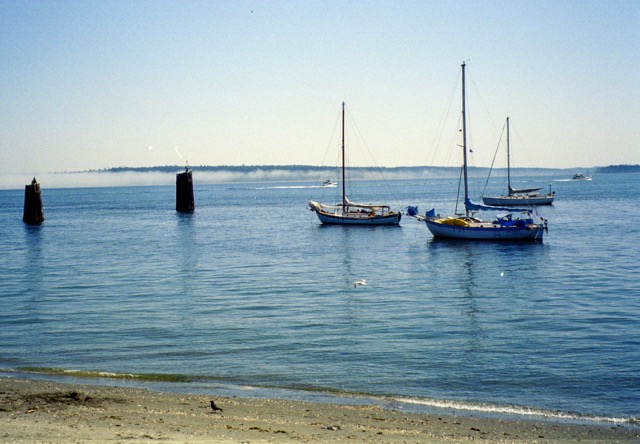
The islands of Puget Sound offered a different beauty—quieter, softer, wrapped in mist and evergreen. The water, the skies, and the evergreen-covered hills rising out of the sea soothe the soul. There’s a softness to life there that still lingers in my mind.
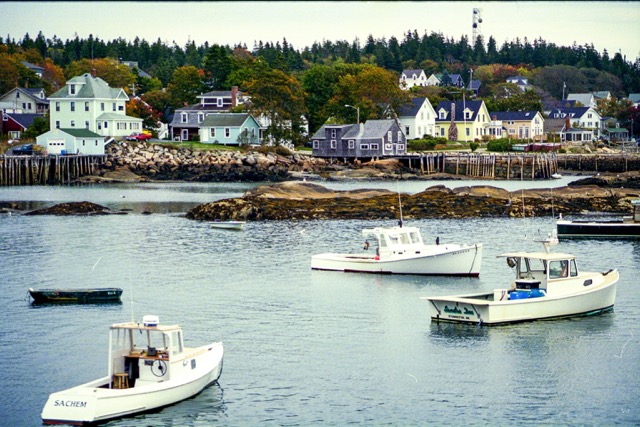
On Deer Isle, Maine, autumn had arrived in full glory. Lobster boats in chilly harbors, turning leaves along narrow roads, crisp air filled with salt and wood smoke—it all felt like stepping into a painting. It was on this trip as naive Californians we discovered that most businesses were closed for the season already in early September. Who knew? And this is where we tasted our first lobster roll.
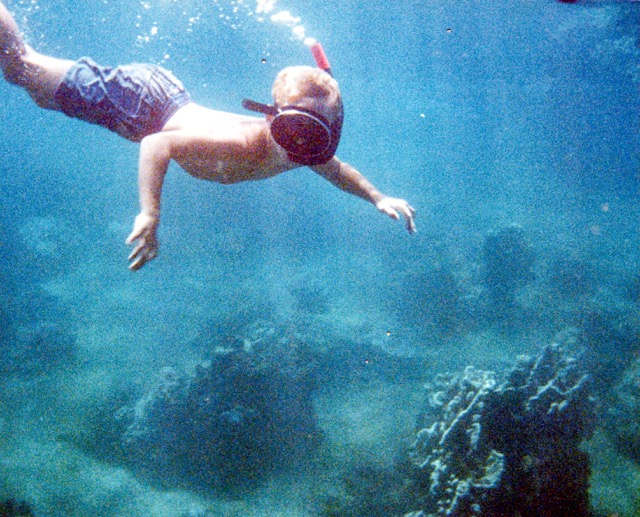
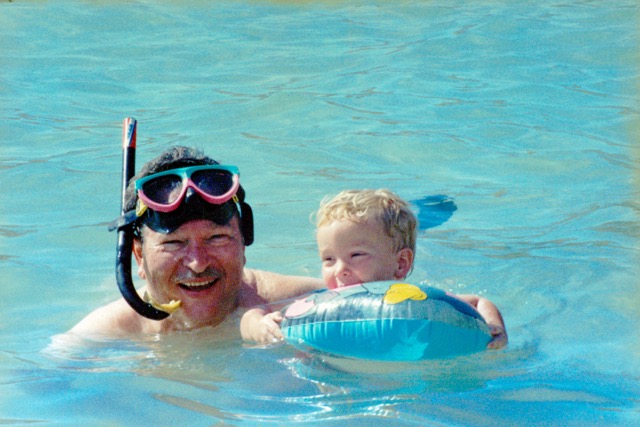
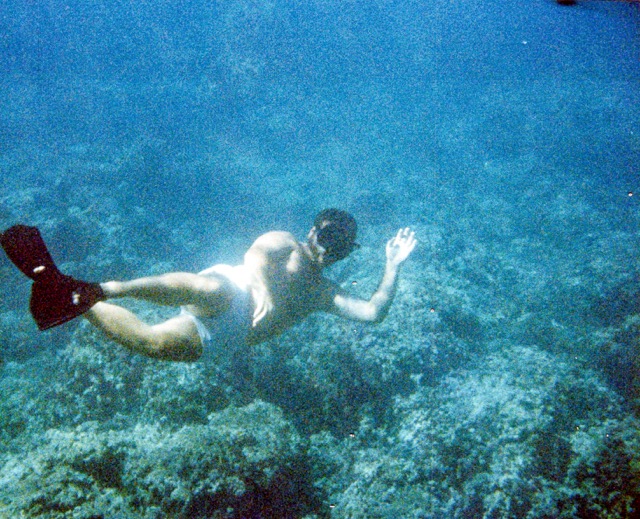
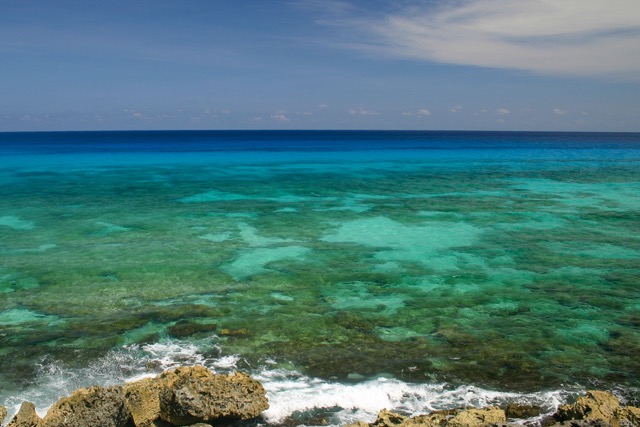
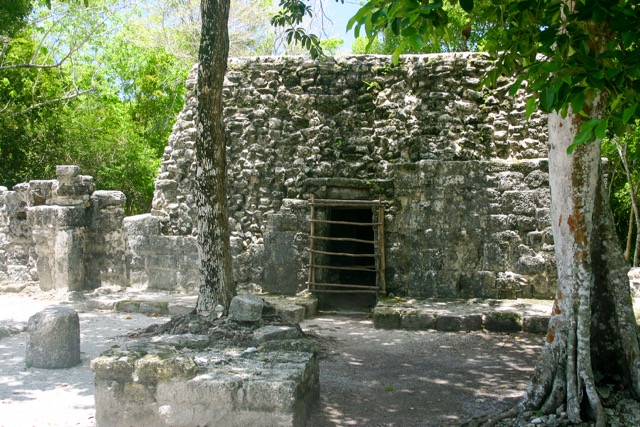
Cozumel, on the other hand, dazzled with warmth and motion—turquoise water, coral reefs alive with color, sunlight dancing on sand, exotic jungle, and ancient ruins. It was a place of laughter and easy choices: swim or snorkel, shade or sun. The gift there was joy, pure and uncomplicated.
Land of the Gaels
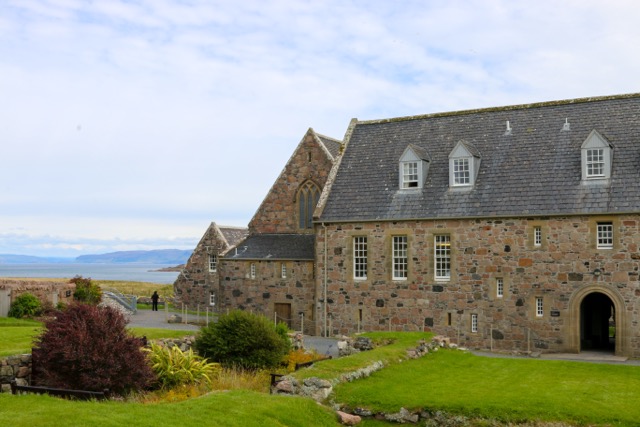
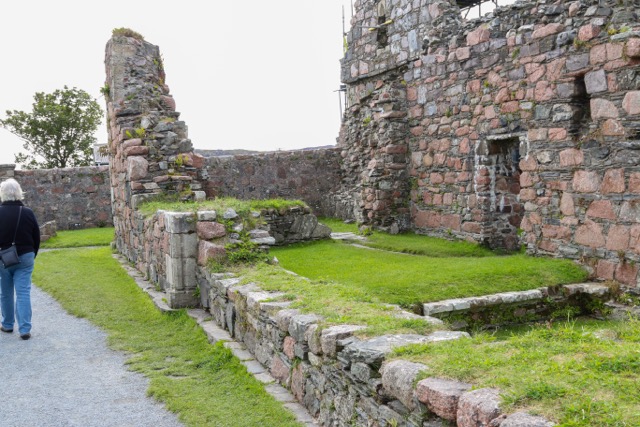
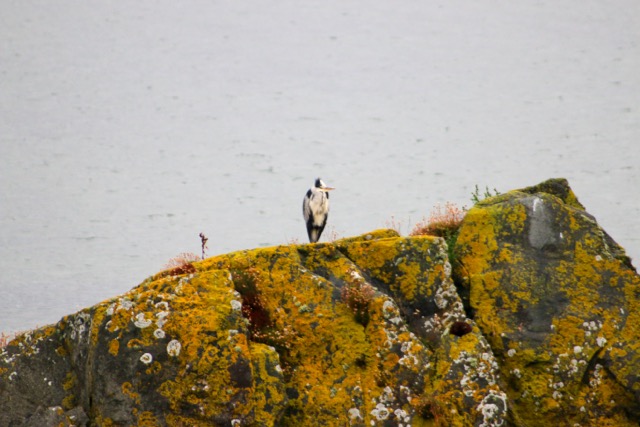
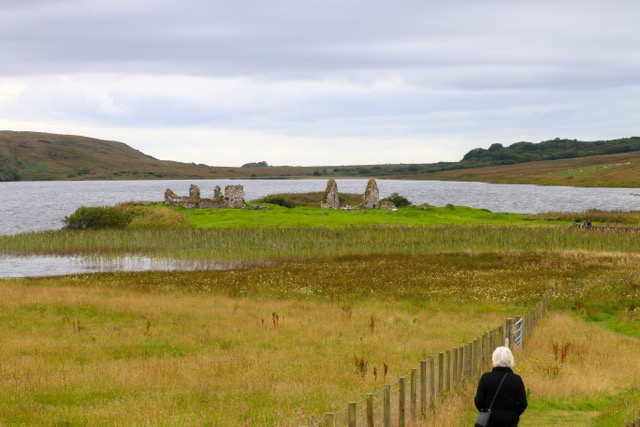
Iona appeared like a whisper—gentle light, ancient stone, and rolling green hills. Off the western coast of Scotland, it’s just a short ferry ride from Oban to a place steeped in history as a center of early Christianity, with its monastery established in 563 AD. Iona has a special kind of quiet beauty. It is the kind of place that stays with you long after you leave.
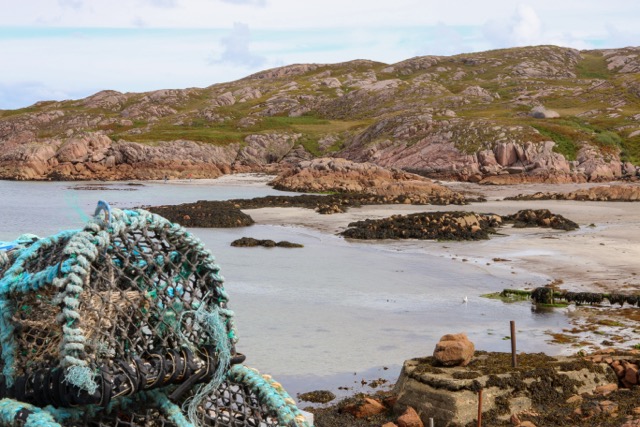
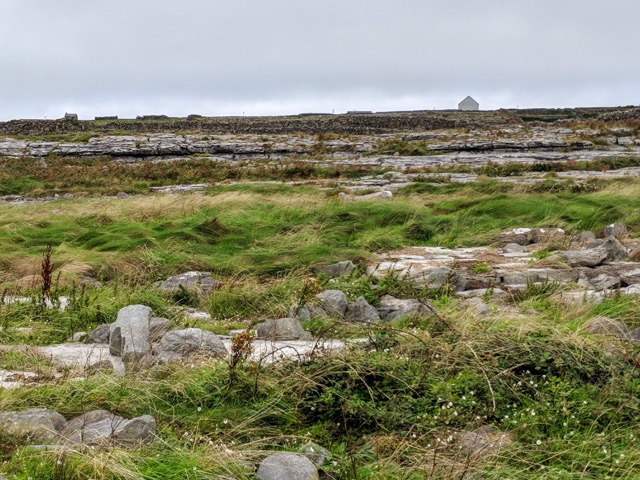
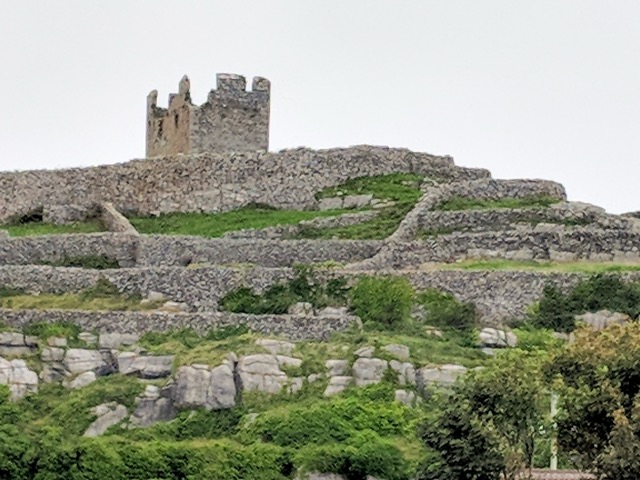
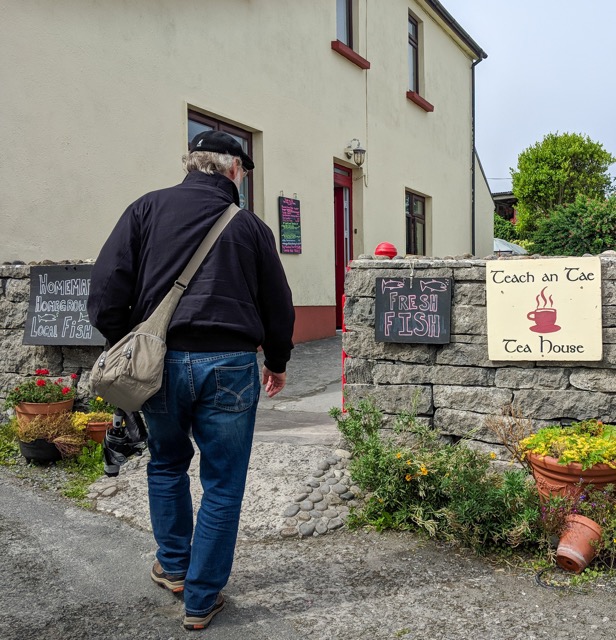
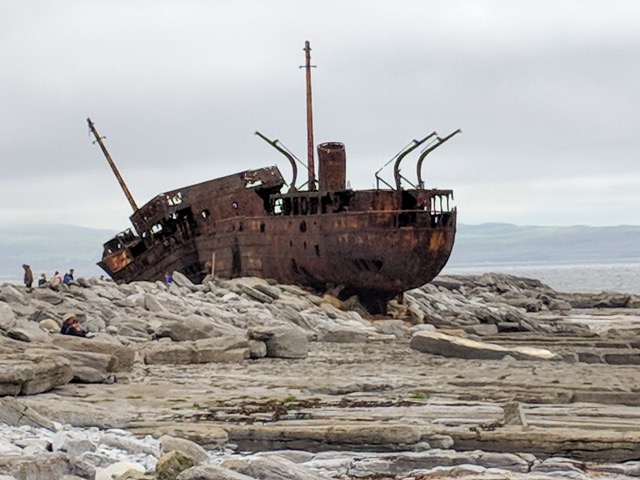
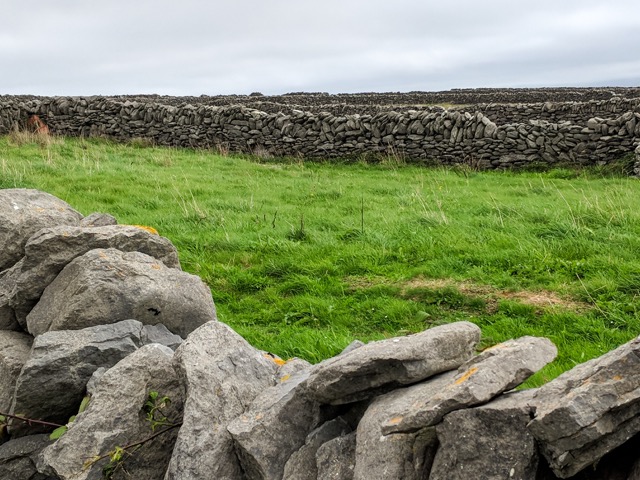
Inisheer (Inis Oír), in Ireland’s Aran Islands, showed me the meaning of rugged living — stone walls, wind-whipped fields, and a simple, harsh beauty. Every cottage, path, and pasture felt shaped by generations of weather and will. When I ordered our lunch at a tiny café, I was greeted by a young woman with an unmistakable Minnesota accent – she had fallen in love with an Irishman from Inisheer and never looked back.
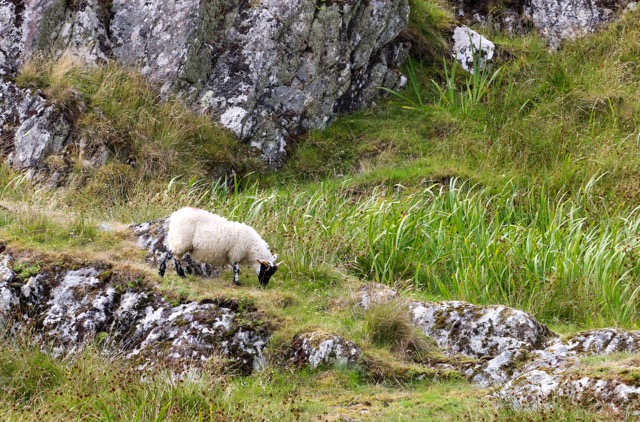
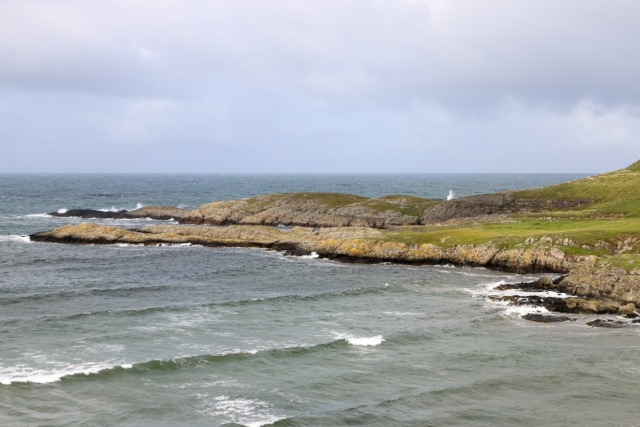
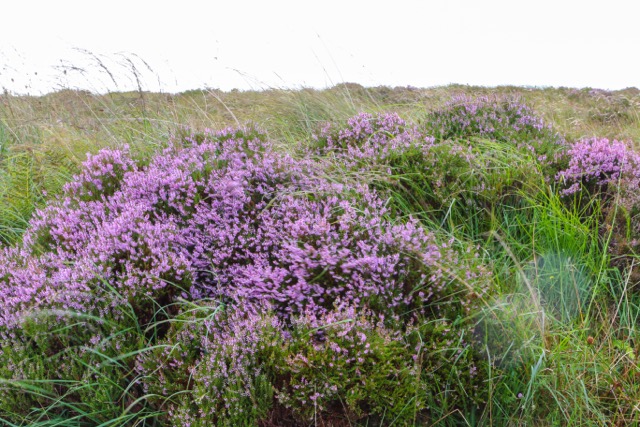
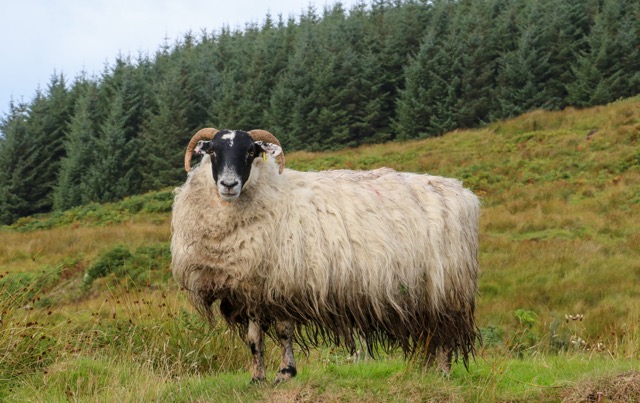
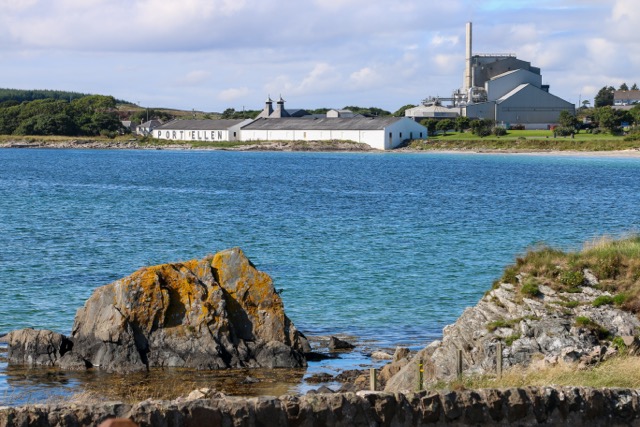
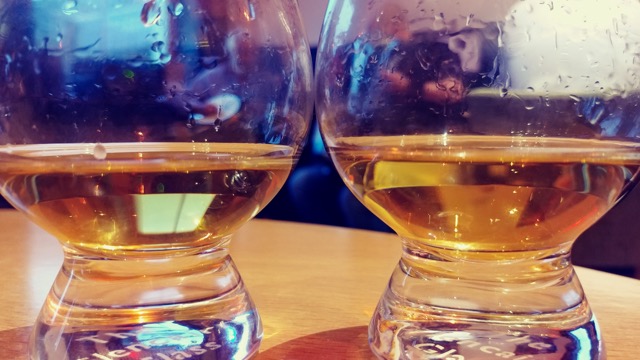
On Islay, the southernmost island of Scotland’s Hebrides, the rolling hills cut through with dark peat bogs, low stone fences, and a wild, salty wind are unforgettable. Also unforgettable is the smoky single malt whiskey that still transports me back with every sip. Leaving Islay became one of our all-time adventures as we boarded a twelve-person inflatable boat to cross the North Sea just ahead of an approaching storm.
Islas de Espaňa
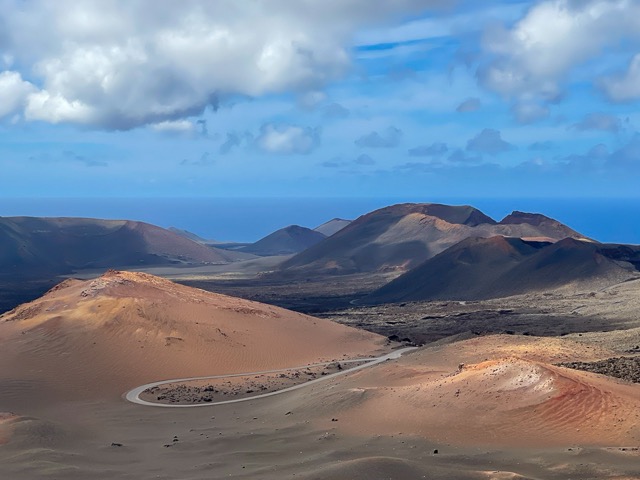
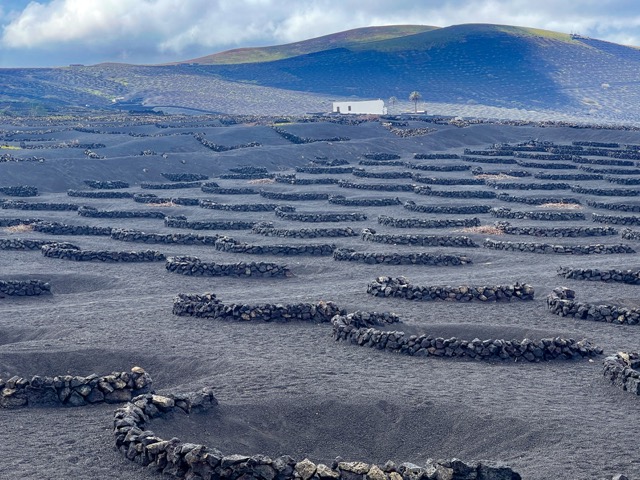
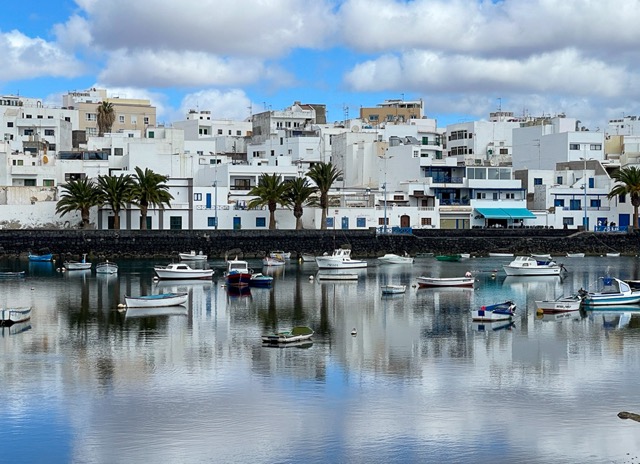
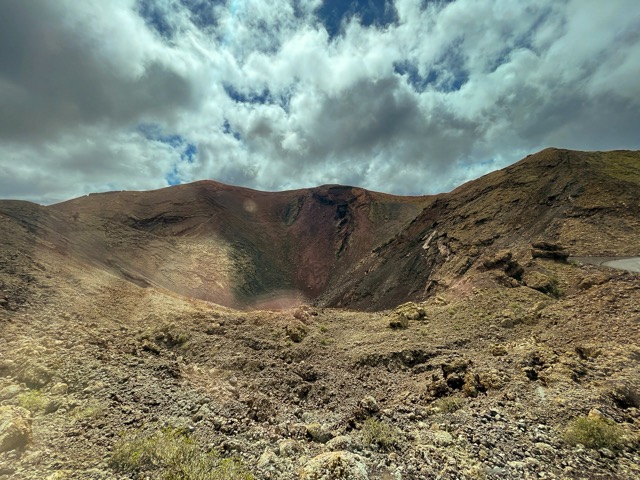
Moving to Spain opened a whole new chapter of island wanderings. It took us almost no time to realize that the Canary Islands are just four hours from Valencia — a simple hop and suddenly you’re somewhere else entirely. Our first stop, Lanzarote, felt like arriving on the moon: black volcanic rock stretching for miles, vineyards cradled in ash, mountains shaped by fire, and surreal landscapes.
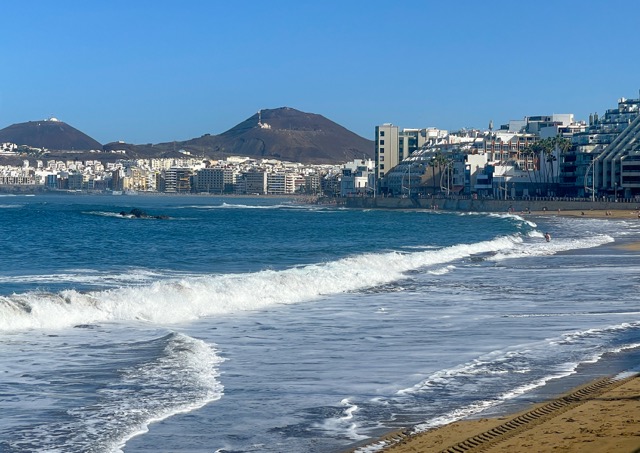
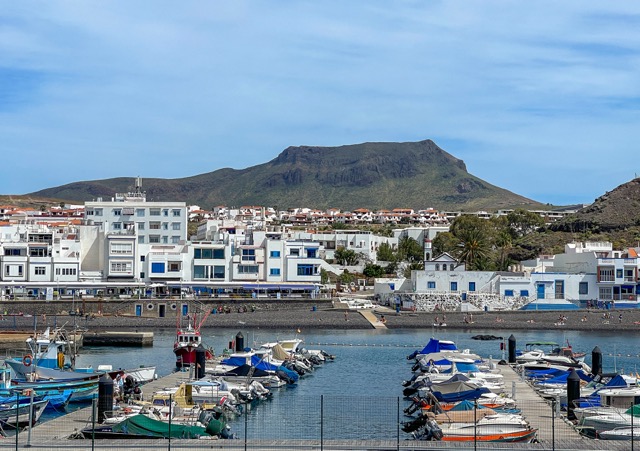
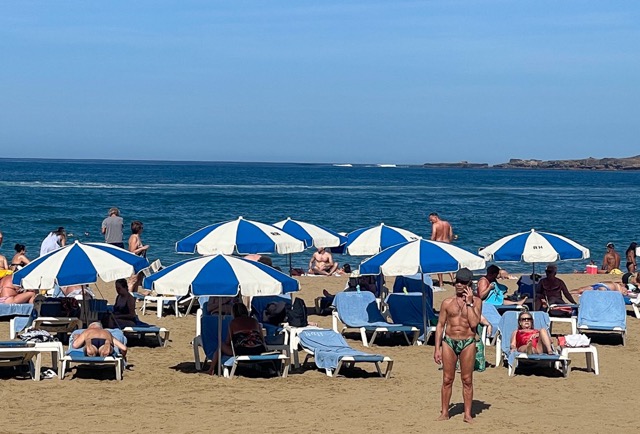
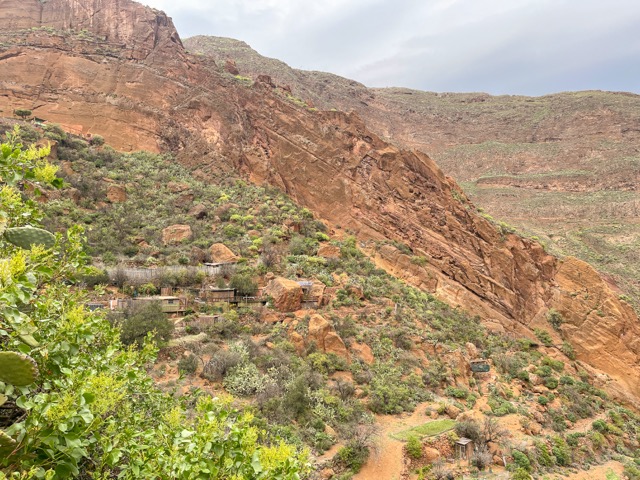
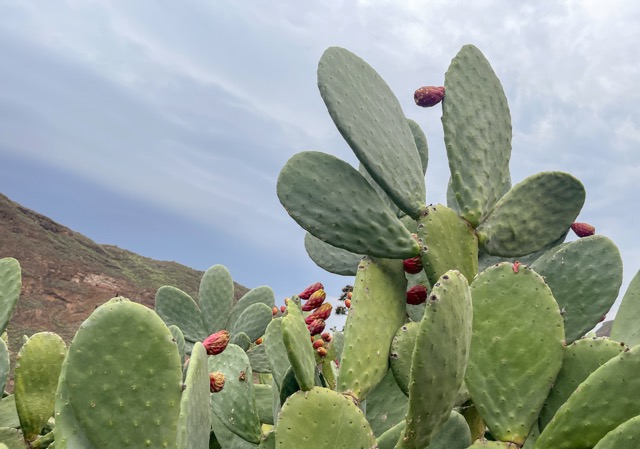
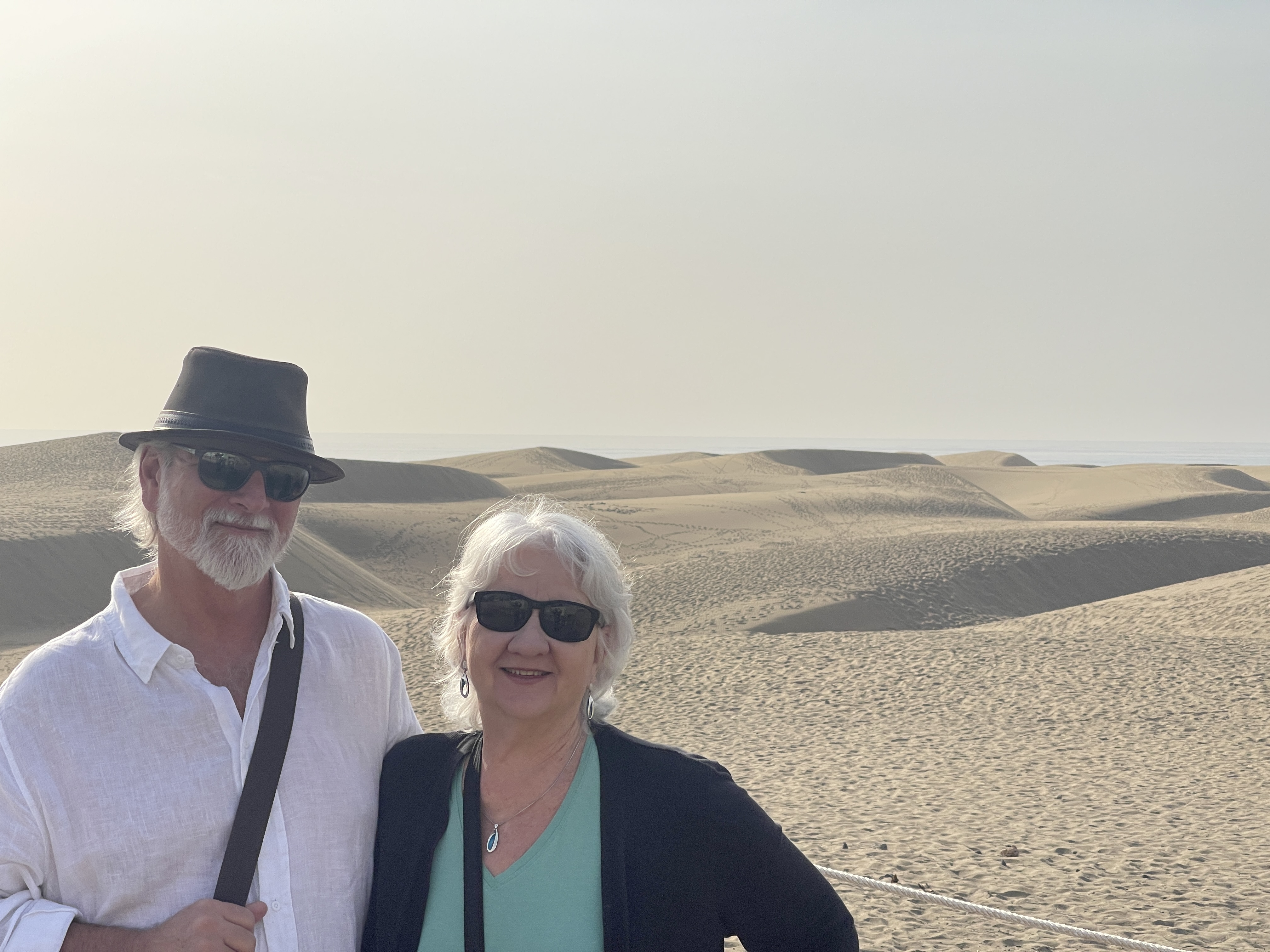
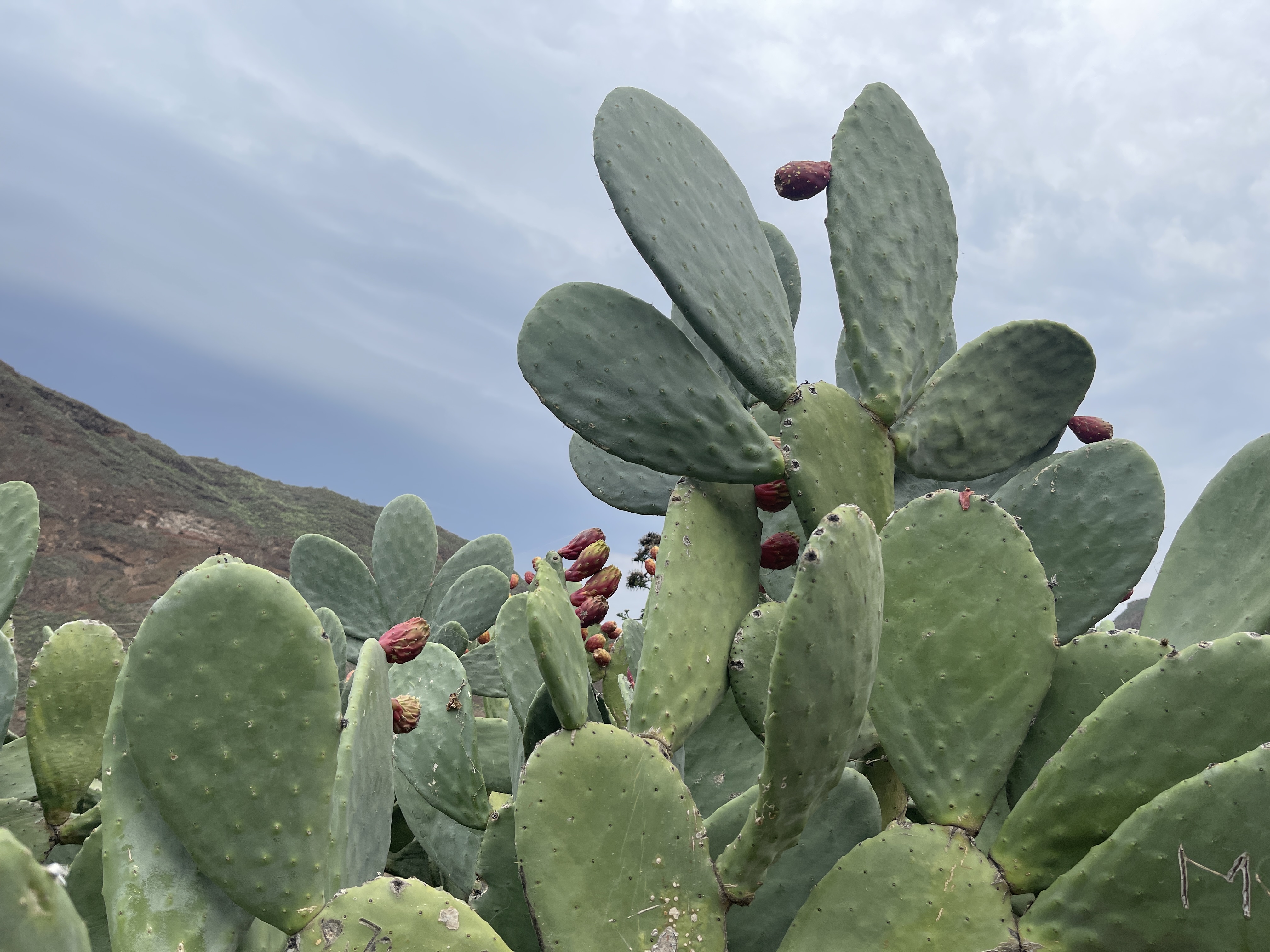
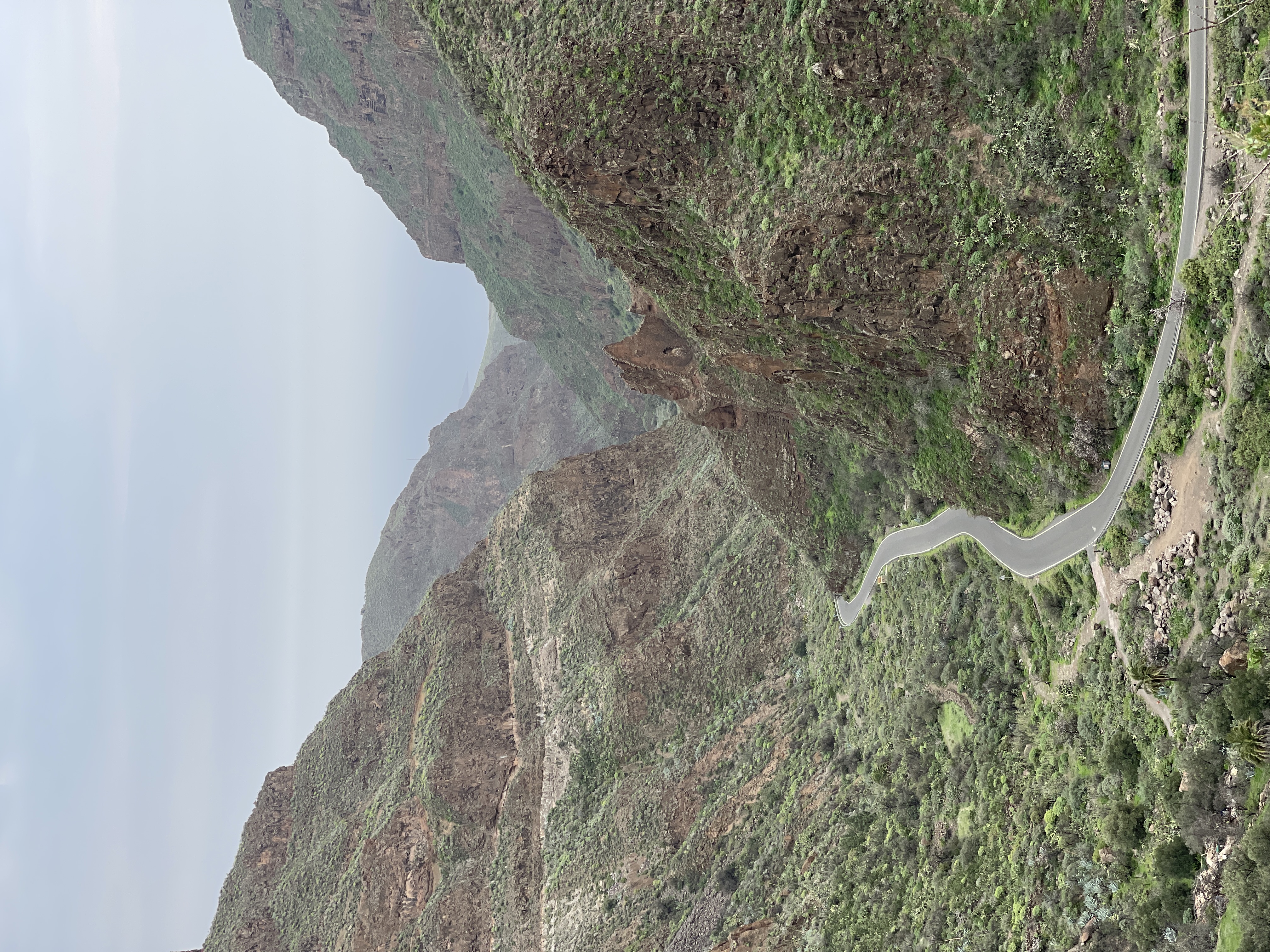
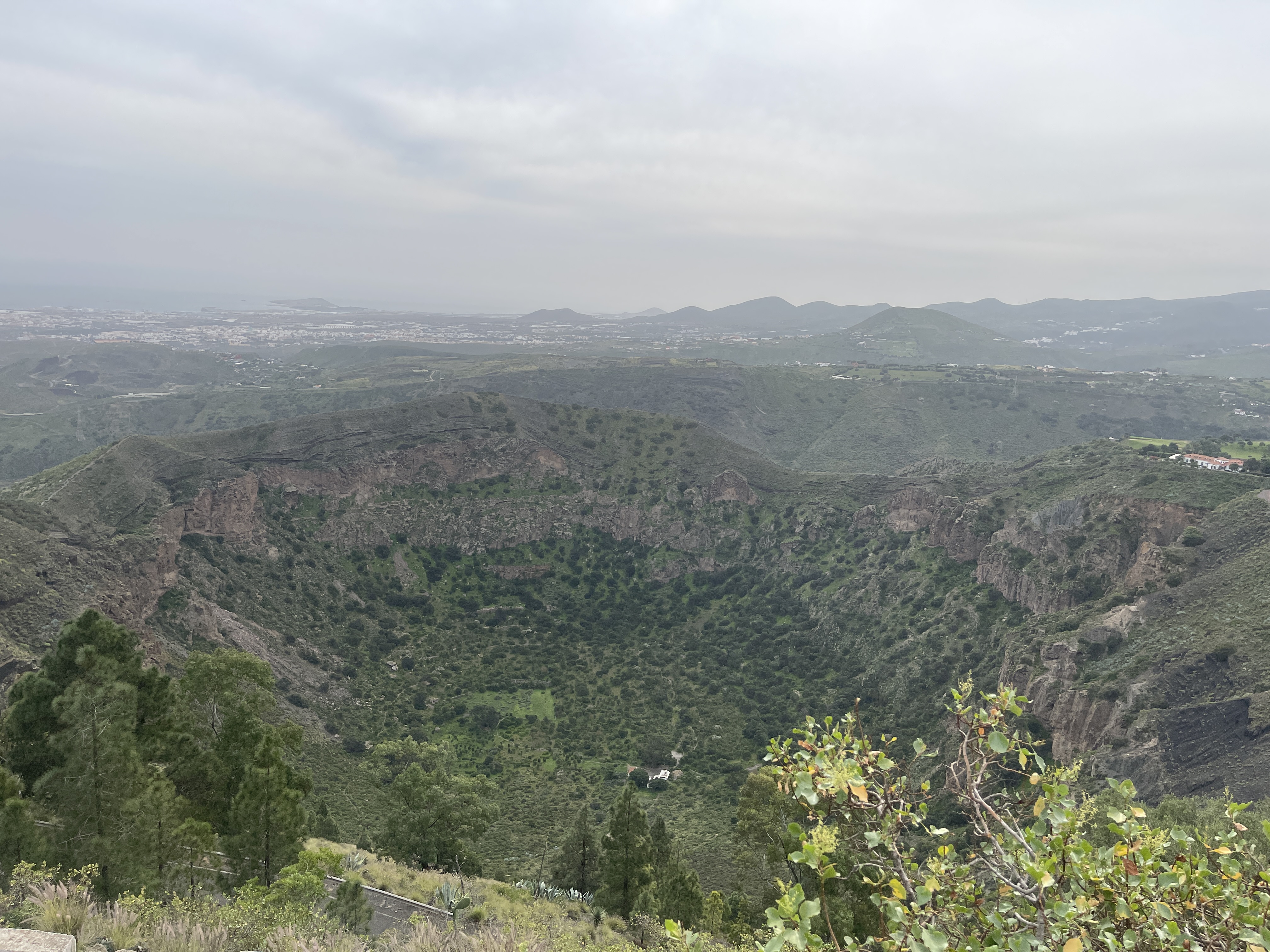
Gran Canaria dazzled us with dramatic cliffs and lush pockets of green. What surprised us most was the incredible biodiversity – pine forests, rolling desert-like sand dunes, an extensive cacti garden, and golden sandy beaches all on a single island.
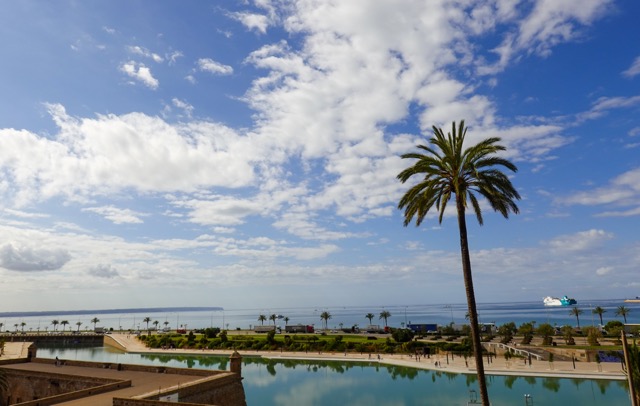
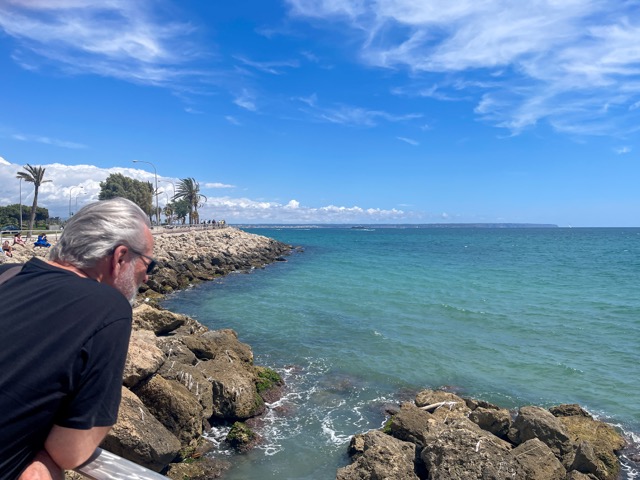
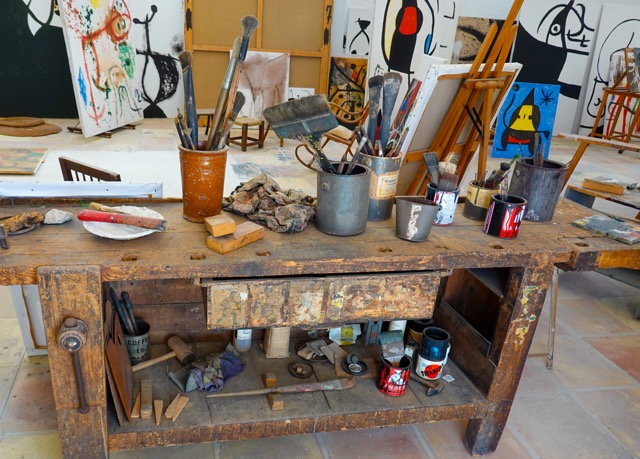
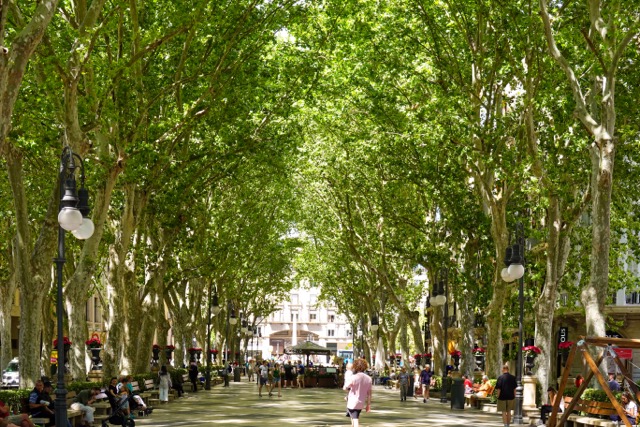
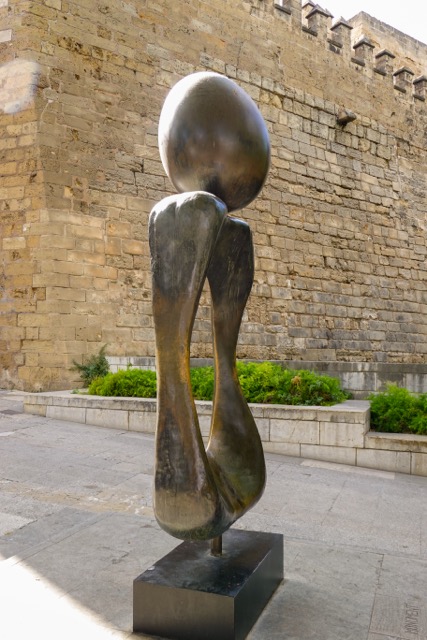
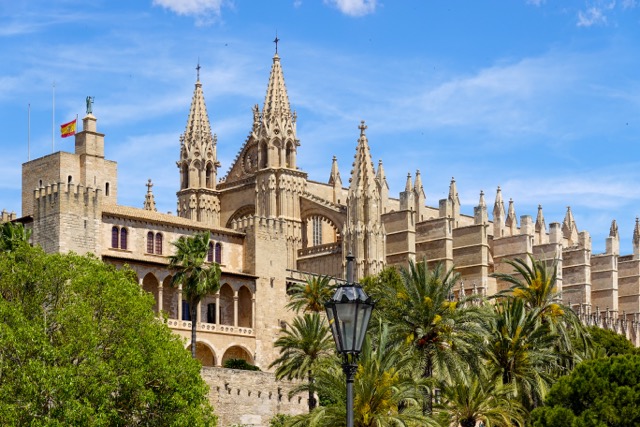
Mallorca welcomed us with golden Mediterranean light, gothic stone cathedral rising from the sea, and evenings that seemed made for lingering. Olive groves, limestone cliffs, shimmering water, and the simple genius of Joan Miró all coexist effortlessly here. Mallorca is an island of elegance and warmth, where art, landscape, and daily life blend seamlessly.
The Island of the Sun
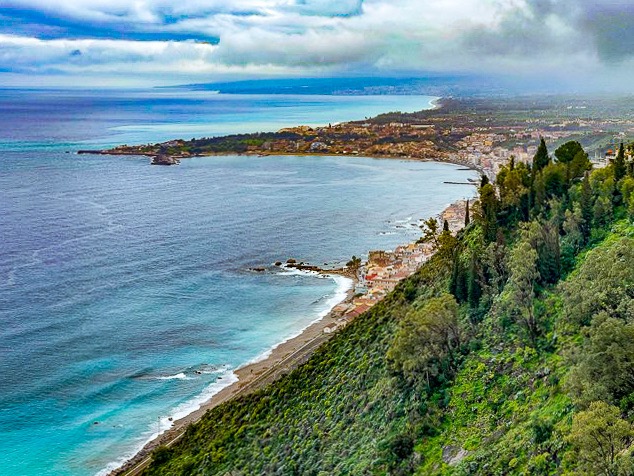
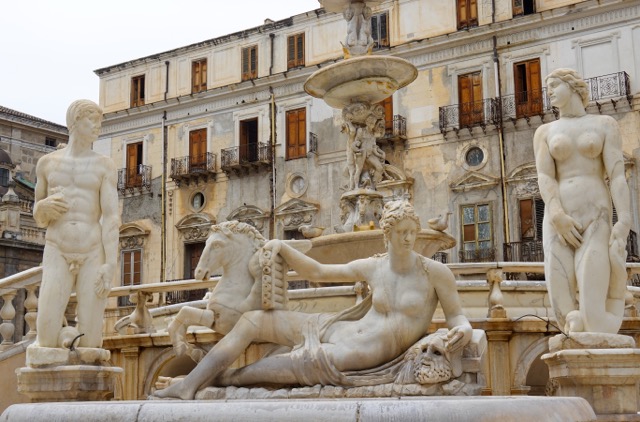
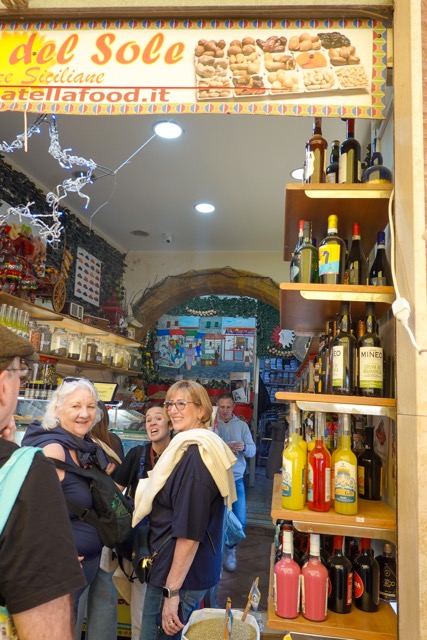
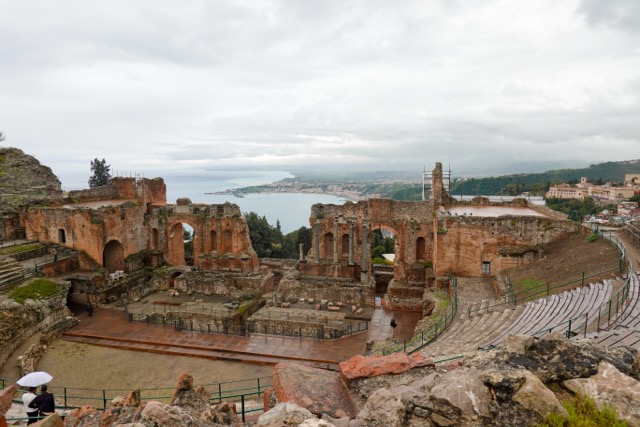
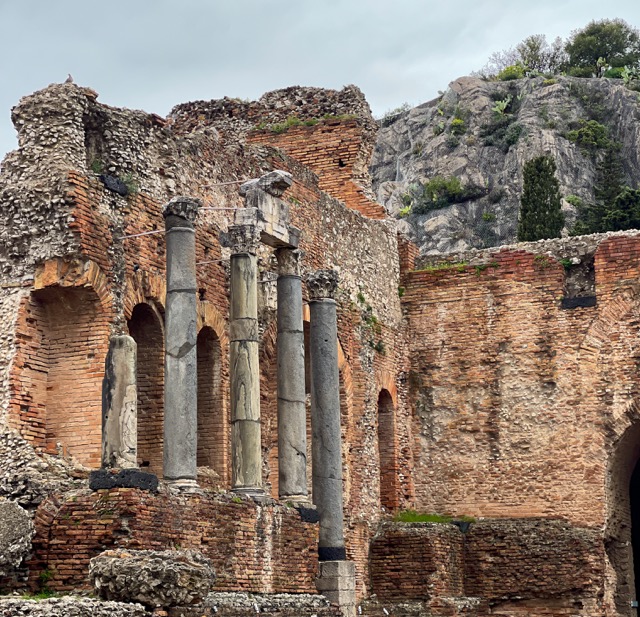
Sicily doesn’t whisper its beauty—it sings it, boldly. The contrast is intoxicating – lively, layered Palermo with wonderful markets and an edgy energy, and then the elegance of Taormina perched above the sea with ancient ruins and sweeping views. In the distance, Mount Etna smolders like a watchful god, reminding you that this island is shaped as much by fire as by water. The way history, coastline, and raw nature swirl together makes you want to stay longer than you planned.
Incomparable Greece
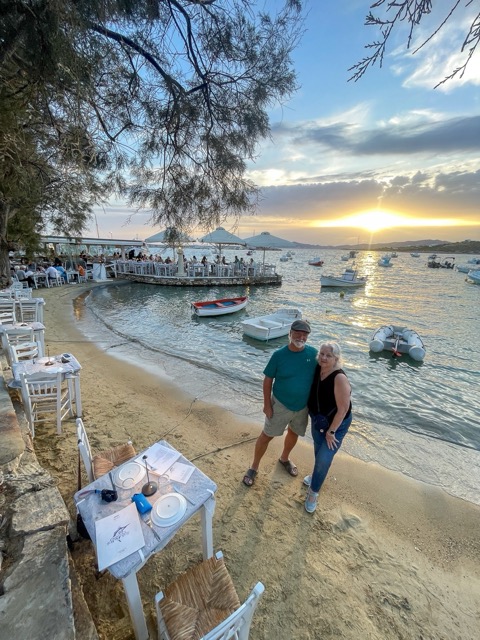
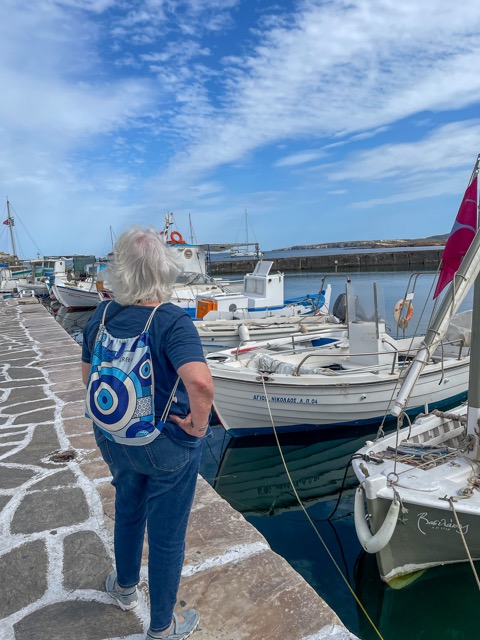
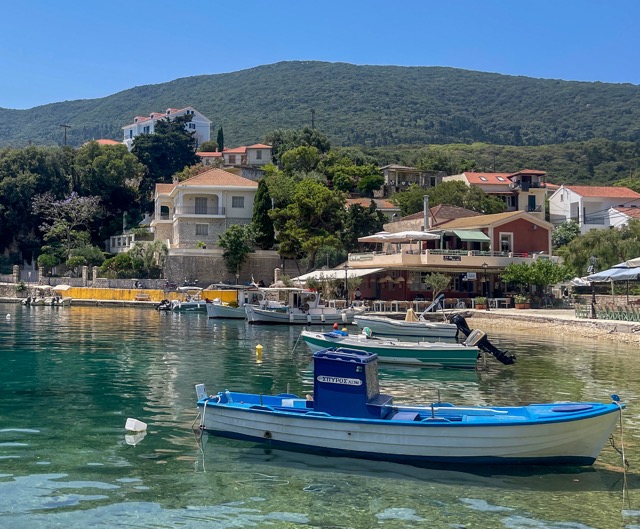
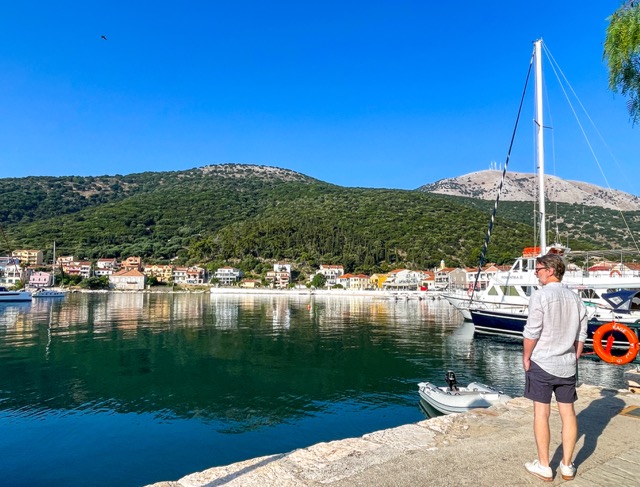
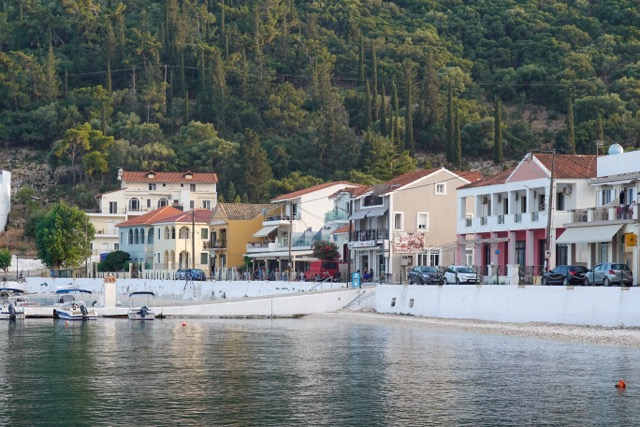
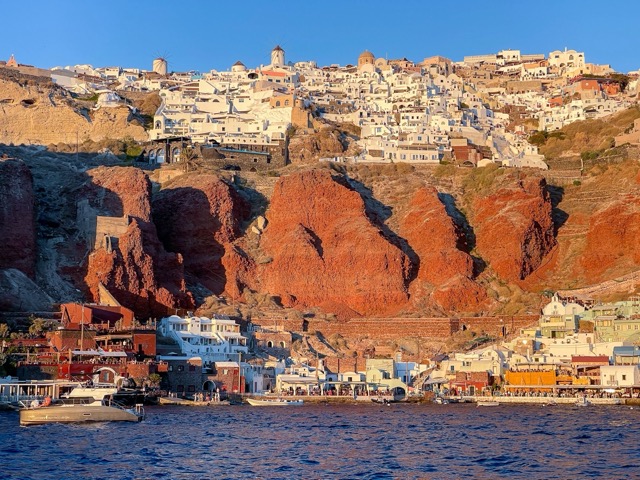
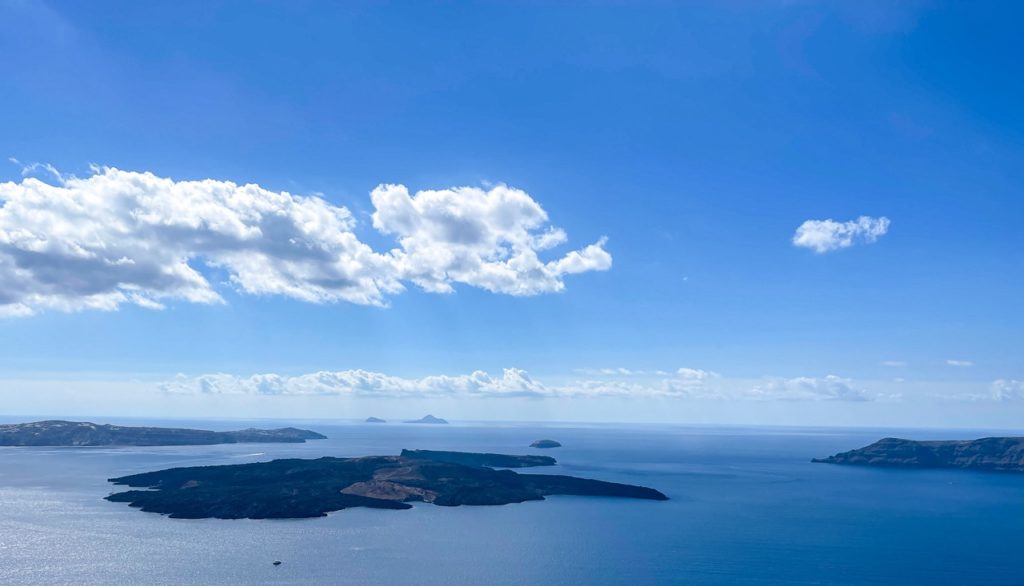
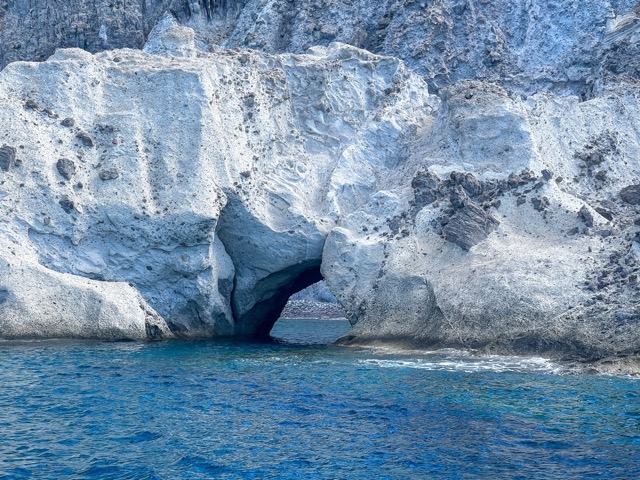
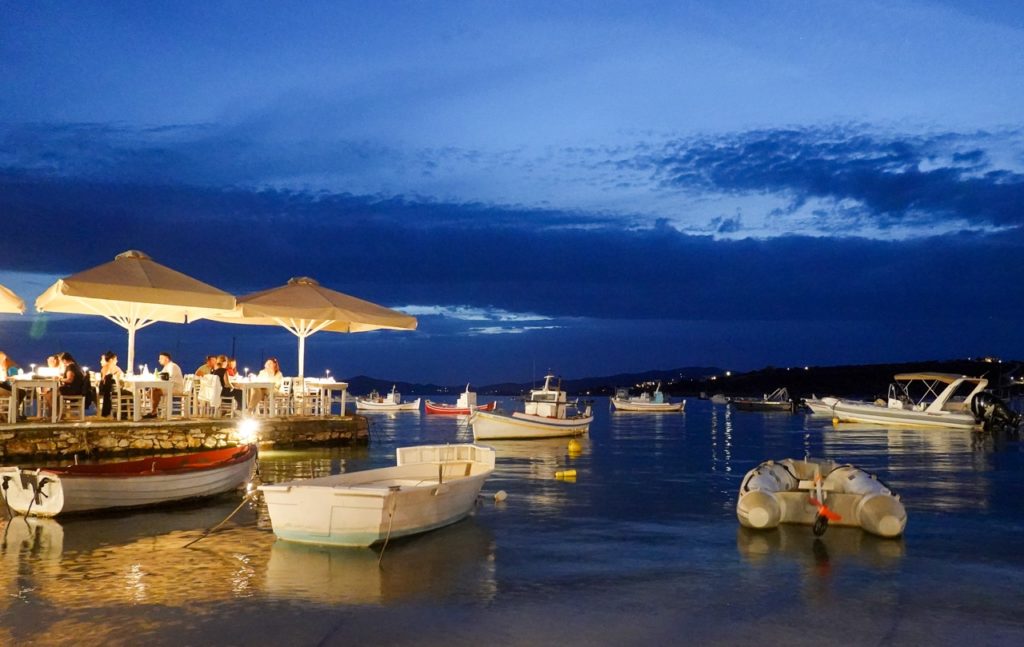
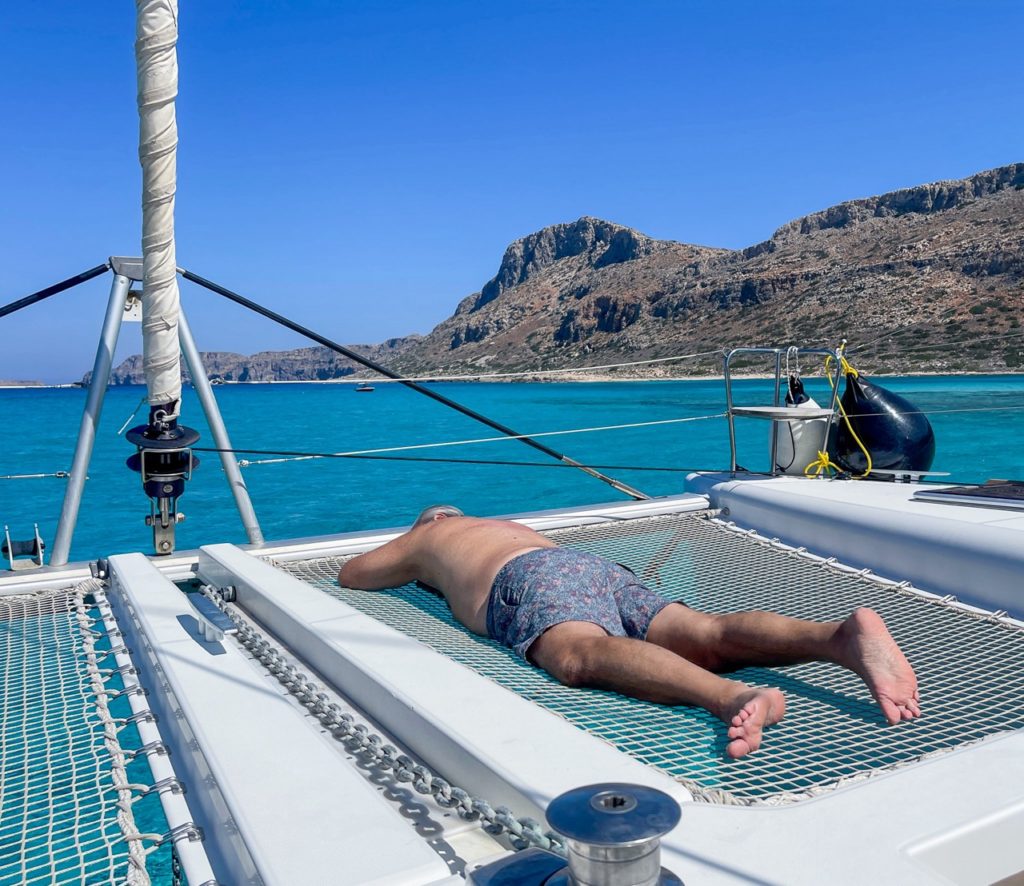
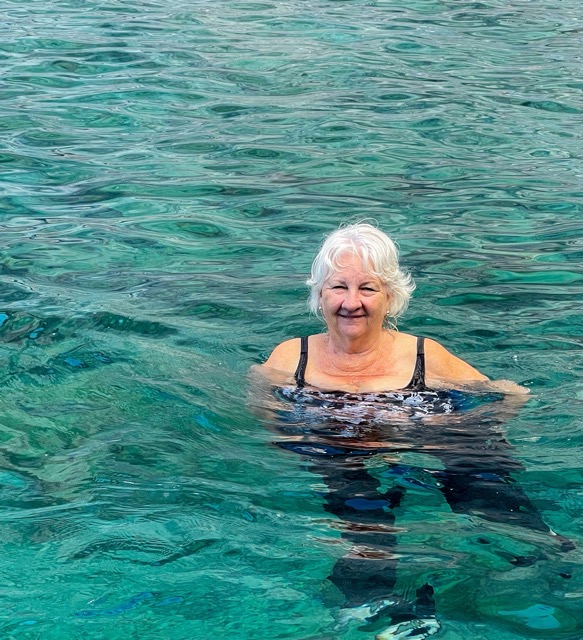
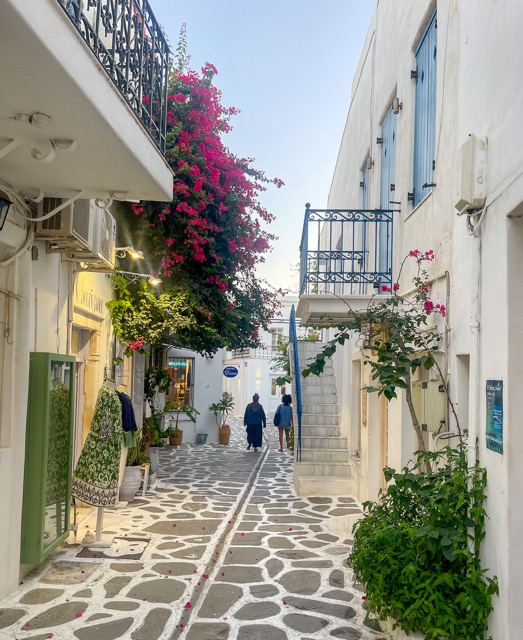
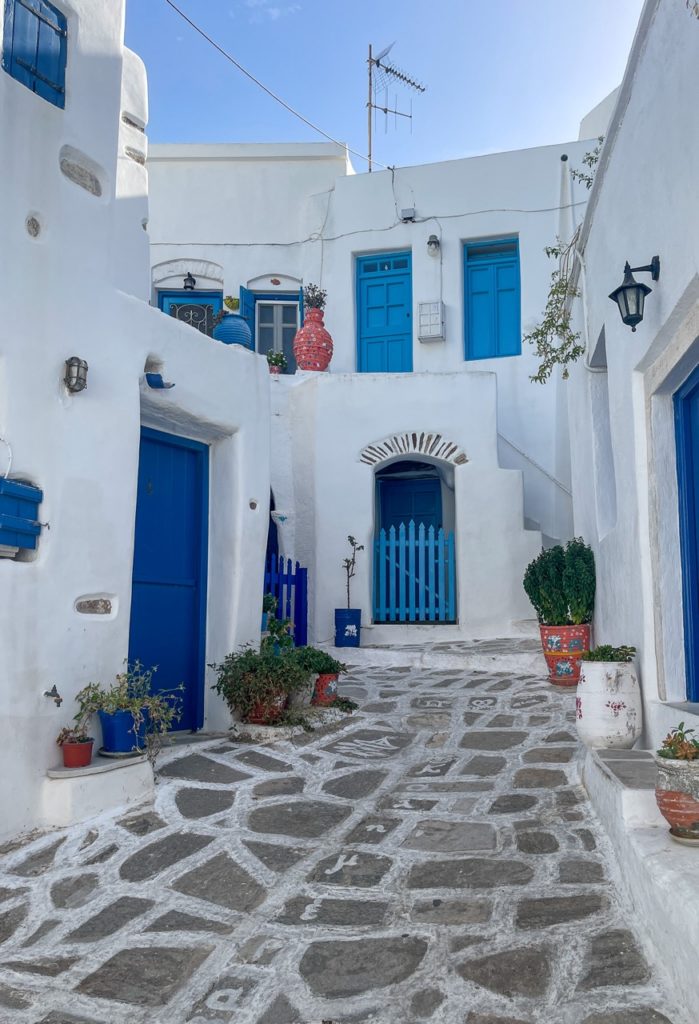
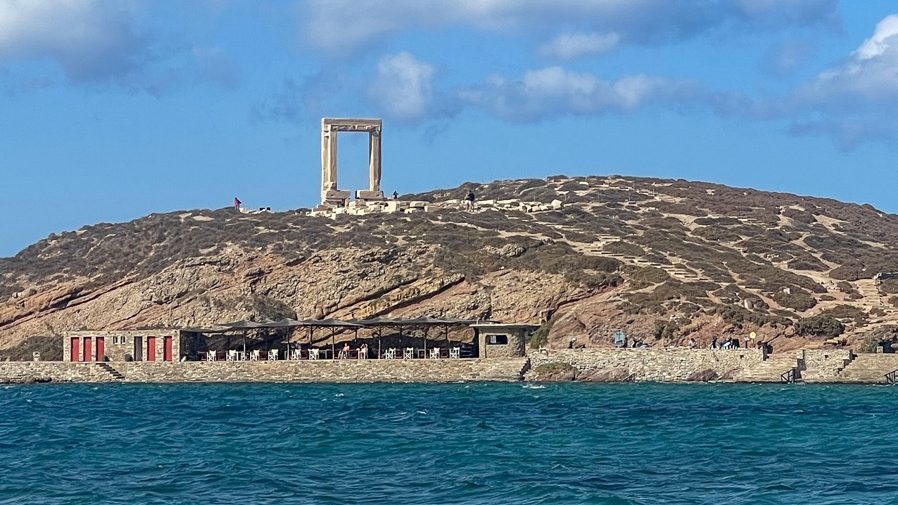
And then there’s Greece – the grand collection that provides a tapestry of culture, myth and color. Blue-domed villages, charming harbors, ancient stories, and stunning beaches make for a particular kind of magic. The water is so clear it hardly seems real and each island we visited seemed to have its own shade of blue. The magic there is timeless.
From wind-lashed cliffs to sunlit coves, from storm crossings to silent harbors, each island has tested us and rewarded us in its own way. Yet the gift has always been the same: the freedom to wander, the invitation to notice, and the quiet nudge to dream again. The islands, endlessly patient, continue to call.
“How I wish that somewhere there existed an island for those who are wise and of good will.”
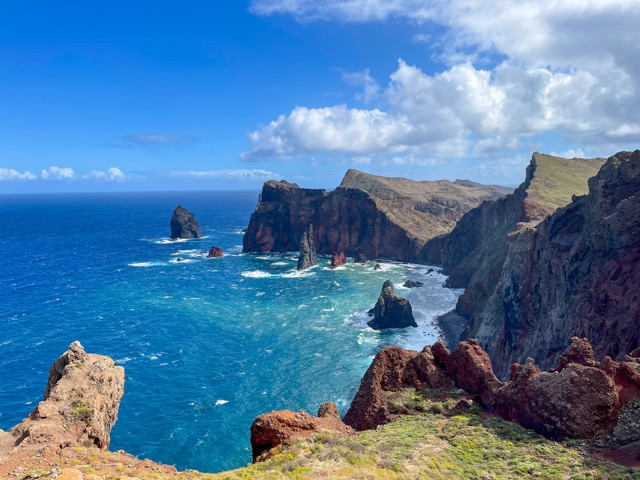
It’s a volcano. A vast undersea mountain with only the top rising from the sea, and like most mountains, it’s a rugged, irregular landscape of peaks and gorges that reach right down to the shoreline. So, our introduction to Madeira began with a minor adrenaline rush. As the plane swooped in low over the Atlantic, it felt like we were landing on a cliff edge – which, it turns out, we were. As the 737 settled into the final approach, we looked out the starboard windows to see a massive cliff streaming by seemingly just a few meters off the wing tip. On the port side, there was nothing to see but the vast blue Atlantic. Later, we learned that the Funchal Airport runway is considered one of the most difficult in the world — pilots need special training to receive certification to land there. Thankfully, that little detail was revealed after landing when it was a bit easier to digest.
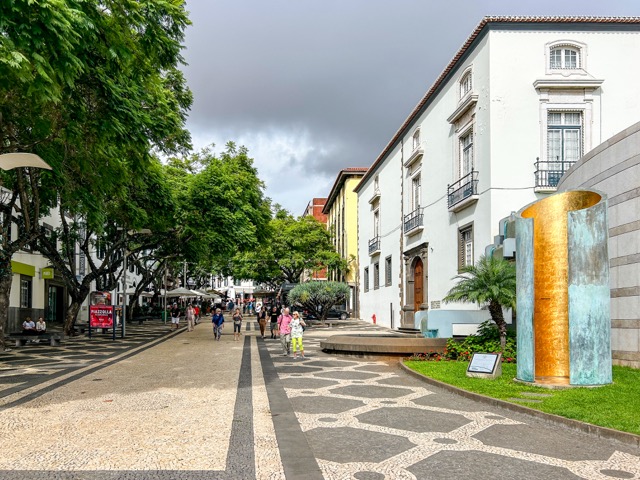
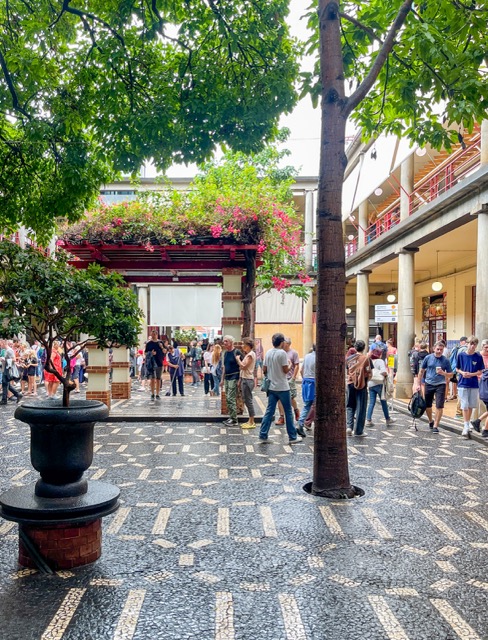
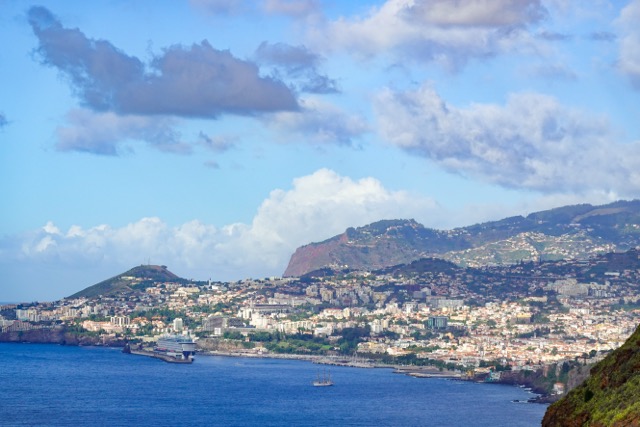
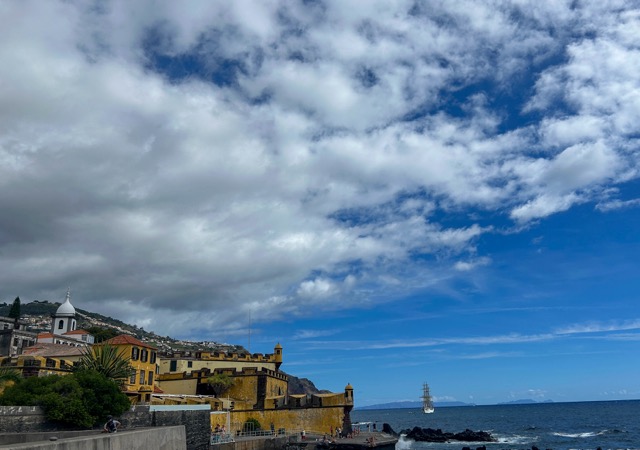
The drama soon gave way to familiarity. Arriving in Funchal (Madeira’s capital city), we stepped out of the taxi into the soft island air and onto that beautiful, patterned black-and-white stone paving we’d loved in Lisbon and Porto. It was a quiet little “welcome back to Portugal” under our feet.
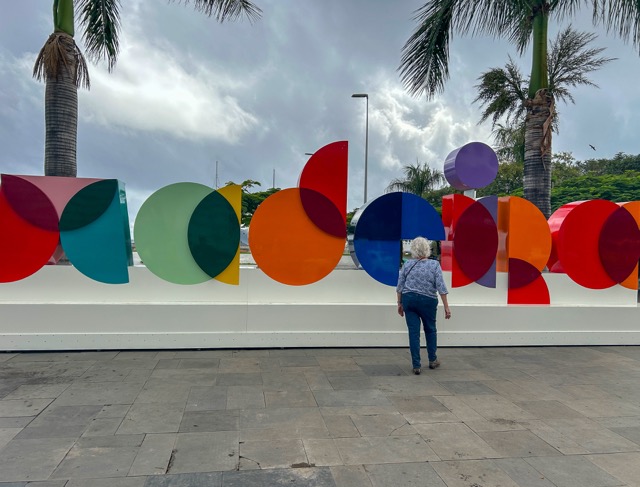
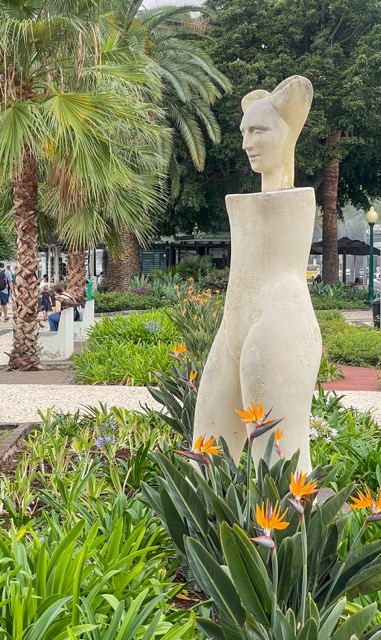
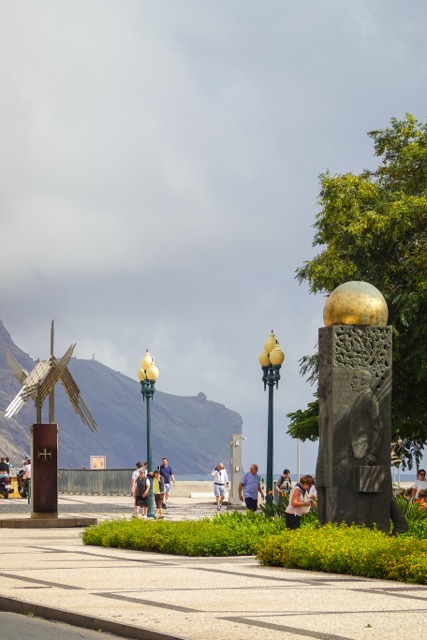
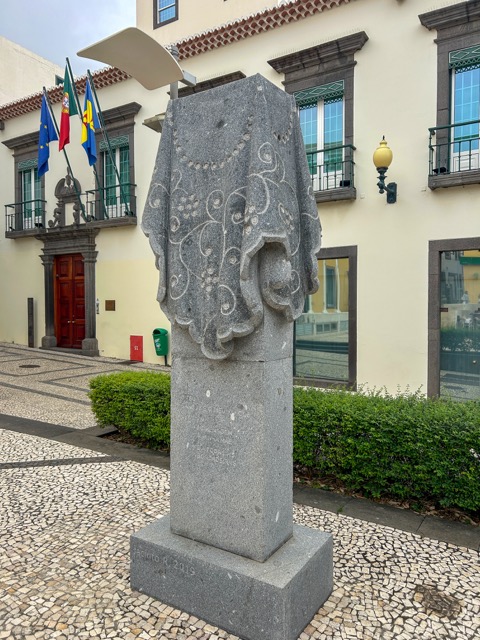
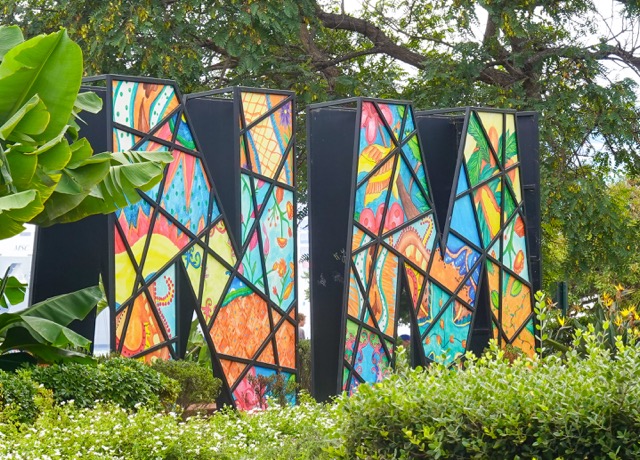
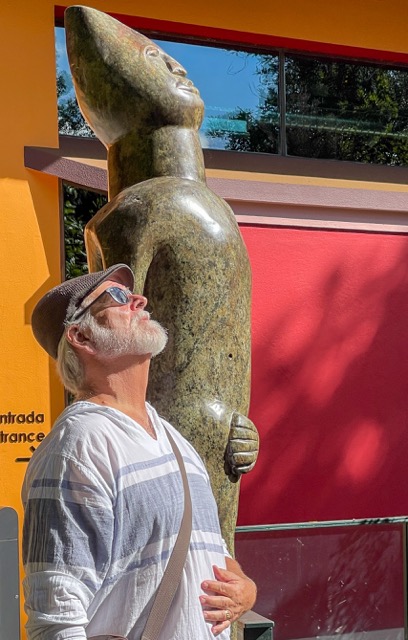
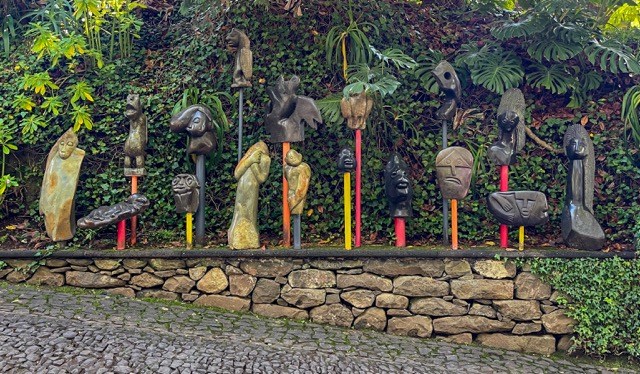
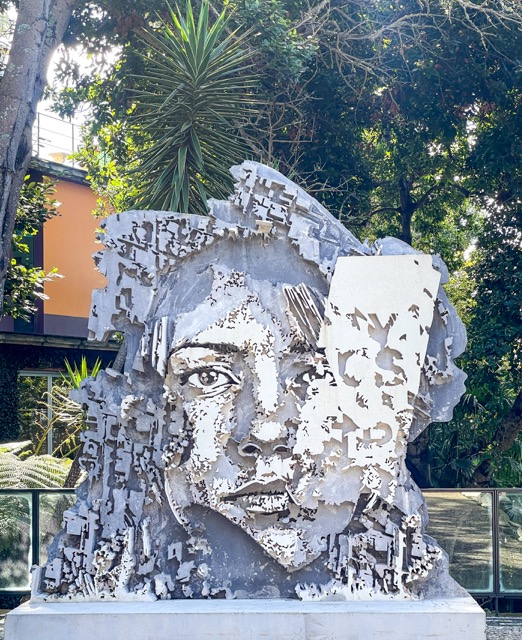
We arrived too early to check in, so we stashed our bags and headed out to explore. Funchal immediately charmed us: cobbled streets, flowering shrubs, the hum of cafés, and a waterfront dotted with public art that felt like an open-air gallery. When we finally checked in later that afternoon, the sea breeze and general vibe of Funchal sealed it: we were going to like it here.
A Tribute to Nelson Mandela
A Market and (of course) a Food Tour
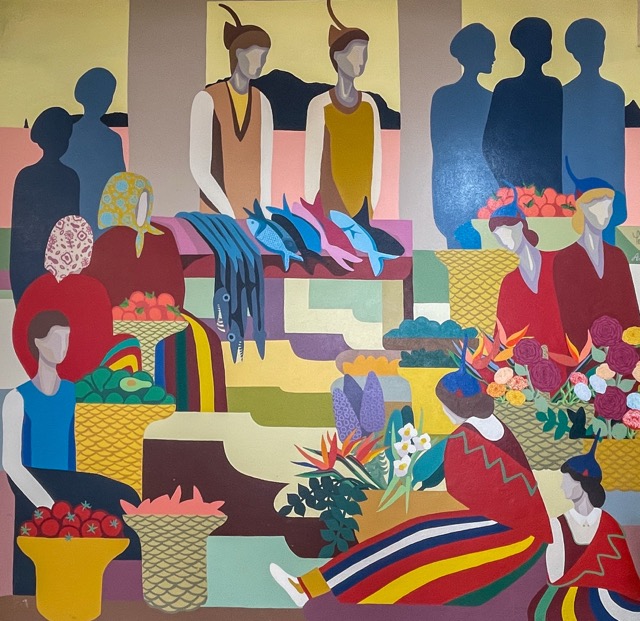
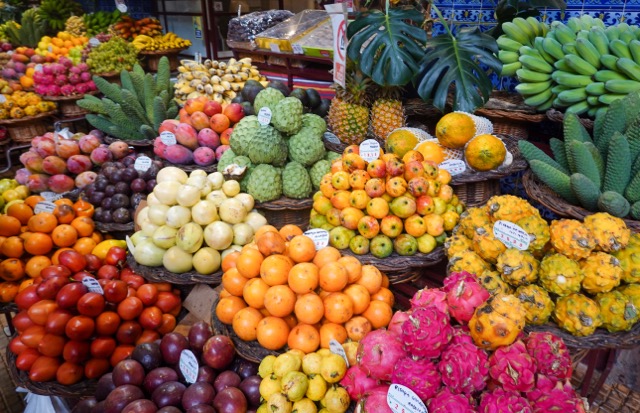
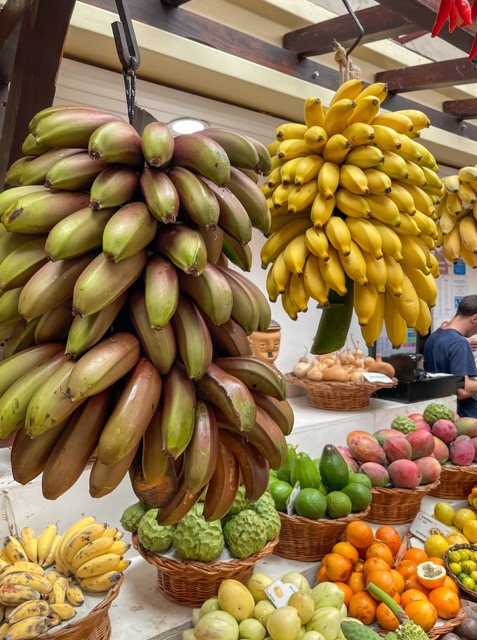
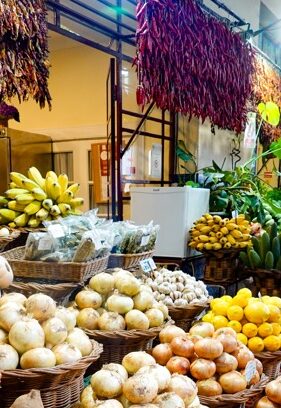
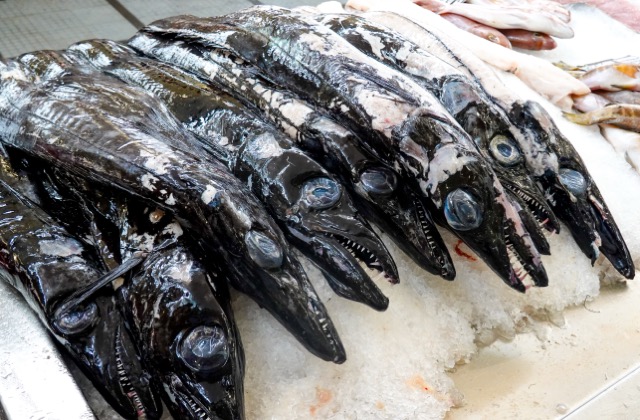
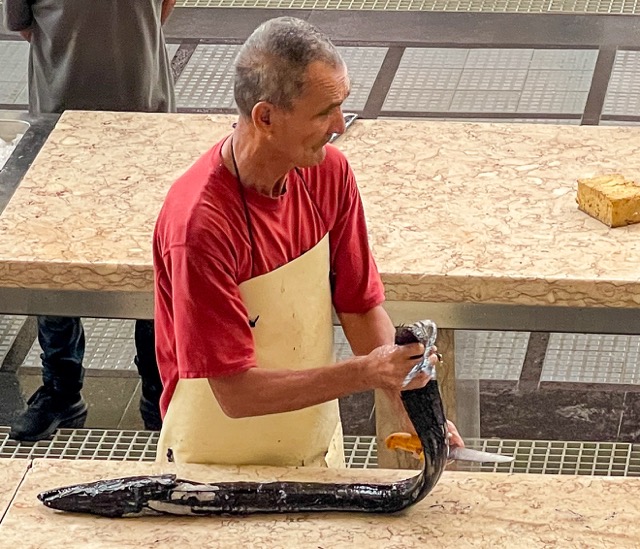
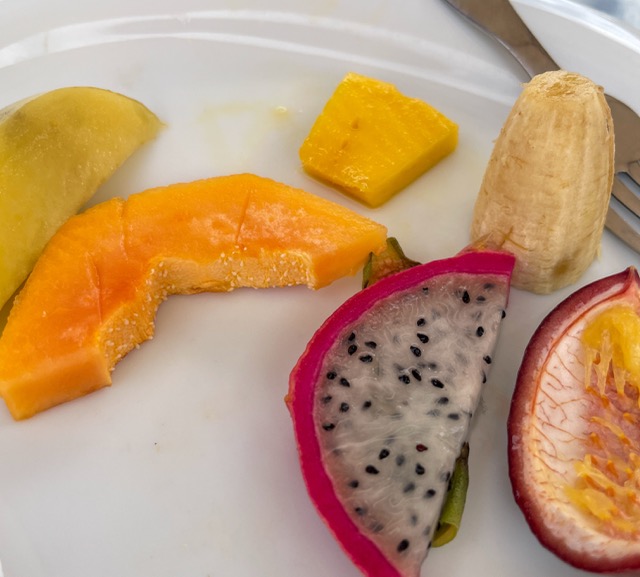
Our first full day in Funchal began at the Mercado dos Lavradores (Farmer’s Market) which turned out to be a feast for the senses in every possible way. Tables overflowing with tropical fruit – bananas, mangoes, dragon fruit, passion fruit, guava, papaya, figs, tangerines, and a few vegetables we couldn’t name. And then, the black scabbard fish (espada) caught us off guard – long, thin, black, and with eyes that looked like a deep-sea monster. The ugliest fish we’ve ever seen. (Also, as we’d soon discover, one of the tastiest.)
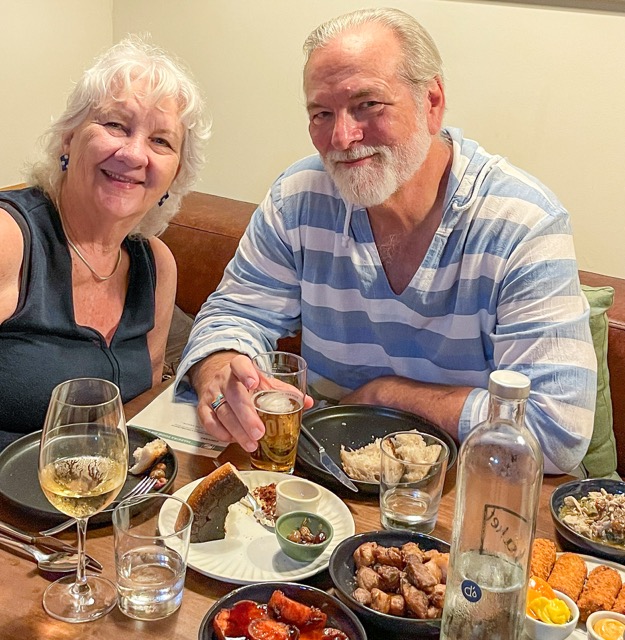
The afternoon was devoted to a food tour that turned into one of the highlights of our trip. It began with a proper lunch:
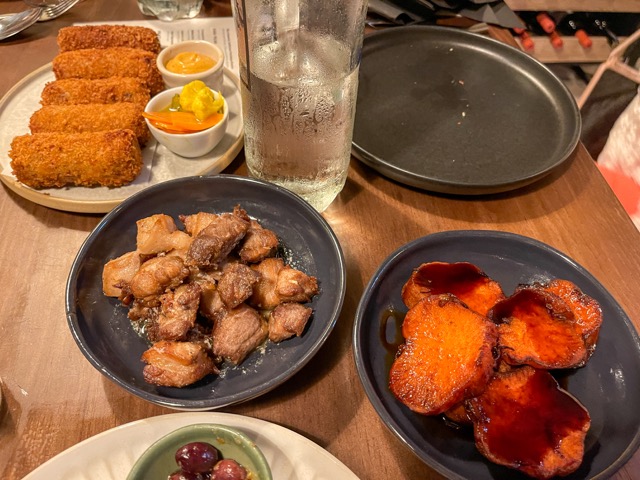
A perfectly crisp croquet stuffed with savory meat.
Carne em Vinha d’Alhos, tender marinated cubes of pork.
Batata-Doce com Mel de Cana, an addictive sweet-potato and molasses combination.
Atum Salpresado, salty cured tuna with all the rich saltiness of the Atlantic.
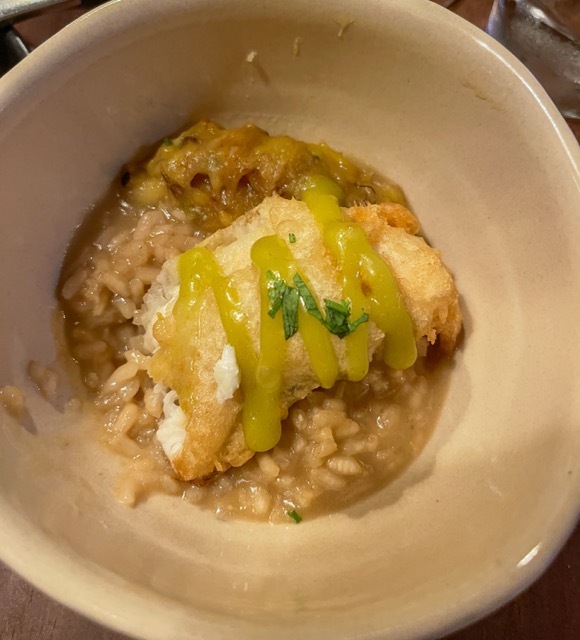
The main course: Arroz de Lima com Espada e Banana — a filet of black scabbard fish over a citrusy rice and topped with a banana concoction. Sounds odd, tastes amazing.
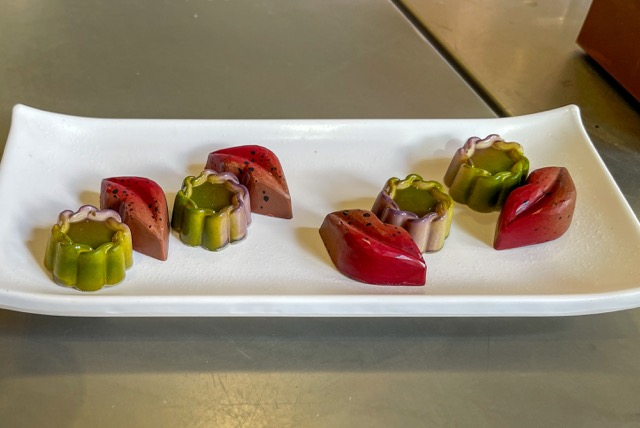
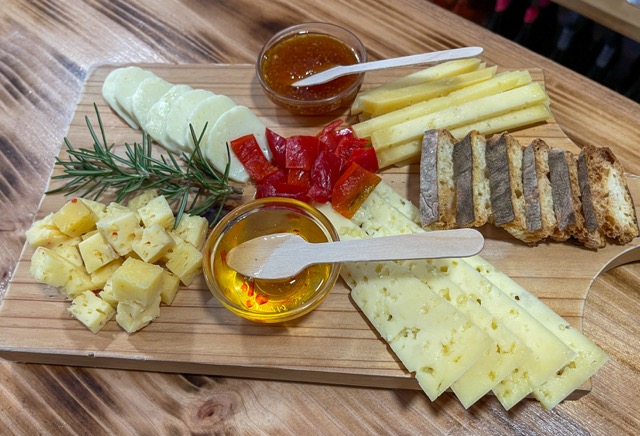
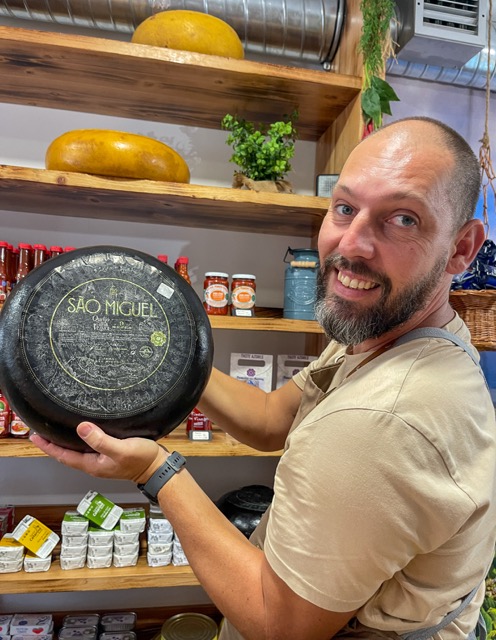
After lunch, we walked (slowly) to our next stop: Uau Cacau, where we sampled artisanal Madeiran chocolates that instantly earned luggage space for the trip home. Then came a tasting of fragrant and colorful tropical fruits and a stop at Fábrica Santo António (a local institution) for traditional Madeiran cookies — crumbly, subtly spiced, old-school good. A cheese and wine tasting at a shop devoted entirely to products from the Azores (note to self: visit the Azores soon!) was our next tasting and that was followed by a final stop for a glass of poncha, the local sugarcane-rum cocktail. By the end of the day, we were equal parts full and blissful — exactly how every food tour should leave you.
The Blandy’s Experience: Stairs and Sips
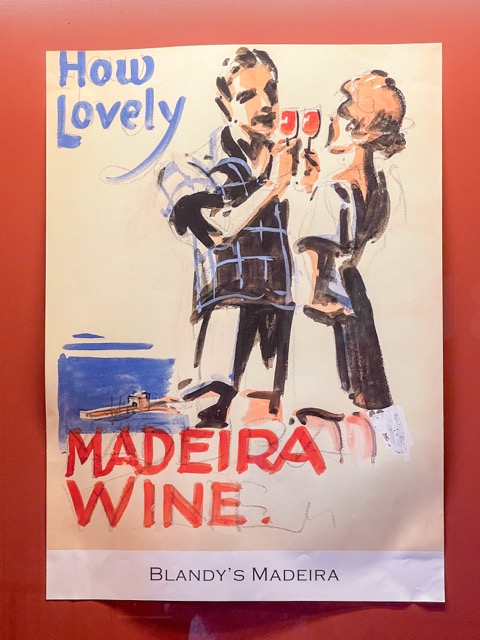
Sticking with the theme of gastronomic self-indulgence, we had booked the Platinum Tour at Blandy’s, the grand dame of Madeira wine for our second day in Funchal. We thought it would be a gentle walk around the winery and a few tastings — you know, the usual. Instead, it was a full-on education (with a cardio bonus).
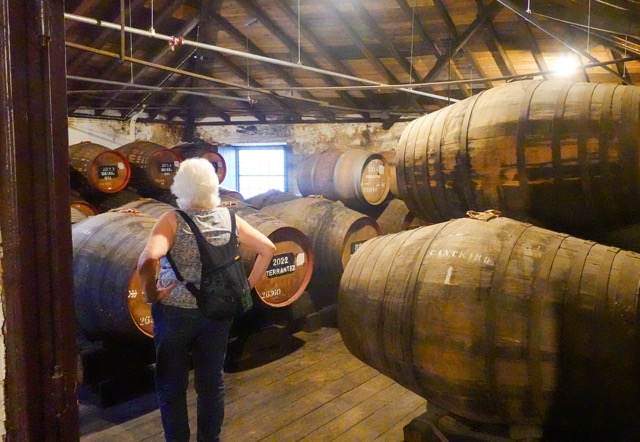
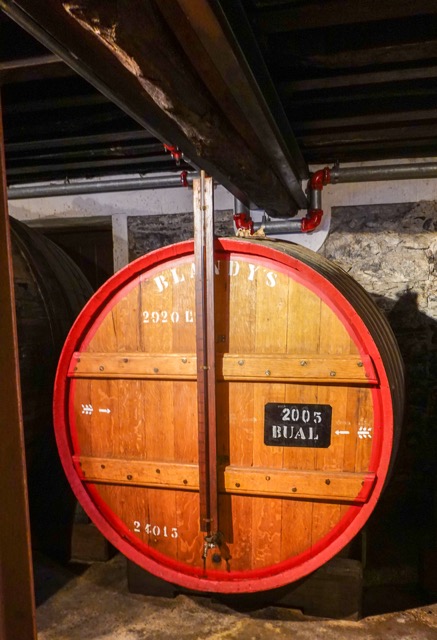
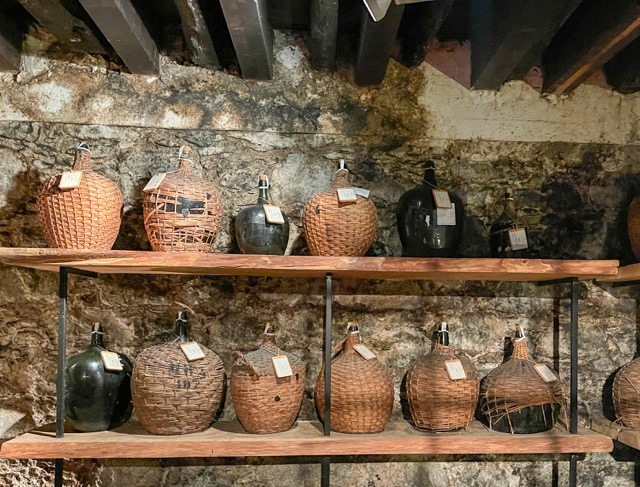
The tour led us up flight after flight of old wooden stairs, each level revealing another layer of Madeira’s winemaking process. Our guide unlocked one after another storage room filled with aging barrels — some decades old, their wood darkened with history and sugar. The air smelled faintly of caramel, oak, and patience.
We quickly realized we’d been underestimating Madeira wine our entire lives. Up to this point, we’d used it for cooking (sorry, Madeira) or occasionally sipped it as a sweet after-dinner treat. But Blandy’s changed that narrative completely.
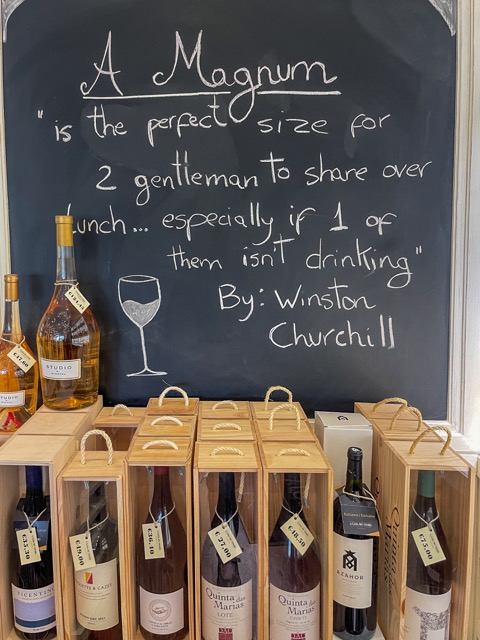
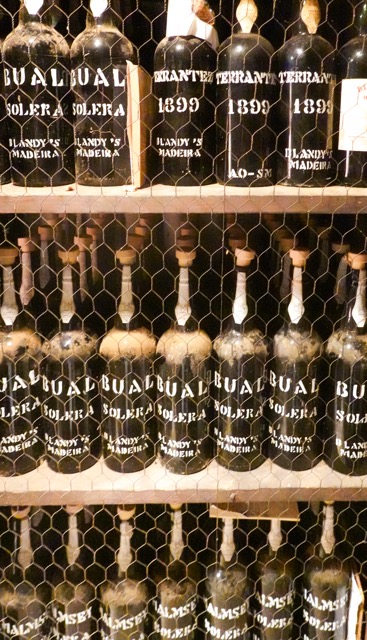
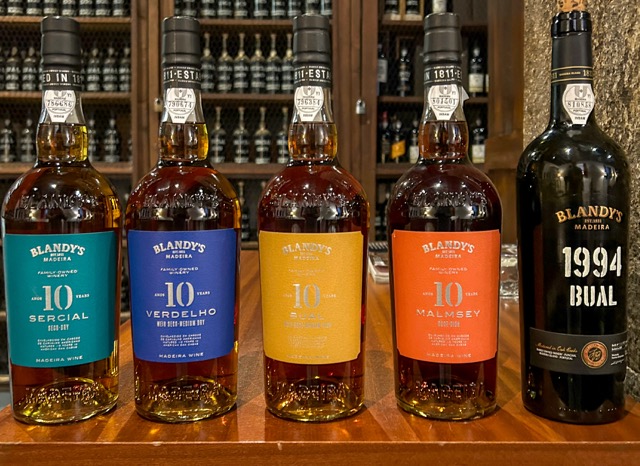
We learned about the different styles of Madeira — from the driest Sercial, served chilled as an aperitif, to the rich Malmsey, that dessert-worthy elixir we already knew. In between are Verdelho and Bual, each with its own unique taste. Who knew there was a whole spectrum of Madeira wines meant to start the evening, not just finish it?
Standing among those timeworn barrels, we could practically taste the island’s story — heat, salt air, and centuries of craftsmanship condensed into amber liquid. By the time we made it back down the stairs (carefully), we had newfound respect for the drink, and a mental note to replace “cooking Madeira” in our pantry with the real thing.
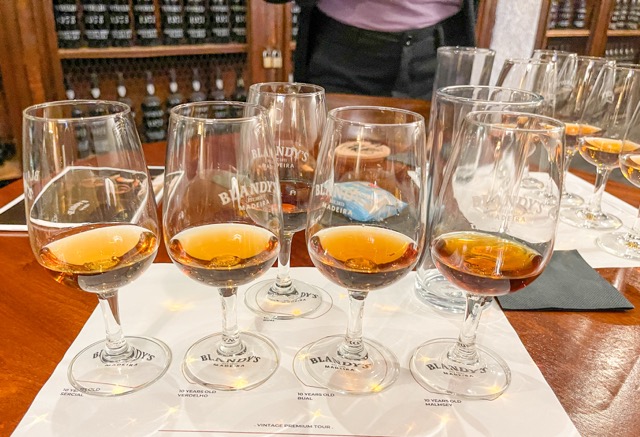
The tasting itself was, naturally, the reward: four glasses lined up from dry to sweet, each one delicious. A fifth glass capped off the experience with one of Blandy’s vintage reserve offerings. We lingered, savoring the shift in flavors — citrus and nut on one end, honey and fig on the other — until we had to leave so the staff could close the place and go home.
The East-Side Trek
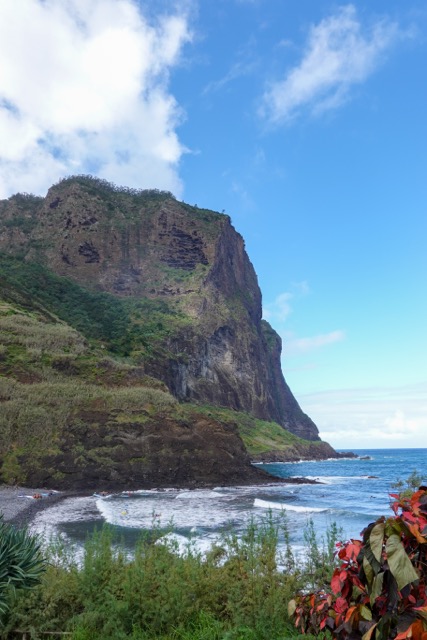
One morning, we set off early to explore Madeira’s east side, a day stitched together by villages, forests, and coastal drama. Our full-day trek around Madeira’s east side took us to ridge lines where the cliffs dropped straight in cobalt water, past waterfalls, and through misty laurel forests. It also highlighted for us one of the wonders of Madeira: the road building. Madeira’s volcanic geology means there are almost no flat surfaces anywhere on the island. A mountain ridge runs through the center of the island with peaks above 6,000 feet. In the face of these challenges, Portugal has built a highway and road network that stitches together the whole island. Some roads seem to spend as much time in tunnels as in the open and there does not seem to be a ridge or valley that they have not found a way to bridge one way or another.
We started the day in Machico, the site where the Portuguese first landed in 1419. It’s a mix of beautiful beaches and lush green mountains.
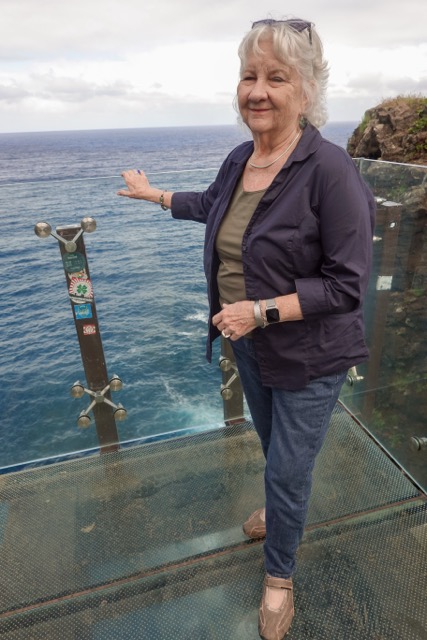
Perched on the island’s north coast, the Faial Glass Walkway offers stunning views of the north coast and the Atlantic Ocean from its two glass walkways that jut dramatically over the ocean.
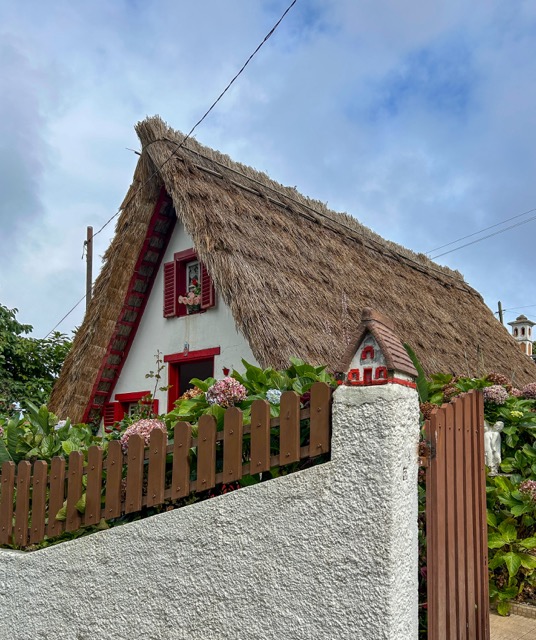
Santana, a postcard village of small, triangular, thatched-roof houses has a quiet and gentle charm with colorful hydrangeas and bougainvillea spilling over stone walls.
In Porta de Cruz we visited a rum distillery where they process the local sugar cane into an award winning Agricole Rum. That designation distinguishes this product as one created directly from the cane syrup unlike more than 90% of the world’s rum which is distilled from molasses. The difference is very distinctive – a smooth, complex, aromatic rum that could become a habit!
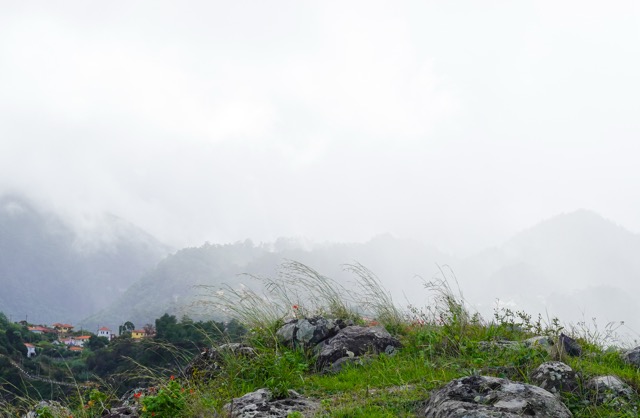
The heart of the Laurissilva forest, a UNESCO World Heritage Site since 1999, has trees that look ancient enough to have seen the first explorers land and the air smells faintly of eucalyptus and rain.
Monte Palace Gardens – Afternoon in the Clouds
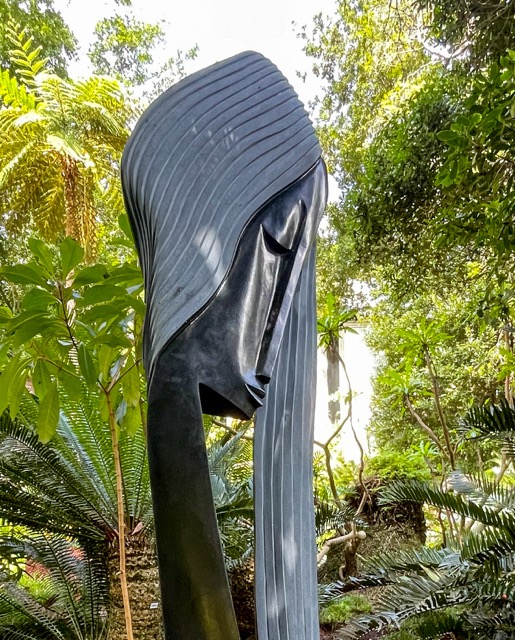
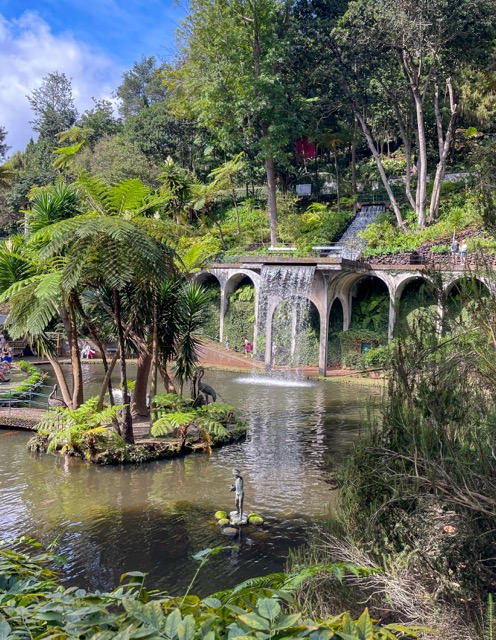
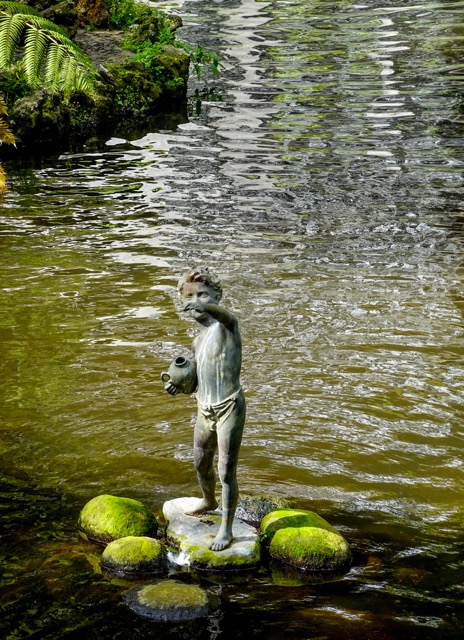
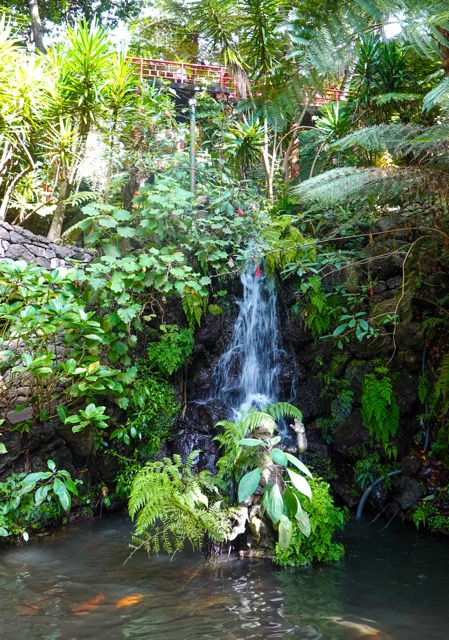
Unfortunately for Ed (but okay by me) the cable gondola was not working for our trip up the hillside the next morning. So, we shared a taxi with a German couple that were heading to the same place. While not high in the air, the on-the-ground approach, turned out to be a windy, twisty, topsy-turvy experience. At the top: the Monte Palace Tropical Garden, a dreamscape of mossy paths, koi ponds, tiled murals, and exotic plants everywhere. The art museum surprised us with contemporary pieces nestled among centuries-old stone. Like all the rest of Funchal, the gardens were created on a hillside with water cascading from all angles and paths that involve steps, switchbacks, bridges and stairways. Everywhere we turned there was art – sculpture, carvings, and ceramic tile panels. The Monte Palace Gardens would be enough to justify a trip to Madeira.
One Last Coffee with the Atlantic
We’d planned to end our trip on the water — a whale-watching excursion to spot the dolphins and pilot and sperm whales that cruise just off Madeira’s coast. But the sea had other ideas: choppy waves, canceled boats, and a brisk Atlantic wind. So, we’ll just have to come back — to finally do that cable-car trek up the mountain, and to set out on calmer seas for a glimpse of those amazing sea creatures. A pretty good excuse, we think, to return to this lovely island that has made our “let’s go back” list. As we looked down from the plane window, the island outlined against the vast blue Atlantic and that infamous runway stretching boldly over the water, we gazed at the green peaks thankful we had been privileged to visit this unique place.
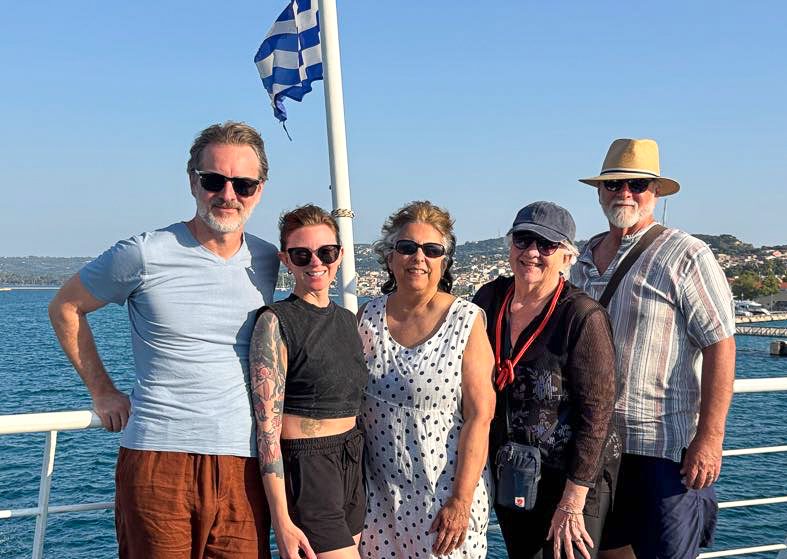
My grandchildren (ages 5, 7, and 9) were arranged in a disheveled tangle around me on the leather sectional, fresh popcorn, pillows and stuffies spilling about. In my best melodramatic voice, I slowly read the chilling description of the Cyclops holding our hero and his men captive in the back of a dark, dank cave, “. . . broad and ugly, with a jutting nose and a thick, heavy brow.” Their rapt faces testified to the enduring power storytelling holds in our lives. I marveled as Homer’s tale of Odysseus’ struggles with sirens, sea monsters, and witches held this newest generation spellbound nearly 3,000 years after it was first recorded in the 8th century, BCE. I have to admit that the story still holds me spellbound! And so it was, with this sweet scene still in my heart, that we set off for the magical islands of the Ionian Sea, home to Odysseus, where Greek gods and legends lurk around every rock. And, of course, another rendevous with Mark and Shannon.
According to the internet, there have been 33 movie adaptations of the Odyssey with number 34 (a Christopher Nolan epic) set for release next year. The story of Oddesseus’ 10-year journey home from the Trojan War has been retold countless times yet retains its hold on our imaginations. There is some speculation that the Greek island of Kefalonia, our primary destination, was the actual site of Odysseus’ kingdom rather than its neighbor, modern day Ithaca. We decided on an itinerary that included both, just to be sure we’d cover all the bases. Also, you know, more beaches.
Our host on Ithaca has her own remarkable story. Angela is a daughter of Kefalonia. Her ancestors were Normans who first settled here sometime in the 11th century, were brutally massacred by a rival clan in the 15th century, then returned to start again a couple hundred years later, reestablishing the family estate under the Venetian rulers of that era. In the 20th century, Angela’s family migrated to the U.S. where she was raised and became a high-school English teacher in the Bay Area. It was a summer visit at age 17 that planted the seed. The family estate at the heart of the Paliki peninsula, now 250 years-old, neglected and uninhabitable, began to tug at her consciousness.
One of my favorite moments of Homer’s tale about Odysseus comes near the very end. Odysseus has finally returned home, and his beloved wife, Penelope, who has been chaste and steadfast for all the years of his absence, fears the gods may be playing tricks on her and is having trouble accepting that this is really her long lost husband returned. That she is a very cunning woman is clear from the machinations she conceived to survive two decades of her husband’s absence. So, as a test, she casually tells her maid to move the couple’s bed to another room. Odysseus immediately intervenes, protesting that the bed cannot be moved. He knew, having built the bed himself, that one of the bed posts was actually a rooted, living, olive tree! Having passed her sly test, Penelope falls into his arms at last.
Angela, it seems, may have a similar connection to these islands.
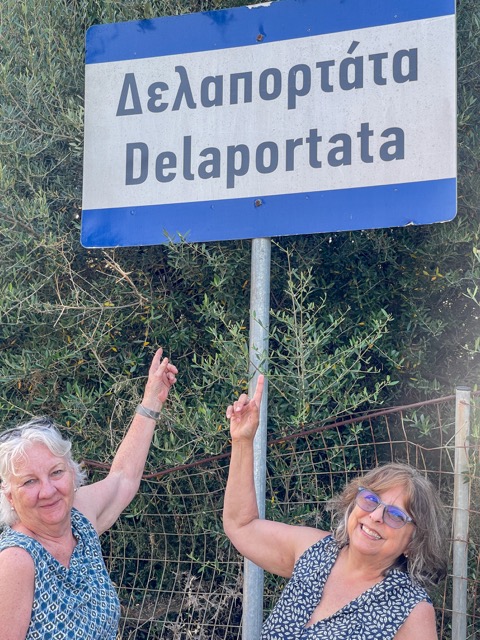
The legacy and stories were too much to resist, and she began rebuilding her ancient family home more than 20 years-ago, exploring its history, reestablishing relationships with local families, hiring local craftsmen, and learning the ways of the island’s agriculture. Slowly, one summer at a time, she has transformed 40 acres of neglected olive trees and vineyards into an estate, and herself from schoolteacher into mistress of the Delaporta legacy. We formally declared her the Duchess of Delaportata. Her hospitality and generosity were extraordinary and made our time on the island a profound experience.
How privileged we are to have had such an inside view of Greek island life! The best tavernas, beaches, shops, wineries, villages and viewpoints were all ours. While Kefalonia receives a significant number of visitors, this is not the tourist mecca that so many of the Greek islands have become with cruise ships inundating the ports, and people jamming the narrow village lanes. It is a rugged landscape of rocks, mountains, chaparral, and forest that is circumscribed by the stunning blue of the Ionian Sea. It was also the place I was required to observe my &#%th birthday. So, to celebrate, we embarked on a day in pursuit of myths and legends on Kefalonia’s famous neighbor – Ithaca.
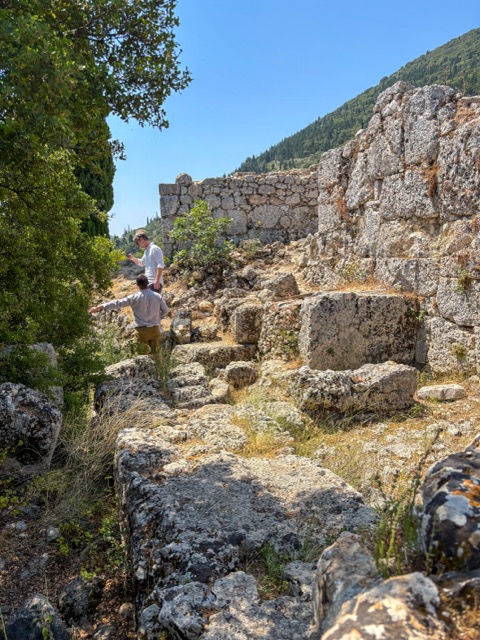
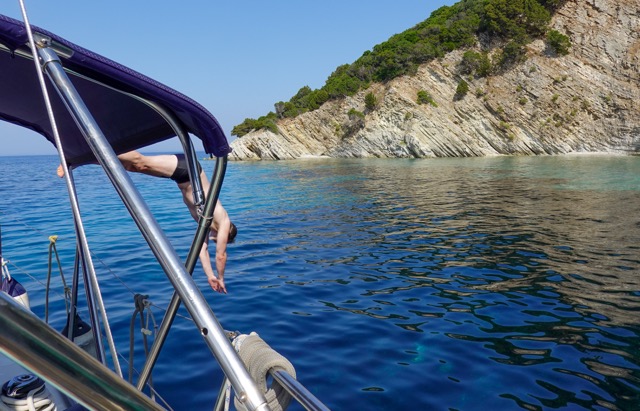
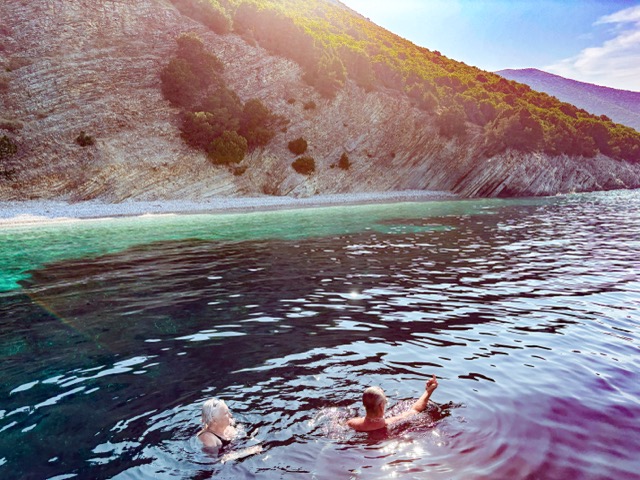
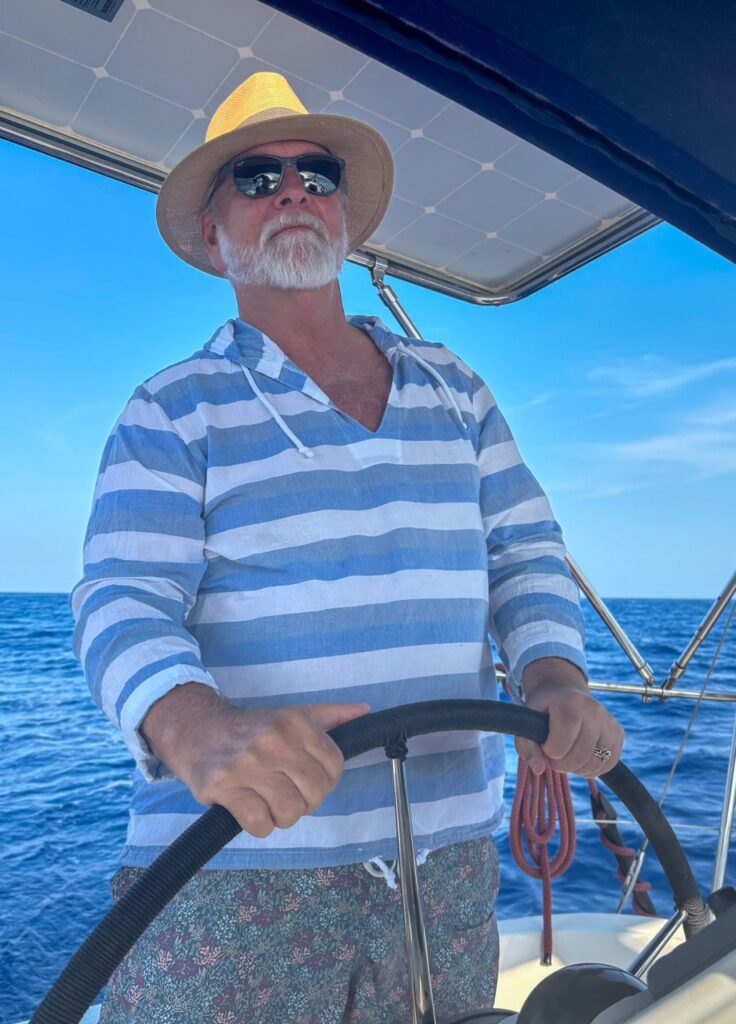
It has become clear to Bonnie and I that nothing the Mediterranean has to offer is better than sailing into a small, secluded cove, dropping anchor, and sliding into the welcoming sea. It’s like a narcotic – the more times you experience the euphoria, the more times you want to repeat it. Our charter captain promised us the finest Ionian swimming spots, but first, we would have to track Odysseus across Ithaka. We found Lilly, the 36-foot sailboat that would be ours for the day, tied to the quay in Agia Effimina, a small fishing village on the east side of the island. (Ask Bonnie, sometime, about walking the single plank across to the stern of the boat.) Our itinerary began with a quick trip across Steno Ithacis (the Straight of Ithaca) where we met our tour guide for a half-day trip through history and myth.
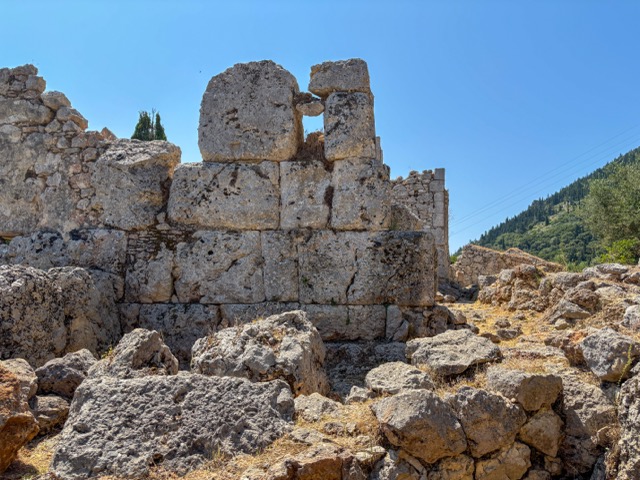
Our timing was somewhat unique. The week of our visit, the Greek Ministry of Culture released the news of a major new discovery at one of the most important archaeological sites on Ithaca, known as the “School of Homer”, and the primary destination of our little expedition.
The site’s significance grows exponentially with the confirmation of a sanctuary dedicated to Odysseus, evidenced by two newly discovered inscriptions from the late Hellenistic period: ΟΔΥCCEOC (Odysseus, genitive) and ΟΔΥCCEI (Odysseus, dative). These epigraphic findings align with a 1930s discovery in the Polis Bay cave, which bore the inscription “ΕΥΧΗΝ ΟΔΥCCΕΙ” (“Thanks, Odysseus”), and support the longstanding theory of hero cult worship centered on the island’s most famous son.
A miniature bronze bust of Odysseus and multiple ritual artifacts—including 34 fragments of clay votives, loom weights, gold and bronze jewelry, and over 100 coins from various city-states—underscore the site’s religious and social significance during the Hellenistic and early Roman periods (3rd century BCE – 2nd century CE).
. . . This discovery brings us closer than ever to verifying the physical roots of Homer’s epic legacy. Whether one views Odysseus as a myth, a man, or both, the sanctuary in northwestern Ithaca offers compelling evidence of his heroic cult and cultural importance across millennia.
As excavation and conservation efforts continue, the School of Homer stands not only as an archaeological treasure but also as a symbolic link between myth and historical memory—a place where Odysseus, king and wanderer, is honored in stone, inscription, and enduring human fascination.
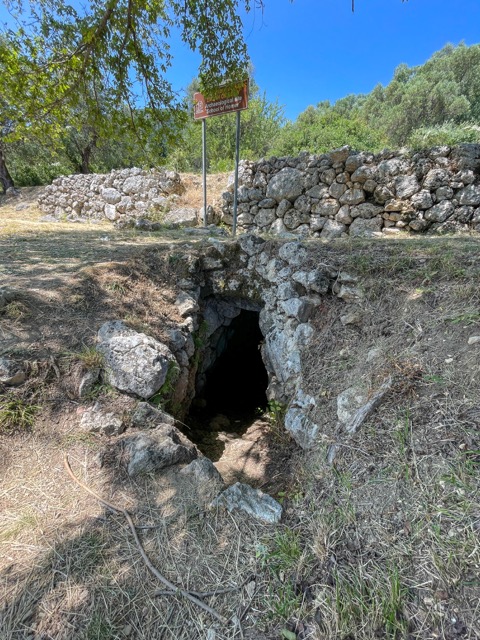
When we arrived at the site, the guide took us immediately to the location of the find described above, an underground cistern that had just recently been uncovered. There we stood, staring into a spring, lined with stone more than 3,000 years-ago, which may have served as the water source for Penelope and her household while Odysseus battled sea monsters to return home. “ . . . Loom weights, gold and bronze jewelry . . .” The words sent my mind spinning, Homer whispering in my ear tales of a wife, working at her loom, spinning scheme after scheme, holding her community together, buying time for her beloved husband to return to her here, on these terraces of rock, overlooking the sea on which he had disappeared.
We wound our way down from the site, breathtaking views of the island and water around every bend, toward the village of Kioni for a seaside taverna lunch before reembarking on the Lilly for an afternoon of sailing and swimming. The day was giving way to sunset as the last of the breeze faded and we were forced to take down the sails and motor back into port back on Kefalonia. In my mind, I heard the creek of wood, the zing of rope, and the collapse of canvas, as the call went up to man the oars for home – Odysseus’ gaze searching the horizon.
Since moving to Spain just over two years ago, we’ve popped over to Italy three times. After our first trip in March 2023, it occurred to me that we could go to Italy for a long weekend. It still amazes me that we can be in Rome in just two hours. After a ten-day trip to Tuscany and Rome in 2023, our 2024 trip was a three week-long adventure beginning in Naples and trekking by train through the hill towns of Umbria, Bologna, Venice, Milan, Turin and the Piemonte region. We’d been thinking about a Fall 2025 trip to Italy’s east coast, but then, one night at dinner in Valencia, our good friends, Richard and Sheila, mentioned they were planning a trip to Sicily in March. “Would you like to go to Palermo to see an opera?” Well, of course! So, there you go – the genesis of another adventure.
The largest island in the Mediterranean, Sicily’s unique location at the crossroads of Europe, Africa, and Asia has made it a mosaic of cultures throughout history. In fact, Sicily had been invaded and conquered since the Phoenicians and Greeks fought over it in the 5th and 6th centuries BCE until the unification of Italy in 1861. Phoenicians, Greeks, Romans, Byzantines, Arabs, Normans, Spain, the Bourbons (and a few others) all conquered Sicily and contributed to its rich, multicultural history.
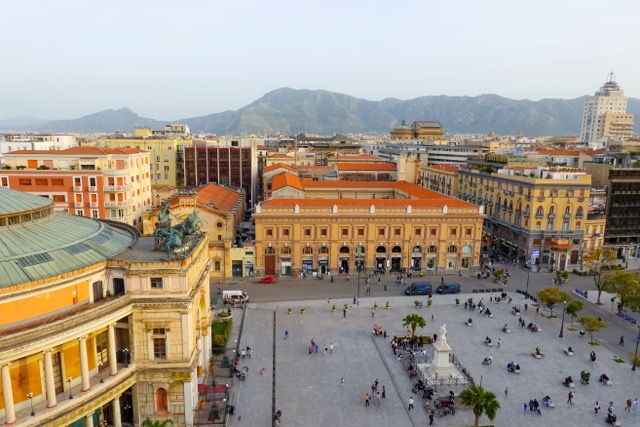
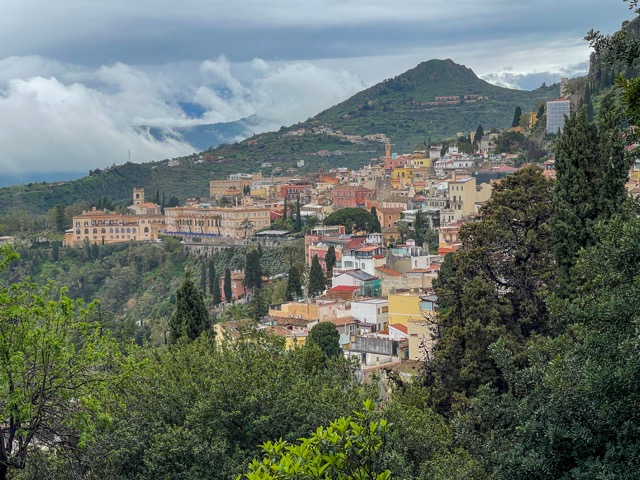
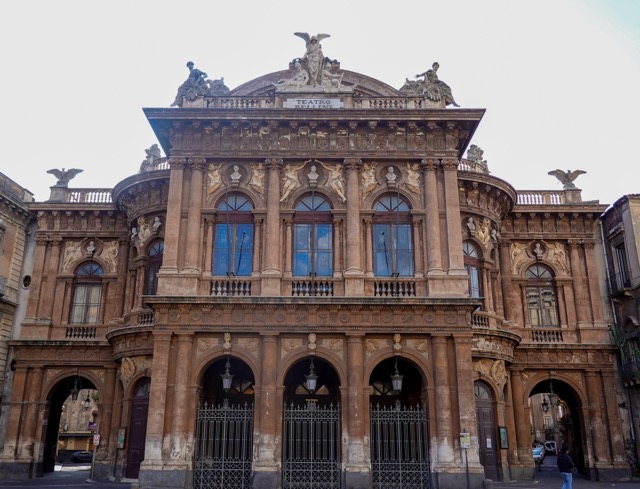
Piazza Politeama, PalermoMt. Etna, shrouded in cloudsTeatro Bellini, Catania
Sicily’s geography is also rich and diverse with a varied landscape including mountains, plains, a long coastline, and four archipelagos. It’s location at the meeting point of the African and Eurasian tectonic plates results in plenty of seismic and volcanic activity. In fact, Mount Etna, Europe’s largest active volcano, was erupting during our visit. More about that later.
Palermo: A City of Contrasts – Bonnie
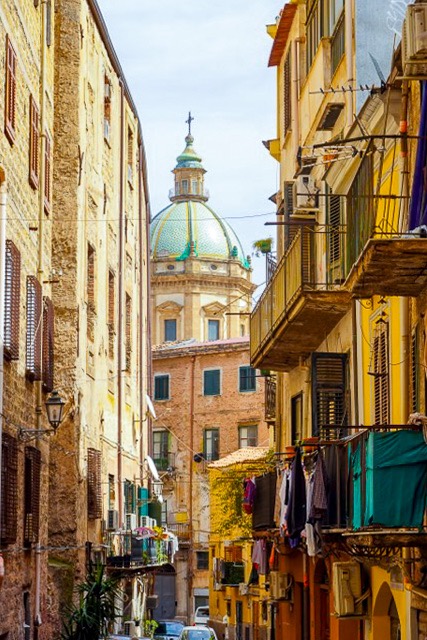
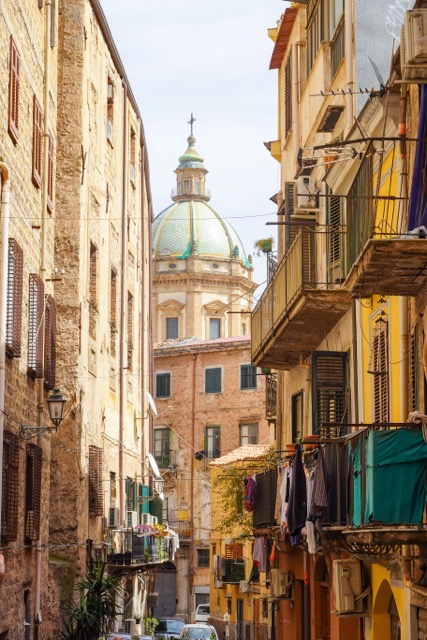
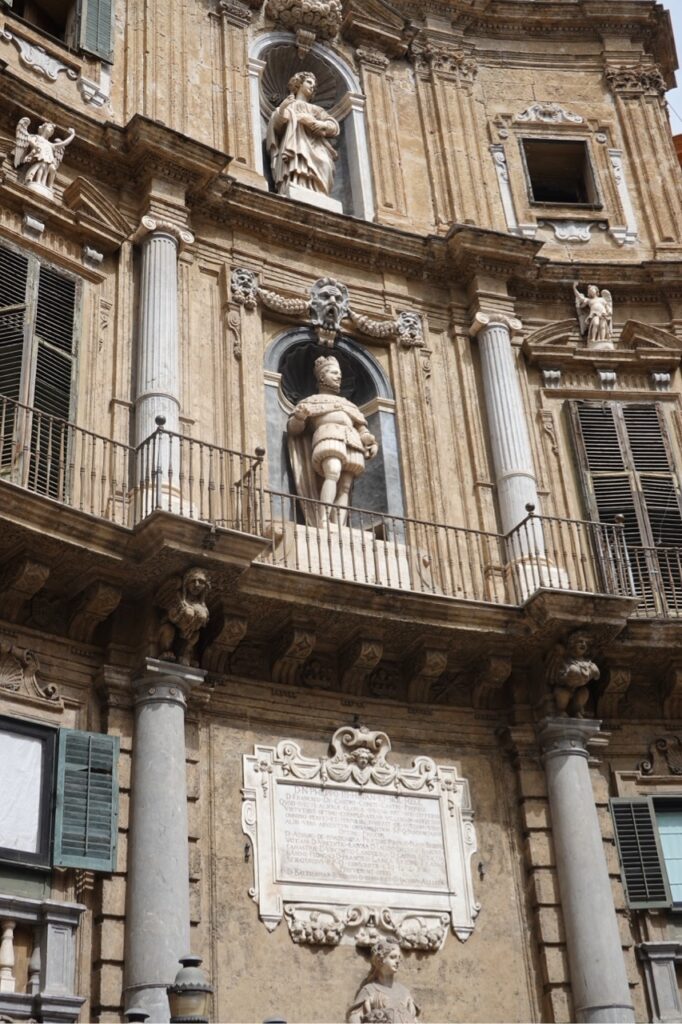
Palermo, Sicily’s capital, is a city of contrasts where faded grandeur and urban decay exist alongside stunning historical treasures. Many once opulent palazzi (palaces) are in various states of disrepair due to decades of economic struggle, political corruption, and organized crime. The streets, chaotic and gritty, are filled with rickety Vespas and e-scooters, hanging laundry, abandoned buildings, neglected sidewalks, and graffiti covered crumbling walls. As we walked the streets during the four days we spent in Palermo, I was struck by a deep sense of resilience and authenticity. It took a minute, but once I was able to embrace its imperfections, Palermo became captivating.
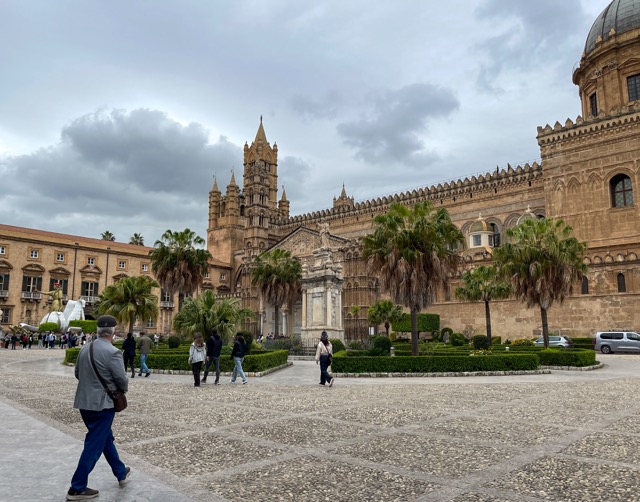
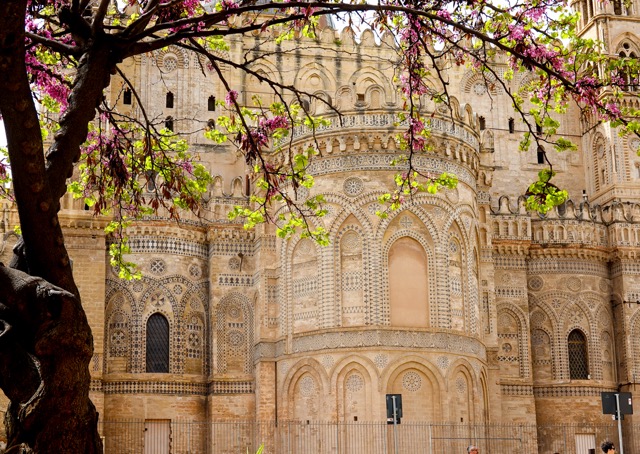
There are several UNESCO World Heritage sites in the city of Palermo – two palaces, three churches, a cathedral, and a bridge – that are architectural treasures. Dating back to 1185, Palermo’s Cathedral, with a unique blend of Western, Islamic and Byzantine architectural styles, is a stunning example of the city’s long history of diversity and multiculturalism – an inscription from the Quran can still be seen on on of the portico’s columns. And, the cathedral was built in a sacred area, where the Phoenicians, Byzantines and Arabs had previously built their own places of worship.
Palermo Cathedral is blend of several architectural styles: Norman, Arab, Byzantine, Gothic and Neoclassical.
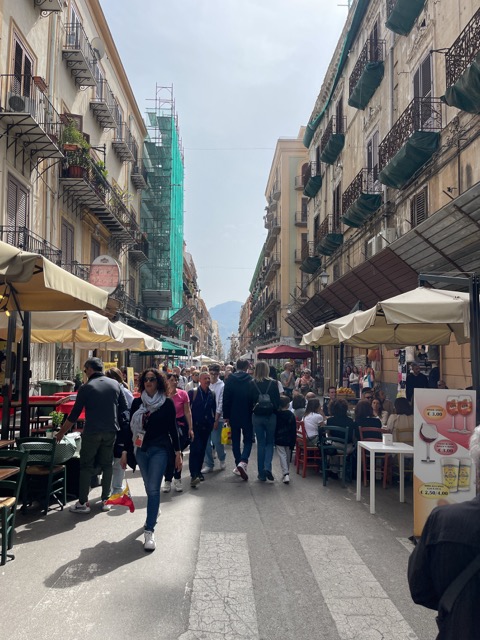
Full of life, activity, and architectural treasures, we enjoyed walking around and exploring this historic city.
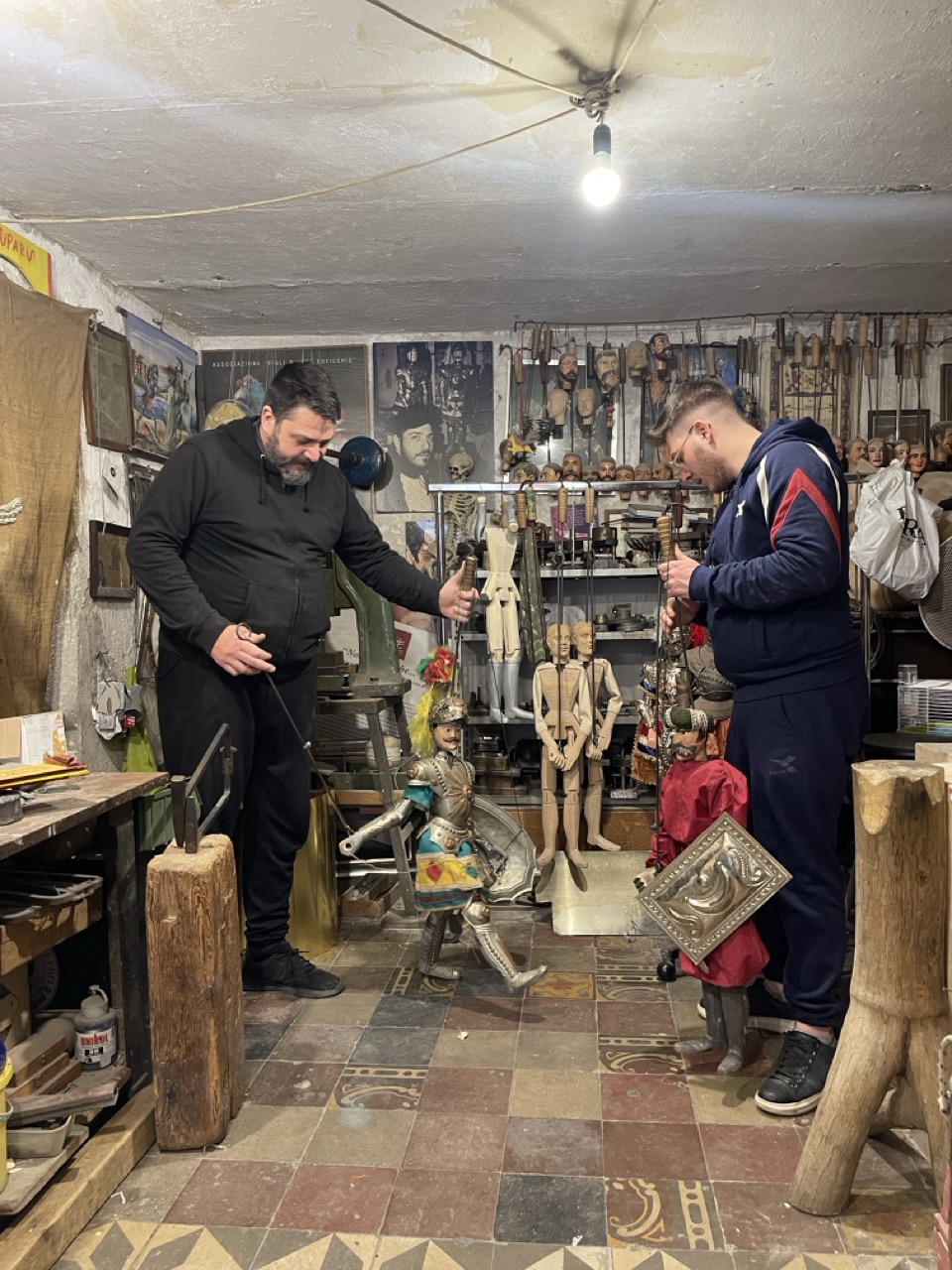
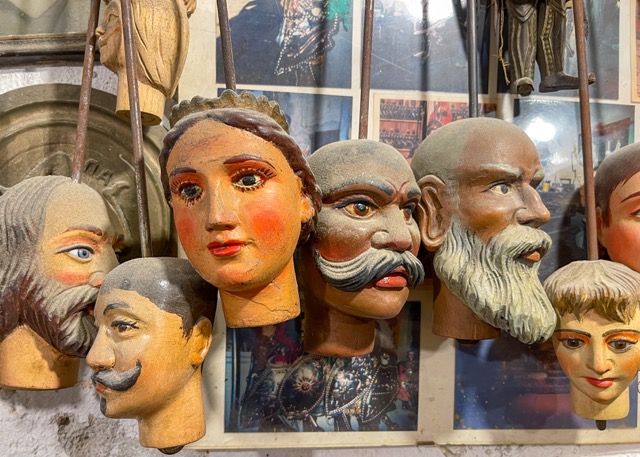
A father & son in their workshop – one of Palermo’s last puppeteers.
The Opera – Ed
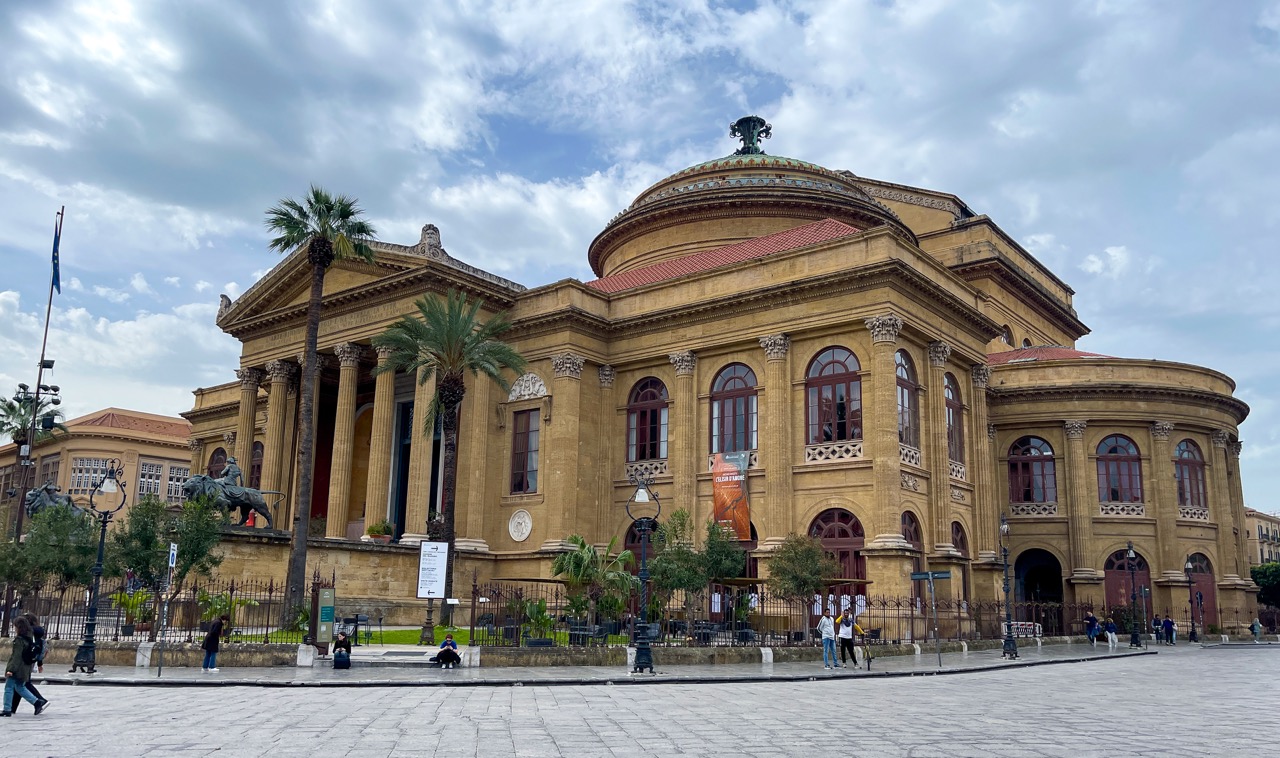
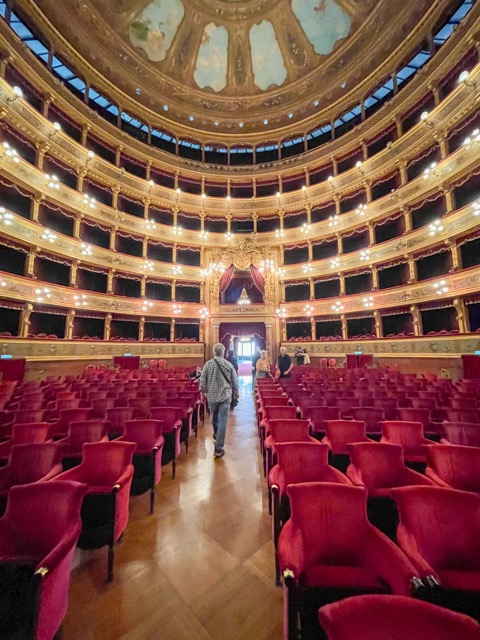
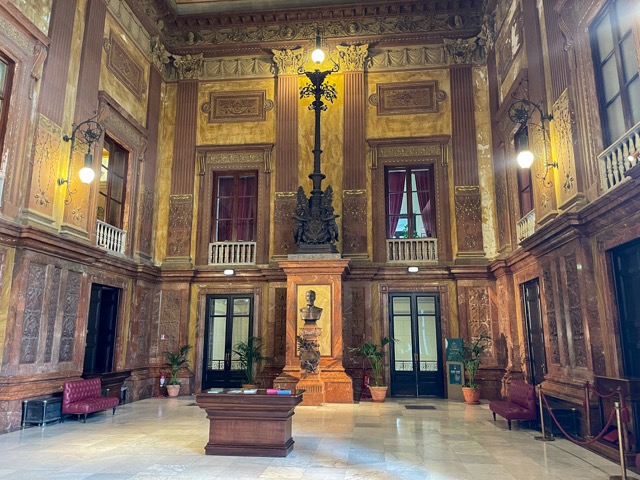
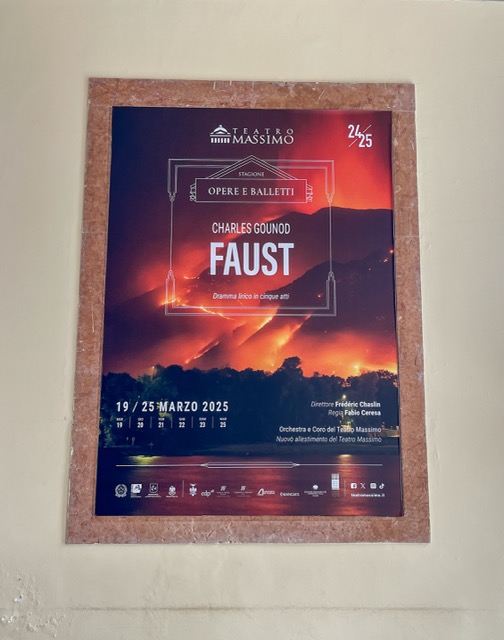
Last year we’d enjoyed a wonderful evening in Naples at a performance of Norma in the Teatro de San Carlo, which has been presenting opera longer than any other venue in the world. So, when we heard about Faust being presented in Palermo at the Teatro Massimo, we were all primed. This is one of Sicily’s Crown Jewels – the largest opera house in Italy and third largest in Europe.
Teatro Massimo, Palermo
Faust, as you may remember, is an ancient legend about a guy who sold his soul to the devil in exchange for a few sordid pleasures here on earth. The opera was written by the French composer Charles Gounod, but his inspiration was from a much earlier work of art. The original two-part epic poem by Johann Wolfgang von Goethe is considered one of the greatest works of literature ever penned. Gounod and a couple of librettists – Jules Barbier and Michel Carré – turned the Goethe’s version of the story into a celebrated opera. Years late, another writer – this time a Russian, named Mikhail Bulgakov, wrote a novel reinterpreting Goethe called The Master and Margarita which he set in 1930’s Moscow. Bulgakov’s novel is hailed as one of the masterpieces of the 20th century. All that to explain that for the production we were privileged to experience in Palermo, the director, Fabio Ceresa, conflates Bulgakov’s vision of 1930’s Moscow with Gounod’s opera to stage a fascinating and thrilling rereading of a classic opera. It was a lot.
Here, l would like to pause for a rather personal aside. Our 50th wedding anniversary spurred a bit of reflection on what exactly accounts for this bond, that has held through the decades. We’ve come to realize that high on the list is a shared, unquenchable thirst for learning. Our experience at the Teatro Massimo is a typical example. We have spent over a week, now, reading and sharing our thoughts on Goethe, Gounod, the importance of baritones, Bulgakov’s novel, and Ceresa’s surreal staging. We are exposing our ignorance and sharing the excitement of discovery. We have late night discussions on the meaning of life and how all of us navigate through its perils. I am so blessed to have such a life partner.
That night, as we headed into the warren of the city in search of a post-performance bite, one of our companions exclaimed “that was just nuts!” Just so. The production was a mashup of iconography, mysticism, social commentary, color, light, sound, and unhinged imagery. I was thrilled. And challenged. And mystified. The acoustics in this grand opera house were the equal of any I have ever heard. The performances were exceptional – subtle, nuanced and restrained early, allowing the drama to build to a memorable crescendo involving an immense chorus in full- throated celebration.
Haunted as I have been ever since, I am working on an essay to critique what I have come to believe is an important connection between elements of Ceresa’s production of Faust and the culture of Sicily. Stay tuned but be warned: it’s going to get nerdy.
Cosa Nostra – Bonnie
Just four weeks before we left for this trip, I saw a news article about the arrest of 183 mafia members in Palermo. Hmm . . . something to think about? I forwarded the article to Sheila, told Ed about it, and put some effort into not worrying. While Sicily has been practically synonymous with organized crime for decades, we learned that Cosa Nostra is a shadow of what it was in the 1980’s, a period of horrific violence. It is, however, still alive and well. The investigation leading to the recent arrests revealed that while some Cosa Nostra still yearn for the infamous crimes of the past, the new generation are more discrete, keep a lower profile, and are adapting to modern realities. They are using encrypted mobile phones and short life micro-sim cards smuggled into prisons to prevent being eavesdropped while they focus their efforts on drug crime, money laundering, online gambling, and infiltrating legitimate businesses.
“They just don’t make mobsters like they used to.”
Mafia boss, on a police wiretap, bemoaning the difficulty of finding good staff nowadays.
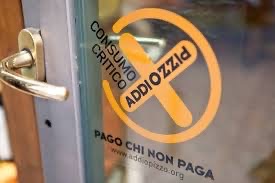
In addition to the intensive work by law enforcement, public resistance has grown significantly. We spent three hours on a walking tour with Addiopizzo, a non-profit, grass-roots organization based in Palermo. Addio translates to “Goodbye” and “Pizzo” is the monthly “protection” money businesses are strong armed into paying. As a result of Addiopizzo’s efforts, there are currently about 1200 businesses in Palermo that have committed to saying “NO” to the Mafia. These businesses display a sticker on their doors to let mafia members know they are not welcome and to communicate their commitment to consumers.
Addiopizza also encourages the public to support these businesses through various educational campaigns. Of course, 1200 is a very small percentage of Palermo’s businesses, but it’s a start. As the Addiopizza tour continued, it dawned on me that a similar consumer-activist approach is beginning to take root as a form of resistance to the tactics being employed by the regime in the U.S.
Il Muro della Legalitá
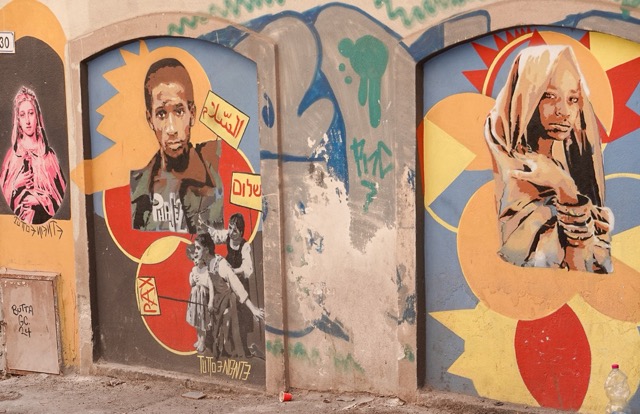
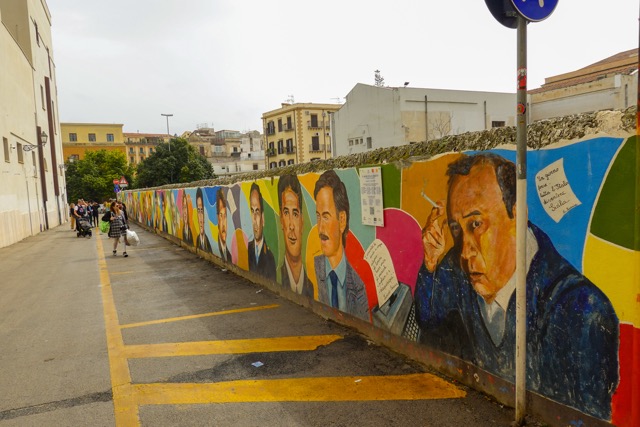
The Il Muro della Legalità (Wall of Legality) in Palermo’s central district, just behind the Teatro Massimo, is a poignant testament to those who have contributed to the fight against organized crime in Palermo. The vibrant images reflect the struggles and the resilience of the local community and their commitment to justice. As we walked along this wall of murals, I was overcome by feelings of grief for those lost, admiration for their sacrifice, and hope for a Palermo that refuses to be defined by its past.
Our guide told the story of each individual’s role and contribution. Of course, the now famous anti-mafia prosecutors, Giovanni Falcone and Paola Borsellino, who were murdered by the Sicilian mafia in 1992, are a highlight of this unique blend of art, history, and activism.
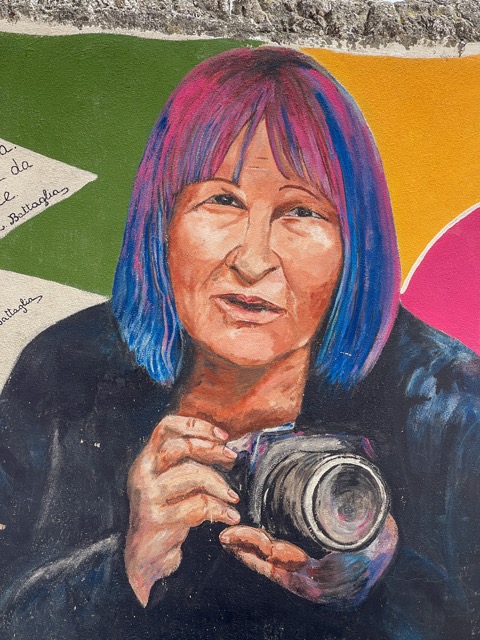
I was especially drawn to the women portrayed in this powerful mural. In particular, I found the story of Letizia Battaglia to be inspiring and powerful. Letizia was a photographer whose images, depicting the victims of Mafia violence, were a form of condemnation and activism. A documentary film of her life, ‘Shooting the Mafia” was released in 2019 and can be streamed on Prime TV or Apple Video (in Italian with English subtitles). I have a collection of images of important, inspirational, and powerful women that I have been assembling from our travels. Letizia will be the latest addition to my wall of heroines.
Letizia Battaglia
Migrants – Bonnie
Sicily has been a major landing point for people fleeing war, poverty and oppression through Africa and the Middle East. We’ve all read the stories and seen the images of over-crowded boats crossing the Mediterranean full of people desperate for a safe place to live. Many communities throughout Sicily, despite significant economic struggles of their own, welcome, feed, provide clothing and temporary shelter.
“We find bodies in our nets.”
Pietro Riso, Sicilian Fisherman
In 2023, Lampedusa, Sicily’s southernmost island, was a Nobel Peace Price nominee for their efforts to rescue and assist migrants. As the the number of migrants has skyrocketed, the hardship and strain on Sicilians has intensified. The human suffering is unimaginable, and the worst of humanity is in plain view. There are also many compassionate Sicilians doing what they can to help. The projections are for an acceleration of migration. I can only hope that love, care and empathy will triumph over corruption and greed.
“We are the people of the most conquered island in the world, where one wave of invaders just changed another, and so we created and inhabited our own universe, where the past — Phoenician, Greek, Roman, Byzantine, Jewish, Arabic, Norman, French, Spanish — was never rejected but accepted and embraced.”
Bianca Del Bello, Palermian Tour Guide
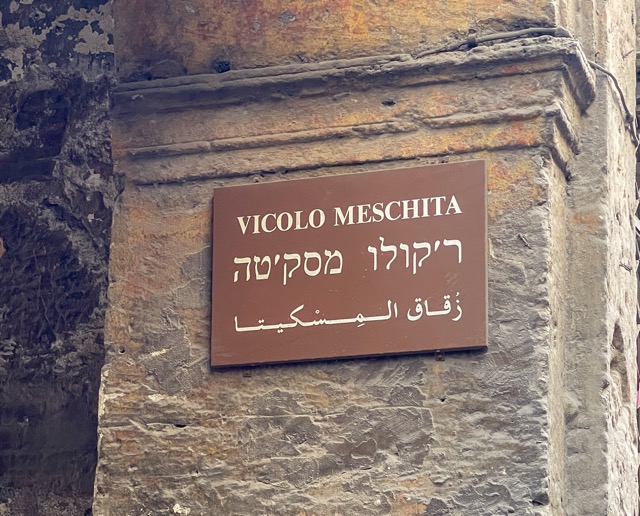
Palermo’s newly-placed street signs written in Hebrew, Arabic, and Italian that pay homage to the island’s Jewish and Moorish roots.
The Food – Ed
To anyone reading our blog posts regularly it must seem that we are obsessed with food. Maybe. But I think it’s actually a bit more complex. Among the reasons we love travel is to experience the vast array of traditions and cultural practices humans have evolved through the ages. Exploring the food in any given region is a window into that culture. This seems particularly true in Sicily where the food has been influenced by one civilization after another as successive empires have waded across the island. And we’re obsessed with food.
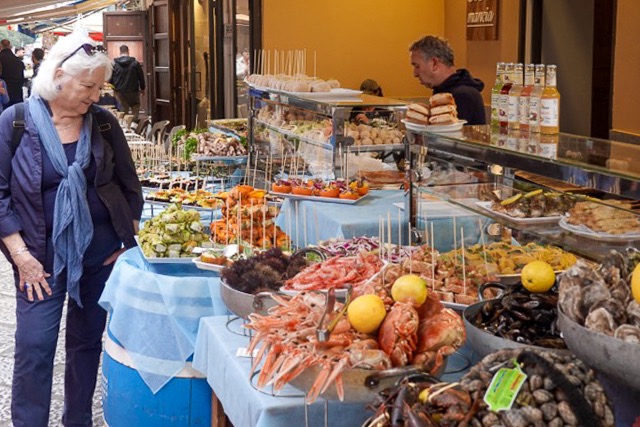
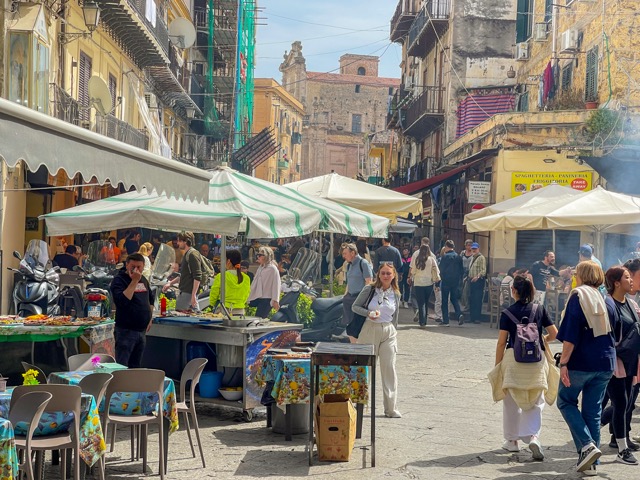
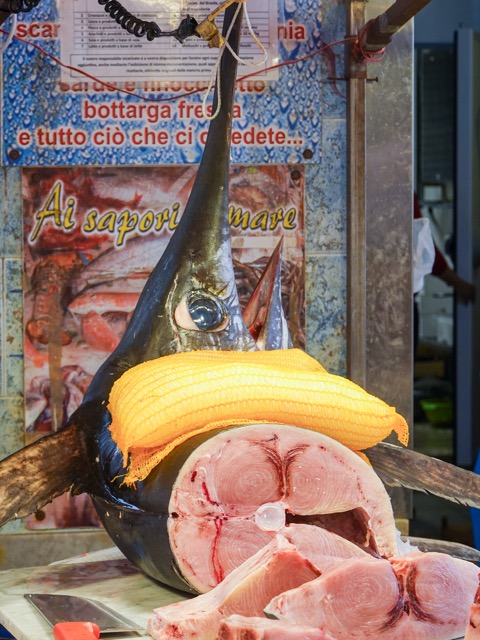
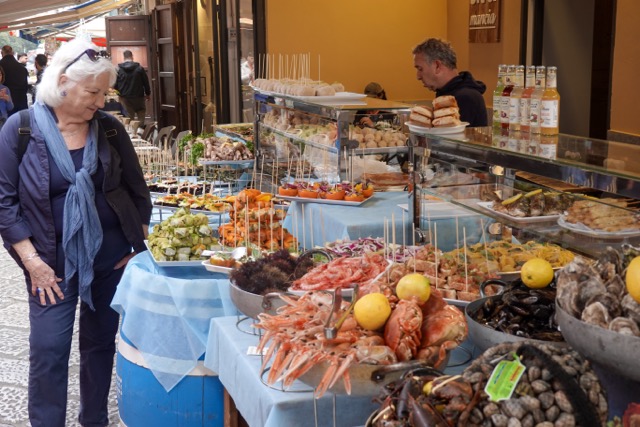
Dating back to the Muslim era (831-1072 CE), Mercato del Capo is Palermo’s most authentic market with colorful stalls selling fresh produce, fish, meat, spices, nuts, olives, wine, bread, cheese and many other local goods. Like many large urban markets, the vivid colors, enticing aromas, and boisterous sounds of vendors are a feast for the senses. There is also a staggering array of street food and dining experiences to enjoy.
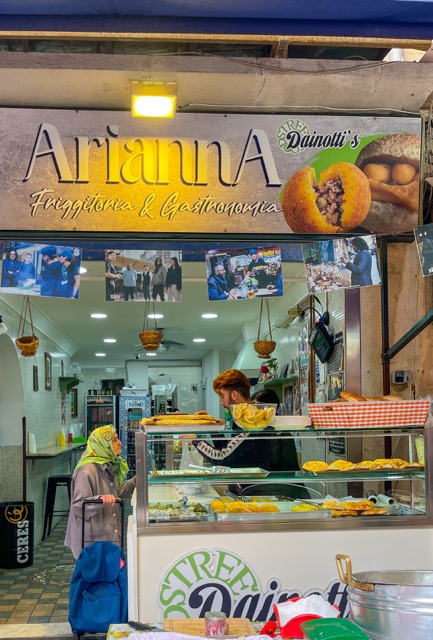
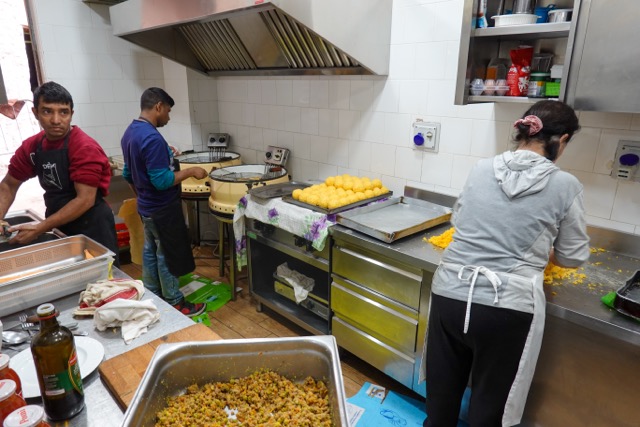
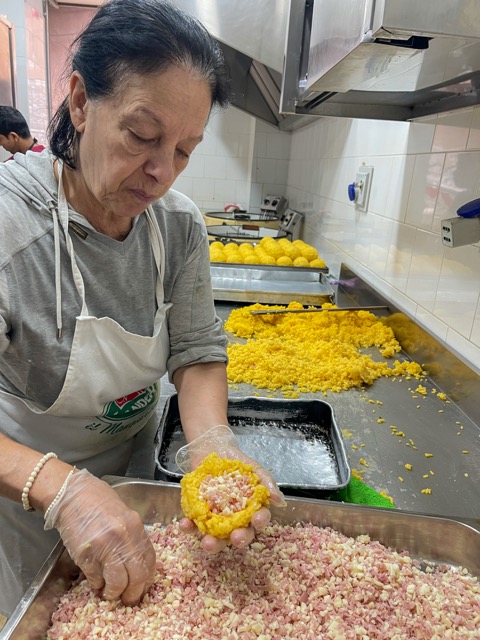
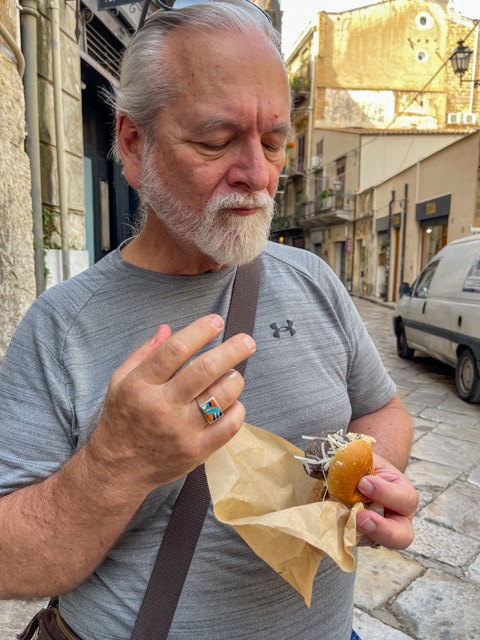
Italian food is generally beloved by Americans like us, so the markets and restaurants of Palermo produced few actual surprises. That said, it never fails to bring joy when we are privileged to sample the original of a dish that is widely imitated. Let’s start with a humble street food, ubiquitous in Sicily: arancini. First, the humble part. Sicily is a poor region of Italy. This has been true throughout history. The legacy of poverty is ageless and can be attributed to geography, politics, and organized crime. So, the people of Sicily have long had to find ways to do more with less. For a vast percentage of the earth’s poor, rice is sustenance. So, how do you turn this humble ingredient into a flavor bomb? Stepping out of the chaos of Palermo’s Capo Street market into the domain of a slight woman who is a local master of arancini, we received a lesson. The rice used is a large, stubby variety that is first prepared risotto style, glazing each grain with a starchy mortar mixed with a hint of saffron for color and fragrance, and a dollop of butter for that rich mouthfeel. After resting overnight to achieve the perfect texture, the rice is scooped into the palm and a spoonful of filling added. Here the key is bold flavor – salty cheese, sun-dried tomato, diced sausage, meaty ragu – or any of a host of options to achieve as much flavor as possible from a very modest portion. Now the rice is shaped into a lovely oblong the size of a duck egg and coated with another humble element: breadcrumbs. The final assembly is dropped briefly into hot oil.
Yes, I’ve had fried rice balls before, sometimes labeled arancini and sometimes not. But this was something else. A wonderfully crisp, tender crust enclosing a soft creamy mantle with a core of intense flavor. This experience was repeated with anchovy panzerotti (turnovers), ravazzata (stuffed brioche), pizzetta (tiny pizza), and spitino con la carne (bread stuffed with ragú). Each one a simple street food, executed by cooks who have mastered every detail to create a nearly perfect meal from the humblest of ingredients.
In the trattorias and osterias we frequented, another staple of Sicily was always on the menu – Pasta alla Norma. Beloved throughout the island, it has a much more recent history, created, as the story goes, to celebrate the opera created by Vincenzo Bellini, one of Sicily’s favorite sons. Here again, you have the simplest ingredient list: tomato, basil, and eggplant, topped with shavings of ricotta salata. Its vibrant flavor depends on the quality of the ingredients and the execution, both plentiful in this culinary landscape. We ate it four different times in eight days – each one better than the last.
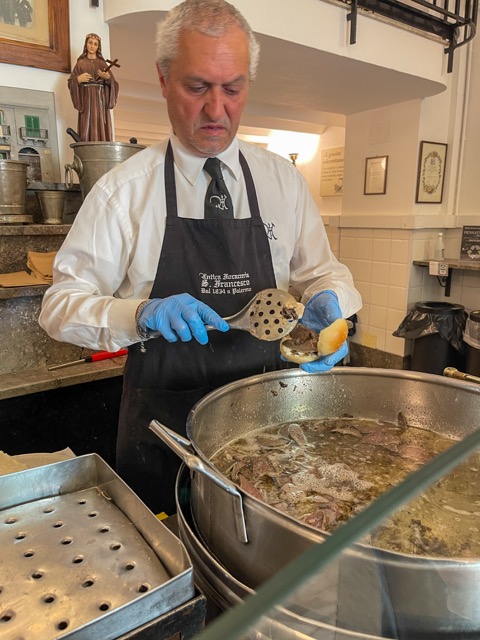
Bonnie insists that I include a word about another street food that is particular to Palermo. Since I was the only one of our little group to actually eat a Pani ca’ Meusa (spleen sandwich), I do feel an obligation to report on the experience. Once again, the Sicilians found a way to utilize the discards of the elite for a savory, filling taste treat. We’re talking street food delicacy here! Cow spleen, lung, and trachea are first boiled, then thinly shaved, then fried in lard, before being piled into a freshly baked roll. I had mine maritata style – that is sprinkled with shredded cheese. I was expecting it to be an acquired taste kind of moment, but it was actually quite good – mild livery flavor with a pleasant, soft chewiness.
Taormina – Bonnie
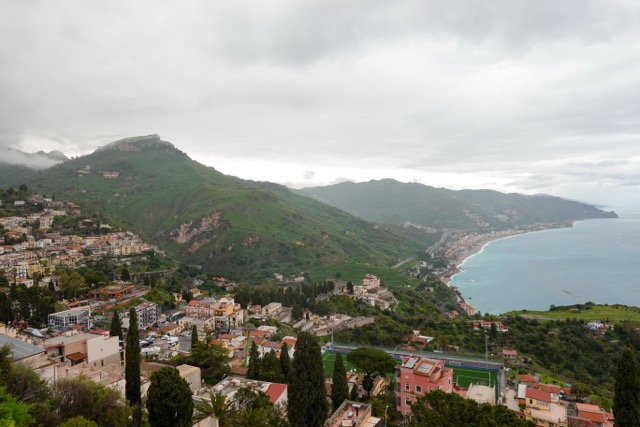
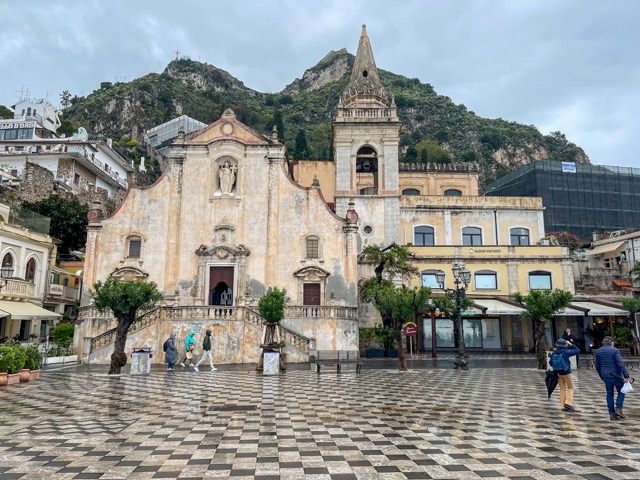
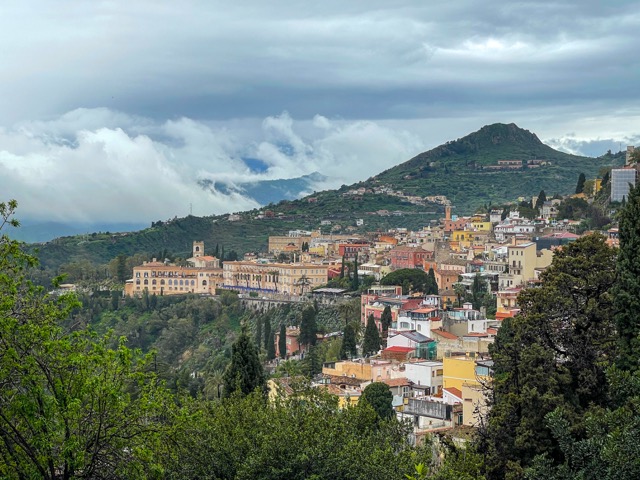
After a four-hour ride, our train from Palermo deposited us in the post-card perfect seaside resort town of Taormina on the east coast of Sicily. Perched on a hill with stunning views of the Ionian Sea on one side and Mount Etna on the other, Taormina was the perfect respite from bustling Palermo.
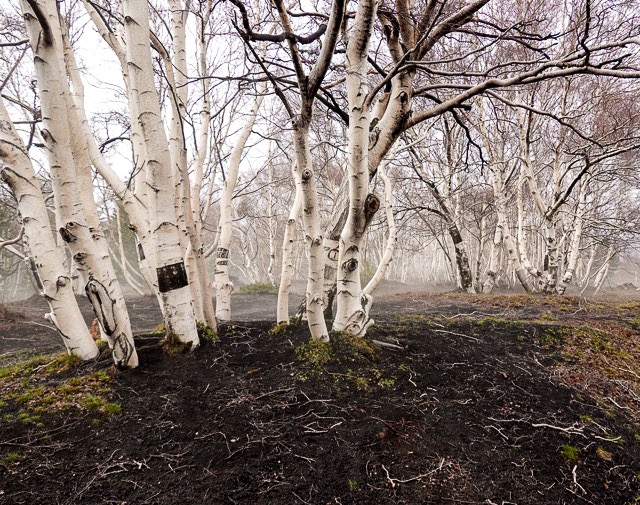
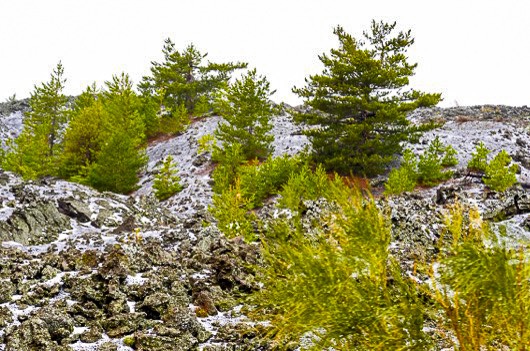
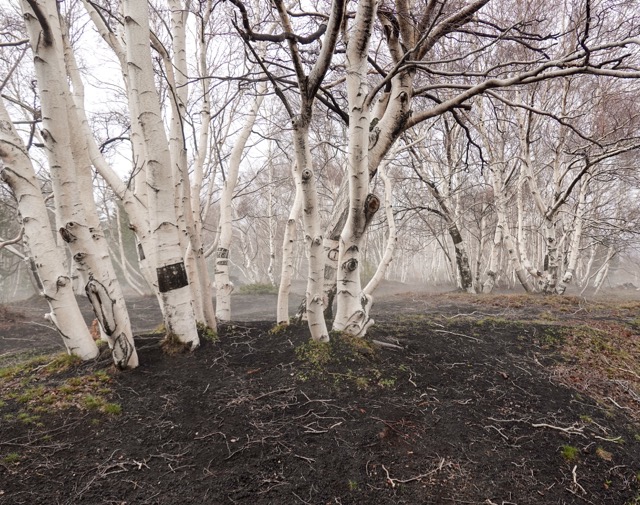
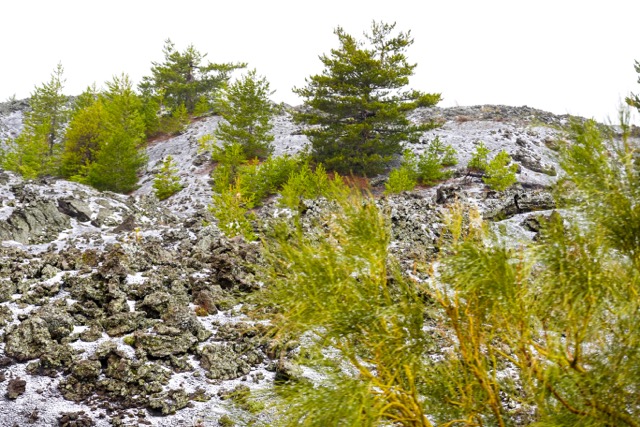
Our two days in Taormina included a trip up the slopes of Mt. Etna, an active volcano known for its frequent eruptions (including during our visit!). Imagine lava flowing down snow covered slopes. We didn’t get close enough to the crater to see this amazing display of fire and ice, but we did enjoy exploring the diverse landscape around Mt. Etna. A short hike into the lava fields of past eruptions was striking, especially with the white birch trees growing in the black lava rock. Our hike was interrupted by a bit of icy/snow type stuff falling from the sky. As we wound our way back down the slopes, the richness of the volcanic soil was evident in the many vineyards, citrus groves, chestnut forests, and almond, hazelnut and pistachio orchards. We ended our day with a tasting and lunch at a lovely family-owned winery. Magical.
Catania – Ed
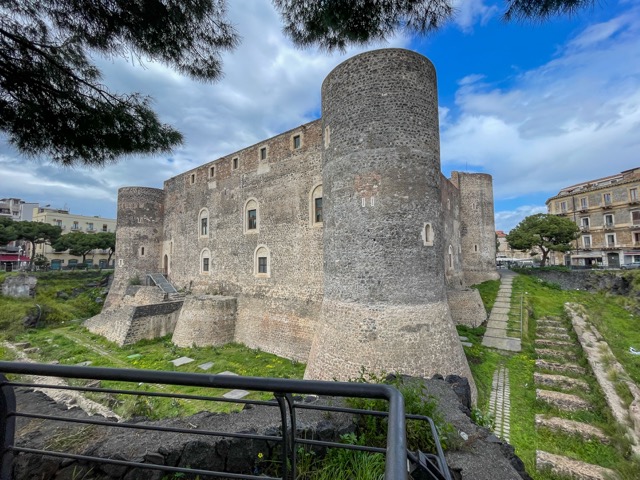
An hour south on a local train and the respite Taormina provided was over. We found ourselves back in the midst of a vibrant, chaotic, old city. Sitting at the base of Mt. Etna, Catania is referred to as the “Black City” because of the use of lava rock as a primary building material and the volcanic soot on its buildings. It turns out that Catania has been destroyed and rebuilt at least seven times due to volcanic eruptions and earthquakes. Talk about resilience.
Ursino Castle – a royal castle built in the 13th century
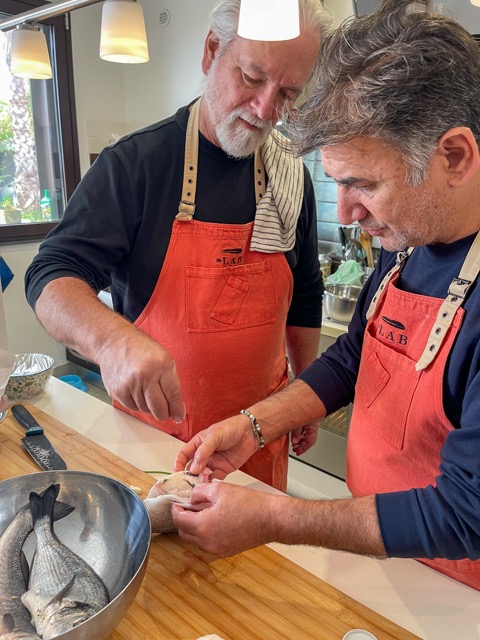
Here, we were fortunate to find ourselves enjoying a cooking lesson with a native of Catania, Chef Riccardo Messina. Riccardo had left Sicily four decades ago to travel and cook in various parts of the world before settling in Shanghai, China where he opened his own restaurant. A couple of years into that venture, Michelin awarded him two stars and he became a rock star on the Asian food scene. Like many of us, the Covid epidemic forced him to rethink his future, and he returned to Sicily, retired from the restaurant business, and decided that meeting and cooking with new people every day was not a bad retirement. Chef Riccardo left it to us to create the menu, and I wanted to focus on the abundant quality seafood on the island.
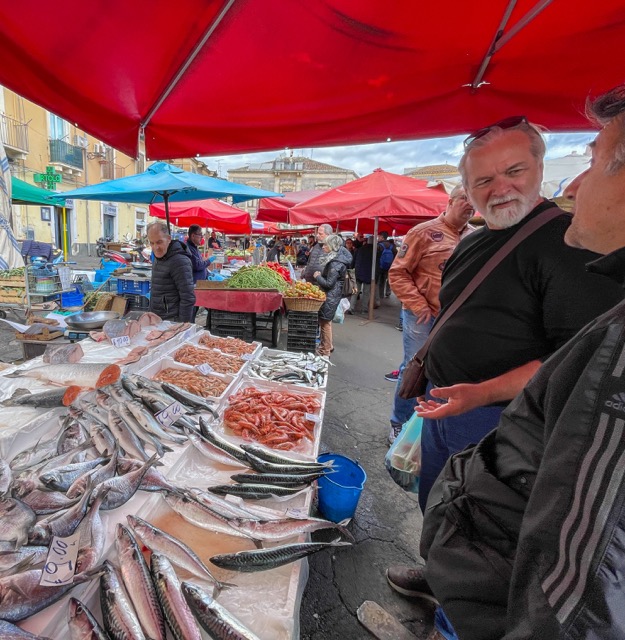
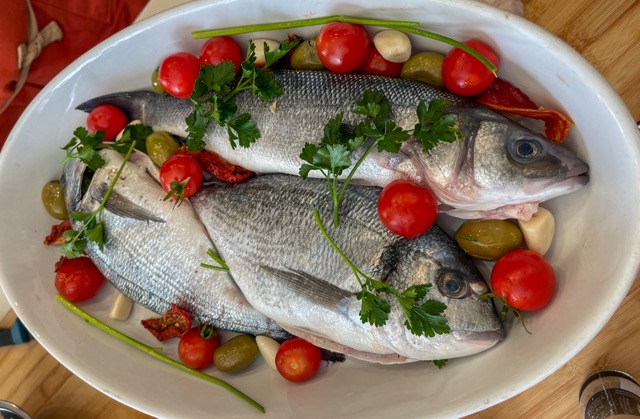
We wandered through Catania’s street market, stopping to inspect the offerings from various fish mongers. In the end, we purchased sea bass, sea bream, mussels, calamari, and red prawns. Chef Riccardo got a little carried away with the produce – artichokes, eggplant, squash, tomatoes, and an assortment of pickles and olives. On the way to his home, we stopped in a little side street to purchase wine and bread. What ensued was a quirky and delightful afternoon, like going to a friend’s house to cook and drink wine together. Our menu evolved as we worked and was filled with small insights and appreciation for the simple use of great ingredients. Riccardo’s wife, Sally, was a delight and we left feeling we had truly experienced Sicily.
What is it about water? Especially sea water? How can it be inspiring and intimidating at the same time? How does it create both a sense of peace and awe? What is it about the sea that calls to us? It was our great good fortune, on our latest travel adventure to the Greek Islands, to have time for pondering these questions while surrounded by the sea.
Oh So Blue
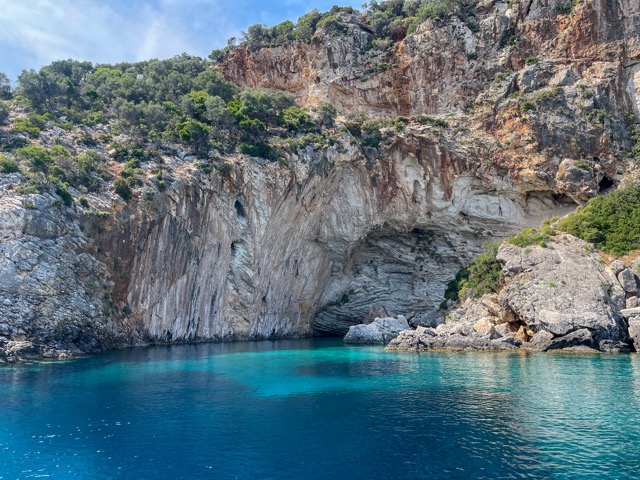
The crystal clear waters of the Aegean Sea range from the deepest blue to sparkling turquoise. It’s hard to believe how blue the water is. It’s impossible to stop staring at it.
It turns out, there are mental health benefits to staring at the ocean. The color blue seems to be associated with calm and peace and we often find our selves in a relaxed, meditative state. Being near the sea is a remedy for stress and anxiety and we feel more connected to nature.
…our brains are hardwired to react positively to water and being near it can calm and connect us, increase innovation and insight, an even heal what’s broken. Wallace J. Nichols, Marine Biologist
Wading & Jumping
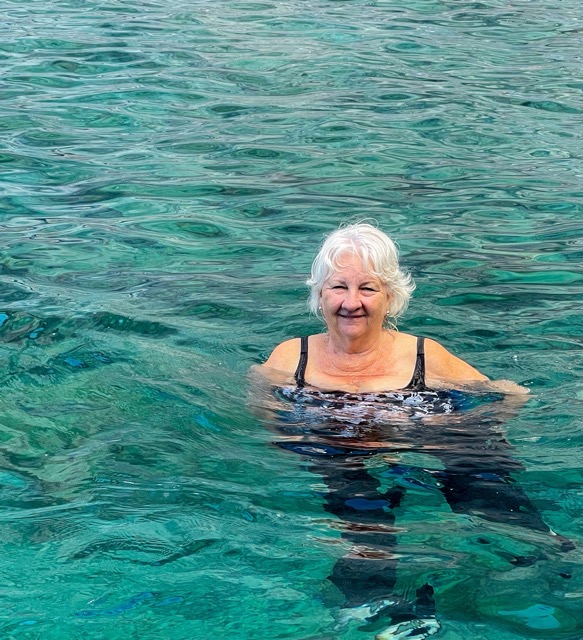
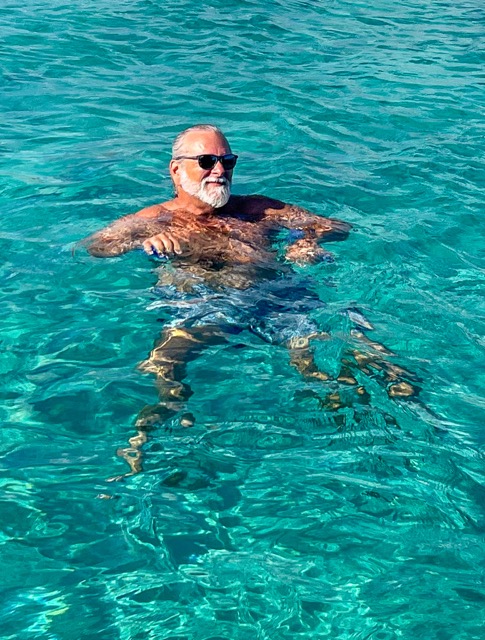
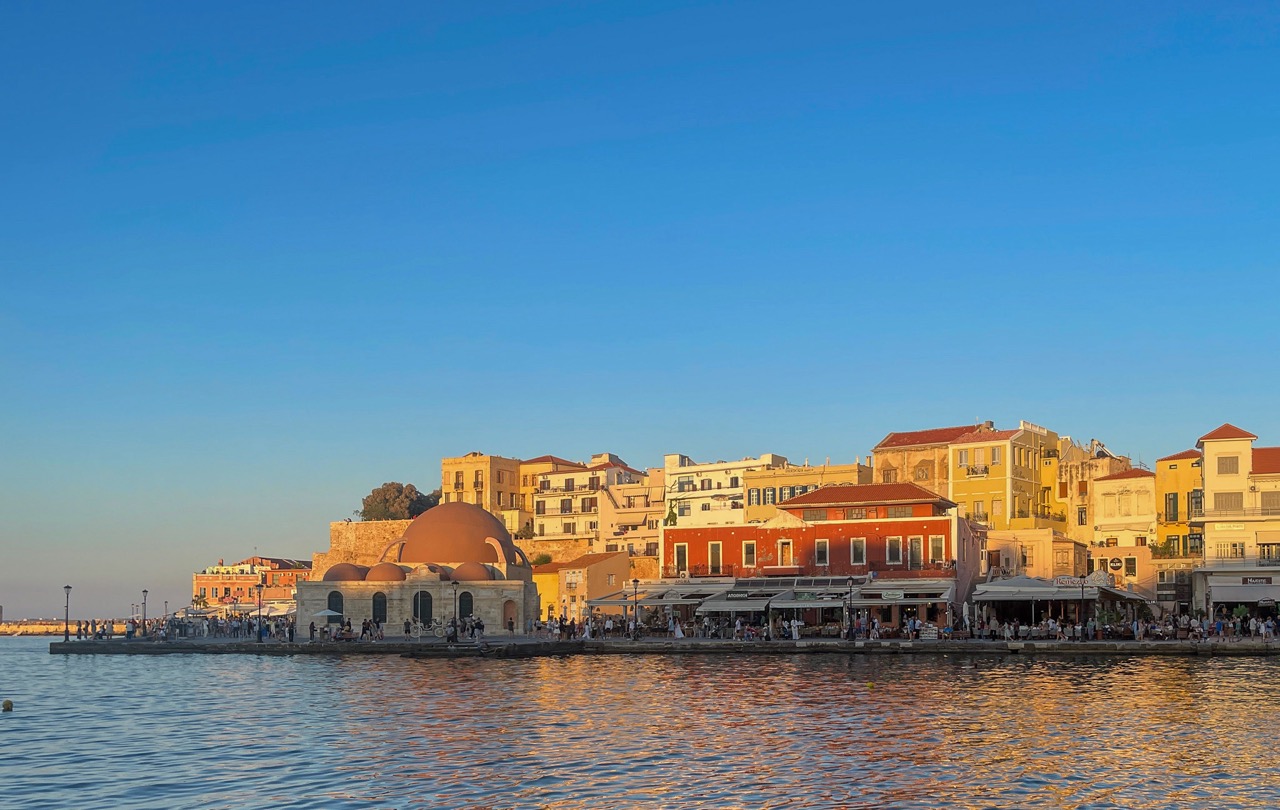
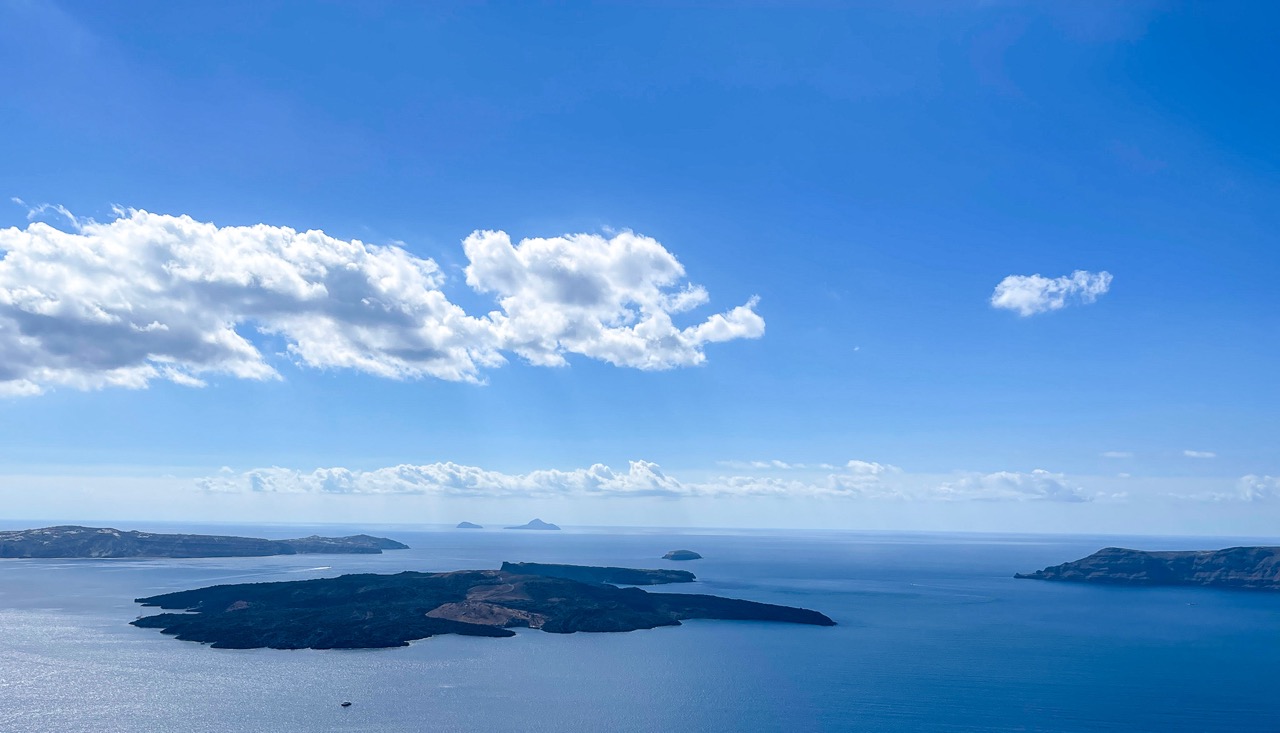
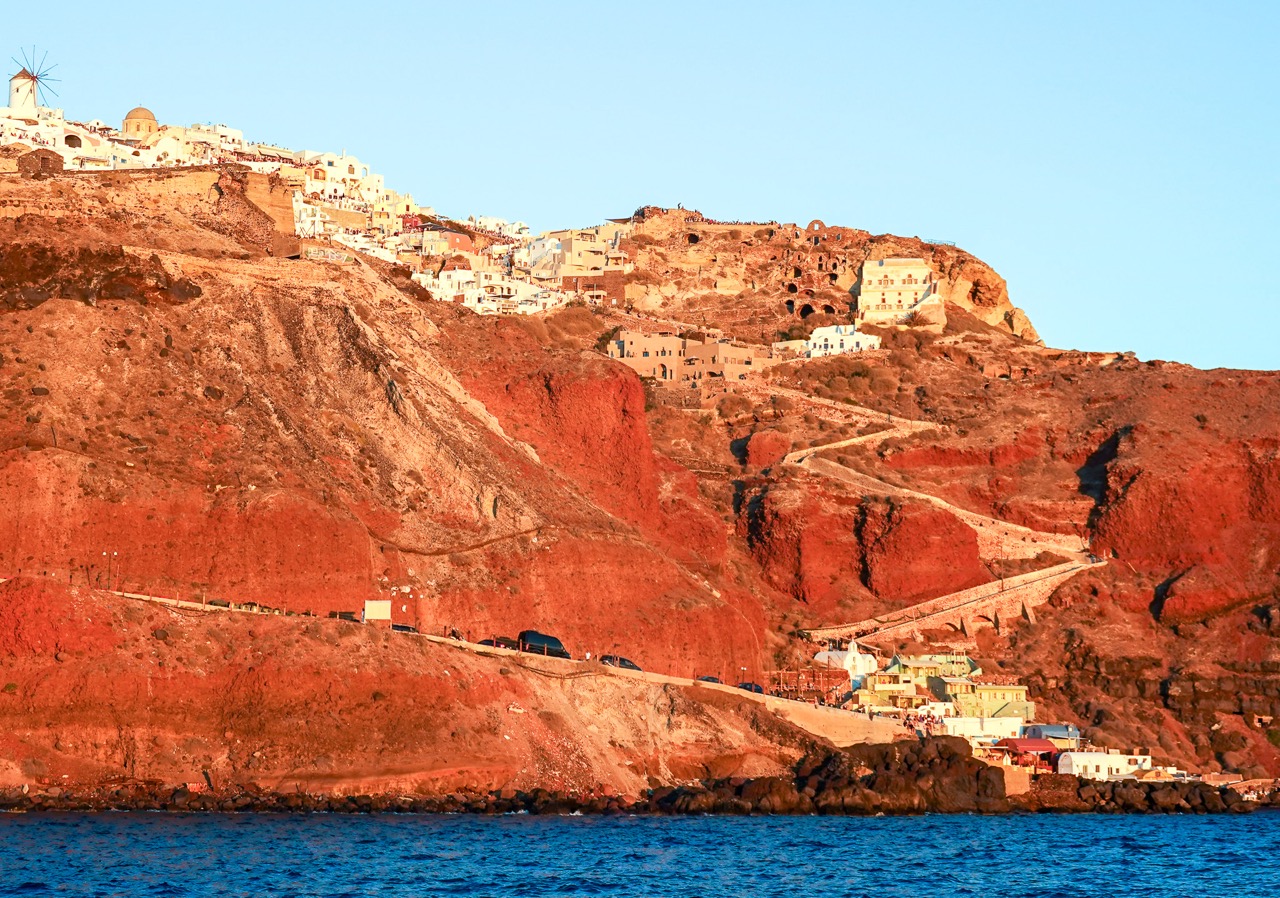
Whether it’s wading into the water from a beautiful sandy beach or jumping in from the side of a boat, there’s no better feeling than being in sea water. We were fortunate to have almost daily opportunities to wade, dive, and swim during our time in Crete, Santorini, and Paros.
Numerous health benefits are attributed to salt water (and the Mediterranean is salty!). Breathing in salty water clears your throat and airways, heals cuts and scrapes, and soothes muscles and joint pains. It’s wonderful to feel supported, buoyed, and gently rocked by the sea.
A Favorite Beach?
Catering to tourists, most hotels and resorts in Greece include beautiful pools and Jacuzzi hot tubs. But the Greeks can’t understand why many of us prefer this artificial water that we can find in every other part of the planet, even our own backyards. For us, the natural beauty, the movement and sound of the surf, the warm sand make beaches a clear winner in the pool vs. beach debate.
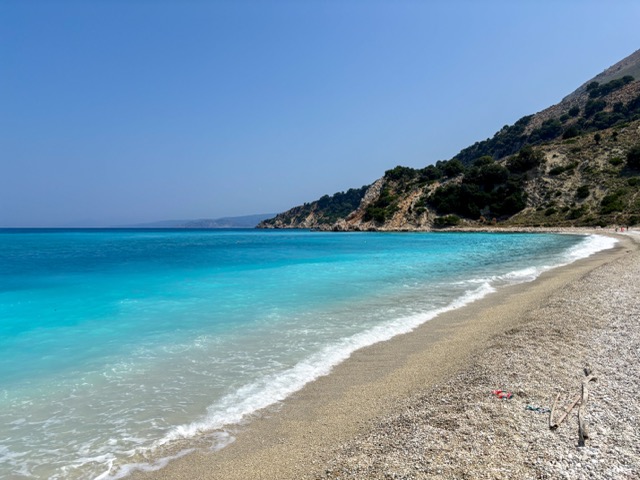
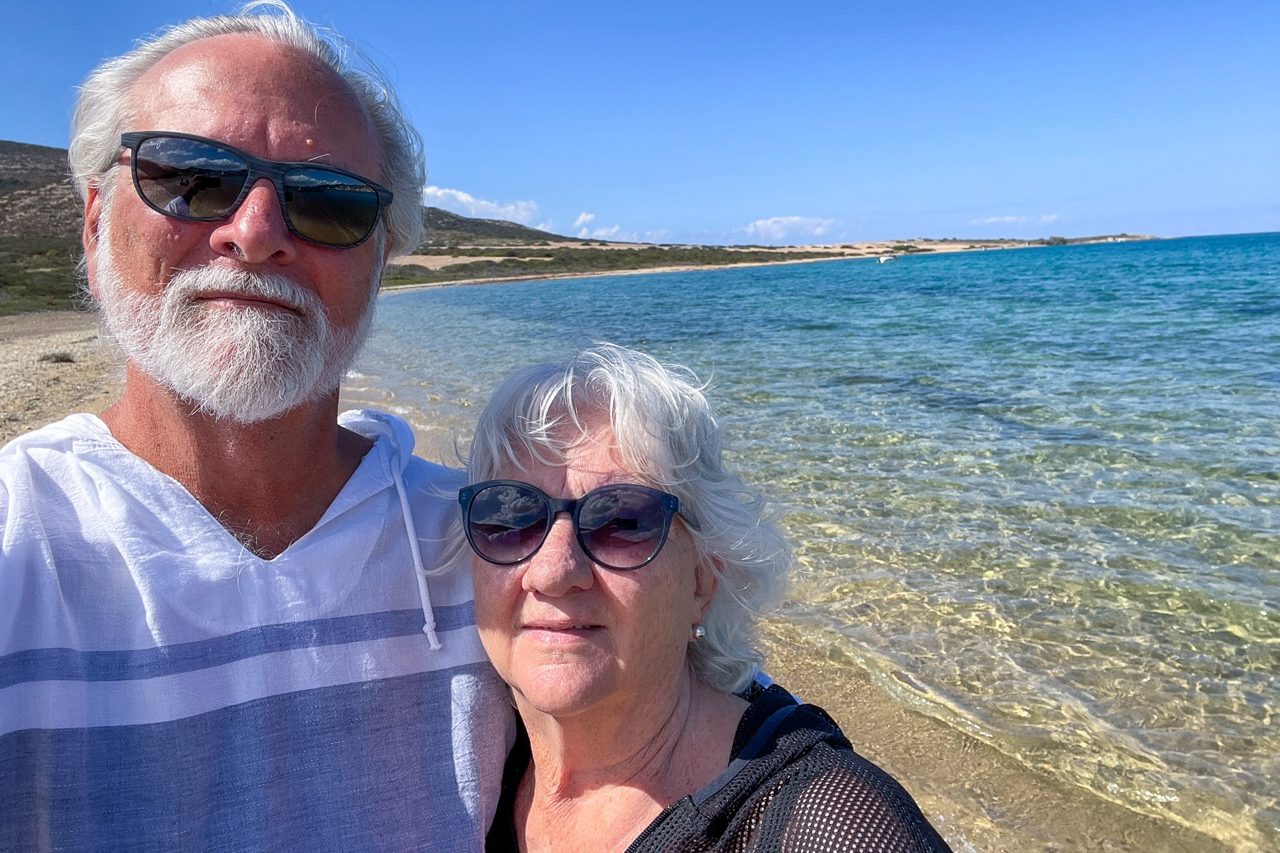
Last May, anticipating our return to Greece to explore a few islands, we asked every Greek we met, “What is your favorite island?” The response was always the same – the name of a favorite beach. As we drove around the island of Paros one day, we drove past many beaches. After a while, Ed stopped the car, we changed to our suits (behind the car) and went for a swim. There were just a few locals nearby doing the same. No umbrellas lined up on the sand, no one to bring a cold drink, no frills…just sand and sea. The sea was calling.
Greeks love the sea. It is the very essence of their being, their culture, and their legacy. They treasure the feel of the cool, salty water on their skin, let their feet touch the soft wet sand, and lie on the beach basking in the joy of the sun drying their body. Is it possible we could be at least part Greek?
Magic
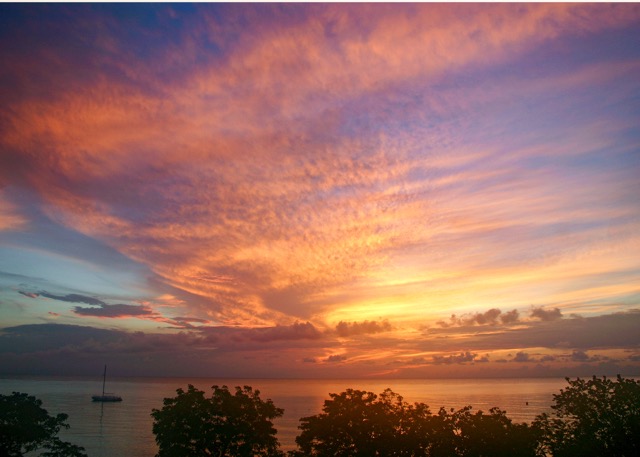
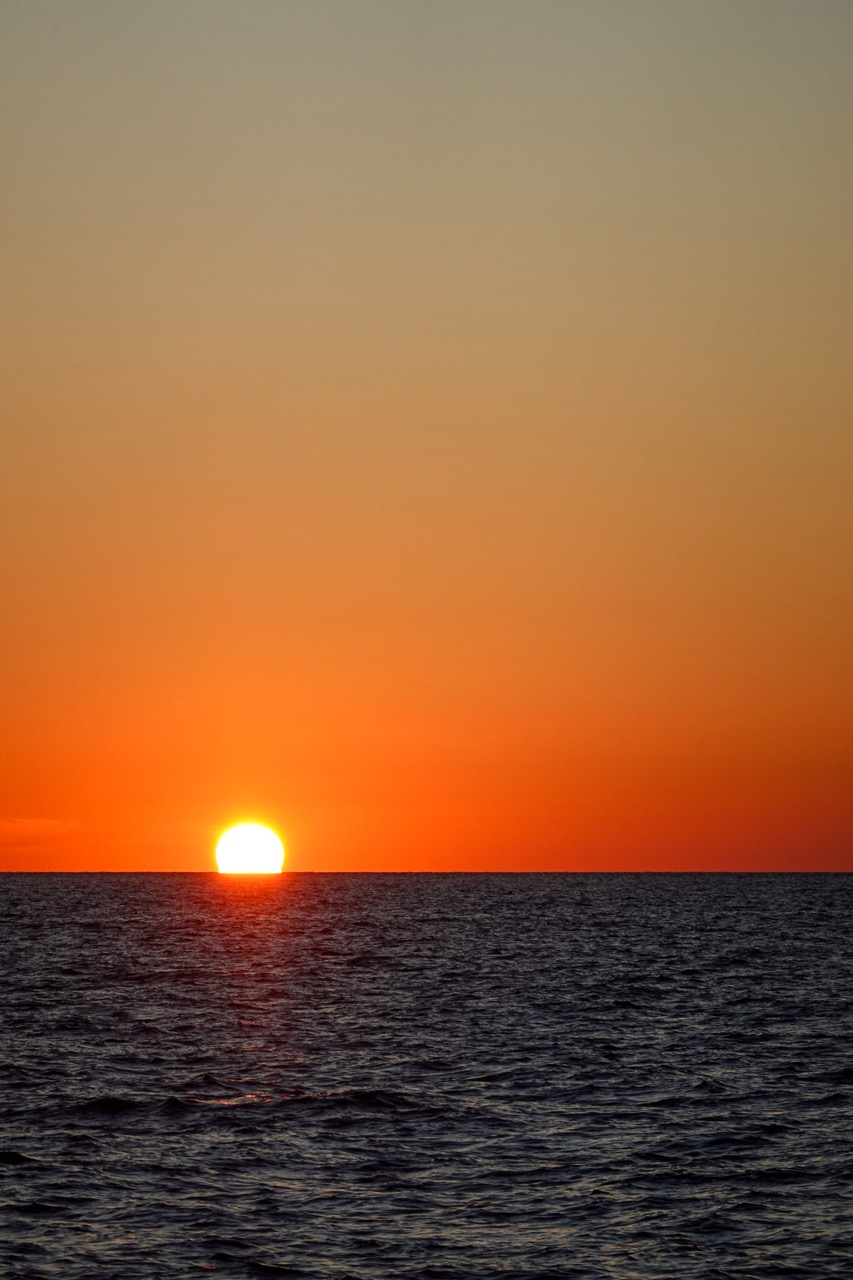
And then, there’s the sunrises and sunsets with vibrant colors reflecting off of the water creating a magical atmosphere. I especially love sunsets!
It’s All Here
With an amazing combination of natural beauty and historical significance, the Aegean is an incredible place. Besides the beaches and the ultra blue water, there are stunning coastlines, ancient ruins, charming villages, vibrant cities – it’s all here to see and experience.
The sea is “a trigger telling your brain you’re in the right place.” Wallace J. Nichols
The Ancient Stones
By Ed Noble
As an American, with our limited education in the history and cultures of the world, tags like “the cradle of western civilization” just roll right over us without any real comprehension. Bonnie and I have spent a total of four weeks wandering about Greece this year, and it is slowly dawning on us just how profound that label is when describing the glories of Greek history and culture.
The Great Minoan Civilization
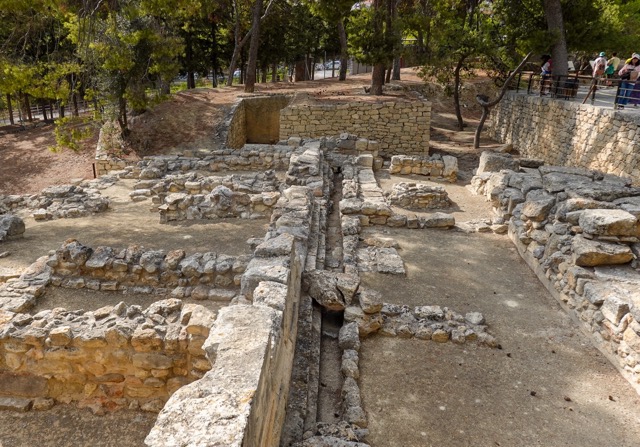
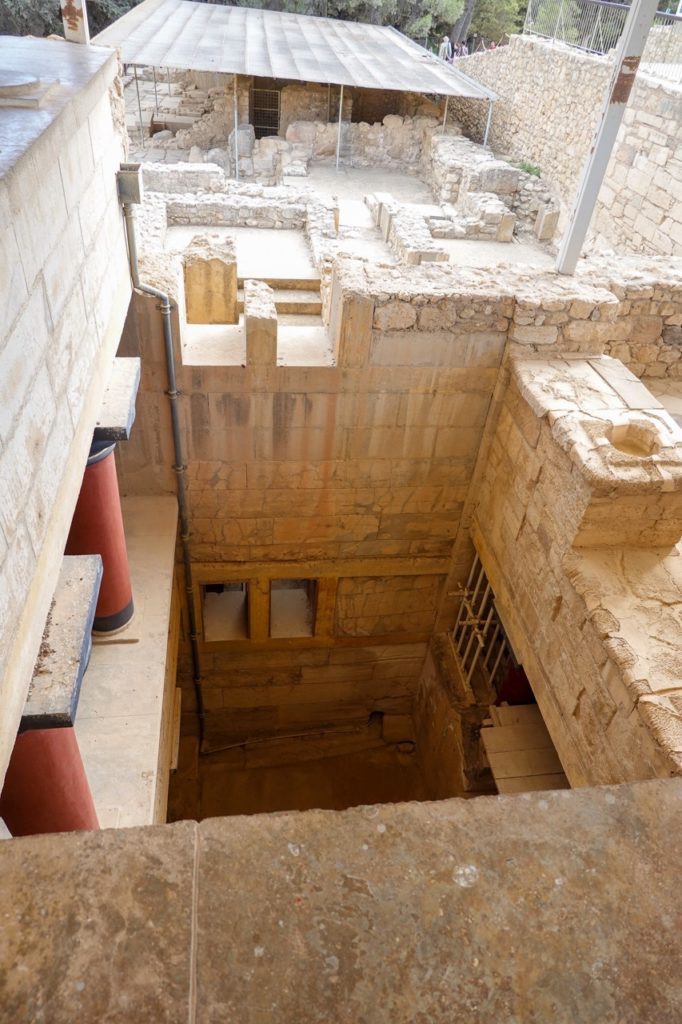
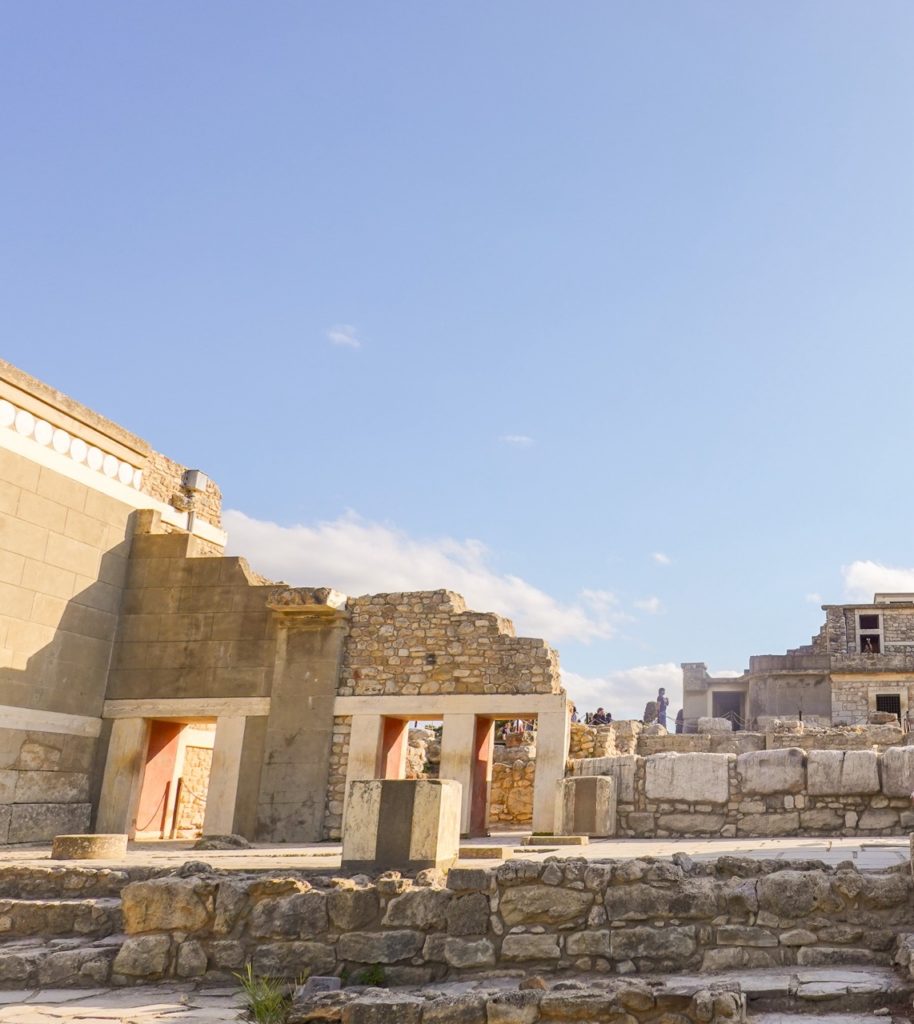
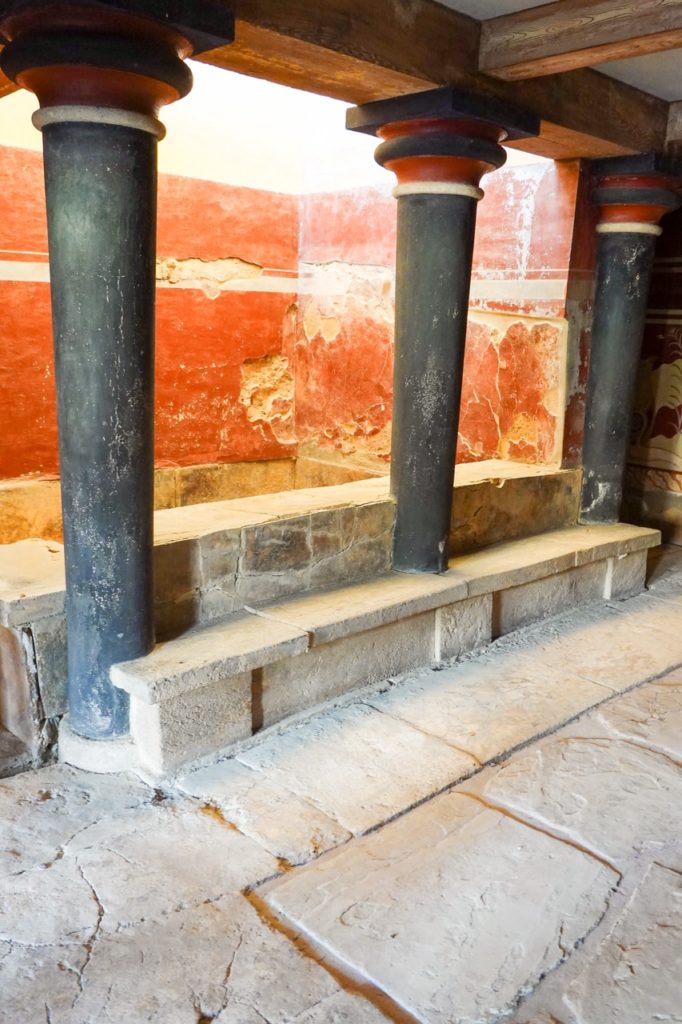
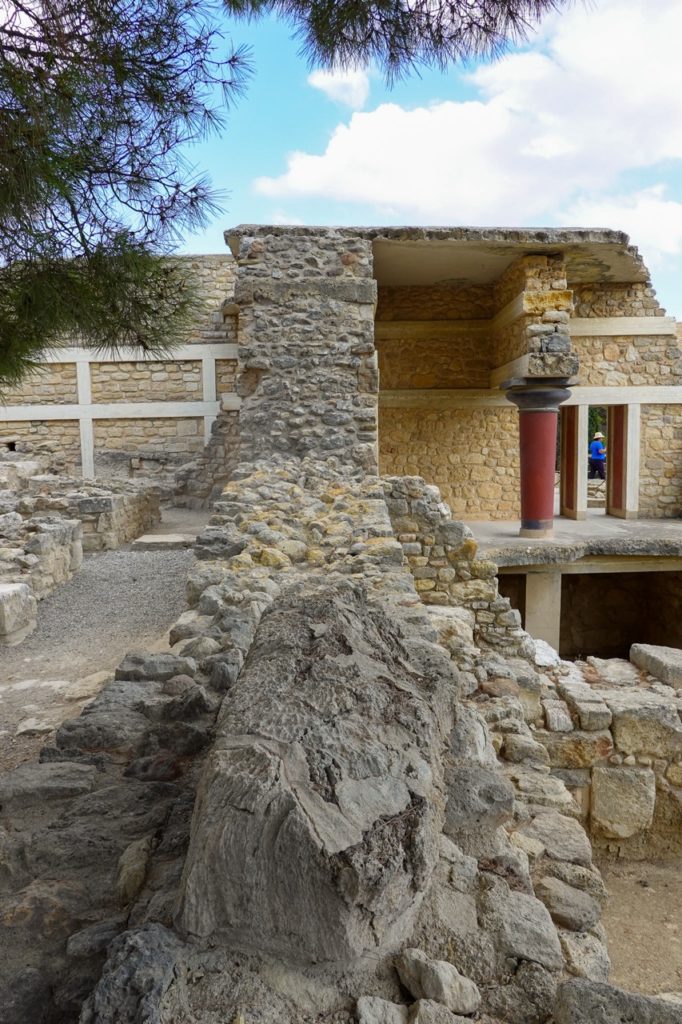
In Greece, you cannot escape the past. Thousands of archaeological sites testify to 5,000 years of human achievement in the development and organization of societies and cultures. The more you see and learn, the more astonishing they become. Consider, for example, our most recent foray into antiquity – a site in Crete known as the Knossos Palace.
This archaeological site was unknown just 150 years ago. It was an olive grove. Lying silently beneath that grove of trees lay a complex stone masterpiece of engineering and construction comprising some 1,300 rooms that had once been the center of a magnificent seafaring civilization buried and forgotten for several millenia. While its discovery and excavation is an interesting story, what is breathtaking for me is to contemplate the sophistication and intelligence of the society that had to have existed to make it possible.
Indoor Plumbing
We have named these people the Minoans – a name drawn from mythology referencing a King Minos, he of the Minotaur and the Labyrinth. In fact, this association is pure speculation and there is much more evidence that Knossos was, in fact, an amazing civilization based on regional trade that existed for a thousand years, peacefully, without wars – developing art, music, dance, and a sophistication that is astonishing to contemplate when compared to what we consider to be modern society. For example, recent excavations of the area around the palace, where the community at large made their homes, has revealed that literally every home had indoor plumbing: fresh running water, waste water piping, and a separate toilet room. Every home! American homes were not guaranteed to include these features as recently as in my grandparents lifetime!
One intriguing theory of what made this culture unique is that it may have been matriarchal – organized and run by women. This might help explain the absence of violence and warriors. Imagine a wealthy and sophisticated society where war and domination of its neighbors was not a feature.
“At the dawn of civilization . . . there was Crete and Sumeria, and Crete had a peaceful trading culture, run by women and filled with art and beauty—a utopia in fact, where the men were acrobats who jumped bulls all day, and women all night, and got the women pregnant and worshipped them . . . While Sumeria on the other hand was ruled by men, who invented war and conquered everything in sight and started all the slave empires that have come since . . . what might have happened if these two civilizations had had a chance to contest the rule of the world, because a volcano blew Crete to kingdom come, and the world passed into Sumeria’s hands . . . If only that volcano had been in Sumeria,”
Kim Stanley Robinson, The Mars Trilogy
Modern Art
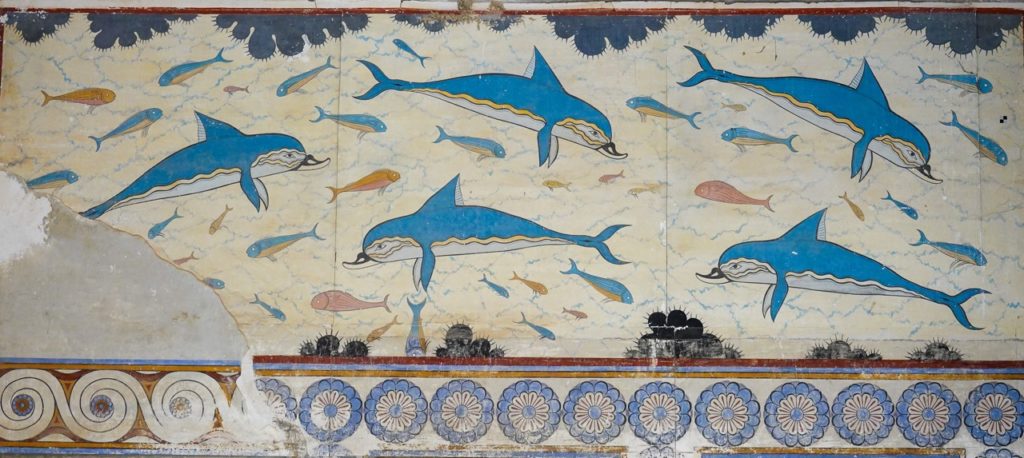
Yes, sometime around 1,750 years before Christ, a volcano exploded at the place we know today as Santorini forever changing history. For me, of course, it’s the art, architecture, and construction technology that fascinates. This palace is only one of at least a dozen on the island of Crete accompanied in each case by a surrounding community of homes and villas. The term “palace” is a misnomer as these projects were much more than a home of the elites. They included administration, workshops, storage, and religious spaces. It seems evident that they were key to the economic and cultural success of this society.
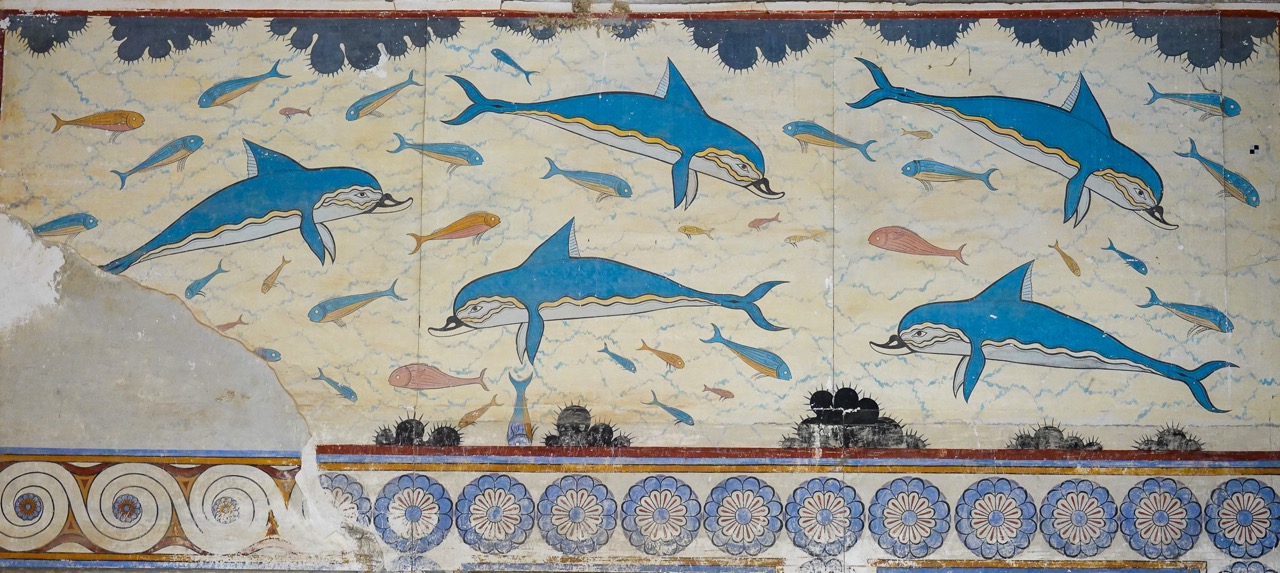
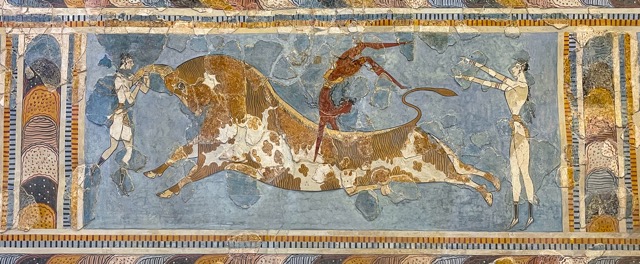
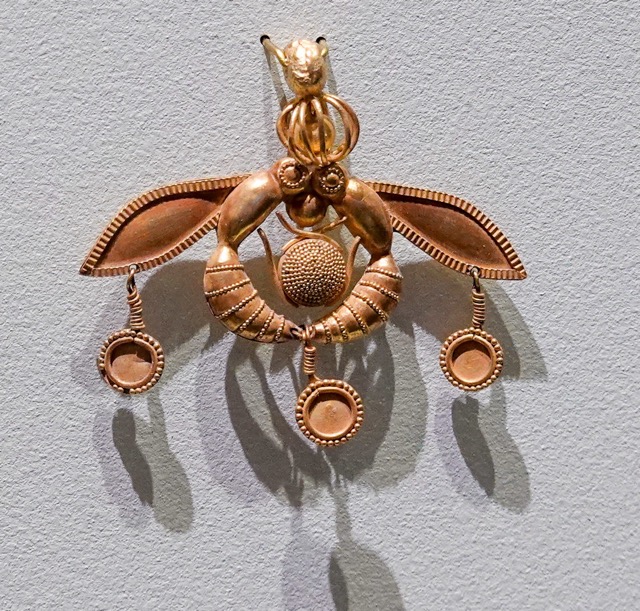
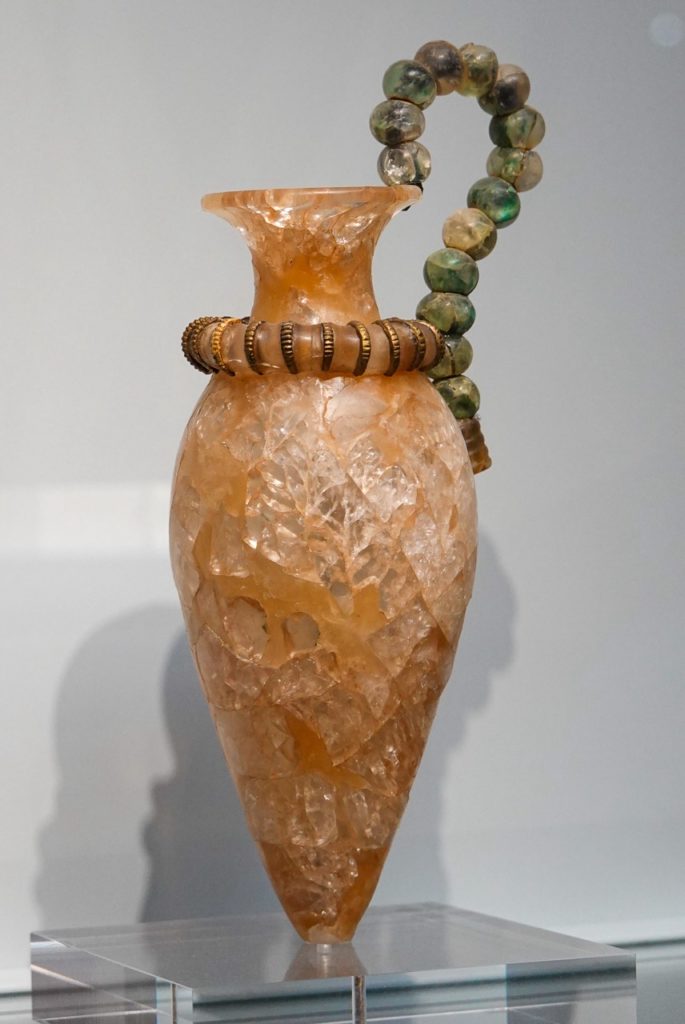
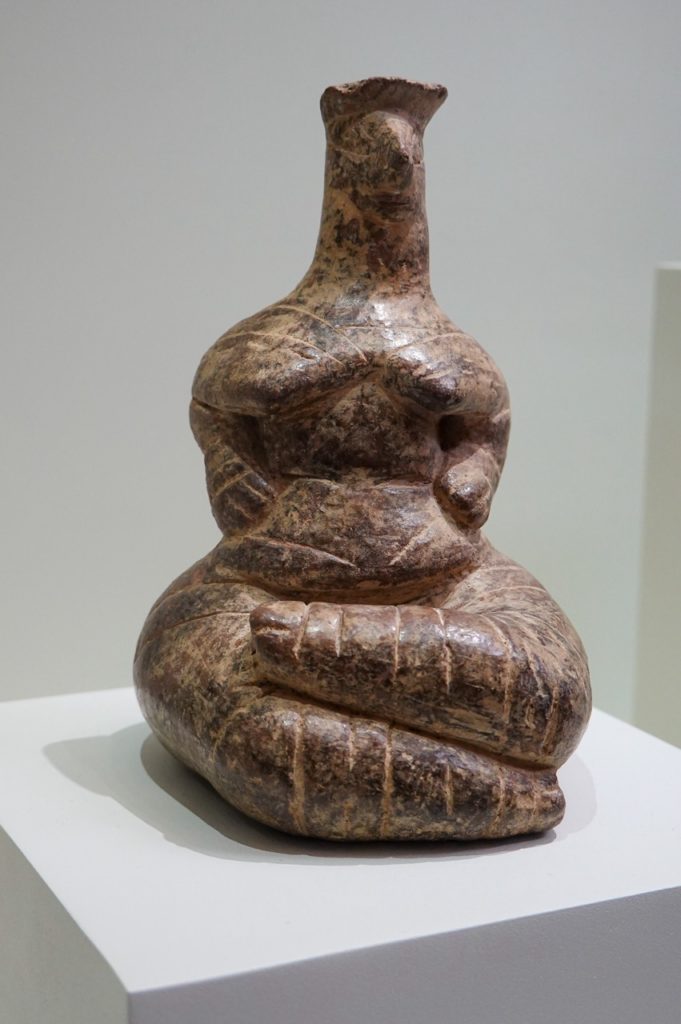
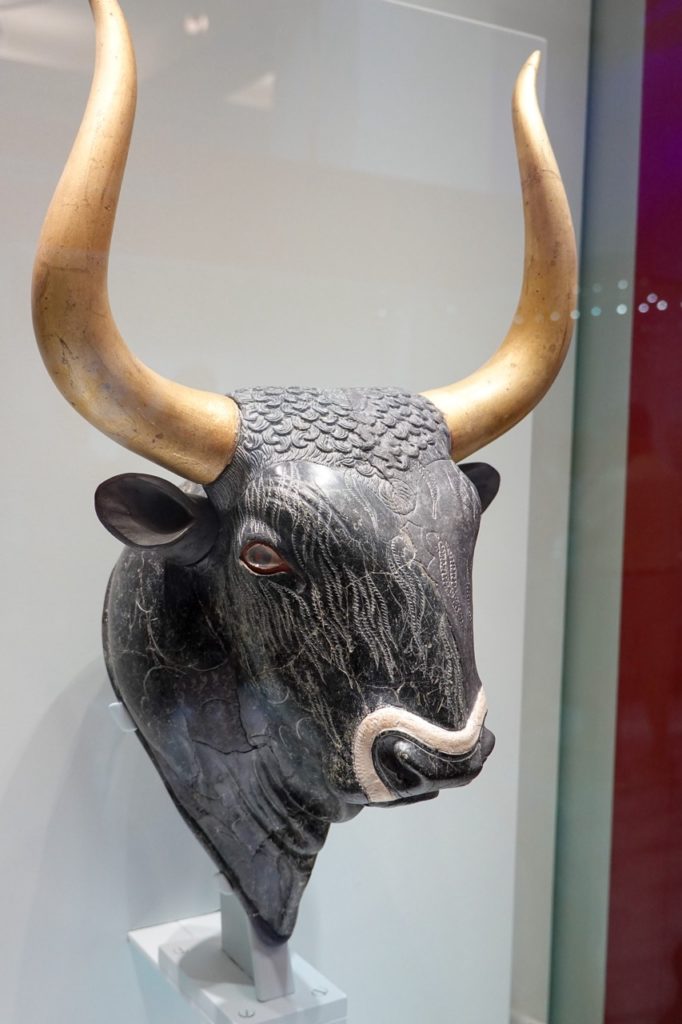
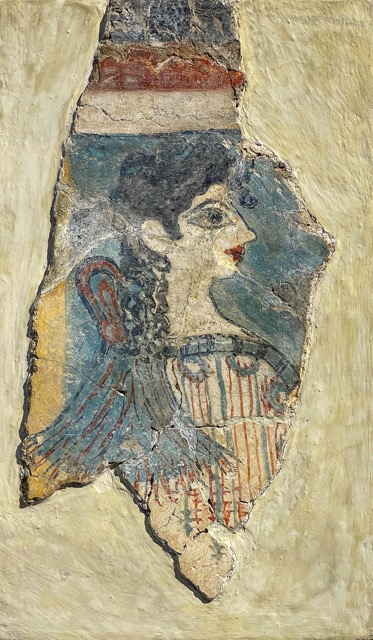
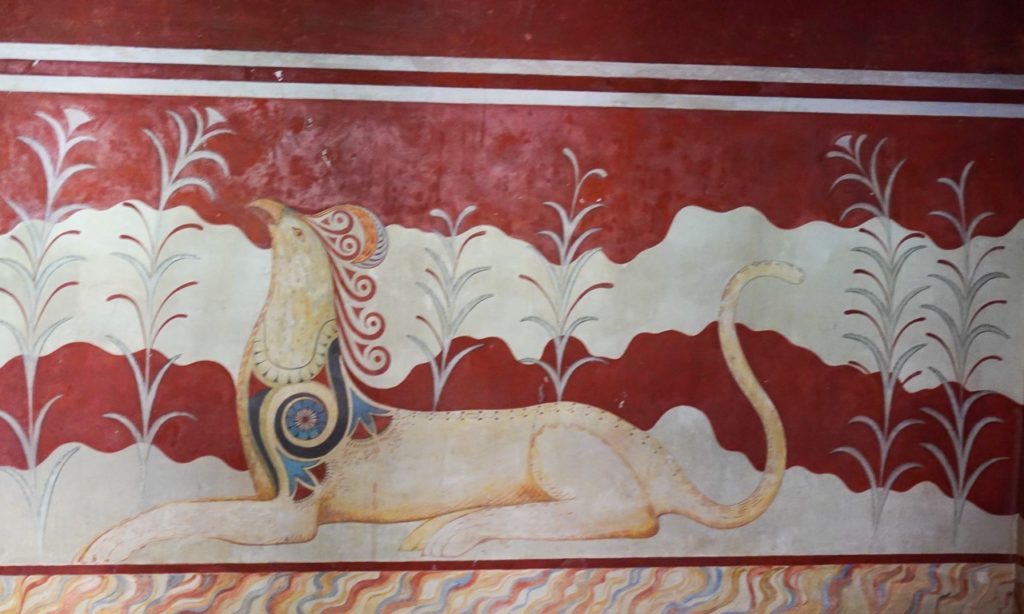
That success allowed the development of an amazing range of artistic achievements including sculpture, wall paintings, pottery, and jewelry, all of which evidence a refined and sophisticated sense of design. In fact, the art of the Minoans feels entirely contemporary with an emphasis on composition, simplicity of form, and refined execution that would be equally at home in MOMA or the Met.
So here we have a civilization that was literally unknown to us just a few generations ago with a sophistication and capability that was also unimagined. It begs the question, of course, what else has been lost to human knowledge and understanding? How many other amazing places exist beneath the blanketing silt of history? I’m humbled.
We often miss our seaside retreat on the Mendocino Coast. There are few things as magical as watching the changing ocean throughout the day and listening to the crashing waves in bed each evening and morning. It seems we’ve fallen in love with Greece. We’re already talking about an annual trip and trying to decide which islands (beaches) to explore next.
“Greece is a haven. I’ve been around the world, to beautiful places in the world, none of them tops Greece. The land, the sky, the water, it’s good for the soul; it’s a healing place. Particularly if you get into that fabulous, fabulous Greek schedule of sleeping until noon, staying up until 3 o’clock in the morning, and arguing in a taverna until 3 am. It’s just the best life one can have.”
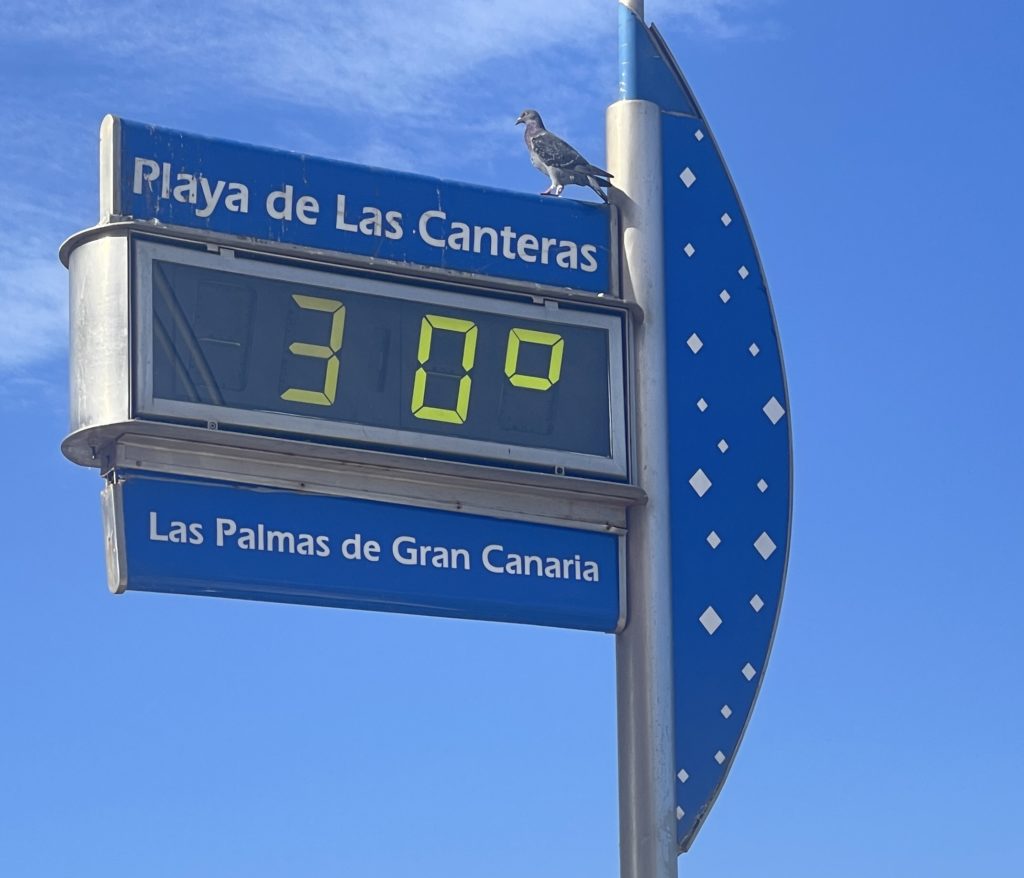
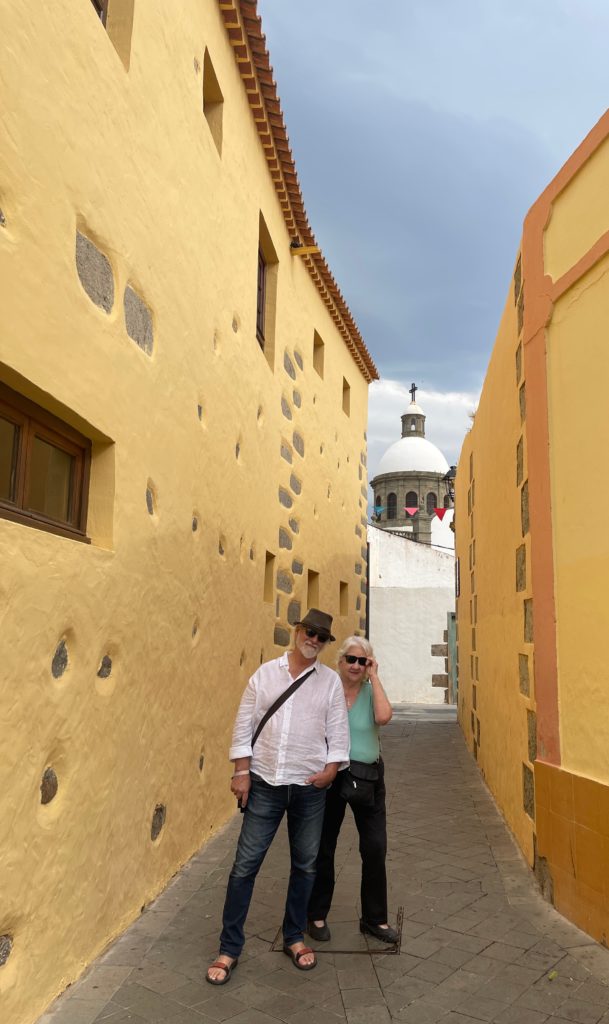
The first weeks of January have been busy and quite wonderful. In the middle of moving to a new apartment (which we love), we popped over to Gran Canaria (Canary Islands) for a few days. It was warm (think 80’s), sunny, and beautiful. Not a bad way to spend a January birthday!
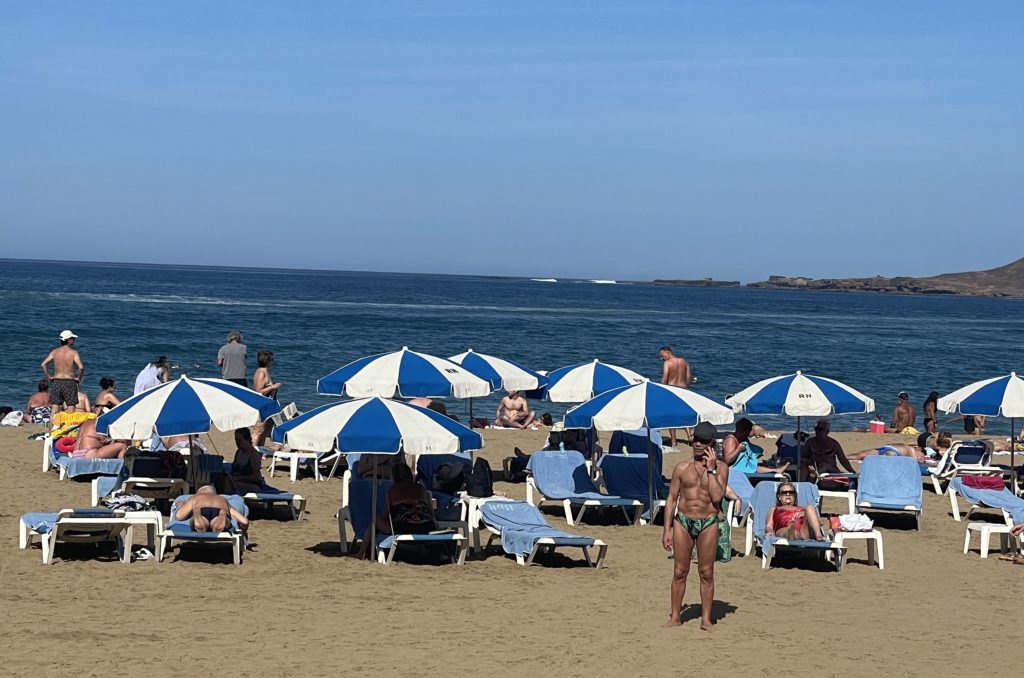
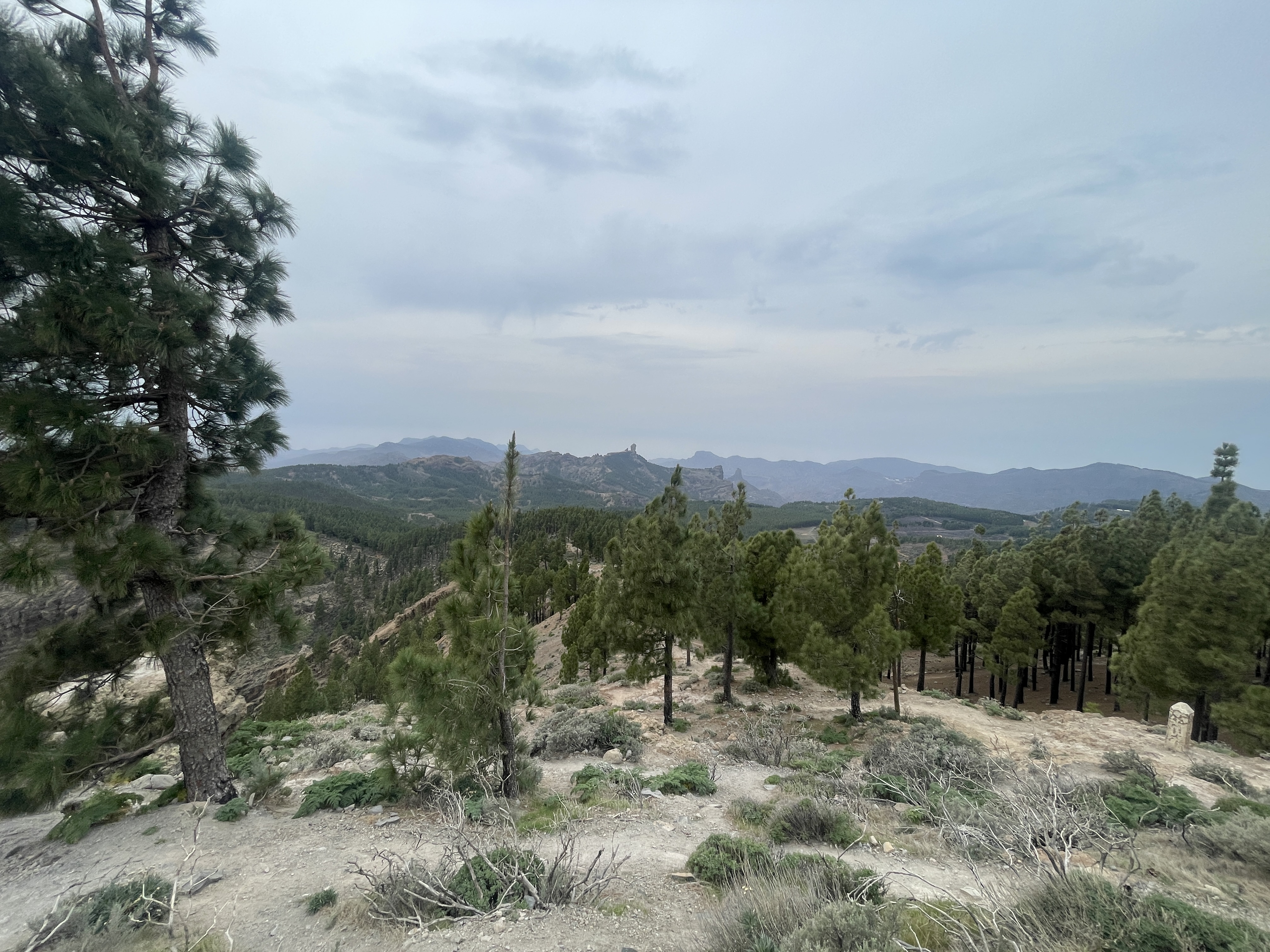
Of the 8 Canary Islands, Gran Canaria is the 3rd largest (a little bigger than the city of Houston, TX) and the most biodiverse. Of course, there’s the beaches crammed with tourists in bikinis, but there’s also several kilometers of pristine sand dunes, mountains, deep ravines, volcanic calderas, cave dwellings, charming villages, and pine forest. It’s fitting that Gran Canaria has been called the world’s smallest continent with its diverse landscapes and extreme microclimates.
A Wine Adventure
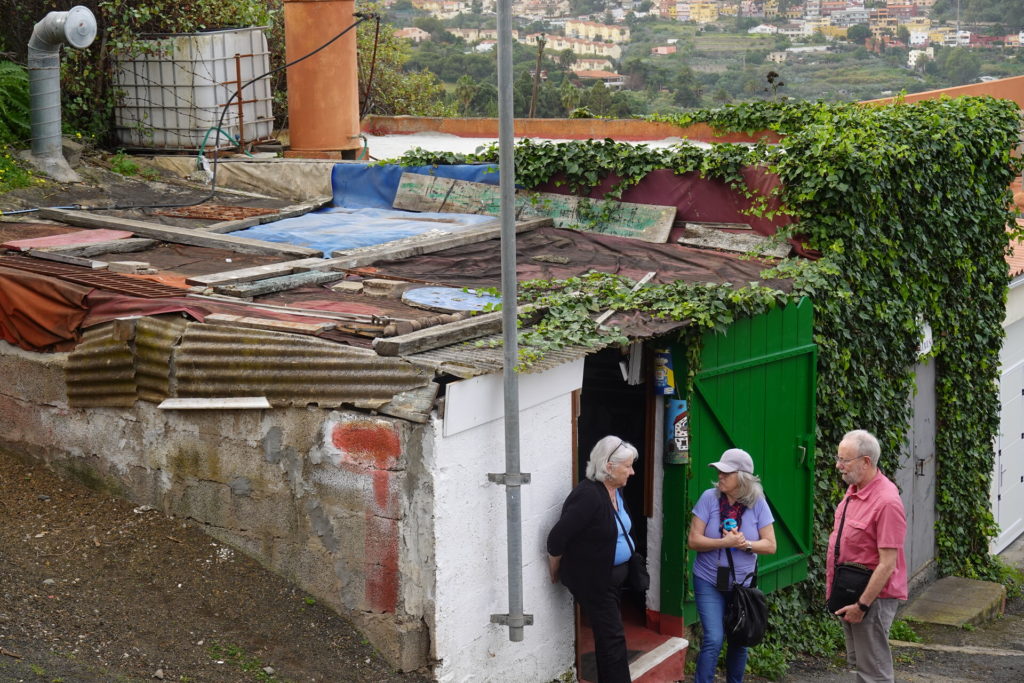
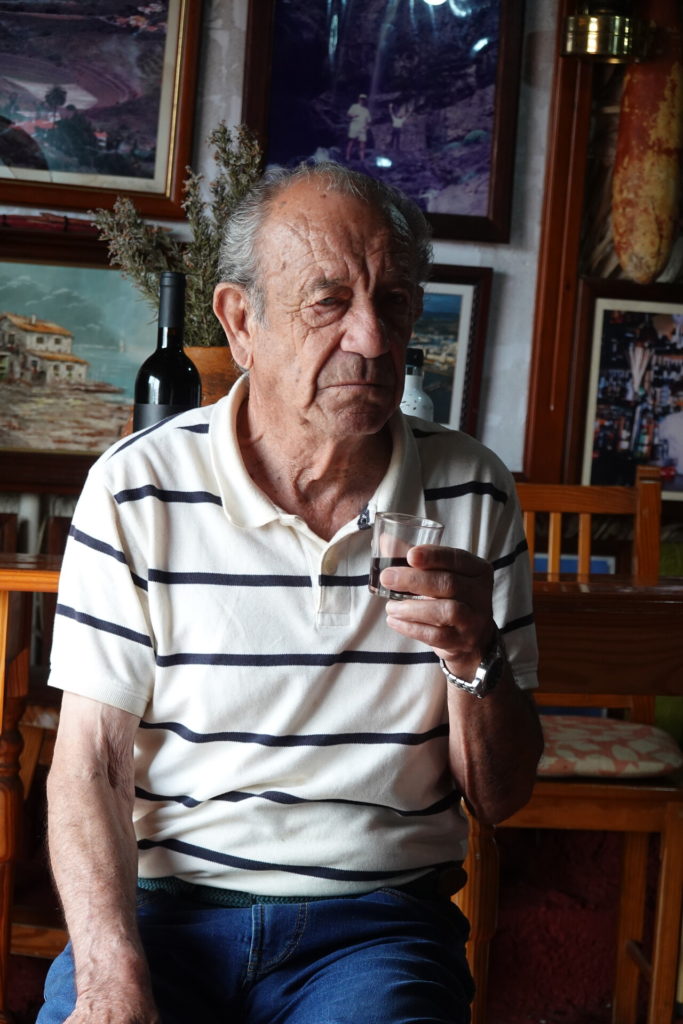
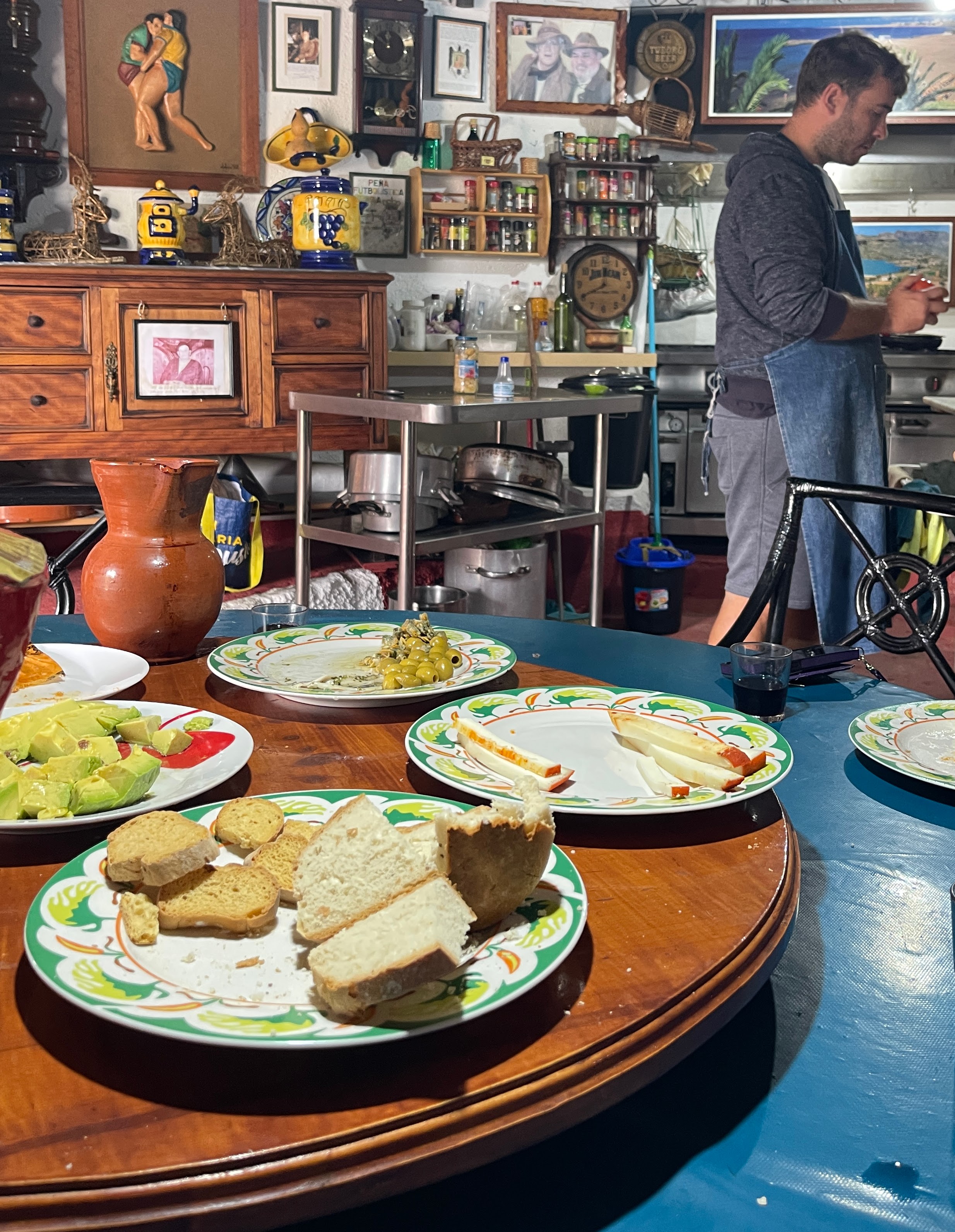
As you know, we love wine! So, I booked a wine tasting tour on Gran Canaria and it was an entirely unique experience. We met our guide, José and three other oenophiles at the central market in Las Palmas (capital city of Gran Canaria). After winding our way through the beautiful countryside, we stopped at a winery to pick up a bottle or two. It turns our main destination was what José referred to as a “club” where the locals hang out to drink wine…and just be together (it’s that Spanish social thing, as always!).
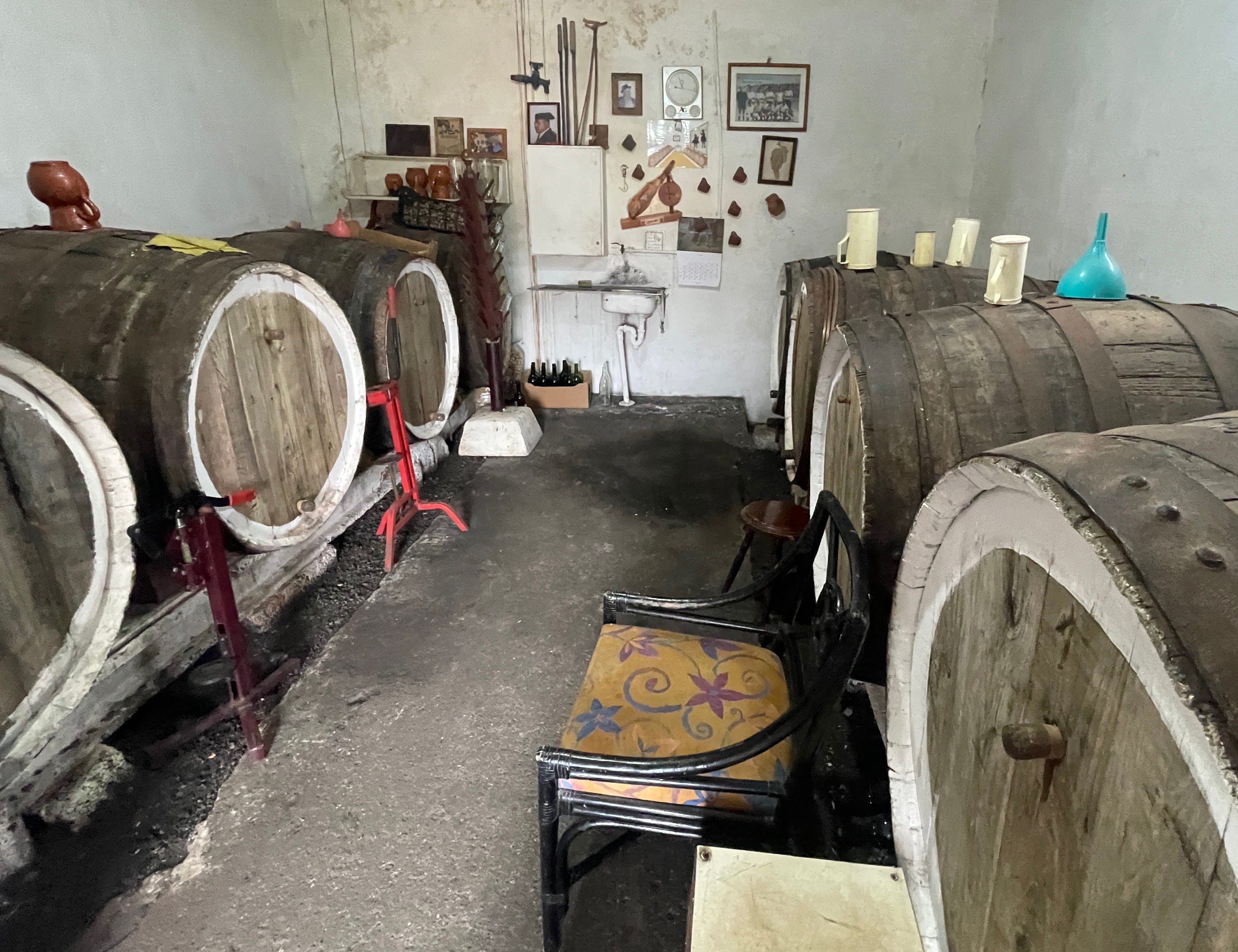
The owner of the club is a vintner in his 70’s who learned wine making from his father and grandfather. He harvests the grapes himself, crushes them using the stomp-on-them-with-your-feet method, and fills about a couple barrels each year. We’re talking totally au natural – just grape juice in a barrel – from this year’s harvest. To retrieve the wine, we all filed into the garage next door where the proprietor produced a glass pitcher, bent down, and opened the cock on the front of an old oak barrel, and began filling it directly from the barrel.
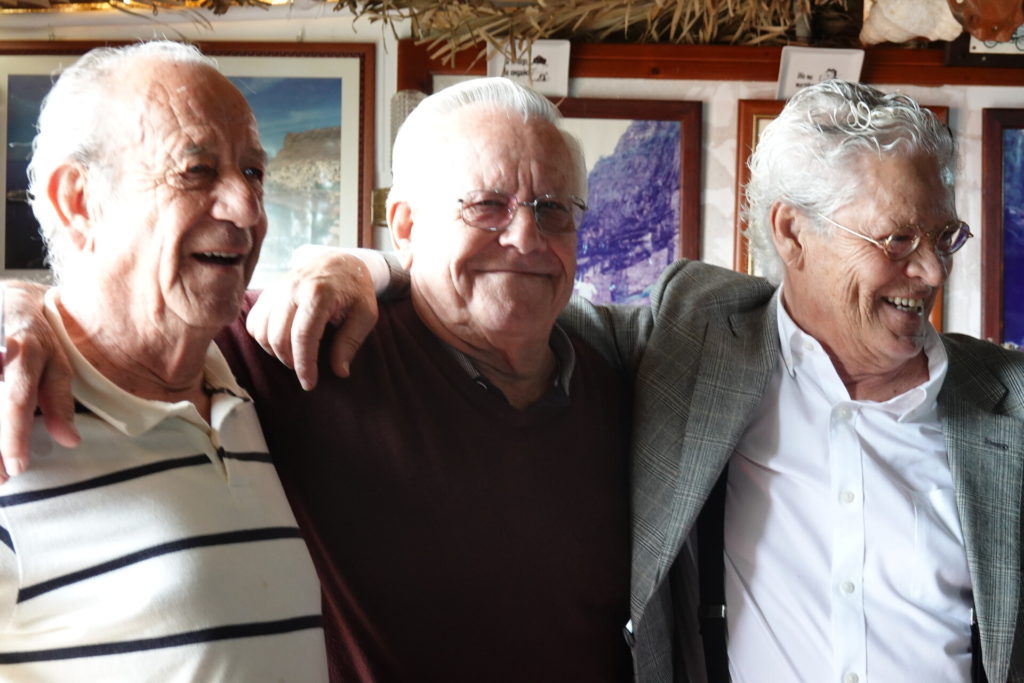
José served a delicious lunch, and we sipped wine, talked, and laughed, sipped more wine (the pitcher made a couple more trips to the garage) laughed more . . . . After a couple of hours, we had made some wonderful new friends! Oh yes, and the wine was delicious: deep ruby colored, fruity, fresh, lightly tannic, about 14% ABV. What a great wine tasting.
Back in Valencia – our “secret” treasure
Meanwhile, life in Valencia we’re settling in and feeling quite proud of our new city. When we chose Valencia back in 2022, it felt as though we’d discovered a little-known European treasure. It turns out the rest of the world has caught up.
This is both good news and not-so-good news. We’re already checking the cruise ship schedules to plan our day around the throngs of tourists checking out our grocery store – the amazing Mercat Centrale.
So, pack your bags and come on over for a visit to our wonderful city. To entice you a bit, here’s the Valencia tourism site to peruse: https://www.visitvalencia.com/en
In the meantime, we’re headed out to an artichoke festival!