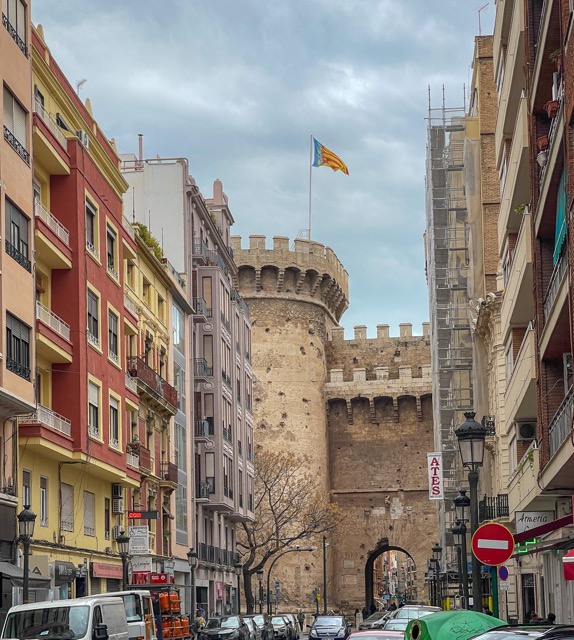
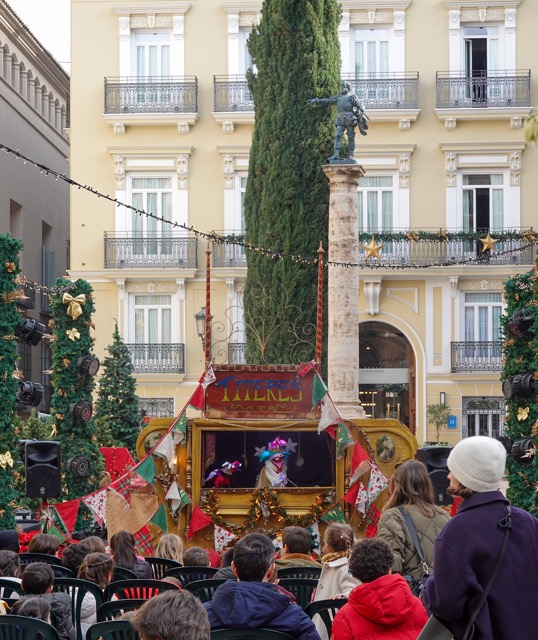
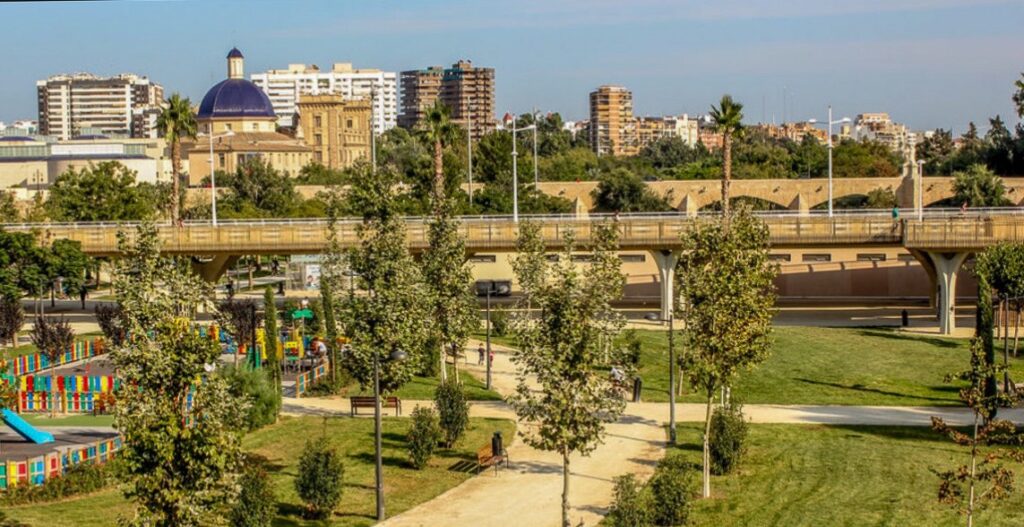
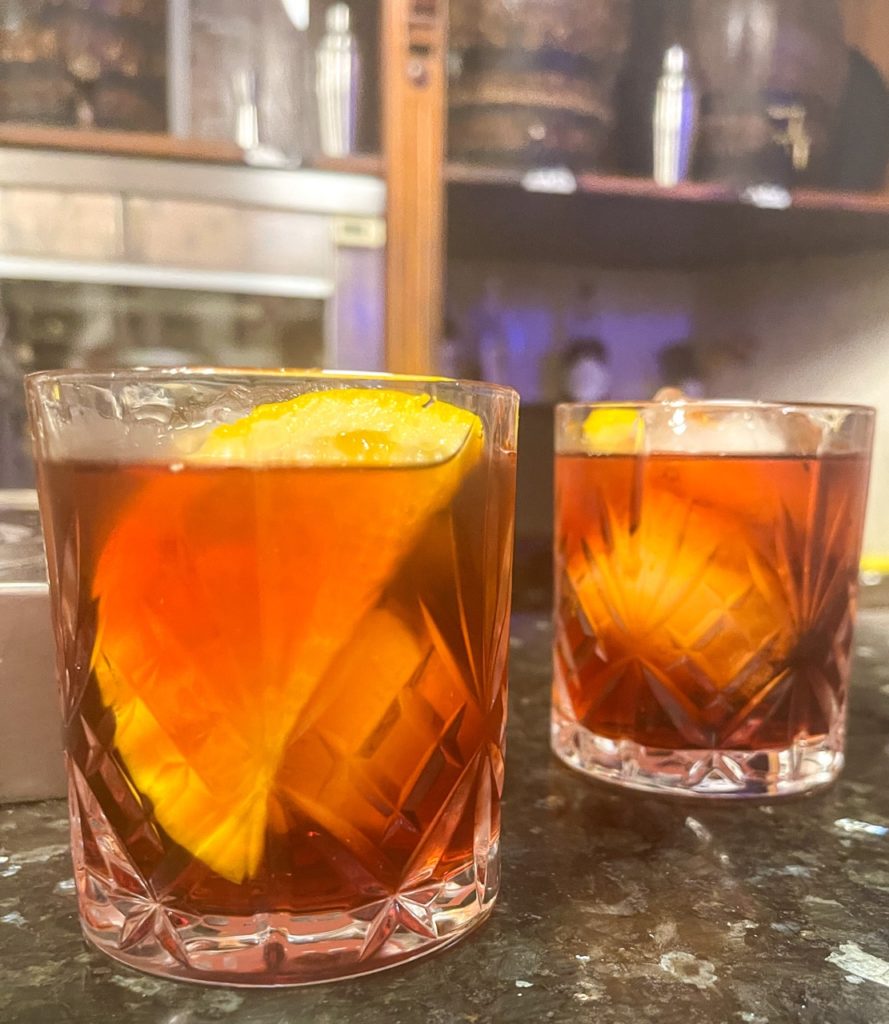
One of the gifts we receive spending part of the year in two very different places is perspective. After nearly three winter months in the U.S. — including time in California and a wonderful stop in Atlanta to celebrate our son Michael’s 40th birthday — we flew back to Spain on February 22. We had missed our life here, and stepping off the plane felt like exhaling.
It’s been a whirlwind ever since. But a good whirlwind — the kind that reminds you exactly why you chose a place.
So, what is it about Valencia that keeps pulling us back? The lifestyle.
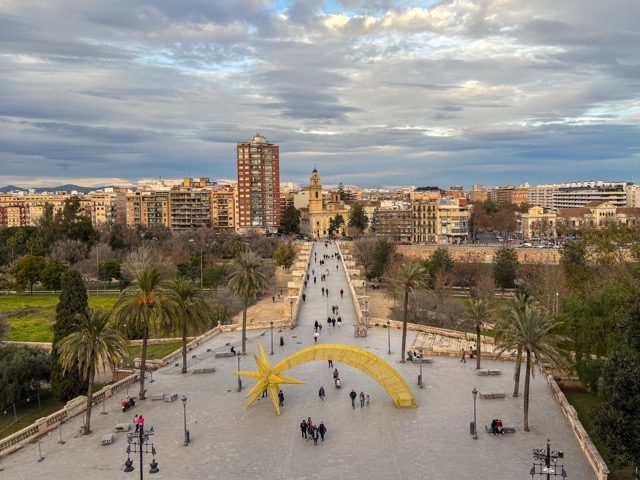
A City Made for Walking
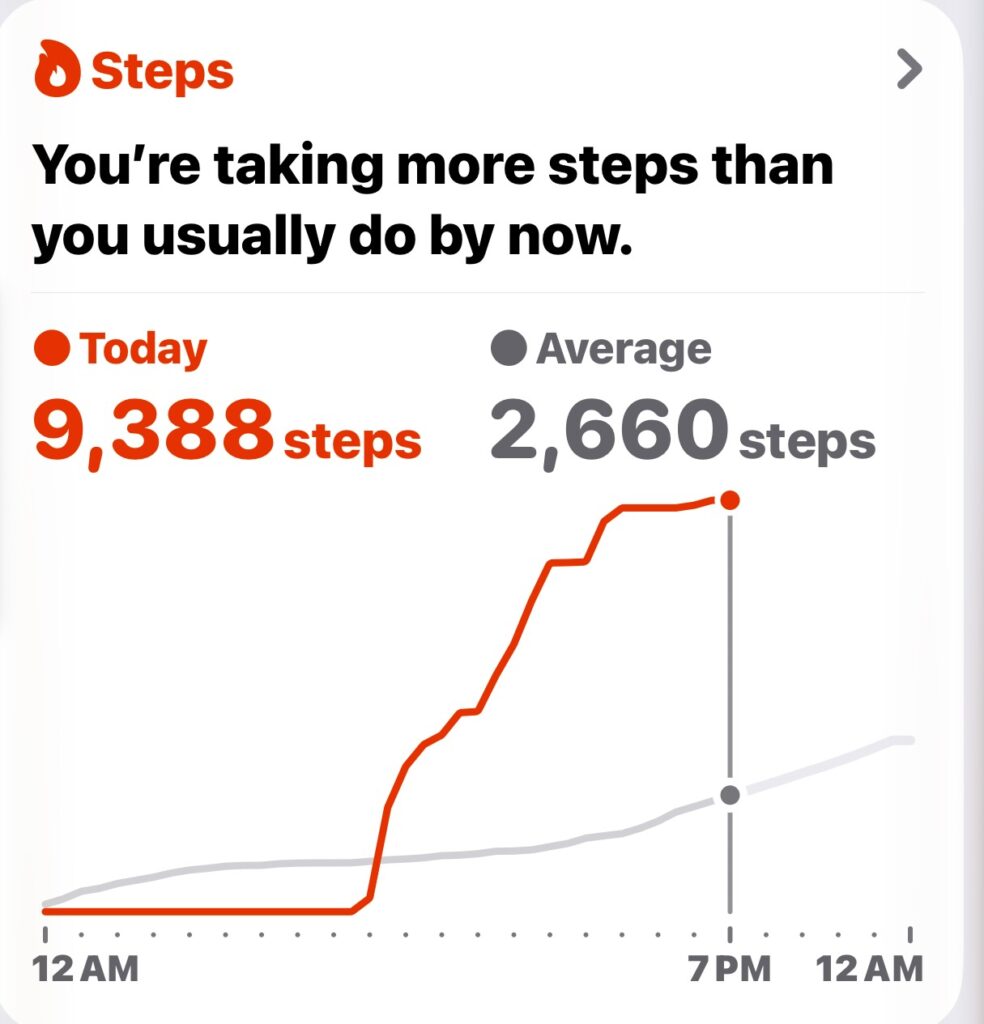
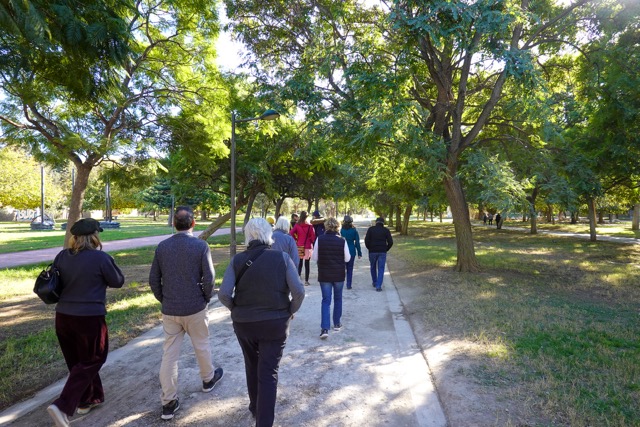
We walk — constantly and happily. Our step counts have more than doubled since we arrived. Groceries, dinner with friends, doctor’s appointments, routine errands, an afternoon of shopping — all of it on foot. I’ve started Pilates at a studio twenty minutes away, and Ed has reconnected with a gym he joined a couple of years ago, also just a short walk from home.
Screenshot
When a destination is a bit farther, there’s always the bus. We just renewed our annual passes for 2026 — twenty euros each, roughly $22. That’s not a weekly fee. Not a monthly fee. That’s the whole year: any bus, anywhere in the city.
Community Comes Easily Here
I’ve been a member of the International Women’s Club of Valencia since we moved here in 2023, and I’m still amazed by the variety of activities on offer each month. Since returning, I’ve already attended the monthly coffee gathering — about fifty women, a lively buzz of conversation — where I caught up with friends I genuinely missed.
A dear friend offers a monthly “Drink and Draw” workshop: wine, creativity, and good company. I made a couple of new friends there, and we’re already planning lunch together. After finishing Virginia Evans’s debut novel The Correspondent, I thoroughly enjoyed a book club discussion along with the delicious Lebanese treats and a glass of wine.
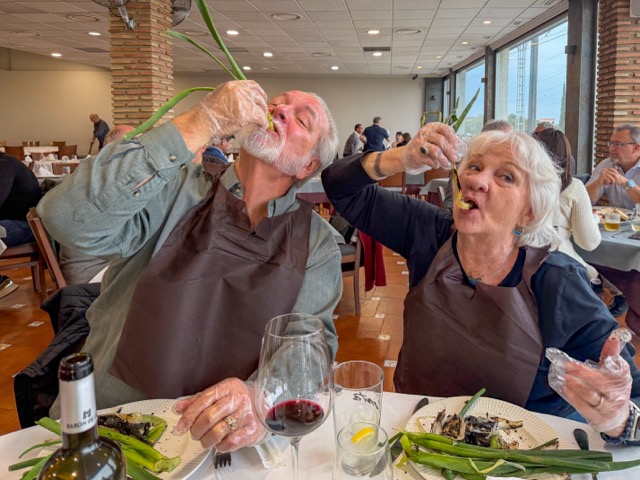
Reconnecting with friends has been a joy. We’ve had lunch at a newly opened Spanish restaurant, shared calçots and grilled meats to celebrate these fleeting spring onions (see last year’s post on calçots: Calçots – A culinary Experience – Adventure BB), attended a wonderful performance of Verdi’s La Traviata, and an elegant and intimate performance of Tango in the Time of a Woman — a celebration of female artistry and charisma in tango.
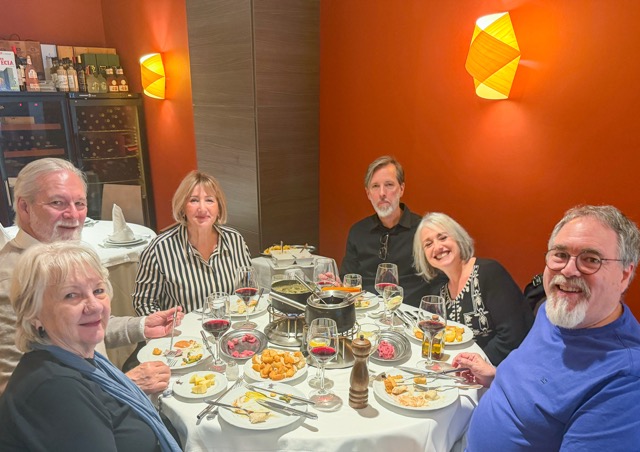
In celebration of it being Thursday (reason enough!), we joined friends for a pre-lunch treat at a favorite osteria (oysters!) followed by fondue at a charming little French restaurant. That evening was capped off at an open mic night for local writers called “Club Hemingway.” Having met a couple who just moved to Valencia from NYC, we met up at a Greek taverna near our apartment to swap city notes over mezze.
Even Grocery Shopping Is an Experience
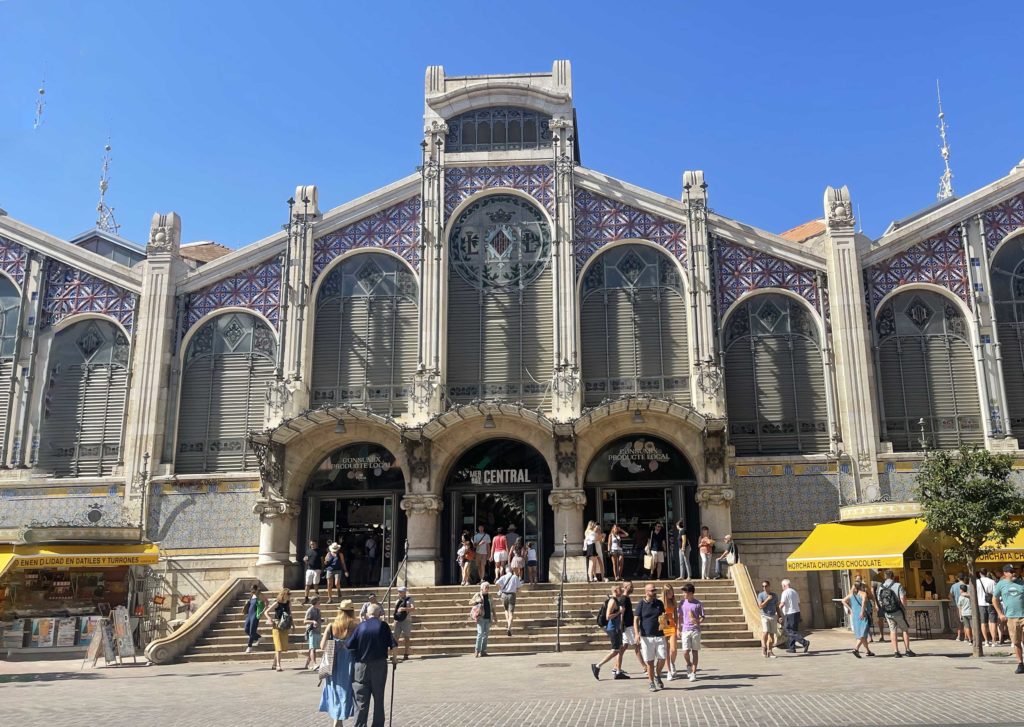
Grocery shopping here feels like more than a chore. Valencia’s Central Market — a stunning Art Nouveau building just a ten-minute walk from our apartment — houses more than 250 vendors. Stalls overflow with local citrus, fresh seafood, aged cheeses, and fragrant spices, and the hum of conversation fills the aisles.
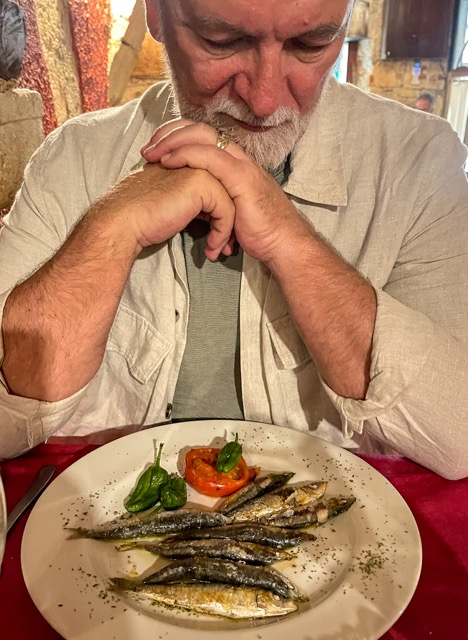
Ed shops there twice a week, selecting fish from one of more than thirty fishmongers. Fresh fish or seafood finds its way to our table about three times a week.
Fallas: Valencia Turns Tradition into a Citywide Spectacle
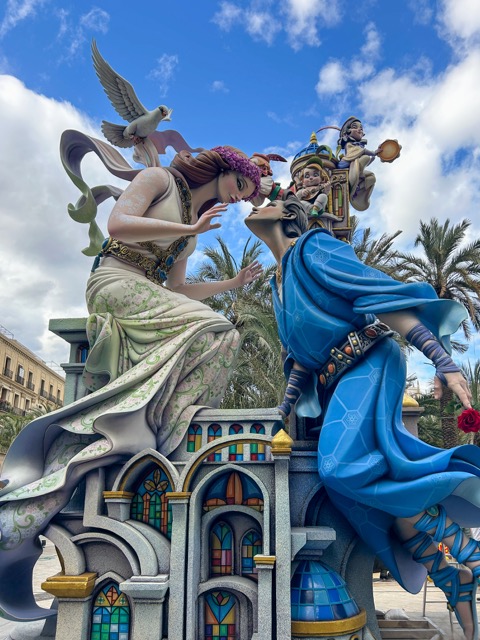
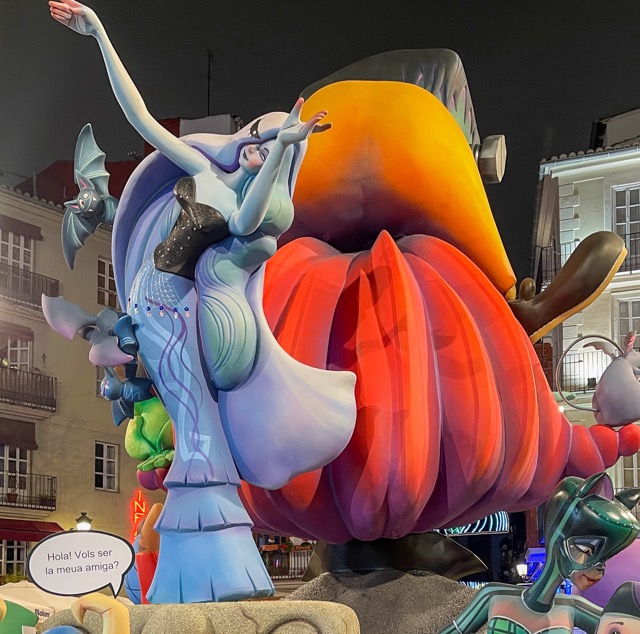
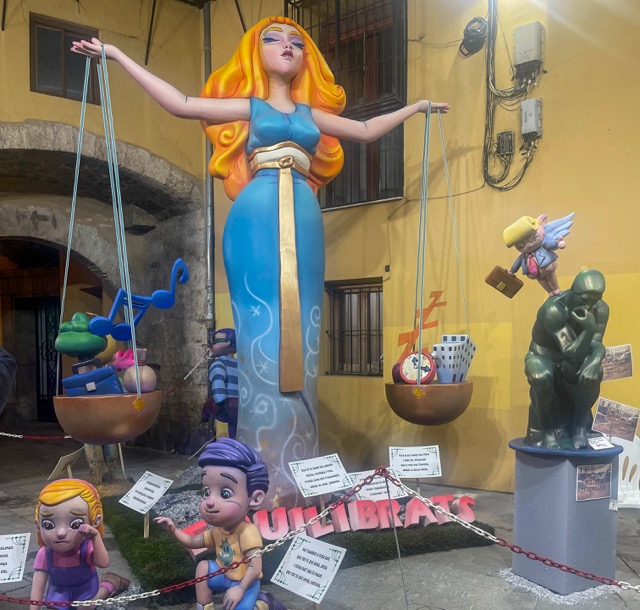
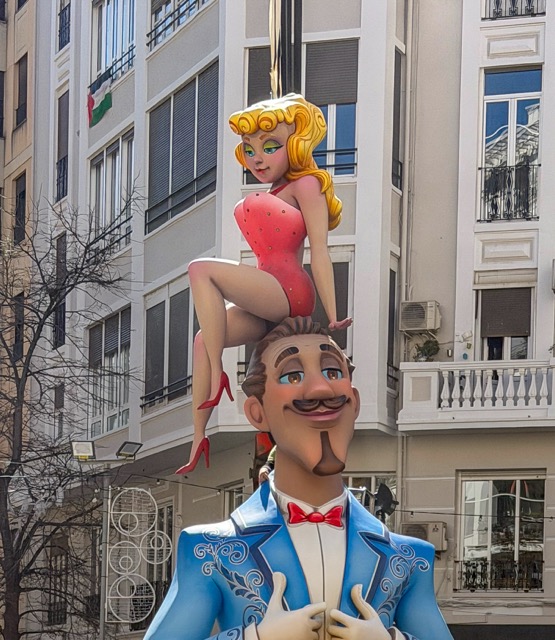
Running beneath all of this, like a drumbeat that keeps getting louder, is Fallas. This is our fourth year experiencing Valencia’s most famous celebration, and we’ve learned to appreciate it on our own terms.
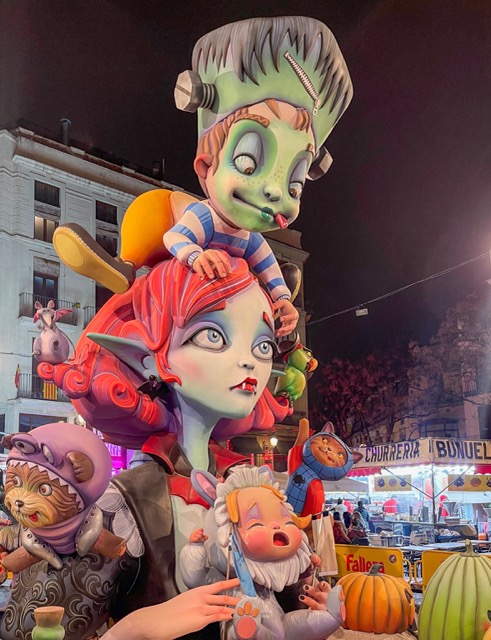
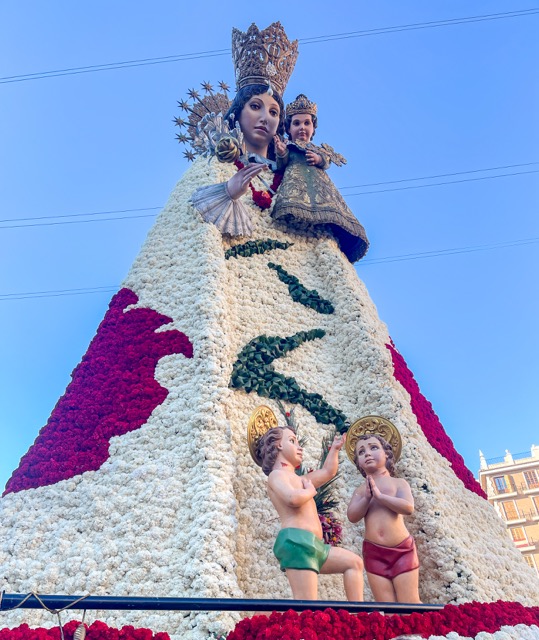
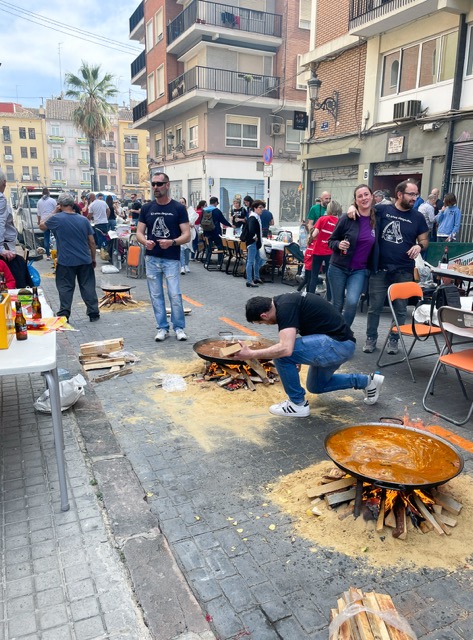
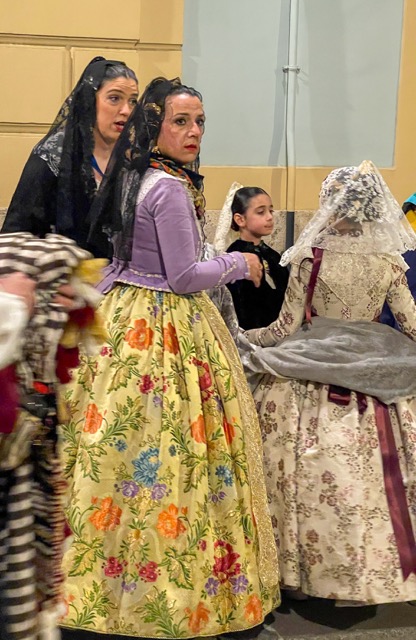
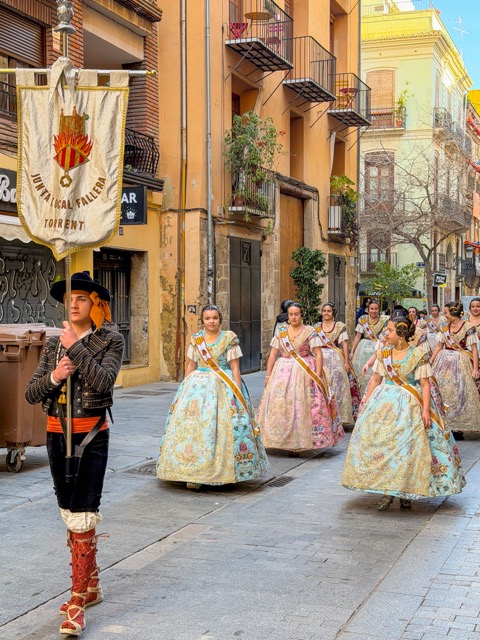
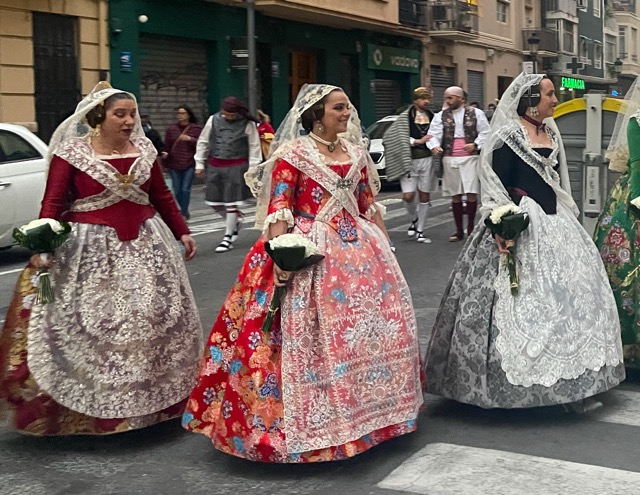
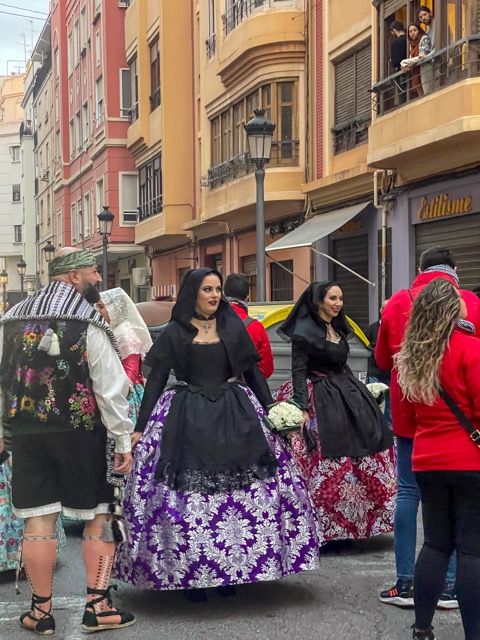
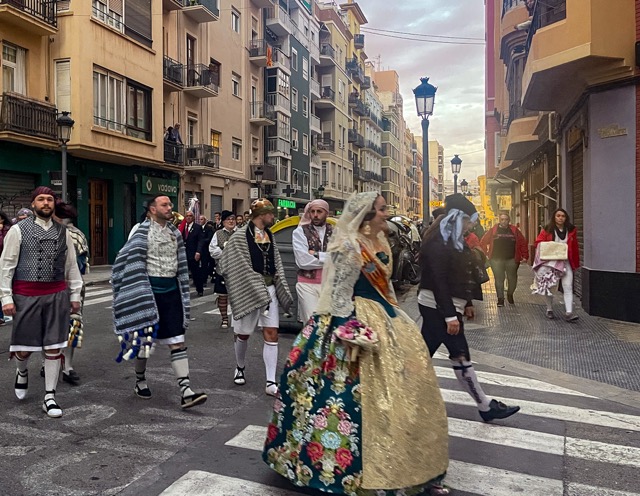
For the uninitiated: every March, Valencia’s neighborhoods erect enormous satirical sculptures — the fallas themselves — and the city spends two weeks celebrating with a devotion that is, frankly, contagious. What I love most is the Ofrenda, when thousands of falleros and falleras in stunning traditional dress carry flowers through the streets to build a towering floral tribute to the Virgin. The casals — the neighborhood groups behind each falla — cook enormous pans of paella in the streets, accompanied by marching musicians. The pageantry, the embroidered gowns, the sense of a city expressing genuine pride in its own culture: it gets me every time.
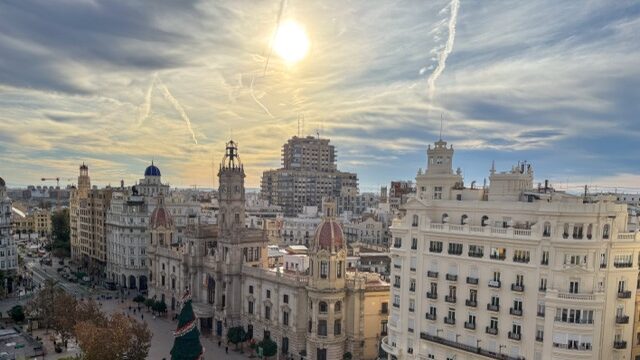
The daily mascleta in Plaza del Ayuntamiento — a precisely choreographed barrage of firecrackers and percussion that shakes the ground at 2 p.m. — I’ve made my peace with. It’s theater, really. What I’m less fond of are the random firecrackers that go off in the streets at all hours, which have a way of launching you out of your own skin when you least expect them. (You’ll find Ed’s post about Fallas here: MARCH MADNESS! – Adventure BB)
By the final days, when tourists arrive by the thousands and the city tilts toward full street party, we tend to make ourselves scarce. This year, we’re slipping away on March 17th — trading the crowds and the smoke of La Crema for five days in San Sebastián, a Spanish treasure we’ve somehow not yet had the chance to explore. We’ll save that story for another post.
Why This Life Works for Us
Time in the United States reminds us how fortunate we are to have family there and a place to return to. But it also sharpens our appreciation for the daily rhythm we’ve found in Valencia — the walkable streets, the ease of meeting friends, the fresh food, the cultural life just steps from our door.
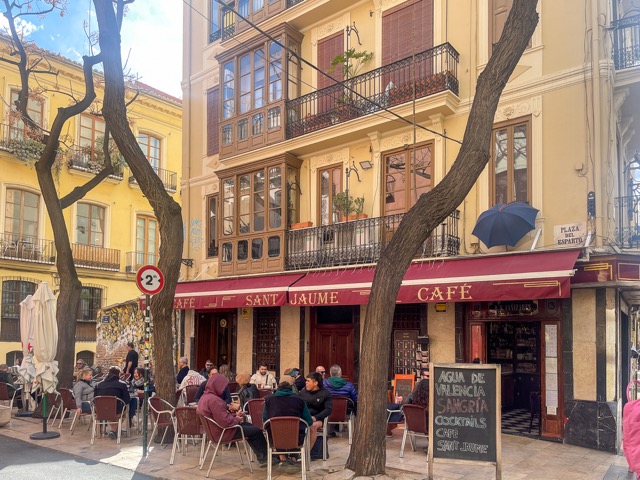
At this stage of our lives, we’re drawn less to convenience and more to connection — to the small, everyday experiences that make a place feel alive. Here, life happens out on the streets, in markets, cafés, parks, and plazas. And for us, that rhythm feels just right.
Every time we return, Valencia reminds us why we chose this life — and why it feels so much like home.
Postscript
We just received word that our application for residency renewal has been approved: another two years of this wonderful life!
Many of you will have heard that Spain suffered a catastrophic power outage yesterday. There was a total blackout of the entire country, parts of Southern France, and parts of Portugal for 6 to 8 hours, longer in a few areas. We were fortunate to have been out of town, returning only after the lights were back on. However, it does not take much imagination to understand the potential for calamity in a modern society suddenly without power – elevators, trains, traffic lights, internet access, financial payment systems – all frozen in an instant across the entire country.
As a member of the local International Women’s Club, Bonnie monitors a very active social chat group composed of English-speaking Valencian expats. This was one of our primary sources of news during the day and evening as we traveled back from Belgium, concerned about what we might find on arriving home shortly after midnight. We felt it might be worthwhile to share a few of the chat group comments. These are unedited, lifted directly from the chat.
Worthy of note regarding yesterday: six+ hours of chaos, confusion , uncertainty and possible danger but the Spanish people (from what I saw) stayed calm and considerate of one another. The response of the people, as a whole, is remarkable and newsworthy. An example to other societies, in my opinion.
I have noticed that the Spanish are remarkedly civilized in day-to-day behavior as well and the level of aggressive street behavior that I’ve observed in other countries is much less and calmer here.
I think they practice for most situations one of my favorite words in their language “nos apañamos” which doesn’t have a translation to English but refers to “we get by one way or another.”
Most amazing to me were the drivers – where there weren’t traffic lights, they drove slowly, carefully, courteously – and let pedestrians cross. Really wonderful.
Yesterday was surreal. Although I saw a news story that said there was chaos, I saw only people taking it in stride. Even the drivers stuck in traffic were handling it ok, especially once they saw there were police helping direct traffic.
I was at a huge gathering for the 14:00 mascleta and although we waited a long time before a policeman came over and told us it wasn’t happening, no one got mad. No angry voices, no shouts at the police for not informing us sooner – no malice at all that I saw. Instead, many thanked the police officer for walking over and telling us it was cancelled. To me, this scene was the opposite of chaos. Granted, I wasn’t stuck in a subway car so I can’t attest to that situation.
When I got home later in the evening, people were outside in small gatherings around the neighborhood, calmly and warmly talking to each other. I was so impressed by the crowd’s and then the neighborhood’s composure. The situation reminded me again of one of the many reasons for loving it here.
We have guests who had to walk up 18 flights to our apartment, and they were good sports too. Dinner was tuna sandwiches paired with a fine wine.
I was outside walking from 3pm – 6pm, in different parts. I saw everyone being cooperative – from drivers to people walking on the streets or gathering politely waiting to pick up bread from the bakers to “para llevar” [to take away] store fronts. Definitely I was happy not to be traveling by train or plane – lots of disruption for those folks. I hope they all got to where they needed to go.
Prior to moving here (which was only last December!), I spent most of my life in DC and NYC. When the power went out and we realized it was widespread, my mind immediately envisioned panic, mass looting, utter chaos. I was really worried about the whole situation, especially because our Spanish is so pitiful. Our reality was so different. The Valencian neighbors in our building invited everyone (4 families total) into their home. They had a battery-operated radio and translated to us what they were hearing. They kept reassuring us (the only expats) that all was well, we would be fine. Lots of hand patting and “tranquilla.” Everyone in the building exuded such a comforting feeling of safety and companionship. I hope what we all experienced yesterday doesn’t happen again, but if it does, I am so grateful to be living here amongst this generous-minded community and country.
People in our building, hearing we had a gas hob [stove], were soon knocking on our door asking if they could come and heat up food. Locals were asking if they could bring food to those stranded at train stations that remained open through the night. I heard reports of taxi drivers helping people get where they needed to go without asking for payment.
Valencia isn’t without problems. In our 2+ years here, there’s been a horrific fire in a high-rise residential building, a catastrophic flood, and yesterday’s country-wide power outage that lasted for many hours. In all these situations, the response of the Valencianos has been the same – compassion, unity, thoughtfulness, and calm. They just care for one another.
After enjoying warm and sunny Oman we returned to a cool and rainy Valencia. It has been unusually chilly in our lovely Mediterranean city (it’s barely above the mid 50s most days). When I can’t escape the cold, I resolve to find ways to embrace winter. Once again, Spain has provided.
It’s Calçot Season!
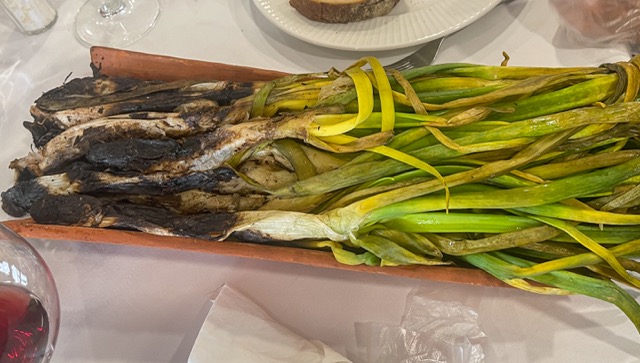
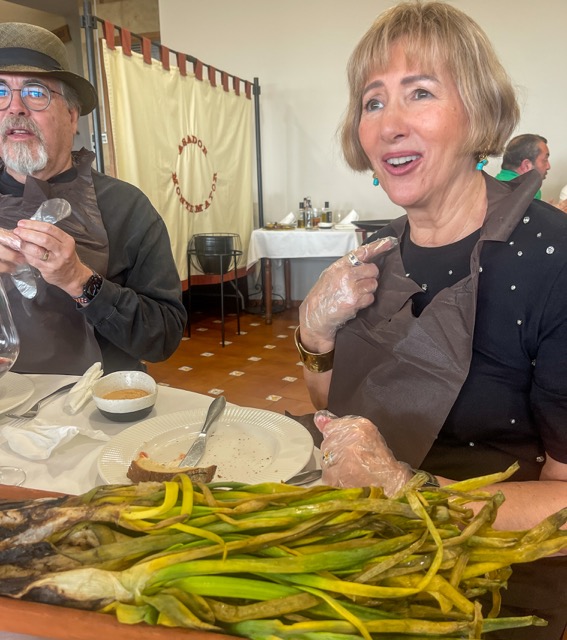
After just a few days back in Valencia, we joined our good friends, Sheila and Richard, for a unique Catalan food experience – calçots (pronounced cal-shots). On the recommendation of a cab driver, they had trekked out to Asador Monte Mayor last year and were eager to return. A forty-minute metro ride followed by a fifteen-minute walk led us to this lovely restaurant in Manises, a small-town northwest of Valencia. It was a wintertime culinary adventure!
What is a Calçot?
A cross between a spring onion and a leek. Sweet, tender, and delicious. Calçots come into season in November and are available until March or early April. They are beloved in Catalonia and there’s more than a century of tradition celebrating this gastronomic treat. In fact, calçots have earned a Protected Geographical Indication (PGI) label from the European Union. (Products with a protected geographical indication have a particular quality, reputation or other characteristic attributable to a geographical origin.) Along with this designation, there are rules, of course. For example, to comply with regulations, each calçot must measure between 15 and 25 centimeters long.
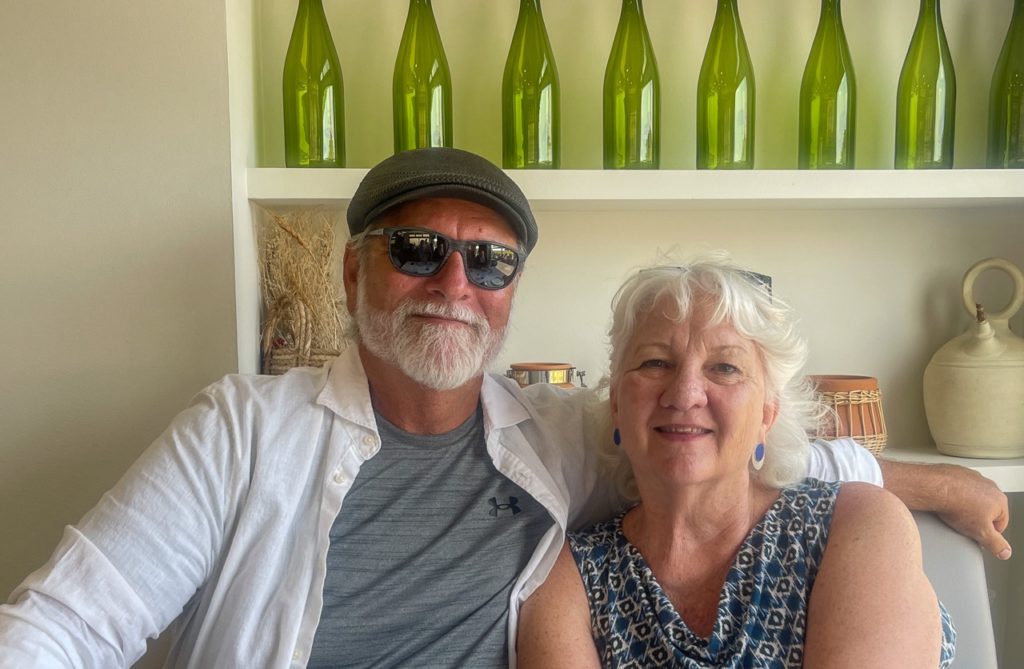
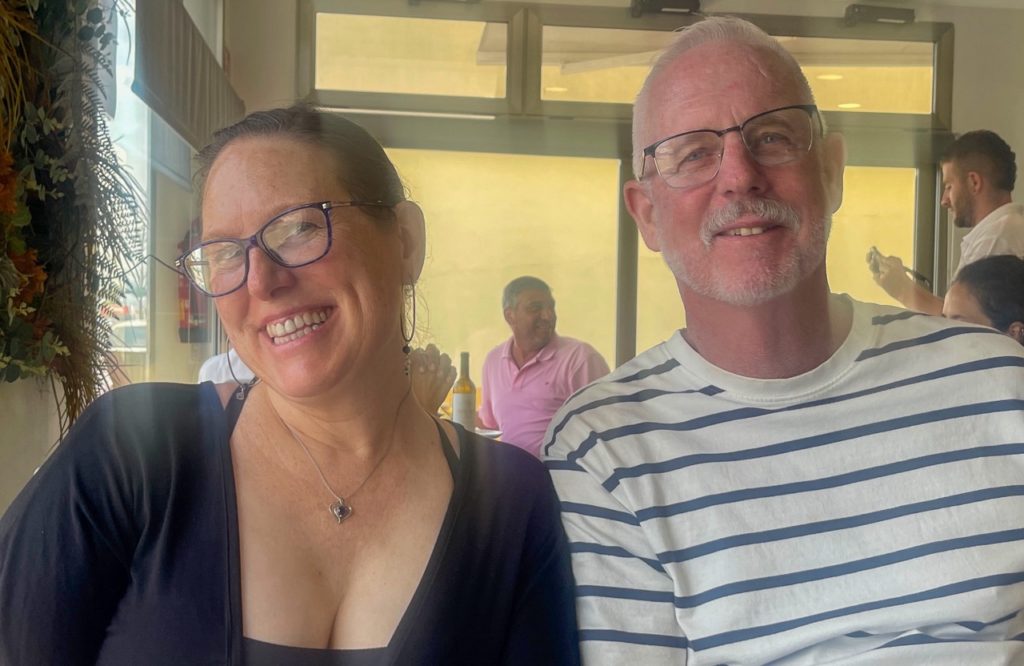
Our good friends…Richard & Sheila
How to cook calçots?
Grilled over a wood fire – not embers – the outer layer is charred by a full flame. When removed from the grill calçots are wrapped in newspaper, which makes them sweat, and therefore become even more tender.
How to Eat a Calçot?
Hold the calçot by the green tops with one hand and peel off the outer layer of charred skin with the other hand. Dip the calçot into the special sauce called Salvixada (like Romesco). Lift the calçot over your mouth, and bite off the white part – the green tops are discarded. Sip some red wine or sparkling cava. Repeat. It’s customary to wear a large bib and gloves to prevent going home with stained clothing.
The feast doesn’t end with calçots. After piles of calçots come all types of grilled meats—like Botifarra, the traditional Catalan sausage, lamb, rabbit, and more. These are all delicious when dipped in Romesco sauce as well. And of course, it’s all washed down with plenty of local wine.
An Excuse to Gather!
The mosttraditional way of eating calçots is at a Calçotada, a gastronomic celebration where barbecued calçots are consumed in massive quantities. The most famous Calçotada is in the town of Valls (where calçots originated) during the last week of January. These are calçot eating parties – the Spanish love to gather to enjoy a meal with family and friends. We’ve agreed to make an annual pilgrimage to Asador Monte Mayor for calçots with Sheila and Richard. Maybe we’ll even head up to Valls to experience a calçotada next year. Would you like to join us?
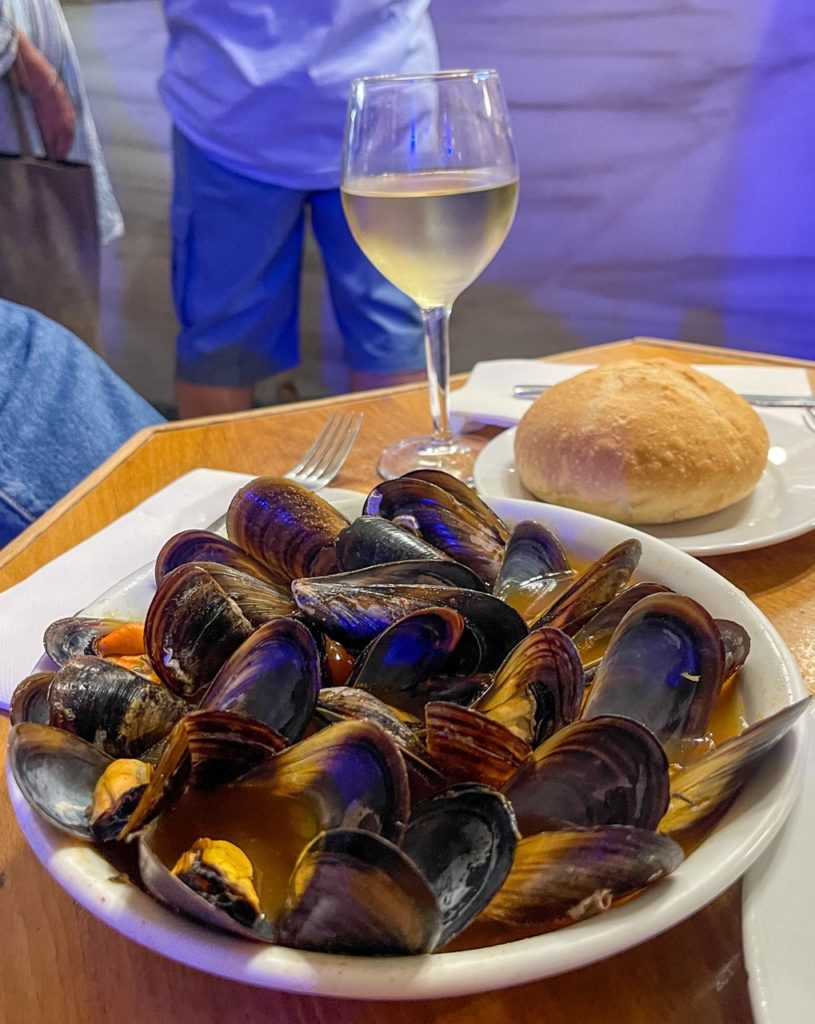
Enjoying calçots will hold me over until those months without a “R” in their name when Valencia’s amazing mussels, Clochinas al vapor (steamed mussels), are back in season.
“Breakfast is the most important meal of the day.”
If you found yourself nodding in agreement to either of these statements, you are obviously not from Spain. Food is, however, a very big deal in Spain. Evidence for how much Spaniards love food is the fact that they eat more times throughout the day than most people around the world!
We’re doing our best to assimilate.
Mealtime is taken seriously here – all five of them! Yep, that’s right. There are five meals a day in Spain. (Some even say there’s a sixth meal.) Seem crazy? The key to all this eating is understanding that not every meal is a feast. However, every meal is very much a social experience and reflects the Spanish approach to life: savor each moment, take time to be with friends and family, and RELAX! Munching a sandwich on the go is not a thing.
So, what are the five Spanish meals?
El Desayuno – Breakfast
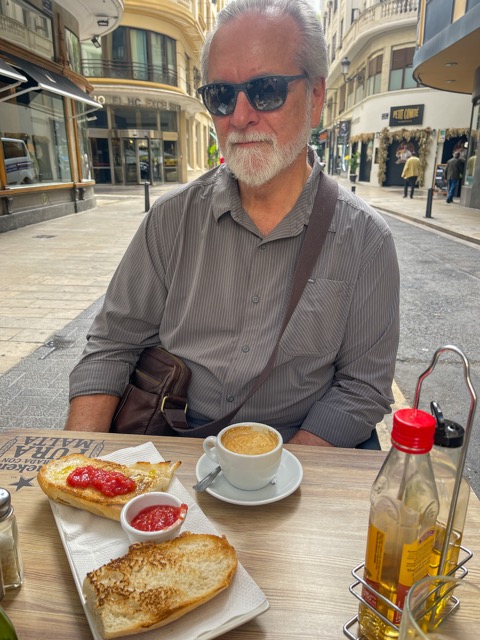
Breakfast is decidedly NOT the most important meal of the day in Spain. Rather, it is quick and simple. A typical breakfast in Spain, from about 7:00 to 8:30 AM, always includes café con leche (coffee with milk), which can be accompanied by one of the following: a croissant, toast with jam or tomato, or simply toast with olive oil. The most popular breakfast item is tostada con tomate – toasted bread that’s covered with freshly grated tomato, a hint of garlic, and plenty of olive oil and salt. It’s also common to have a small glass of beer, a glass of wine, or even a shot of cognac with your desayuno. Children have chocolate milk and maybe some cookies for dunking.
El Almuerzo – Brunch
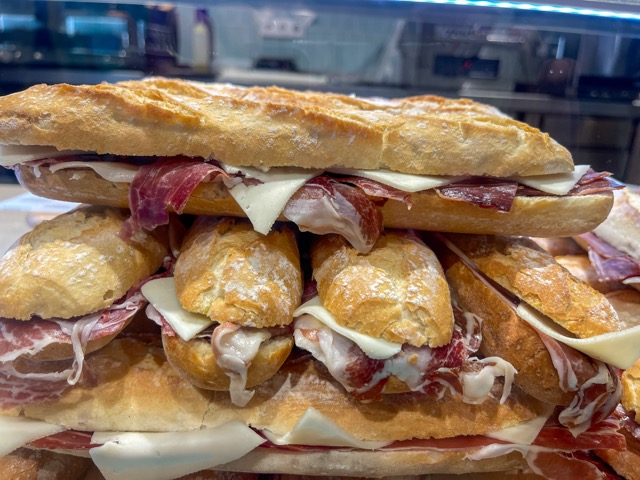
Even though Google Translate will tell you that “almuerzo: means “lunch” in English, this is not correct. Breakfast #2 would be a better description for this meal which is from 10:00 to 11:00 AM (workers and school children all have a mid-morning break at this time). In Valencia, a typical el almuerzo is a light meal such as a bocadillo (small sandwich on a baguette) or cocas (a type of individual Spanish pizza with no cheese). The accompaniments can include nuts, olives, sausages, serrano ham, or chorizo and cheese. Once again, a small alcoholic beverage such as beer or table wine is often included. One can finish the meal with cafe con leche or cortatdo. It’s important to remember that drinking coffee WITH your meal is not done. It is fine, however, to finish a meal with un café (espresso served with no milk), un cortado (espresso with a little milk), or café con leche (espresso with more milk). Just don’t drink it while you’re eating.
Vermú – Vermouth
Sometime around noon to 1:00 PM, it’s time to grab a quick snack and a drink to hold you over until lunch. You meet with friends to enjoy a few tapas and wash them down with vermú. You never order coffee with this meal. In fact, I’ve seen signs that say “A partir de las 12:00 horas, ya no se hacen cafés. Disculpen las molestias.” which means “From 12:00 on, we don’t make coffee. Sorry for the inconvenience.” While considered a sacred time of day, especially in Barcelona, the vermouth hour Vermouth hour is can be any time before a meal nowadays. (This is the optional sixth meal of the day.)
La Comida – Lunch
Finally, it’s lunch time and this one is sacred! The largest meal of the day, it is eaten between 1:30 – 3:00 and usually includes multiple courses. Spaniards believe in taking their time and enjoying their meals, so la comida can easily last two to three hours. A typical la comida includes a starter (a salad or a plate of jamon, cheese, olives, and bread), a main course of grilled meat or fish, paella, or pasta. A bottle of wine is a must and there’s always a dessert course.
La comida is such an important Spanish mealtime that stores, businesses, schools, and offices close from about 1:30 PM to 4:30 PM. People take time to enjoy their lunch and possibly take a siesta. If you need something from a store (other than the large department stores), you must get it before 1:30 PM or after 5:00 PM. In the tourist areas some restaurants keep “crazy” hours just for the tourists and serve “lunch” starting at around noon. Most local restaurants, however, don’t start serving lunch until at least 1:30 PM and many don’t open until 2:00 PM.
The Menu del Dia tradition – Menu of the Day
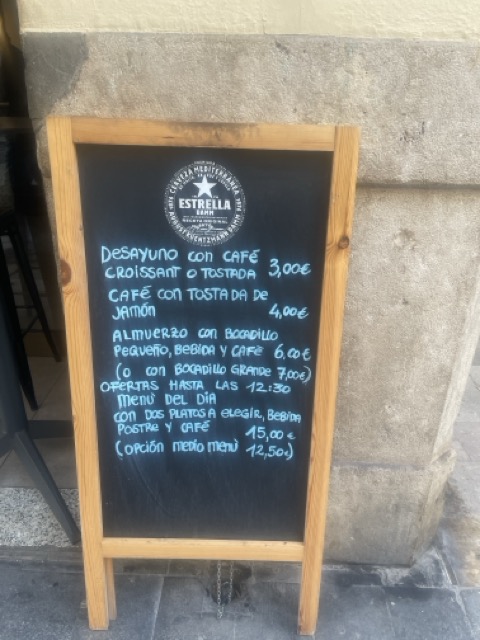
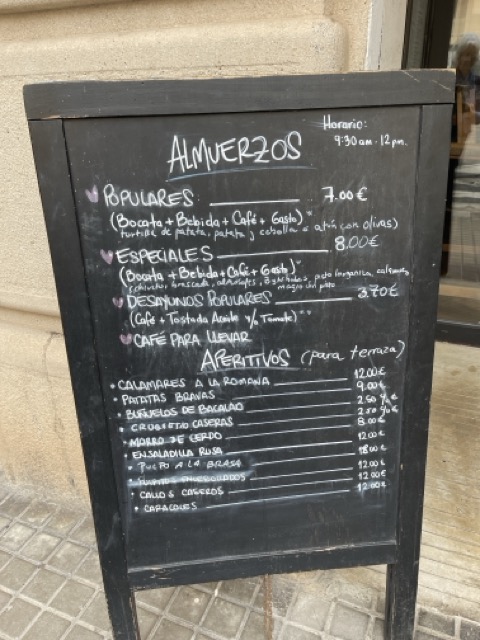
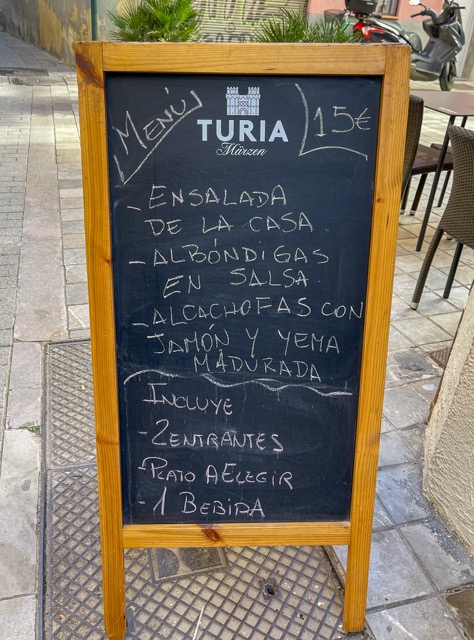
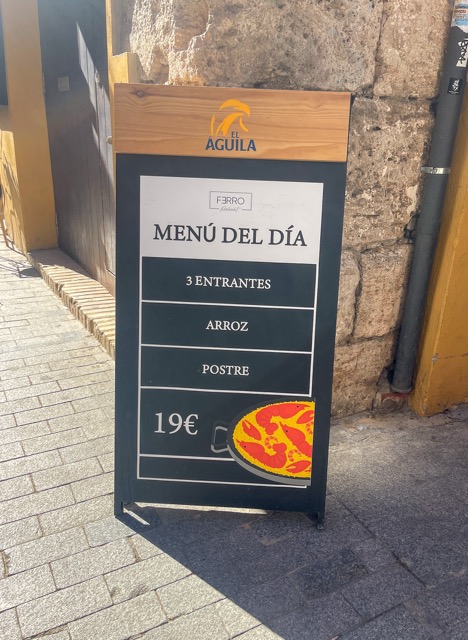
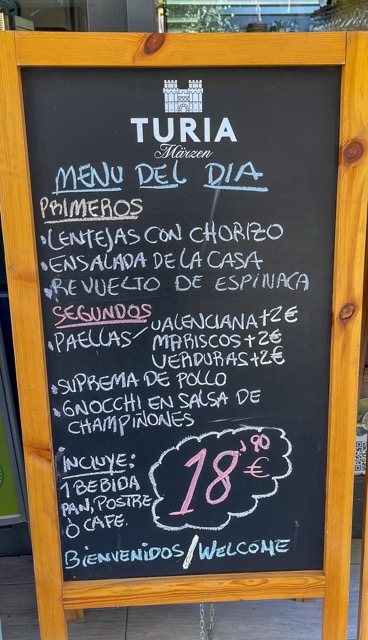
Apparently, in the 1960’s and 1970’s, General Franco issued a decree that required all restaurants throughout Spain to provide an affordable meal (charging no more than the typical hourly wage) for workers on weekdays. The tradition lives on. Even today, it’s easy to find a 3-course mid-day meal for around €10-20. Often, this includes a glass of wine or beer and coffee (after the meal). The choices are typically written on a chalkboard on the sidewalk or on a piece of paper tacked up in the restaurant.
Just a quick note about some paella rules: Paella is only eaten at lunch, never for dinner. It is never cooked in individual portions and it should take a long time to arrive at the table. Oh, and meat and seafood should never be mixed together.
La Merienda – Late-Afternoon Snack
La merienda, usually between 5:00-7:00 PM, may seem unnecessary but remember, dinner is eaten very late in Spain. So, to hold one over, a small snack is required. This can be a savory bite such as a bocadillo, a tortilla (a Spanish omelet with potatoes and onions), or calamari (grilled or fried), and as always some of that famous Spanish jamon (ham). Alternatively, one can choose sweets such as bixocho (sponge cake), cheesecake, or a churro with dipping chocolate.
This little meal, or rather snack, is still taken quite seriously even for school children. When school is out, parents will ask their kids, “Quieres merender?” (Do you want to snack?) Of course, no kid ever refuses, and their merienda can include bread, biscuits, chocolate milk, or fruit. With dinner still several hours away, this could be important!
La Cena – Dinner
Dinner in Spain is eaten at about 10:00 PM throughout the week and even later weekends. The kitchens in virtually all restaurants close around 4:00 PM and don’t open again until 8:00 – 8:30 PM. Typically, a lighter meal, dinner might include a salad, soup, cold cuts, cheese, and sometimes a small serving of fresh fish or meat served with potatoes or vegetables. A light dessert of fresh fruit is a typical dessert.
These traditions are a part of what makes Spain such a pleasant and laid-back country to live in. A common expression here is “No pasa nada” and a rough translation might be something like, “Relax, don’t take it all too seriously, here, have some olives.”
Sobramesa
Relaxing and socializing after a meal is a Spanish tradition they call sobramesa. This is particularly true after lunch (La Comida). Sobramesa is about prolonging a meal because you’re having such a good time with your friends that you don’t want it to end.
Tapas
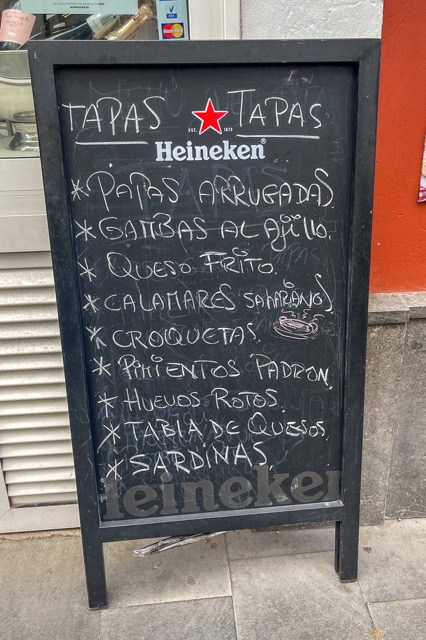
You might be wondering about tapas. When are tapas eaten? Anytime. All the time. A tapa is a small portion of food that is served alongside an alcoholic beverage (are you noticing a pattern?) such as a beer or wine. You might enjoy several tapas as a full meal, or just one to whet your appetite for a large dinner. And, of course, tapas are an excuse to socialize (another pattern?). Some of my favorite tapas are garlic shrimp, patatas bravas (fried potatoes with spicy sauce), small green padron peppers, croquettes filled with meat or seafood, jamon and cheese in countless concoctions, boquerones (marinated anchovies), torrezno (crispy fried pork skin), and pinxtos (beautifully arranged ingredients atop slices of toasted bread).
Is this healthy?
You might be thinking that the Spanish approach to eating sounds like a health nightmare. So, I checked. Recent data ranks Spain 9th in the world for longevity (the U.S. is 48th) and Spaniards live longer on average than any other European. The incidence of obesity here: less than half of the U.S. rate. But what about all that drinking? One local employer, asked about the sobriety of his work force declared, “My employees are never drunk! Of course, they’re never entirely sober either.” Despite this, the rate of alcohol dependency is more than 5 times lower in Spain than in the U.S. Maybe these Spaniards are on to something!
The Restaurant Experience
Restaurant culture is quite different in Spain compared to the U.S. You know the drill in the U.S. – servers come to the table, introduce themselves, tell you they are going to “take care of you”, and ask if you are ready to order. Then, they are attentive throughout your meal making sure to ask, “is everything OK?” and offering refills on drinks. In the U.S., we often think of good service as being quick – bringing your food out quickly, making sure you get your check quickly, etc.
This behavior would be considered rude in Spain. There is never a rush by the restaurant to “turn” the table. A server would never be so rude as to interrupt you to ask if you are ready to order or if everything is OK. Typically, the server will not come to your table to take your order until you signal that you are ready to do so. To do this, you look in their direction, catch their eye, and motion to them to come over. The check will never be delivered until you specifically ask for it.
Mealtime in Spain is about gathering with family and friends. It’s a sense of community and belonging that nourishes the soul as much as the body and we know that social connection plays a major role in healthy aging.
So, there you go, now you know how to eat like a Spaniard! As I said, we’re doing our best to get used to this routine and it’s going well. It’s a quite pleasant lifestyle that supports a relaxed pace of life and focuses on really enjoying your food.
Buen Provecho!
Simply translated: enjoy your meal. But there’s a bit more to it when we break it down. Buen means good and provecho means profit or benefit. The sentiment: “May you benefit from this meal!”
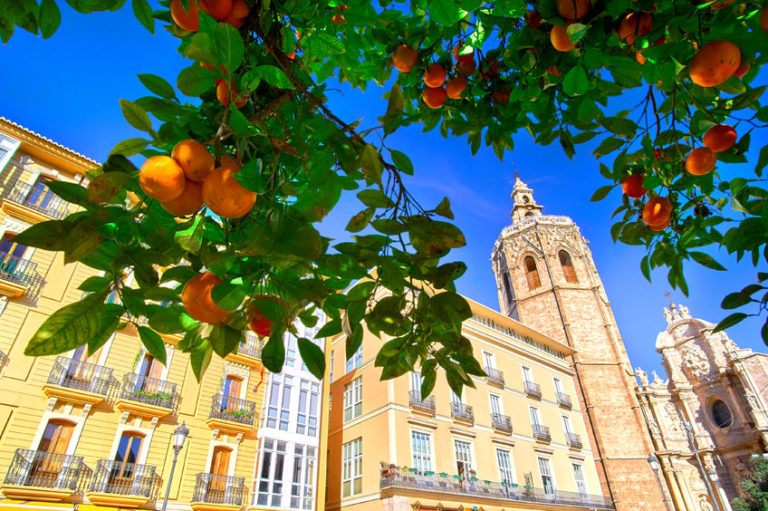
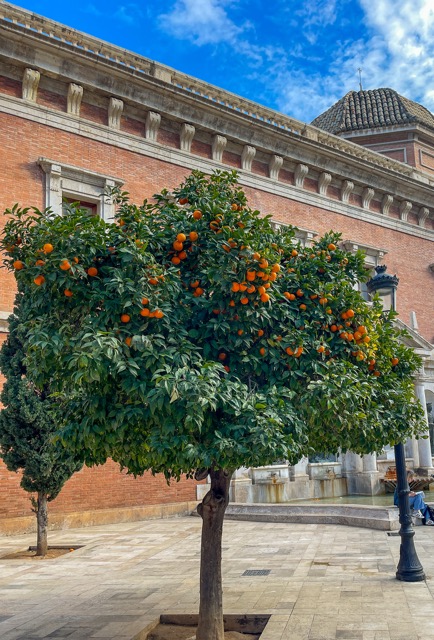
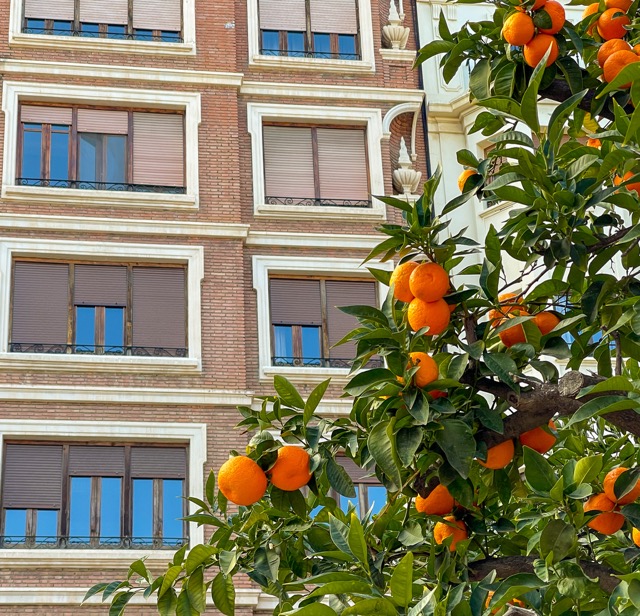
In January, an annual ritual takes place in the city of Valencia – shaking of the oranges from the thousands of orange trees scattered around the city. With approximately 12,000 of them, this is a big job.
In 2018, Valencia developed a bat-like machine to do this (which is appropriate since the bat is the symbol of Valencia – more on that in a future post!). I guess you’d call this machine an “orange shaker” and it’s an amusing process to watch. Check out this video:
https://youtu.be/kqxhn3G_GWs?feature=shared
The city has estimated they will gather about 460,000 kilograms of oranges this year. That’s about 1 million pounds or 500 tons. No wonder they invented a shaking machine!
These oranges are edible, but bitter and so they are composted and used by local farmers to fertilize their fields.
We’ve just set a record for staying put – we’ve been in Valencia for a consecutive seven weeks without even one overnight train trip!
I’ve been busy taking an immersion Spanish course which required spending about five hours a day studying español. Ed has been focused on getting his Spanish driver’s license. I’m a little better at speaking Spanish and he’s made progress on being able to drive here. In between all this effort, we’ve managed to squeeze in some time each week to explore Valencia. It’s been fun playing touristas in our own city.
Week One – The Hortensia Herrero Art Centre
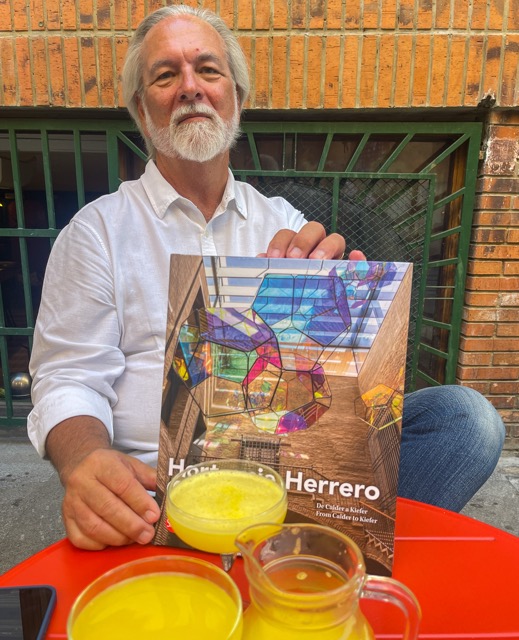
This new art museum is housed in a former gothic palace built in the 14th century. The restoration took more than five years to complete and opened just a year ago. Construction crews discovered fragments of a Roman circus dating back to the 2nd century AD and these ruins have been preserved for visitors to see. Check it out: https://www.cahh.es/en/
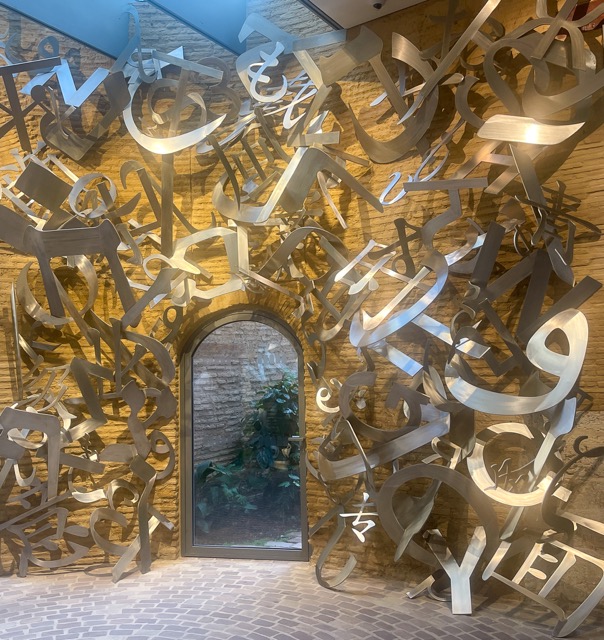
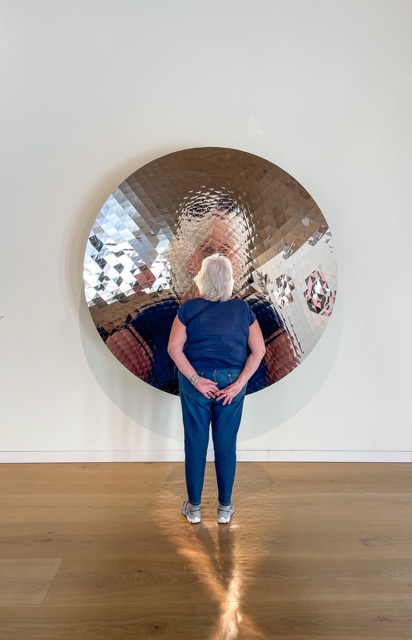
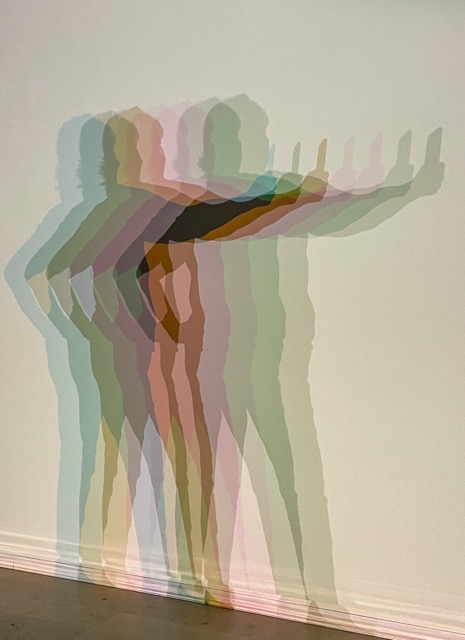
The patron, Hortensia Herrero, is a wealthy Valenciana who purposely acquired art so that she could share her extensive collection with the public. It’s an incredible building with amazing art by many world-renowned artists. We especially enjoyed the site specific sculptures and the interactive pieces.
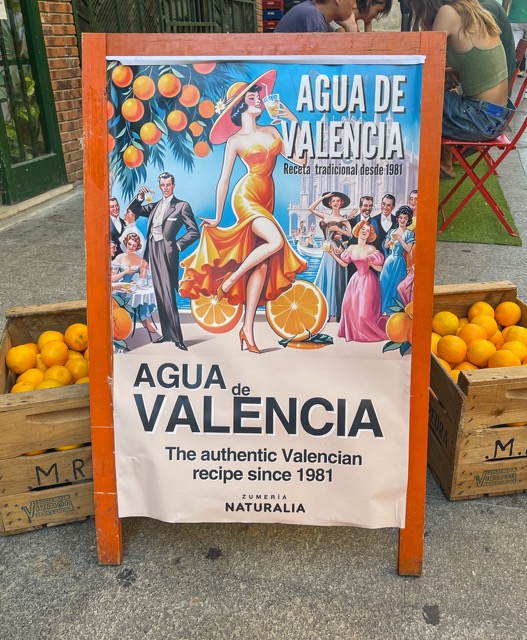
After our museum visit, a little refreshment was needed so we stopped for an Agua de Valencia. This uniquely Valencian cocktail is found all over the city. It was created in 1959 by a Valencian named Constante Gil for his customers who were getting bored with Agua de Bilbao (the house sparkling wine). It’s an intense combination of ingredients that starts with fresh (local) orange juice to which is added a splash of vodka, gin and cava – yep, that’s right, all three in one cocktail. Agua de Valencia, meant to be shared, is served in a pitcher along with a champagne coupe of the style said to be modeled on the breast of Marie Antoinette. I’m not sure about that image!
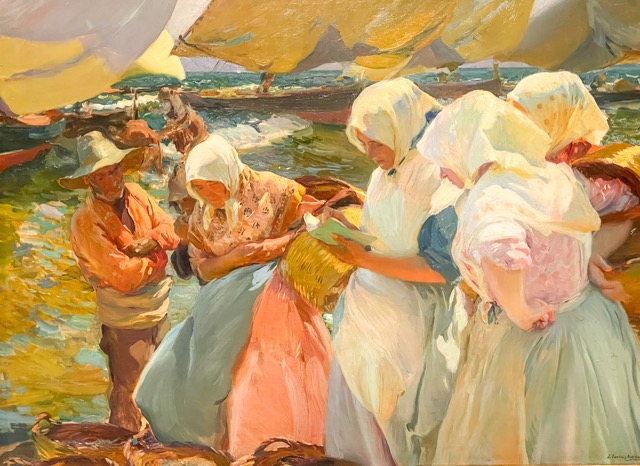
Week Two – “In the Sea of Sorolla with Manuel Vicent”
Joaquin Sorolla is one of Valencia’s favorite sons who is called “the painter of Valencia and it’s light.” He was the most internationally known Spanish artist of his day (b. 1863, d. 1923) and one of the key figures in the history of Spanish art. The exhibit that we saw is a special collection of more than 100 canvasses and was presented in a novel approach. A well-known Valencian writer, Manuel Vicent, curated the exhibit by offering a dialogue between painting and literature with the Mediterranean Sea as the common thread. https://www.fundacionbancaja.es/exposicion/en-el-mar-de-sorolla-con-manuel-vicent/
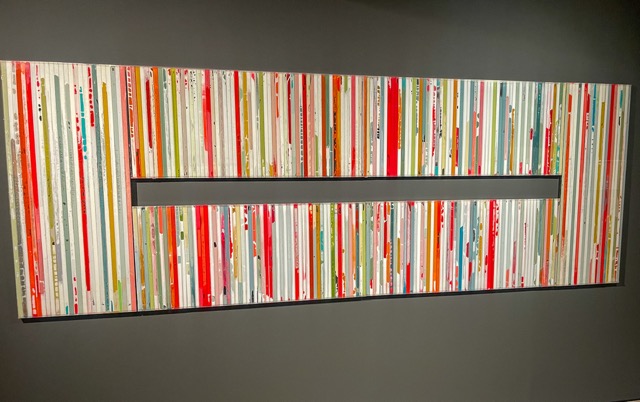
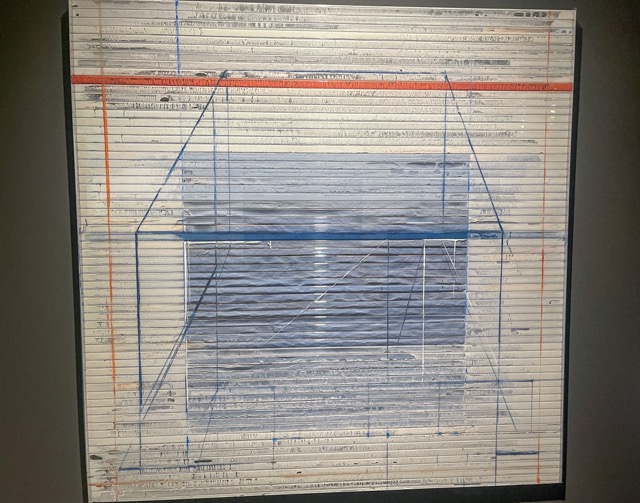
In addition to the special Sorolla exhibit, we enjoyed a modern art exhibit by Madrid artist María Arangurnen. She uses industrial materials and recycled plastics to create abstracts. Inspiring!
Week Three – The Sistine Chapel of Valencia & Valencia’s Roman Ruins
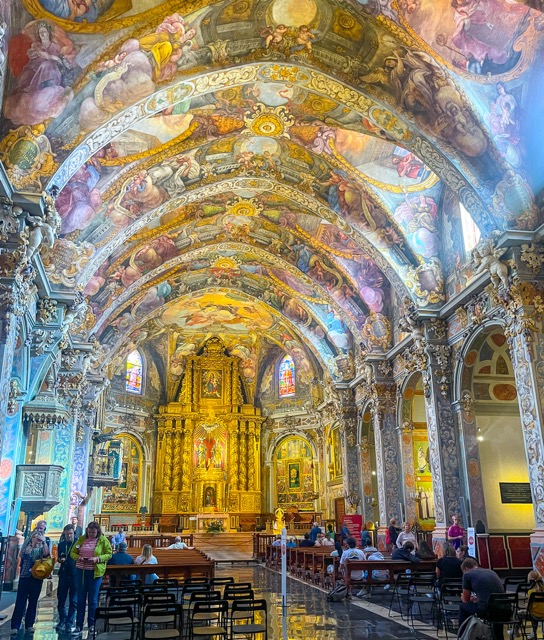
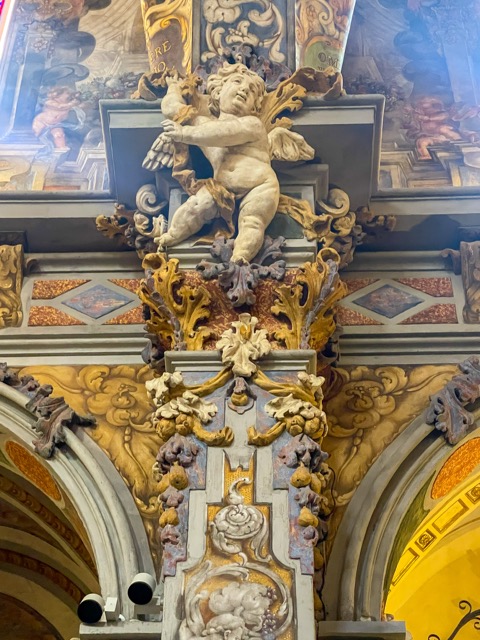
Just a two-minute walk from our place, is the Iglesia de San Nicolás de Bari y San Pedro Mártir de Valencia (San Nicolas Church). This church was erected as a parish church around 1242, remodeled in the Gothic style between 1419-1455, and redecorated in the Baroque style with fresco paintings between 1690-1693. It’s an excellent example of a 15th century Gothic building with 17th century Baroque decoration. This little church sits on hallowed ground. Originally, there was a Roman temple on the site, then a Visigothic paleo Christian temple, and next a mosque with the arrival of the Muslims in the 8th century. Check out the virtual tour here: https://www.visitavirtualsannicolasvalencia.com/
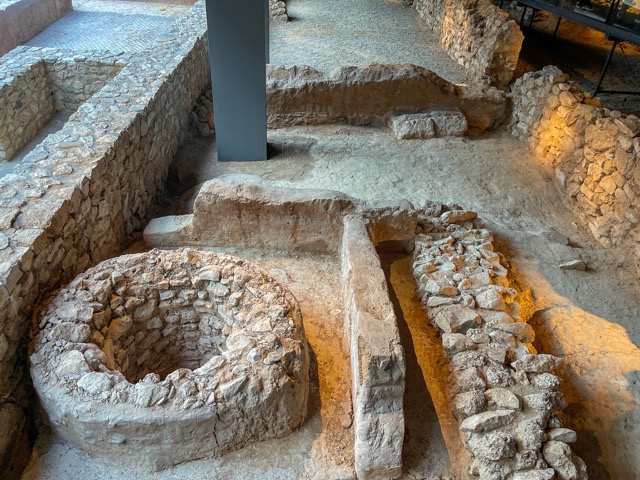
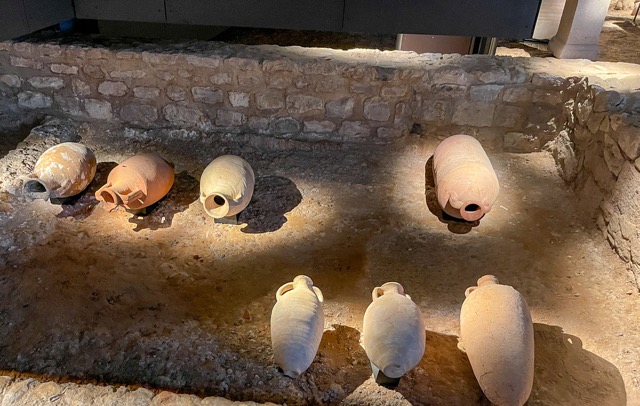
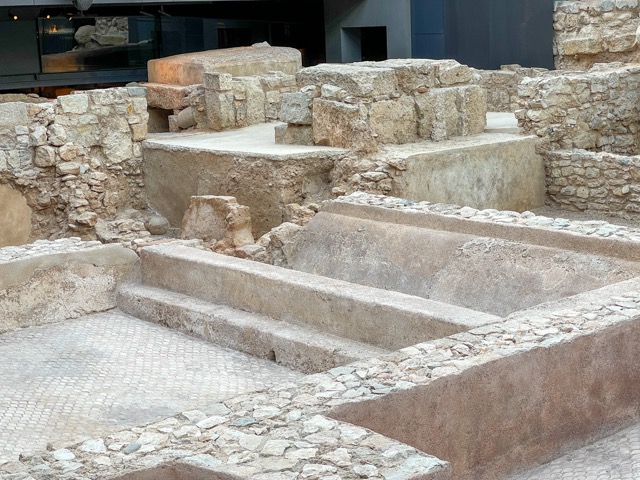
Next, we strolled through Plaza de la Virgen to visit the Centre Arqueològic de L’Almoina where remnants of the city’s founding by the Romans in the 2nd century BC are preserved. For background, here’s a brief history of Valencia:
138 BC – Junius Brutus founded the city of Valencia (Valentia)
75 BC – Valencia was sacked in a war between Pompey and Sertorius
25 BC – The Romans re-founded Valencia
500 AD – the Visigoths drove out the Romans
711 AD – The Muslims arrived (the region was named Balansiya)
1238 AD – Christians conquered the Muslims and took over the city (Valencians still celebrate the entry of Jaume I on October 9th)
The Valencian word “almoina” means “alms” and this name comes from the medieval period when there was a charity center for the disadvantaged on this spot. The current museum complex was completed in 2005 and is considered one of the best archaeological sites in Europe. It’s feels like the soul of the city. You can check it our here – https://www.valencia.es/val/almoina/introduccio (but you’ll need to ask Google Translate for assistance).
Week Four – City of Arts & Sciences
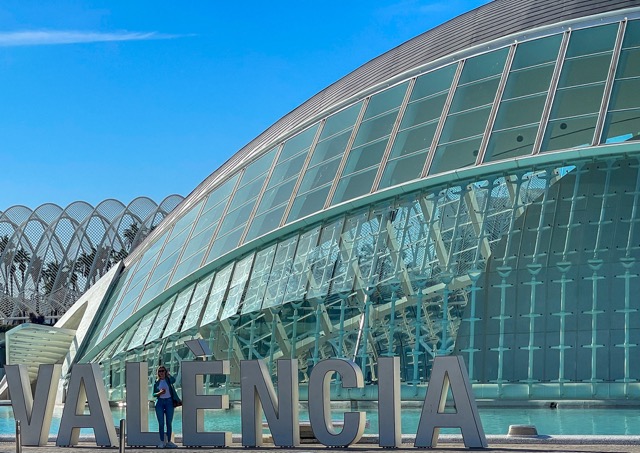
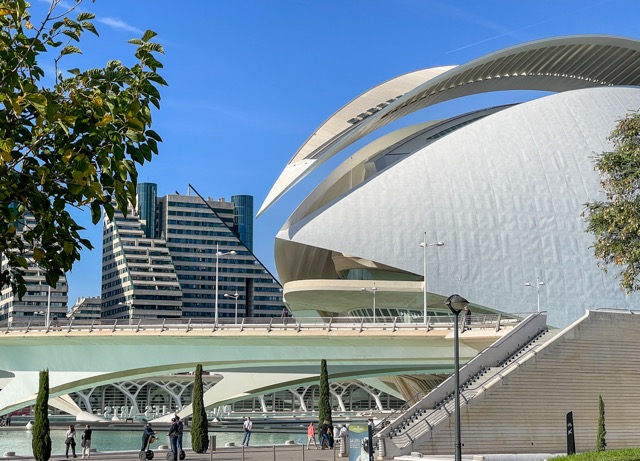
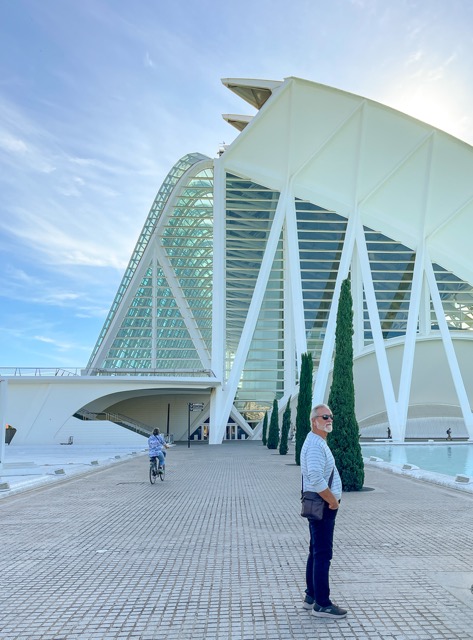
The buildings of Valencia’s Ciutat de les Arts i les Ciències de Valencia are the work of an internationally renowned architect, Santiago Calatrava. Completed in 2006, these buildings have become icons of the city. Last year, we visited the aquarium, the largest in Europe, with Michael and Charlotte. This time, we explored the Science Museum including extensive exhibits on how the human body works, what astronauts do in space, and what’s inside an anthill.
Our second stop was the Hemisféric, a 3D digital cinema with a huge, domed screen that completely immerses you. Several films are shown every day, and we opted to watch “Oceans: Our Blue Planet.” It was spectacular.
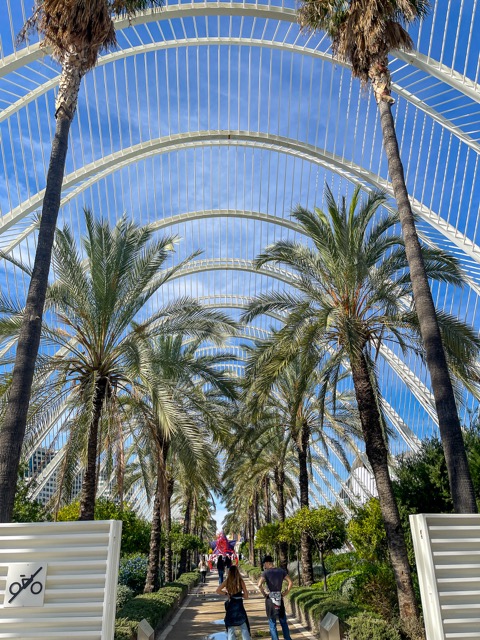
Before heading to lunch with friends, we finished our visit with a look at the Umbracle – a huge open-access garden. We’re planning to book some music and dance performances at the Palau de les Arts. My photos don’t begin to capture the architectural drama of this complex. You can see some aerial shots here – https://cac.es/en/
Week 5 – Ephemeral Art
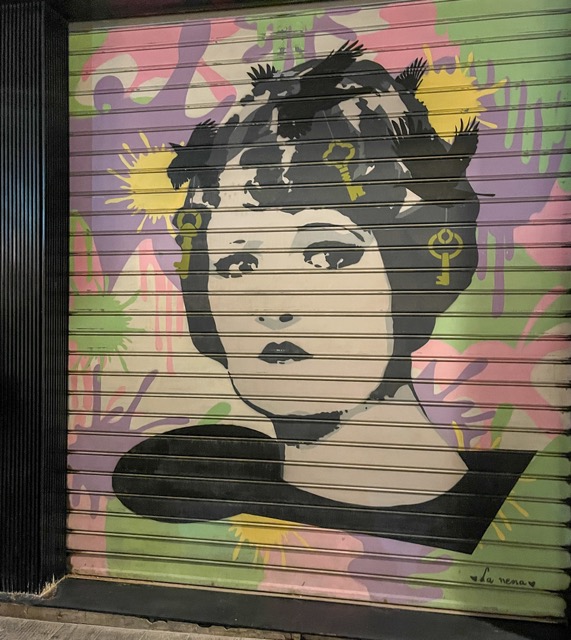
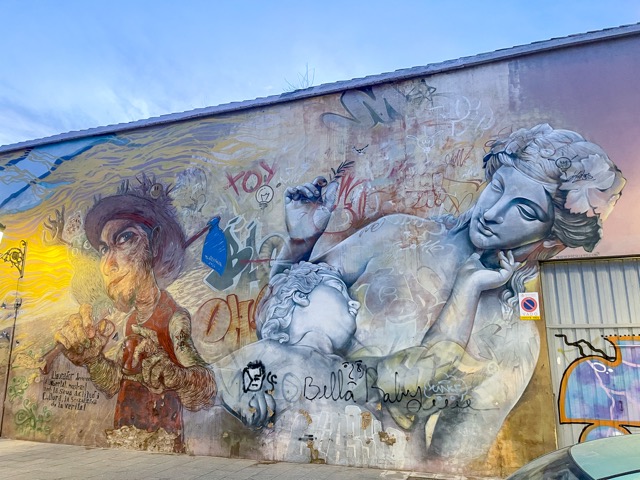
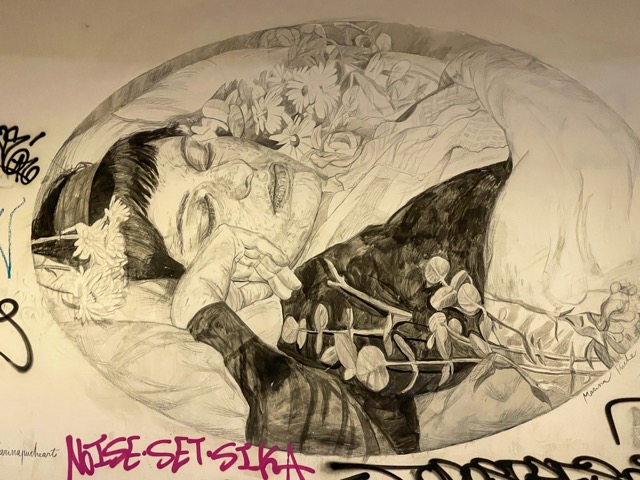
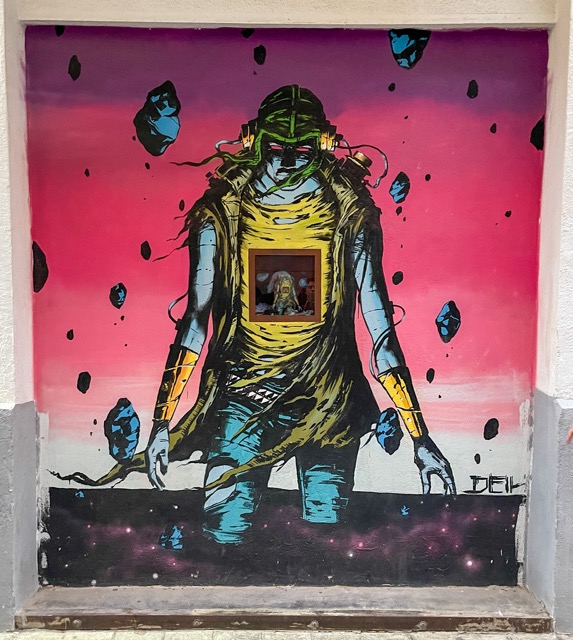
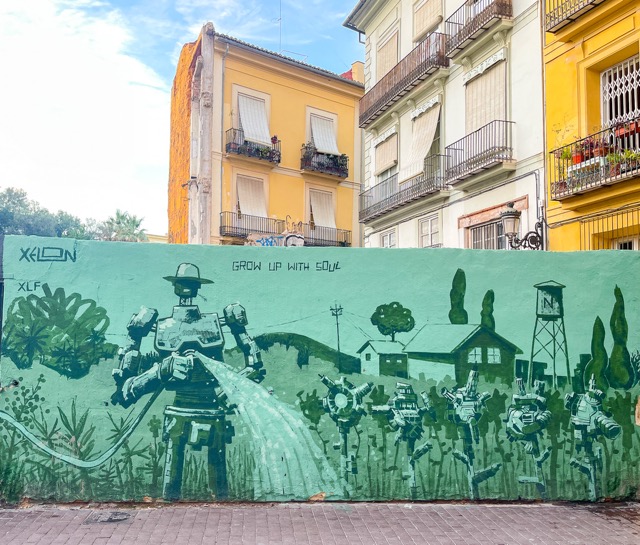
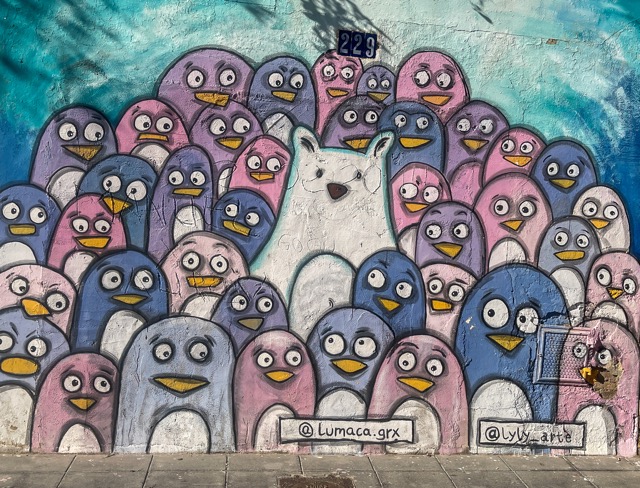
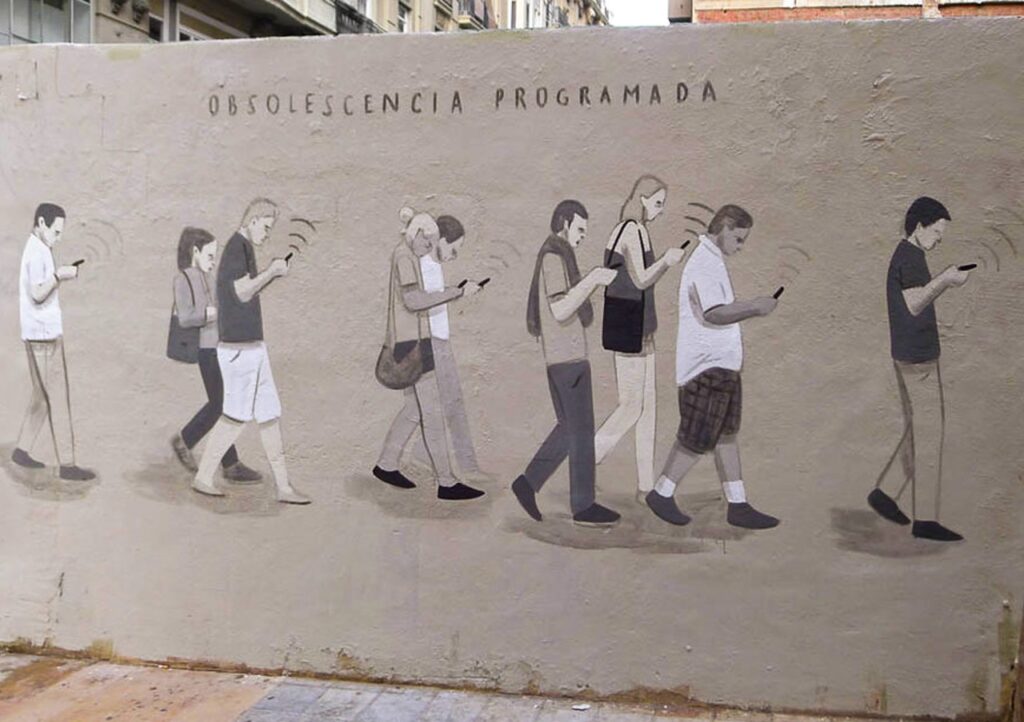
Ed discovered an interesting way to see our neighborhood, so the next thing you know we’re on a 2 ½ hour walking “Street Art” tour with a very knowledgeable guide. Like many cities, Valencia has a lot of graffiti, tagging, and street art – lots to see as one walks around. But wait, when is it art and when is it vandalism? I was hoping our guide would help to settle this question for me. It turns out it’s a complicated, no one right answer, art is in the eye of the beholder sort of thing.
Visiting art museums and galleries is a favorite activity for us. Street art is different. Of course, not being confined to a gallery or museum, there is a much larger and varied audience. Then, there’s the random places it a appears, often surprising walkers by. Street art amuses and enlightens, and sometimes it disturbs or annoys. It’s ephemeral, here today, gone tomorrow. One must enjoy it while it lasts.
Graffiti and street art are often passionate, even subversive. This is art that is relevant in real-time. It’s about the fundamental need of self-expression – trying to make sense of and share the experience of life on Earth. I wonder if street art is any different than cave drawings made by ancient civilizations.
Street art in Valencia has been popular since the early 90’s and currently attracts some of the best street artists in the world. Often, this is a collaborative effort, with teams of artists coming to Valencia from around the world to showcase their work in the form of stencils, spray paint, and stickers. Murals in all shapes, sizes, and styles can be found throughout El Carmen, the area of the old city where we live.
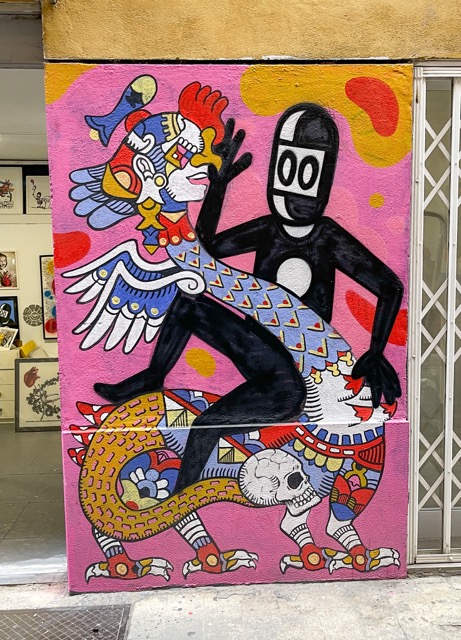
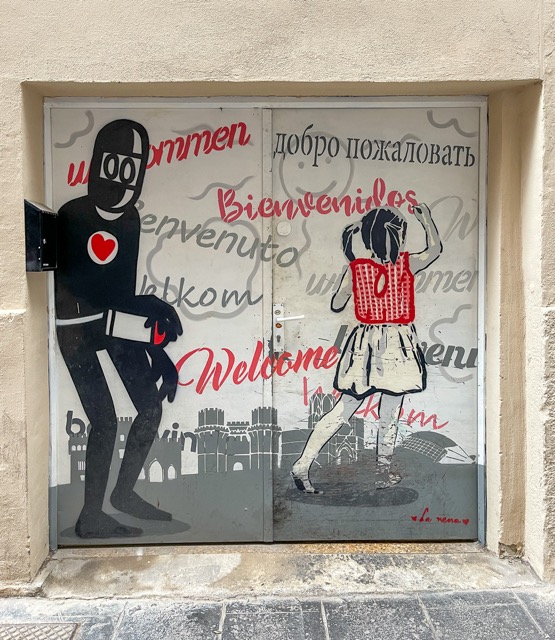
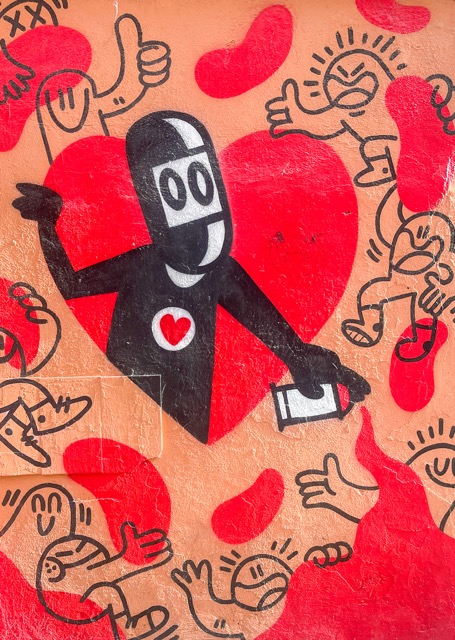
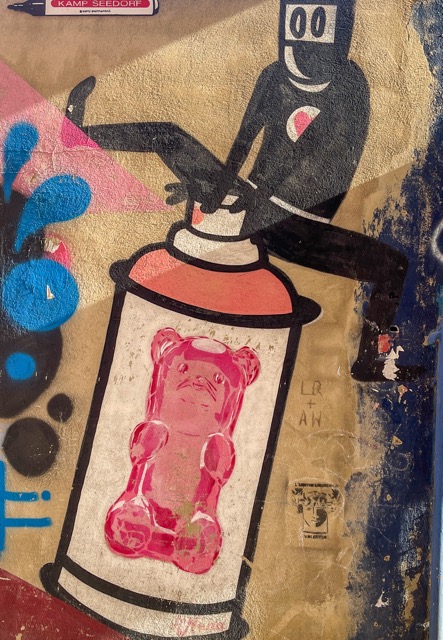
David de Limón grew up in El Carmen, completed an art degree at a Valencia university, and has been graffitiing the streets of Valencia since 1998. He started with lemons, but his black ninja has become his signature image. According to the artist, it’s not an ninja, but rather, a masked man because he needs to hide himself. Street art is still considered vandalism and the ninja’s face is covered with a mask so he can stay anonymous. His images are found all over the city. His ninjas are all over the city.
Another well-known artist, Escif, was born in Valencia and has been creating street art here since 1996. His murals examine current social issues, resistance movements, the challenges of capitalism, and the environmental problems of our times.
“I see graffiti as a necessary symptom of life in contemporary cities. A painted wall represents a way of using the city that has not been thought of. I find it very interesting that people who live in a city are not satisfied with its use according to the imposed norms, but rather invent new ways of using.” Escif
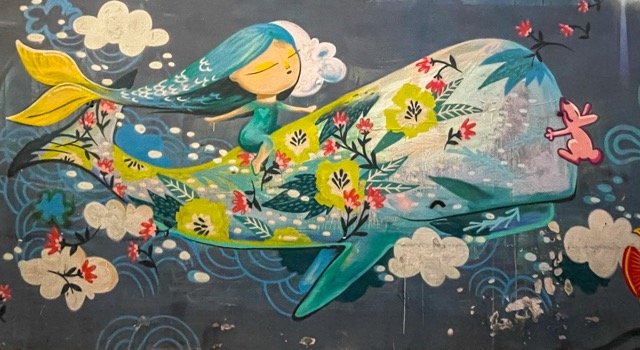
Julieta, an artist who is part of the XLF-crew (a group of famous artists) was born in and has a Fine Arts degrees from the Polytechnic University of Valencia. Drawings of a Japanese girl are her signature. The girl is called Kawaii which means adorable, in Japanese. The girl in Julieta’s painting always has her eyes closed. In Julieta’s opinion the kawaii is a chameleon – sometimes happy, sometimes sad, sometimes alive and sometimes dead. She is always keeping a secret.
“When I walk through the streets of my city, its walls speak to me, they tell me the thoughts of others… I am attentive, I look and read in silence. I like to walk through the central neighborhoods with narrow streets where everything can be heard better, the sidewalks are packed with people feeling the warmth.” Julieta
Although I very much enjoy viewing fine art in museums, there’s something exhilarating about street art. It’s relevant. It’s bold. Street art provides a way of understanding the issues, values, and struggles of everyday people. So, is it art or vandalism? It is truly in the eye of the beholder.
Week 6 – El Cabanyal & Thanksgiving Dinner
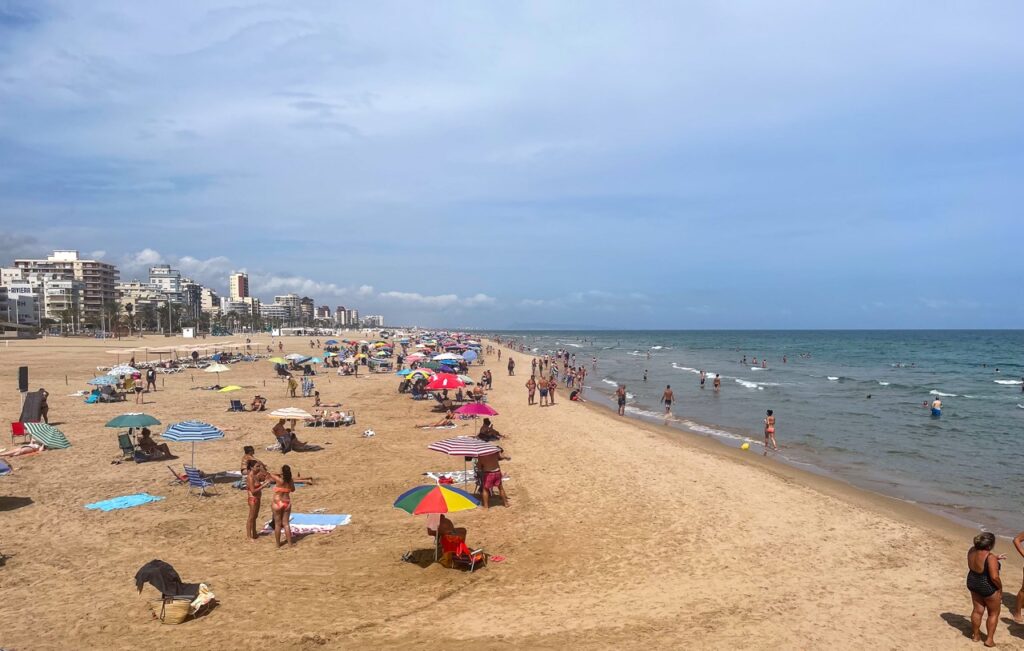
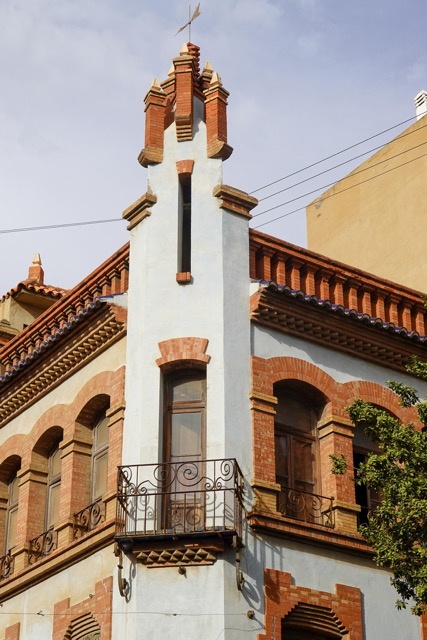
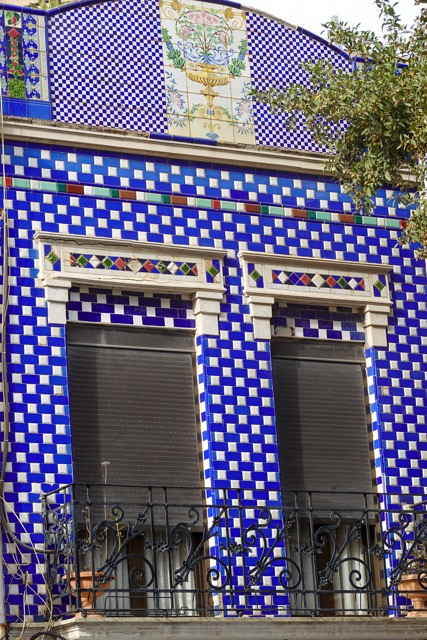
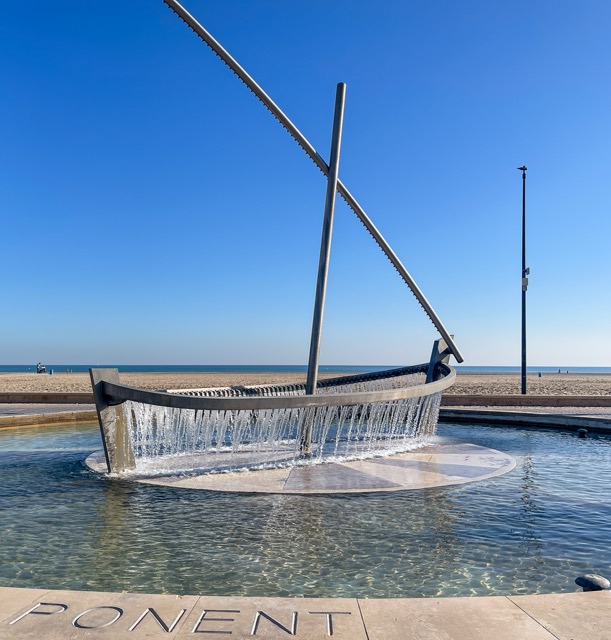
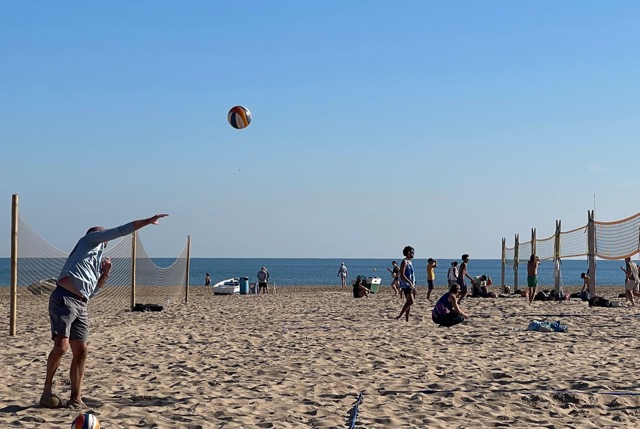
On Thanksgiving Day, we headed to the beach. El Cabanyal is a Valencian neighborhood on the Mediterranean. Historically, this was a small fishing village that became a part of the city of Valencia in the 19th century. The architecture is fascinating with fishing huts, beautiful, tiled facades, and modernist structures. Having fallen victim to neglect in the past, Cabanyal is the up-and-coming bohemian place to be, especially for young hipsters. We wandered through the huge street market that appears every Thursday, strolled along the beach and watched the numerous volleyball games going on. Finally, we had a wonderful tapas lunch at Casa Montaña – a Cabanyal institution since 1836. It was a delightful start to our day.
In the evening, we joined fellow expats for a traditional, American Thanksgiving dinner. Gathered in a craft beer pub, we enjoyed turkey and all the trimmings prepared by Spanish people in the kitchen of a nearby Italian restaurant. Best of all, we made some new friends and enjoyed the camaraderie.
Week 7 – Sagunto
Sagunto, just 30 km north of the city of Valencia, is an ancient city that was asking to be explored. An early Iberian settlement, there is evidence of human habitation going back as far as 1,500 BC. The narrow, meandering streets of the old town reveal remnants of the many invaders of Sagunto – Moors, Romans, Visigoths and even Hannibal in 218 BC when he attacked Saguntum (the Roman name for Sagunto) kicking off his (eventually failed) attempt to conquer the Roman Empire.
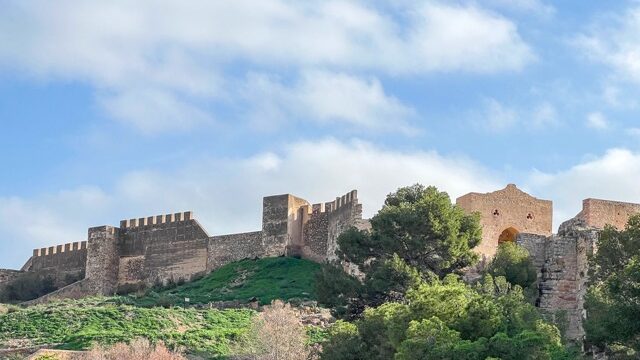
The Romans re-captured what was left of the city and set about re-building it. A few centuries later, Sagunto was captured by the Moors and they built a hilltop castle, which is a major tourist site today. We climbed the hill only to discover that much of the castle complex was closed. Still, at almost a kilometer long, we were in awe of the sheer effort that went into its construction.
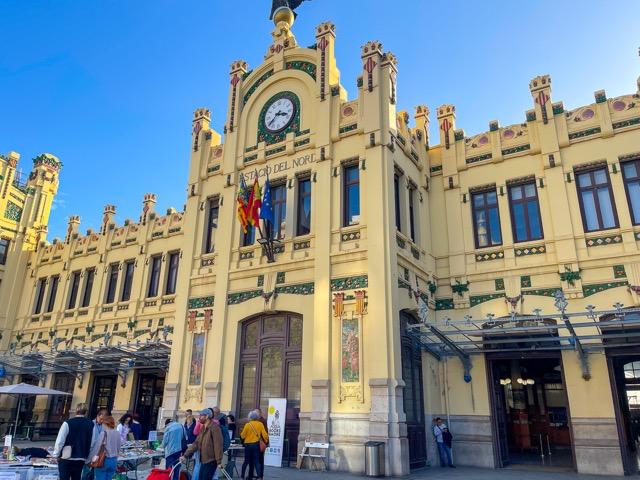
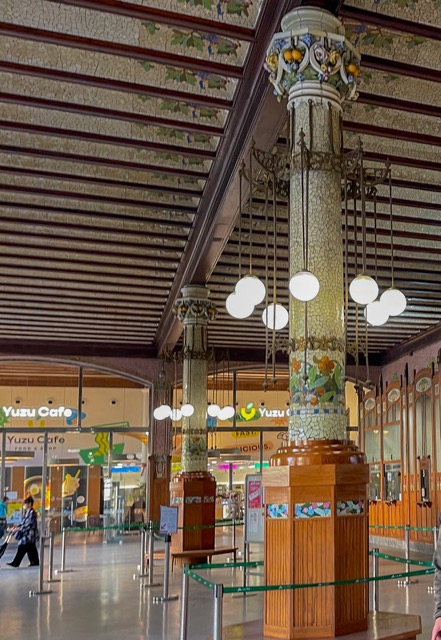
Down the hill in the old city, we wandered through the ancient Jewish quarter with it’s narrow cobbled streets and medieval houses. After exploring with our friends Jim and Heather, we walked a very long way to a lovely lunch before heading back to the train station for the 30-minute ride back to Valencia. A highlight of this brief visit to Sagunto was coming and going via the beautiful Estación del Norte (North Train Station). Built in 1919, this train station is at the center of Valencia next to the bull ring and just 200 meters from the town hall. It’s a wonderful example of Valencian Art Nouveau architecture.
This little adventure was quite a trek – 15,000 steps, to be exact! We indulged ourselves with a much-needed siesta when we arrived home.
Keeping Busy
In addition to these “touristy” activities, Spanish lessons, and driving school, we managed to squeeze in a night at a local jazz club; a dosa (Indian style crepes) making workshop; a concert featuring the Requiem de Fauré (a beautiful piece of classical music featuring soprano and baritone soloists, a mixed choir, orchestra, and an organ); a couple of dinner parties; several new restaurants; and some volunteering at World Central Kitchen. Best of all, we’ve made a few new friends in these last seven weeks.
I hope you’ve enjoyed this little glimpse of Valencia. We’d love to share more of our city with you…come on over!
Tomorrow, we leave for Pennsylvania! We’re so excited to see these amazing kiddos!
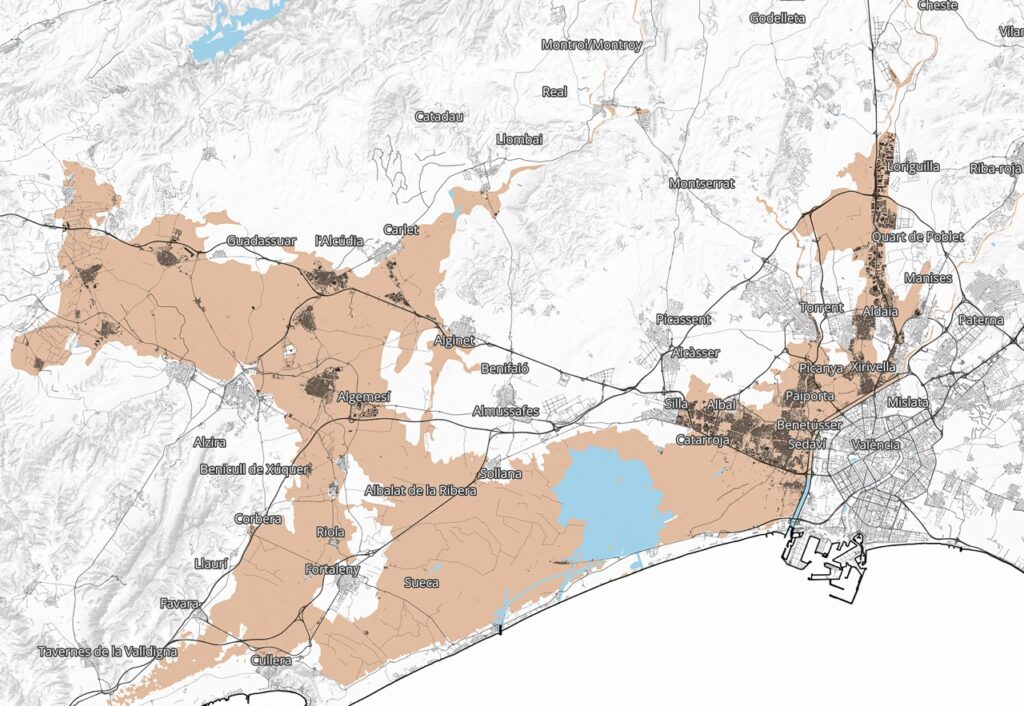
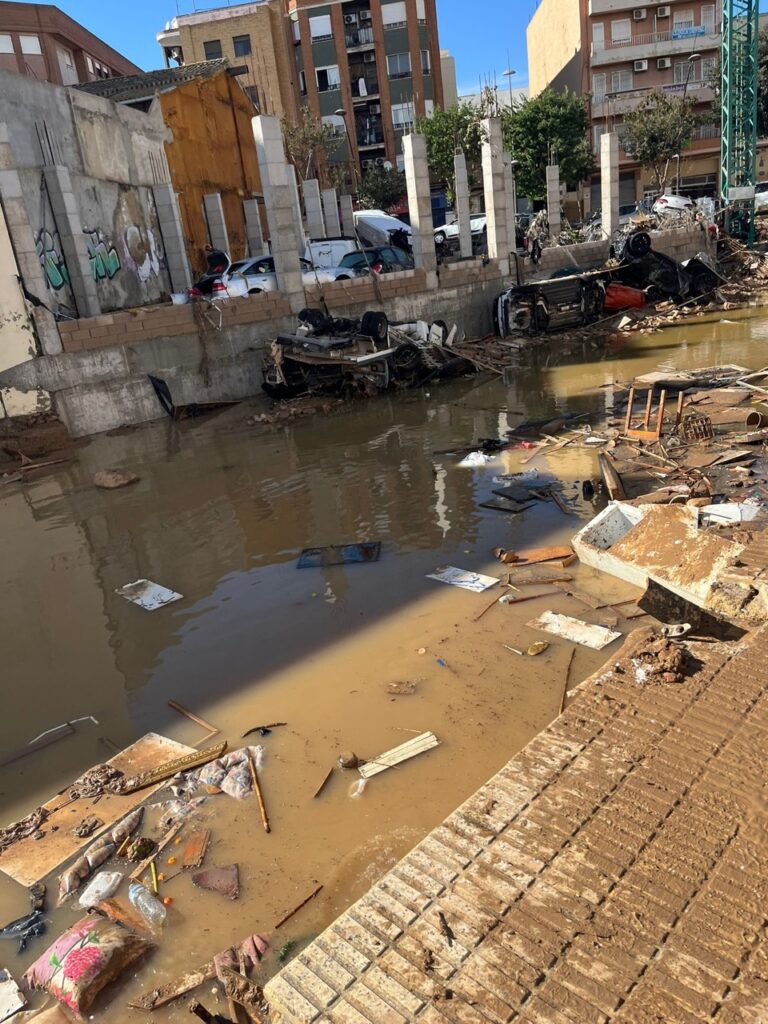
It’s been just over three weeks since DANA – the catastrophic floods that hit Valencia on October 29. The damage is unfathomable. Approximately 70 different communities outside of the city of Valencia have been affected, and many of them have been destroyed.
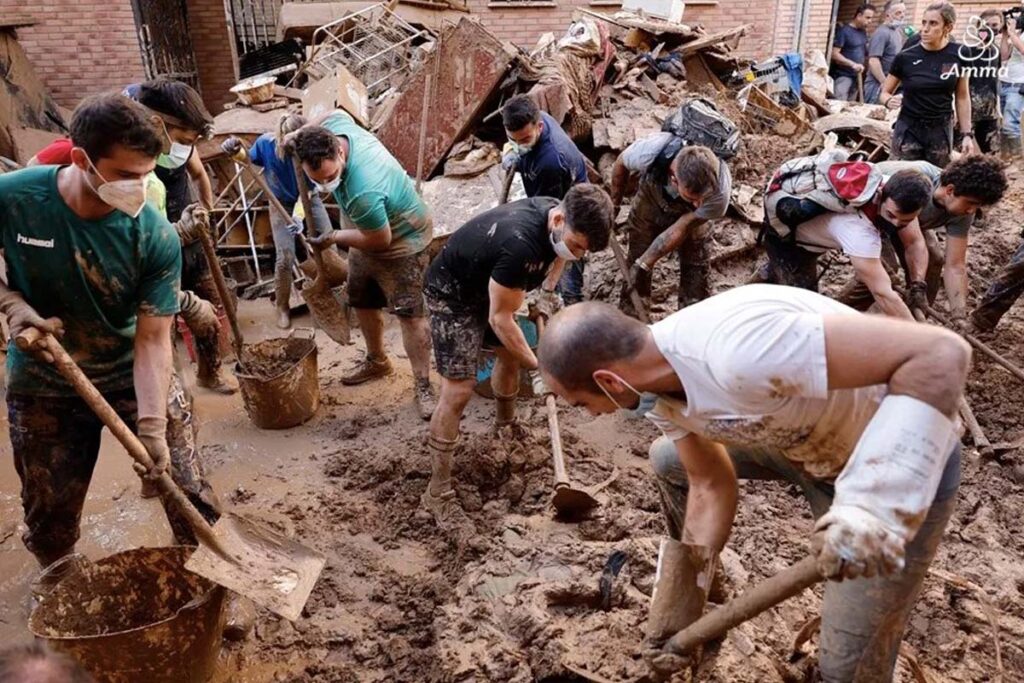
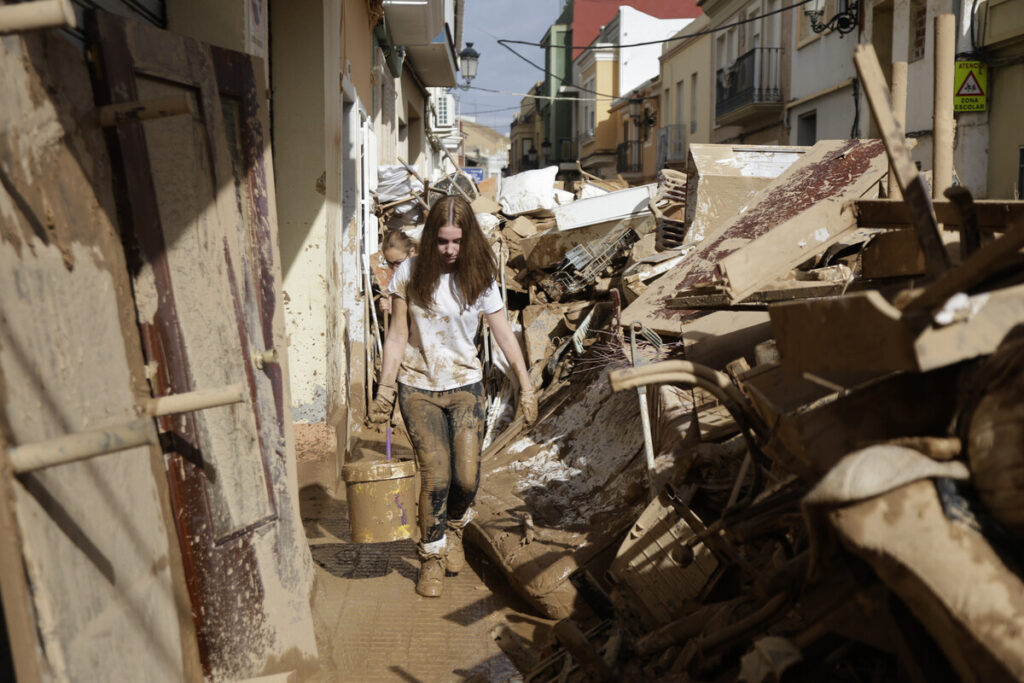
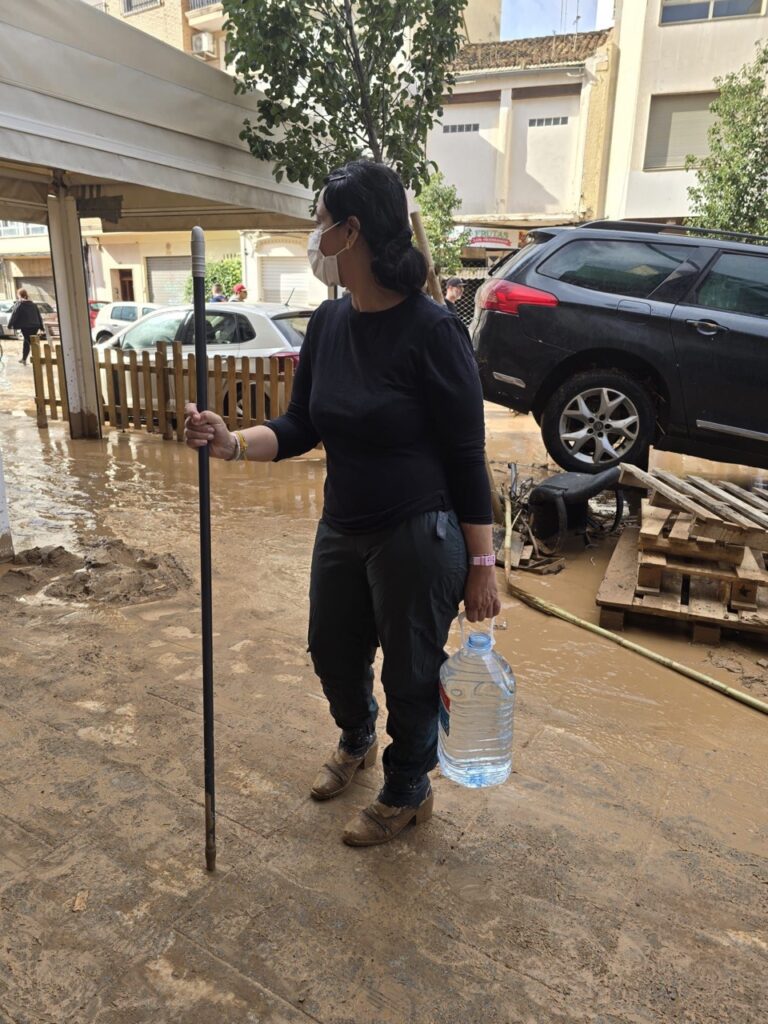
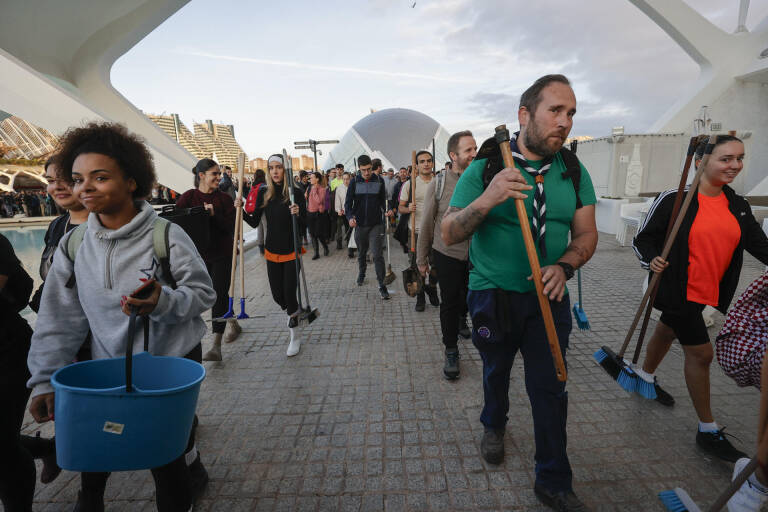
Rescue teams have come from all over Spain, and from France, Italy, Portugal, Morocco, and even Mexico. More than 8,500 soldiers, 10,000 police and firemen, and hordes of volunteers are engaged with the clean-up efforts. Nearly every day when we’re walking about the city in the late afternoon or early evening, we see young people in clothes covered in mud returning to their homes with brooms and shovels in hand. Lately, we see them wearing masks and with plastic bags wrapped around their boots and legs. The mud they’ve been shoveling has become infectious. It’s estimated that the bodies of about 3,000 farm animals and several hundred pets are buried in the mud.
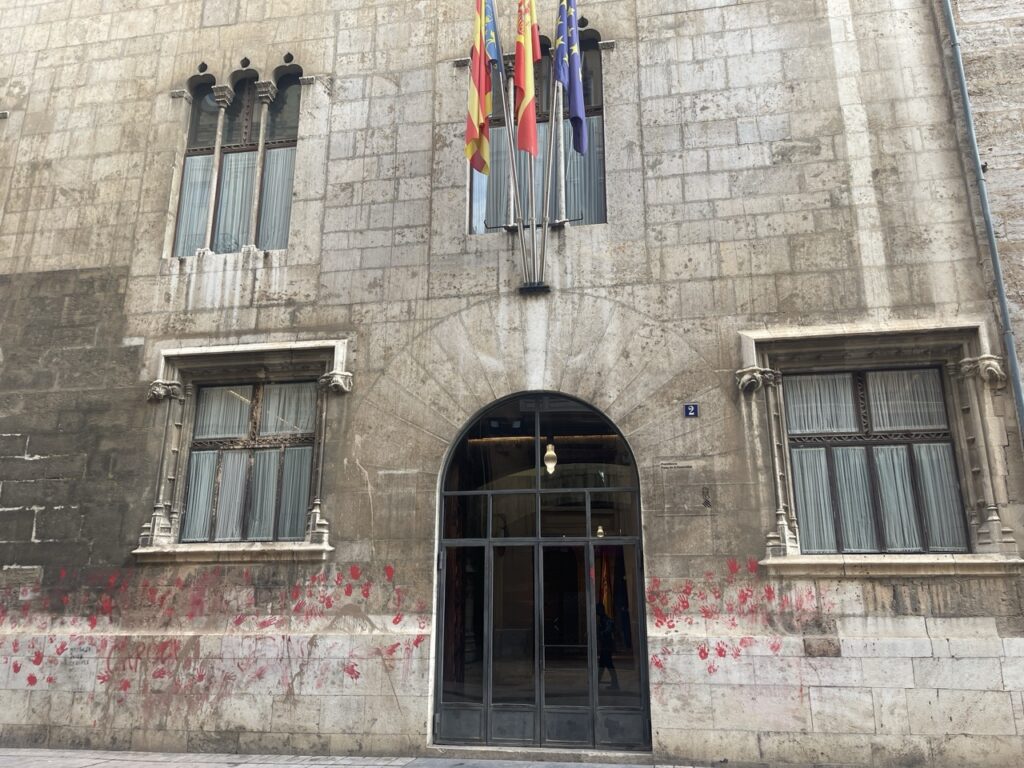
The people of Valencia are outraged by their government’s actions and inaction during and after October 29. Last Sunday, a rally was held in Valencia and more than 130,000 people gathered protesting against the regional government and asking for the resignation of the head of the Valencia government for his handling of the situation both pre and post disaster. They marched through the streets of the city from Plaza Ayuntamiento (the central town square) to the building that houses the Generalitat Valenciana (the governing body of the Valencian Autonomous Community), a beautiful Gothic palace built in 1421, just around the corner from our flat. Walking by this building the next day, we found red paint handprints around the main entrance. On another wall, someone had spray-painted “asesino” (murderer) on the palace wall.
The government response was, in various important ways, completely inadequate. Warnings were not issued until well after the streets had begun to fill with water and people were outside shopping, working, and driving their cars. There is a story of one man who received the alert when he was already up to his chin in water.
Barbara, our housekeeper, finally made it out of her apartment after four days. She contacted me the next week to let me know she was back to work. She needed the money. A couple of days later, when Barbara arrived at our place, she fell into my arms sobbing uncontrollably for several minutes. She kept repeating, “¡Es horrible!” We were heartbroken and deeply touched as we listened and attempted to provide support. Eventually, she pulled herself together and got to work because that’s what must be done.
The view from Barbara’s 4th floor apartment.Barbara going for water on her first day out of the building.
The city of Valencia, where we live, looks unaffected with people going about their normal business. It is, however, still on everyone’s minds and hearts. We hear sirens and helicopters often and now instead of weather alerts we get health alerts warning those in affected areas and volunteers helping with the cleanup efforts to protect themselves from illness by wearing appropriate protective gear. Transportation into the city is also still impacted. The Metro has opened a few lines and the high-speed train to Madrid has just re-opened this week. Of course, these are minor difficulties.
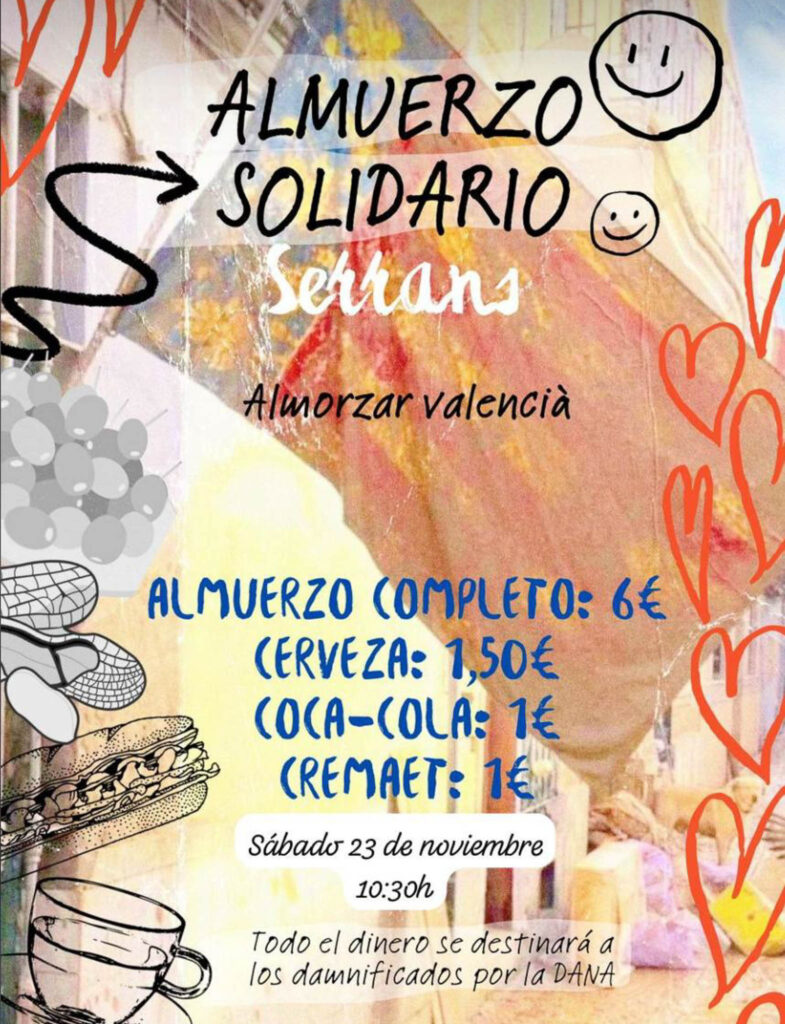
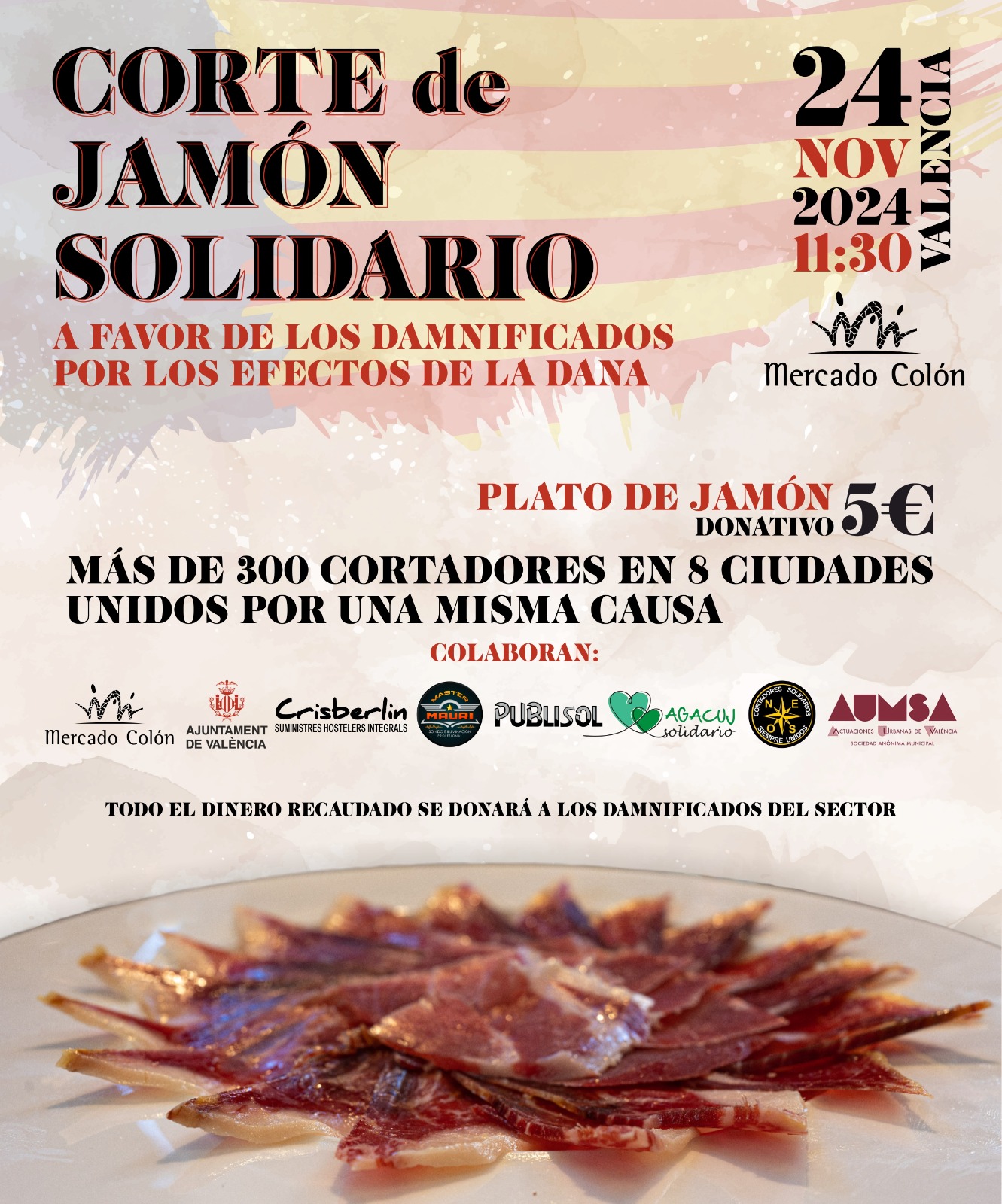
I belong to the International Women’s Club of Valencia which has a membership of about 300 expats. Every day, I receive several messages about opportunities to donate, volunteer, and support locals in the efforts to help those in need. We are participating in as many of these activities as we can. Last week, we delivered bags full of school supplies to the one of Valencia’s universities. The faculty of the Department of Education are collecting supplies for some of the schools that were destroyed. Small groups all over the city are making meals to deliver and requests for ingredients are sent out daily. On our street there is a casal (neighborhood association) that is hosting almuerzo (the meal between breakfast and lunch) on Saturday. They’re charging €6 for the meal and all proceeds will go to flood victims. Another shop is selling a plate of Jamón Ibérico (Spain’s famous ham) for €5 and donating what they collect.
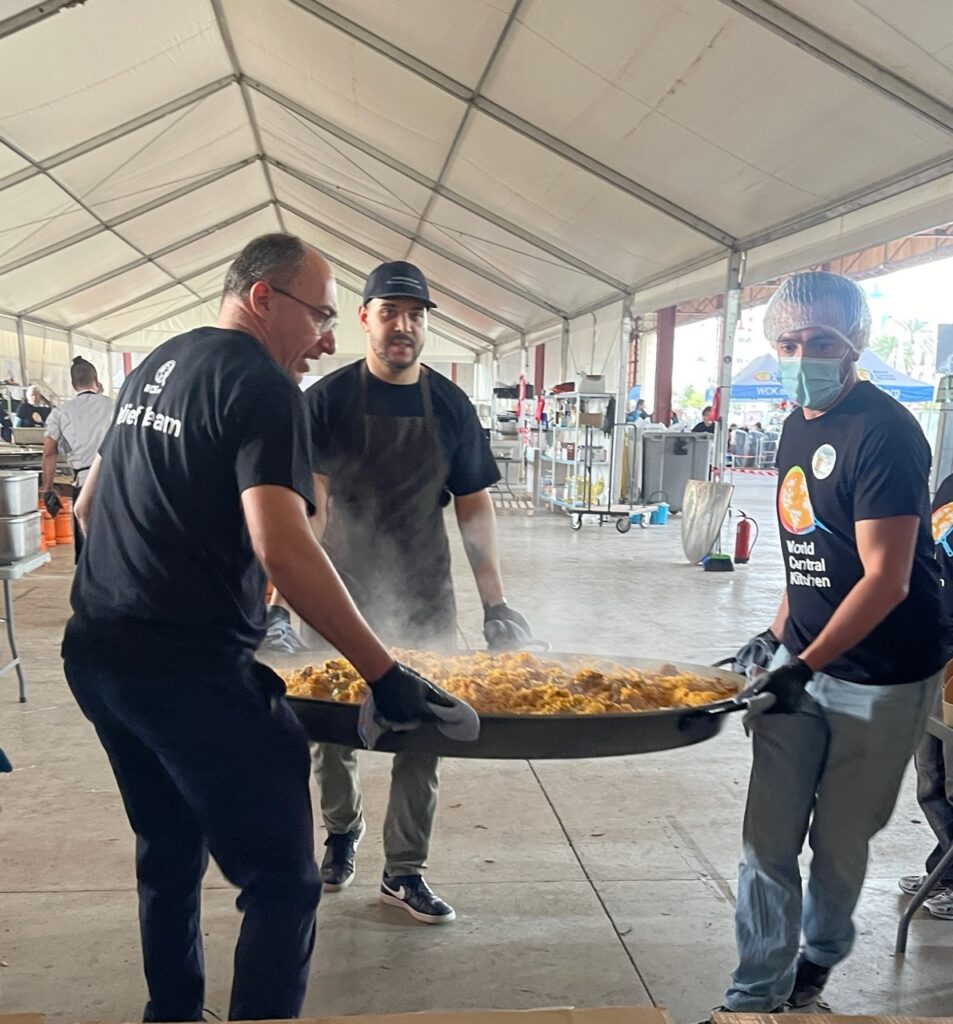
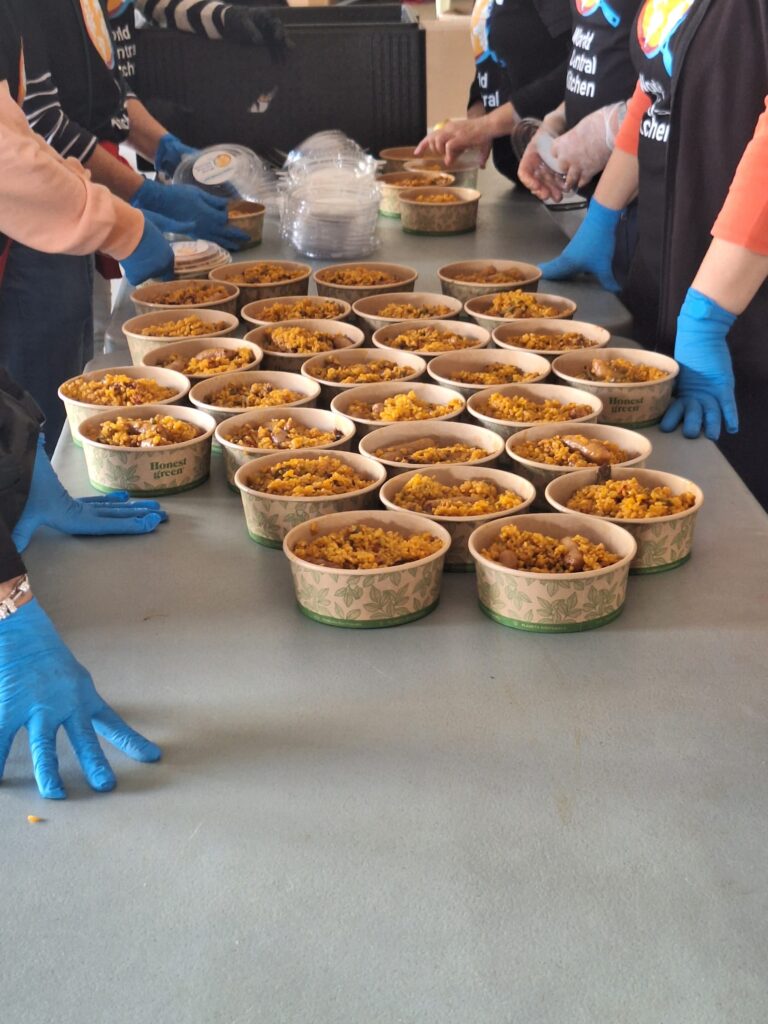
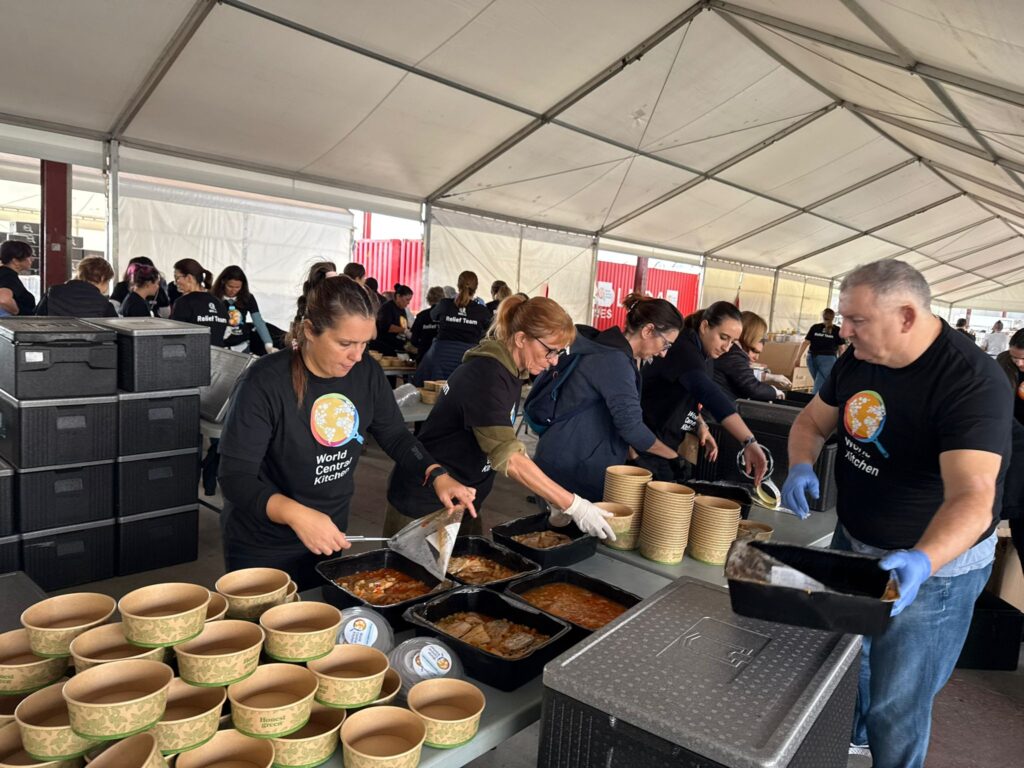
World Central Kitchen has set up operations in the port area of Valencia and has already provided nearly 300,000 meals, set up 30 distribution sites, and is partnering with numerous local restaurants. I spent a few hours there today helping to put food into containers. We plan to go back several days next week. I’ve long admired José Andrés and the amazing organization he has built. I never imagined I’d live in a place where World Central Kitchen was needed.
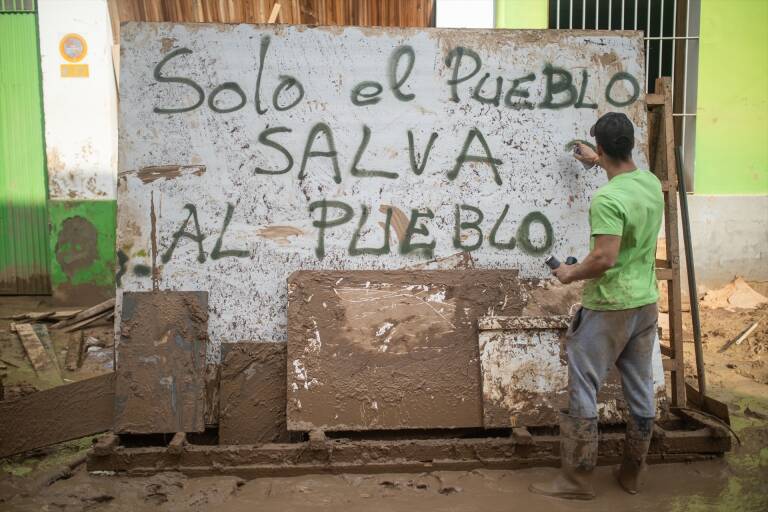
We often see and hear the slogan “solo el pueblo salva al pueblo” which translates to “only the people can save the people” posted on signs, spread on social media, chanted by the protest marchers, and murmured among many of the thousands of volunteers.
I’ve read that this spirit of solidarity is reminiscent of a famous letter by Antonio Machado, a Spanish poet, written to a friend during the Spanish Civil War. He described how the government had abandoned Madrid, but it was the citizens themselves who organized and defended the capital from Franco’s fascist forces. For him, this bravery was no surprise, but something inherent to ordinary people, who have always known how to stand up for their own when all else fails. Today, in Valencia, this is evident in the many gestures of help and solidarity after DANA.
Initially, I was a bit enamored with this slogan and the way it pays tribute to the generosity and solidarity of the Spanish people helping one another in a time of need. I also felt some discomfort with the implicit rejection of the important role of government in dealing with catastrophes such as DANA. Unsurprisingly, the frustration and anger felt by so many in the affected towns in Valencia provide fodder for right-wing politicians to promote distrust in and opposition to Spain’s democratic institutions.
You would think I’d be acutely aware of this ploy having watched both U.S. and E.U. politics evolve over the last decade or so. I believe the right turn toward populism in much of our world is a threat to democratic thought, practice, and institutions. Just like the MAGA politics in the U.S., the adoption of certain language and idioms of democracy and freedom are often used deceptively to actually promote the antithesis of democracy, freedom and equality. Slogans like “solo (ONLY) the people can save the people” may contribute to a dangerous distrust in government. Yes, the people are saving the people. But so is the government.
“Every crane, every truck, every pump, every road opened, every highway repaired, every train reestablished, every infrastructure recovered, has had democratic politics behind it.”
Rafael Simancas, NuevaTribuna, November 17, 2024
As the adage goes, democracy is messy. There are shortcomings and failures, to be sure. We have seen those here in Valencia. However, we are at our best when we, the people, work hand in hand with our democratic institutions to create and maintain a civil society.
As I experience and reflect on all that is happening in our beautiful, adopted city, I am confronted with the vulnerability of our communities to natural disasters as the impacts of climate change accelerate. We seem to have passed a point of no return and we need our governments to increase attention on disaster mitigation and preparedness going forward. I am inspired by the resilience and unity displayed by the people of Valencia. The bravery and kindness demonstrated by so many here in Valencia highlights, for me, the important role of community in overcoming adversity and illustrates the remarkable strength found in compassion.
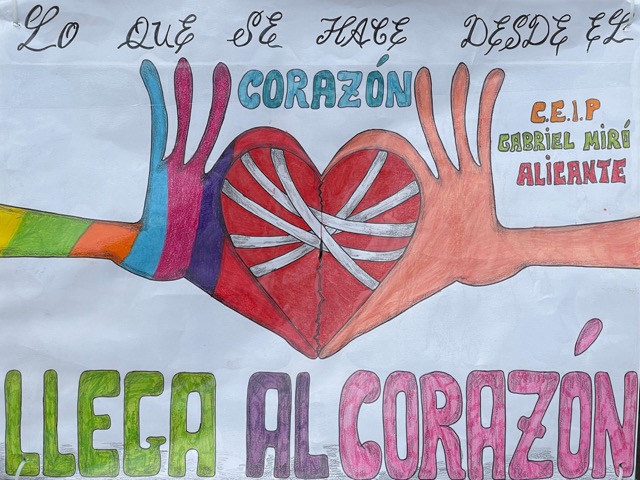
Translation: What is done from the heart reaches the heart. (A poster I saw today as I was leaving the World Central Kitchen site.)
Solidarity is more than just a concept. It’s a lived experience that strengthens communities and fosters resilience. Ed and I feel privileged to witness and honor this essence of Spain.
A couple of days after the flooding, a new Volunteer Coordination Center opened in Valencia. One of its programs facilitates transportation to the affected areas for volunteers. Yesterday, they announced that 50 buses will depart from the coordination center daily starting at 7:00 am, with a capacity of 50 people per vehicle. Each group will have clear instructions and assigned tasks to ensure an effective response in each area. Volunteers are instructed to bring water boots or mountain footwear suitable for muddy conditions, protective gloves, a mask, and food and water for the day.
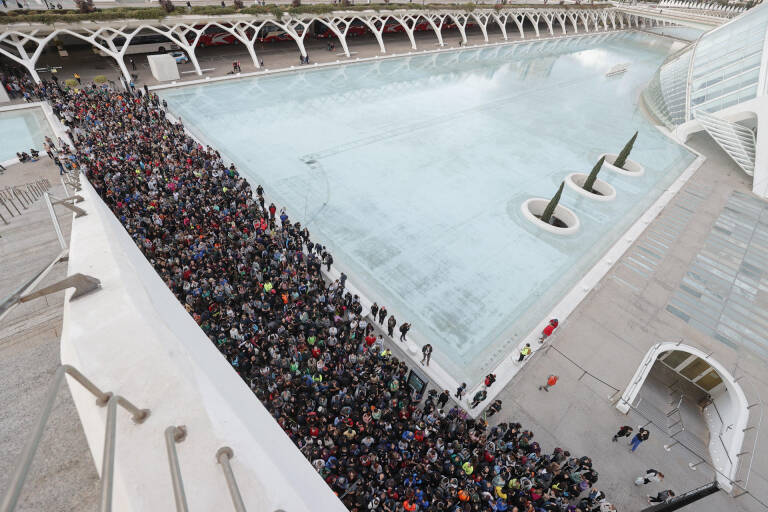
This morning, thousands of people showed up to board a bus, waited patiently to be told which bus to get on and to which location they’d be going that day. Many of them were carrying shovels, brooms, and buckets. The government announced that today’s busses were full of 2,500 volunteers and urged people to come back on the following days.
Another article announced that the many of the roads were clear, bridges have been secured, and logistics bases are operational. The president of the Generalitat Valenciana (regional government) has requested an additional 5,000 federal soldiers to add to the 2,000 already here.
One neighborhood within the city of Valencia, La Torre, was hit hard. Hundreds of people carrying food, water, shovels and brooms are crossing the pedestrian bridge that connects central Valencia with the La Torre neighborhood. Some of the La Torre residents who can get out of their homes are also walking across the bridge to buy food, water, shovels, etc.
Where we live, in the center of Ciutat Vella (Old City), there are a few minor disruptions. Grocery stores are running very low on supplies due to so many people buying supplies to take to volunteer centers. Trash pick-up is not running as usual because some of the routes to the dump stations are blocked. People are being asked to keep their trash inside until the trucks can get back their normal routes. (One of my expat friends posted that she is keeping her compost in the refrigerator for now.) The mayor of Valencia announced a nightly reduction of water pressure from midnight until 6AM to divert fresh water to the affected outlying towns. Our housekeeper was trapped in her apartment for three days because cars piled up against the front of the building prevented the doors from being opened. She and her family were without power for a few days and still don’t have water. I’m in contact with her daily and will provide whatever assistance I can.
The scale and scope of this disaster is enormous. Currently, the estimated number of missing people ranges from several hundred to as many as 1,900. There are some residents complaining about the rescue efforts not being fast enough and some looting is being reported. Spain isn’t perfect, of course, but the solidarity, sense of community, and the bond of people committed to one another and to a common cause is inspiring and heartwarming to watch. I have seriously considered getting on one of those busses, but I’m thinking it might be best to leave the strenuous work to someone who is not approaching middle old age.
Many of you have reached out with concern about the recent weather disaster in Spain. We are fine.
The massive flooding that has been making news was in the nearby foothills and towns of the Valencia region west of us, not the actual city of Valencia where we live. Over the past couple of days, we received many warnings and alerts regarding the expected torrential rains, and I monitored the radar regularly. We appeared to have a protective bubble over us on the radar screen with violent thunderstorms encircling the city but never encroaching. We received about an inch of rain and had some blustery winds – nothing more.
That said, the damage in other areas of the Valencia region has been significant. The death toll stands at 51 and rising, there has been huge property damage, and transportation systems have been disrupted. Consistent with our experience here the past two years, the government’s response – from regional to national – has been impressive. I am confident that recovery will be swift in the affected areas. It has been a reminder, however, that the impacts of global warming are accelerating, will increasingly cause death and destruction, and will impact all of us no matter where we live.
It’s wonderful to be back in Valencia! With barely three weeks to enjoy our adopted city before leaving on a monthlong adventure, we’re focused on savoring things that are uniquely Valencian.
Clóchinas (Mejillones aka Mussels)
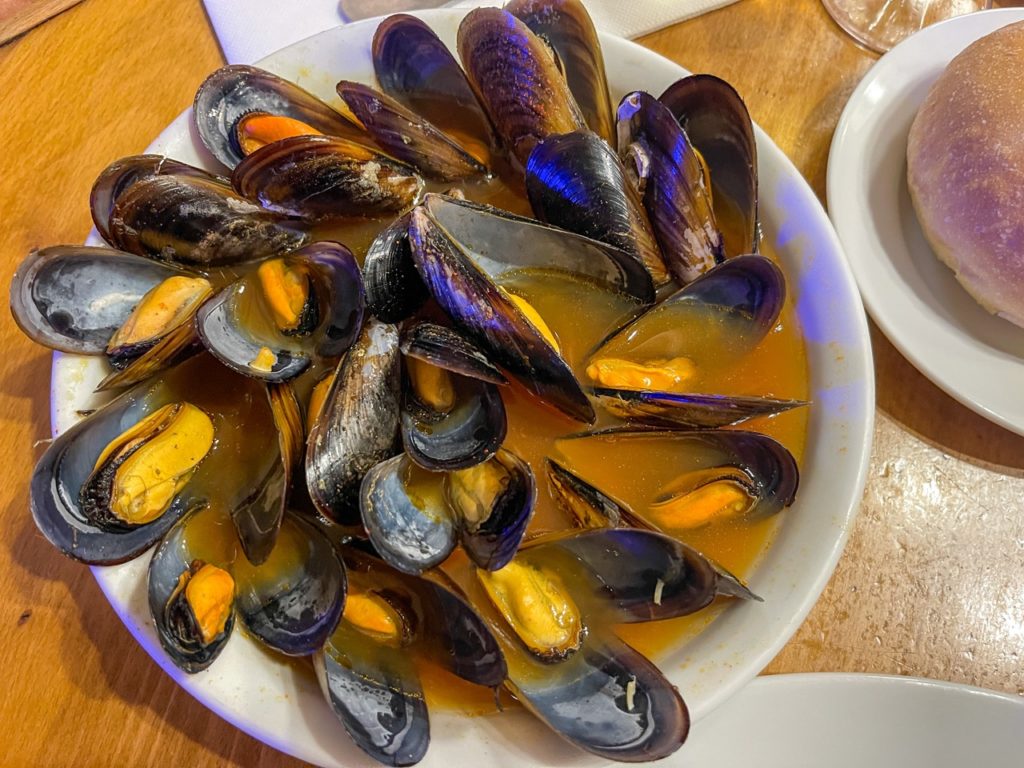
During the months without an “R” in the name (May through August), clóchinas are on restaurant menus all over Valencia. These aren’t the mussels we’ve always known and loved. Rather, clóchinas are smaller, sweeter, and have a robust flavor that comes from the Mediterranean Sea. The Mediterranean water has a high salinity and is said to be rich in nutrients and minerals, contributing to the amazing flavor of these special mussels. In addition to being smaller, and more flavorful, clóchinas are a beautiful orange color. Any Valenciano will tell you, clóchinas are far superior to the larger mejillones.
Simply Delicious – since 1890
Clóchinas are cultivated on floating rafts located just off the coast of Valencia. Their harvest follows the cycles of the moon, beginning with the full moon at the end of April and ending with the waning moon of August. Then, new embryos are seeded for next year’s crop as soon as the water begins to cool a bit in September. The first clóchina rafts were placed in the port of Valencia in 1890 and the “Association of Clóchineros of the Port of Valencia” is responsible for protecting the right to call a mussel a clóchina and guaranteeing their authenticity. The traditional way to prepare clóchinas is to steam them in their own juices, which releases a rich salty broth, and season with lemon, garlic and olive oil. That’s what much of the food in Spain is like – simple.
A Barrio Bar
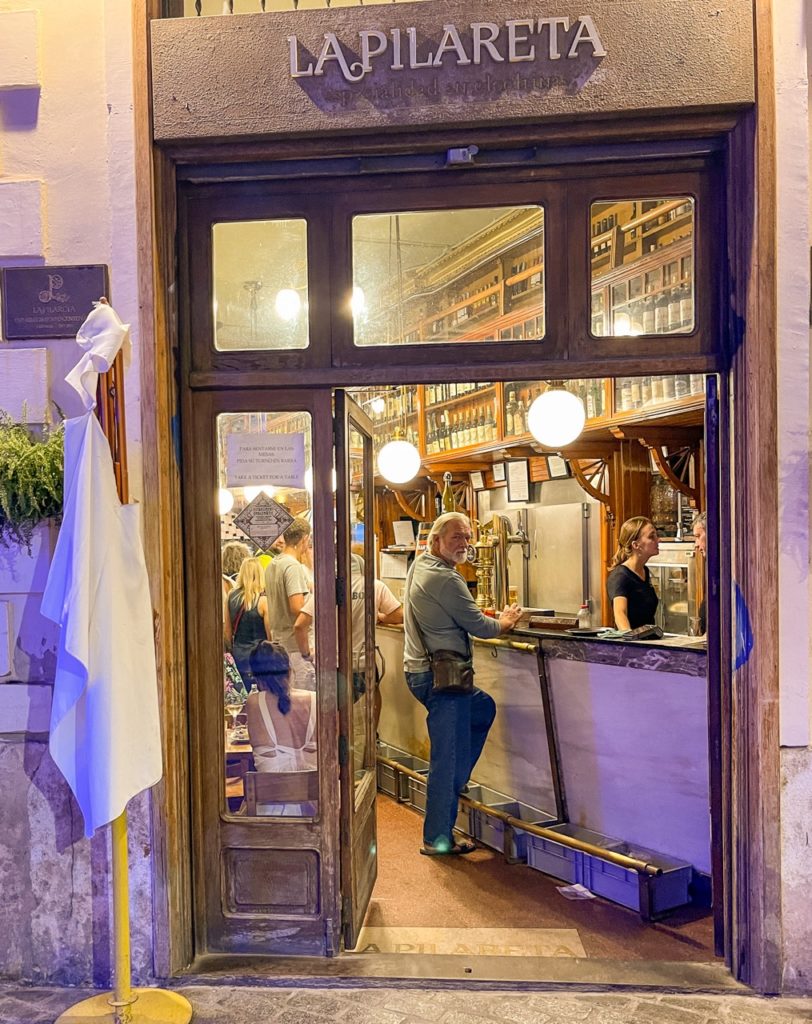
La Pilareta, just a five-minute walk from our apartment, is a great place to enjoy clóchinas. Very much a barrio bar, the food and ambience are delightful. A true Valencian treasure, La Pilareta opened in 1917 and the founder, Mrs. Pilar Contell, ran the place until 1983. There’s often a line to get a table, but you take a number from José and look for a spot at the bar to get a glass of house vermouth while waiting. Sometimes it’s impossible to wait, so we often enjoy a first bowl of clóchinas while standing at the bar, throwing our shells in the buckets at our feet.
We eat at La Pilareta often, even when clóchinas are not in season. It’s a pleasant (and inexpensive) way to spending time enjoying good home-cooked Spanish food. Most of the menu items are around 5-7 Euros and a glass of wine will set you back about 2 Euros. Nothing fancy, just quality tapas the way they have been serving them since 1917.
Paella
Everyone knows about paella and many think of it as Spain’s national dish. However, paella originated in the Valencian region.
“Paella is not just a dish, it’s a way of life in Valencia; everything revolves around the paella pan … around rice culture. It’s 10 or 12 ingredients transformed through fire into a really beautiful and cohesive dish.”
Matt Goulding, “Grape, Olive, Pig”
Lunchtime for Farmers
There’s a long history of rice in Spain – Muslims in Al-Andalus began rice cultivation around the 10th century. Since Valencia’s climate is perfect for growing rice, locals have enjoyed paella in one form or another for centuries. It all started when farmers working the fields of Valencia’s inland areas would cook rice in a flat pan with whatever vegetables and meat they could find. Healthy, hearty and easy to make, it was perfect after a long morning of hard manual labor.
Traditional Paella
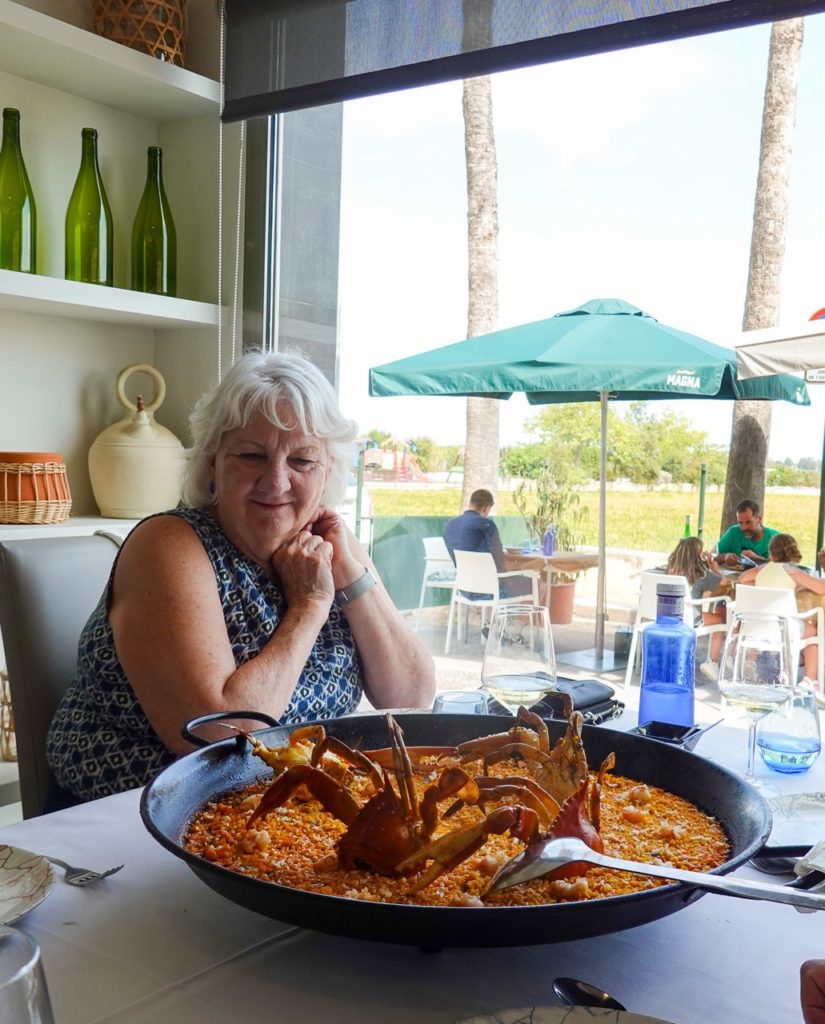
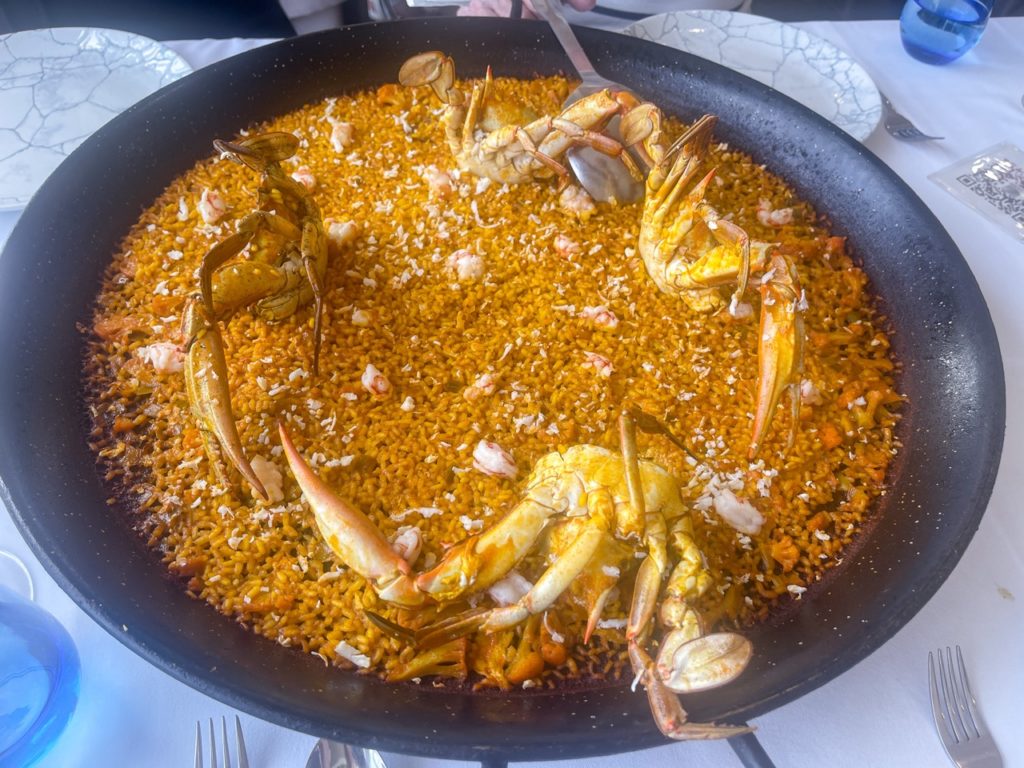
Early recipes had some variations, but true Paella Valenciana is made with chicken, rabbit, snails, green beans, and local garrofó beans (similar to lima beans). Together with a slow-cooked sofrito, saffron, and rice, this is Valencian paella in its purest form. Many Valencians insist that no more than these ingredients should go into making paella. Finally, there’s the fire and smoke. Some say the smoke is probably the most important ingredient in a paella. While seafood paella is very common (and delicious), many Valencians consider fish and shellfish to be out of the question. Being Northern Californians, we were recently tempted by a Dungeness crab paella. I know, what in the world are Dungeness crabs doing in Spain?
The Rice is Key
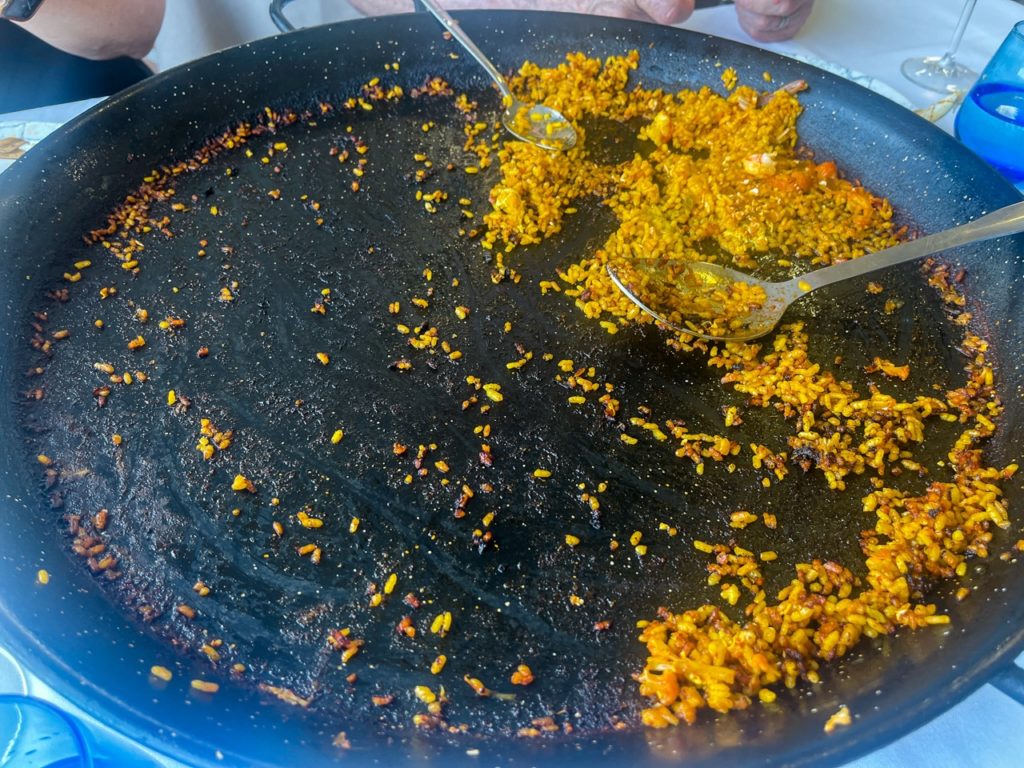
Bomba rice, introduced along the Mediterranean during the Middle Ages, is a type of pearly white short grain rice that Spaniards use exclusively in making paella. Bomba is perfect for soaking up flavors and it’s critical to “burn” or “scorch” the rice on the bottom of the pan. This is called “socarrat” and refers to the well-done caramelized crust layer that clings to the bottom of the pan.
“It means that the rice loves the paella pan, and the paella pan doesn’t want the rice to leave, and they bond together into one perfectly nice brown color — crispy, beautiful love between the rice and the paella pan.”
Chef José Andrés
Parque Natural de L’Albufera de València
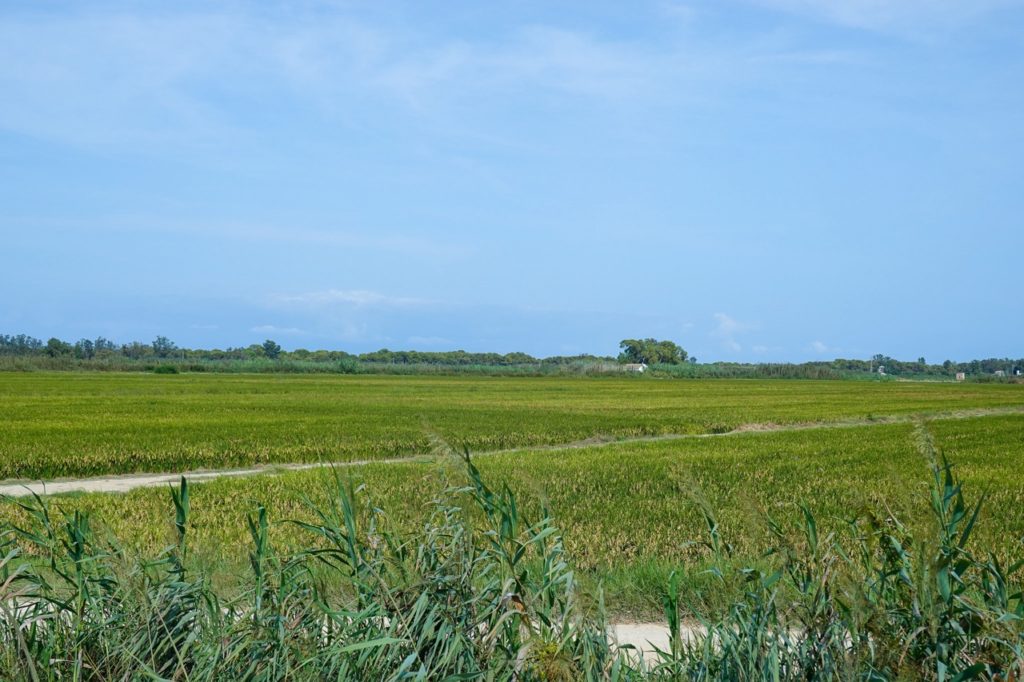
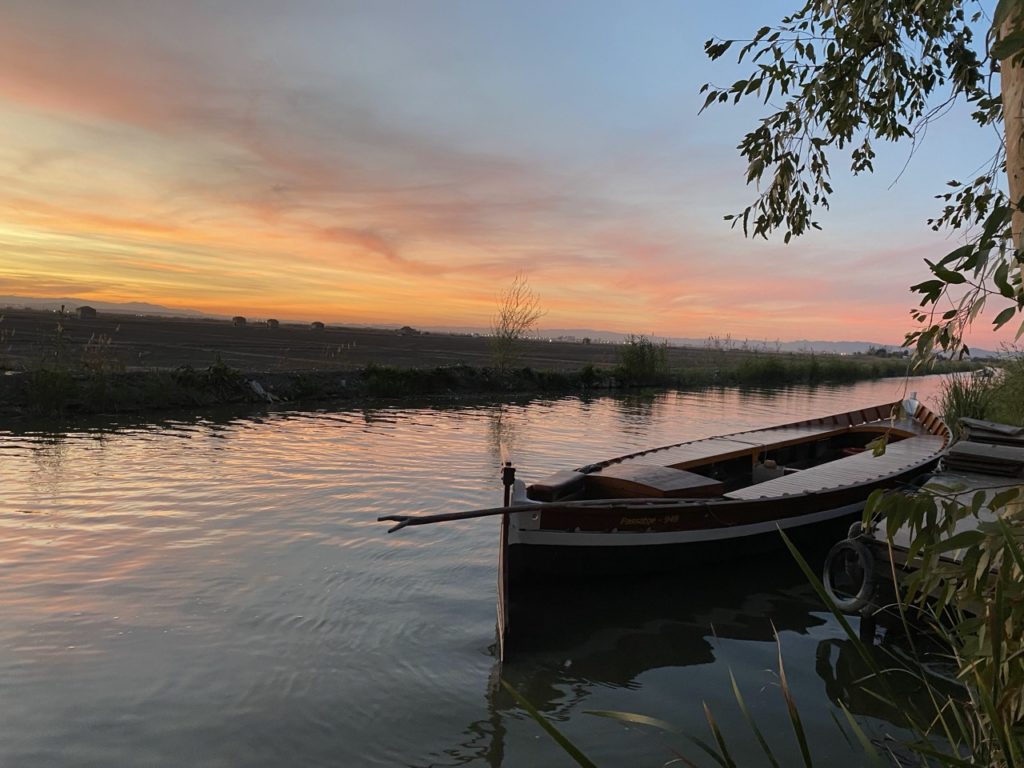
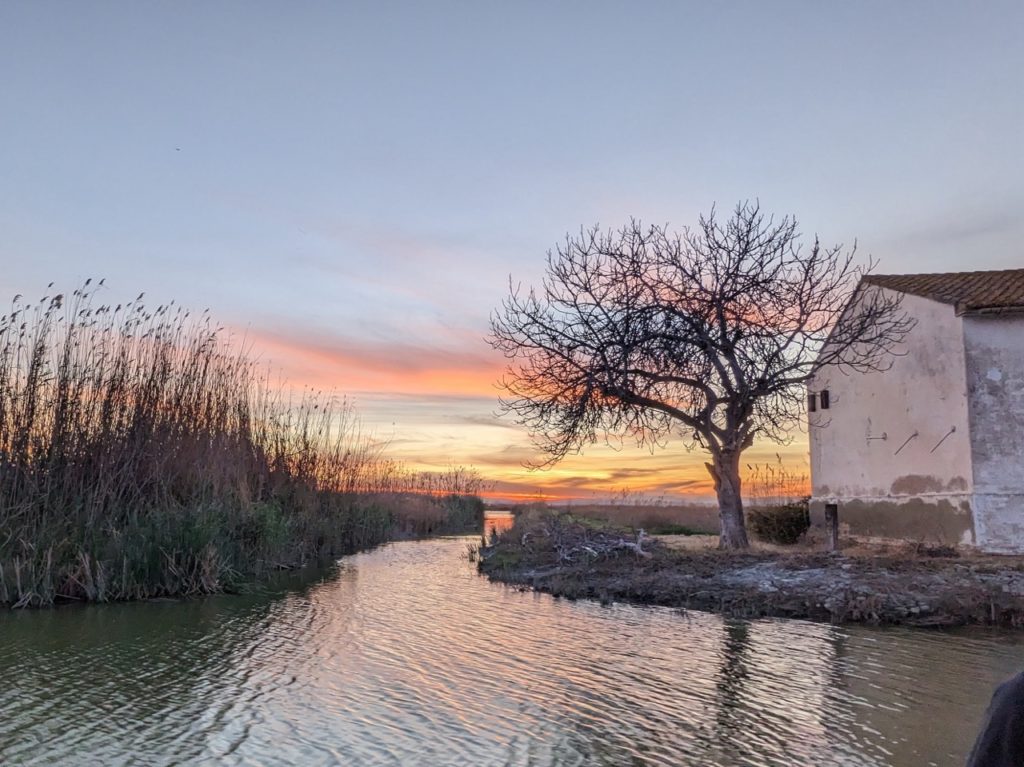
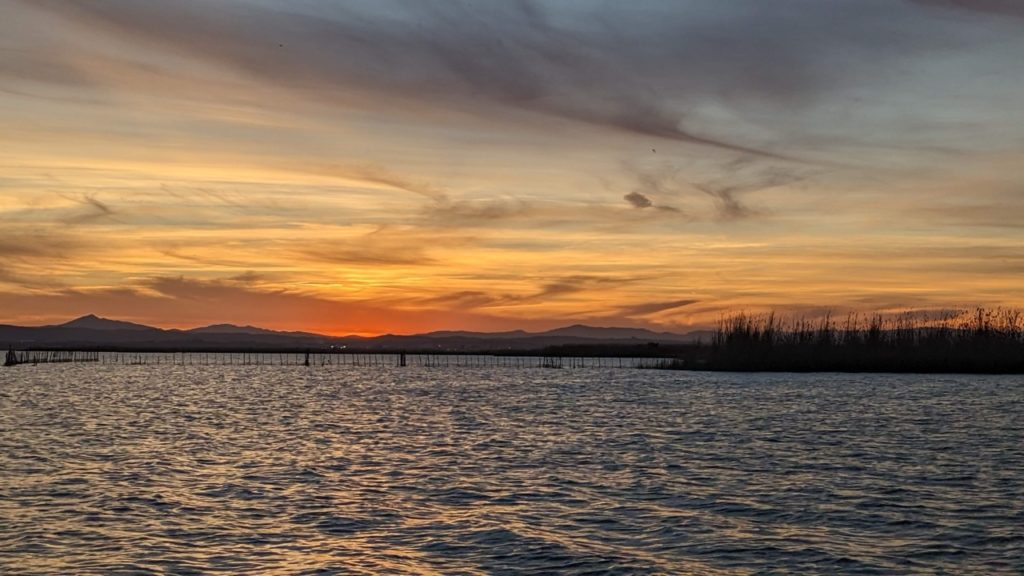
Albufera Natural Park is the true home of paella. Albufera is an Arabic word, “al-buhayra” meaning small sea and was known by the Romans as Nacarum Stagnum. One of the most important wetlands in Spain, this coastal lagoon sits between the sea and rice paddies and includes estuaries and the mouths of the Turia and Jucar rivers. Several foot and bike trails are a wonderful way to investigate the local flora, landscapes, and history. The lagoon provides shelter for up to 300 different species of birds throughout the year, especially the waterfowl that winter there, including flamingos. There are also boat tours through the waters of the lake of l’Albufera and its channels between rice fields. Located about 10 km south of the city of Valencia, it takes about 40-minutes to get there by bus from the city center.
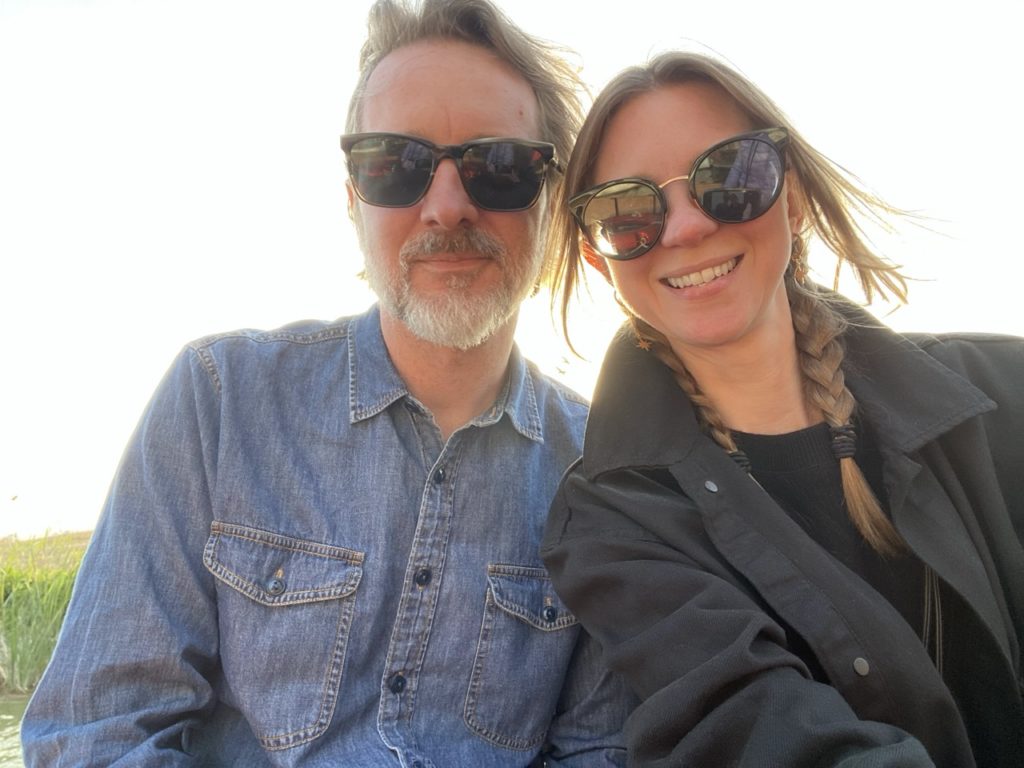
Mark and Shannon enjoyed a beautiful sunset boat ride when they visited Valencia in March 2023.
In addition to enjoying nature, there are dozens of restaurants serving paella, particularly in the small town of El Palmar. We had a wonderful time making the trek to El Palmar with our good friends, Heather and Jim.
On the Road Again Soon
Nourished by our time in Valencia, we’ll be on the road again in just a few days (September 14, to be exact). Our first stop is Tbilisi, Georgia where we’ll join a few other adventurers for a weeklong food and wine focused tour (you can read about it here: https://culinarybackstreets.com/trips/2019/harvest-time-in-the-cradle-of-wine-a-georgian-culinary-adventure-tbilisi-trip/). This was a last minute addition to the Greek Islands trip we already had on the calendar. We’d been on a waiting list for this trip and two spots opened up just before we left the U.S. It took an hour of semi-serious discussion to make the decision to go for it.
Our time in Georgia will be followed by three weeks exploring just a few of the nearly 6,000 Greek Islands. We’ll be in Crete, Santorini, Paros, Naxos, Antiparos, and 2-3 others depending on which ferry, catamaran, or sailboat we happen to hop on. This retirement thing is really working out!