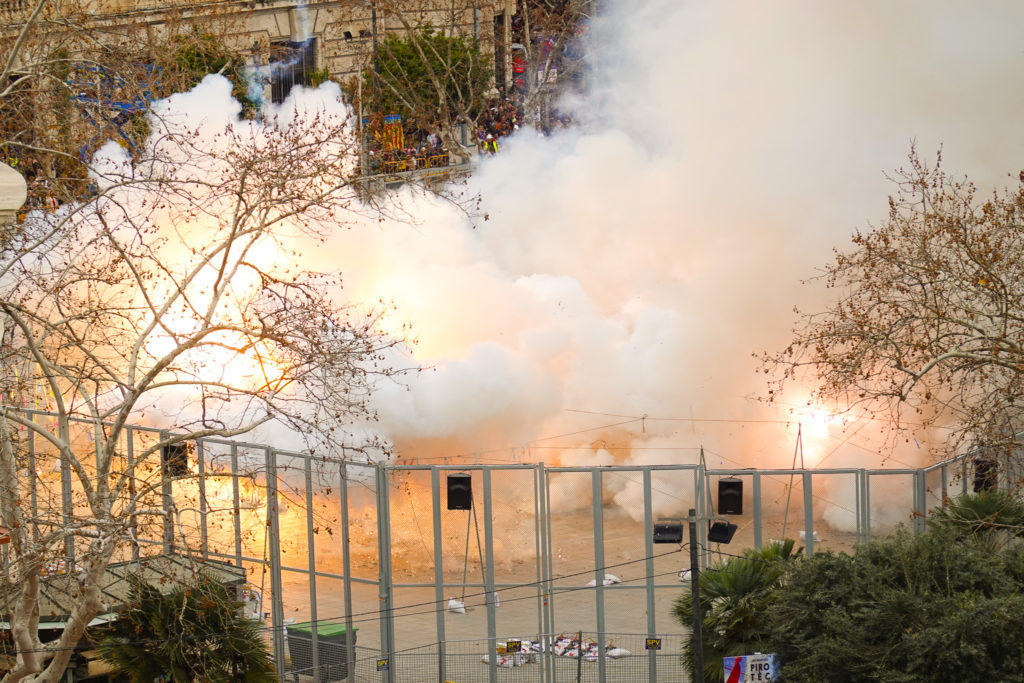
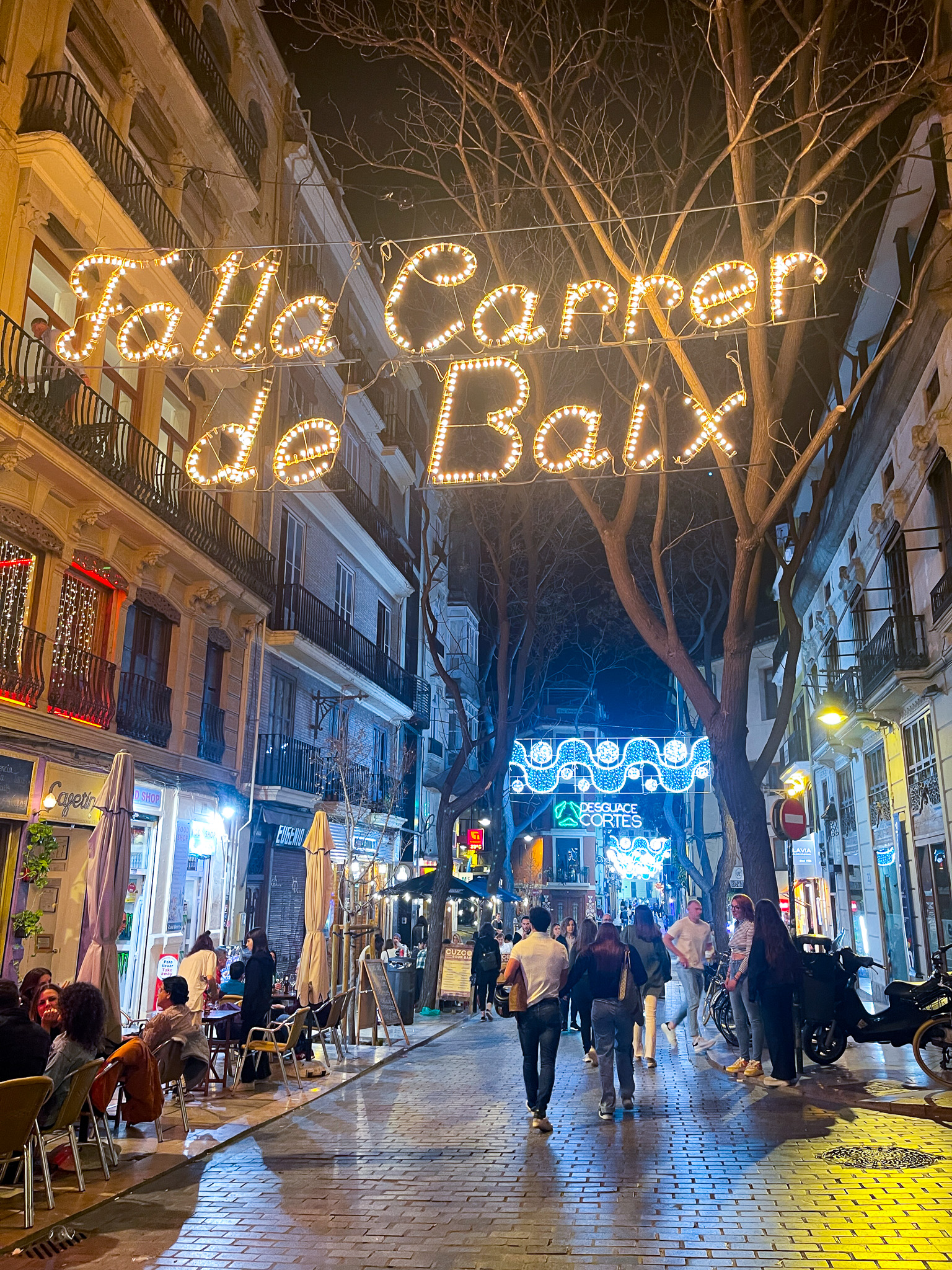
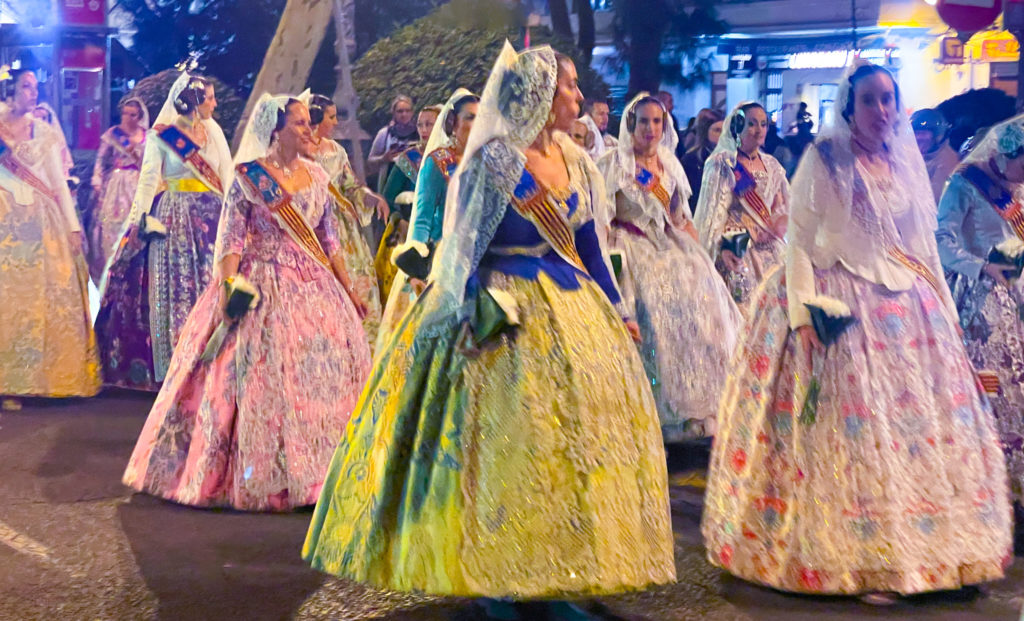
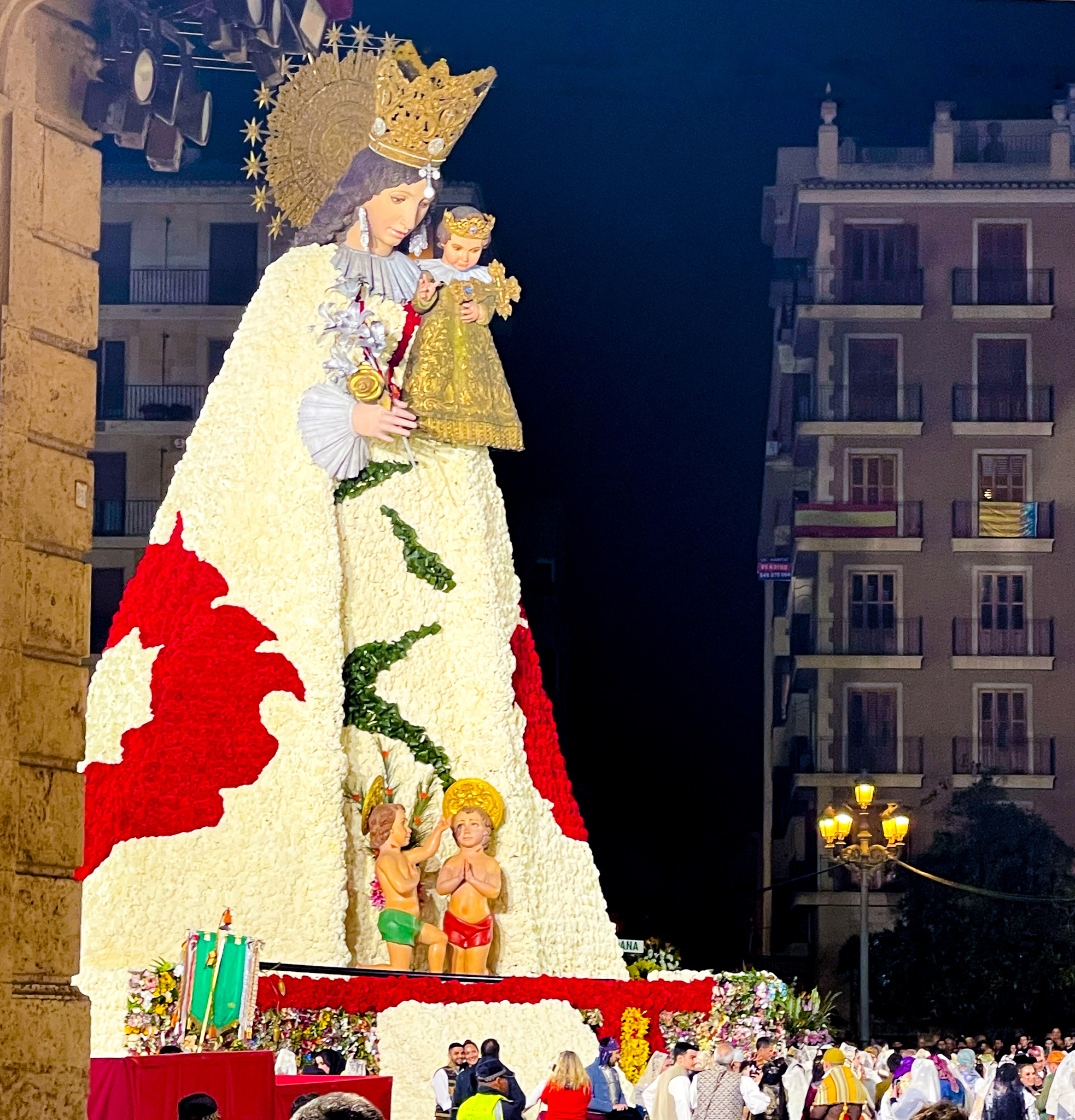
The street below our third-floor balcony is a cacophony of bursts, pops, chatter, shrieks, and distant loudspeakers. When I crack open the window, the scent of wood smoke from cooking fires that line the street fills the room, along with a dramatic increase in the concussive power of the sporadic booms. The distinctive roar of a large helicopter sweeping low overhead adds to the surreal sonic landscape and my imagination soars with visions of the chaotic scene below. After all our careful research and travel planning, how have we managed to stumble into an unexpected war zone?
Well, actually it’s just Las Fallas – Valencia’s version of March madness!
When we made the decision to establish a home in this Mediterranean city on the east coast of Spain, we knew we would face many challenges. There is a reason most Americans never leave the familiar comforts of home, and we have asked each other a hundred times, “Are we crazy? Why are we doing this?” Why put ourselves through the daunting challenge of learning a foreign language in our late 60’s? What’s the point of struggling to understand and negotiate the labyrinthine bureaucracy necessary to achieve even the basics of banking, utilities, and housing. There seem to be an endless list of obstacles to acquiring furniture, mail delivery, or something as simple as a box of tissues. All of this was predictable, and we pretty much understood that it was what we signed up for. Then, along comes Las Fallas. This is another level altogether.
In the first months of living here, it began to take on a mythical status in our minds. As we explored the city, meeting new people, asking questions about what it’s like to live in Valencia, the topic kept coming up. Hushed warnings about the first three weeks in March. Apocalyptic descriptions of a city over the brink. Standing travel plans made each year to escape the horror. Now, it’s important to keep in mind that nearly all our fledgling relationships in Valencia are with expats, who, to generalize unforgivably, sometimes tend to be a bit fearful of other cultures and perspectives. So, with that in mind, we bravely vowed to face our fears and explore Las Fallas for ourselves, in the flesh, with full knowledge of the terrible risks involved. Afterall, we have nearly mastered the Spanish banking system. How bad can it be? So, we vowed to live through the full season of Las Fallas our first year in Valencia.
THE ORIGIN STORY
Las Fallas seems to be unique to Valencia. While many cultures have a festival or carnival to celebrate the return of spring, few to none do it by embracing fire as a motif. It seems to have originated in the Middle Ages. To lengthen their work day in the depths of winter, carpenters would assemble wood structures to hold torches and candles. As the daylight hours lengthened in the Spring, they would gather these now unnecessary constructions into a pile and burn them to celebrate the increasing hours of sunlight. Of course, it soon became a competition to see who could build the biggest bonfire. And, then someone got the bright idea of building a pile with an artistic flare or a satirical image, and we were off to the races. As with many such celebrations, the church began to see an opportunity and declared that the holiday for Saint Joseph, patron saint of carpenters, would be the ideal occasion for this annual burning. As things go, the whole thing became more elaborate, expansive, and consuming to a degree that is pretty hard to describe. But I’m going to try.
Let’s get one thing out of the way right now: from an American perspective what goes on in modern day Valencia in March each year is insanity, and the response of our expat friends is understandable. Even the Valencianos get a bit weary of the weeks long festival of gunpowder, processions, and revelry before it finally ends on March 19 in blazing madness. So, what exactly is this thing?
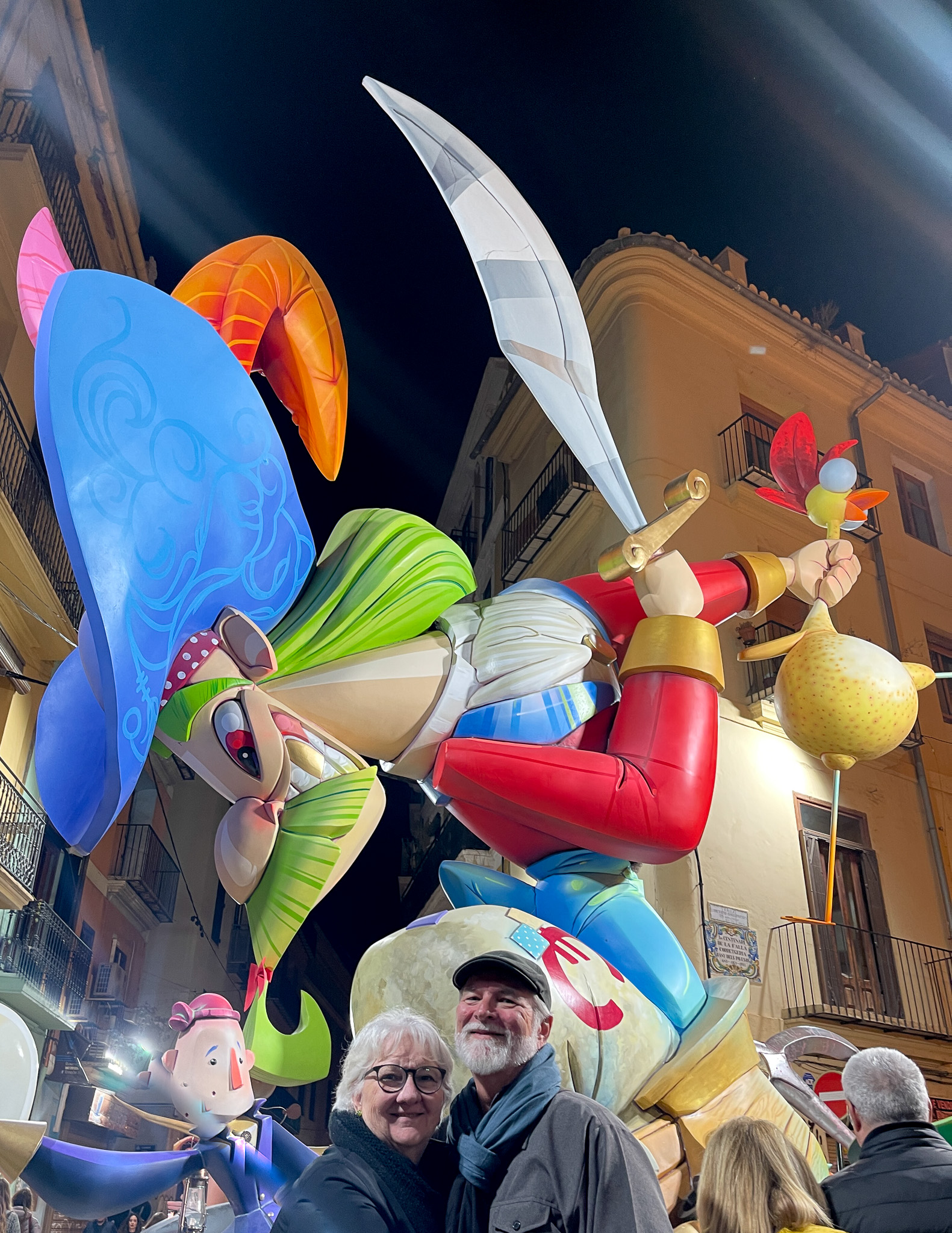
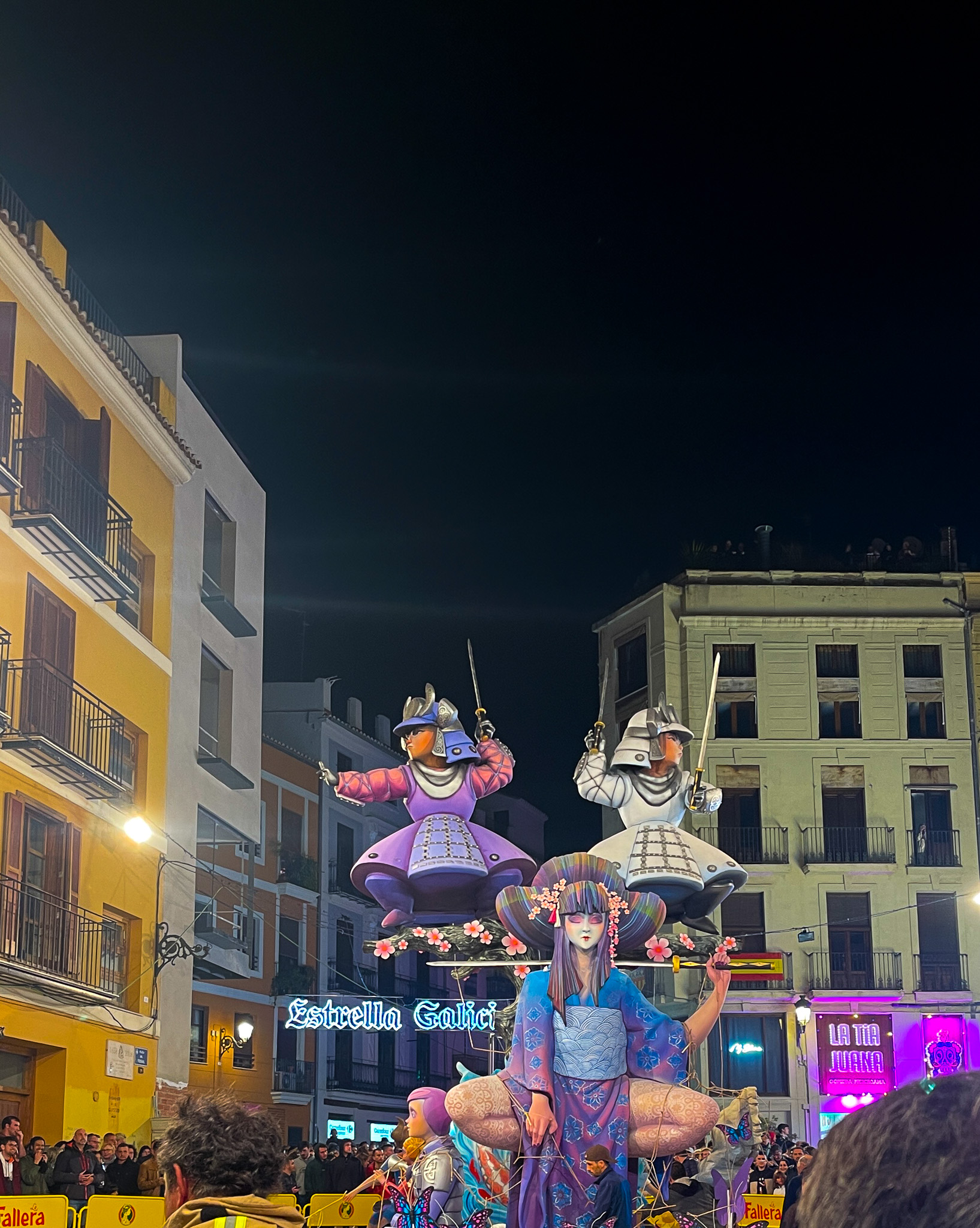
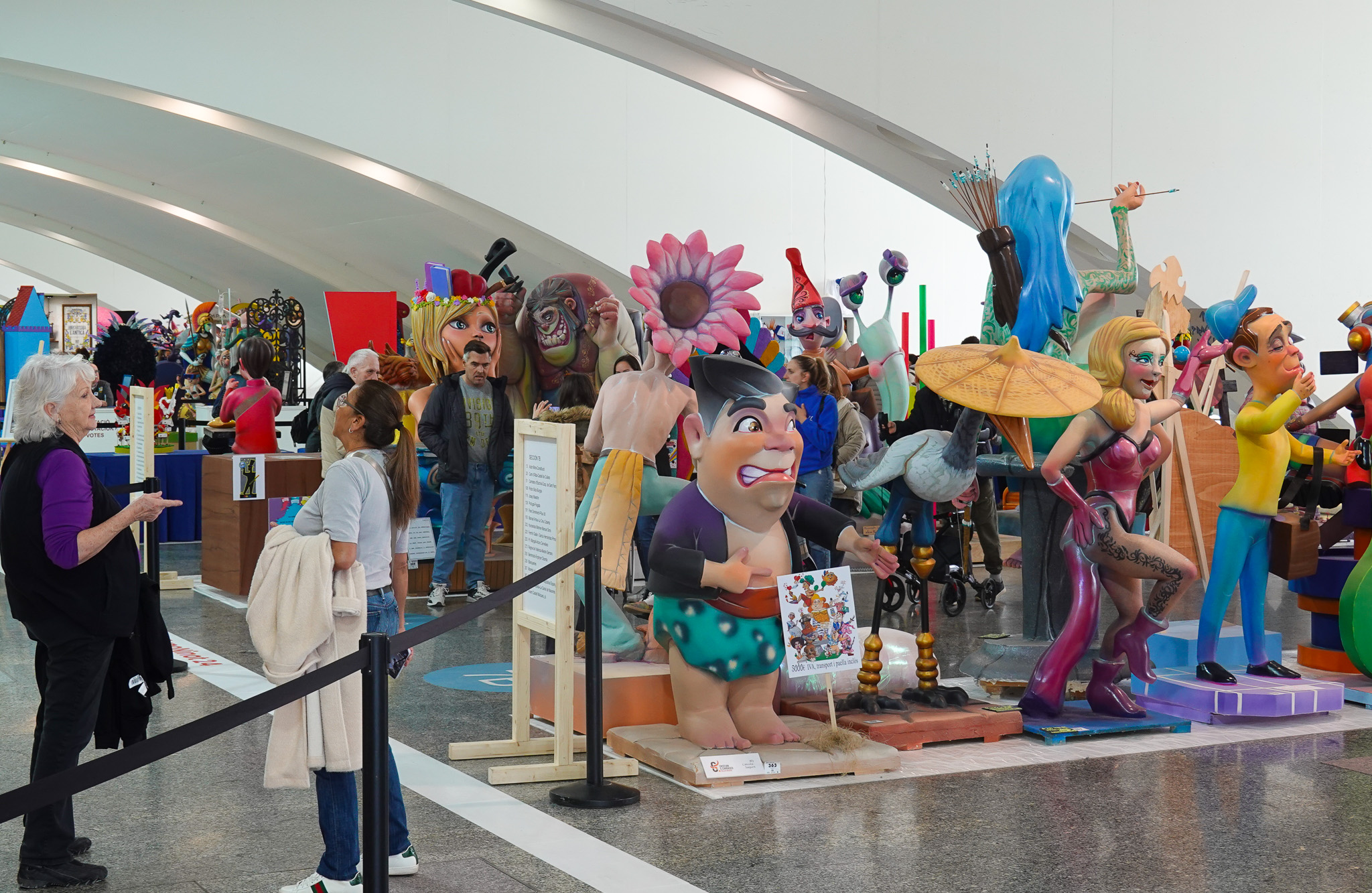
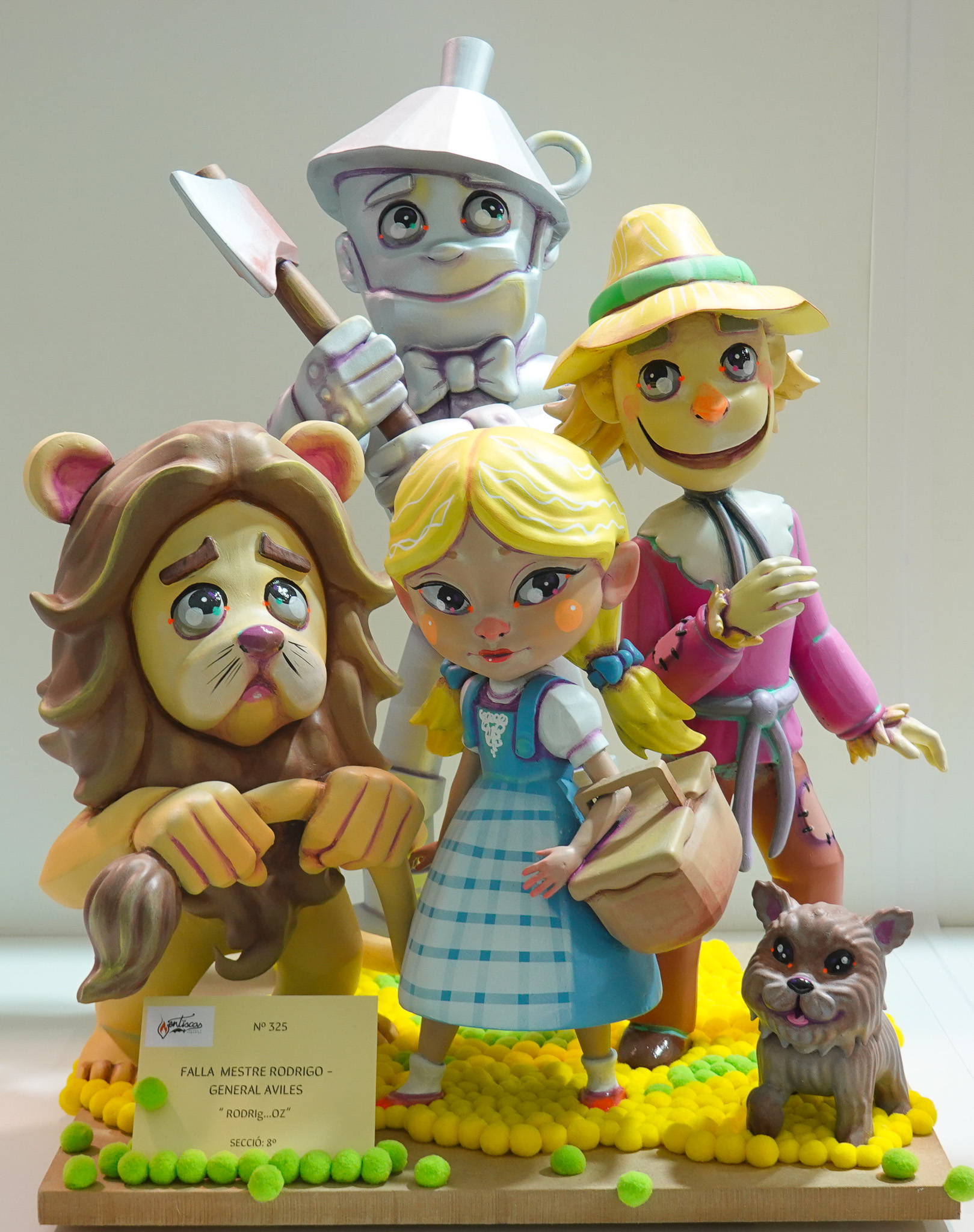
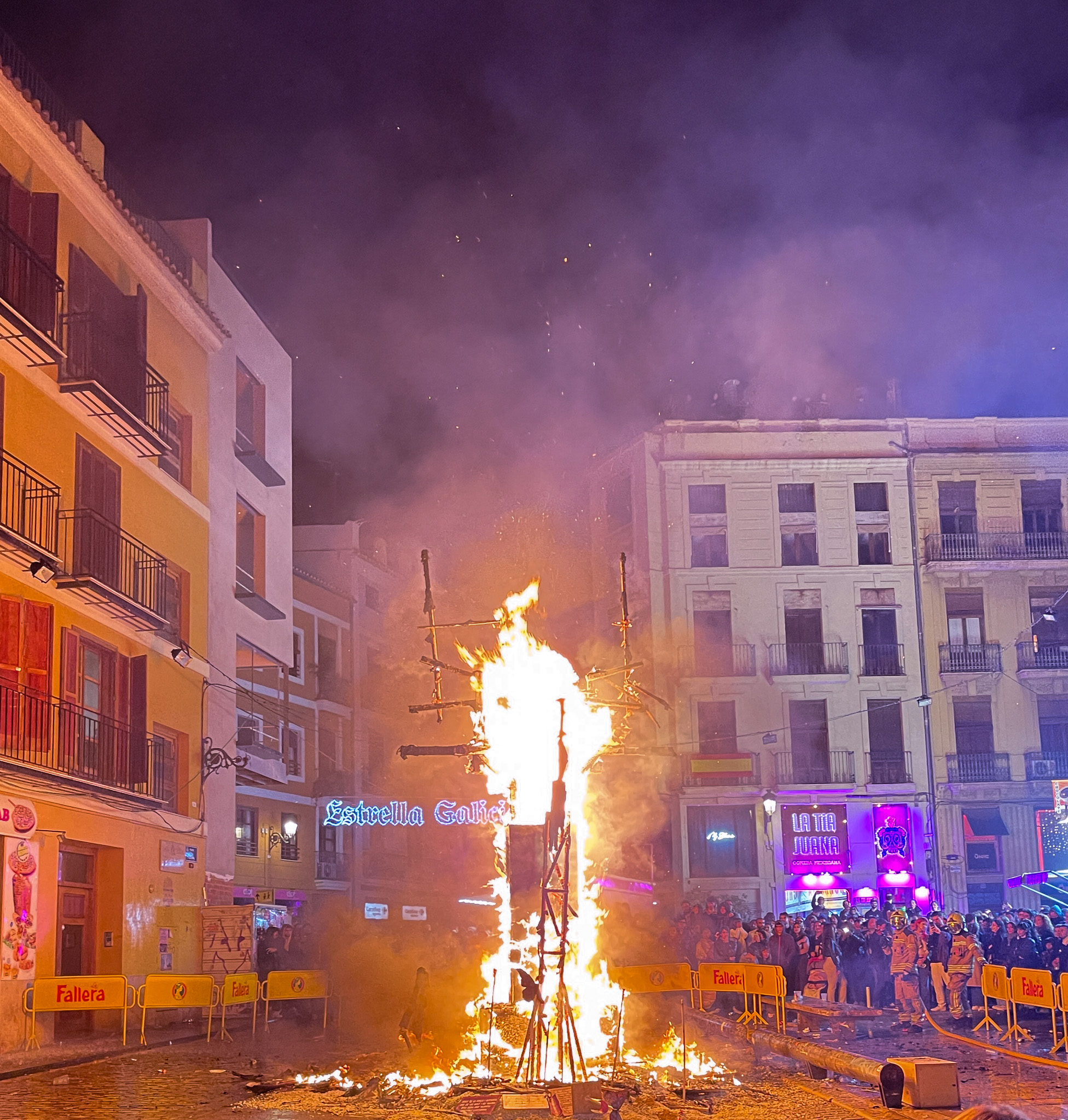
The foundation of the modern Fallas celebration are the Falleros, Valencians dedicated to the traditions of their art, music and pageantry. Essentially, from what I can deduce as an outsider, Falleros are organized into neighborhood social clubs known as Casals that serve their communities in many capacities, but really take center stage when the annual celebration of St. Joseph rolls around. Each Casal produces a Falla to celebrate the season, among many other activities. Fallas are the progeny of those early carpenter’s bonfires, except things have evolved. Today, thousands of hours and tens of thousands of dollars are expended to create Fallas that are enormous, beautiful, colorful, profane, satirical, comical, charming, and shocking. There are over 350 Casals in Valencia, and nearly all of them create some sort of a Falla. And on the night of March 19, in what is known as “La Crema”, these works of art – some towering four stories high – are completely burned to the ground. Wait . . . what? That’s right. An entire years’ worth of fund raising, planning, designing, building, and decorating is torched in spectacular bonfires all over the city. These fires are so intense that fire fighters are required to hose down the surrounding buildings to make certain the destruction is limited to the Falla. Crazy, right? But there’s more.
BOOM, BANG, POW . . .
Valencianos have a particular affection for gunpowder. Traditional fireworks displays are ubiquitous during the first 19 days in March. But what really gets your attention are the plain old firecrackers.
As a boy growing up in 1960’s California, firecrackers were illicit contraband. This, of course, made the use of them irresistible to an adolescent male who delighted in tormenting adults during the July 4th picnic each year. Each little matchstick size device was rationed to carefully husband the treasured collection for future mischief. In Valencia, on the other hand, every child seems to have acquired a cornucopia of explosives to be deployed at all hours of the day and night at a rate of expenditure that would have drained my meager childhood stash in a matter of minutes. And, far from being annoyed by this mayhem, the parents actually facilitate and encourage it!
For the most part, native Valencianos seem to be immune to the resulting chaos. Strolling through plazas in our area it’s common to see the local dogs out with their masters calmly napping in the sun while strings of firecrackers explode around them. On weekends, this cacophony begins just after breakfast and lasts until late into the night, punctuated every few minutes by the explosion of far more powerful charges handled by the local post puberty crews. People sitting at cafes around the city do not look up or appear startled by even the most shocking blasts. The whole ambient sound track is pretty hard for a foreigner to process, and frankly, it does become pretty tedious as the days stretch on. This, however, is merely the sonic merriment of amateurs. The ultimate expression of Valencianos passion for explosives is the Mascletá.
AFTERNOON DELIGHT . . . OR, MAYHEM?
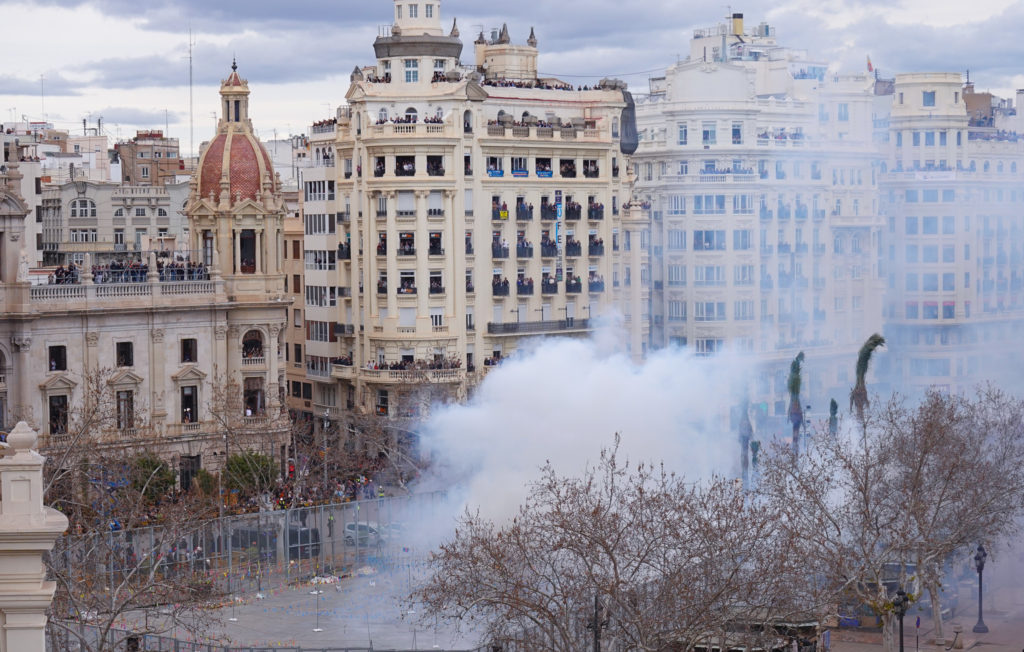
Every day, from March 1 to March 19, in the middle of the huge Plaza that fronts the Valencia City Hall, crowds begin to gather just after noon, streaming to the plaza from all around the city. The balconies of all the surrounding buildings begin to fill with revelers and, as two o’clock approaches, the square is packed with merry Valencianos, eyes glistening with anticipation. At five minutes till two, a single explosion takes place to heighten the tension and signal that the countdown has begun. Restless murmurs begin to fill the plaza punctuated by shouts and cheers. Precisely at 2 pm, the fireworks begin. Rolling, thunderous explosions suddenly suck your breath away, smoke and ash fill the air, the crowd roars its approval, and the opening movement of the “symphony of gunpowder” has begun. The steady roar builds for a minute or two before giving way to a series of controlled breaks and thunderous explosions in a rhythmic staccato that comprises the second movement. The third section sees the bulk of the gunpowder expended in the movement known as “the earthquake”. The goal in this passage is to fill the city with overwhelming waves of sound. Each second that passes you’re sure that it cannot get louder, and then it does. The roar completely fills your consciousness and throbs through your body with such an all-consuming power that no other reality can intrude up until the moment when it suddenly ends, and the sonic force gripping your body and mind begins to relax. There is a startling moment of silence, and then the mass of humanity erupts in cheers and applause, ending one of the most intense five minutes of your life. Every day. For 19 days. Really.
The Mascletá, like Las Fallas generally, seems to be unique to Valencia. And, while the first 19 days of March are the height of the practice, a Mascletá might be heard anytime of year to celebrate a wedding, the feast day of a saint, or just because it’s Tuesday afternoon. The authors of these performances are professional pyrotechnicians and local celebrities. Local newspapers print daily reviews of the artistic quality of the presentation and quotes from the author of the mayhem relative to his satisfaction or disappointment with the results. The practitioner judged to have created the best show is given the honor of being named to fire off the final Mascletá on March 19. These extraordinary practices – the Falla constructions, La Cremá, and Mascletá – are riveting, but there is much more going on during this festival. Many other aspects of the celebration seem to express the soul of what it means to be Valencian.
UPHOLDING TRADITION
As I mentioned earlier, the Casal – neighborhood communities of Falleros – are the heart of the celebration. It is these neighborhood groups that plan and fund raise all year in anticipation of the celebration of Saint Joseph. And it is the Casals that uphold and nurture the traditions of Valencia expressed in family, food, dress, music, and pageantry. It is at this level, the neighborhood gatherings to celebrate Las Fallas, where a more profound understanding of what this festival means to Valencia can be found.
Everywhere you go around Valencia during Las Fallas you will find streets blocked with large party tents set up by the local Casal to facilitate the nightly gathering of the Falleros. These are whole family events where the community comes together to sing, dance, play music (everyone seems to play an instrument) and simply enjoy one another’s company. Among the most profound things we’ve observed is the embrace of the children by these communities. Growing up in a Valencia casal means knowing you are loved and cherished not just by your parents, but by dozens of generation spanning neighbors all passing down their legacy. Like everything in society, Casals come in all stripes and sizes – rich, poor, large, small, plain, and fancy. What they all have in common, however, is a sense of community beyond anything we have ever seen or experienced. They are at the heart of a particular lifestyle that seeks to honor and sustain the cultural history of Valencia.
One of the most charming traditions is the paella dinner. This world renown Spanish rice dish was created here in Valencia. The marshy mouth of the Turia river where it empties into the Mediteranean has been the site of rice cultivation since the Romans. Turning that rice into a flavorful, nutritious meal cooked over an open fire was, no doubt, originally born of necessity. Today, of course, it is a beloved part of the culture. Purists insist that only a paella prepared over a wood fire is authentic. And so, several times during Las Fallas, the falleros gather at their casal and build wood fires all along the street where traditional paella valenciana is prepared over an open flame. Like many things during Las Fallas, there is a good spirited competition among the cooks for the honor best paella, before everyone sits down to enjoy the feast.
OFFERINGS TO THE VIRGIN
Among the practices that we have come to cherish most is an event known as La Ofrenda (the offering). As practiced here in Valencia, the offering in question is one of flowers. The last week of the festival season, a three-story tall wood and steel version of the Virgin Mary is erected in the plaza adjacent to Valencia’s cathedral. With preparations complete, all the falleros and falleras meet at their casals in the traditional costume of the Valenciano – formal gowns fashioned from gorgeous, embroidered silks – to begin their procession from across the city to the Plaza of the Virgin. Each fallera carries in her arms a bouquet to be placed as an offering. This procession goes on pretty much continuously for two days with each group proudly marching behind their casal’s banner, accompanied by a traditional band marching with them. Tens of thousands take part, and by the end, the three-story effigy of the virgin has been completely covered in flowers. It’s a magnificent sight, and thankfully, not included in the final conflagration!
Another charming element of the festival is the display and judging of the Ninots, something we participated in this year for the first time. Ninots are individual figures that become elements of the larger fallas constructions described earlier. Like the final large fallas constructions, the ninots can be whimsical, satirical, lewd, inspiring, or despairing. They are all gathered for display in an exhibit hall for public viewing and judging. The ninot that wins the most votes receives a pardon from the night of fire and is retired to the Fallero Museum for posterity. The museum currently holds 80 year’s worth of winning ninot figures. When the judging is closed, all the ninots are moved onto the streets of Valencia to take their places in the assembly of the big fallas. Oh yeah, one other thing about these figures: each one includes a cavity stuffed with fireworks to ensure total destruction on the night of the crema.
For 19 days, there are neighborhood street parties, live bands, trailers parked in every plaza to sell buñuelos, churros, and chocolate for dipping, firework displays, dance competitions, parades, marching bands, and tourists. Lots of tourists. Some estimates suggest that this city of 800,000 swells by more than 1,000,000 people from all over Europe during the last days of the festival. And, with the visitors comes much of the dark side of the festival. The locals Valencianos are rarely, if ever, drunk, or disrespectful. Often, however, the visitors are both. This leads, of course, to some ugliness as the level of debauchery builds toward the climactic night. And it is not hard to sympathize with our expat friends who flee the city for more peaceful destinations during Las Fallas. Our experience has certainly included some unpleasantness but not more than you might expect from a massive festival. As night falls on the 19th, a parade that celebrates fire moves through the city center, touching off a surreal landscape of explosions and conflagrations across the entire city.
THE FINAL ACT
Then, as dawn breaks, one the most amazing aspects of Las Fallas is revealed. Overnight, an enormous army of city workers has been scouring the city. And while it will still be another day before the last vestiges have been removed, by late morning of the 20th, almost all evidence of the previous night’s chaos has been completely erased, the streets hosed down, the trash and litter removed, and the city returned to its routines as if nothing has happened.
This might be the most surreal moment of the entire festival.
NOTE:
You will find additional photos of Las Fallas in the Gallery. Also, I am attempting to write another post exploring what it all means. Still trying to get my head around it . . .
Thank You for your concerns. We are doing well and amazed by the response of the Valencia community. The Valencia City Council announced today that they are setting up 130 apartment for those displaced by the fire. These apartments will be fully furnished including food in the refrigerators. In the meantime, local hotels are providing free lodging for all of those impacted by the fire. Clothing is being provided by three different stores here in Valencia and all health care services including medications are being provided for free. Local veterinarians are providing free lodging for pets while the families get settled. A request went out asking the public to not bring any more donations because they are overwhelmed with the volume of stuff they have received since in the last three days. This is amazing community.
With the U.S. as our reference, we agree that not requiring smoke detectors is unimaginable. However, only about one-half of the EU countries have significant requirements for smoke detectors. Only Austria, Germany, Ireland and the UK have similar requirements as the U.S. and ten European countries require just one smoke detector per residence (Belgium, Czechia, Denmark, Estonia, France, Latvia, Lithuania, Netherlands, Norway and Sweden). So, while it’s hard to process, Spain is not an outlier on this front.
Some are claiming “shoddy” construction as a possible cause, the least of which is using polyurethane insulation underneath aluminum cladding. The same situation occurred in a horrible fire in the UK in 2017 that resulted in 72 fatalities. So, once again, this is not something unique to Spain. There are several other construction/building system factors that are probably factors. I’ll leave any commentary on construction methods to Ed.
As for our own safety, we have ordered smoke detectors, a fire blanket, fire extinguisher, and a fire escape rope ladder for our apartment. We are on the 3rd floor of a building that is concrete and stone (no flammable cladding). We appreciate your concern and promise to stay safe. Actually, we’re buying a portable smoke detector that we will take with us on our month-long trip to Italy beginning in March.
This past Thursday, Bonnie and I were enjoying a rare blank calendar day, lounging around the flat, working on our travel plans, and generally relaxing. We finally wandered out into a blustery late afternoon, strolling around the neighborhood to visit the local “tobacos” to pick up a recent amazon purchase. (As in many European countries, tobacco stores in Spain fulfill an assortment of official functions – bus fare, postage, delivery point, lottery tickets, etc.) As I waited on the street for Bonnie, I looked out toward the medieval tower that defines our neighborhood and was startled to see a large puff of dark smoke drifting by. As I watched, it was followed by another, and then a growing cloud pushed by a brisk breeze.
As soon as Bonnie emerged with her package we headed out to the tower where I hoped to be able to locate the source. As we turned to face the west, my heart sank – a torrent of dark smoke was billowing up from a location just beyond our vision. I knew instinctively that this was a serious structure fire, and there was no sign of the tell-tale white or grey plume that would indicate the bomberos (fire fighters) were on site.
Bonnie began tapping into our Valencian expat network asking if anyone knew what was going on. Some twenty minutes later she turned to me with the first photo on her phone: a high-rise apartment block was spewing flames and smoke on two or three floors about a third of the way up the building. I looked at that image in horror. Five decades of working in the electrical construction industry was more than enough for me to see in an instant what kind of tragedy was unfolding in that moment. Everything we do in the design and construction of a high-rise building is done with the goal of preventing exactly the scenario I was staring at in that image and I knew something had gone terribly wrong. By the time we had returned home, we watched in anguish as the videos and news reports began streaming in real-time a disaster that will profoundly impact not only Valencia, but all of Spain for years to come. Scenes of the hellish catastrophe continued throughout the night as the fire completely engulfed two 14 story apartment blocks.
Bonnie:
Of course, we were anxious to find a way to help. We both reached out that night to some of our closest friends and the expat community that we’re connected with here in Valencia. It was nearly impossible to sleep as our phones (and my new Apple watch) kept dinging with messages and updates. By morning, the fire had mostly burned itself out, and the grim business of counting the human cost was underway.
We received a message a little later that the Casal Falla (There are more than 400 of these traditional neighborhood social organizations around Valencia) nearest to the fire was collecting items for the families who were suddenly without a home. At that point the items they were in most need of were diapers, personal hygiene items, and baby clothes. On Friday at 1:00 we met with our good friends Heather, Jim & Elsa at one of our favorite street cafes, Sant Juame, and of course, much of our conversation focused on the fire. I mentioned to
Heather that we were planning to buy some diapers and personal care items and deliver them to the Casal that afternoon. Heather said she wanted to do this as well and we agreed to go together. The plan was to leave our place at 4:15, stop at a supermarket, and then take a bus to the Casal. We had to be back by 7:00 to meet with our new neighbors at their place right across the street from us. (I know, retirement is awesome!)
Ed and Jim decided to stay home so Heather and I headed out together with our shopping roller bags in tow. With Heather’s permission, the following is her account of our experience.
Heather:
Bonnie and I met up and went to Consum to grab a bunch of items: diapers, pads & tampons, hand sanitizer, shampoo and conditioner and other personal care items. We weren’t sure what was better, a bunch of one or two items, or a little of everything. We ended up doing a little of everything. We had heard that some of the local hotels were taking in affected people – the Hotel Valencia Palace was said to take 40 couples that night – so we decided to not bring food items as it was unlikely that most people would have access to a kitchen, and everyone probably needed toothpaste and toothbrushes.
Once we left the store, I looked up transit options on Moovit and we went to catch the first connection. The Campanar neighborhood is about a 1 ½ miles from where we live, but the only time either of us had really been there was for an artichoke festival a few weeks ago. We missed the first bus by seconds (it’s hard to run with roller bags stuffed full!), but the public transit here in Valencia is excellent and another bus came in seven minutes.
When we got off, we were a little confused on how to get to the next connection’s stop, it wasn’t far but there were 4 streets and weird angles involved – and now we know if we go that way again it’s easier to go back a half a block and cross there instead of the way we went. There was an older gentleman standing at the bus stop already, and B and I chatted to each other while we waited. A couple of buses that were not ours passed us and my Spidey sense went off. I checked Moovit and saw that the next bus was due in 21 minutes. That seemed far longer than it should be – in the early afternoon the longest I’ve seen is more like 14 minutes. I checked Google and it said no, the bus should be there in 7 minutes. So, then I checked the EMT website and saw the dreaded <!> sign. The alert was in Spanish, but I could tell without getting the translation app involved that there were delays and re-routing because of THE FIRE. Total face-palm moment. Of course – we were headed to the Falla in the neighborhood of the fire! Why that hadn’t occurred to me, I don’t know.
As we watched the different transit app options give us wildly different estimates for the arrival of our bus (ranging from 7 to 14 minutes to more than 30), our comrade-in-waiting started talking to us in rapid Spanish. He didn’t seem to have a cellphone on him, so we showed him our apps and the EMT alert and we all commiserated with each other about how we had no idea if the bus was coming at all or not.
We decided to wait a few more minutes but when yet another no. 73 passed us (the 3rd one since we’d been standing there), we decided to grab a taxi. Bonnie had been eyeballing taxis for a few minutes, but in a quintessential moment of Murphy’s Law, as soon as we made the decision to hail a cab, there was nary a cab to be found! Our newfound friend had a lot to say to us as we discussed the taxi situation and I’m embarrassed to say that it took me far too long to realize that he was suggesting that we try to flag a taxi driving the opposite direction – he was telling us that a cab on the other side of the street would willingly flip a U turn. Of course, that meant that immediately no cabs passed in that direction, either, but we were on Gran Via de Ferron el Catòlic (a major street), and so we did finally snag one.
We piled in with our supplies and our cab driver told us that he wouldn’t be able to take us very far because of the blockades. Another face-palm moment. He drove the few blocks he could and deposited us at the police blockade. Out came our cellphones again (how did we survive without them?) as we looked up the address of the Casal that we were headed to. We saw people walking in the direction we knew we needed to go, so we followed them figuring there was a mix of local residents and other people headed to the donation site. Every time we came to yellow barriers or police tape, we stopped and re-oriented ourselves. We asked police twice for directions to the Falla, thinking that they would tell us to move along or go away, and they were more than nice – I would say in my terrible Spanglish that we had things for the fire and ‘Dondé está la Falla?’ and they would give us directions in English. The first time I think we were so surprised that we weren’t being turned away (and also, we could see the huge burnt building towering over us and it was so much worse seeing it in person) that I admitted to Bonnie that I had forgotten most of what he said after we’d walked about a half a block away – only to find out that she was in a similar state of shock.
The building is a burned out hull. It reeks of the violence of fire and brought back flashback memories of disasters and fires that I’ve been on the edges of: the Oakland Hills fire, the collapse of the Cypress structure after the 1989 Loma Prieta earthquake, the more recent annual California-burning-everywhere fires. Emotions welled up in me and I couldn’t help crying a little for the horror those people had and still were going through. Bonnie took my hand and wiped a tear away as well as we whispered to each other a few of these traumas we’ve both witnessed in common.
We came across a group of people standing in line being handed supplies in boxes and bags. It was clearly not the Falla, but I thought maybe we could drop our items off there – I found a harried looking organizer and she seemed very flustered but graciously took time to really listen to what we were trying to do and said that her group was not organized right now and we should continue to the Falla. And then after passing a big media presence where all the news crews were gathered, we spotted a banner with the Maestro Rodrigo Falla name on it – we had found it!
Still, there was one more hurdle to overcome – when we were at Consum, we just chucked everything in our roller bags, but now we realized that everyone was handing over their donations in bags. I had assumed that there would be boxes and they’d want canned goods in one, clothes in another, and so on. We stood there for a moment, uncertain of what to do, and then a man walked up with a bag full of EMPTY BAGS! “Bolsa! Bolsa por favor!” we cried, and voila, problem solved. We filled up a couple of the bags and handed them to the organizers. Mission accomplished.
Now, how to get home? We had started this whole production 2 hours ago. Neither of us wanted to walk back past that blackened husk where people had lost their lives and pets and all the things that made their apartments home. We decided to walk in the opposite direction from whence we came, and to find another bus line that didn’t travel through this area, but in a reverse of our earlier Murphy’s Law taxi experience, mere seconds later, we spied a taxi pulling up behind the Falla.
“Oh, let’s see if they’re going to get out here” I murmured – and as luck would have it, the driver pulled up right next to us. As he got out of the cab to assist the two ladies inside (they were there for the same thing we were), Bonnie made eye contact and said hello to him. The women collected their bags, and they saw us with our roller bags. One of the women looked right in my eyes and smiled a smile of connection, of community. I smiled back at her and we both said gracias to each other. The cab driver put our rollers in the trunk and we hopped in and gave him our destination of Torres de Serrano. I spotted a 5 euro on the console and so I handed it to him. It seemed a little weird that they had put the money there instead of handing it to him, but that thought quickly disappeared as Bonnie and I talked about how glad we were that we had succeeded in our quest.
As our taxi driver veered around barriers and worked his way towards open roads, he was talking to dispatch a lot. Then he said something to us. As often happens, it was too fast for me to process, so I told him my usual “sorry, my Spanish isn’t very good, can you slow down and repeat what you said?” and when he did I realized that he was asking if we had gone over to the Falla to help, so I said yes, we had brought things to them. He pulled up to the towers and Bonnie handed him money for the fare, but he refused to take it. He helped us get our things out and gave us both hugs. We both teared up at his generosity and thanked him profusely.
It wasn’t until I walked in my apartment door that I connected the dots – when his previous fares got out of the cab, they had thrown money in the back seat – I think he refused to take their money too, but one of the ladies had stayed in the cab while he was getting their bags of donation goods out of his trunk and put the fare money on the console.
Bonnie:
Whew! That 2 ½ hours was jammed packed – not just with the logistical challenges we faced, but also the emotional ones. Processing feelings of both grief and joy at the same time is complex and I’m thankful for the way this time spent with Heather captured for me the bittersweet nature and richness of life. I’m also thankful for finding such a wonderful friend in Valencia. I admire Heather’s genuineness, caring, compassion, and way of celebrating life’s lighter moments. Her presence and companionship made this adventure truly memorable. I also admire the Spanish people whose deeply rooted commitment to family, friends, and community has been so evident in their response to this tragedy.
Ed:
It’s sobering. We’ve enjoyed a pretty drama free year in Valencia and have come to love the people and culture they have created for themselves. As Bonnie says often, “it’s a gentle life,” and we are privileged to share a small bit of it. The reality, however, is that there are real differences in societal priorities here that we are becoming aware of only slowly. Building safety is certainly one of those differences. A huge emphasis is placed on the energy efficiency of new construction with all the attendant investment. At the same time, smoke detectors are still not mandatory in dwelling units! This is inconceivable and incredibly troubling to us. As Bonnie expressed it, “we want Spain to be better than this!”
The construction of safe buildings has defined my entire adult life. What you probably know as the Electrical Code, I know as NFPA 70. (The electrical code is written and published by the National Fire Protection Association). California in particularly is a world leader when it comes to building standards and has much to share. I was fortunate to be allowed a role in that arena and naively assumed the rest of the developed world was following our lead. When Bonnie turned to me with tears in her eyes and asked, “how could this have happened,” I knew exactly how, and could write pages about the failures and shortcomings of the building we watched burning that night.
Unfortunately, as we have seen over and over, it often takes an immense tragedy to finally motivate meaningful reform and change. For Spain, I truly hope and believe we witnessed such a moment this week. The entire Valencian community is officially in mourning this weekend and our hearts are with them.
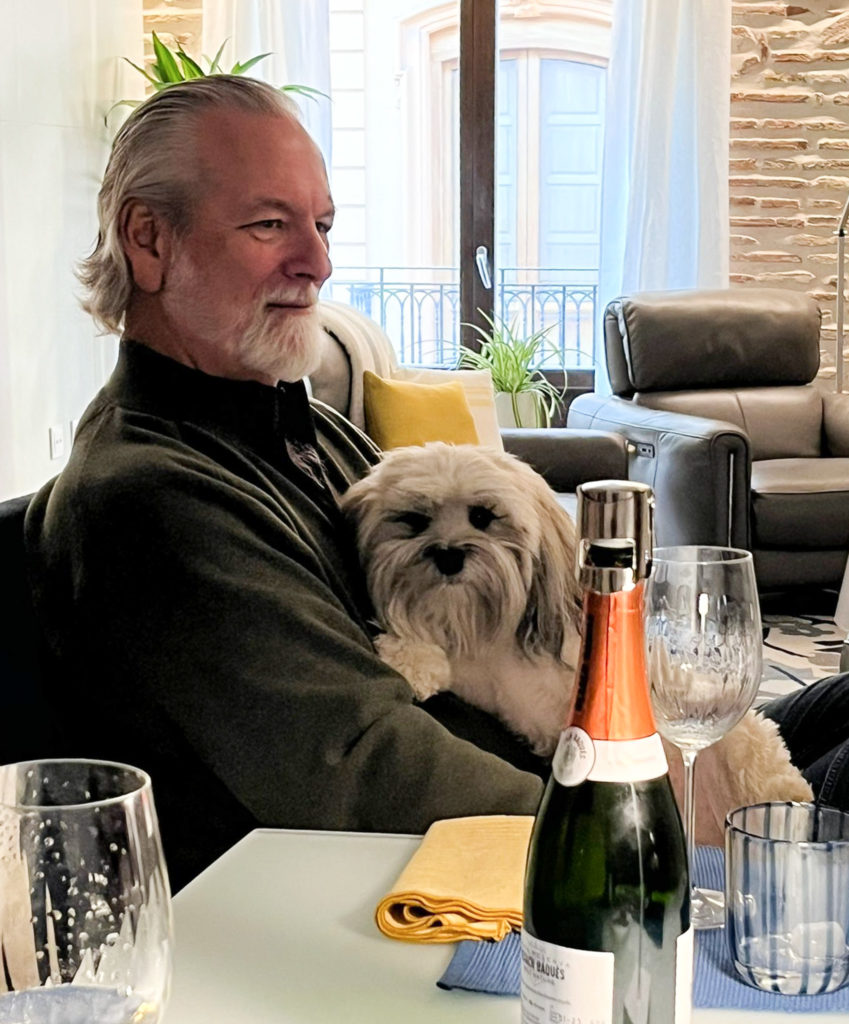
It’s a wonderful thing that there are so many expats in Valencia. We have met interesting people and made good friends. Heather and Jim are a lovely couple who moved to Valencia just a few weeks before us, also from Northern California, so we immediately had some things in common. (They also have an adorable pup, Elsa, that Ed has fallen in love with.) During a lunch get-together at our place a couple of weeks ago, as we discussed some of the challenges of expat life, Heather commented, “Sometimes, I just need a day to be easy.” Well said! I couldn’t agree more.
Last year, I wrote a few emails (now blog posts) describing some of our funny and sometimes frustrating expat experiences: the bank account adventure, peanut butter shopping, and the challenge of finding the right size bed sheets.
WATER, PLEASE
Expat life continues to be challenging. As you know, we moved to a new apartment recently. And as you might imagine that process provided ample opportunities for interesting expat experiences. The water was turned off in our new apartment because the previous tenant had neglected to pay the bill. Getting it turned back on was like the experience of opening a bank account – it took four trips to the water utility’s office to get it done. To be fair, our move date was January 4 and that’s still holiday time in Spain. Many businesses close over the holidays, including the offices of the building owner from whom we needed a very specific document to take to the water utility. Rental agreement in hand, Ed learned of this additional requirement at his first visit. Next, someone came in from their holiday vacation to get the necessary document. The first time it was the wrong document, so now he’s made three trips.
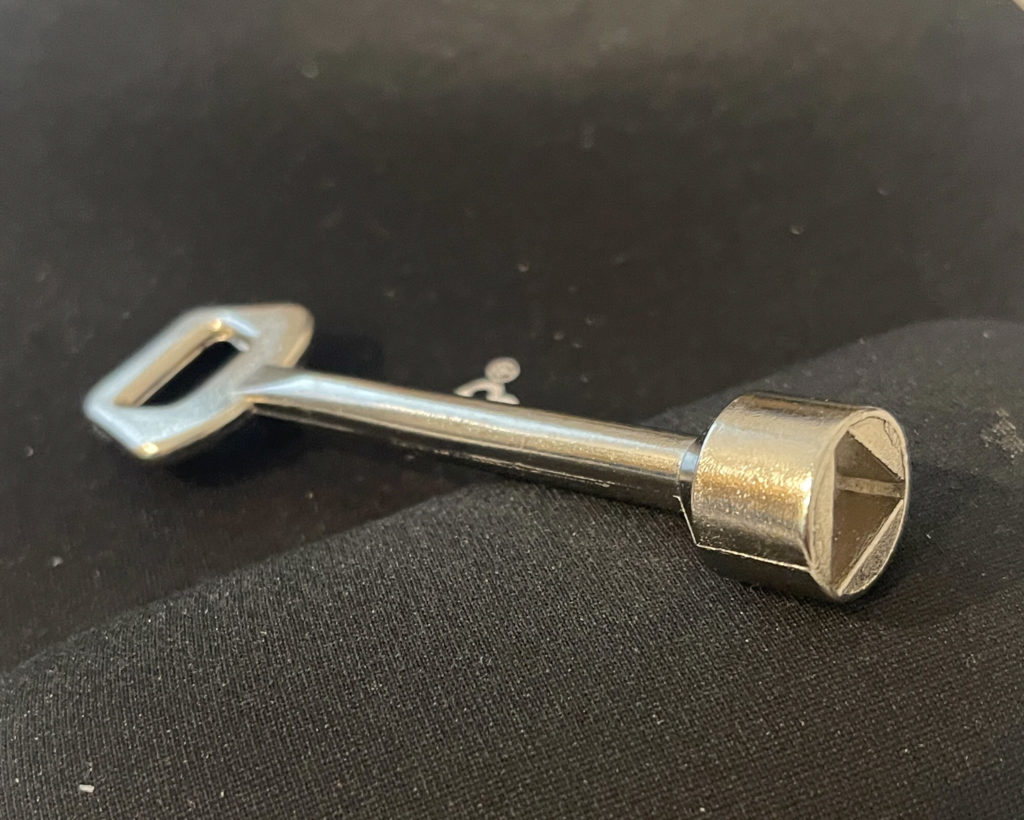
Then, it turns out the water utility needed a photo of the water meter which is in a locked room. The realtor said he could have someone come open the door OR we could buy a “standard triangle key” and open it ourselves. Ed went to a hardware store and asked for such a key and the response was “por el agua”? Si, por el agua. A proud owner of his very own triangle key, Ed got the photo and headed out for another trip to the water utility office. Four trips (a half hour walk each way) and one triangle key later, we had water.
IT TAKES A VILLAGE (OF REALLY NICE PEOPLE)
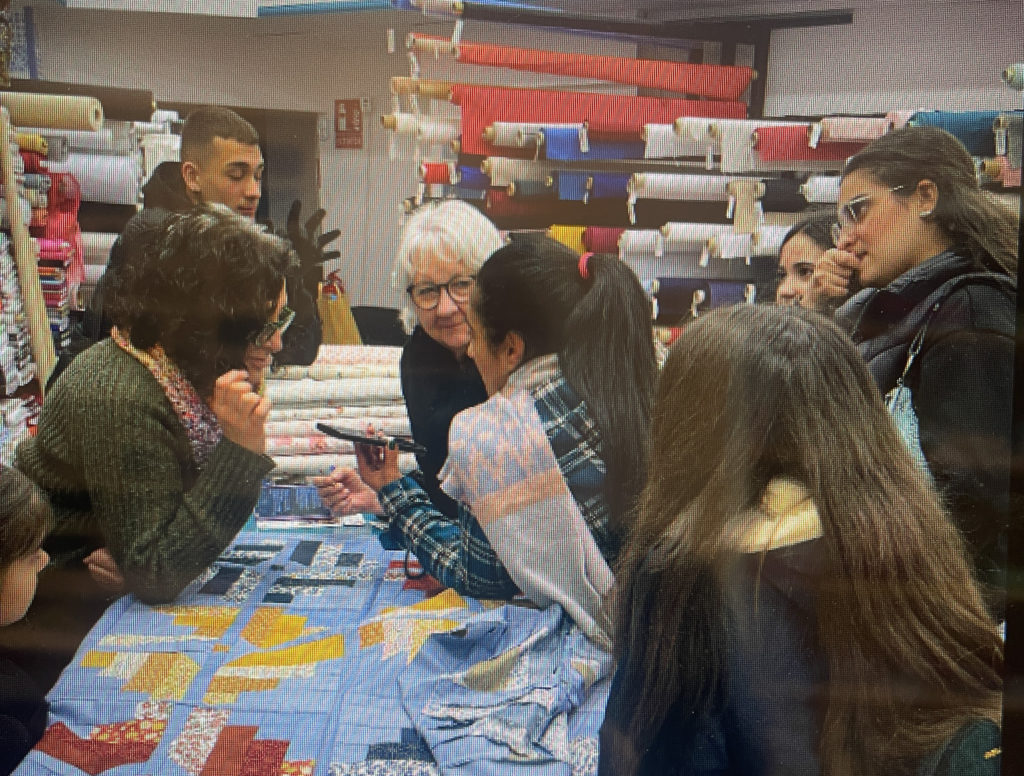
I’ve been doing some sewing and after piecing together a small wall hanging sized quilt, I needed to find a quilter. I had done this once when we were here last year and went back to the same little shop only to discover it had closed. The internet wasn’t much help, and I was just about to ship my little project to the quilter I’ve used in the U.S., which is a slow and expensive option. Then, one day we were walking by a fabric store, and I noticed a beautiful quilt hanging in the window. I went in to ask if they provided quilting services. The lovely woman in the store spoke zero English. I tried to use my limited Spanish, but we ended up communicating through Google Translate. Eventually, she called the quilter that provides the service and we attempted to have a three-way Google Translate conversation. We made a little progress, but it was very slow and frustrating for all of us. After about twenty minutes of this comedy routine, another customer came into the store. She was a 40ish woman who had 5 young girls with her. They all tried to help, but none of them spoke much English. Finally, the woman called her 12-year-old son who is fluent in English (but knows nothing about quilting, of course). I told him what I wanted, he told his mother and the shopkeeper in Spanish what I had said, the shopkeeper relayed the information to the quilter who was still on the phone. Round and round we went. Eventually, we got it done and everyone hugged before saying “Buenas Tardes! Adios!”
KITCHEN ROBOTS?
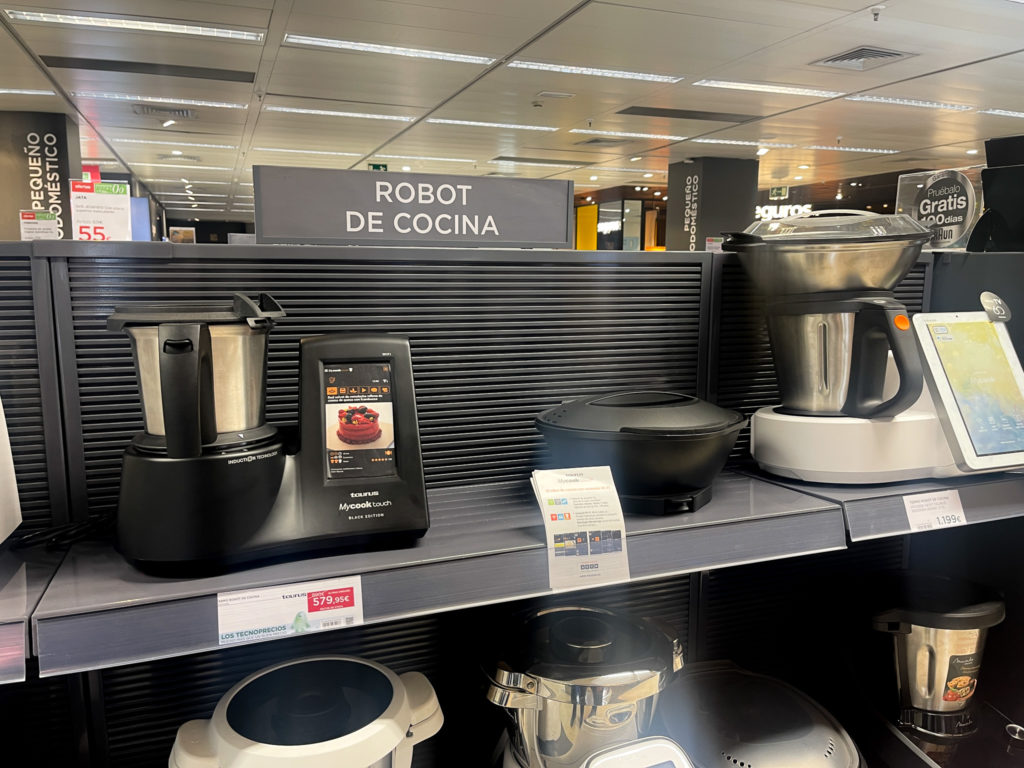
We decided we need a blender and/or food processor and looked at the options one day when we were in the mega-store, El Cortes Ingles. (Remember the 30+ immersion blenders from a previous post?) Well, we couldn’t find a food processor. We did find several “robot de cocina“ contraptions to choose from. I’m not sure what a kitchen robot is but they’re quite expensive. We didn’t feel up to the challenge and ordered a food processor/blender combo on Amazon.com. Easy.
COMMUNICATING ABOUT HEALTHCARE STUFF
We have had a few encounters with the health care system here (fortunately nothing too serious) and that can be a bit stressful. It’s not too difficult to find a doctor who speaks some English, but often the office staff don’t speak much, if any. Typically, I begin these encounters with the best of intentions. I prepare and practice my question in Spanish. Whew! I’m so proud of myself! Then, the other person responds, and I can understand somewhere around 30-50% of what is said. Yikes! This isn’t ordering lunch; this is healthcare stuff. I should say that I don’t expect everyone to speak English and my Spanish is getting better, but as Heather said, sometimes I just need the day to be easy.
At one healthcare encounter, I was proud of myself when I said, “Tengo una cita en enero pero no recuerdo el día ni la hora.” The receptionist responded, “Su tarjeta de seguro, por favor.” I handed her my insurance card and easily understood when she told me, “Tu cita es el 18 de enero a las dos de la tarde.”
Phone calls can be overwhelming. When I get an automated greeting or message, it’s nearly impossible to understand what’s being said because they talk so fast. I went back to the fabric store one day to pick up my finished quilt and while in the store my phone rang. It was a Spanish number and when I answered I was listening to a recorded message spoken in Spanish – fast Spanish. I knew it had something to do with a healthcare appointment, but had no idea if they were confirming, cancelling, or changing the appointment. Nor did I know if I was supposed to DO something – like “press 1” to confirm. I turned on speaker phone and asked Ed to listen along with me, but still no entiendo (sort of like no comprende). It was a stressful moment, and I was on the verge of a mini meltdown (silly, I know, but little things start to pile up). A young man who was in the fabric store came to the rescue. He came to my side and quietly told me that they were just confirming my appointment and there was nothing I needed to do. I thanked (and hugged) him too!
SPAINIVERSARY
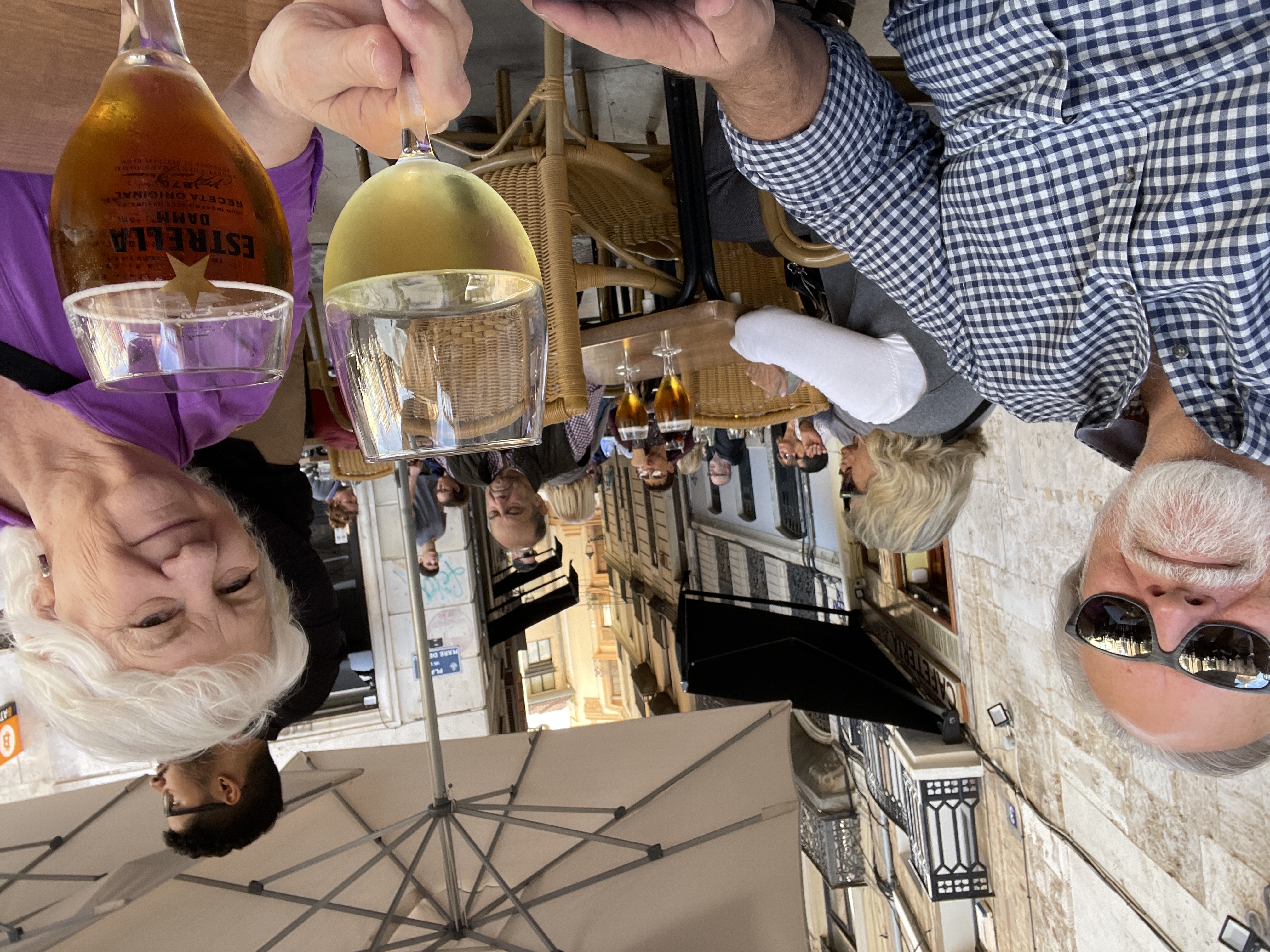
On February 3, we celebrated our one year anniversary of residency in Spain. This means that our TIE cards are expired. TIE stands for “Tarjeta de Identidad de Extranjero” and it’s a card that contains all your identity details and is proof that you are a Spanish resident. As recommended, we submitted our applications for renewal in early December, 60 days in advance. Now, we wait for the Valencia bureaucracy. We’ve heard that it can take between 2-6 months to get approval. After that, we go back to the police department where they check fingerprints, photos, and issue a new card. Then, there’s the fact that we can only stay in Spain for 90 days after the TIE expires (until May 3). We have some travel plans coming up and we can move about Europe with our U.S. passports. However, I’m not sure what happens after May 3. Worst case scenario, we get back to Valencia in late May from our trip to Greece and they don’t let us back into Spain. Unlikely, but something to ponder over a glass of wine.
FRIENDS AND NICE PEOPLE
Two things make all of this so much easier than it might otherwise be. First, as I mentioned above, we have some wonderful expat friends to commiserate and trade stories and tips with. Second, Valencianos are kind, patient, and eager to help. It’s a caring and gentle culture. People are patient with one another (even with expats), and they just seem happy. Happy to be alive. Happy to be together. Happy to help.
I have a sentence that I’ve committed to memory. “Gracias por su paciencia mientras aprendo español.” I say it often.
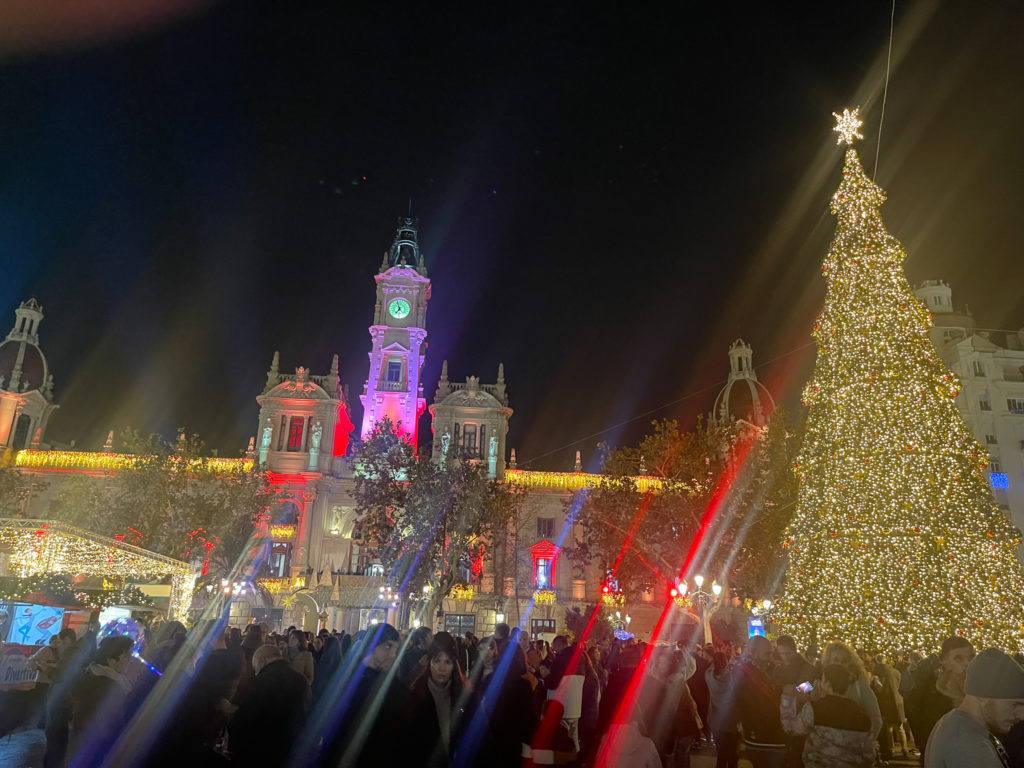
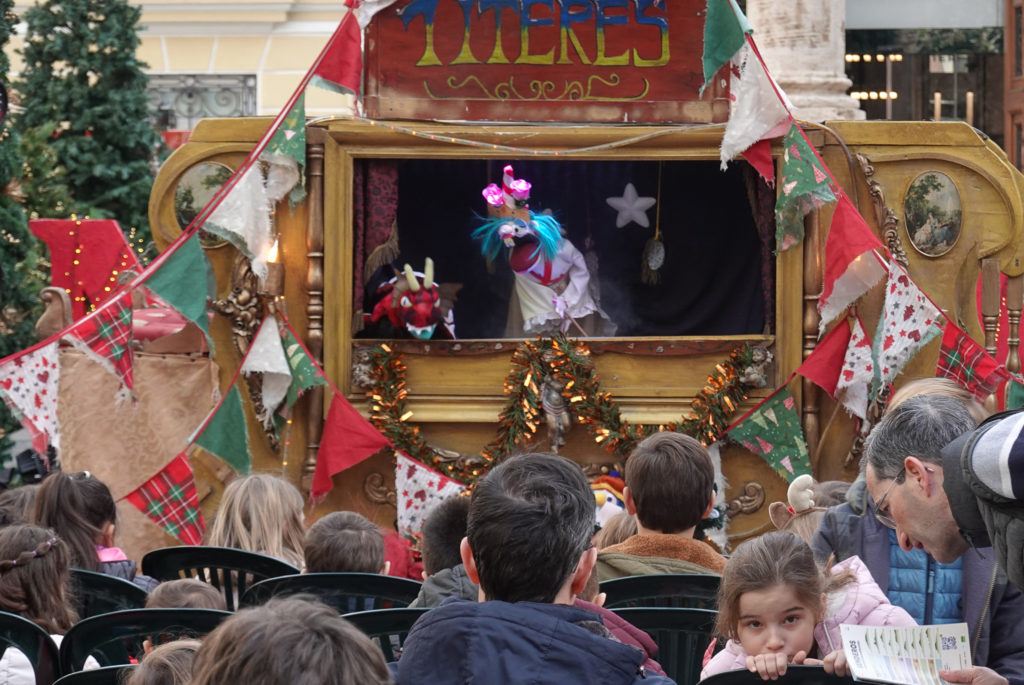
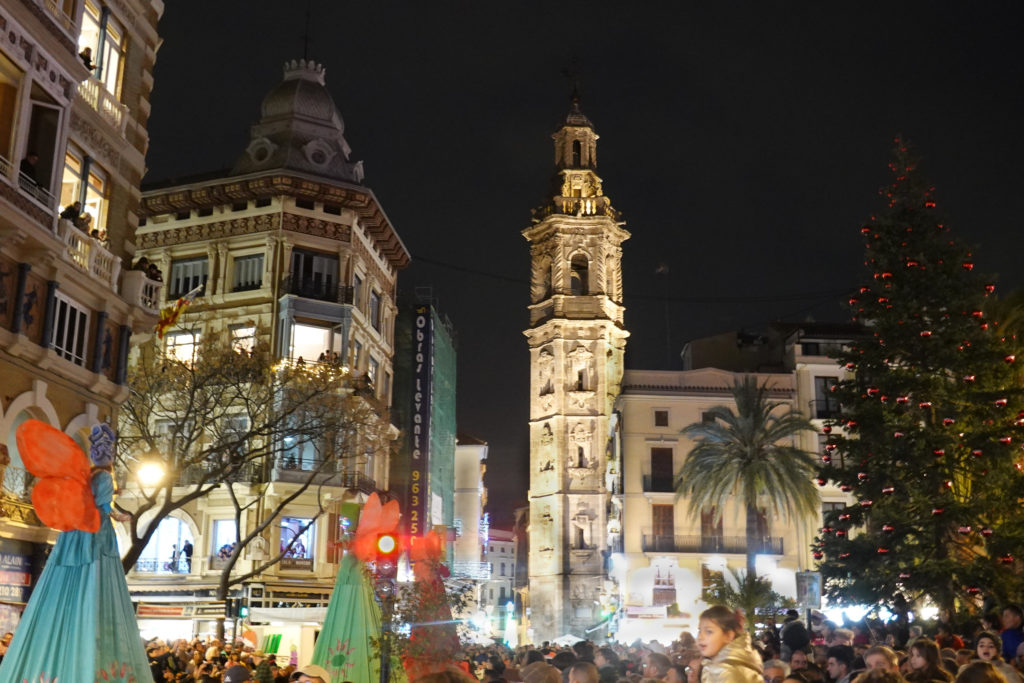
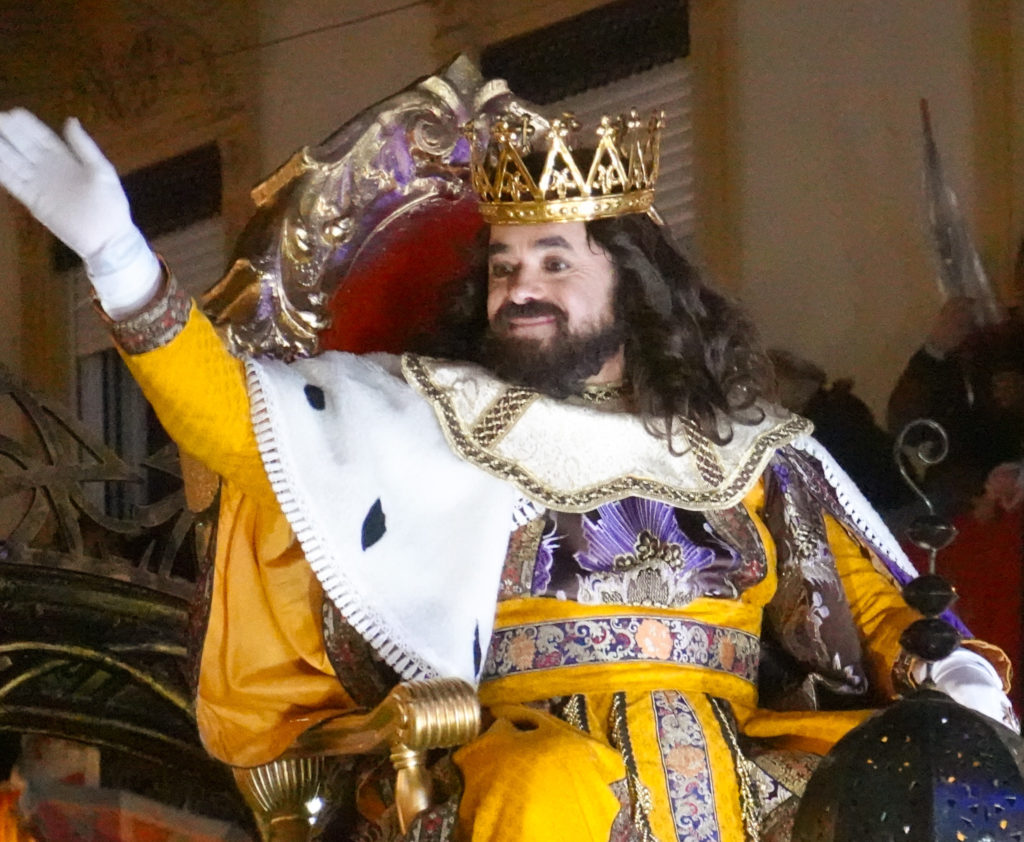
Whew! Yesterday, the holiday season in Valencia finally came to an end with the exchange of gifts celebrating the arrival of the Magi. Experiencing the holidays in Spain for the first time has been magical. From the numerous festive lights around the city to the lively Christmas markets, puppet shows, and live music, there’s been much holiday cheer. The Spanish traditions involving joyous gatherings with family and friends have been a delight to observe and participate in. The warmth of the people and the rich cultural heritage truly made our first holiday season in Spain a cherished experience.
THE ARRIVAL OF THE WISE ONES
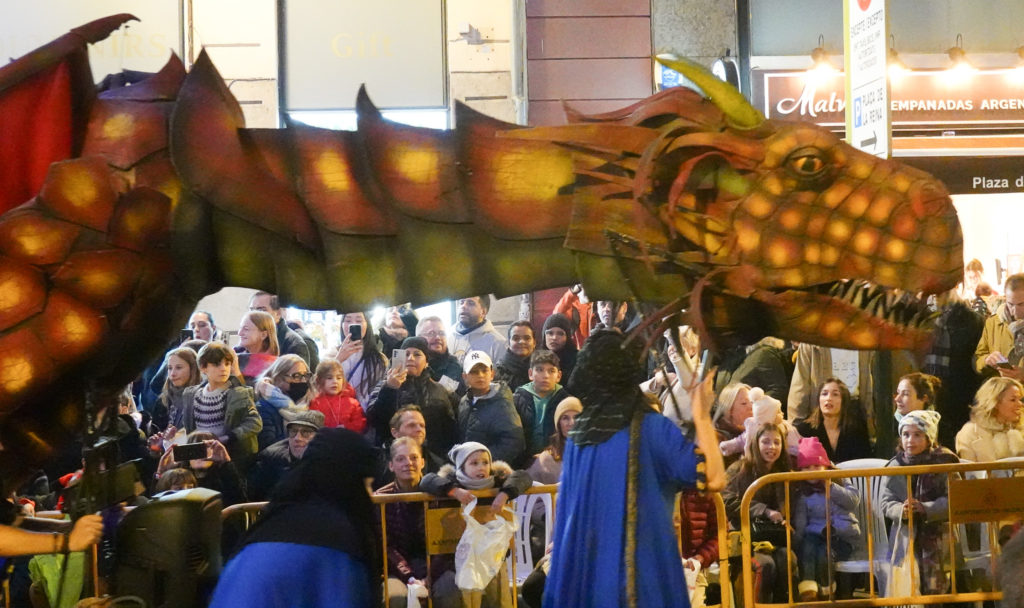
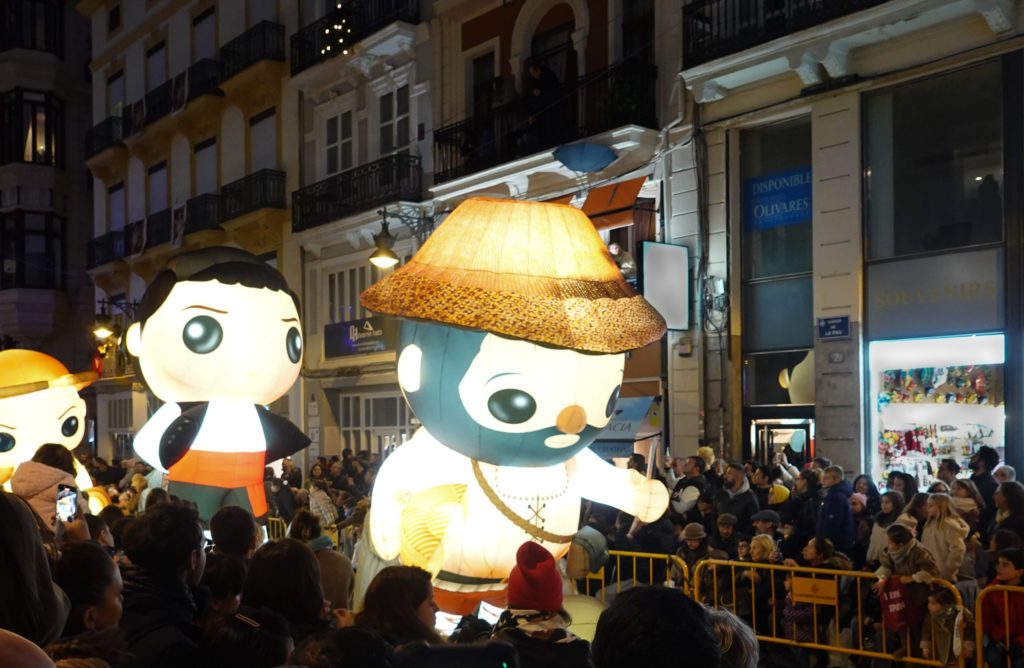
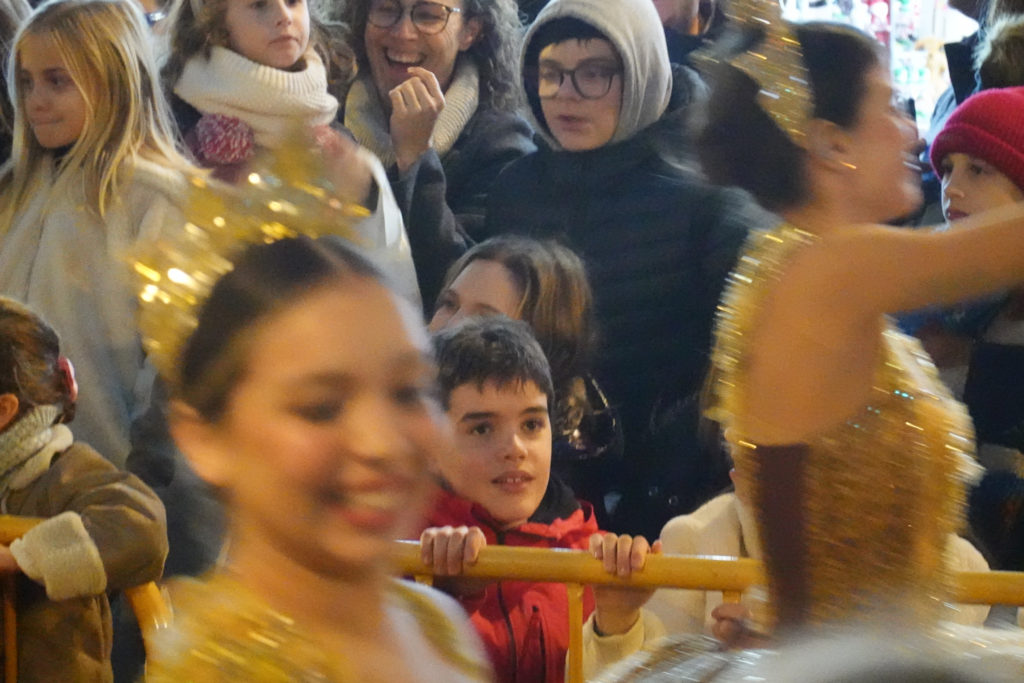
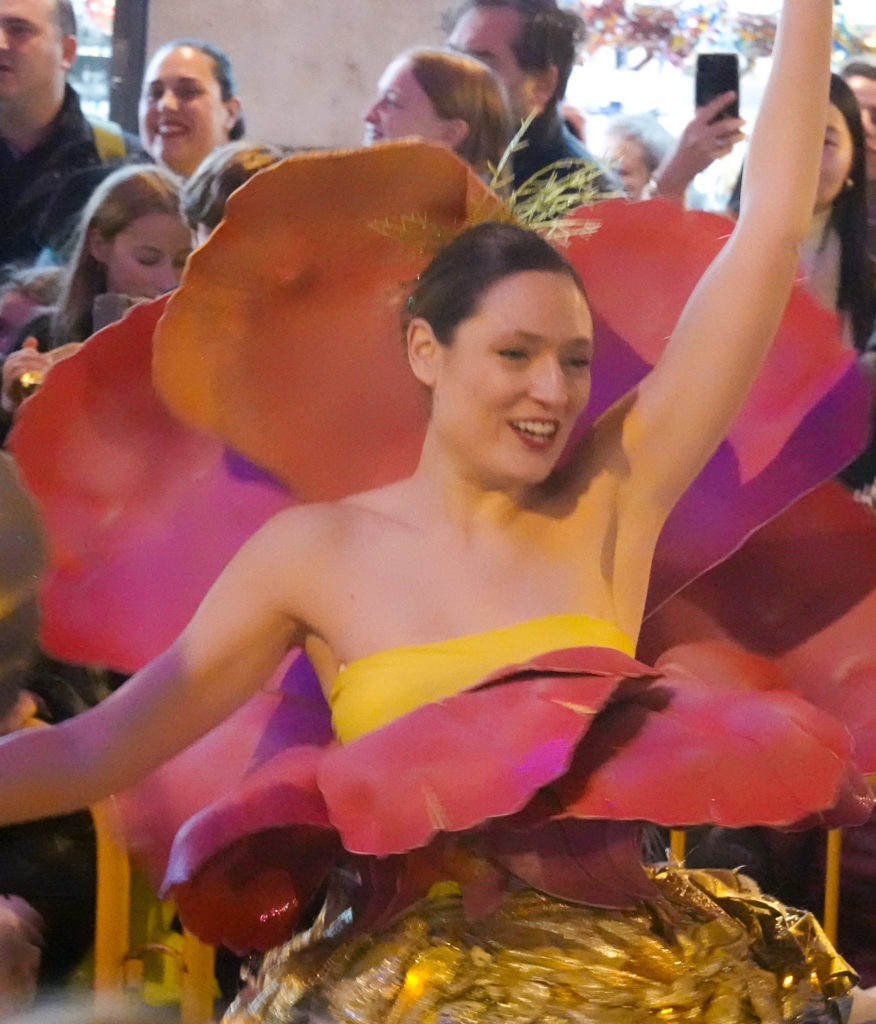
In Spain, Christmas doesn’t wind down after Christmas Day. It stretches joyfully on until El Día de los Reyes (the Day of the Kings) on January 6. On the evening before the big day, the much-anticipated arrival of Melchior, Gaspar, and Balthazar by boat at Valencia’s Mediterranean harbor is followed by a spectacular parade that winds through the city with the Kings robed in their regal attire. Of course, historically the Kings arrived on camel. But today they arrive on horses in Madrid and by boat in Barcelona, and in one small village they arrive by hang-glider. Maybe next year we’ll check that out!
Handfuls of candy are thrown wildly to the delight of the children with some holding umbrellas upside down to catch as many sweets as possible. The procession ends at Plaza Ayuntamiento (Town Hall square) with dance, music and, of course, fireworks!
Santa isn’t such a big deal here. Rather, the spirit of generosity and joy, popularly represented in the U.S. by Santa Claus, is provided by the Three Wise Men. Every year as Christmas approaches, Spanish children write letters to the Kings to let them know if they have behaved well throughout the year. Naughty children will receive just a piece of coal (which is a sugary sweet).
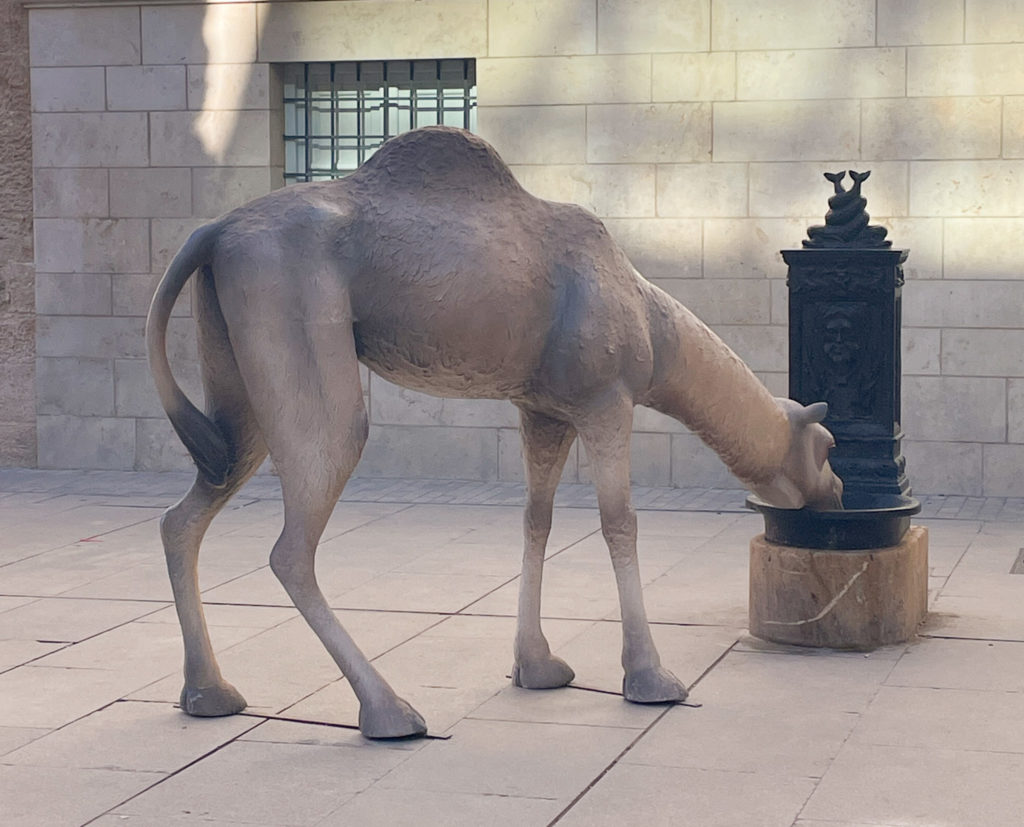
Having watched the Three Kings parade through town, children rush home to prepare for the next day. Because the kings have travelled a long distance, the children leave water, Turrón and milk (and sometimes cognac!) for the kings and their camels. Turrón, found in abundance in Spain at Christmas time, is a delicious nougat that is made from honey, sugar, egg white and toasted almonds. The children also clean their shoes and place them out to be filled by gifts from the kings.
ON THE MOVE AGAIN
Amid the holiday season, we moved! I know, it’s hard to believe that we’ve moved again. I’ll spare you the rationale and just provide you with our new address.
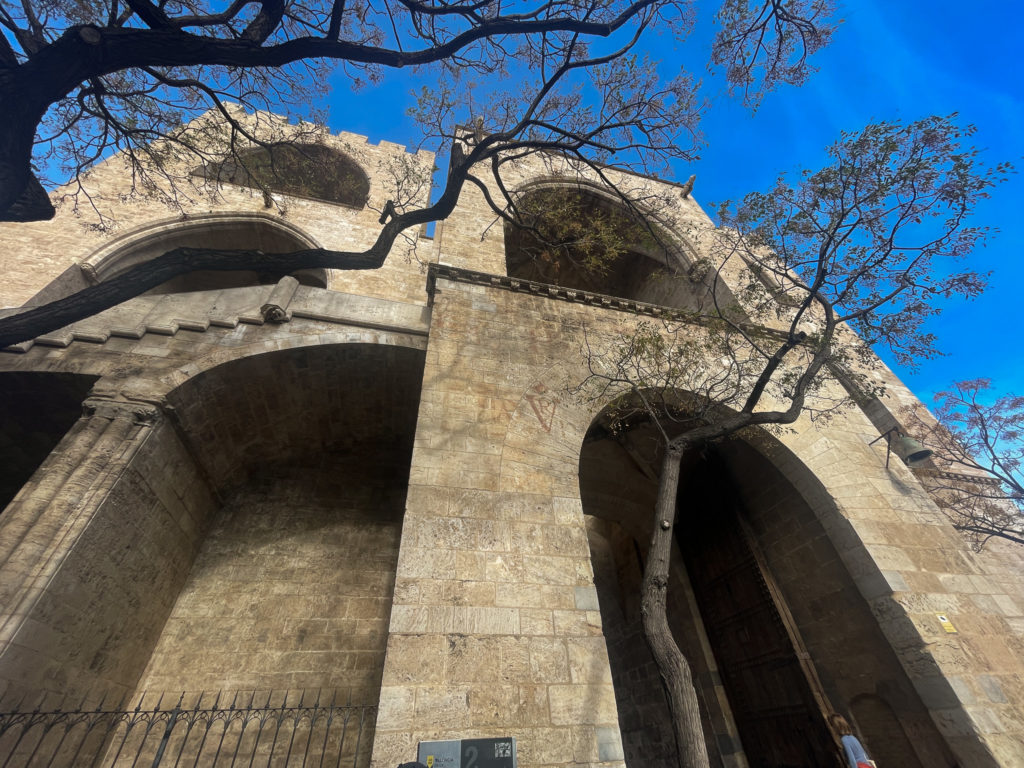
Calle Serranos, 10 Puerta 3 Valencia, Valencia 46003 España
Our new place is on the border of the El Carmen and La Seu neighborhoods in the Ciutat Vella (Old City). Our street, Calle Serranos, is named after the “Torres de Serranos” (Serranos Towers), a limestone clad, Gothic structure originally built to defend the city and serve as the primary entrance. Construction on the Serrano towers began in 1392 and these towers were one of twelve gates of the ancient walls that surrounded Valencia.
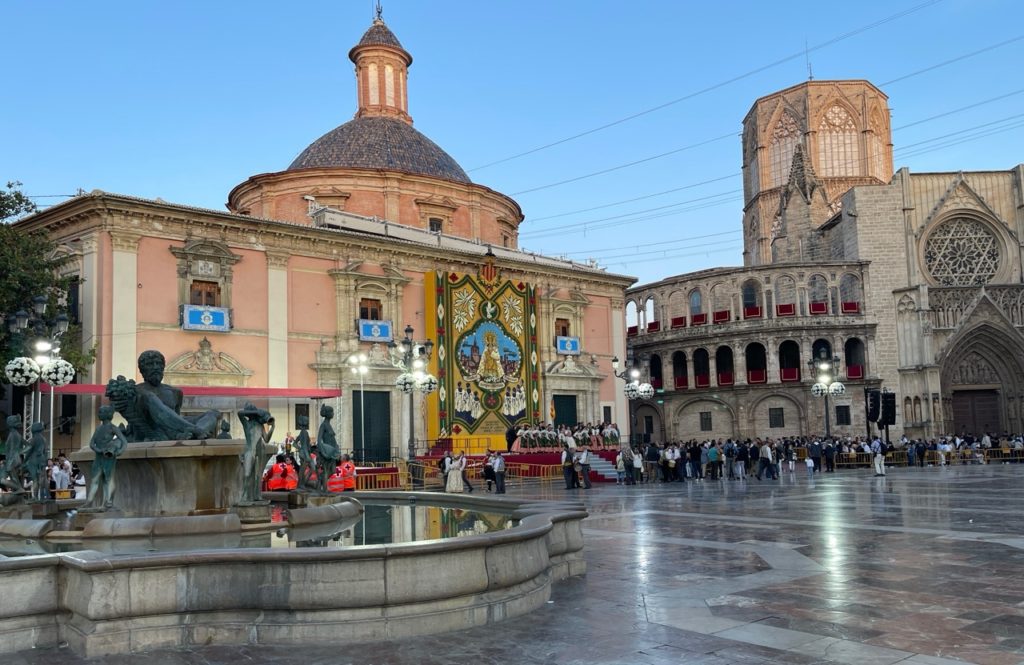
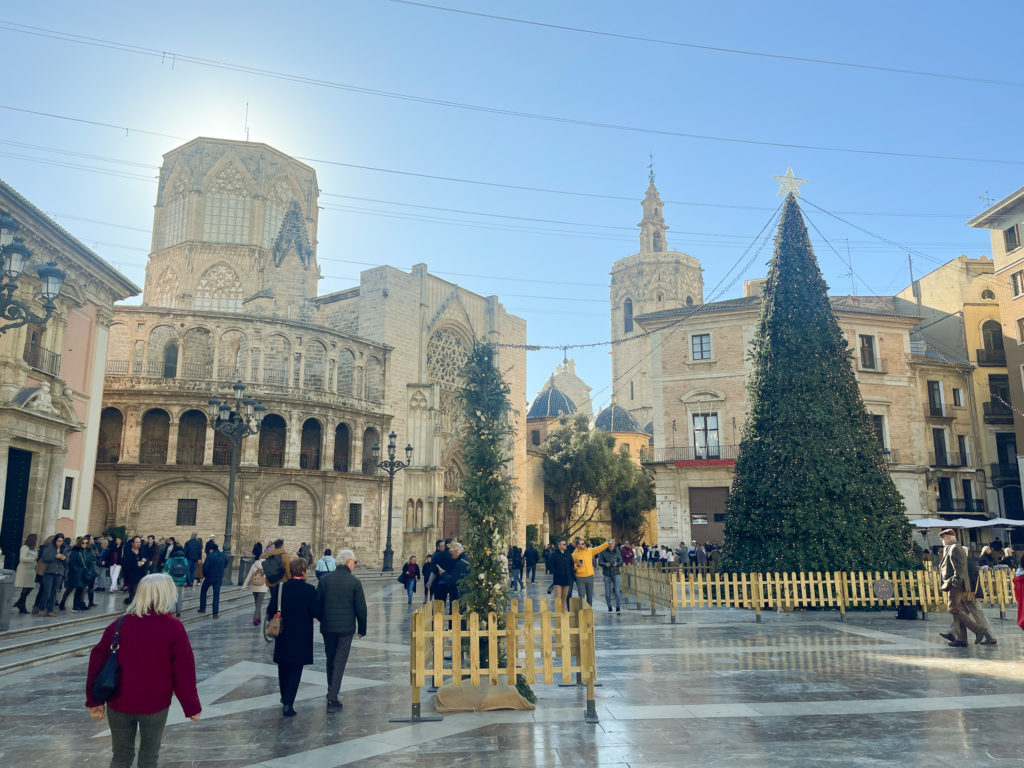
Just around the corner from our new place is the beautiful Plaza de la Virgen. This completely pedestrian plaza is the historic center of the city, home to one of Valencia’s Cathedrals (built in the 13-15th centuries). The cathedral is built on the site that was once the Roman Forum of Valencia.
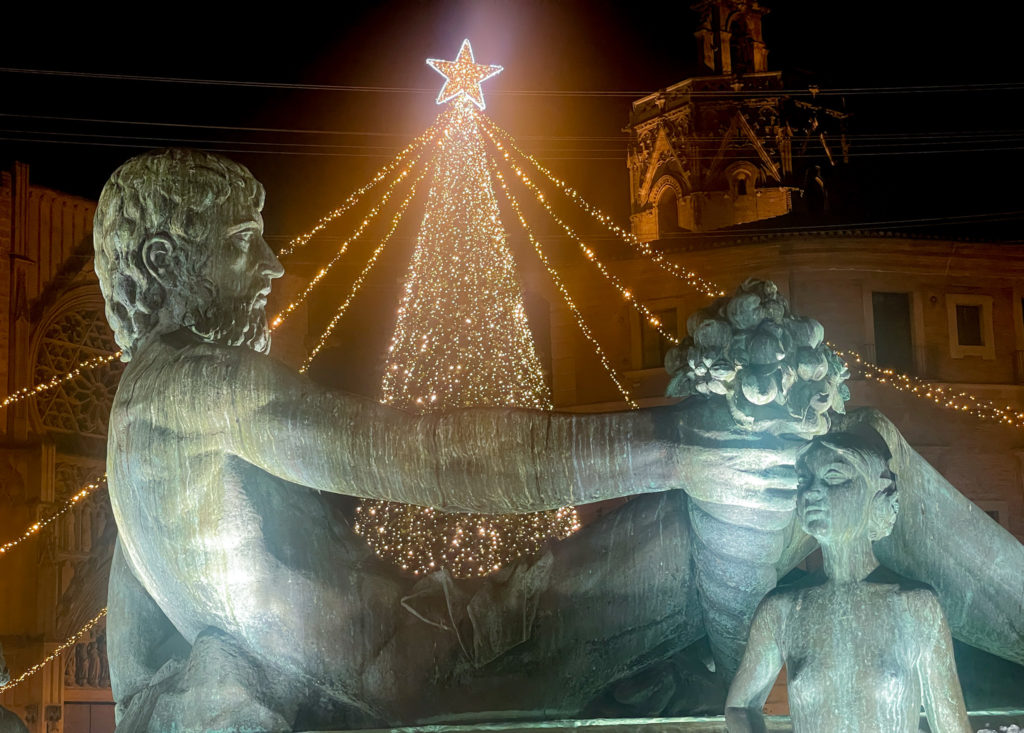
In addition to numerous cafes, the plaza is home to a wonderful fountain and statue of a comfortably reclining Neptune (my bud). Neptune represents the Río Turia while the eight lovely women surrounding him symbolize the eight primary irrigation channels flowing from the river to support the rich agricultural production that has characterized the region for hundreds of years.
We LOVE our new neighborhood and invite you all to come check it out!
We wish you all very Happy New Year and a year filled with many moments of laughter and love. Cheers to a fantastic 2024!
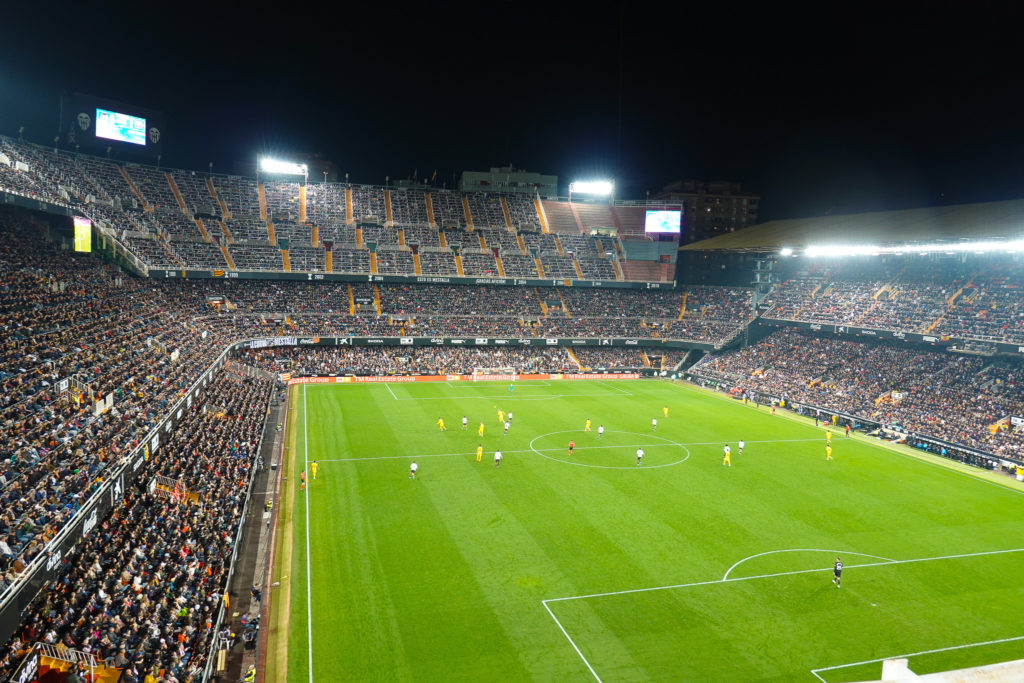
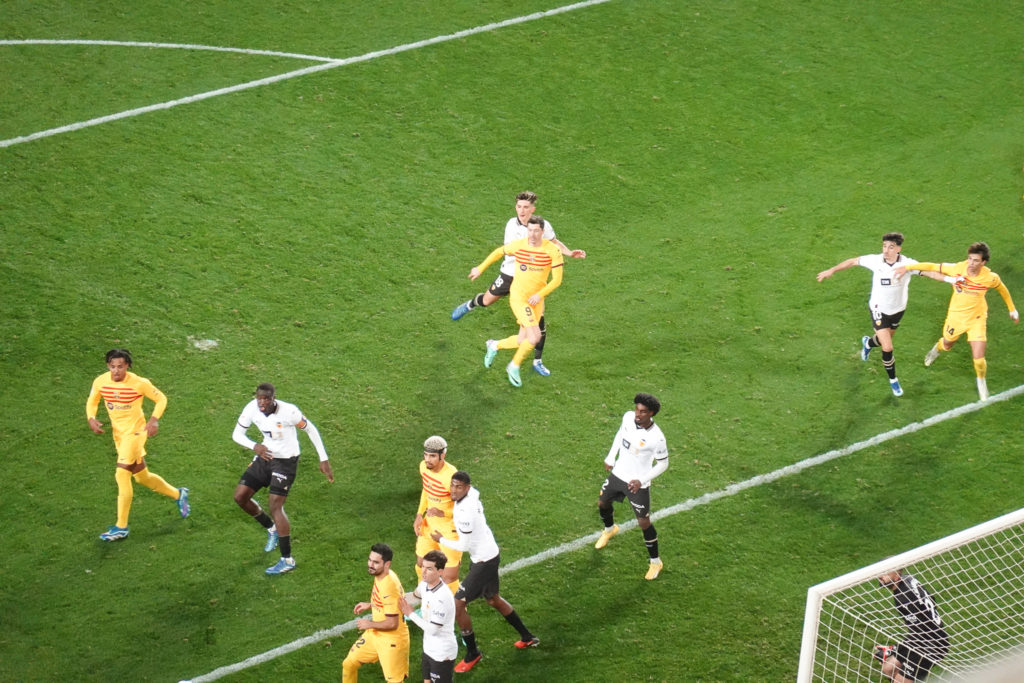
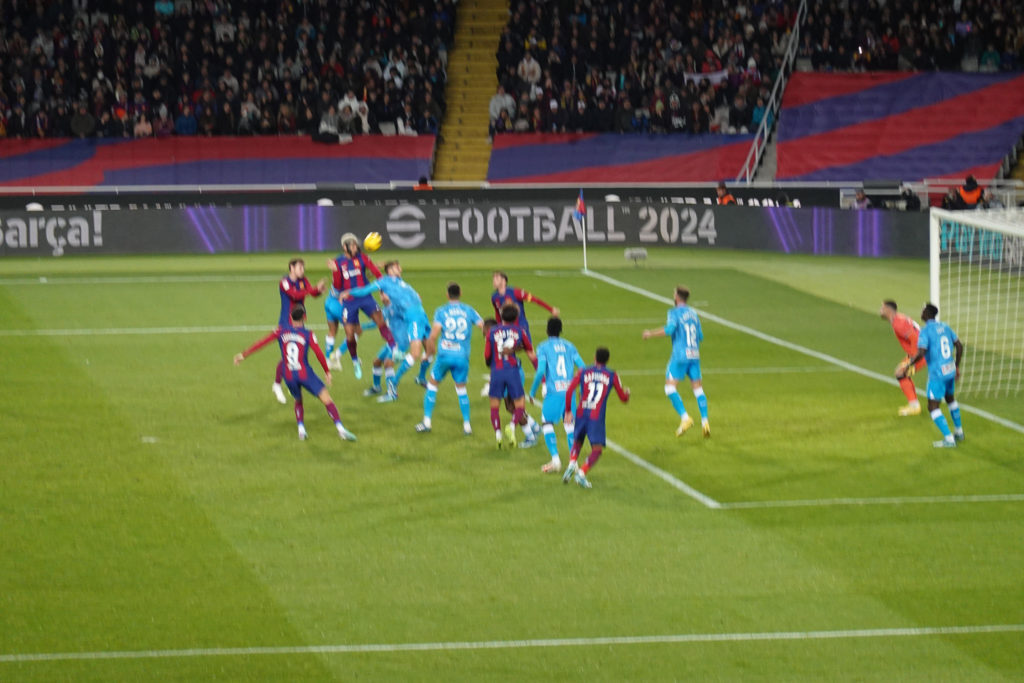
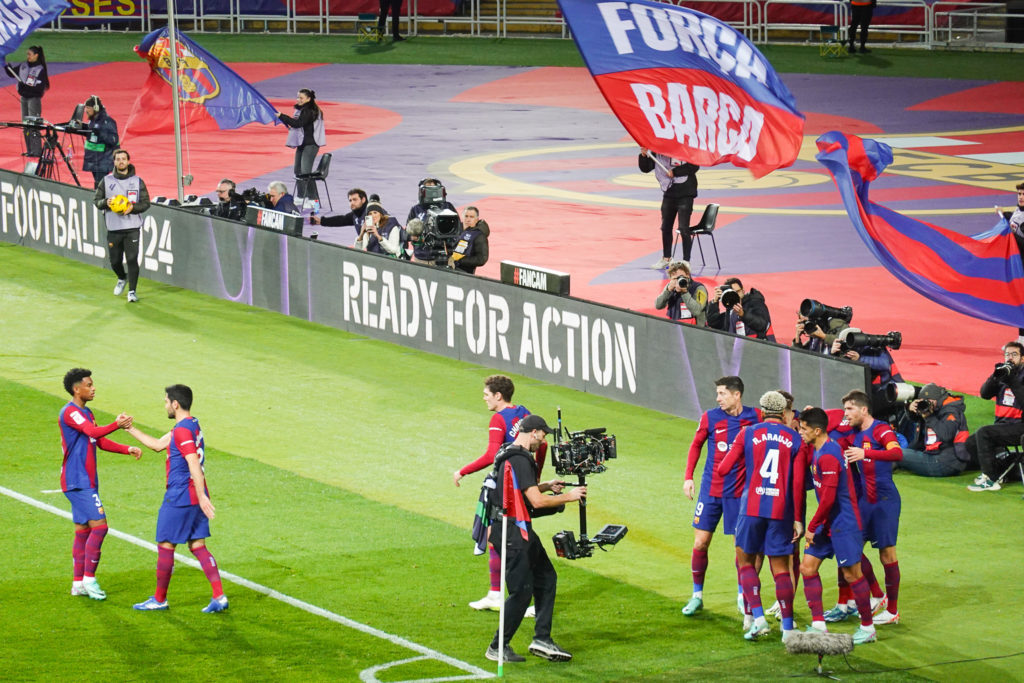
It’s been a very special holiday season for Grandfather Noble. On a recent Sunday night, I wandered through the Valencian night, bundled up against the winter cold, to the old concrete monolith that is Estadi de Mestalla. I took my seat in a completely packed stadium just after 9:00 PM for a clash between FC Barcelona and Valencia CF with the chants and singing of the hometown crowd echoing throughout the city. (Valencia managed a draw.) Just three nights later, Bonnie accompanied me to Barcelona’s temporary home at Estadí Olímpic as they confronted a must win match with a UD Almeria team sitting last in the standings. (Barcelona eked out a rather unsatisfactory 3-2 win.)
Two Barca games in one week!!
This is retirement heaven.
Those of you who know me well will be aware that I am endlessly fascinated by the game America insists on calling soccer. It is by far the most popular team sport on the planet, and both the origin, and pinnacle of competition, are in Europe. La Liga, the Spanish professional futból league is largely acknowledged to be second only to the British Premier League for quality of play and talent. The top two teams in Spain – Real Madrid and Barcelona – are giants among the world’s soccer clubs. I have been a Barcelona fan for nearly two decades since first hearing of a teenager named Leo Messi that was setting the futból world on fire.
My love of the game was planted very early – long before most Americans had heard of the game that obsessed the rest of the world. Among the many blessings of an idyllic childhood, was a male teacher in my elementary school who saw fit to introduce soccer to us during the physical education portion of our day. This strange notion of a game played only with the feet made immediate, intuitive sense to my adolescent self and I was firmly ensconced in the role of goalkeeper on that long ago playground. That seed moldered, almost forgotten, until the boy became a father eager to introduce his sons to the pleasures and lessons of team sports. A decade had passed, and soccer had become fashionable among the more well informed and progressive parents. Ahem.
Armed with a wonderfully virtuous motive – my sons’ well-being – I threw myself into the task of educating myself on the art of coaching youth soccer teams. (Gratification of my competitive nature may have played some role here, possibly. Well, sure. But come on, right?) I read. I attended seminars. I took on field coaching lessons. And I coached. In short, I immersed myself in the tactical elements of the game and strategies for teaching it. I was intense, focused, and damned good at it. Also, probably a pain the ass to the other parents. So, there was that.
That seed planted by a grade school teacher flowered into fourteen years of coaching my sons in youth soccer that will always be among my most treasured life experiences. It also cemented my love of the game and an appreciation for all the nuance and beauty of the sport. Played at the highest levels, it combines the artistry and athleticism of NBA basketball, with the cerebral tactics of NFL football on a field that is large enough to gracefully accommodate both. But what is most compelling are the moments of sudden, soul wrenching drama. The passion of fans for their fútbol team is unlike anything I have experienced in other sports. They live and breathe the successes and failures of their team – be it the local community, their ethnic region, or the entire nation. Indeed, “fútbol is life.”
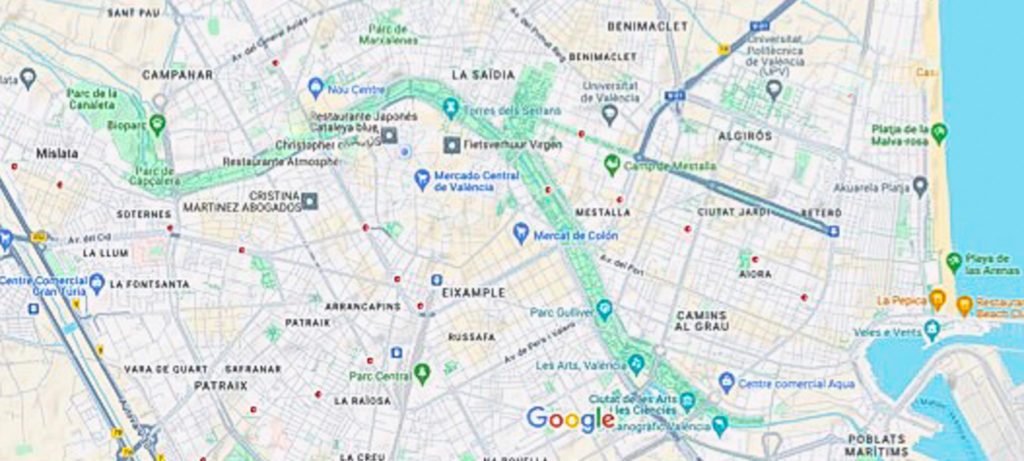
“Quedamos en el río” is a phrase that is often heard in Valencia but if you are a tourist or a newcomer you might find it difficult to actually locate this mysterious river.
“GREEN LUNGS”
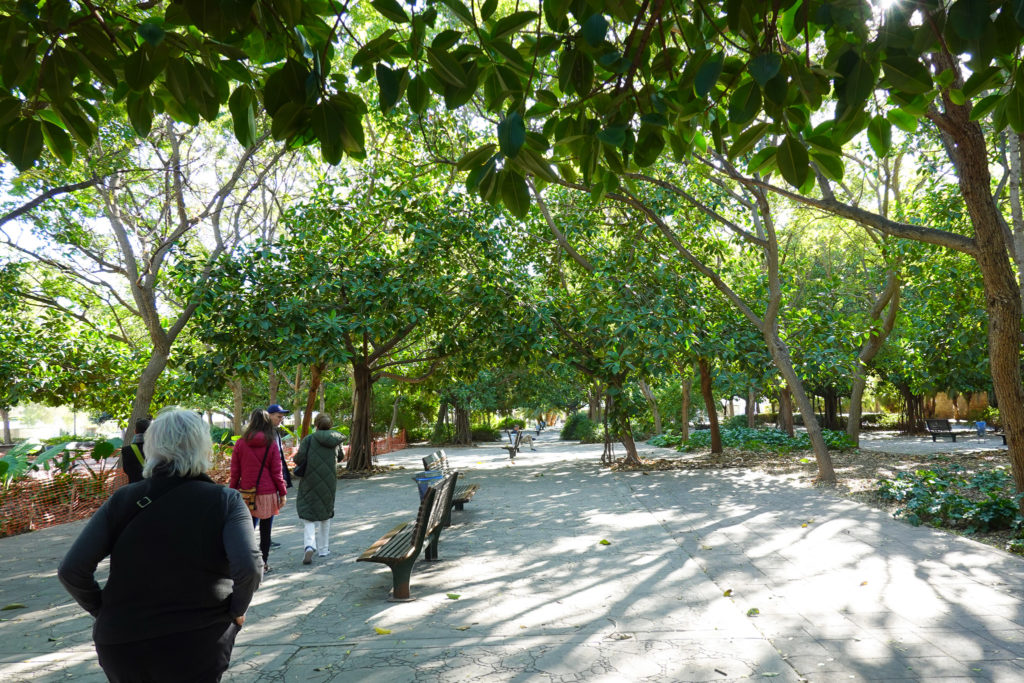
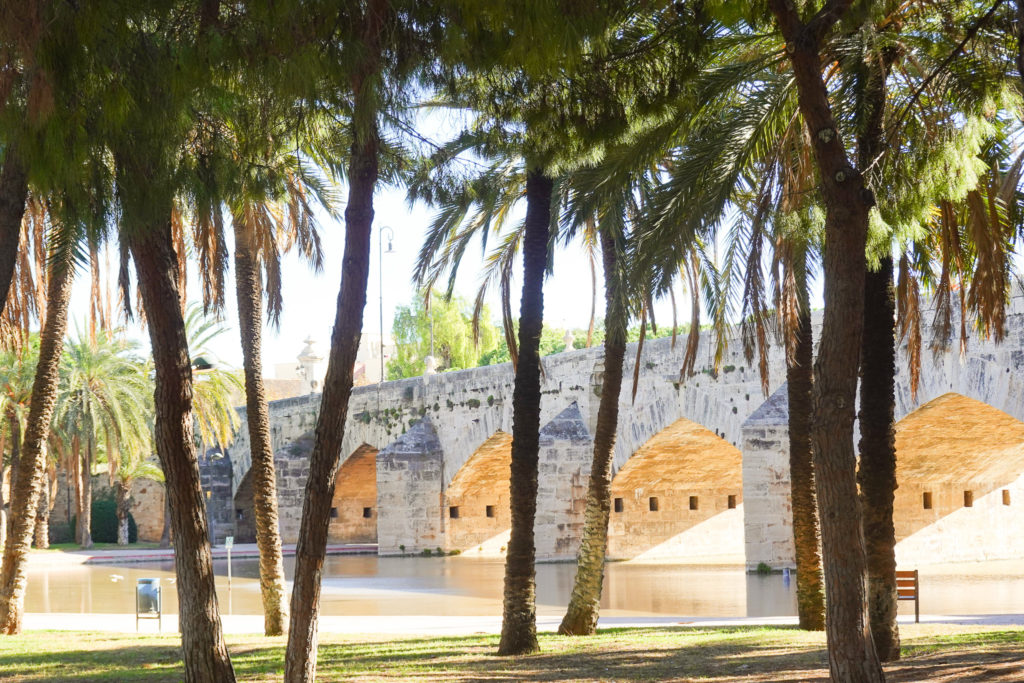
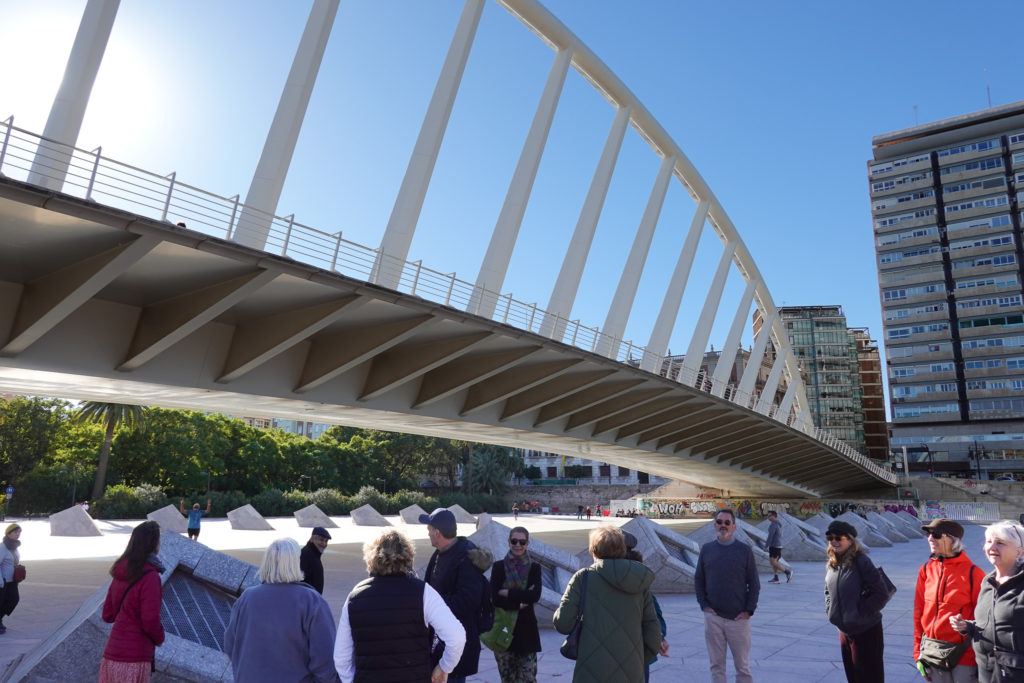
We had a delightful walking tour right here in València this week! We spent a few hours walking along the Turia and learning about some of the many bridges that cross it. The Jardínes de Turia is a huge park that winds through the heart of the city. At 9 kilometers (5 miles) in length, it is the largest urban park in Spain.
Once a river, it is now a green space that is referred to as the “green lungs” of Valencia. There’s a wonderful mix of cycling, jogging, and walking paths, playing fields, trees, fountains, lawns, playgrounds, and cafes. The Turia Gardens end near the Mediterranean Sea, beside the pools of the La Ciudad de las Artes y las Ciencias (City of Arts and Sciences). More on that amazing place another time!
A LITTLE HISTORY
In 1957, Valencia experienced a devastating flood that forever changed the city’s relationship with the Turia River. Nearly three quarters of the city was inundated by floodwater and over 60 people lost their lives. The following year, the city embraced a plan to divert the river around its western outskirts to the Mediterranean Sea.
A park wasn’t the city leadership’s first idea—in an effort to alleviate traffic congestion, they envisioned an elaborate highway system through the heart of the City. But by 1970 the citizens pushed back and protested the highway proposal under the motto “The bed of Turia is ours and we want green!” By the end of the decade, the City approved legislation to turn the riverbed into a park and commissioned a master plan in 1982. The plan created a framework for the riverbed and divided it into 18 zones. Currently, all but one of the zones has been developed.
Once Spain recovered its democracy in 1975, the municipality of Valencia decided to turn the empty riverbed into a park. The first sections were officially opened in 1986.
AMAZING BRIDGES
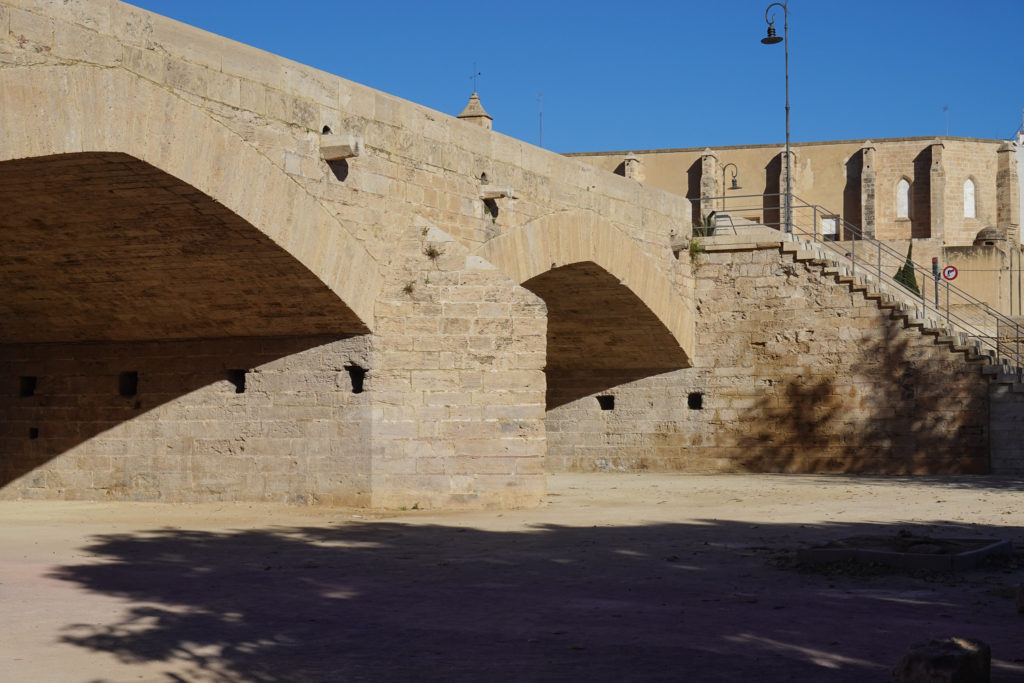
As for the bridges, they are architectural wonders, each with its own story and design. There are eighteen bridges that cross the Turia and they are from different periods and various architectural styles. Five of the bridges are quite old having been built between the early 15th and 17th centuries. Oldest is the Puente de la Trinidad (1402) which was built in the Gothic style on the remnants of a Moorish bridge made of wood.
Then, there’s the striking and very modern bridge designed by the famous architect Santiago Calatrava (a native of Valencia).
We’re definitely planning to spend more time in the beloved Jardínes de Turia!
A long trek, but we made it! We left PA on October 31 and after a quick stop in Detroit, we had a brief visit to Amsterdam during a 9 hour layover. Finally, we’re back in Valencia as of November 1! It’s good to be back!
ANNIVERSARY CELEBRATION
A recent highlight was our 50th Anniversary Celebration in Sacramento over the weekend of September 22-23. We very much appreciate the planning and attention to every little detail by our sons that made the celebration perfect in every way. Mark proved to be an amazing event planner and host extraordinaire! We feel so fortunate to have such talented, thoughtful, and creative sons who each have a wonderful woman in their lives. Each of their toasts meant so much to us (and Shannon’s too!). Here’s a link to the party website including photos (both oldies and current) – https://www.edandbonnie50years.com/. After a wonderful time with family and friends, we spent nine fabulous days in Santa Fe, New Mexico wandering through art galleries and enjoying numerous great meals.
NEW WILMINGTON HIGHLIGHTS
May through October we hung out in New Wilmington, PA and enjoyed lots of kiddo time including frequent sleepovers, gardening, a family gathering in July, and a few dinner parties with new friends.
We’ve also had the pleasure of watching Matt and Maggie as they work to open The Tavern. You can follow the progress on Instagram or Facebook and sign up for their newsletter – https://www.thetavernonthesquare.com/.
RETIREMENT!
Another big change this year is Ed’s retirement. As of November 1, he is 100% retired. Long awaited and much desired, it is also one of those life events that has a significant number of change stress points.
BECOMING VALENCIANOS
We’ve settled in to our apartment in El Carmen, a neighborhood at the very heart of old town Valencia (Ciutat Vella in Valenciano, Ciudad Viejo in Spanish). A first priorty has been to enjoy some of our favorite restaurants. So far, we’ve had hamburgers, amazing pizza, sushi, Thai, and French food – all within a five minute walk from our apartment. There’s a favorite Burmese restaurant on the list for sometime soon! I joined a book club and a “Spanish Coffee” group which involves talking in Spanish for an hour over coffee. Ed is busy studying to get a Spanish driver’s license and we’re new members of a small gym near our apartment. We’ve checked in with our expat friends and made a few new ones too. In our spare time, we’ve been building this website and blog. Life in Valencia is good!
We’re almost 3 weeks in on our one-month stay in Valencia and have put the lingering Covid symptoms behind us. It’s been wonderful to spend so much time in one place. Of course, we’ve explored some of the historical sites and museums and Ed has especially enjoyed the architecture – there’s something different and interesting around every corner. Valencia has two soccer teams, both in the First Division of La Liga and Ed has attended two games – one with me and a second with Michael. It’s taken a bit more time and effort to fall in love with the food in Spain (compared to Portugal), but we’re making progress. Don’t worry, there’s a “Food in Spain” write up in the works!
COSTA BLANCA
In addition to exploring Valencia, we took a 4-day road trip to the beautiful Costa Blanca coast and spent a day on the Mediterranean Sea with Michael and Charlotte (they jumped in for a warm, salty swim!).
NEW FRIENDS
We’ve made some new friends here. First, we met a couple about our age from Seattle who made a permanent move to Valencia about three years ago and love it. Yesterday, we met a woman who is Secretary of the Valencia chapter of Democrats Abroad. She was sitting with her husband at a table outside a small lunch spot (Planet Salad) with a sign encouraging US citizens who might walk by to register to vote. We’re having lunch with them next week. They’ve been here 4 years and love it. The crazy thing about these new friends is that they lived in Dallas across the street from one of our dear friends there. Also yesterday, Ed shared the elevator in our Airbnb building with a Canadian woman who has been working here for a while and has decided to pursue permanent residency because she doesn’t want to go back to the “crazy rat race” that is her life in Canada. Michael and Charlotte met and shared contact information with a few expats and I think they’re meeting up with some of them in Barcelona this week. It’s so much fun to meet such interesting people!
GET AWAY FROM OUR GETAWAY-VIENNA HERE WE COME
Tomorrow, we leave for an anniversary get-away to Vienna! We’ll be there four days and we’re very excited. We’ve booked a food tour (of course), art museums, a Spanish horse-riding performance (Lipizzans), an opera performance (Barber of Seville), and a ballet performance. It will be a whirlwind filled with so many things that we love.