Portugal

Porto: You’re Such a Charmer

It’s been more than three years since our first visit to Portugal. It was love at first sight . . . well, at least infatuation. Lisbon was a delight, of course. But oh Porto, you sly thing. You are romance and beauty, sass and sophistication, energy and repose. Irresistible.

So, naturally, when we realized that our route to and from Madeira would be through Porto, we had to arrange a stop for a few nights. You know, for auld lang syne.

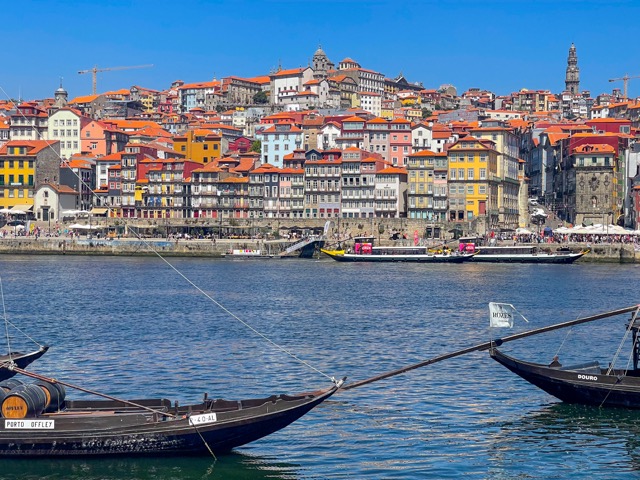
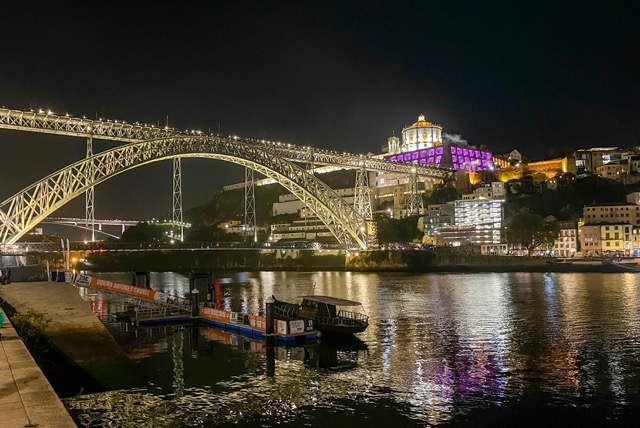
We arrived mid-afternoon of a brisk, fall day. A little travel weary, we chose to nap a bit before preparing to head down to the River Douro waterfront that evening for a taste of Porto night life. Bonnie had a late reservation at a restaurant we’d both loved on our previous visit with a second-floor table looking out across the inky waters to the great port houses lining the opposite shore. It was everything we remembered and more.
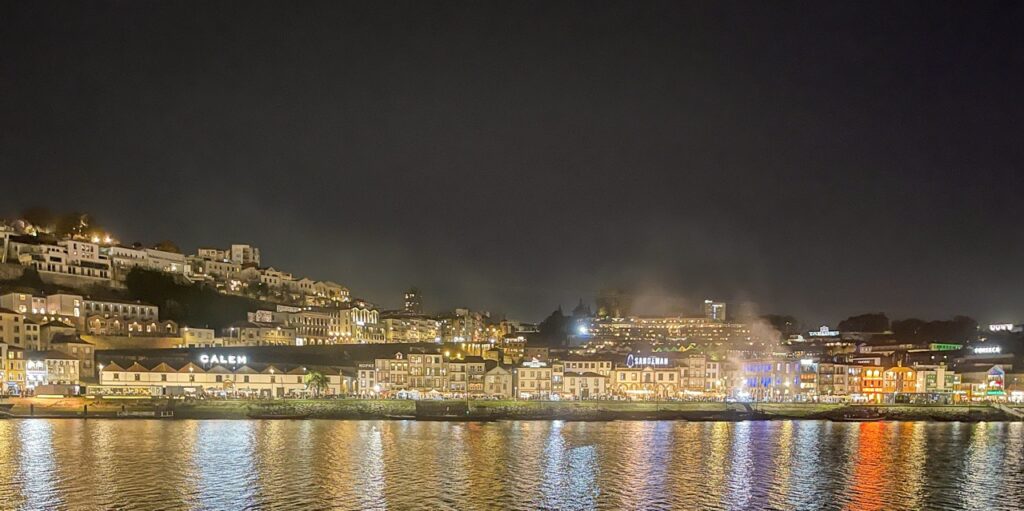
I’ve been trying to think through exactly what it is about Portugal, and Porto in particular, that we find so seductive. There is, of course, the extraordinarily cinematic setting of the city rising from the Douro at its juncture with the Atlantic. Porto fully embraces these waters, incorporating and celebrating its bountiful relationship with both river and sea into a cuisine that seems timeless, comforting, and exquisite all at once. So, we like the food. But what else?
Who are the Portuguese?

Some part of the explanation may have to do with our expectations. Our previous mental images of Portugal have been pretty limited. Afterall, this is a country that was left well behind the rest of Europe while enduring the tyranny of a dictator until the late twentieth century. Only in the most recent decade or so has interest in Portugal begun to rise in the consciousness of Americans seeking a more civil society to call home. Unlike the traditional tourist destinations, Portugal has been largely an afterthought. And so, we fill in with vague impressions. Wasn’t Portugal one of those debtor countries the EU saved from bankruptcy? Isn’t Portugal part of the third world?

Well, no.

While it is certainly true that Portugal was a very late entry to the European Union and has been playing catchup since its “Carnation Revolution” in 1974, if that is your only frame of reference you are overlooking a culture that was at the forefront of western European expansion around the world. In fact, Portugal led the way in the “Age of Discovery” reaching its zenith in the 16th century before enduring a gradual slide into the background of western politics. Having once been one of the great empires of Europe, however, has left a legacy that finds expression in a variety of nuanced cultural qualities. For example, we have been startled by the Portuguese emphasis on literacy and reading, and their robust contribution to the western canon of literature through authors such as Fernado Pessoa, or more recently, José Saramago.
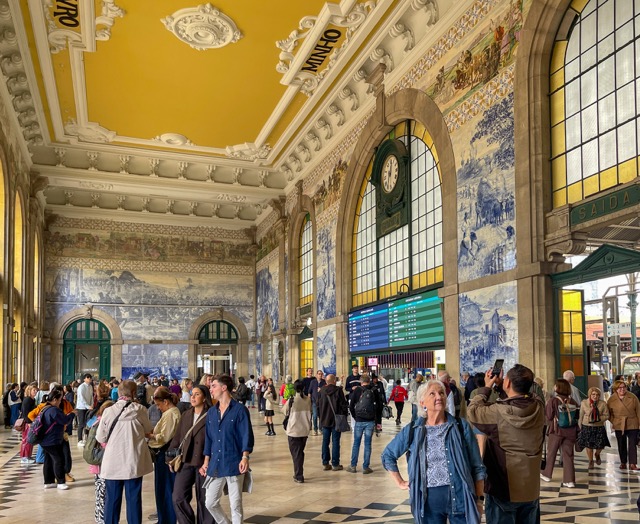
Leading with Literature

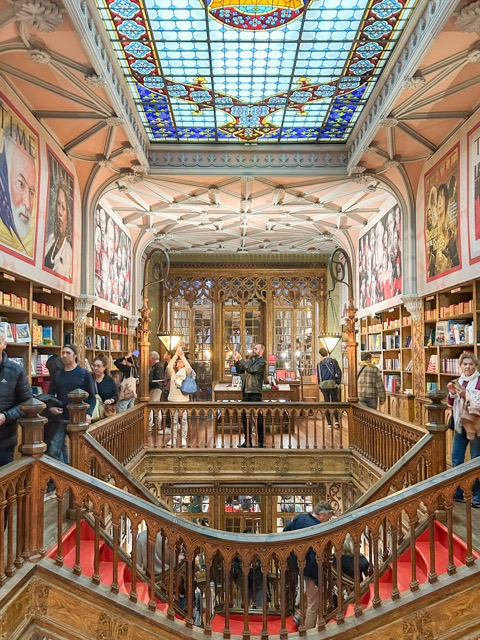
Small bookstores abound throughout Porto with one in particular, Livraria Lello, being celebrated as “the most beautiful bookstore in the world”. Well, that’s intriguing.

Browsing the books in Livraria Lello has become such a tourist attraction in recent years, that the proprietor decided to sell timed entry tickets to control the crowds. (Wonderfully, the value of the ticket is applicable to the purchase of a book!) Bonnie reserved our tickets a month before the trip, and, of course, she booked the “platinum” tour which includes a staffer as guide and access to the basement vault where the literary treasures are kept. I must confess to having pretty low expectations for what I anticipated to be a kitschy tourist trap kind of experience. And it is that. And somehow much more. I found it impossible not to be caught up in the passion for books that is at the core of the business. And when our guide produced for our inspection a first edition of Moby Dick, swooning seemed a possibility. Unfortunately, it was not sale.
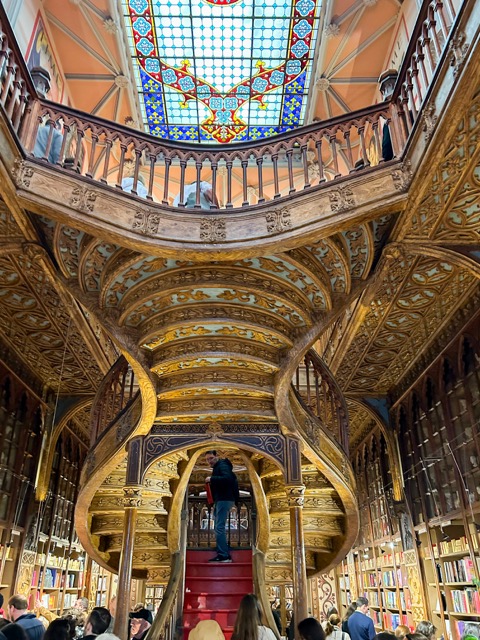
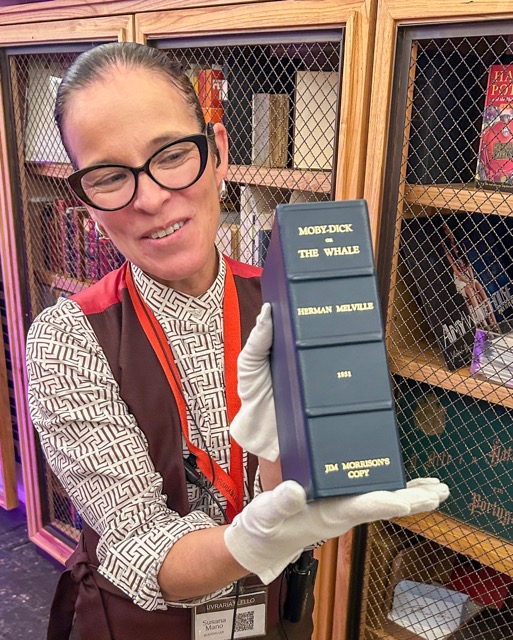
I had no difficulty spending the value of our tickets, and then some, including the purchase of an unexpected treasure we’re planning to share with the family over our New Year’s holiday together (to be revealed in a post-holiday blog post).

Aesthetic Sense and Sensibility

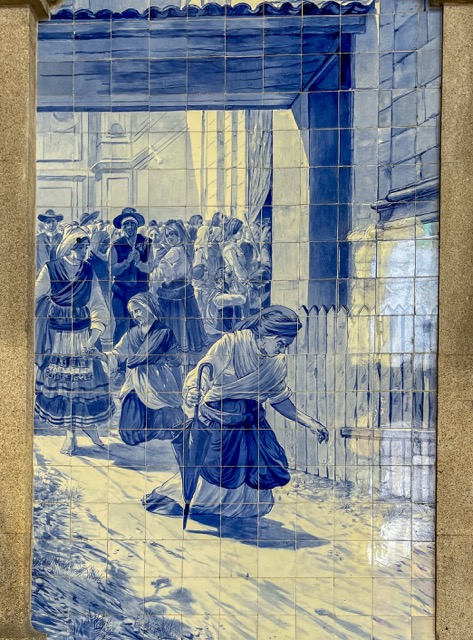
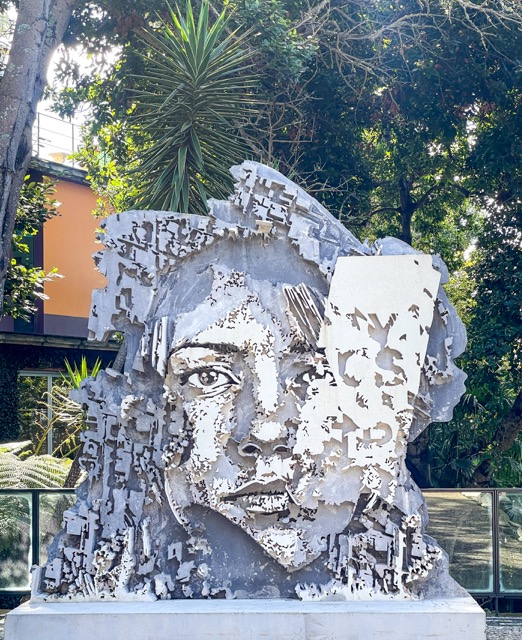
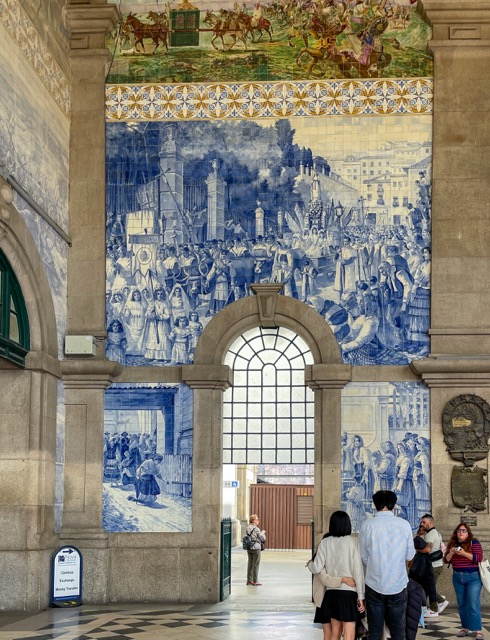
Another of Porto’s special qualities is the ubiquitous display of public art. Everywhere you turn there are sculptures, reliefs, and glorious tile panels reflecting the history and culture of the people. Slowly, we have also begun to appreciate the quality and subtlety of design in the architecture, interiors, and urban planning all contributing to an ambience of calm and wellbeing, despite the frenetic pace of a dense urban environment. Intrigued, we realized that we had not spent any energy really exploring the art and design side of Porto and resolved to visit one of the more important museum complexes in the city devoted to modern art and design: The Serralves Foundation.
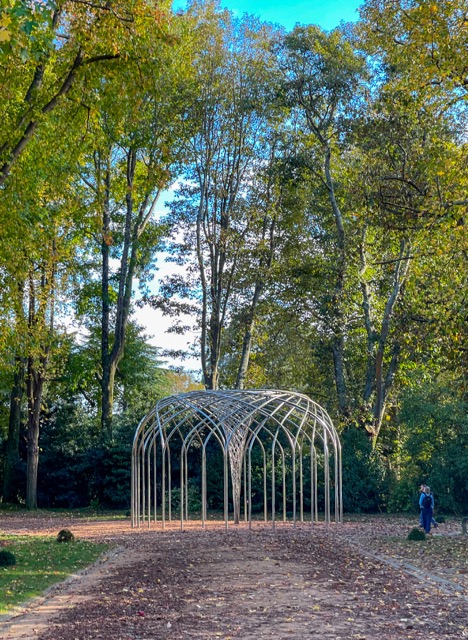
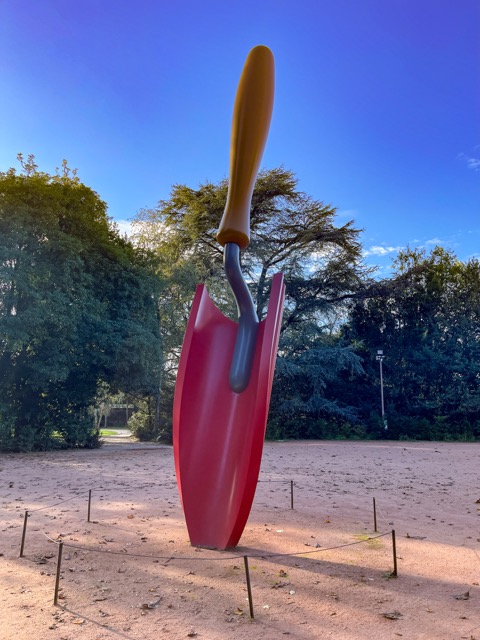
The Serralves sits on more than 40 acres of park grounds filled with art. It is an institution dedicated to the advancement of the liberal arts with a breadth and scope of activities that are so ambitious it is hard to think of a comparable organization in the U.S. We spent the whole day there, experienced only a portion of what’s on offer, and look forward to going back. Here is a place where seemingly every exhibit and experience is designed to challenge your preconceptions, broaden your vision, and deepen your understanding of humanity. That evening was filled with quiet, contemplative conversation as we processed our new understanding of what it means to be Portuguese.
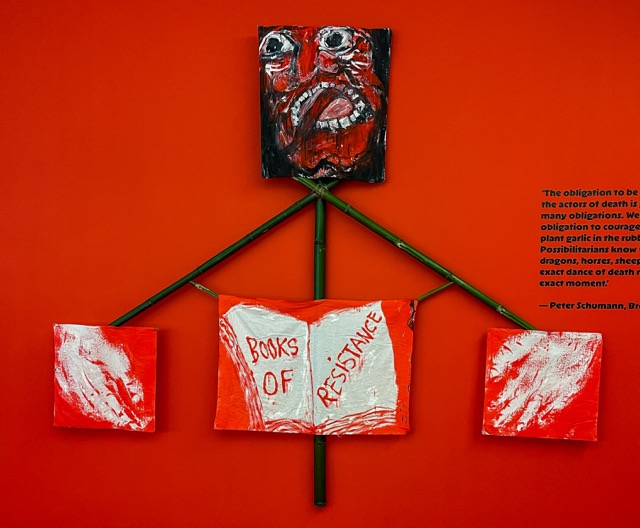
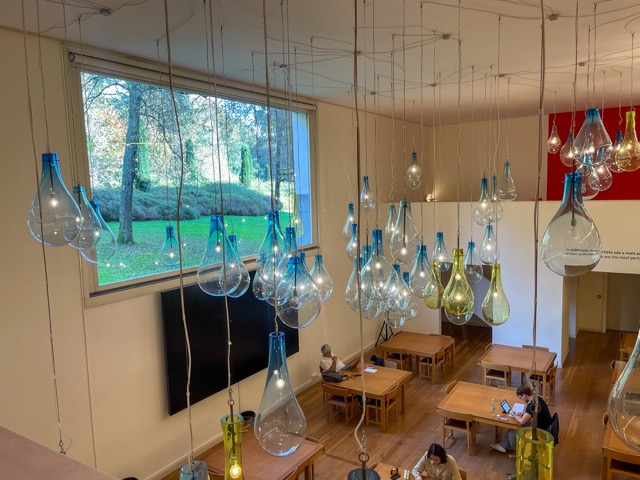
Our last day of this brief visit was a return to the prurient, hedonistic indulgence that the whole world associates with Porto: port wine.

WOW, just wow

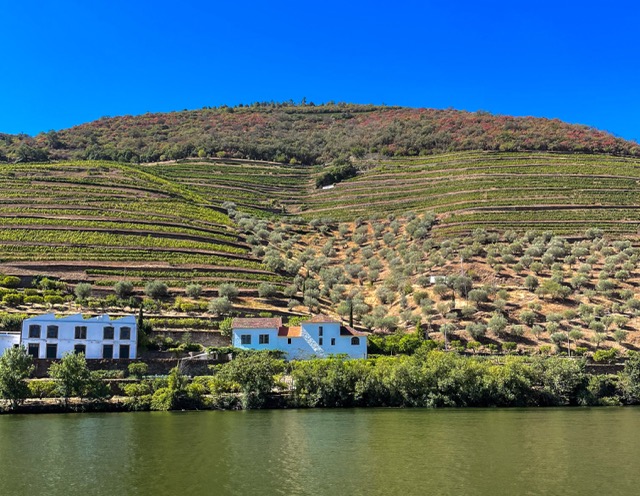
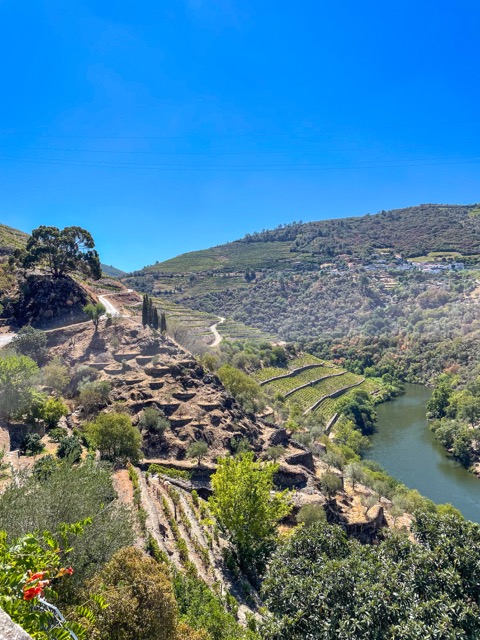
If you have even a passing appreciation for vintage port, you are familiar with the names – Taylor’s, Cockburn’s, Dow’s, Grahm’s, Churchill’s, Sandeman, Fonseca – the list goes on. These great houses of port are all congregated together, opposite the city of Porto, on the south side of the Douro River, in buildings that have been used to age and distribute this coveted juice for centuries. And here, on our previous visit to the city, we’d spent an entire day wandering from one storied vintner to another tasting our way to bliss (and a mild headache). On that occasion, however, I had been a bit non-plussed by a massive, barricaded construction site smack in the middle of all that glorious indulgence. It turns out that project was the now completed World of Wine (WOW) cultural district. This is a wonderfully designed and executed complex of buildings and terraces that feature seven museums, ten restaurants, shops, and a school of wine.

The Wine Experience museum claims the title of “best wine museum in the world” (hyperbole might also be a feature of Portugues culture) and we were hard pressed to disagree after spending far longer wandering its beautifully executed exhibits than we had anticipated. We also took in the Cork Museum before sitting down to enjoy a late lunch on a terrace looking back at the city across the great river. The WOW experience should not be missed if you are ever able to visit this fascinating city.

So, what is it that makes this place so seductive? I’ve come to think that what we experience in Porto is a culture which is the product of empire humbled. That is, the Portuguese are extremely proud of their heritage as a catalyst of the Age of Discovery and the empire that resulted but also feel a bit of melancholy over its loss and their failure to rise to such a place in today’s world. So, indulging in a bit of pop psychology, you have a robust cultural heritage combined with an introspection born of loss that is rare in the western world. The result, it seems to me is a sophisticated, thoughtful approach to life born of deep reserves of cultural insight and experience. Portugal is on the rise. You can sense it. There is a growing confidence and energy that combines with inherent beauty and intelligence.

It’s a very attractive proposition, old girl.

Porto: You’re Such a Charmer Read More »
A week in Paradise

Touchdown in Madeira

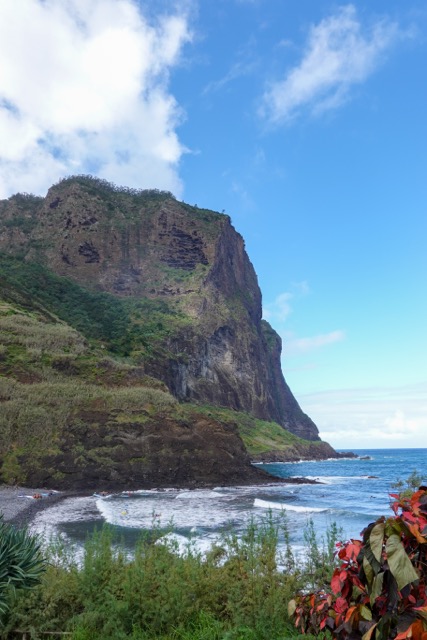
It’s a volcano. A vast undersea mountain with only the top rising from the sea, and like most mountains, it’s a rugged, irregular landscape of peaks and gorges that reach right down to the shoreline. So, our introduction to Madeira began with a minor adrenaline rush. As the plane swooped in low over the Atlantic, it felt like we were landing on a cliff edge – which, it turns out, we were. As the 737 settled into the final approach, we looked out the starboard windows to see a massive cliff streaming by seemingly just a few meters off the wing tip. On the port side, there was nothing to see but the vast blue Atlantic. Later, we learned that the Funchal Airport runway is considered one of the most difficult in the world — pilots need special training to receive certification to land there. Thankfully, that little detail was revealed after landing when it was a bit easier to digest.

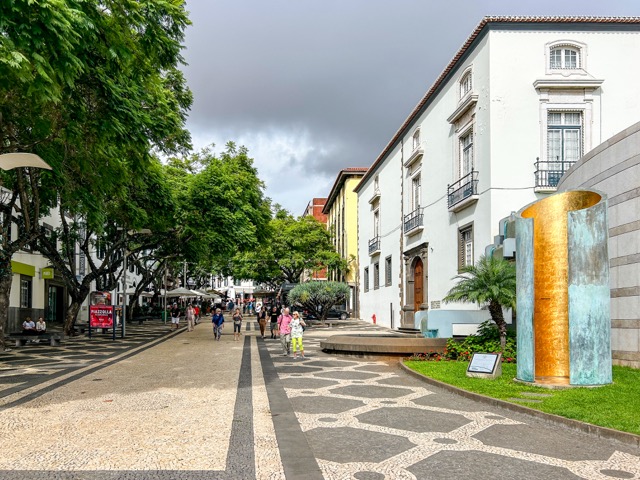
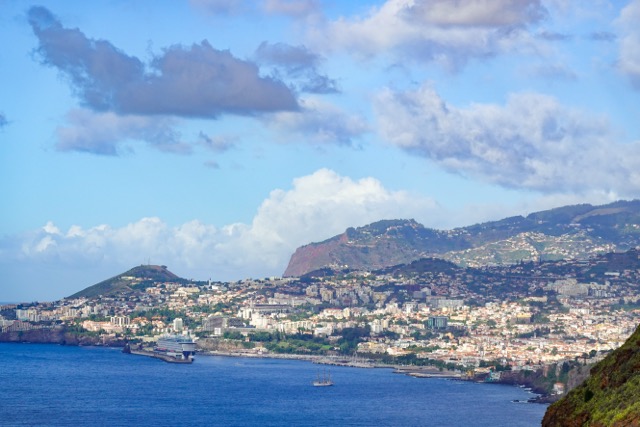
The drama soon gave way to familiarity. Arriving in Funchal (Madeira’s capital city), we stepped out of the taxi into the soft island air and onto that beautiful, patterned black-and-white stone paving we’d loved in Lisbon and Porto. It was a quiet little “welcome back to Portugal” under our feet.  

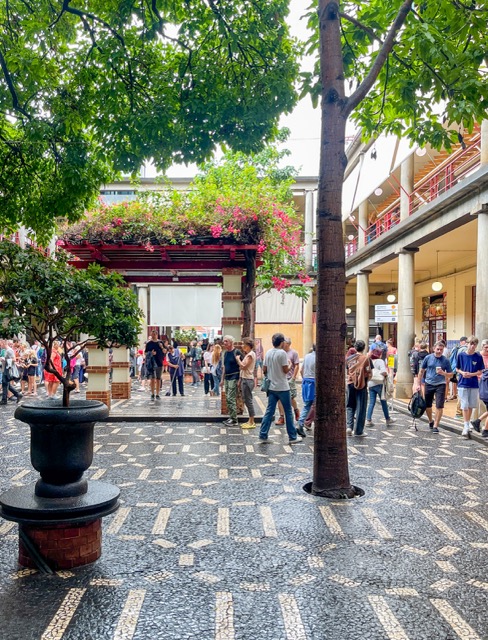
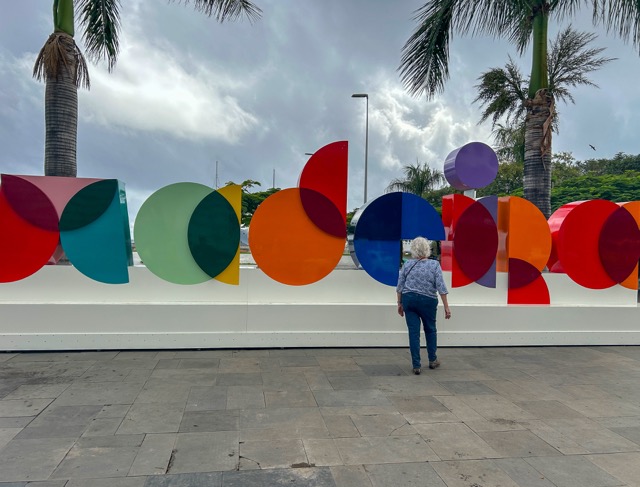
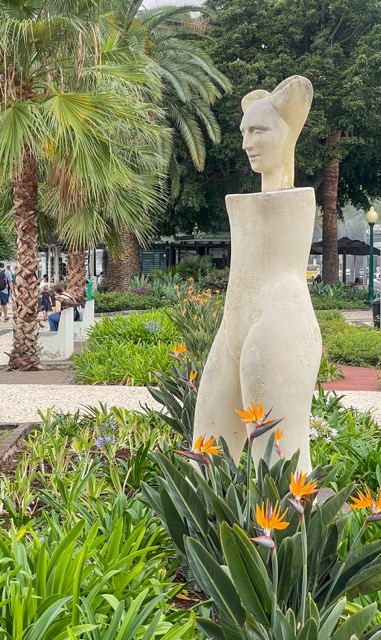
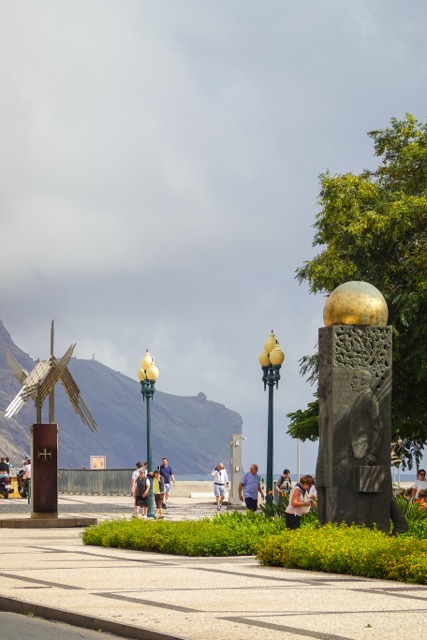
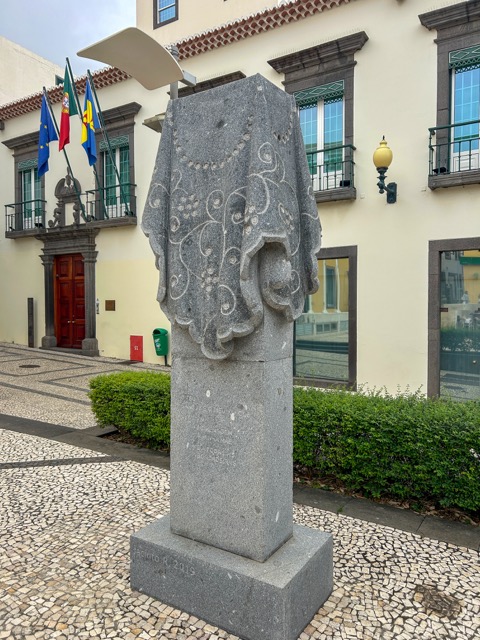
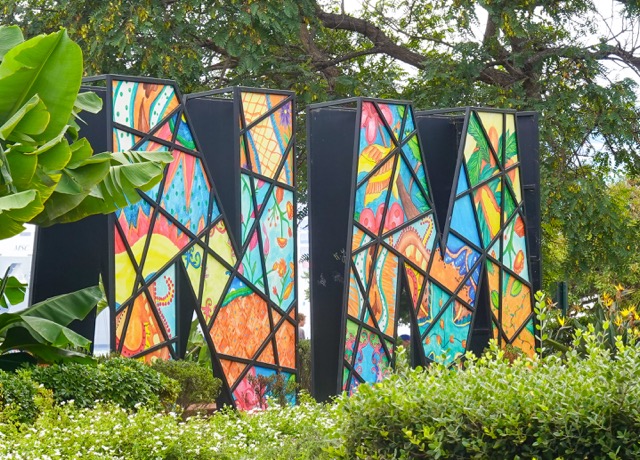
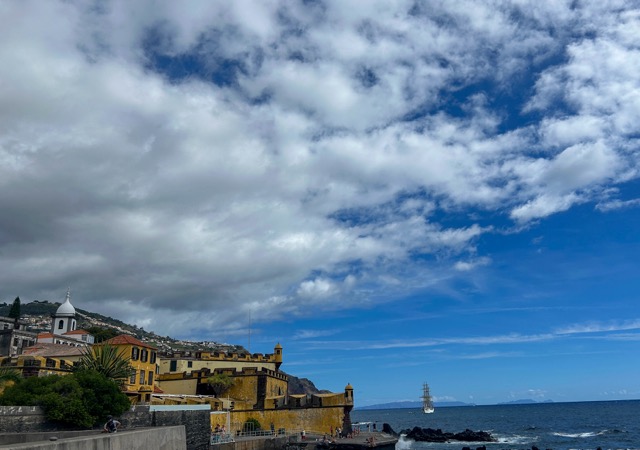
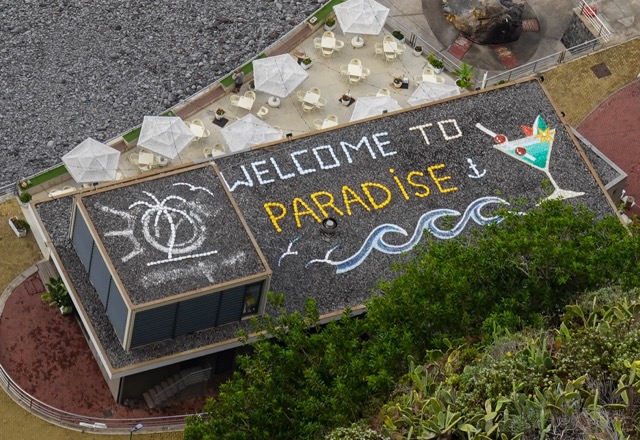
We arrived too early to check in, so we stashed our bags and headed out to explore. Funchal immediately charmed us: cobbled streets, flowering shrubs, the hum of cafés, and a waterfront dotted with public art that felt like an open-air gallery. When we finally checked in later that afternoon, the sea breeze and general vibe of Funchal sealed it: we were going to like it here.

A Market and (of course) a Food Tour

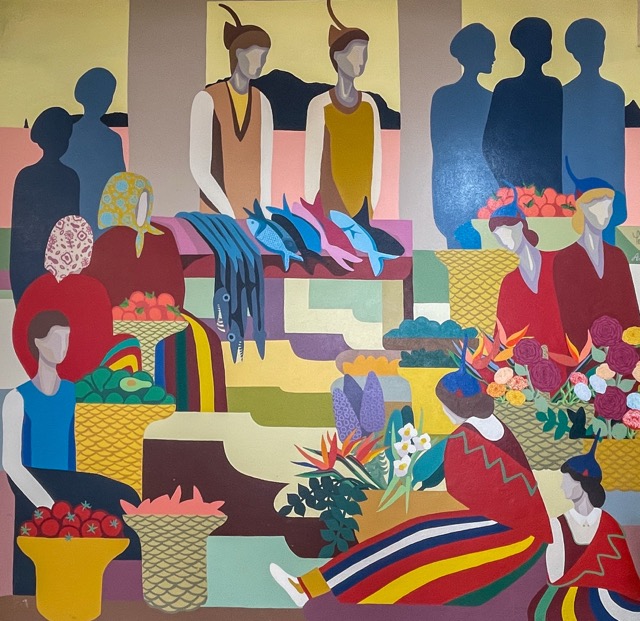
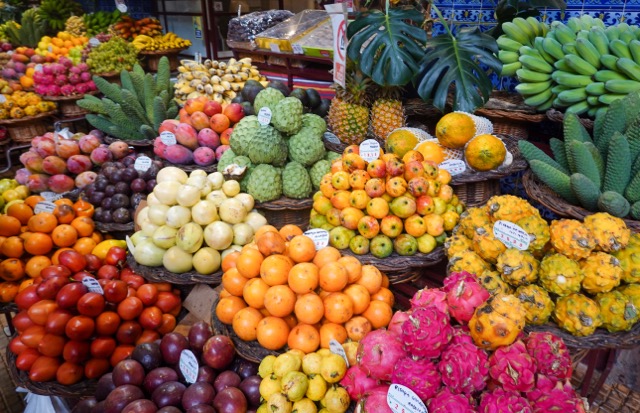
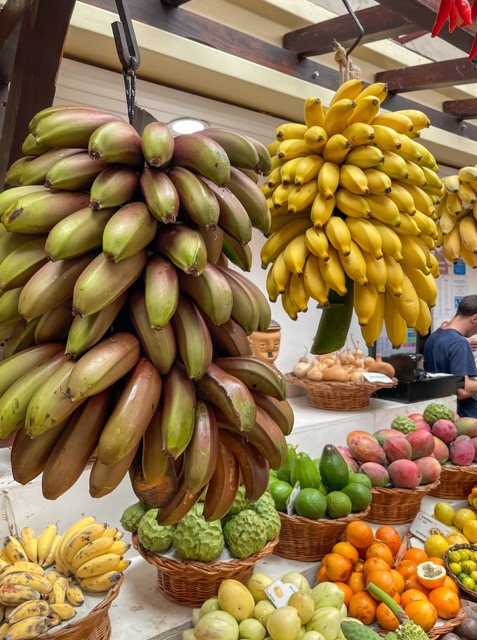
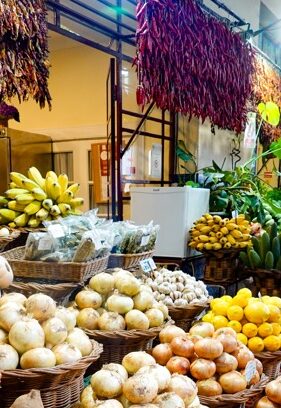
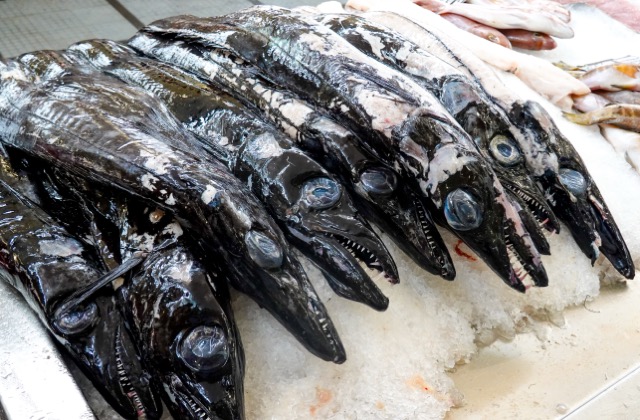
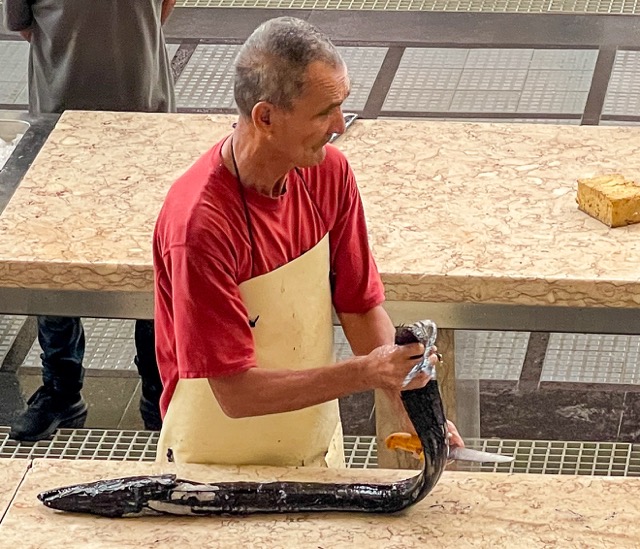
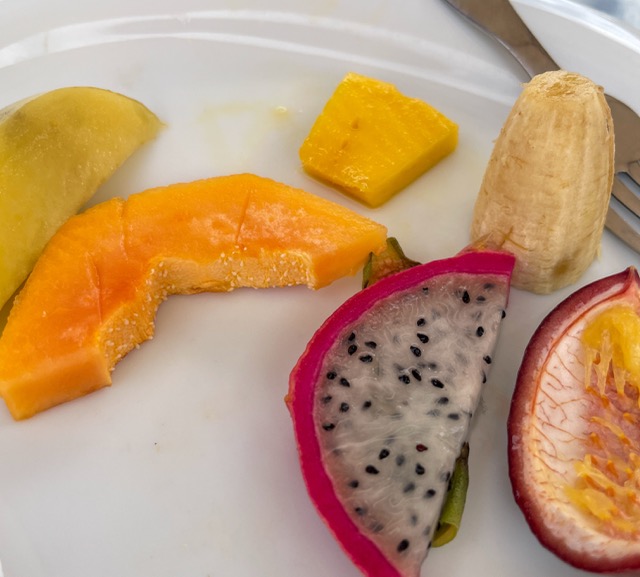
Our first full day in Funchal began at the Mercado dos Lavradores (Farmer’s Market) which turned out to be a feast for the senses in every possible way. Tables overflowing with tropical fruit – bananas, mangoes, dragon fruit, passion fruit, guava, papaya, figs, tangerines, and a few vegetables we couldn’t name. And then, the black scabbard fish (espada) caught us off guard – long, thin, black, and with eyes that looked like a deep-sea monster. The ugliest fish we’ve ever seen. (Also, as we’d soon discover, one of the tastiest.)

The afternoon was devoted to a food tour that turned into one of the highlights of our trip. It began with a proper lunch:

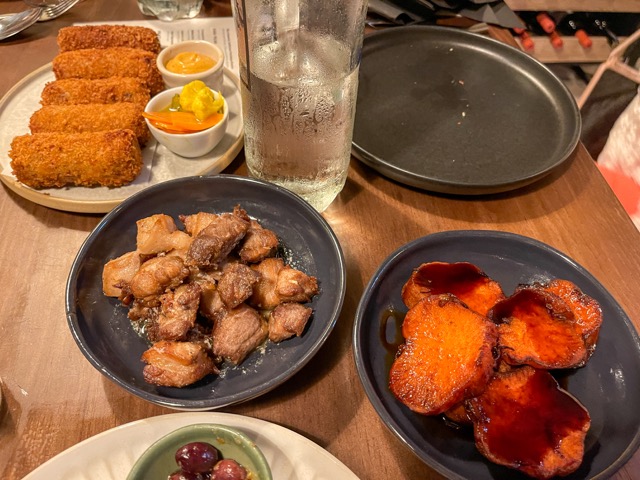
  • A perfectly crisp croquet stuffed with savory meat.
  • Carne em Vinha d’Alhos, tender marinated cubes of pork.
  • Batata-Doce com Mel de Cana, an addictive sweet-potato and molasses combination.
  • Atum Salpresado, salty cured tuna with all the rich saltiness of the Atlantic.

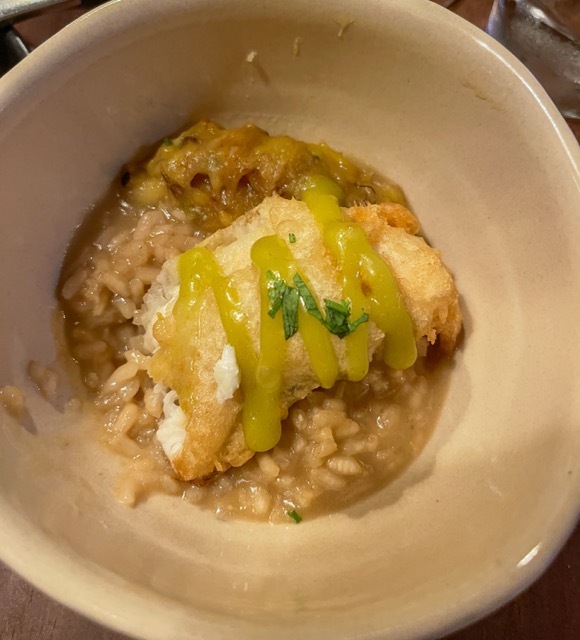
The main course: Arroz de Lima com Espada e Banana — a filet of black scabbard fish over a citrusy rice and topped with a banana concoction. Sounds odd, tastes amazing.

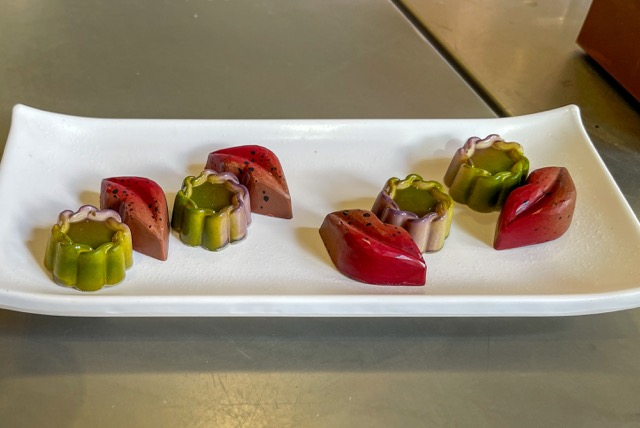
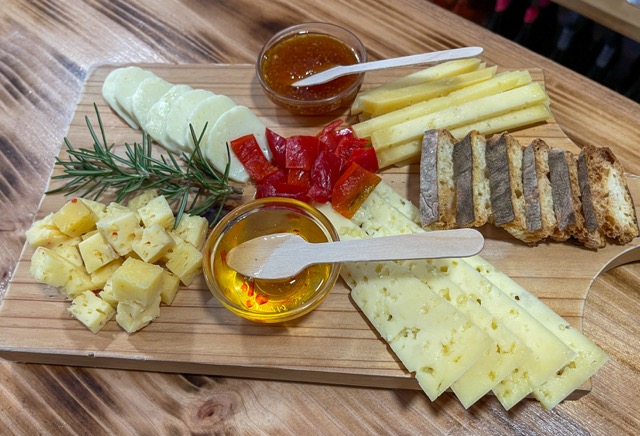
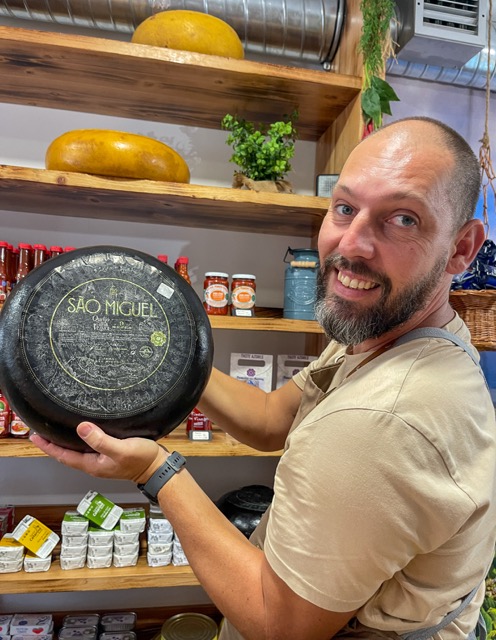
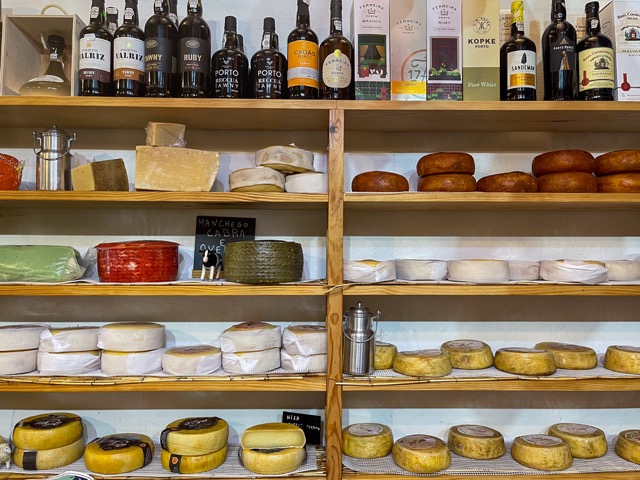
After lunch, we walked (slowly) to our next stop: Uau Cacau, where we sampled artisanal Madeiran chocolates that instantly earned luggage space for the trip home. Then came a tasting of fragrant and colorful tropical fruits and a stop at Fábrica Santo António (a local institution) for traditional Madeiran cookies — crumbly, subtly spiced, old-school good. A cheese and wine tasting at a shop devoted entirely to products from the Azores (note to self: visit the Azores soon!) was our next tasting and that was followed by a final stop for a  glass of poncha, the local sugarcane-rum cocktail. By the end of the day, we were equal parts full and blissful — exactly how every food tour should leave you.

The Blandy’s Experience: Stairs and Sips

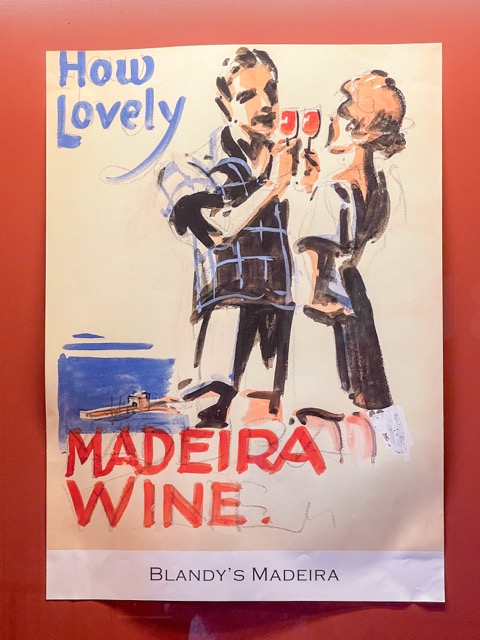
Sticking with the theme of gastronomic self-indulgence, we had booked the Platinum Tour at Blandy’s, the grand dame of Madeira wine for our second day in Funchal. We thought it would be a gentle walk around the winery and a few tastings — you know, the usual. Instead, it was a full-on education (with a cardio bonus).

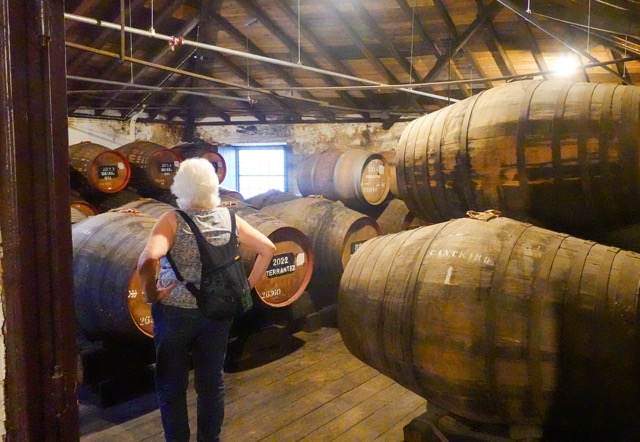
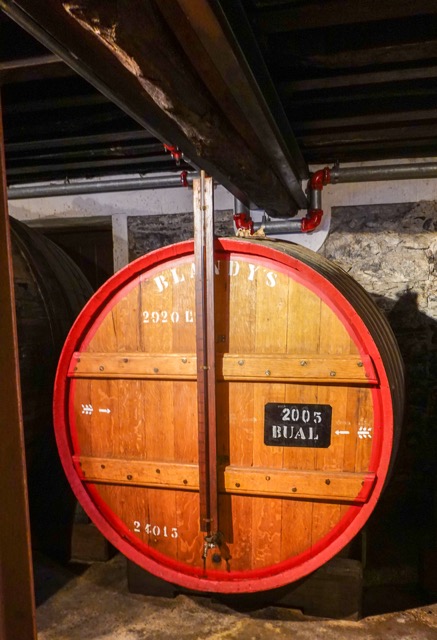
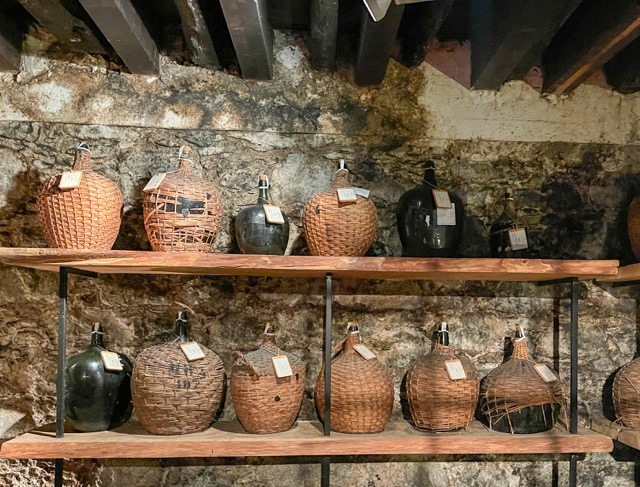
The tour led us up flight after flight of old wooden stairs, each level revealing another layer of Madeira’s winemaking process. Our guide unlocked one after another storage room filled with aging barrels — some decades old, their wood darkened with history and sugar. The air smelled faintly of caramel, oak, and patience.

We quickly realized we’d been underestimating Madeira wine our entire lives. Up to this point, we’d used it for cooking (sorry, Madeira) or occasionally sipped it as a sweet after-dinner treat. But Blandy’s changed that narrative completely.

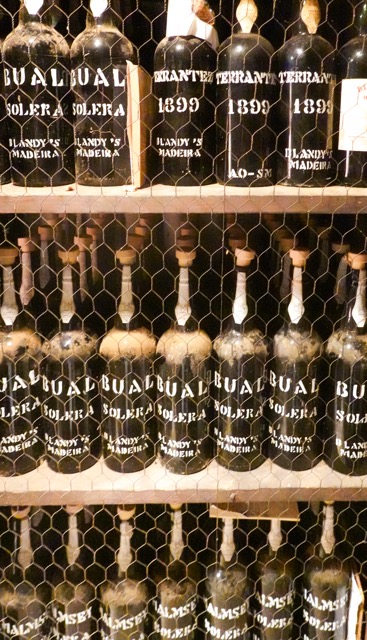
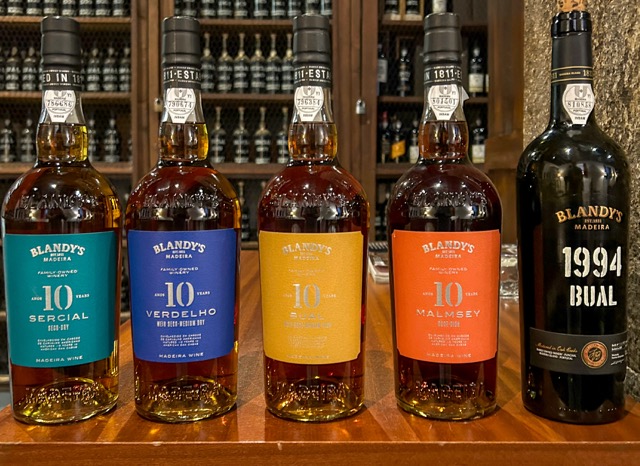
We learned about the different styles of Madeira — from the driest Sercial, served chilled as an aperitif, to the rich Malmsey, that dessert-worthy elixir we already knew. In between are Verdelho and Bual, each with its own unique taste. Who knew there was a whole spectrum of Madeira wines meant to start the evening, not just finish it?

Standing among those timeworn barrels, we could practically taste the island’s story — heat, salt air, and centuries of craftsmanship condensed into amber liquid. By the time we made it back down the stairs (carefully), we had newfound respect for the drink, and a mental note to replace “cooking Madeira” in our pantry with the real thing.

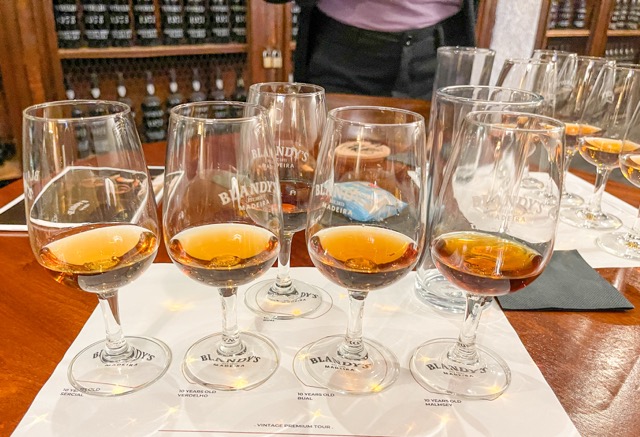
The tasting itself was, naturally, the reward: four glasses lined up from dry to sweet, each one delicious. A fifth glass capped off the experience with one of Blandy’s vintage reserve offerings. We lingered, savoring the shift in flavors — citrus and nut on one end, honey and fig on the other — until we had to leave so the staff could close the place and go home.

The East-Side Trek

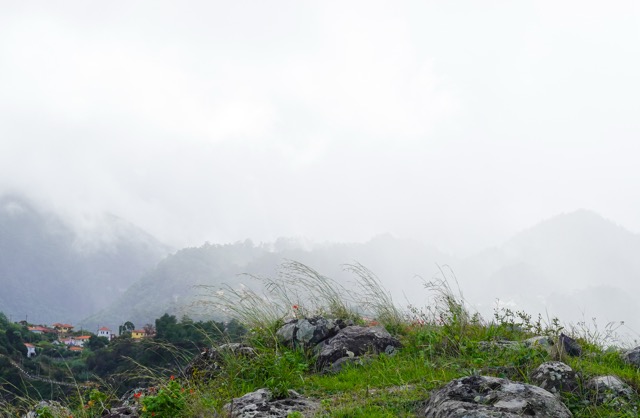
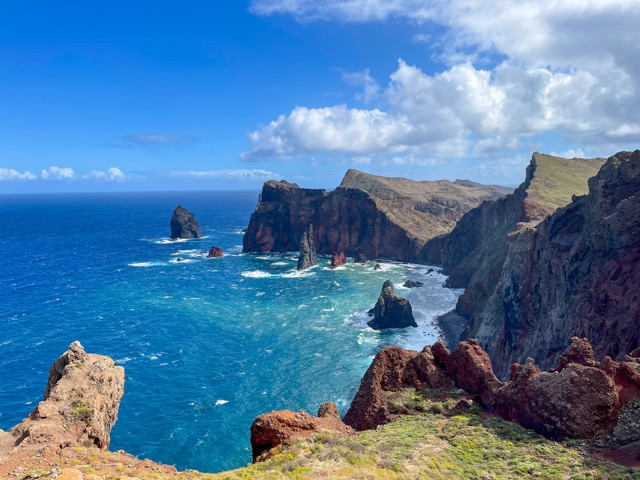
One morning, we set off early to explore Madeira’s east side, a day stitched together by villages, forests, and coastal drama. Our full-day trek around Madeira’s east side took us to ridge lines where the cliffs dropped straight in cobalt water, past waterfalls, and through misty laurel forests. It also highlighted for us one of the wonders of Madeira: the road building. Madeira’s volcanic geology means there are almost no flat surfaces anywhere on the island. A mountain ridge runs through the center of the island with peaks above 6,000 feet. In the face of these challenges, Portugal has built a highway and road network that stitches together the whole island. Some roads seem to spend as much time in tunnels as in the open and there does not seem to be a ridge or valley that they have not found a way to bridge one way or another.

We started the day in Machico, the site where the Portuguese first landed in 1419. It’s a mix of beautiful beaches and lush green mountains.

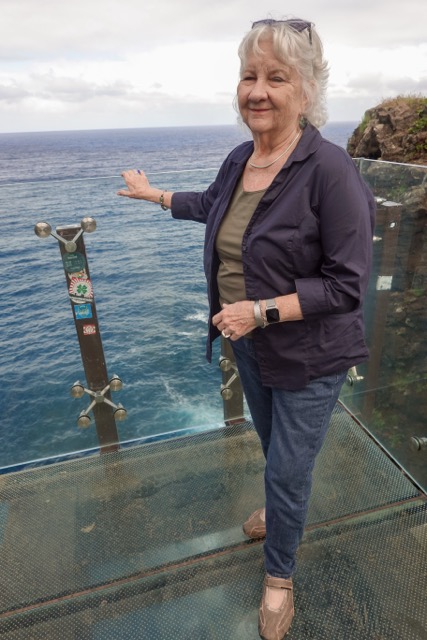
Perched on the island’s north coast, the Faial Glass Walkway offers stunning views of the north coast and the Atlantic Ocean from its two glass walkways that jut dramatically over the ocean.

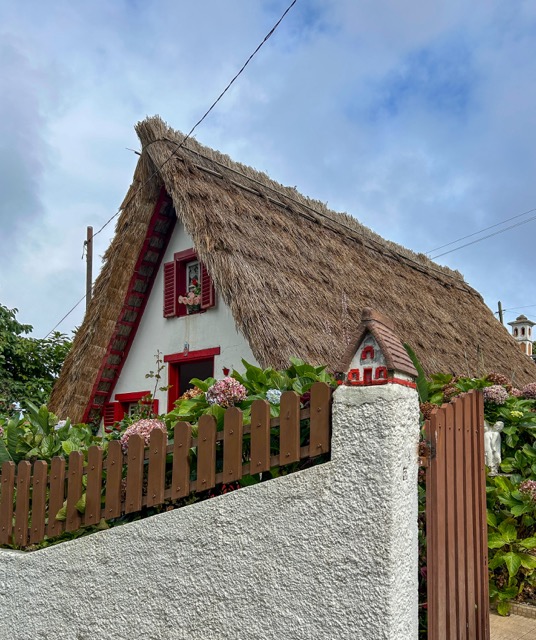
Santana, a postcard village of small, triangular, thatched-roof houses has a quiet and gentle charm  with colorful hydrangeas and bougainvillea spilling over stone walls.

In Porta de Cruz we visited a rum distillery where they process the local sugar cane into an award winning Agricole Rum. That designation distinguishes this product as one created directly from the cane syrup unlike more than 90% of the world’s rum which is distilled from molasses. The difference is very distinctive – a smooth, complex, aromatic rum that could become a habit!

The heart of the Laurissilva forest, a UNESCO World Heritage Site since 1999, has trees that look ancient enough to have seen the first explorers land and the air smells faintly of eucalyptus and rain.

Monte Palace Gardens –  Afternoon in the Clouds

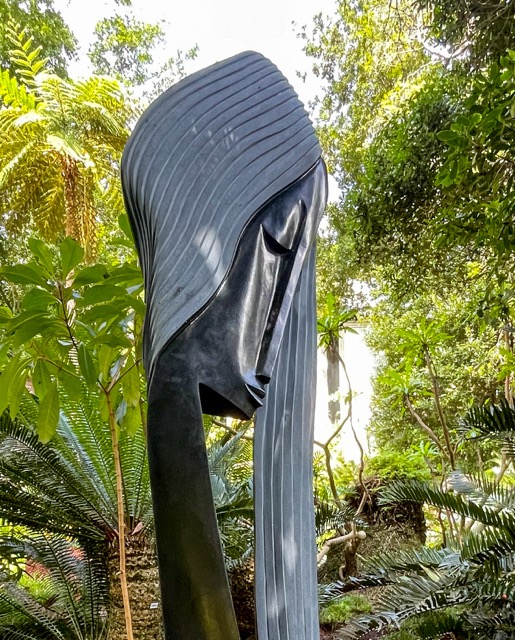
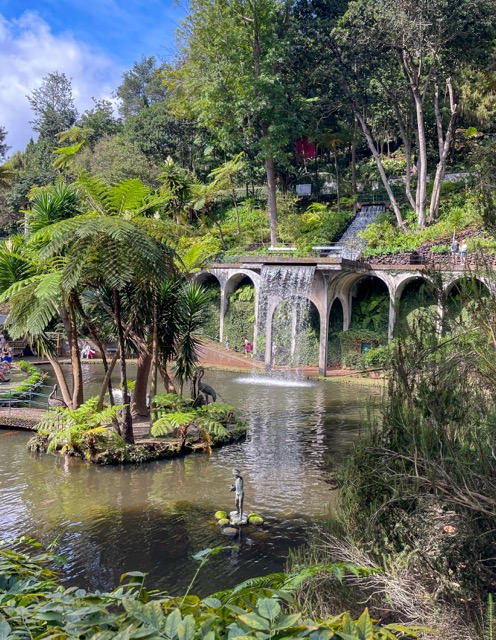
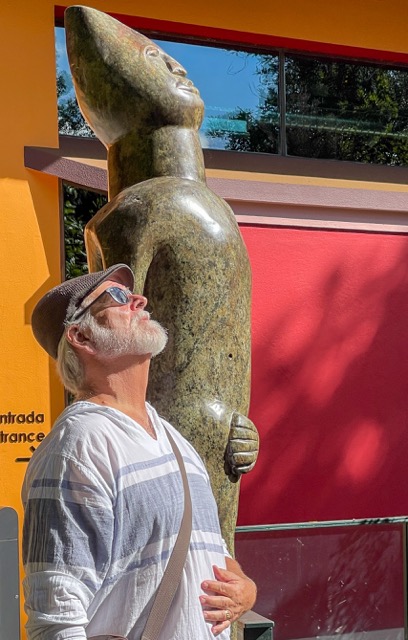
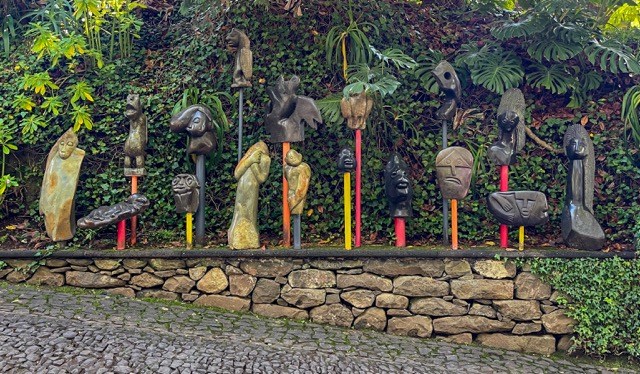
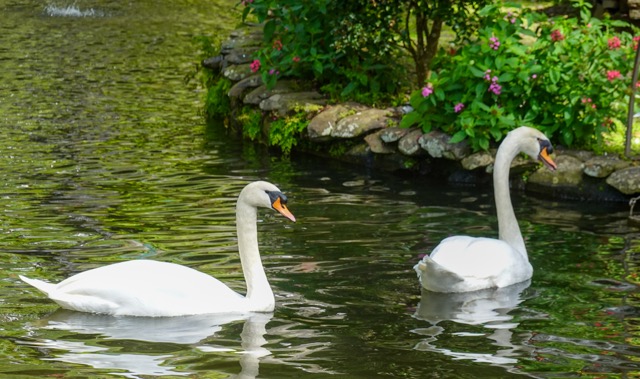
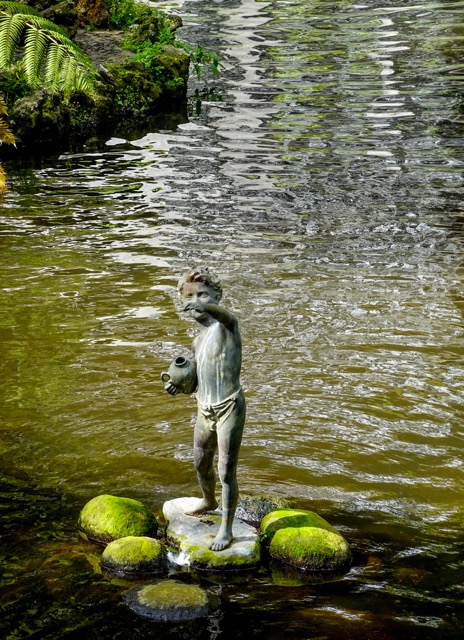
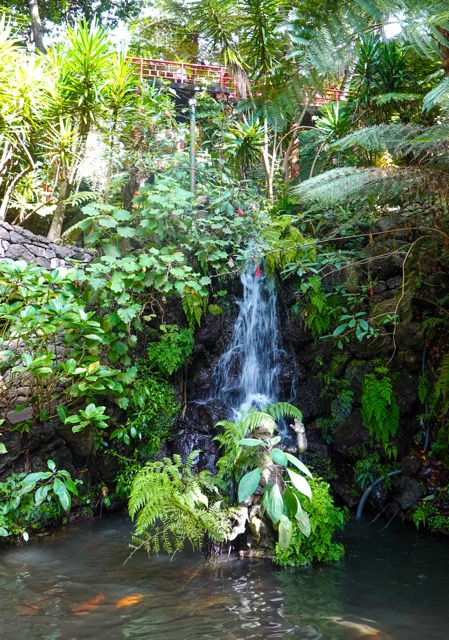
Unfortunately for Ed (but okay by me) the cable gondola was not working for our trip up the hillside the next morning. So, we shared a taxi with a German couple that were heading to the same place. While not high in the air, the on-the-ground approach, turned out to be a windy, twisty, topsy-turvy experience. At the top: the Monte Palace Tropical Garden, a dreamscape of mossy paths, koi ponds, tiled murals, and exotic plants everywhere. The art museum surprised us with contemporary pieces nestled among centuries-old stone. Like all the rest of Funchal, the gardens were created on a hillside with water cascading from all angles and paths that involve steps, switchbacks, bridges and stairways. Everywhere we turned there was art – sculpture, carvings, and ceramic tile panels. The Monte Palace Gardens would be enough to justify a trip to Madeira.

One Last Coffee with the Atlantic

We’d planned to end our trip on the water — a whale-watching excursion to spot the dolphins and pilot and sperm whales that cruise just off Madeira’s coast. But the sea had other ideas: choppy waves, canceled boats, and a brisk Atlantic wind. So, we’ll just have to come back — to finally do that cable-car trek up the mountain, and to set out on calmer seas for a glimpse of those amazing sea creatures. A pretty good excuse, we think, to return to this lovely island that has made our “let’s go back” list. As we looked down from the plane window, the island outlined against the vast blue Atlantic and that infamous runway stretching boldly over the water, we gazed at the green peaks thankful we had been privileged to visit this unique place.

A week in Paradise Read More »
A FOODIE’S PARADISE

Here’s the previously promised (and long awaited?) chapter on our foodie adventures in Lisbon and Porto. We hope you enjoy it. Bom Apetite!

BACALHAU

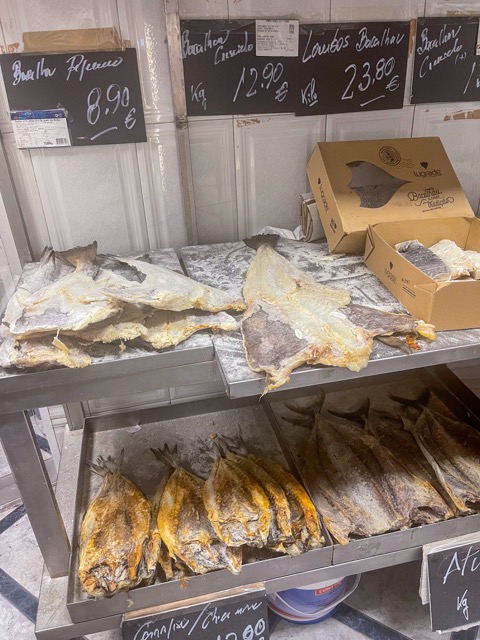
The story of Portuguese culinary traditions must begin with Codfish (Bacalhau). Cod is a big deal in Portugal. It is called “fiel amigo” (faithful friend) and I’ve read that every Portuguese restaurant has at least one dish made of codfish. (I can attest to this based on my limited sample size.) I’ve also read that 20% of all cod caught around the globe are eaten in Portugal – an average of 35 kilograms (77 pounds) per person, per year. That’s about 1 ½ pounds of cod every week!

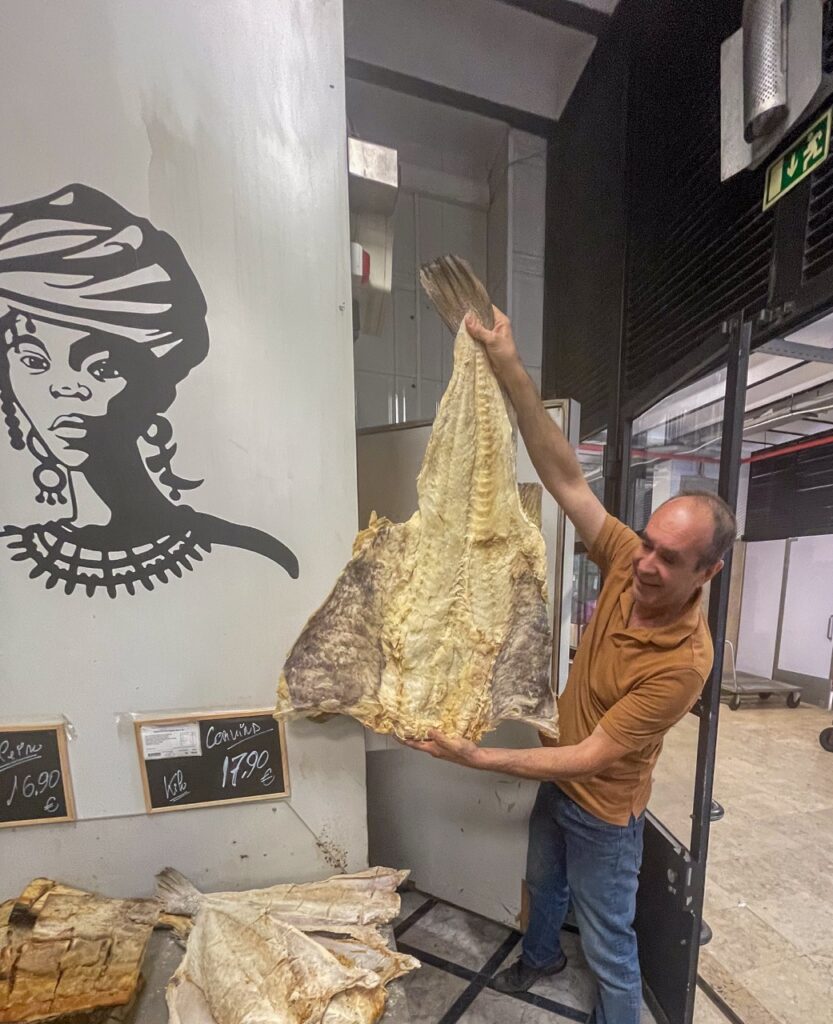
What the Portuguese call “bacalhau” is North Atlantic cod that has been salted and dried. 95% of the 77 pounds per person referenced above is in this form – salted and dried. Fresh cod is a relatively new thing in Portugal. Seems crazy, right? Here’s the story…

• There are no cod off the Portuguese coast. All the codfish eaten in Portugal is caught in the cold waters off Norway, Newfoundland, Iceland, etc.

• Portuguese have been fishing cod off the coast of Newfoundland since the sixteenth century during the Age of Discoveries.

• To preserve the cod for the long trip home, salt was used. By the time it arrived in Lisbon, it was salted, dried, plentiful, and cheap – known as “the meat of the poor.”

• The resulting bacalhau is so well preserved by the salting and drying that it will literally keep for years, making it the perfect food stuff for long sea voyages. Remember that “age of discovery” stuff? It turns out dried cod played a key role.

• To prepare it for cooking, it’s sliced into filets, washed, covered with water and/or milk and kept in the refrigerator for 2-3 days (changing the liquid every 6 hours). This soaking and rinsing re-hydrates the fish and rinses out most of the salt.

• Finally, we’re ready to cook.

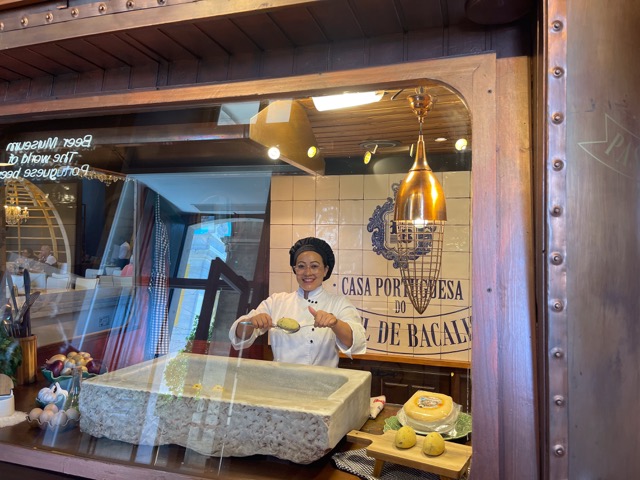
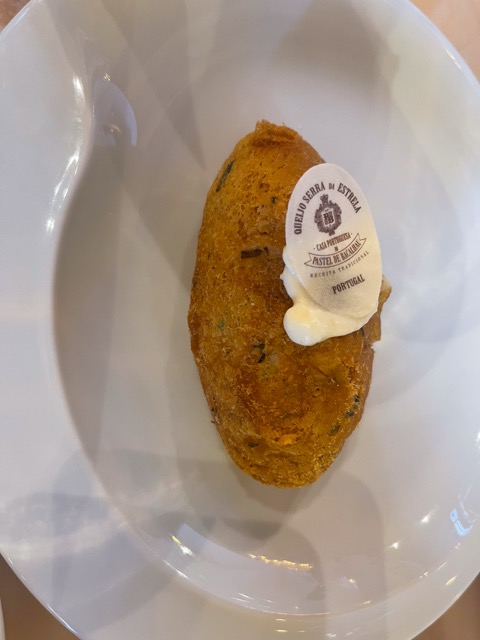
There are hundreds of recipes for cod but one of the most famous is Lisbon’s Pastéis de Bacalhau – codfish cakes. This recipe involves creating a mash by mixing the rehydrated cod fillets with potatoes, garlic, and herbs, and then forming the mash (with 2 spoons) into a special oval-ish shape before finally frying or baking them.

SARDINES!

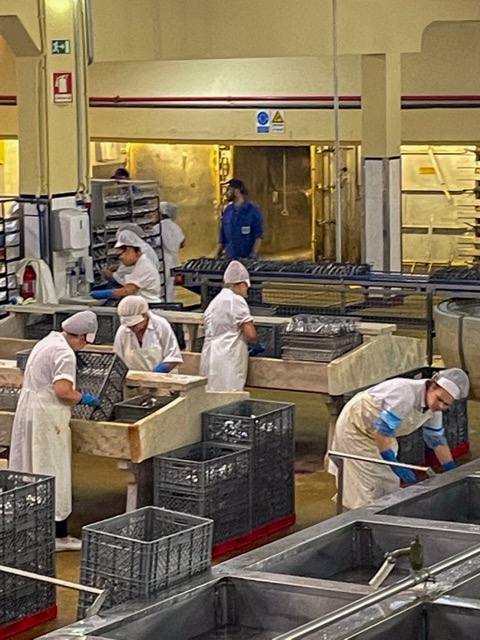
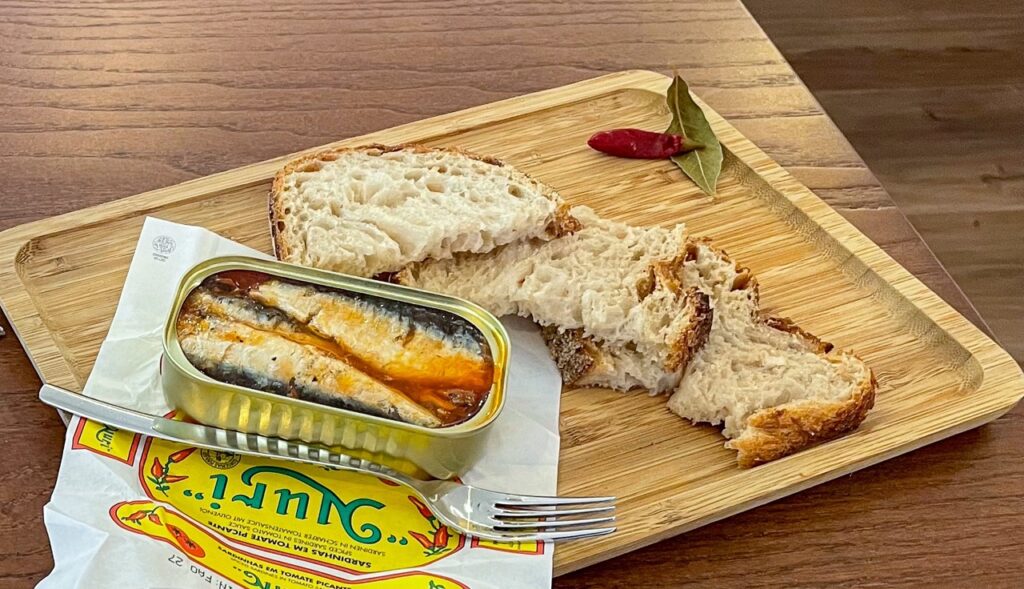
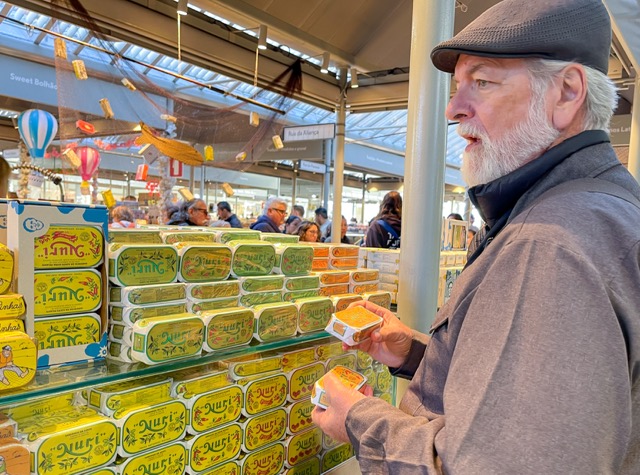
Another important preserved seafood in the Portuguese diet is Sardines (sardinha). The Portuguese LOVE their sardines and Ed has enthusiastically embraced this little fish as well. These fish are caught all along the coast of Portugal but are especially important in the Porto region. Before we left home, Ed booked a tour of a sardine factory in Porto and ordered a few tins to have at home for sampling before leaving on our trip. (I’m not so much a fan.) I didn’t join him for the sardine factory tour (giving my hip a rest), but he seemed to thoroughly enjoy this culinary adventure.

BARNACLES (that’s right, barnacles)

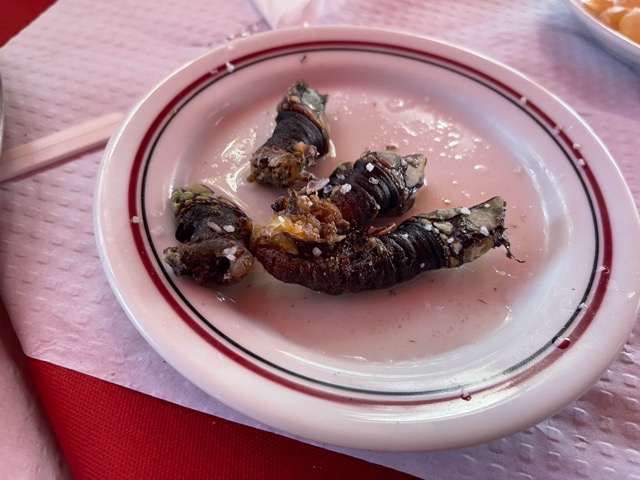
Goose Barnacles (cracas de ganso). It’s true, sardines are not so exotic. But have you tried barnacles? Goose Barnacles are an expensive treat in Portugal. These little treasures are a claw-shaped crustacean that live attached to rocks in the ocean. Eating them means fully enjoying the flavor of the sea. They’re expensive because harvesting them is a risky business because that involves using ropes to climb down rocks and cliffs while the waves of the North Atlantic are crashing about. It’s all worth it because not only are they delicious (so say the Portuguese and Spanish), but they are incredibly good for you – low fat and cholesterol content and zero carbohydrates. The perfect diet food! They’re fully cooked and filled with juices inside. When you open a goose barnacle, you might even splash yourself.

HAMBURGERS

After several days of eating so much delicious seafood, we decided it was time for a hamburger! We found a charming little restaurant in Lisbon called “To. B” which is short for “To Burger or Not to Burger.” In addition to the owners being wonderfully friendly and interesting, the burgers were absolutely delicious! Carlos, the owner, proudly told us that that, all the beef comes from the Azores where the cows are fed on the lush grasses of the island. This wasn’t the first time someone mentioned “The Azores” to us, so we made a note to learn more about this place (an archipelago of nine islands in the middle of the North Atlantic – just a 2 ½ flight from Lisbon). It turns out that the highest quality dairy products are made with milk from the Azores, also because of the wonderful quality of the island grasses the cows graze on.

Carlos grinds the meat fresh every day. We were enjoying our burgers so much that we forgot to take a photo! Want to meet us in the Azores someday?

SANDWICHES

In addition to fish, the Portuguese also love sandwiches. These are some of the favorites that we had a chance to sample.

Francesinha

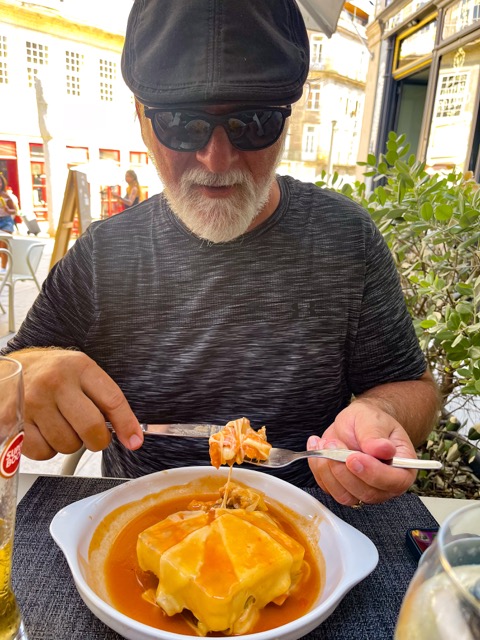
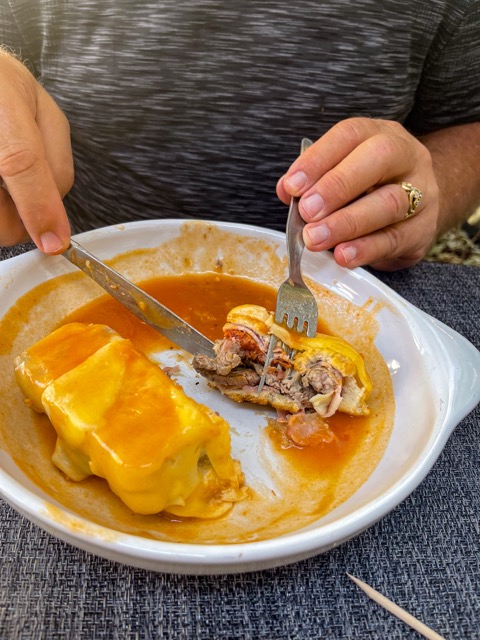
Wow! What sandwich! Order a Francesinha and here’s what you’ll get: thick slices of white loaf bread layered with ham, sausage, and steak. The whole thing is wrapped in melted cheese and then put swimming in a slightly spicy beer and tomato sauce. It’s usually served with French fries and often has a fried egg on top. A carnivore’s delight! Ed ordered a Francesinha at a late lunch on our last day in Porto and he had no desire to eat another bite until the next day.

Bifana

While Ed was eating his Francesinha, I had a wonderful piece of grilled sea bass. So, I did have a desire to eat again that day and a Bifana was on the top of my list. We arrived at an off-the-tourist-beaten path about 10PM on Friday night and joined the long line of locals at the door. A Bifana sandwich is basically bread and slices of pork. I know that doesn’t sound particularly unique or interesting, but it’s delicious and worth the wait. The thinly sliced meat is cooked by immersing it into a just simmering sauce with various spices and secret ingredients that vary from chef to chef. After waiting in line for about 30 minutes, we figured out that we didn’t need to wait for a table but could stand at the counter for our Bifana experience – also pairs nicely with beer!

Puppies (aka Hot Dogs)

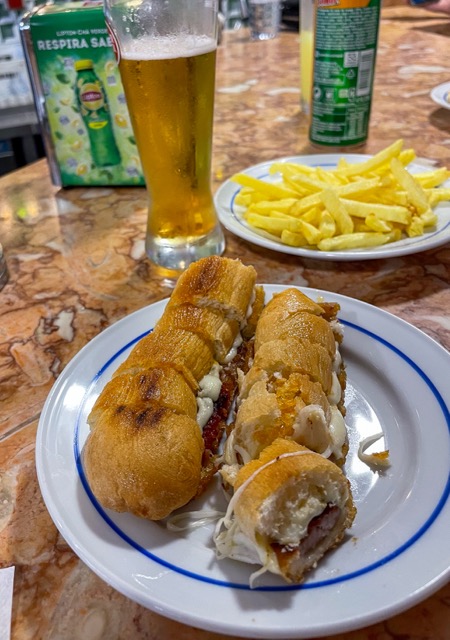
Portuguese Hot Dog (Cachorros). In Porto, hotdogs are not what you think. Cachorros (translation is “puppies”) are made with a thin sausage brushed with butter and cooked on a sort of panini grill, then placed on a thin French roll, cheese is added, and then another generous brush of butter before grilling again, with more butter. Just before serving, they are brushed with a another secret spicy sauce and cut into small pieces. Did I mention they use a lot of butter? Wow are they good!

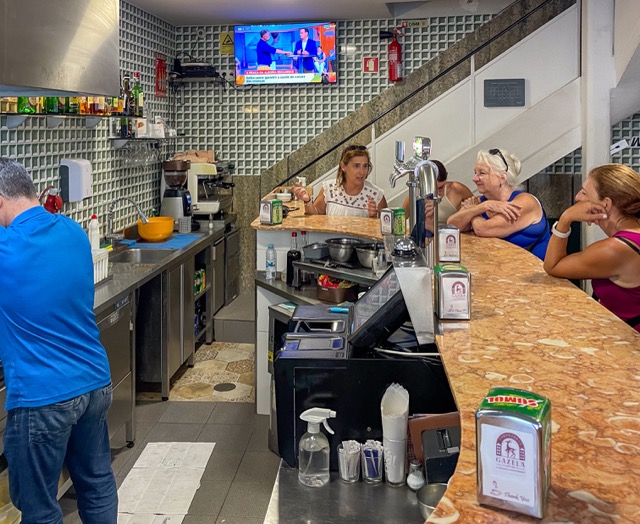
Gazela is the name of the cachorros shop where we stopped on our Culinary Backstreets walking tour. We got there about 15 minutes before they opened and soon after a line started to form. We were the first in the door and took six of the 12 seats and the U-shaped bar. The staff were very friendly and told us about a regular customer who eats four of these hot dogs every day. Yikes! A signed photo of Anthony Bourdain on the wall attests to how wonderful these little puppies are.

LOVING PORK

Black Pork (Porco Preto). The Portuguese love their pork, and the most highly regarded is porco preto. It’s called black pork because the pigs are a gray to black (and sometimes red) skin color. These little piggies gorge themselves on acorns from oak trees that give the meat a sort of nutty flavor. While this pork is higher in fat than many other pigs, the Portuguese insist that its actually healthier than other pork, because of the acorn-only diet. (Something to do with the idea that acorn fat is similar in chemistry to olive oil.) So, it seems this is heart-healthy pork. Hmmm. No photos to share, but black pork is also very popular in Spain, so we still have time to sample and snap some shots.

ARE YOU READY FOR DESSERT?

Pastéis de Nata

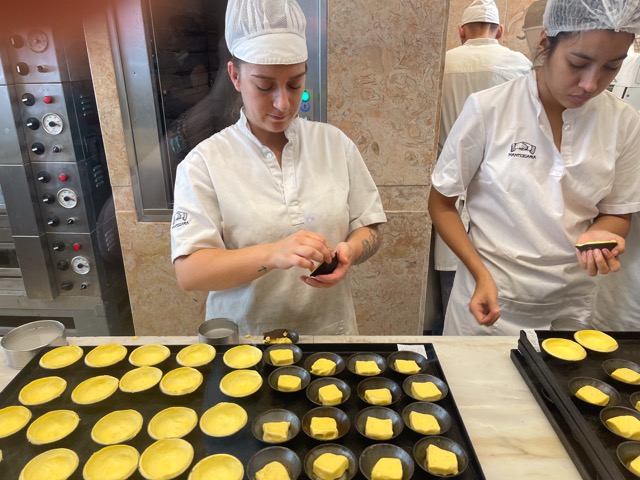
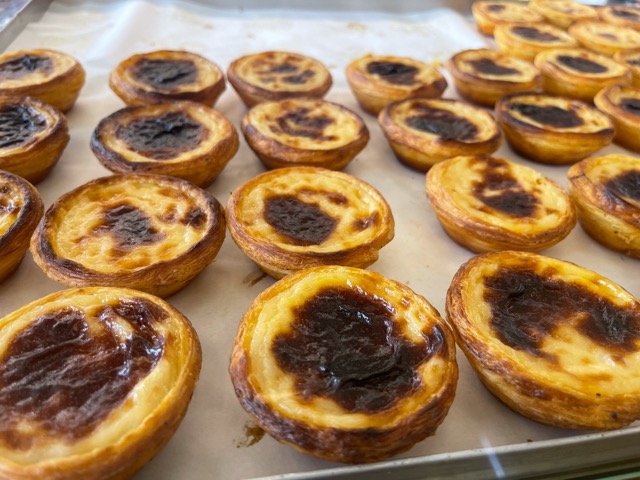
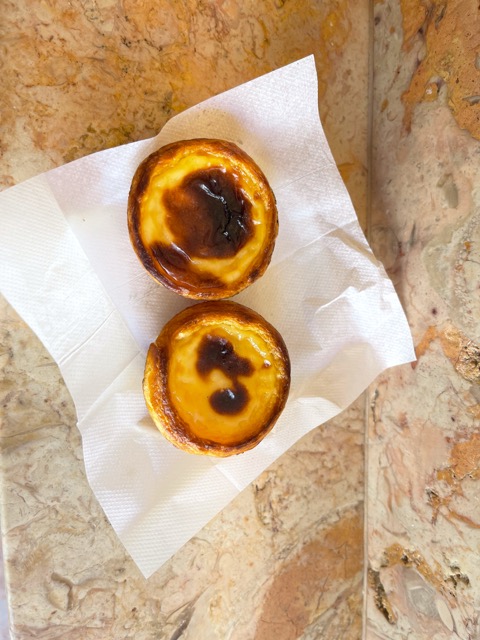
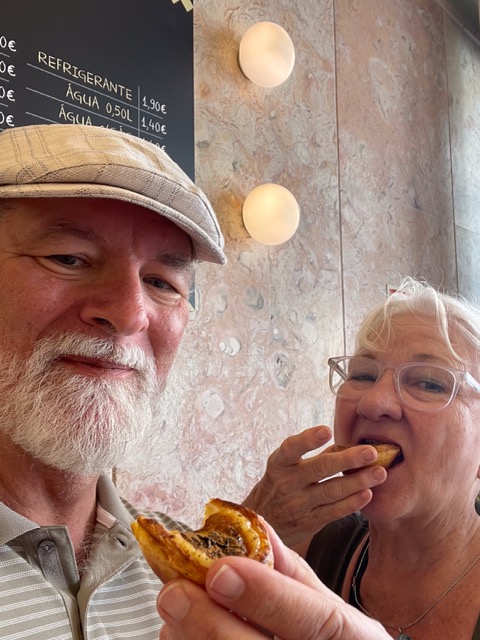
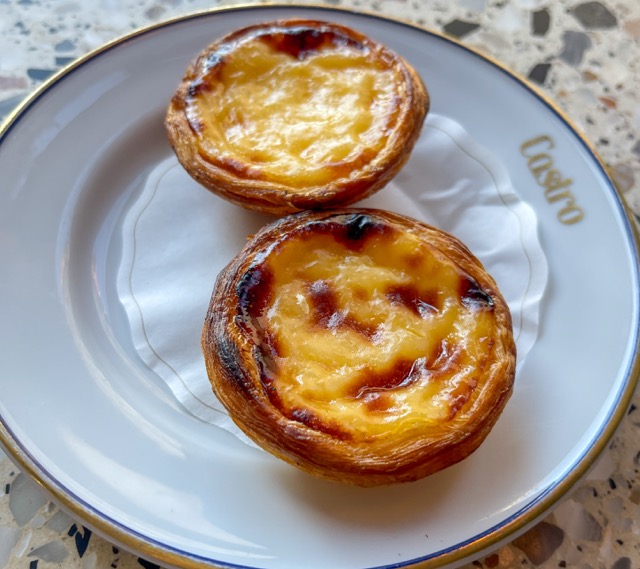
Wow! These little pastries are SO delicious. Pastéis de nata are a traditional Portuguese pastry that consist of a flacky, buttery shell with a filling of rich yellow custard. The top of the custard is caramelized, and once out of the oven, they’re dusted with cinnamon and powdered sugar. Like I said, DELICIOUS! While they have just a few ingredients and look pretty simple, apparently they take a bit of experience and effort to get right. (I’m pretty sure Ed can figure this out!) They are ubiquitous in both Lisbon and Porto and can be found warm from the oven at any time of day.

These little treasures were invented – or at least perfected – in the Belém area of Lisbon. As the story goes, the monks at the Jerónimos Monastery in Belém were the first to make and distribute the iconic egg tarts. Egg whites were used in the convents and monasteries to starch clothing such as the nun’s habits which meant they were tons of unused egg yolks. Instead of wasting them, they often used them to make cakes and pastries.

OPORTO

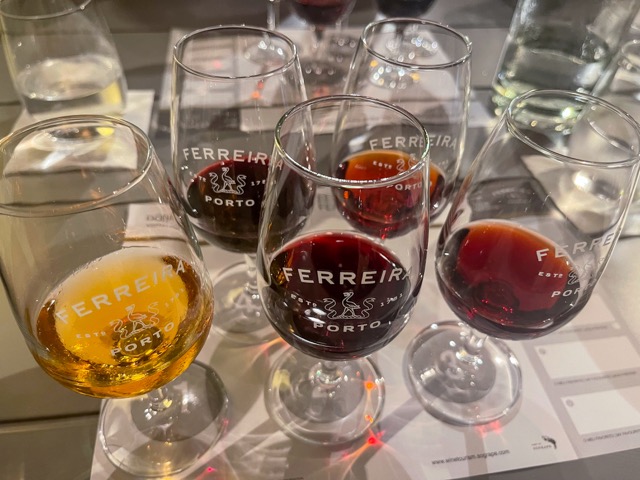
Of course, no trip to Porto is complete without imbibing in some Oporto – that most delicious fortified wine from Portugal’s Douro Valley. There are several port wine cellars located in Vila Nova de Gaia, just across the Douro River from the city of Porto. Tastings of different styles of port wine, often including Ruby, Tawny, and White ports was delightful!

Tchin-tchin!

A FOODIE’S PARADISE Read More »
BOM DIA!

Today is our last day in Portugal and while we’re eager for a new adventure, there is so much we treasure and will miss about this beautiful country and its culture. The Portuguese people are very friendly and welcoming. And it’s nice that everyone speaks English (we’re spoiled in that regard).

PORTUGUESE FOOD IS AMAZING

The food in Portugal is amazing (and that’s the opinion of two devoted, hard-core foodies!). It’s been quite a culinary adventure here. We’ve had goose barnacles (yep, those things you pry off the rocks as the ocean waves are crashing), lots of perfectly cooked fish, and the most incredible pastries. More on food later – that’s a whole chapter of its own!

EAT, DRINK, NAP, REPEAT

This is a lifestyle that works for us! Sleep in, a light breakfast at a sidewalk café, lots of walking (up and down LOTS of hills), lunch at another sidewalk café (including some “Vin Verde” aka white wine), back home for a siesta (sesta in Portuguese), a late dinner (9:00 or 9:30 is a common dinner reservation time here). Then, after eating, drinking, and talking for 2-3 hours, we stroll home about midnight for a good night’s sleep. Next day: Repeat!

NEXT UP…SPAIN!

Tomorrow morning, we take a train from Porto to Vigo, Spain which is on the Portugal/Spain border along the coast. We’ll rent a car in Vigo and drive along the west and north coast of Spain to the city of Bilbao. As you likely know, Bilbao is the largest city in Basque Country and is known for great food, architecture, and art. Sounds like our kind of city!

BOM DIA! Read More »
Scroll to Top