Spain

Basque Country Gem

The Cave

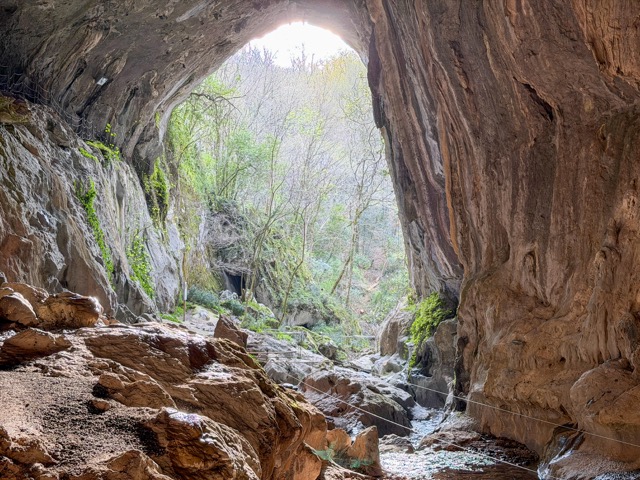
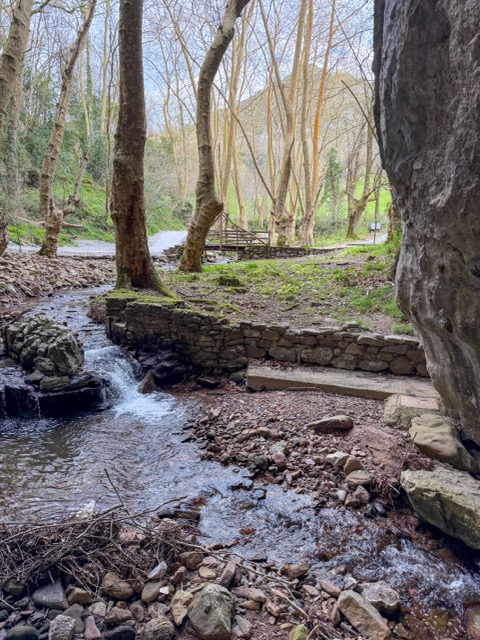
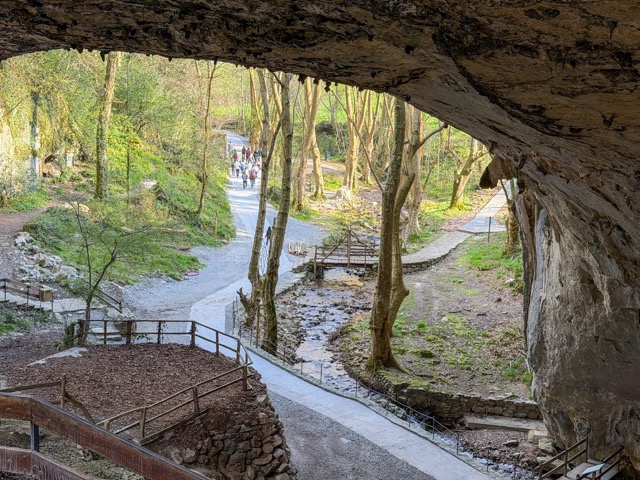
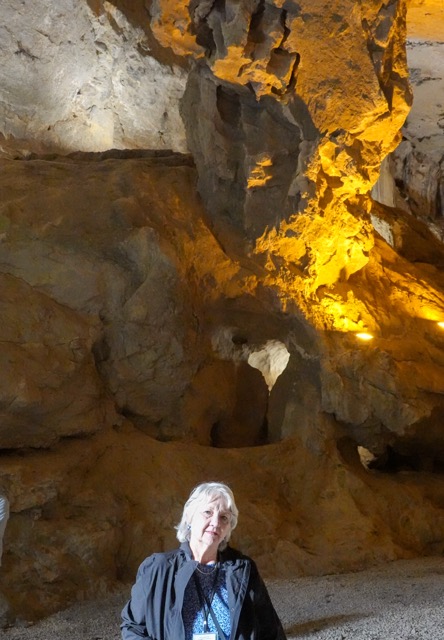
Stepping into the depths of the enormous cavern of rock, dampness and earth filling my nostrils, I was startled by the roar of rushing water. The stream, flowing directly through the cave, seemed entirely innocent and incapable of such sound until I realized that part of this vast stone hollow’s magic was amplification.

Listening intently to our guide, straining to understand the rapid fire Spanish and rueing our lax approach to study of the language, we stood in a small group while she earnestly recounted the events that had taken place here centuries earlier. Brujas. Witches. Akelarries. It was here, in the early 17th century, 11 women were burned at the stake by the Spanish Inquisition. Sentenced to death for practicing their ancient rituals in this ancient place. Unexpectedly, she stopped, looked directly at Bonnie, and in clear English said, “I have been asking the group what the word “witch” means to them. What is your answer?”

Flummoxed for a moment, I watched Bonnie’s face go from slight panic, to confidence. The group fell silent and all eyes turned, waiting to hear how the foreigner would repond. “Someone who worships the natural world,” she stated with calm authority.

“Perfecto,” declared our guide with a look of quiet satisfaction. She turned and translated Bonnie’s response for the group with the tone of a teacher acknowledging her star pupil’s excellent answer.

It was a moment.

There was my admiration for all that Bonnie expressed with that simple, incisive answer. And then there was the broader implication for all that we were experiencing of Basque culture. Once again, our exploration of Europe and its history had tossed me an intriguing and unexpected aspect of the human experience to chew on. Witches? We were just supposed to be escaping the last few days of Fallas! But here I was again, falling down a new, mysterious cultural rabbit hole: honoring the natural world.

The Escape – Fleeing from Las Fallas

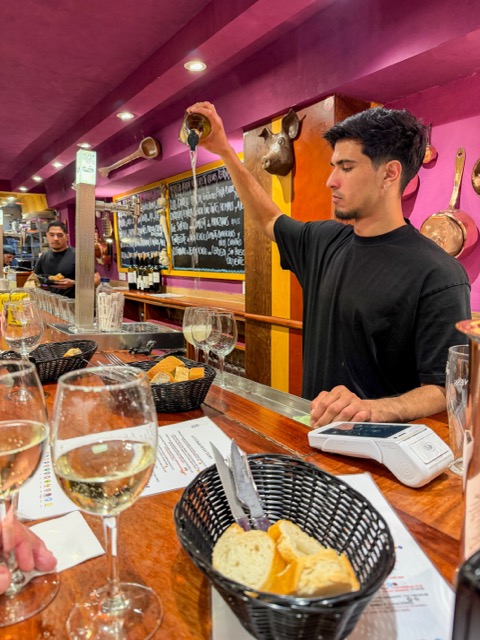
We have previously recounted the joys and challenges of Fallas in Valencia. I will leave it to you to read up (https://edandbon.com/march-madness/ ; or not) but suffice it to say that as much as the Valencianos relish the 19 day festival, we and our expat friends are desperate to escape. It actually becomes a kind of parlor game as March approaches and we all trade stories and ideas about the most appealing destinations for our Fallas break over tapas and vermouth. So, it is now part of our routine to plan a short trip covering the middle of March, allowing sanity to return to the streets of Valencia so that we can as well. We chose a train ride to San Sebastián this year, looking for the perfect combination of coastal relaxation and world class gastronomy.

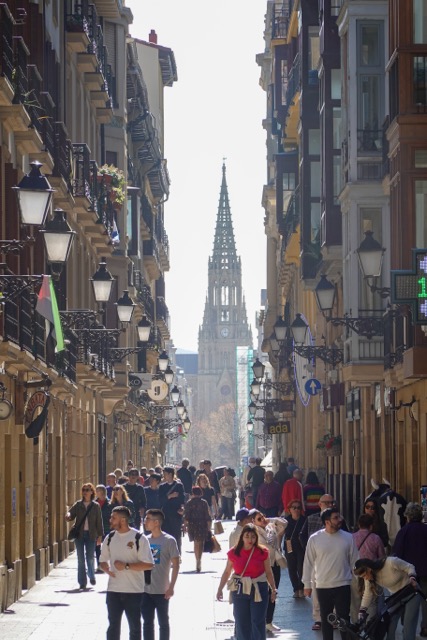
There was a lot of “slow train” planned into this trip. We have come to savor the languorous nature of trains, reading, gazing at the changing landscape, occasionally visiting the cafe car. Arriving well past dark, we were greeted by an unusually quiet city, not the vibrant restaurant and bar scene we’d been promised. Our carefully planned route through the old city marked, with the best pintxos bars, was suddenly useless as we found silent streets and shuttered businesses. Something was clearly amiss, but what?

The level of participation by Spanish citizens in their democracy is something we are still adjusting to, and we are often slow to recognize the political elements of life here. What we had unknowingly walked into was a region wide general strike! The day had seen huge demonstrations and protests demanding changes to the minimum wage for the Basque region, notorious for its higher cost of living. And, in solidarity, all the small busineses — including the pintxos bars – were simply closed. A rebel sandwich shop saved us from starvation.

In Quest of . . . Breakfast

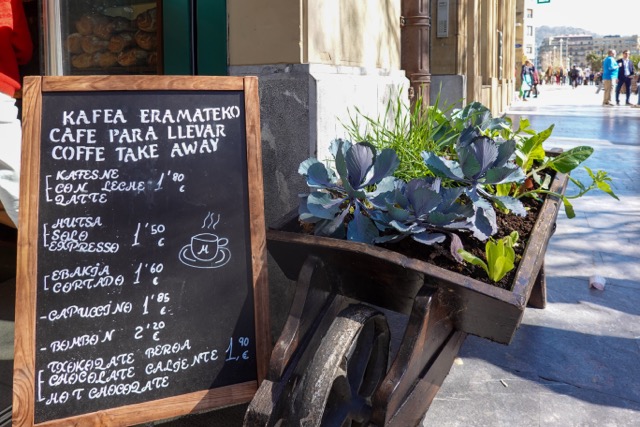
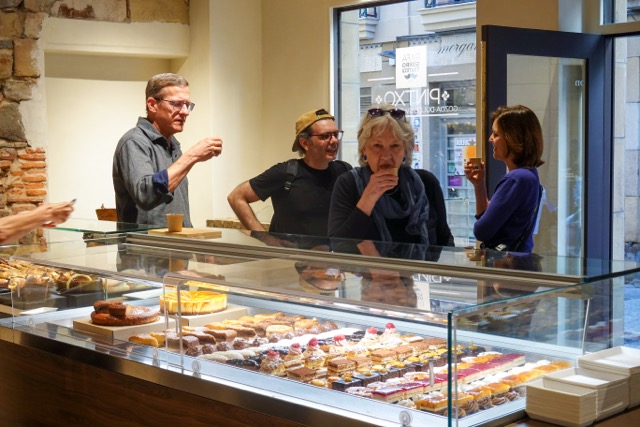
The following day we did what we do: a Culinary Backstreets food tour to learn what we might about the local scene. I’ll not bore you with an account of every step of the walk. However, I do want to say that spending several hours with our young guide, Panos, was one of those travel experiences that gives me hope for the future. 

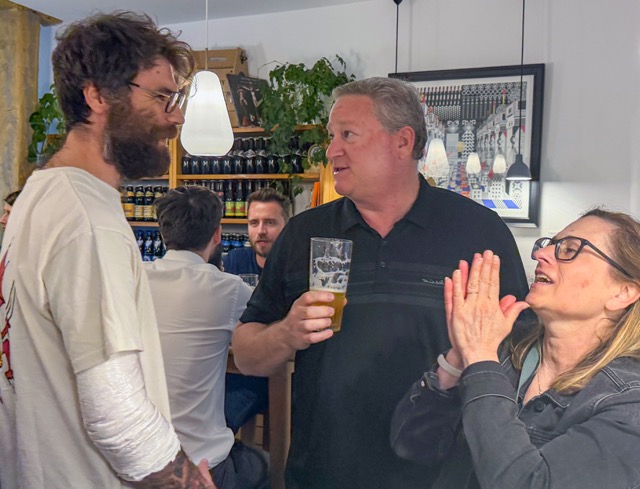
Panos is a native of Athens, Greece. He has a degree in chemistry and another in oenology. He spent several years in Edinburgh where he went to study brewing and distilling. He has been a brewer in the UK, Barcelona, and San Sebastián before deciding with his lovely partner to open a wine shop, Piripi, focused solely on 100% natural wine and beer. 

Panos shared with us his experiences as a young professional being sucked into a culture of cut-throat competition inspired by US style capitalism. He was good at it and reached his goal, becoming the master brewer he had set out to become. He realized, however, that he had compromised his values in pursuit of success. Now, his focus is on ensuring that his business practices embody his belief in a communal future – the only sustainable future for mankind – and a full embrace of the natural bounty that the Basque region provides. Yeah, another nature worshipper.

This Epicurean Thing is not New

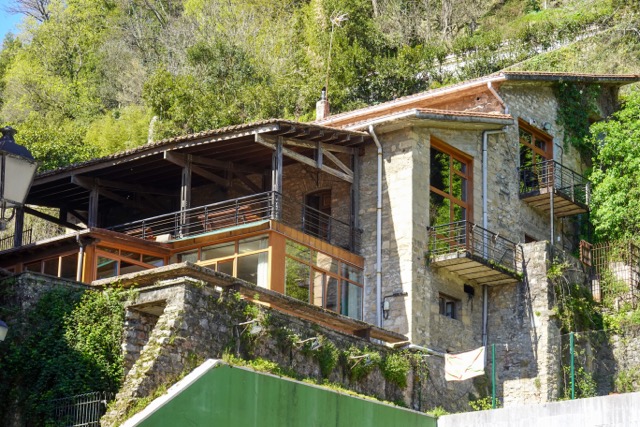
One discovery on the food tour was intriguing to us. Panos pointed out an innocuous looking hillside building that he described as a typical, but exclusive Basque food club. Think golf country club, for foodies. For a not insignificant fee, members are provided access to a fully equipped professional kitchen where one may schedule an evening to create and serve a meal in one of the luxurious, staffed dining rooms. Or, if you would prefer, hire one of the chefs on staff to prepare or assist with your menu. This arrangement allows the members to bring in the freshest and best market products, entertain guests, immerse themselves in the culinary experience of creating a unique dining experience, and leave the cleanup to the club. OMG! Seriously? Why have I never heard of this thing? Most amazing: there are hundreds of these clubs in Basque Country and they have been a tradition going back centuries. For the most exclusive clubs, membership must basically be inherited. This food thing runs deep for these people.

The Bountiful Pyrenees

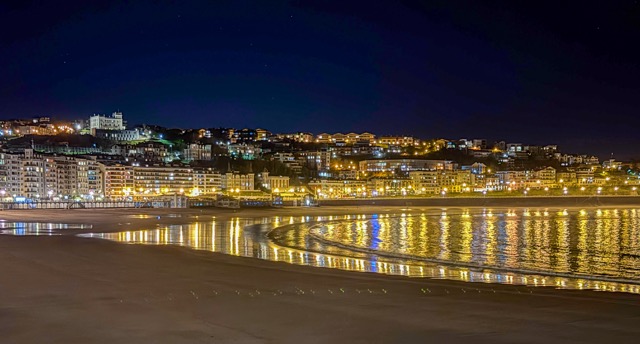
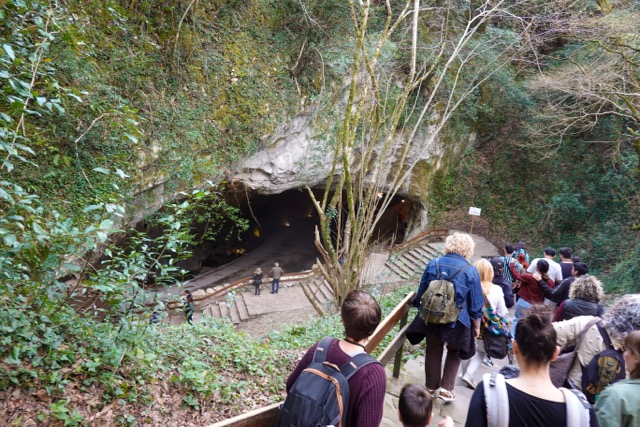
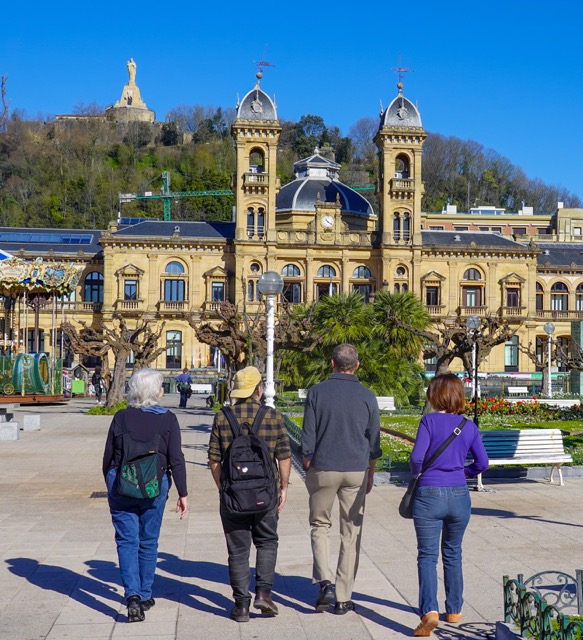
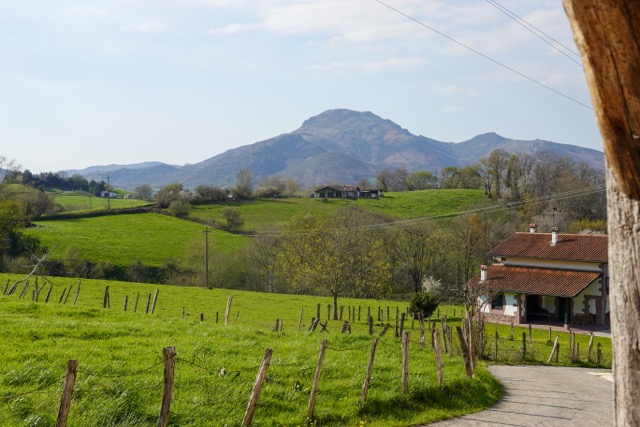
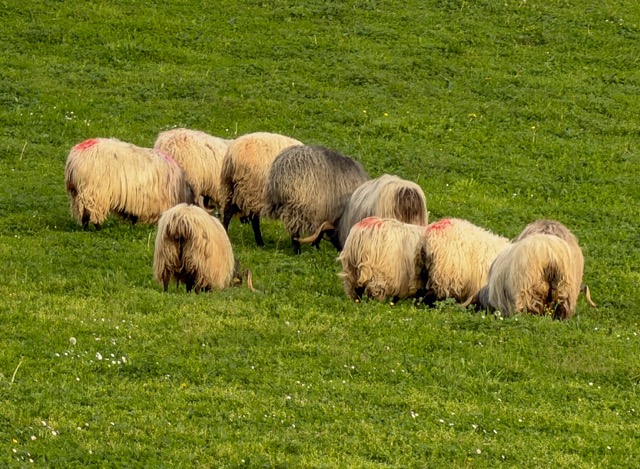
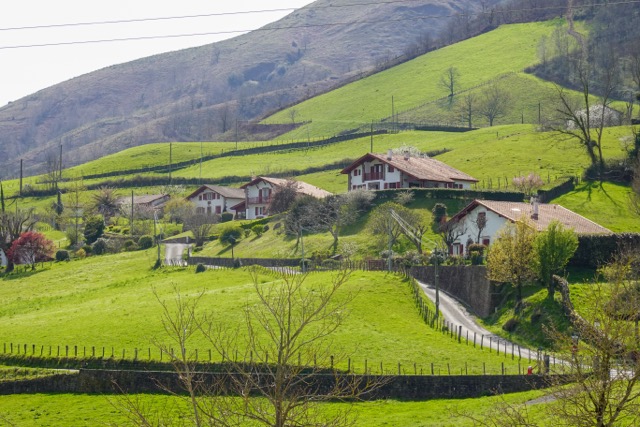
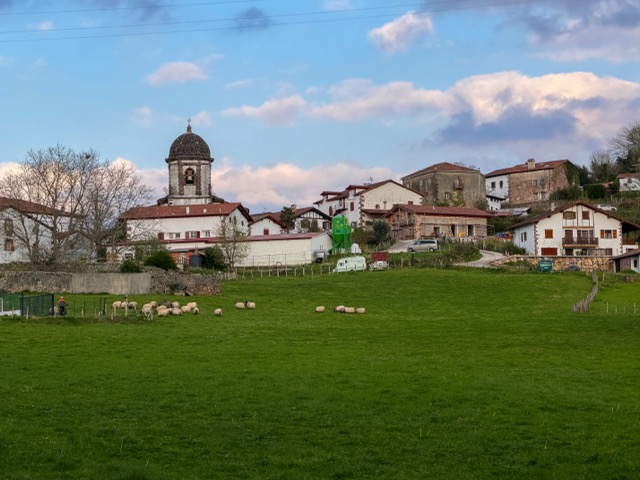
To get a better sense of the natural bounty that has supplied this passion for cuisine, we rented a car the next day, leaving the crystalline bay and its gem-like city to enjoy the early spring countryside. No wonder the early Basque culture was awed by nature. This is the intersection of climate and geology that produces the stuff of poetry. It was a wandering day through the landscape of abundance that is the source material for San Sebastián’s great culinary traditions. The foothills of the Pyrenees Mountains were blanketed with verdant green, trees trembling on the edge of release. To call this land picturesque is to understate significantly. We enjoyed a simple farmhouse lunch, shared a traditional Basque pastry, and wound our way to that infamous cave.

The Zugarramurdi cave is the site of the largest prosecution and execution of witches in history. Some 7,000 people were accused and hundreds executed over the course of the reign of terror known as the Spanish Inquisition, but the largest single case occurred here. The Basques count this story as just one on a list of attempts to conquer or control their homeland and culture – all doomed to fail. 

Always Under Pressure

The Romans decided that the cost of subduing the Basques was greater than they wanted to pay, and left them more or less alone. The Visigoths followed the Romans and came up short. The Umayyad, who dominated the Iberian peninsula for 700 years after Rome, tried and failed giving them the nickname “pagan wizards.” And so it has gone down through history including the horrific destruction of the Basque town of Guernica where Franco, frustrated by the region’s resistance during the civil war, invited Hitler to practice his Luftwaffe tactics on them. Today, in modern day Spain, the Basque region is among the wealthiest and most autonomous regions of the country. 

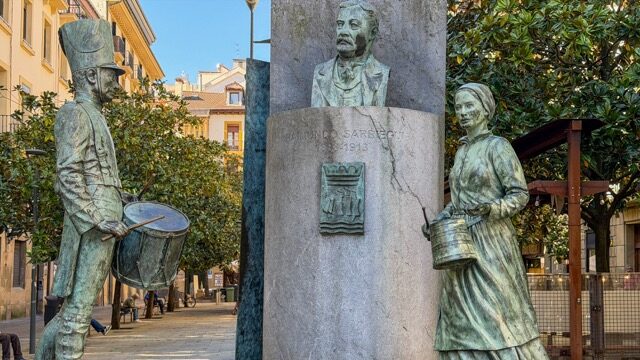
Stories of the defiance of the Basque people to attempts at oppression are seemingly endless. One of the monuments that I most enjoyed in San Sebastián is a life size sculpture of two people apparently playing drums. Upon closer inspection, however, you realize that the woman is drumming the underside of a wooden bucket. The story goes that on the occasion of having been occupied (temporarily, it turns out) by the French, the women of the town marched around beating their wooden buckets to mock the soldiers and show their contempt. This legend is celebrated by the city every year with a 24 hour drumming session at the town square.

A Spiritual Experience

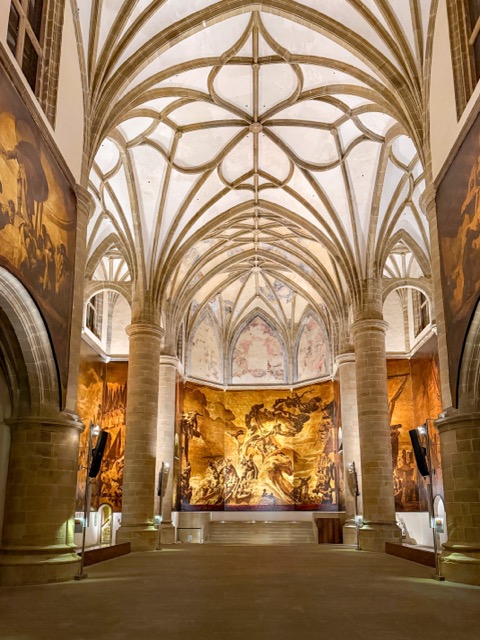
On our last day in San Sebastián we came upon one more manifestation of the Basque embrace and defense of their culture, legends, and myths. We planned a brief visit to the San Telmo Museum. The “brief” part of the plan went out the window as we began exploring this magnificent repository of the regions history and art. It is housed in a 16th century convent that was augmented recently with a steel and glass addition that beautifully mirrors the tug and pull of past and present in the Basque identity. But the moment that brought us to a full stop was walking into what had been the convent’s church. It is a sublimely proportioned, elegantly restrained, space where the walls have been adorned with contemporary impressionistic painting unlike anything we had ever encountered in a church. 

It seems that when the facility was converted to its secular purposes, the town fathers decided that it nonetheless needed the kind of ornamentation and story telling typical of this genre, just not the typical topics. The result are monumental paintings depicting the history and culture of the Basques. And there, on the first panel on the left, are the witches, engaged in their ancient ritual communion with nature.

We left San Sebastián in contemplation of a culture that is more nuanced and complex than we could have possibly suspected. They are gifted with amazing natural resources, stunning beauty, rich history, and enormous character. For thousands of years these elements have been placed under enormous pressure and heat by other societies and cultures. When such forces are brought to bear on such elements, the result, of course, is a gem. 

Basque Country Gem Read More »

Escape to Catalonia

The Iberian Peninsula has been a dreary place for the past month – cold, blustery, raining every day. Beginning the first of March, we’ve also had to contend with Las Fallas, the annual insanity that is Valencia’s biggest festival of the year. (see this post for details: https://edandbon.com/march-madness/) We decided to head north to Catalonia, a neighboring region with its own quirky personality, rich history, and great food (https://edandbon.com/trotters-and-tripe/) to maybe change the vibe. From Valencia, we jumped on a high-speed train to Barcelona where we picked up a local train to make the final one-hour push to the picturesque little city of Girona.

The Medieval Quarter

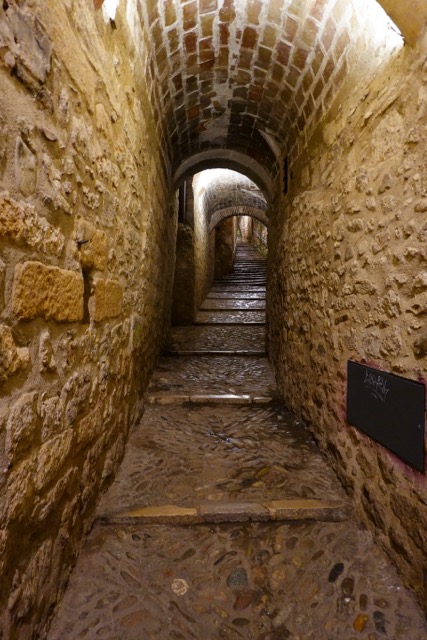
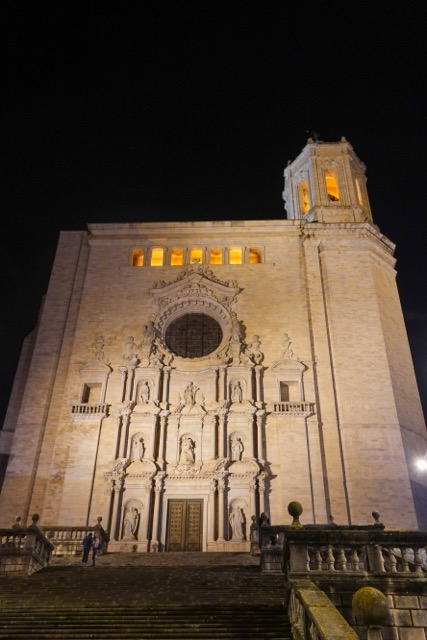
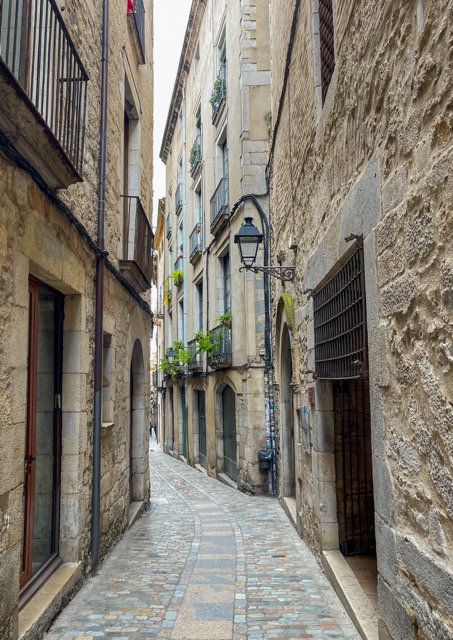
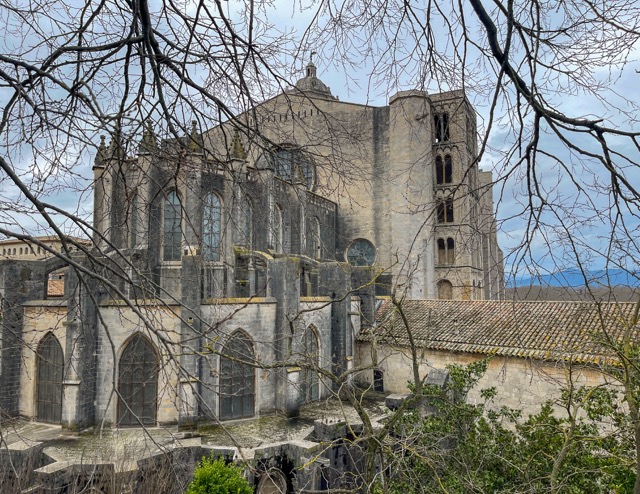
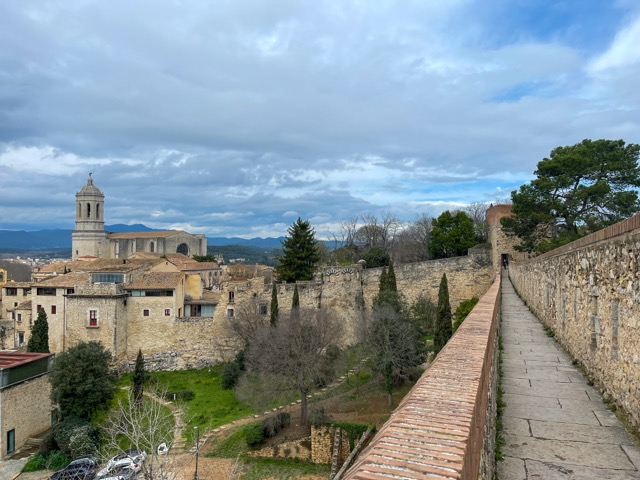
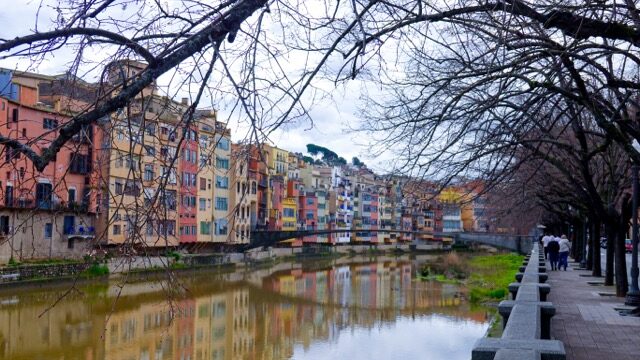
Situated at the confluence of four rivers, Girona is the capital city of Girona Province which includes olive groves, forests, beaches, picturesque Pyrenees Mountain towns, and extensive nature reserves. The city has a population of about 100,000 and an old town compactly tucked in between the eastern foothills and the river with an almost entirely intact wall. Here, medieval stone is spread, stacked, stepped, and arched into a twisting labyrinth of passages, alleyways, and staircases that wind up the hillside, culminating in an immense cathedral that dates from the 12th century. Arriving at a small family-owned inn around the corner from the cathedral, we dropped our bags and headed out to explore the artisan shops and small cafes that dot this ancient section of town. Here are a few of our impressions.

Culinary Adventures Bonnie

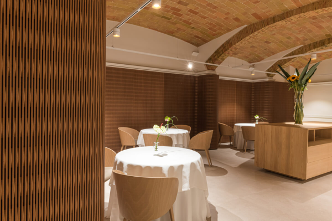
The Barri Vell, Girona’s historic district, seems frozen in time. Yet, it is home to dozens of thoroughly modern dining experiences, carefully tucked into vaults and niches of stone. The contrast was jarring and intriguing. Combining modern gastronomy with Catalonia’s deep culinary roots was magic, as if the old world and the new were colliding on our plates.

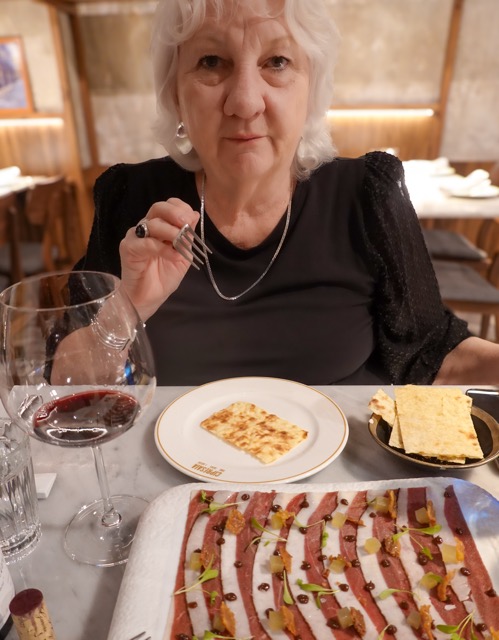
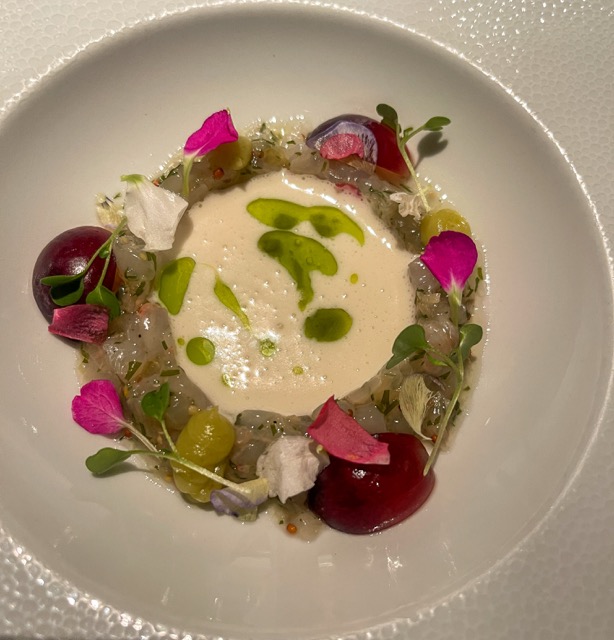
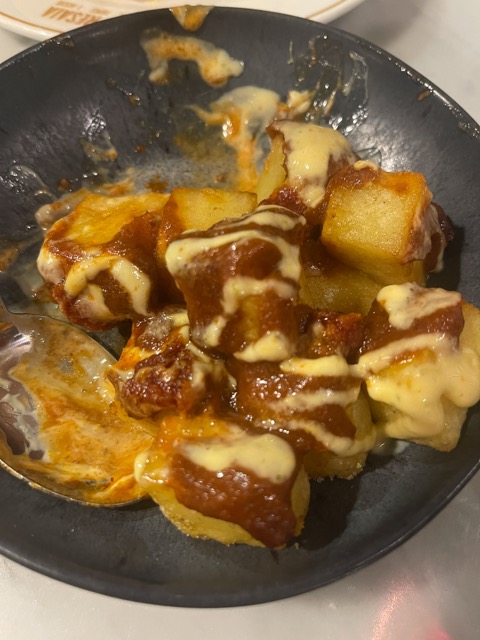
Modern-day alchemists, these Catalan chefs present delicious food that is also art on a plate. Seafood carpaccio topped with delicate flowers. Morel mushrooms in a warm cream sauce. Mushroom broth with crispy truffle cheese. Spicy potatoes (bravas) with aji Amarillo and black pig sobrasada. Smoked grilled duck breast carpaccio from “Coll Verd,” homemade hoisin sauce, cucumber, and crispy chicken skin. Veal sweetbreads with creamy morels, roast sauce, and a veil of Iberian pork jowl. Poularde terrine with foie gras, wild sprout salad and red berries. And the finest rich, full-bodied wines from the Ribero del Duro and Rioja.

Time Travel – Ed

It was silent except for our footsteps on the cobbles echoing off the dimly lit stone passage. Sated and flushed, still savoring the rich meal and unctuous wine, I was startled by a sense of having suddenly passed through a veil into some kind of time warp. A low arch on the right, opening onto a stone staircase; massive wooden doors, banded by iron; cool damp; soft moonlight and moisture from a recent shower both dripping into the passage. A menorah tucked into a niche in the stone announces the beginning of the Jewish quarter. Shadows from the immense bulk of the great cathedral begin to appear ahead. There is no sign of modernity. Nothing but centuries old stone, silent witness to the passing of generations. For thirty minutes, returning to our bed for the night, the modern world has completely fallen away. We silently traverse a medieval city. I am a bit shaken. Disoriented. Enchanted.

The Wall – Bonnie

The weathered stone of Girona’s wall beneath my feet was cool and the air was filled with history. The earliest bits of the wall were placed by the Romans in the first century BC. The city stretches out below – sweeping views of the winding streets, red-roofed houses, and the green expanse of the surrounding countryside. Passing through small, arched doorways, led to hidden courtyards, secret gardens, and quiet nooks where time seems to have slowed. I felt a sense of tranquility in the elevated walk where every step is a connection to the past.

At the same time, hundreds of arrow slits evoke a mix of awe, solemnity, vulnerability, and isolation. Each narrow, jagged opening tells a story of defense and survival. There’s an almost palpable sense of tension, as if the wall is holding a silent, watchful presence, ready to unleash a barrage of arrows at any moment. Somber reflection of the harsh realities of a time when survival depended on such defenses. Humbling to contemplate.

Returning to Girona is a must. When the weather is warmer, the many trees are in leaf, and the sun is shining on the beautiful Costa Brava beaches, we’ll be on our way for another Catalan adventure.

The City of Terrassa

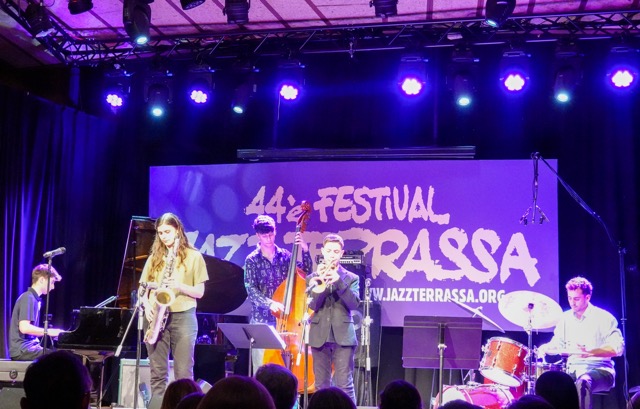
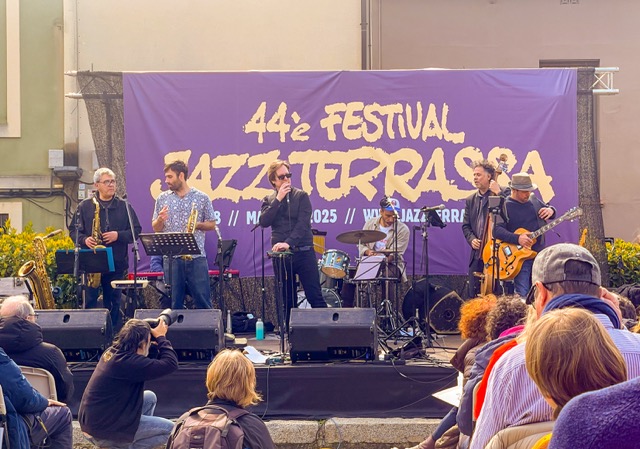
We headed back to Barcelona by train and then boarded a local commuter which, after about 35 minutes, deposited us at the center of Terrassa. Music and the arts, including theater, are deeply ingrained in Terrassa’s culture and we were drawn here by the city’s 44th annual jazz festival. Known for music, particularly jazz, Terrassa has a vibrant music scene with numerous music schools and scores of local musicians.

Settled into a modern, boutique hotel, a world away from the 12th century, we fell into a comfortable routine of desayuno (breakfast) at 11 AM, la comida (lunch) at 3 PM, siesta time, and a jazz concert at 9:30 PM. Terrassa, it turns out, is the perfect Fallas get-away. Planning for next March is already underway.

Jazz Trumpet at Twelve – Bonnie

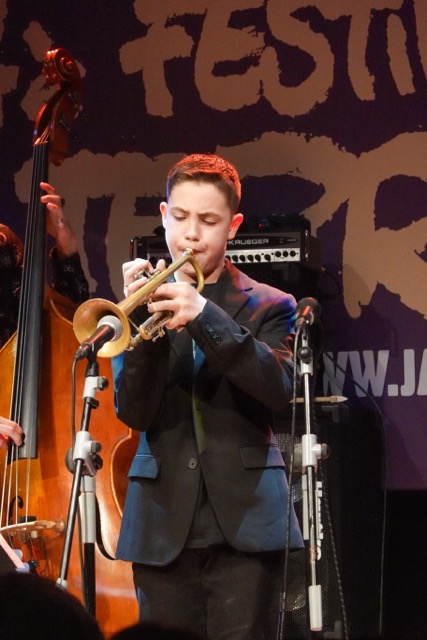
It wasn’t until a couple of hours before our first jazz performance that we realized the lead musician would be a trumpet player who is just twelve years old. A big fan of jazz, we have often enjoyed both Wynton Marsalis and Chris Botti, two of the most famous and accomplished trumpet players of our day. So, we thought, hmm…how good could this kid be? Really good, it turns out.

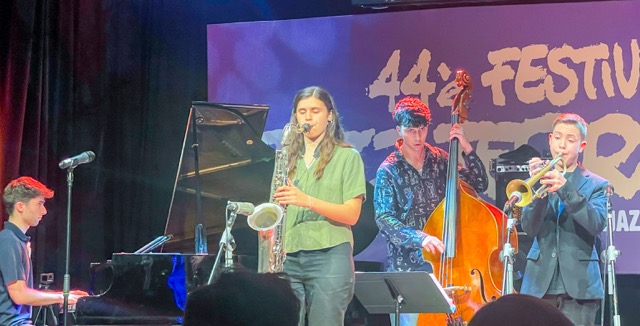
Watching a 12-year-old take the lead in a jazz quintet was magical. As Martí Costalago stepped onto the stage with his trumpet, his face was a mix of concentration and excitement. His passion for creating music was palpable as his young fingers danced across the valves of his instrument. Martí led a quintet that evening and everyone on the stage was under 20 years old. In the second set, several other young people joined the jam session which lasted more than two hours. It turns out they are members of the Barcelona based Sant Andreu Jazz Band which features 7- to 20-year-olds.

Watching and hearing young people play music had a profound emotional impact. There was a kind of vulnerability in the air and at the same time, a sense of possibility filled the room – deeply stirring and full of hope. Their music was a pure expression of emotion that, for me, tapped into something universally human. I was in awe at how they carry the weight of their instruments with such grace and promise.

Saturday in the Park – Ed

Stepping onto the street for our last morning, we were delighted to find that umbrellas would not be required! After our usual coffee and tea, we began strolling in the direction of a mid-day, open air concert that was promised in the afternoon. Soaking up the sun, we found our path had led us to the Vallparadís Park, a 3-kilometer stretch of undulating greenery, streams, waterfalls, and playgrounds that sits at the bottom of a 25-meter-deep crevasse in the middle of the city. We stood over the park, studying the contours of the descent, and calculating the effort involved in hauling ourselves back out, screwed up our courage, and headed down slope.

Terrasso is a city of about 200,000 that was in its hey-day when the textile industry was booming in Catalonia during the 18th and 19th centuries. At street level, it reflects its heritage – repurposed warehouses and factories, dense housing, frequent plazas, all arranged in an attractive, but practical scheme that reflects both the Catalan aesthetic sense, and their business acumen. Descending into the park we left the city behind and entered a natural world that was a balm to our souls. Occasional patches of flowers, water gurgling in the stream, trees of all descriptions lining gentle wandering paths, and birdsong. Once again, I was startled by an environment. Here was the antidote to stress and anxiety that I have trouble even naming, let alone mitigating. I had not even realized how much I longed for nature. At that moment, I looked up to a nearby tree and suddenly realized that it was covered with tiny bits of green leaf peeking out from their wintry cocoons. Hope.

Local Food – Bonnie

Catalonia is known for world-class gastronomy, and Terrassa didn’t disappoint. Not so much a tourist city, we found ourselves dining with the locals. Good Thai food and delicious Neapolitan pizza alternating with traditional Catalan cuisine using in-season local ingredients made for some wonderful pre-siesta lunches.

Settling in and perusing the menu, we were faced with the challenge of not knowing (at all) the Catalan language. Each menu was presented in this unique language, which shares some similarities with both Spanish and French. Fortunately, one can request an alternate menu in Spanish (English being much less common) and our Spanish is getting better, especially when it comes to ordering food and drink.

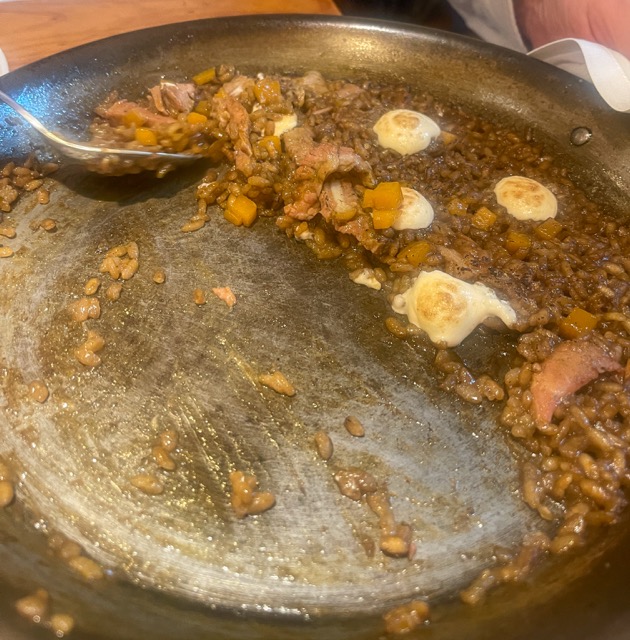
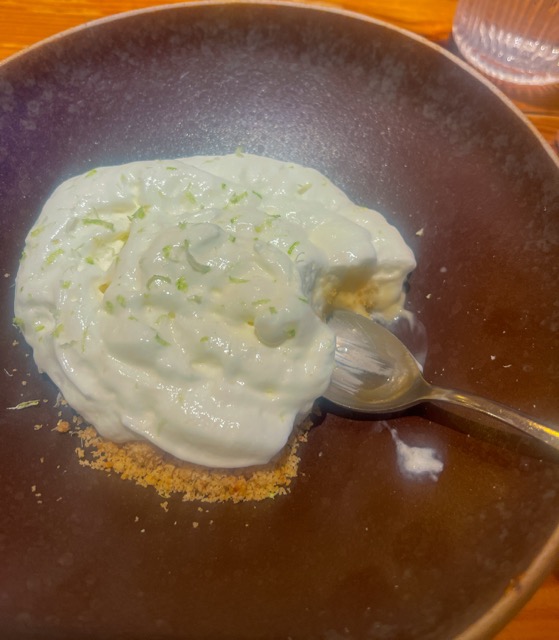
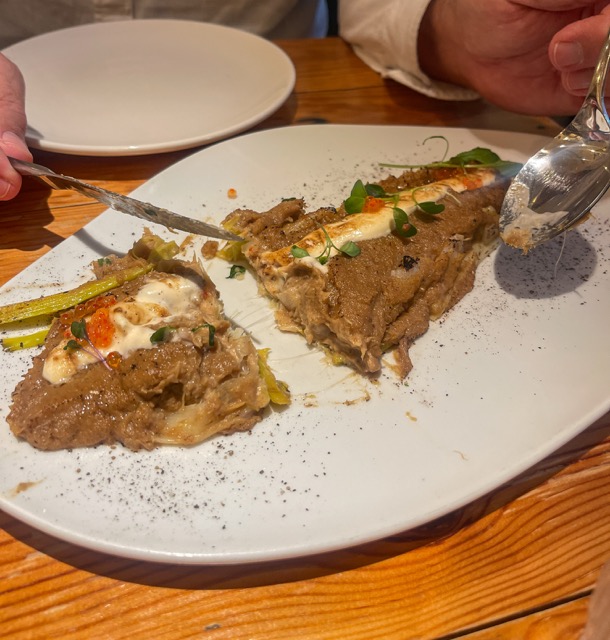
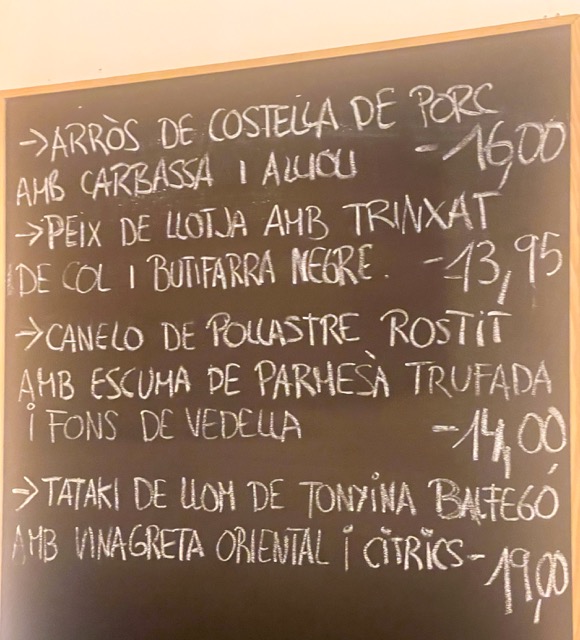
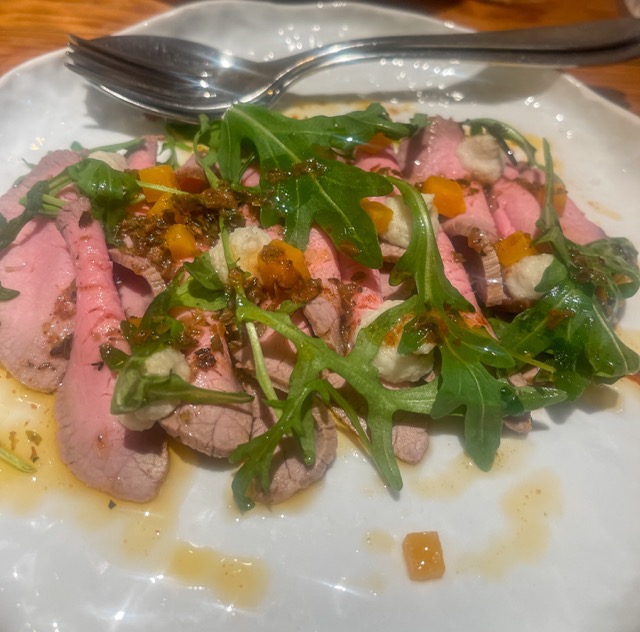
Dining in Terrassa involves a bit less drama on the plate than in Girona, but the food is wonderfully creative and delicious. Leek stuffed with cod brandade, nori seaweed, garlic mousseline au gratin and sprouts. Roast beef with smoked nyamera cream and chimichurri. Lamb “tacos” with chipotle sauce and pico de gallo. Rice with pork rib, pumpkin and aioli. Cuttlefish casserole with Empordà-style meatballs. Lemon pie with biscuit base and yogurt foam.

Afternoon Delight – Ed

A stage filled with musicians, a few hundred chairs filled with happy, swinging jazz fans. Ahh, there’s a tiny drinks concession . . . ohh, and a queue. Patience. Breath in the music. Hmm, cerveza or vermut . . . cutting orange slices . . . for each vermut, one at a time. Finally, slipping into a chair and triumphantly delivering her a vermut . . . fresh orange slice and two olives. Azure sky. White, cottony post-storm clouds drifting overhead. Warmth from our star spreading from my face to my soul.

Thank you, Catalonia.

Postscript

We’re leaving tomorrow for another Italian adventure. After eight days in Sicily,  we’ll make a brief two-night stop in Rome on our way back to Valencia. All of you be well and take care of your mental health in these stressful times.

Escape to Catalonia Read More »

Five (or Six) Squares a Day

Everyone needs three square meals a day.”

Breakfast is the most important meal of the day.”

 If you found yourself nodding in agreement to either of these statements, you are obviously not from Spain. Food is, however, a very big deal in Spain. Evidence for how much Spaniards love food is the fact that they eat more times throughout the day than most people around the world!

We’re doing our best to assimilate.

Mealtime is taken seriously here – all five of them! Yep, that’s right. There are five meals a day in Spain. (Some even say there’s a sixth meal.) Seem crazy? The key to all this eating is understanding that not every meal is a feast. However, every meal is very much a social experience and reflects the Spanish approach to life: savor each moment, take time to be with friends and family, and RELAX! Munching a sandwich on the go is not a thing.

So, what are the five Spanish meals?

El Desayuno – Breakfast

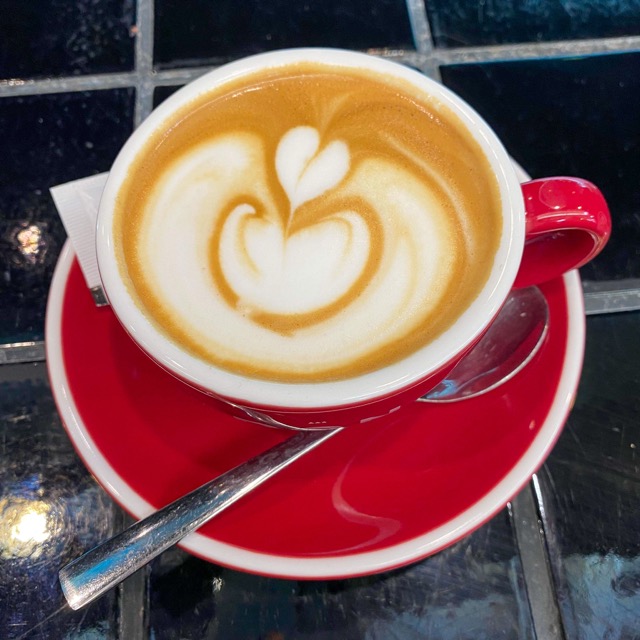
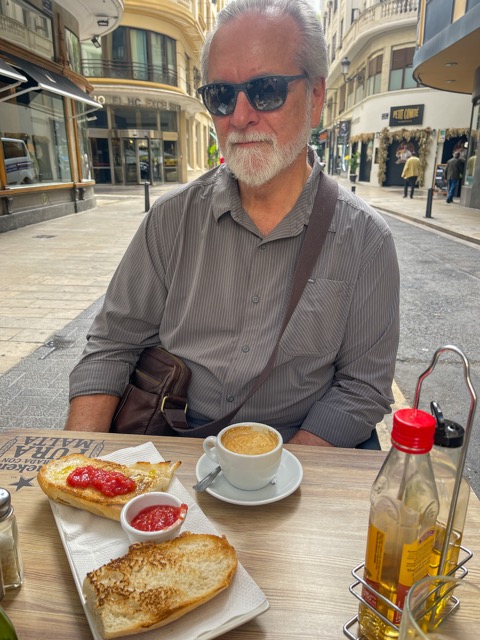
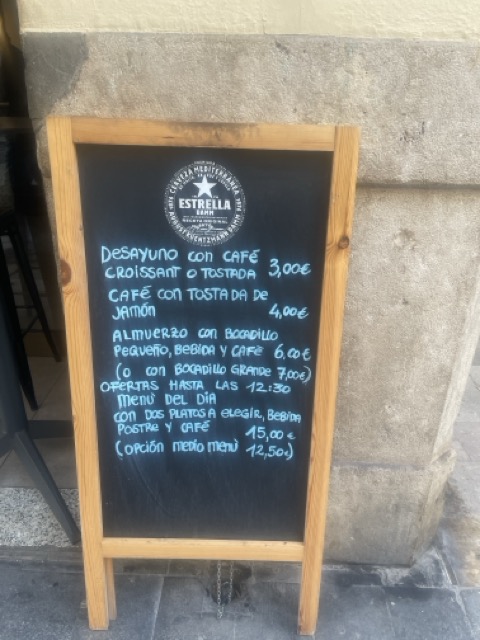
Breakfast is decidedly NOT the most important meal of the day in Spain. Rather, it is quick and simple. A typical breakfast in Spain, from about 7:00 to 8:30 AM, always includes café con leche (coffee with milk), which can be accompanied by one of the following: a croissant, toast with jam or tomato, or simply toast with olive oil. The most popular breakfast item is tostada con tomate – toasted bread that’s covered with freshly grated tomato, a hint of garlic, and plenty of olive oil and salt. It’s also common to have a small glass of beer, a glass of wine, or even a shot of cognac with your desayuno. Children have chocolate milk and maybe some cookies for dunking.

El Almuerzo – Brunch

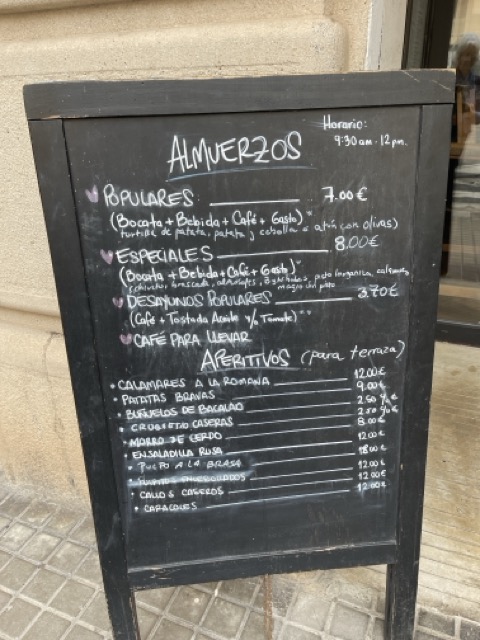
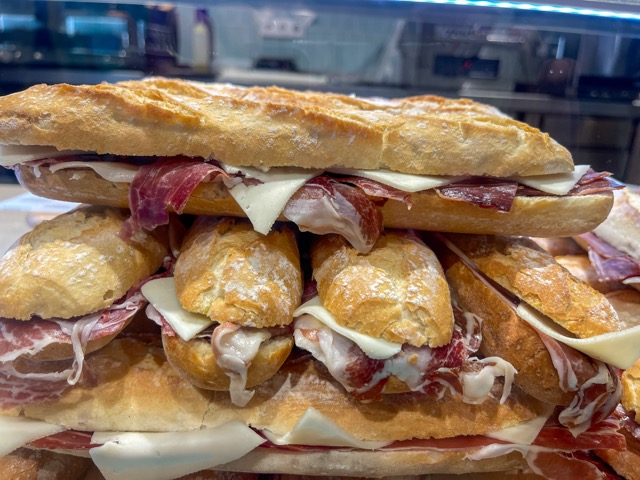
Even though Google Translate will tell you that “almuerzo: means “lunch” in English, this is not correct. Breakfast #2 would be a better description for this meal which is from 10:00 to 11:00 AM (workers and school children all have a mid-morning break at this time). In Valencia, a typical el almuerzo is a light meal such as a bocadillo (small sandwich on a baguette) or cocas (a type of individual Spanish pizza with no cheese). The  accompaniments can include nuts, olives, sausages, serrano ham, or chorizo ​​and cheese. Once again, a small alcoholic beverage such as beer or table wine is often included. One can finish the meal with cafe con leche or cortatdo. It’s important to remember that drinking coffee WITH your meal is not done. It is fine, however, to finish a meal with un café (espresso served with no milk), un cortado (espresso with a little milk), or café con leche (espresso with more milk). Just don’t drink it while you’re eating.

Vermú  –  Vermouth

Sometime around noon to 1:00 PM, it’s time to grab a quick snack and a drink to hold you over until lunch. You meet with friends to enjoy a few tapas and wash them down with vermú. You never order coffee with this meal. In fact, I’ve seen signs that say “A partir de las 12:00 horas, ya no se hacen cafés. Disculpen las molestias.” which means “From 12:00 on, we don’t make coffee. Sorry for the inconvenience.” While considered a sacred time of day, especially in Barcelona, the vermouth hour Vermouth hour is can be any time before a meal nowadays. (This is the optional sixth meal of the day.)

La Comida – Lunch

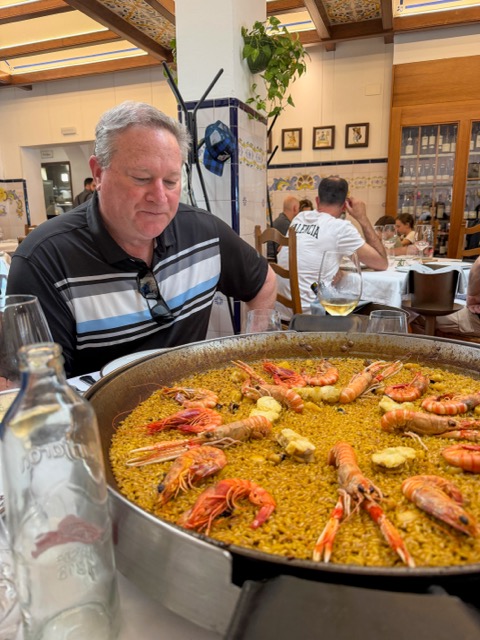
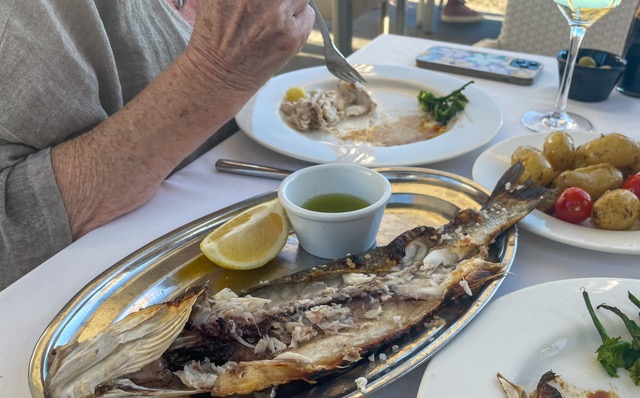
Finally, it’s lunch time and this one is sacred! The largest meal of the day, it is eaten between 1:30 – 3:00 and usually includes multiple courses. Spaniards believe in taking their time and enjoying their meals, so la comida can easily last two to three hours. A typical la comida includes a starter (a salad or a plate of jamon, cheese, olives, and bread), a main course of grilled meat or fish, paella, or pasta. A bottle of wine is a must and there’s always a dessert course.

La comida is such an important Spanish mealtime that stores, businesses, schools, and offices close from about 1:30 PM to 4:30 PM. People take time to enjoy their lunch and possibly take a siesta. If you need something from a store (other than the large department stores), you must get it before 1:30 PM or after 5:00 PM. In the tourist areas some restaurants keep “crazy” hours  just for the tourists and serve “lunch” starting at around noon. Most local restaurants, however, don’t start serving lunch until at least 1:30 PM and many don’t open until 2:00 PM.

The Menu del Dia tradition – Menu of the Day

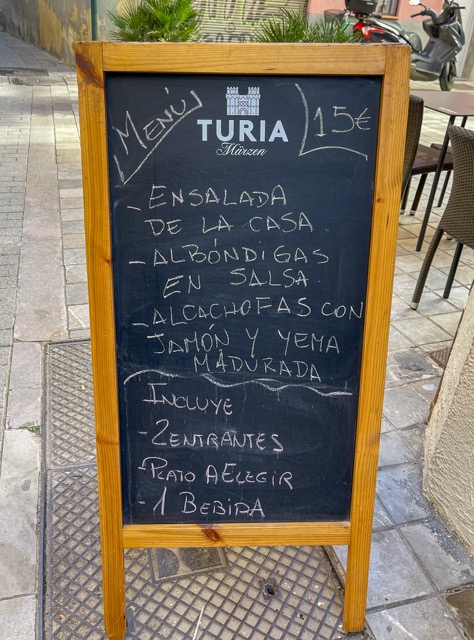
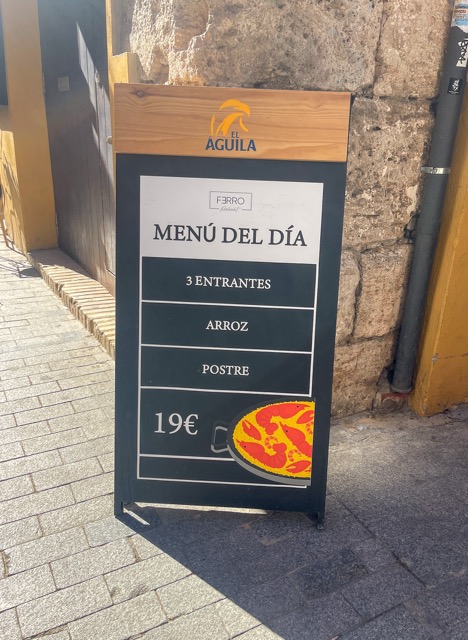
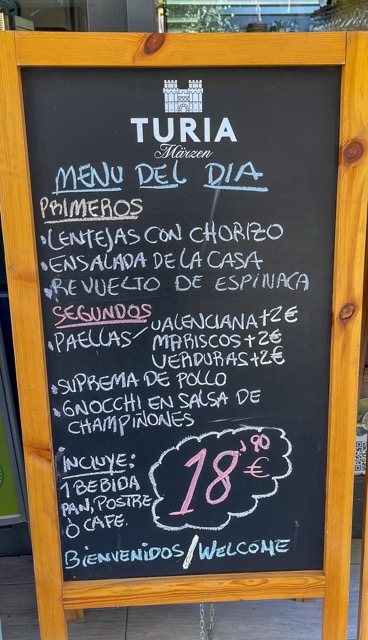
Apparently, in the 1960’s and 1970’s, General Franco issued a decree that required all restaurants throughout Spain to provide an affordable meal (charging no more than the typical hourly wage) for workers on weekdays. The tradition lives on. Even today, it’s easy to find a 3-course mid-day meal for around €10-20. Often, this includes a glass of wine or beer and coffee (after the meal). The choices are typically written on a chalkboard on the sidewalk or on a piece of paper tacked up in the restaurant.

Just a quick note about some paella rules: Paella is only eaten at lunch, never for dinner. It is never cooked in individual portions and it should take a long time to arrive at the table. Oh, and meat and seafood should never be mixed together.

La Merienda – Late-Afternoon Snack

La merienda, usually between 5:00-7:00 PM, may seem unnecessary but remember, dinner is eaten very late in Spain. So, to hold one over, a small snack is required. This can be a savory bite such as a bocadillo, a tortilla (a Spanish omelet with potatoes and onions), or calamari (grilled or fried), and as always some of that famous Spanish jamon (ham). Alternatively,  one can choose sweets such as bixocho (sponge cake), cheesecake, or a churro with dipping chocolate.

This little meal, or rather snack, is still taken quite seriously even for school children. When school is out, parents will ask their kids, “Quieres merender?” (Do you want to snack?) Of course, no kid ever refuses, and their merienda can include bread, biscuits, chocolate milk, or fruit. With dinner still several hours away, this could be important!

La Cena – Dinner

Dinner in Spain is eaten at about 10:00 PM throughout the week and even later weekends. The kitchens in virtually all restaurants close around 4:00 PM and don’t open again until 8:00 – 8:30 PM. Typically, a lighter meal, dinner might include a salad, soup, cold cuts, cheese, and sometimes a small serving of fresh fish or meat served with potatoes or vegetables. A light dessert of fresh fruit is a typical dessert.

These traditions are a part of what makes Spain such a pleasant and laid-back country to live in. A common expression here is “No pasa nada” and a rough translation might be something like, “Relax, don’t take it all too seriously, here, have some olives.”

Sobramesa

Relaxing and socializing after a meal is a Spanish tradition they call sobramesa. This is particularly true after lunch (La Comida). Sobramesa is about prolonging a meal because you’re having such a good time with your friends that you don’t want it to end.

Tapas

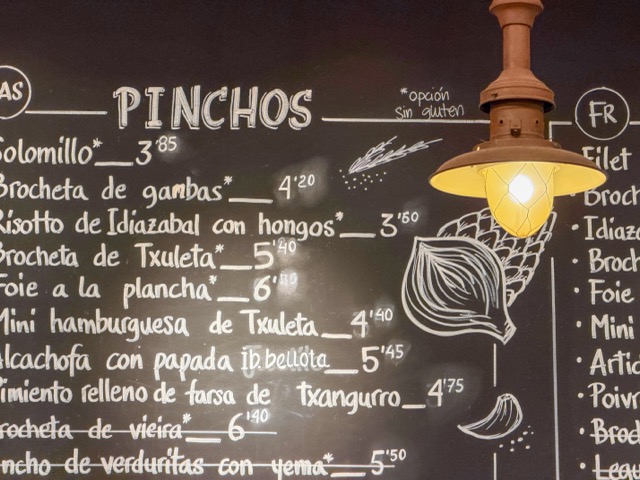
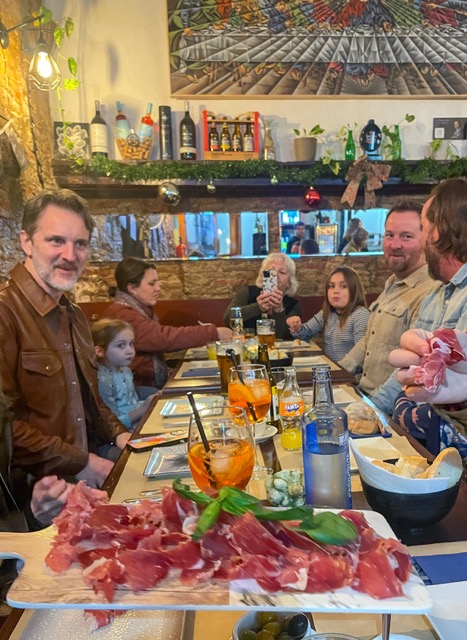
 You might be wondering about tapas. When are tapas eaten? Anytime. All the time.  A tapa is a small portion of food that is served alongside an alcoholic beverage (are you noticing a pattern?) such as a beer or wine.  You might enjoy several tapas as a full meal, or just one to whet your appetite for a large dinner. And, of course, tapas are an excuse to socialize (another pattern?). Some of my favorite tapas are garlic shrimp, patatas bravas (fried potatoes with spicy sauce), small green padron peppers, croquettes filled with meat or seafood, jamon and cheese in countless concoctions, boquerones (marinated anchovies), torrezno (crispy fried pork skin), and pinxtos (beautifully arranged ingredients atop slices of toasted bread).

Is this healthy?

You might be thinking that the Spanish approach to eating sounds like a health nightmare. So, I checked. Recent data ranks Spain 9th in the world for longevity (the U.S. is 48th) and Spaniards live longer on average than any other European. The incidence of obesity here:  less than half of the U.S. rate. But what about all that drinking? One local employer, asked about the sobriety of his work force declared, “My employees are never drunk! Of course, they’re never entirely sober either.” Despite this, the rate of alcohol dependency is more than 5 times lower in Spain than in the U.S. Maybe these Spaniards are on to something!

The Restaurant Experience

Restaurant culture is quite different in Spain compared to the U.S. You know the drill in the U.S. – servers come to the table, introduce themselves, tell you they are going to “take care of you”, and ask if you are ready to order. Then, they are attentive throughout your meal making sure to ask, “is everything OK?” and offering refills on drinks. In the U.S., we often think of good service as being quick – bringing your food out quickly, making sure you get your check quickly, etc.

This behavior would be considered rude in Spain. There is never a rush by the restaurant to “turn” the table. A server would never be so rude as to interrupt you to ask if you are ready to order or if everything is OK. Typically, the server will not come to your table to take your order until you signal that you are ready to do so. To do this, you look in their direction, catch their eye, and motion to them to come over. The check will never be delivered until you specifically ask for it.

Mealtime in Spain is about gathering with family and friends. It’s a sense of community and belonging that nourishes the soul as much as the body and we know that social connection plays a major role in healthy aging.

So, there you go, now you know how to eat like a Spaniard! As I said, we’re doing our best to get used to this routine and it’s going well. It’s a quite pleasant lifestyle that supports a relaxed pace of life and focuses on really enjoying your food.

Buen Provecho!

Simply translated: enjoy your meal. But there’s a bit more to it when we break it down. Buen means good and provecho means profit or benefit. The sentiment: “May you benefit from this meal!”

Five (or Six) Squares a Day Read More »
Family TIme

The end of ’24 and the start of ’25 have been Family Time!

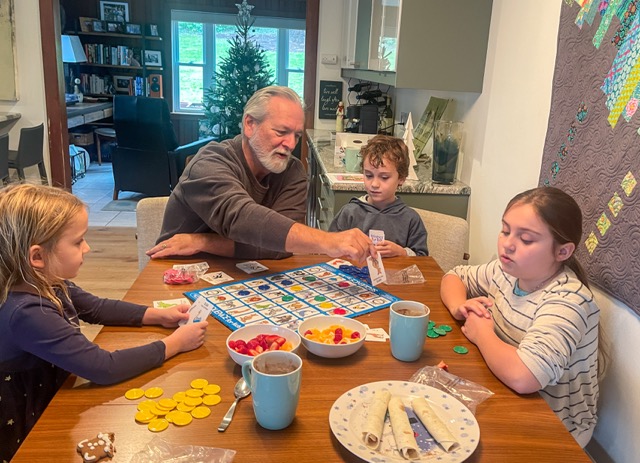
December was a whirlwind of activity as we returned to Pennsylvania for the holiday season. We landed in Pittsburgh at 8PM on December 6, got a few hours of sleep, picked up our grandchildren, and went tree shopping. By the evening of the December 7th the tree was up, the house was decorated, and we had a hearty winter stew bubbling on the stove for a dinner with Matt, Maggie and the kiddos. Whew!

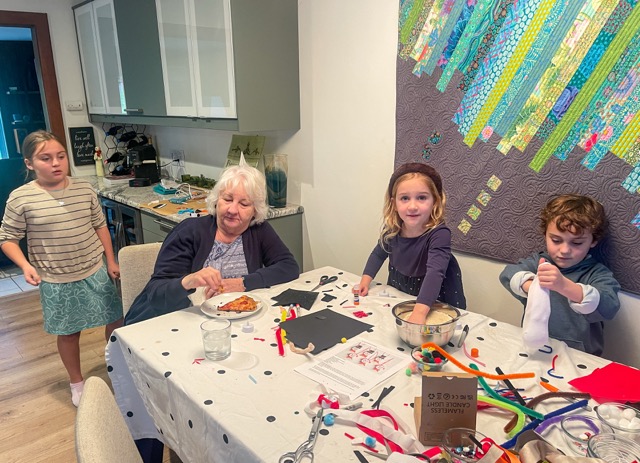
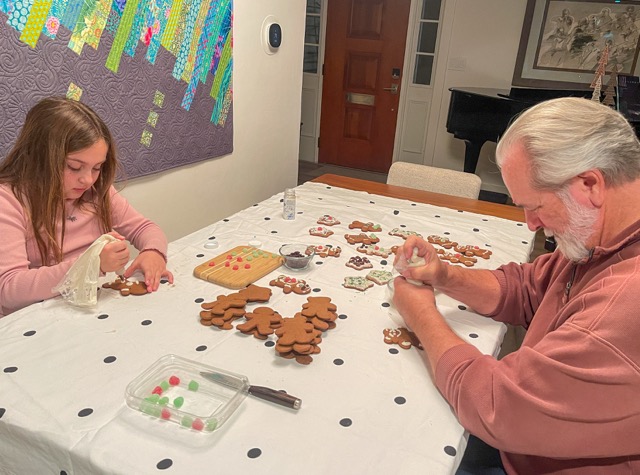
Playing with the kiddos, baking and decorating cookies, wrapping gifts, making holiday crafts, hosting dinner parties for our friends, and hanging out at The Tavern (Matt & Maggie’s WONDERFUL restaurant in New Wilmington – (www.thetavernonthesquare.com) consumed us for the last weeks of 2024. (Ed also did a bit of snow shoveling!)

We celebrated Merr’s birthday on December 29 (she’s 6!) with a lovely family dinner at The Tavern.

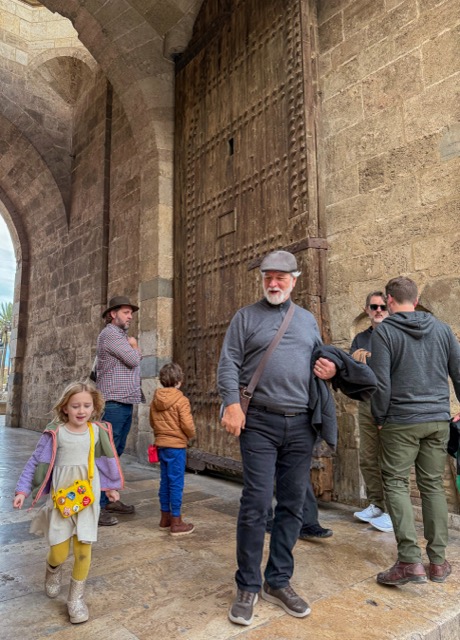
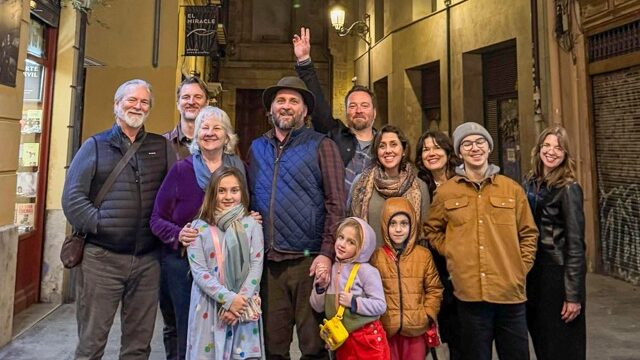
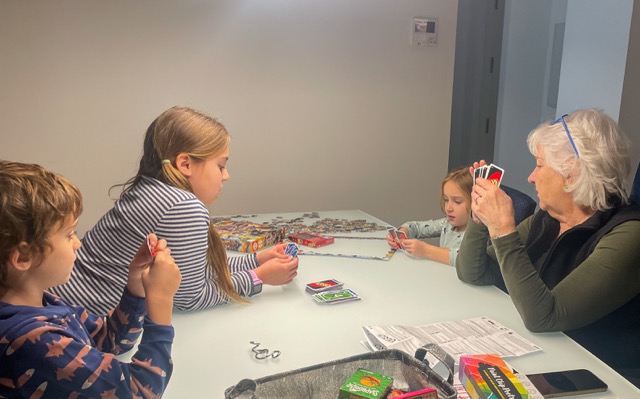
Arriving back in Valencia on December 31, we were just in time to prepare for Matt, Maggie and the kiddos arrival on January 1st. The rest of the gang (Mark, Shannon, Michael, Charlotte, and Jesse) landed in town the following day and for the next week we did our best to share with our family this wonderful city that we have come to love. Tours, feasts, stories, museums, art, music, and just hanging out together – the plan was to maximize the experience for everyone. It was magical for us, and we will long treasure the memories.

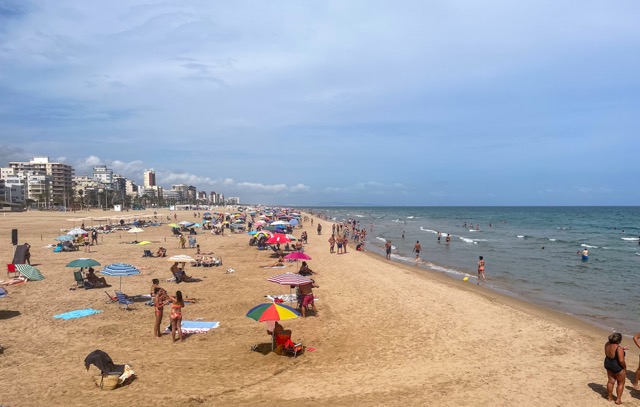
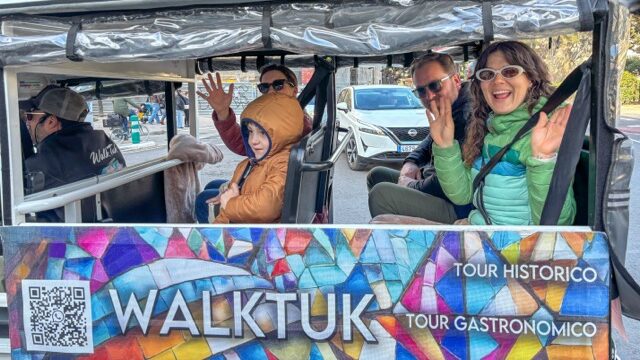
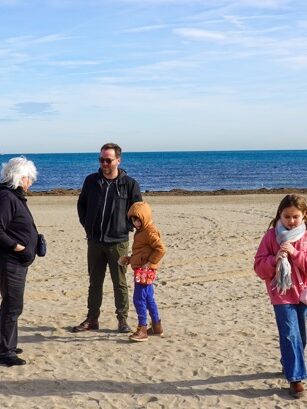
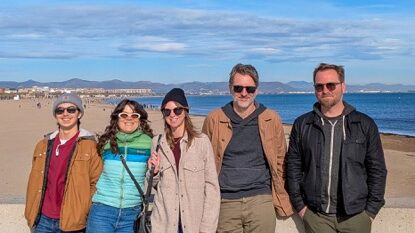
Our first day together in Valencia started with a Tuk-Tuk tour. After winding through the city, we headed to the Mediterranean for a walk on the beach.

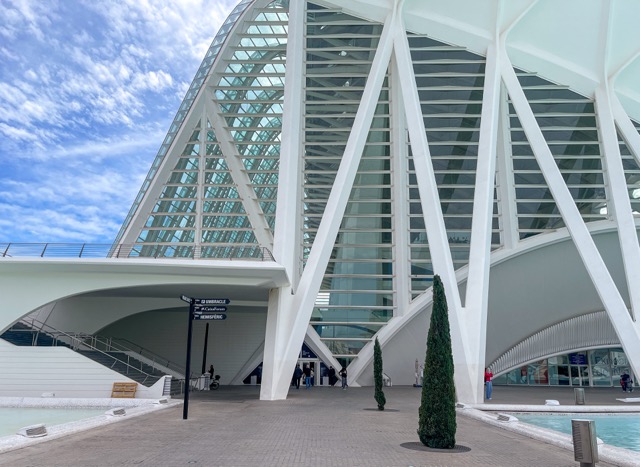
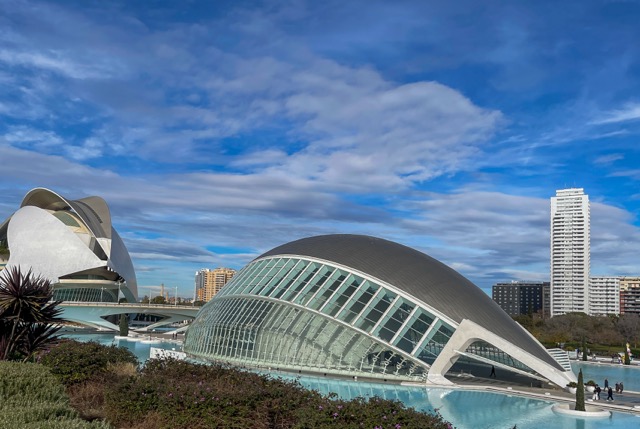
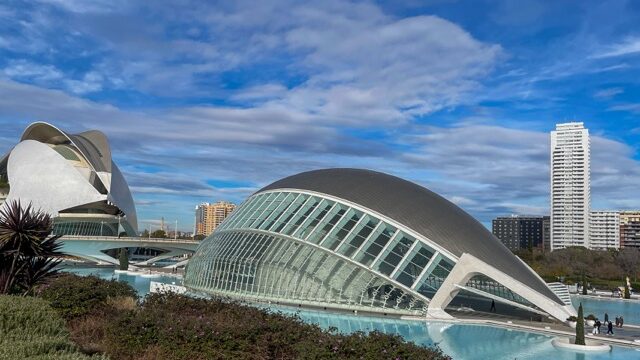
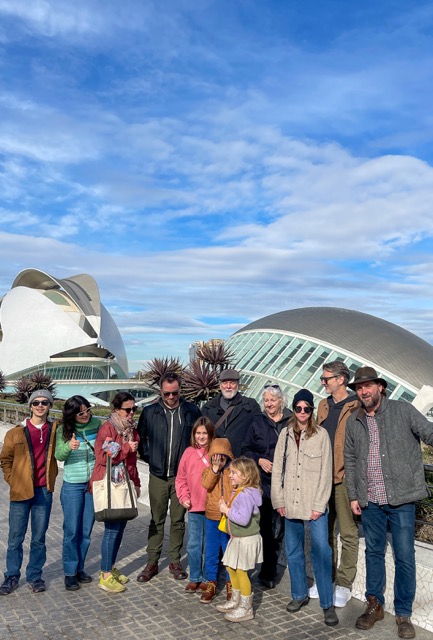
Our next stop was Valencia’s Ciudad de las Artes y las Ciencias (City of Arts & Sciences) where we admired the spectacular, and very modern architecture of Santiago Calatrava. Everyone was impressed!

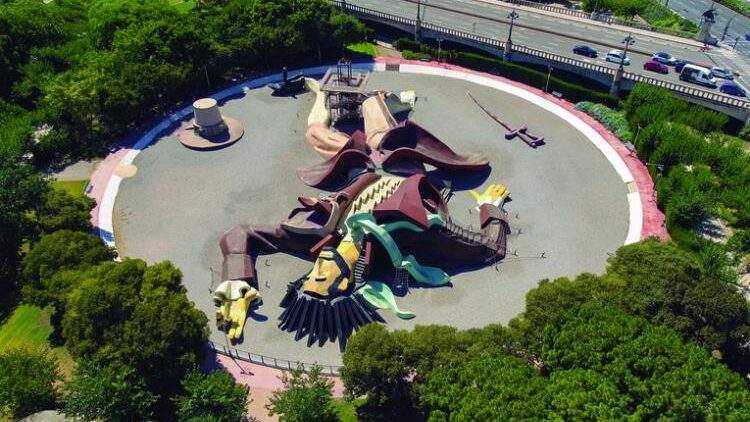
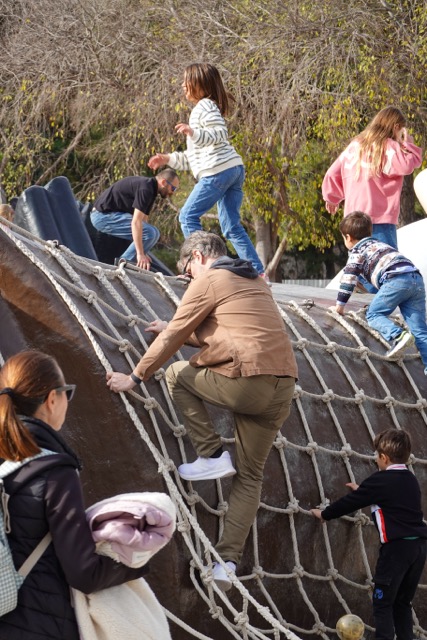
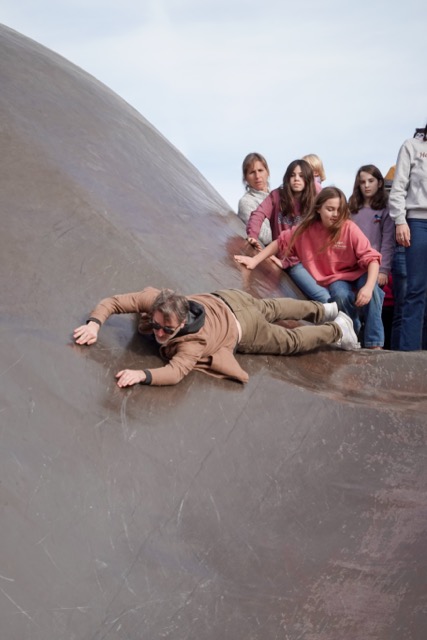
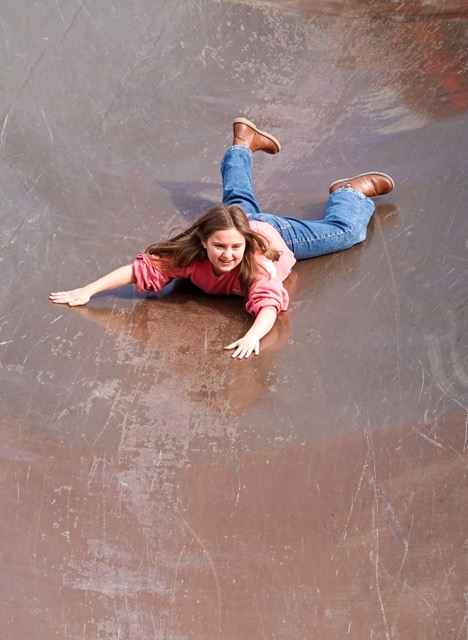
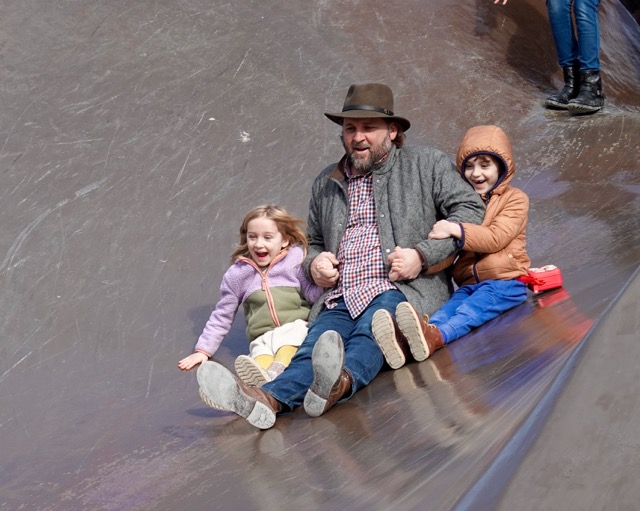
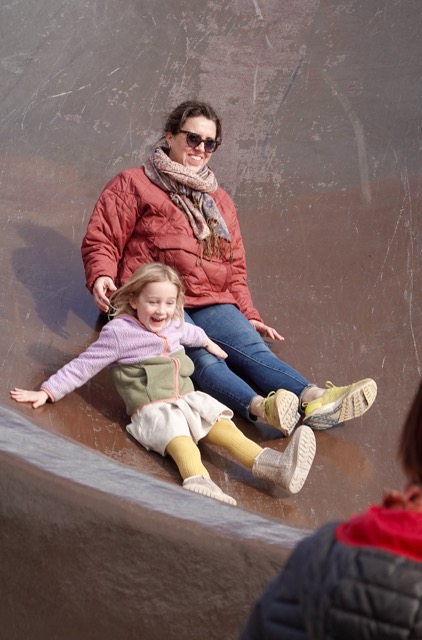
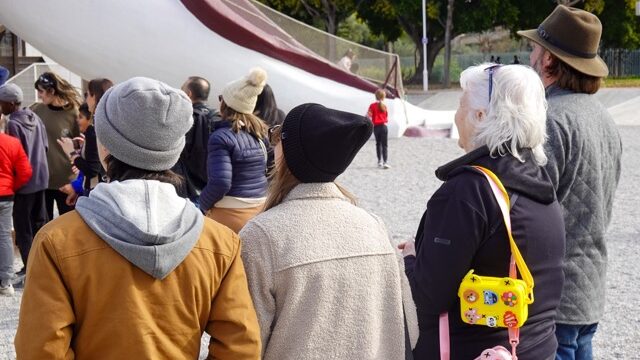
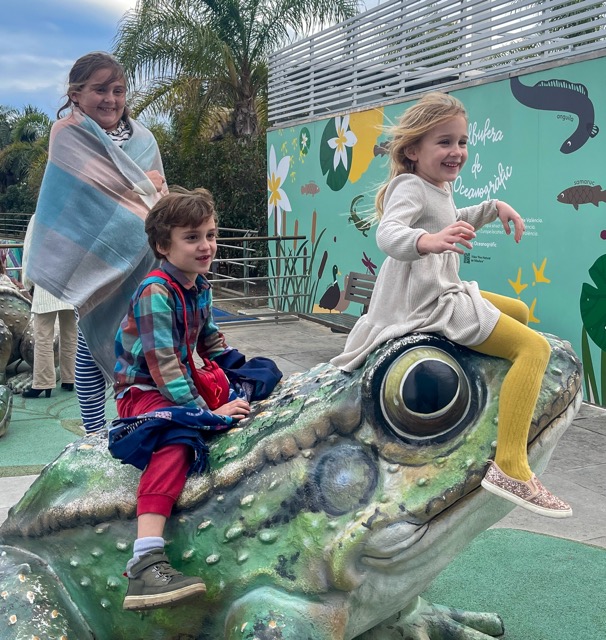
Our TukTuk drivers dropped us off at Guliver’s Park where a good time was had climbing all over Gulliver lying on the ground, bound by the ropes of the Lilliputians.

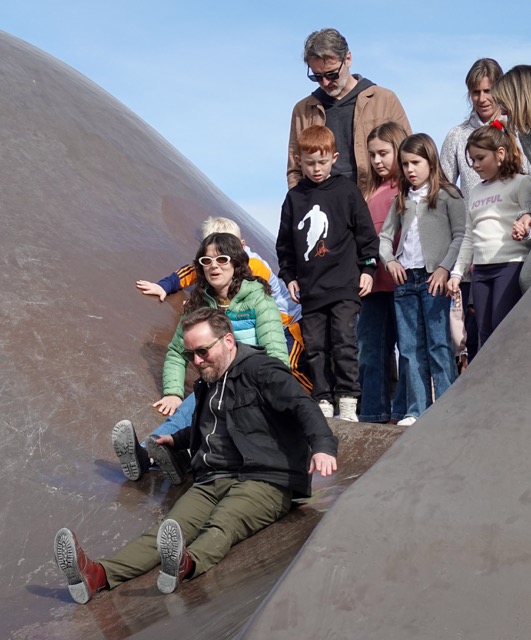
The giant slide, Gulliver’s coattails, seemed to be everyone’s favorite.

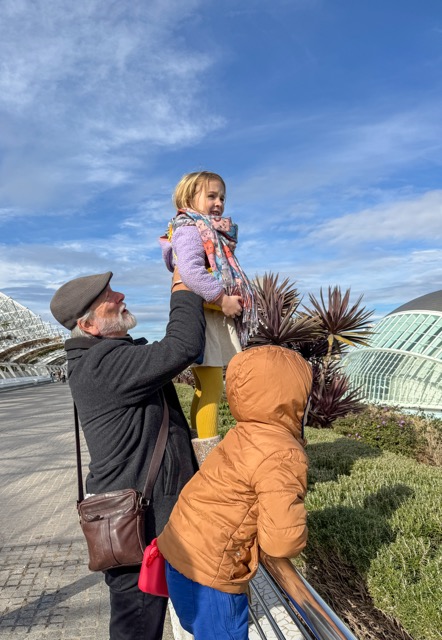
Everyone needs an audience.

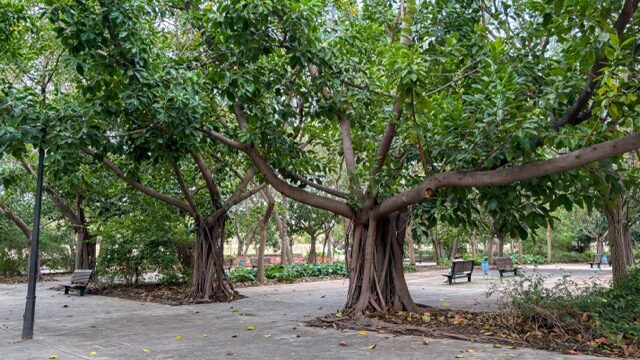
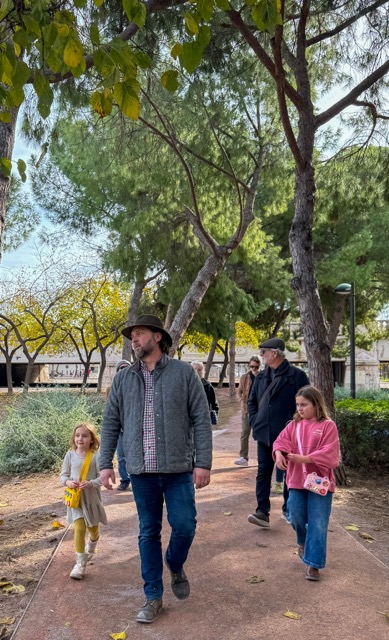
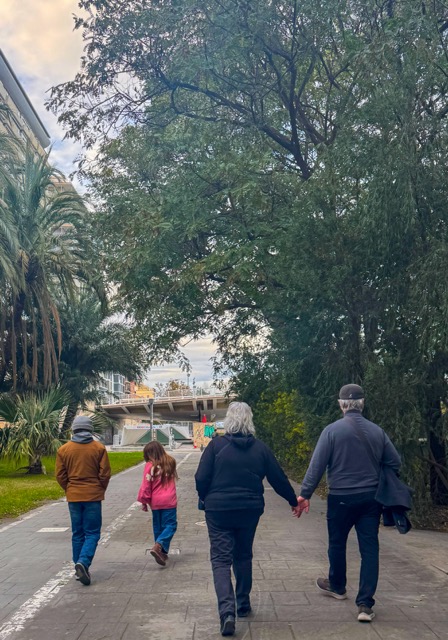
Saying goodbye to Gulliver, we took a nice walk through the Jardín del Turia (the fabulous 9KM green space in the middle of Valencia) on our way to a lunch of tapas and paella.

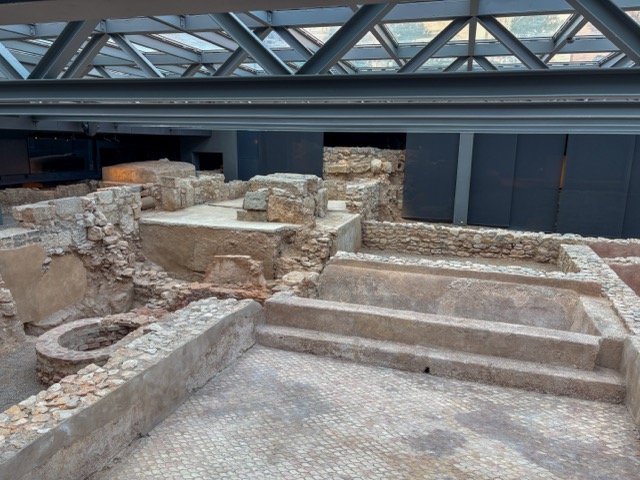
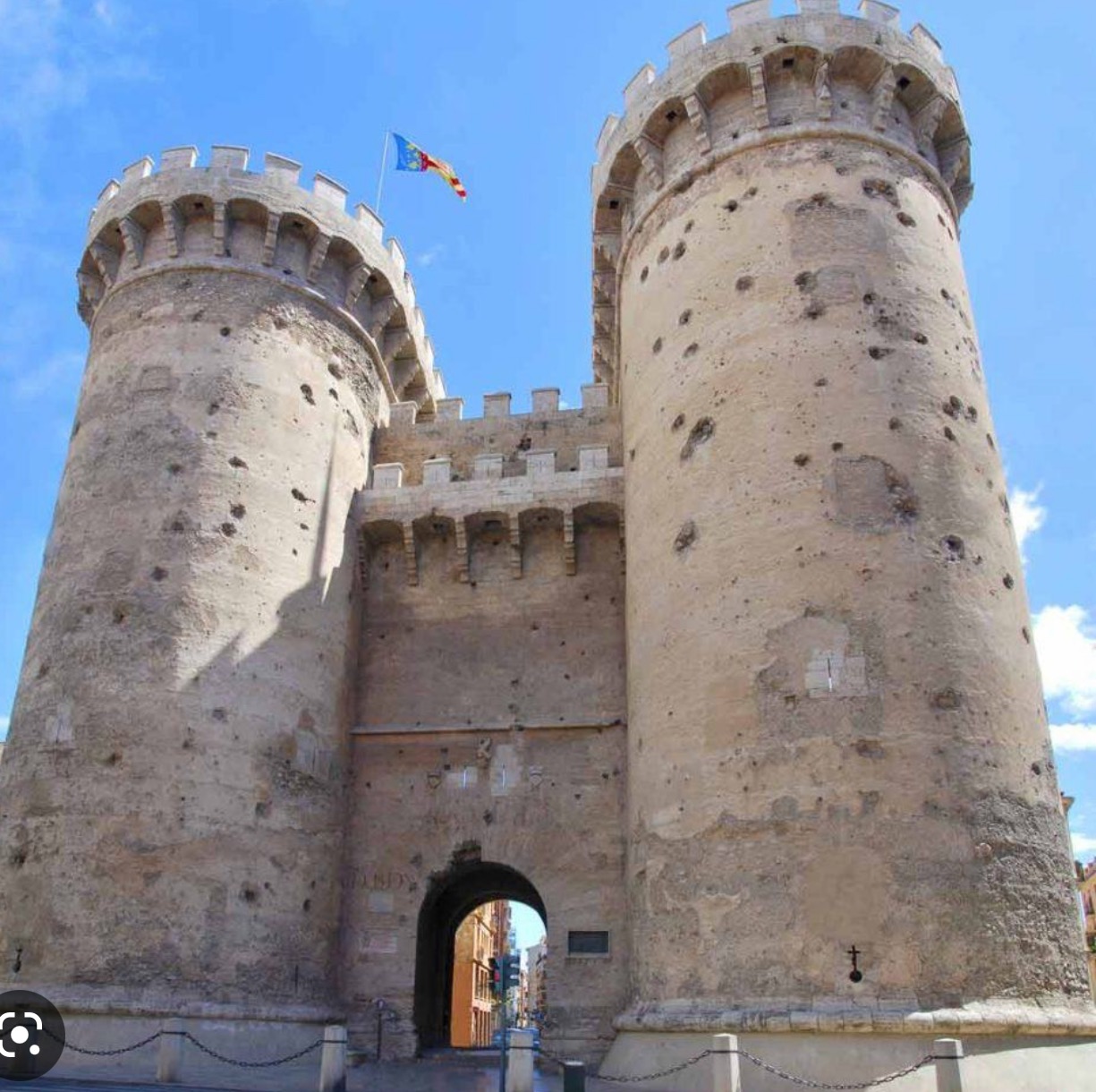
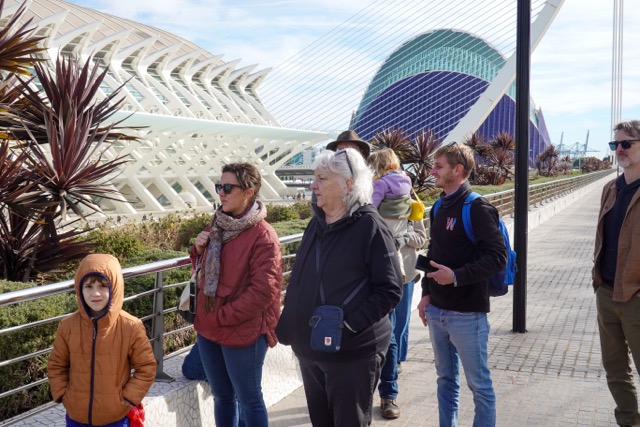
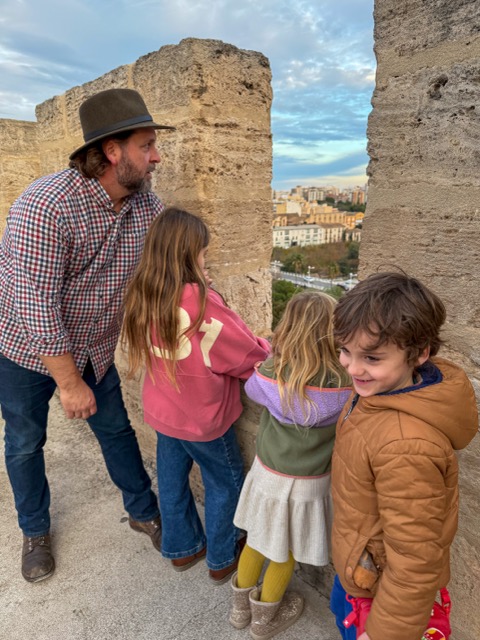
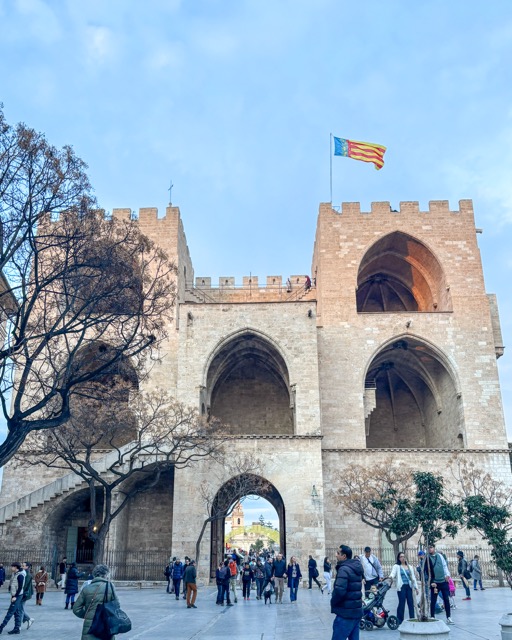
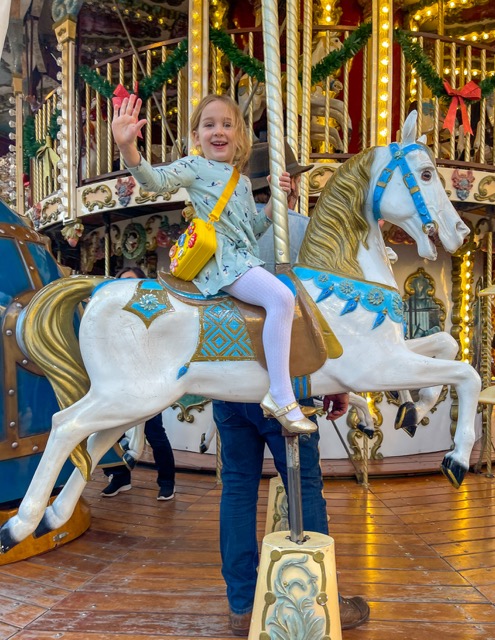
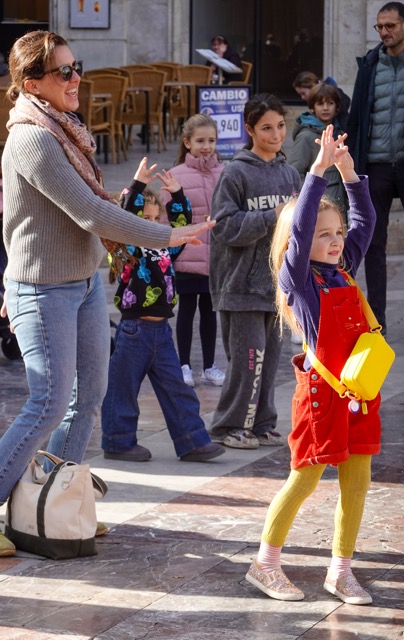
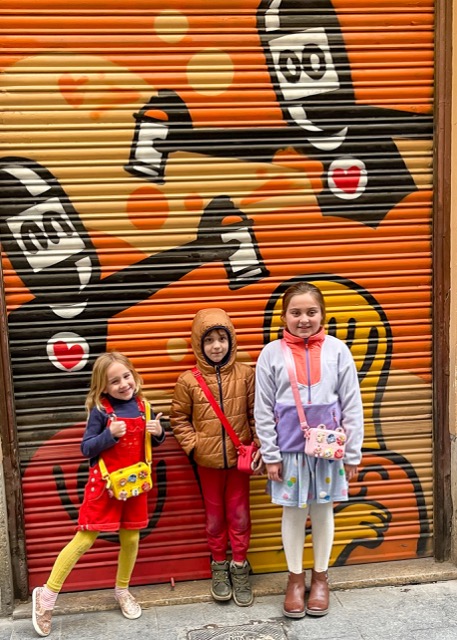
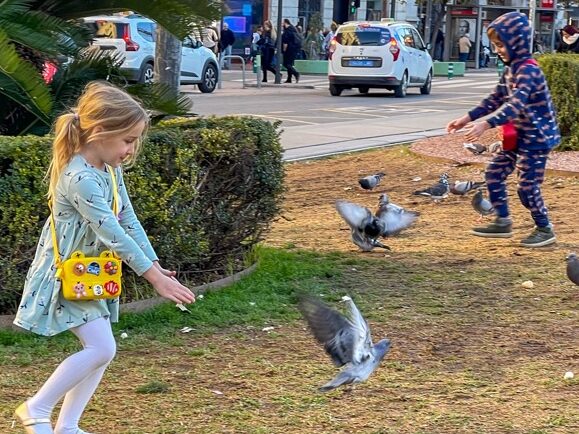
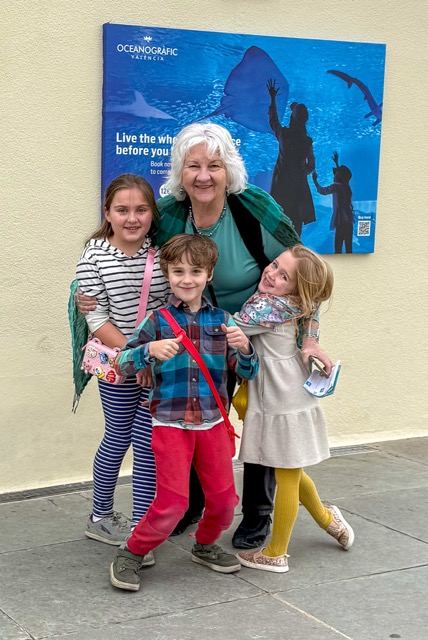
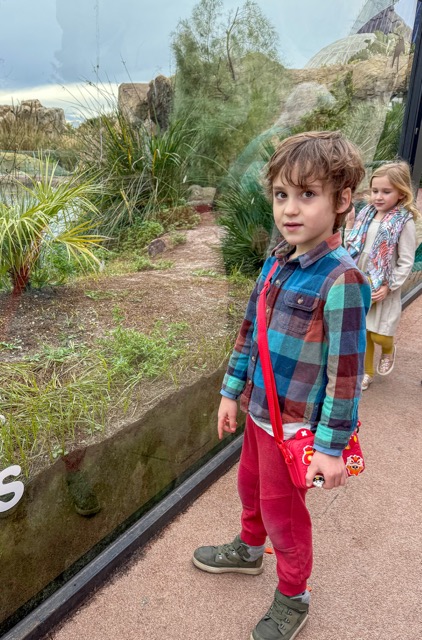
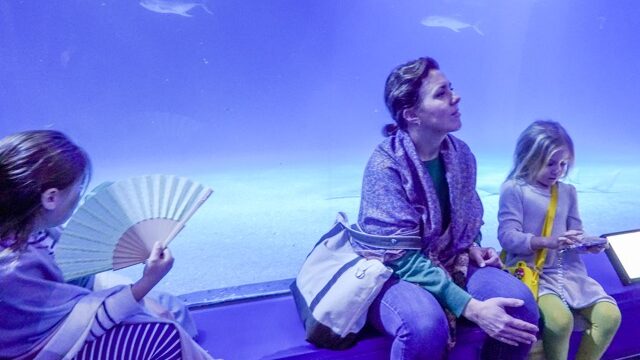
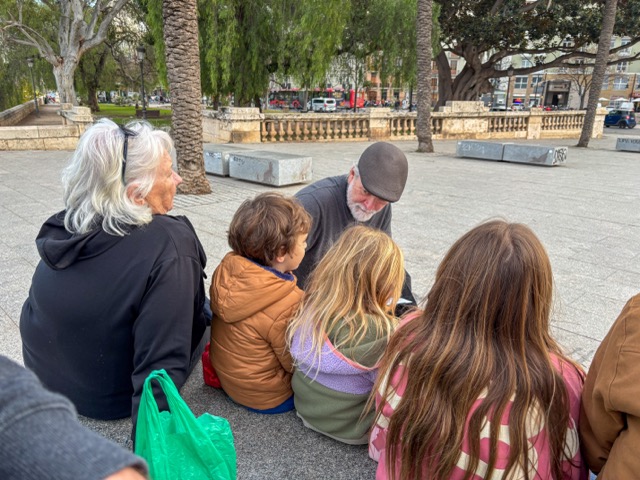
That was day one! For the remainder of the week, we walked about the city, climbed to the top of the Serranos Towers, checked the street art, enjoyed the Three Kings Parade, explored Roman ruins, rode the Merry-Go-Round, chased pigeons, danced in with the Christmas elves in the plaza, visited the aquarium (largest in Europe), and listened to some of Grandfather’s and Uncle Mark’s stories about Valencia. So much fun!

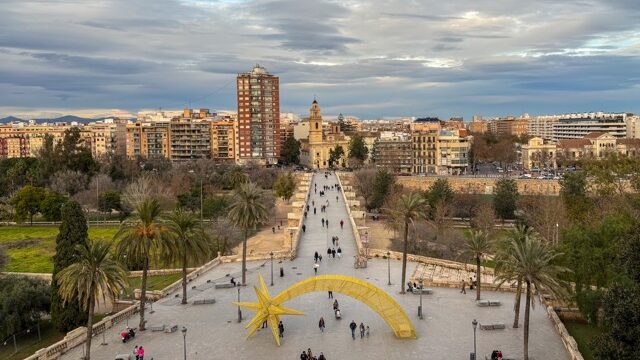
Valenica – looking north from the top of Torres de Serranos.

Of course, we spent plenty of family time around a table full of food (and cocktails!).

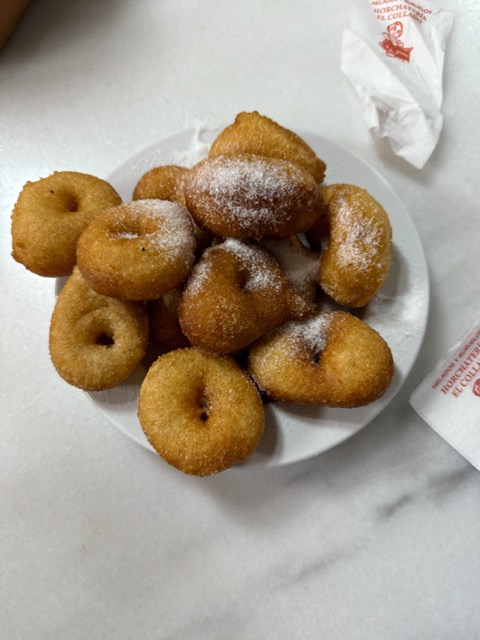
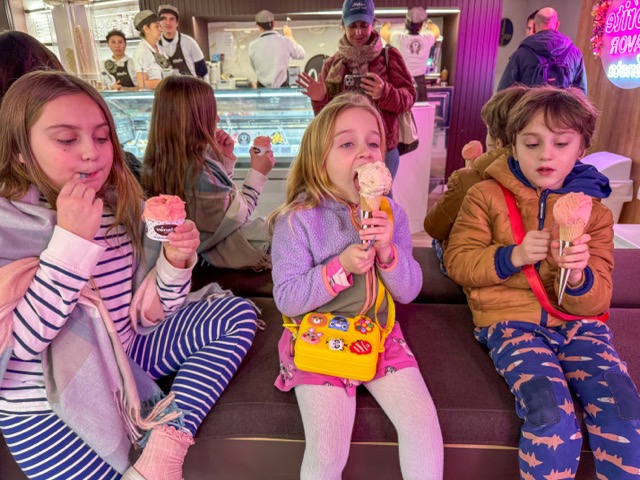
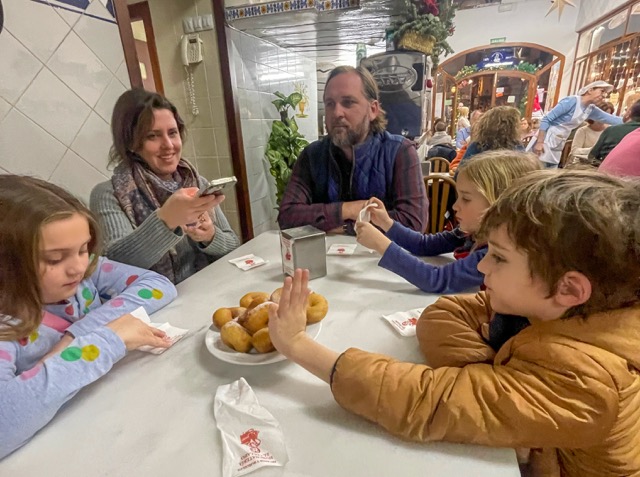
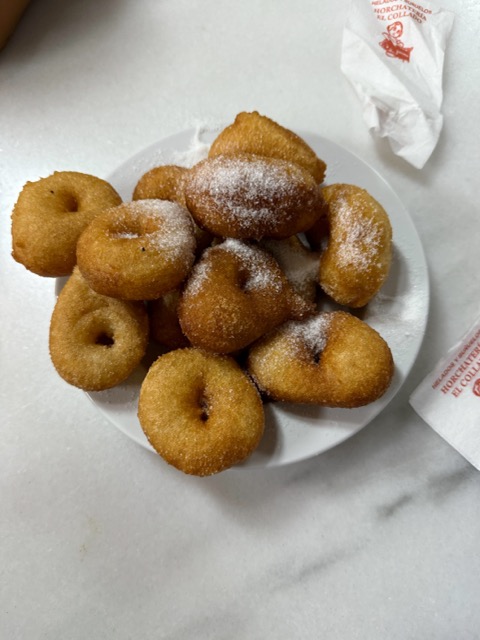
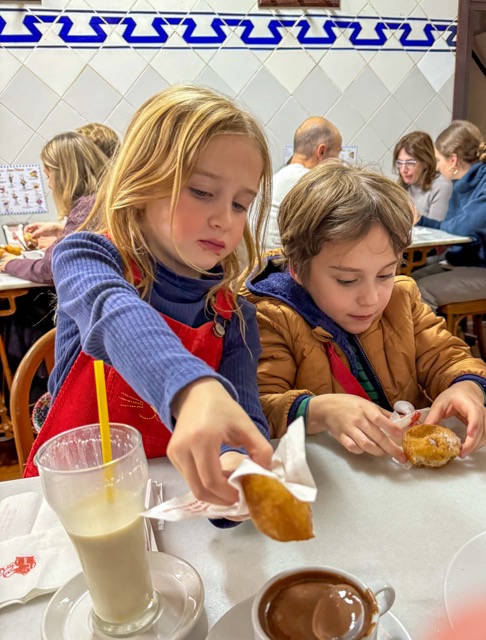
Not to worry, there were plenty of stops for treats, including a Valencia specialty…buñuelos and horchata.

Time hanging out at our place might have been the best of all!

Saying good by wasn’t easy.

 We’re busy planning our 2025 travel starting with a birthday trip to Oman. Stay tuned!

Family TIme Read More »
Reflections on an Adventure

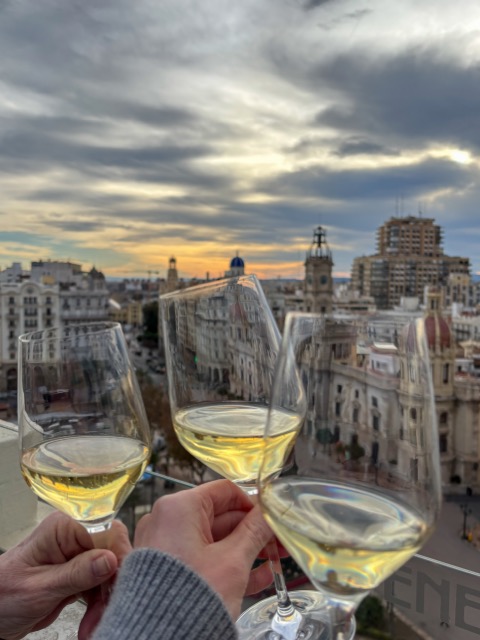
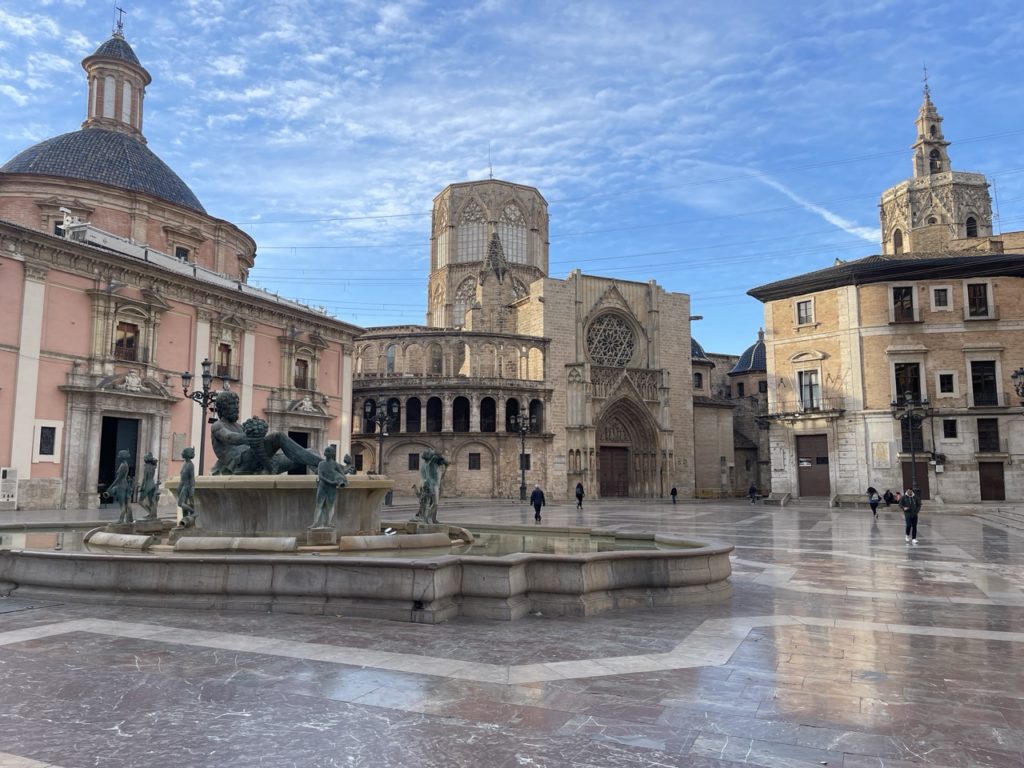
We’ve been back in Valencia for almost two weeks and while it’s nice to be home, our thoughts are often still in Italy and France. Letting these thoughts linger helps to keep the magic of the trip alive and inspire us for future travels. The photo above is our lovely Plaza de la Virgin which is just around the corner from our apartment. This was taken in the early morning. The plaza will soon be filled with lots of people wandering about and sitting at the numerous cafe tables that are set up each day. It’s one of our favorite spots in Valencia.

Bella Italia!

We were sad to leave Italy. It’s such a rich and diverse country with stunning physical beauty, so much history, great food, and amazing people with an infectious passion for life. We will return. We met a German couple in Bologna who live in Cologne but travel to Italy at least 4 to 5 times a year. Then, there was Thomas and Lisbeth, the chef couple from Copenhagen who moved to Umbria 14 years ago. I’m not sure we’ll move to Italy and I’m not sure we’ll make it to Italy 4 or 5 times each year (there are SO many places to go!). But we’re thinking we can commit to at least 2 trips to Italy each year, especially since it’s so close to Valencia. Next year, we hope to visit Sardinia, Sicily, and Puglia. I have not yet figured out how to fit in all the places we are determined to visit again – Bologna, Venice, Turin, Rome, Florence, etc.

A Francophile Among Us

In Lyon, Ed confessed that he feels most comfortable in France. I mentioned the well-deserved stereotype of French snobbishness and he replied, “Yeah, these are my peeps.” It’s that darn French language that has been the problem for him. More than a decade ago, when we were living in Dallas, he agreed to take private French lessons with me. The instructor required an interview before accepting new students and this included reading a paragraph of French just after she’d read it to us. When we completed the interview, she told us that she would accept me as a student, but not Ed. This was big blow to the ego and established a firm conviction on Ed’s part that he was incapable of speaking French. When he reminded me of this during our stay in Lyon, I suggested a second opinion might be in order. We’ll see how that goes.

“France has the only two things towards which we drift as we grow older – intelligence and manners.” 

F. Scott Fitzgerald

Train, Trains, and more Trains

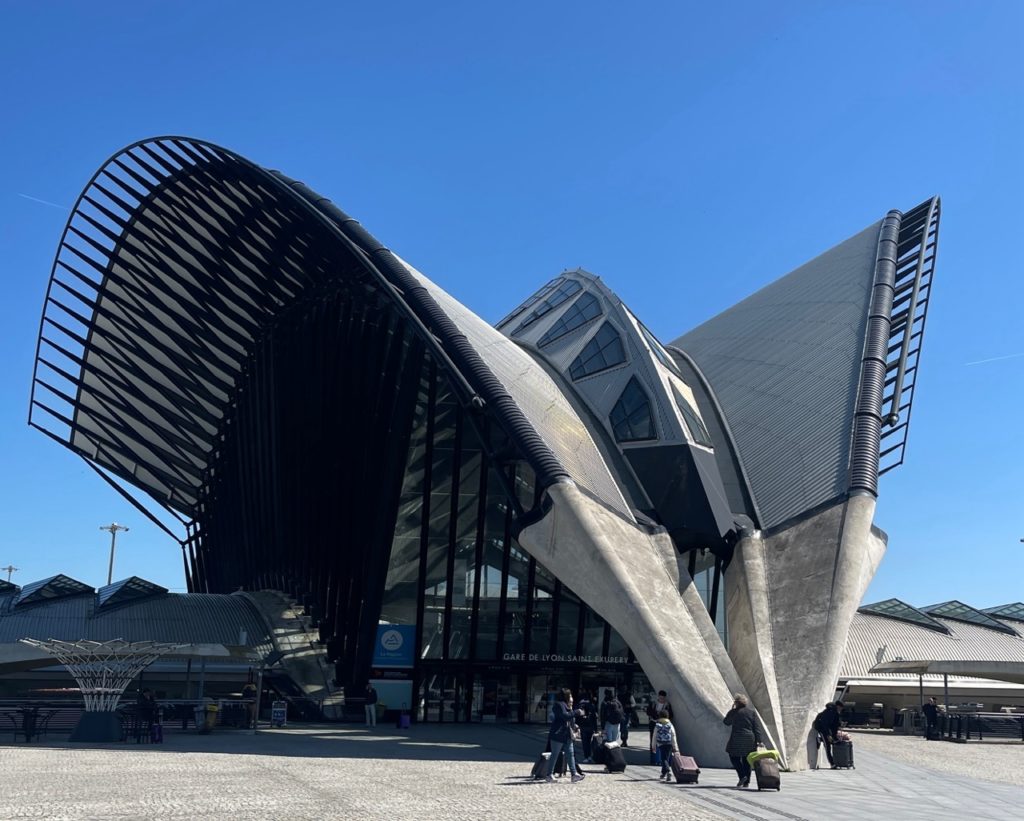
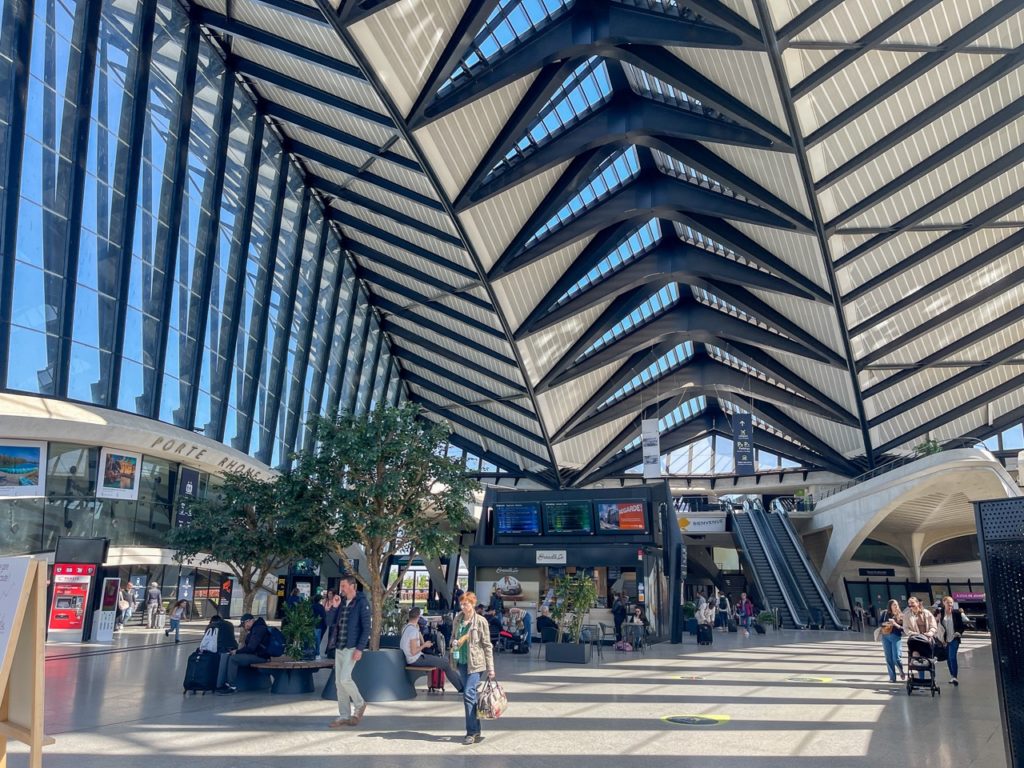
We’re hooked on trains! There’s a lightness in my step (a big deal at my age) and a feeling of excitement as we roll our bags to yet another train station headed for a place we’ve never been or one we’re eager to return to. There’s a sense of adventure as you glide through the countryside, small towns, and cities along the way. The changing landscapes outside the window provide a glimpse into local life and new places to consider visiting. Often, the train station itself is an example of wonderful architecture.

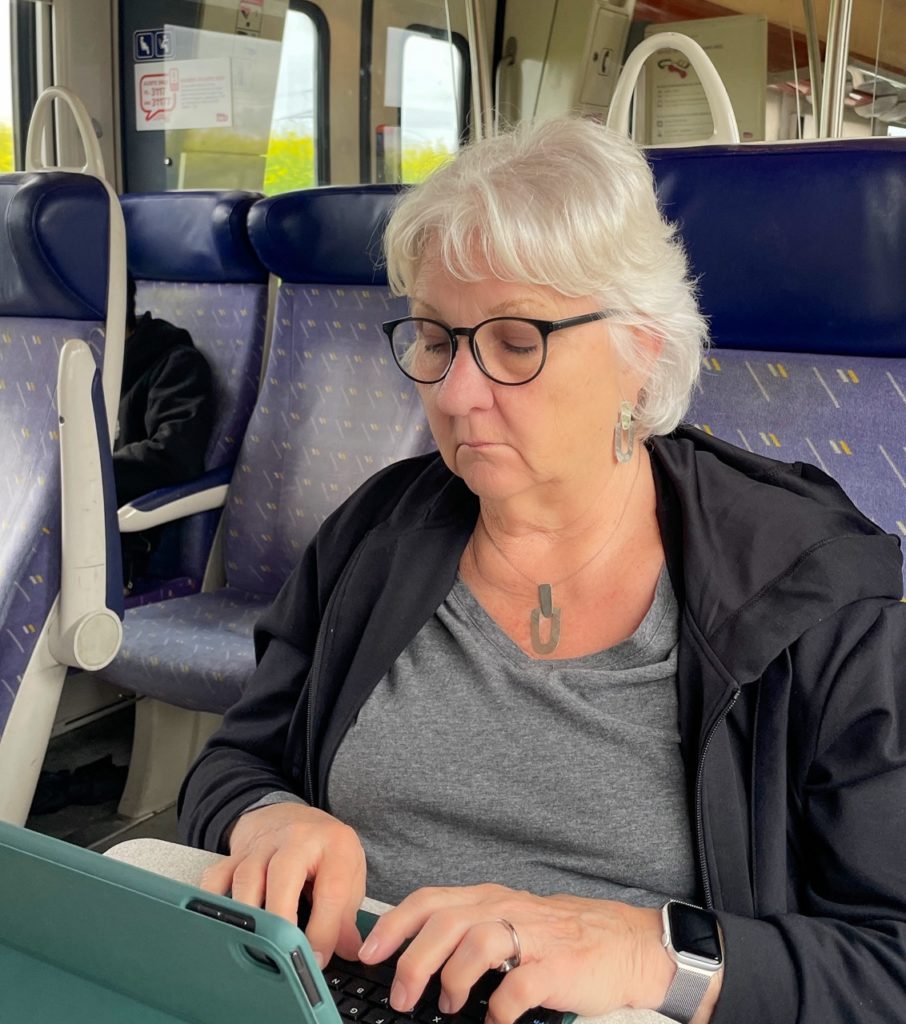
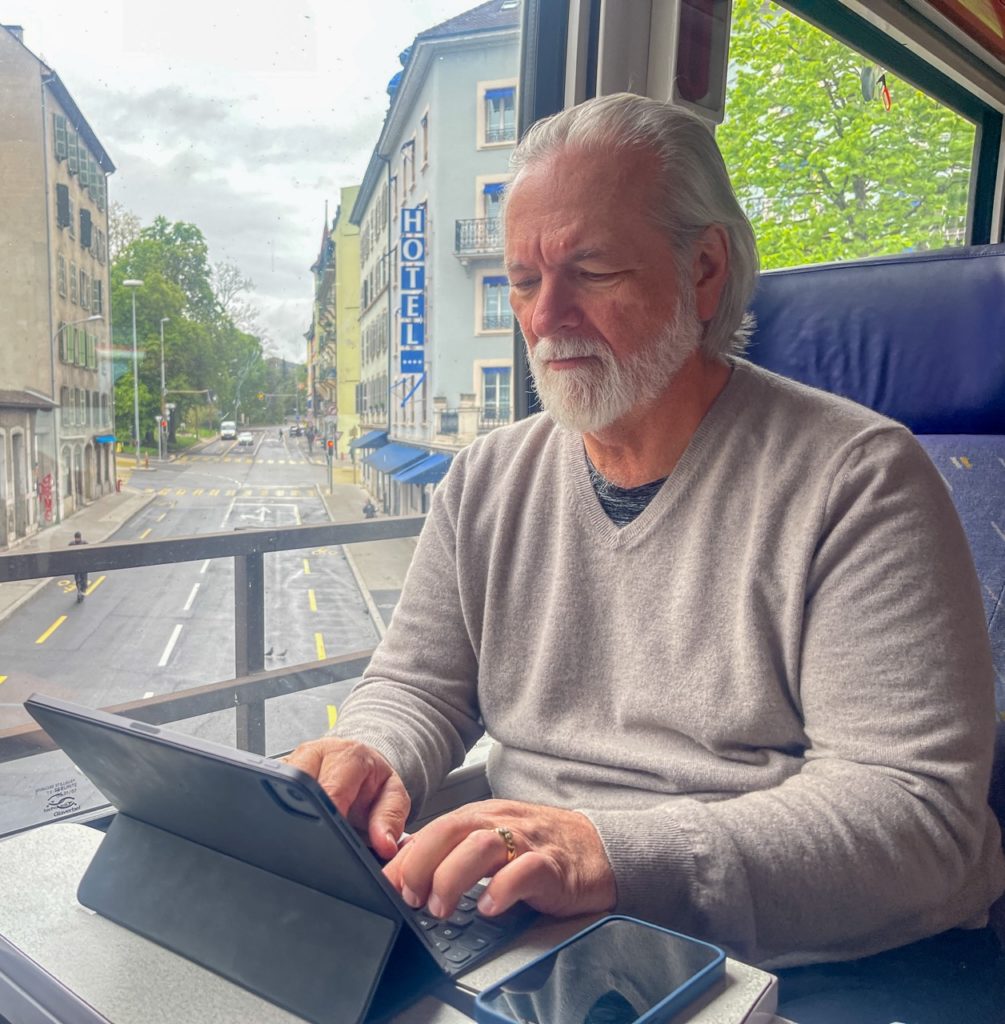
And then there’s the fact that traveling by train is relaxing. The gentle, rhythmic motion lulls you into a state of relaxation. And you can get up, walk about, and visit the cafe car at any time. It’s a great way to travel. We look forward to our train days spending much of our time writing our blog posts. Rather than feeling like a chore, it’s a time to reflect on and discuss our experiences. Plus, writing seems to help us set the memories more solidly in our aging brains.

Trip Take Aways

Living out of a suitcase for 30 days can be tiring. Since we are based in Valencia, we’re considering shorter and more frequent European trips. For example, our next Italy adventure might be 2 weeks in Sardinia, 2 weeks in Sicily, and then 2 weeks in Puglia rather than one 6 weeklong trip to all of the above. The other lesson learned is that we’d prefer to stay longer at each stop. Five to seven days seems about right.

We’re also feeling tour weary and find ourselves resisting structured itineraries and schedules determined by someone else. We most enjoy the days when we set the pace and have the flexibility to linger in a captivating place, or veer off the beaten path to discover a hidden gem.

“A good traveler has no fixed plans and is not intent on arriving.” 

Lao Tzu

Lifelong Learning

One of the things we love most about travel is how it is a catalyst for lifelong learning. As we plan a trip, we begin to realize how little we know, and our curiosity is sparked which leads to delving deeper into a wide variety of subjects. To support this shared goal of learning, we subscribe to Wondrium, a streaming service that offers “Great Courses” on a variety of subjects. In 2022, we started this with a 24-lecture series on Spanish history. We were hooked. To prepare for our trip to Italy we watched courses on Pompeii and one titled “Understanding Greek and Roman technology.” Of course, one thing leads to another and so far, we’ve completed courses on the Spanish Civil war, Alexander the Great, Napoleon, Leonardo da Vinci and the Italian High Renaissance, and a 36-lecture course on the history of Western civilization. I admit sometimes I doze off and Ed is always good natured about repeating an episode or two.

Our hope is to be curious, adaptable, and open-minded as we continually expand our horizons. Resilience and a deeper understanding of ourselves and others are the qualities we aspire to.

Travel makes one modest. You see what a tiny place you occupy in the world.” 

Gustav Flaubert

Our New Life

Someone we met in Italy asked if we were on vacation. At first, I wasn’t sure how to respond, but I settled on “No, this is just our life now.” We’re loving it!

Check out the Gallery on our website. We’ve added a dozen or so of our favorite photos for each of our stops.

Reflections on an Adventure Read More »
¡FÚTBOL!

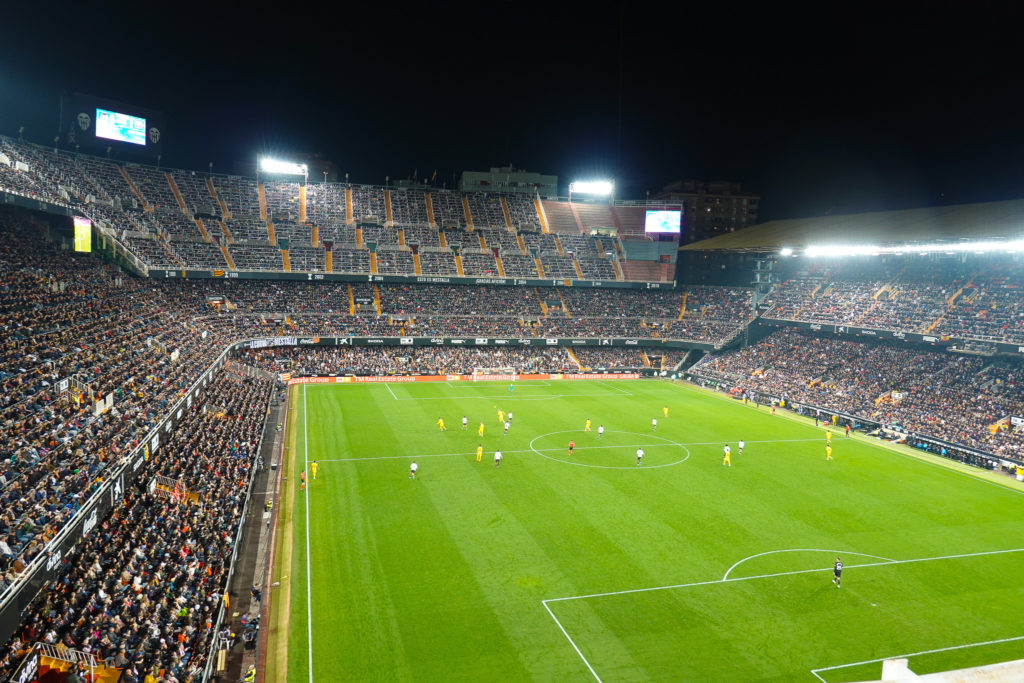
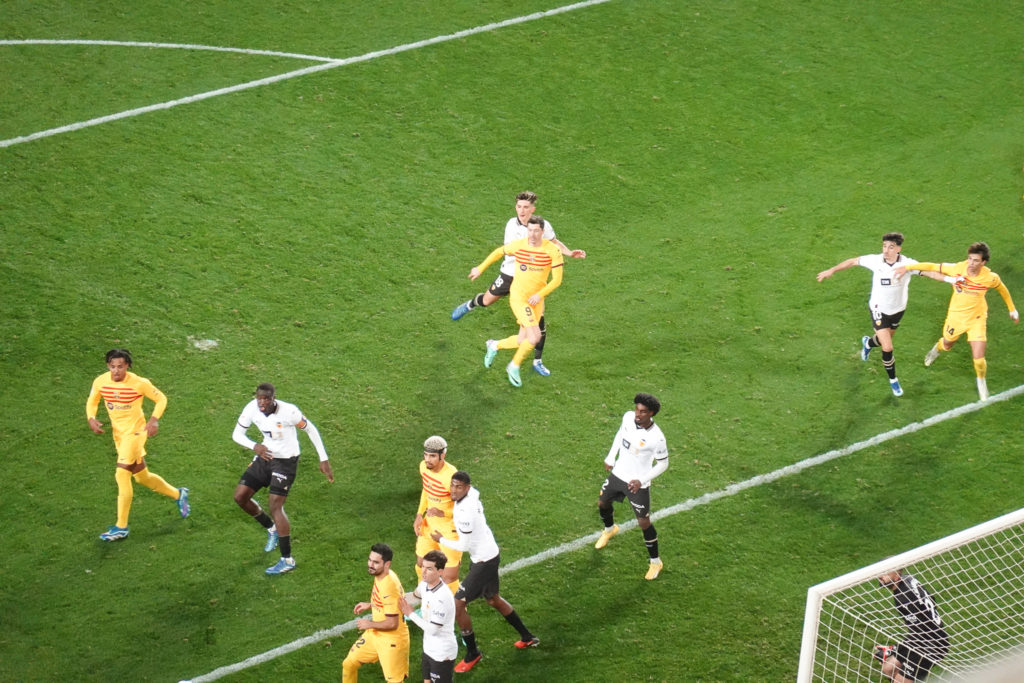
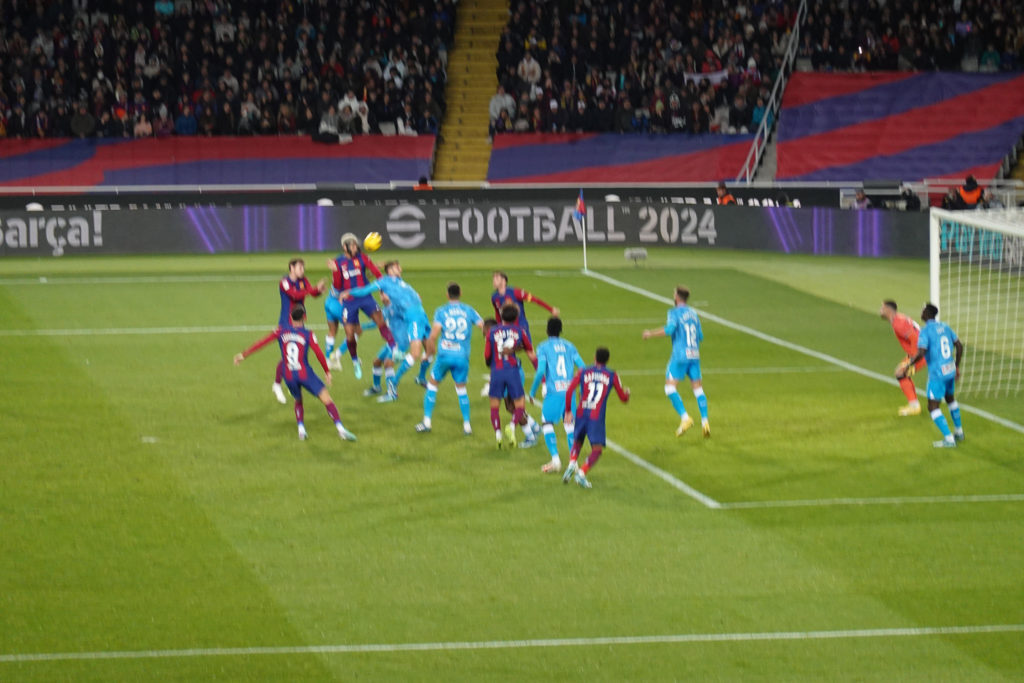
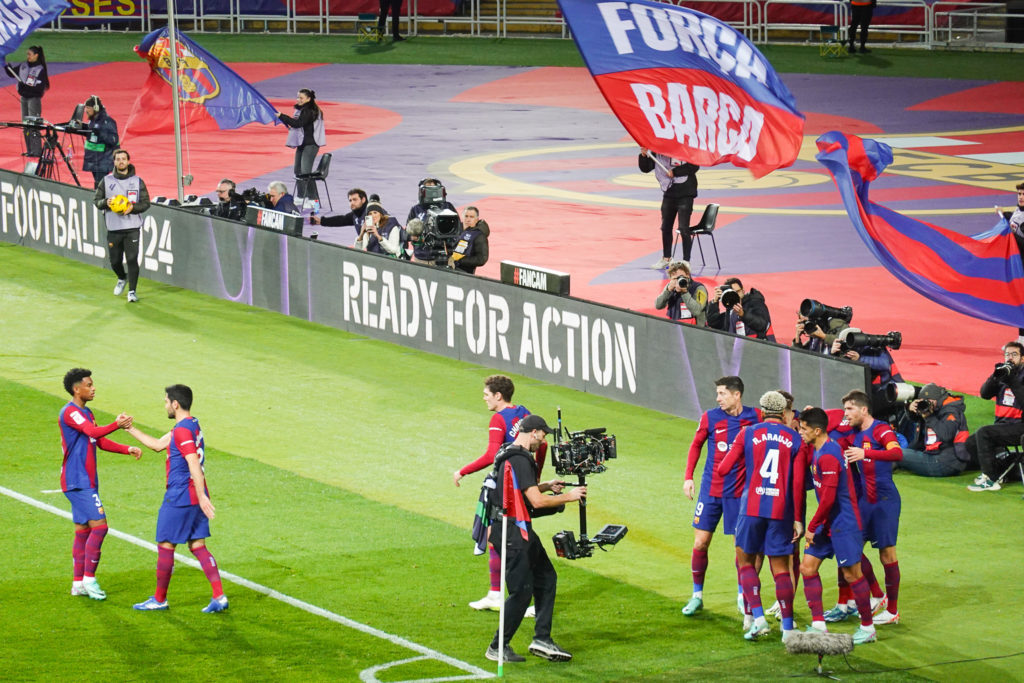
It’s been a very special holiday season for Grandfather Noble. On a recent Sunday night, I wandered through the Valencian night, bundled up against the winter cold, to the old concrete monolith that is Estadi de Mestalla. I took my seat in a completely packed stadium just after 9:00 PM for a clash between FC Barcelona and Valencia CF with the chants and singing of the hometown crowd echoing throughout the city. (Valencia managed a draw.) Just three nights later, Bonnie accompanied me to Barcelona’s temporary home at Estadí Olímpic as they confronted a must win match with a UD Almeria team sitting last in the standings. (Barcelona eked out a rather unsatisfactory 3-2 win.)

Two Barca games in one week!!

This is retirement heaven.

Those of you who know me well will be aware that I am endlessly fascinated by the game America insists on calling soccer. It is by far the most popular team sport on the planet, and both the origin, and pinnacle of competition, are in Europe. La Liga, the Spanish professional futból league is largely acknowledged to be second only to the British Premier League for quality of play and talent. The top two teams in Spain – Real Madrid and Barcelona – are giants among the world’s soccer clubs. I have been a Barcelona fan for nearly two decades since first hearing of a teenager named Leo Messi that was setting the futból world on fire.

My love of the game was planted very early – long before most Americans had heard of the game that obsessed the rest of the world. Among the many blessings of an idyllic childhood, was a male teacher in my elementary school who saw fit to introduce soccer to us during the physical education portion of our day. This strange notion of a game played only with the feet made immediate, intuitive sense to my adolescent self and I was firmly ensconced in the role of goalkeeper on that long ago playground. That seed moldered, almost forgotten, until the boy became a father eager to introduce his sons to the pleasures and lessons of team sports. A decade had passed, and soccer had become fashionable among the more well informed and progressive parents. Ahem.

 Armed with a wonderfully virtuous motive – my sons’ well-being – I threw myself into the task of educating myself on the art of coaching youth soccer teams. (Gratification of my competitive nature may have played some role here, possibly. Well, sure. But come on, right?) I read. I attended seminars. I took on field coaching lessons. And I coached. In short, I immersed myself in the tactical elements of the game and strategies for teaching it. I was intense, focused, and damned good at it. Also, probably a pain the ass to the other parents. So, there was that.

That seed planted by a grade school teacher flowered into fourteen years of coaching my sons in youth soccer that will always be among my most treasured life experiences. It also cemented my love of the game and an appreciation for all the nuance and beauty of the sport. Played at the highest levels, it combines the artistry and athleticism of NBA basketball, with the cerebral tactics of NFL football on a field that is large enough to gracefully accommodate both. But what is most compelling are the moments of sudden, soul wrenching drama. The passion of fans for their fútbol team is unlike anything I have experienced in other sports. They live and breathe the successes and failures of their team – be it the local community, their ethnic region, or the entire nation. Indeed, “fútbol is life.”

¡FÚTBOL! Read More »
Trotters and Tripe

We just got back from a whirlwind of a visit to Barcelona. What a beautiful city!

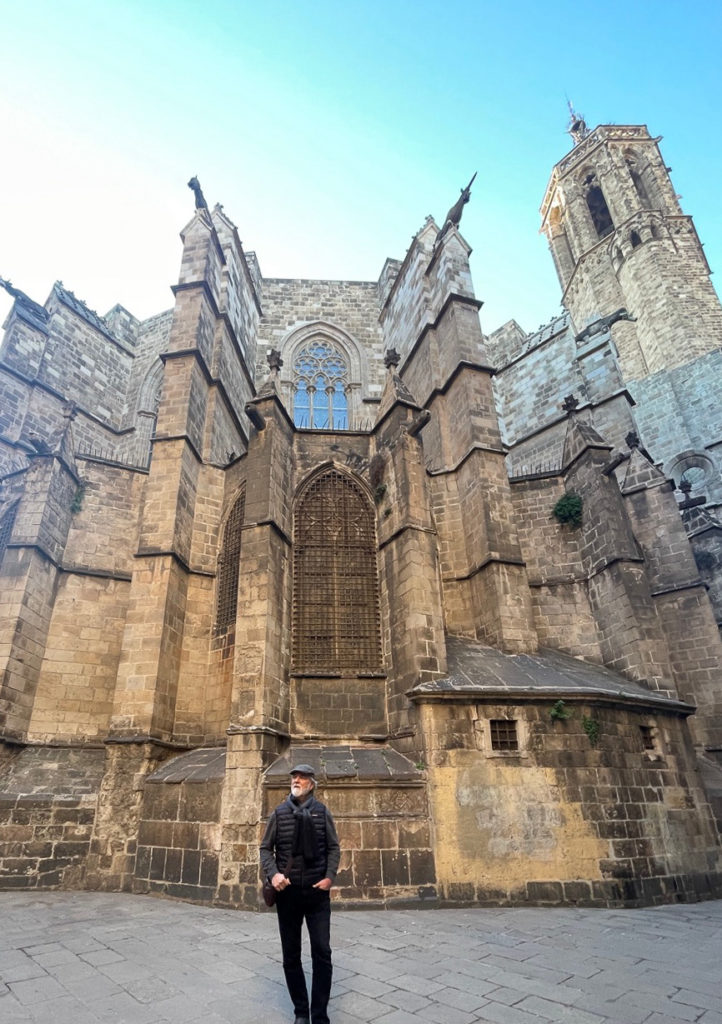
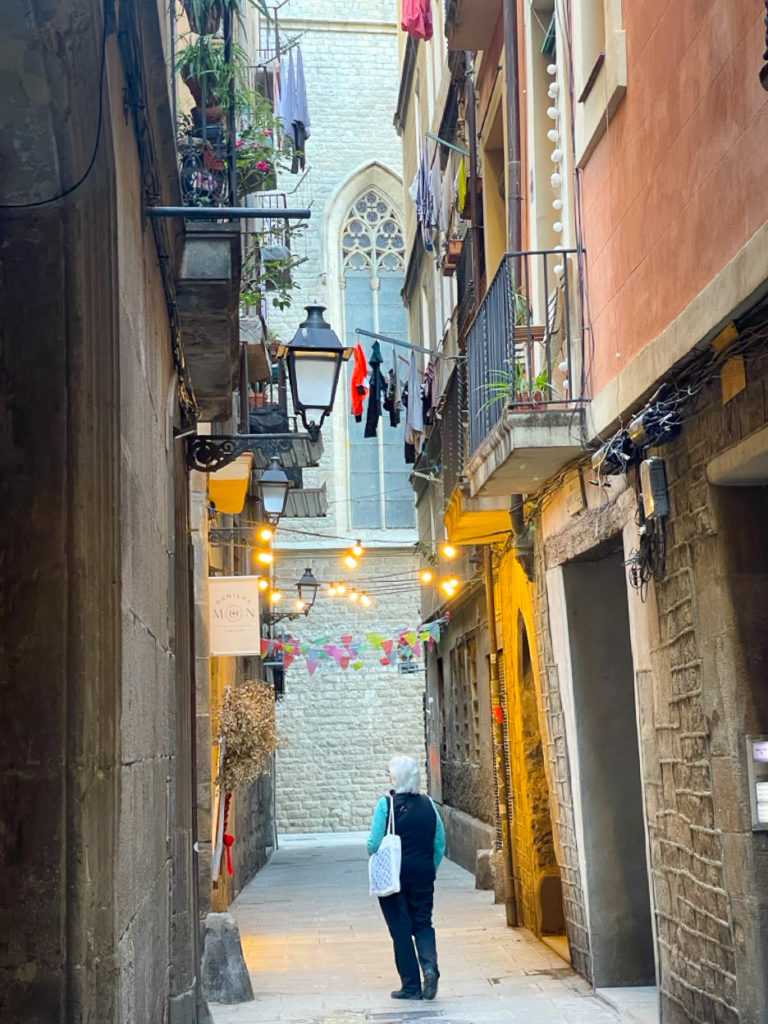
The high-speed train from Valencia gets us to Barcelona in just under three hours. On Wednesday afternoon, we checked into our hotel, dropped our bags, and took a stroll through the Gothic Quarter before heading to out to a fútbol game. Barcelona, or Barça, as the locals say, was playing Almería which happens to be the worst team in LaLiga this year. It was not the best game ever, but let’s leave soccer commentary to Ed.

Day two in Barcelona was a food tour! Hard to imagine us on a food tour, right? We’re big fans of exploring places where the locals eat and shop and this time, the focus was on traditional Catalan food.

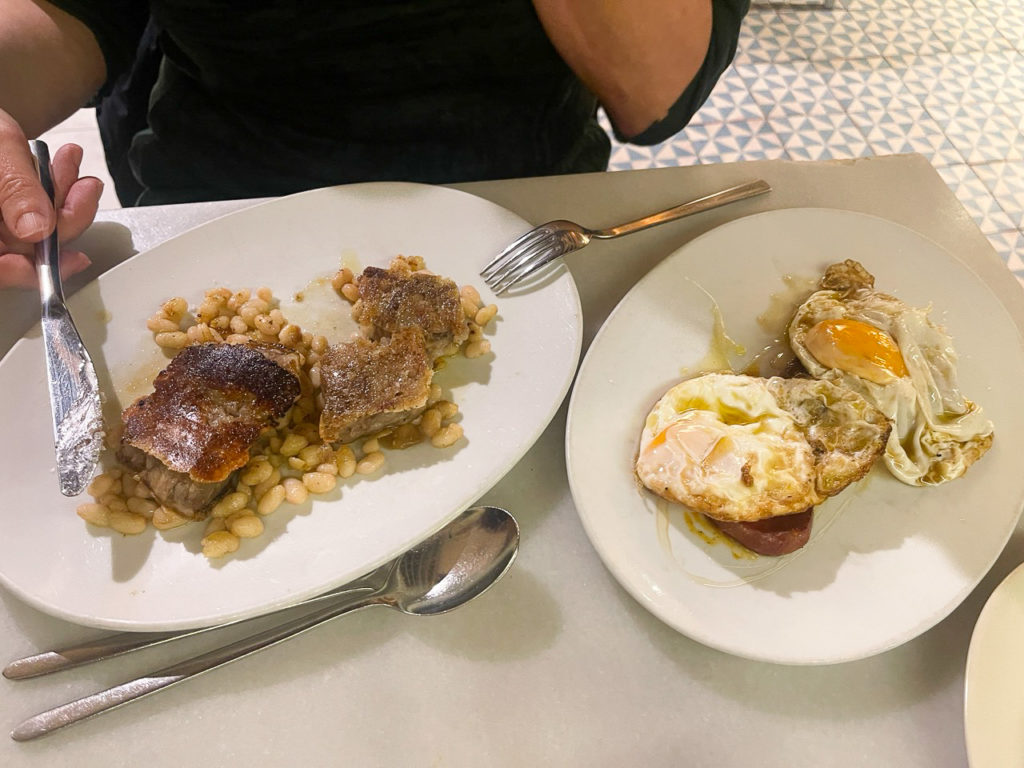
Our first stop was breakfast at La Pubilla where we had a cup of cafe con leche and two interesting breakfast entrees – Pues de porc amb Mongetes (pork feet, aka ¨trotters¨ with beans) and Sobrassada amb our ferrats (sausage with fried eggs). Our tour guide, Lynda (an Aussie who moved to Barcelona 30 years ago) made a point to tell us that rather than meat, the first dish was actually “just cartilage” – very crunchy. The Catalans love to combine sweet and savory, so the salty sobrassada was drizzled with honey. Delicisoso!

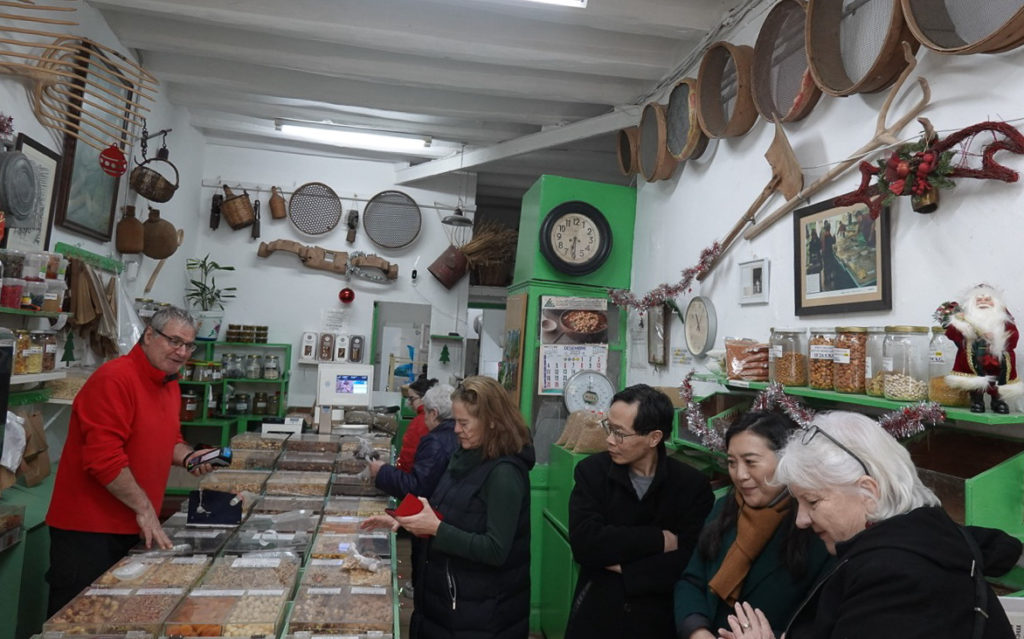
We wandered about the lovely Gràcia neighborhood stopping at a local market where we sampled Catalan cheeses and cured meat, a seed and nut shop for marcona almonds, dried figs, and tiger nuts, and a shop selling all things olive oil. Did you know almost half of the world´s olive oil is produced in Spain? In fact, Spanish extra virgin olive oils are ranked some of the best in the world – in 2023, six of the top ten were made in Spain.

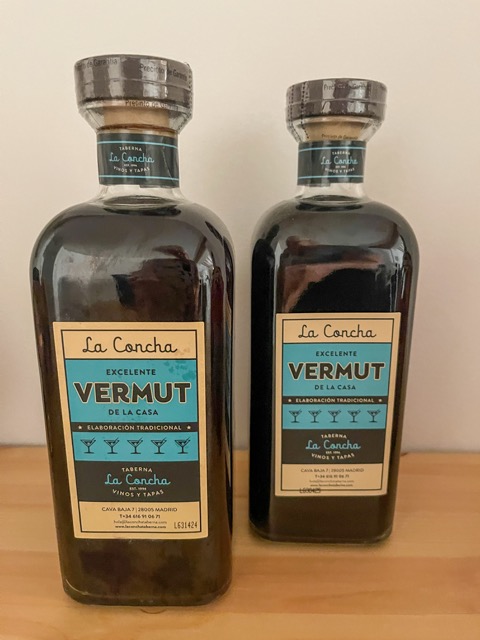
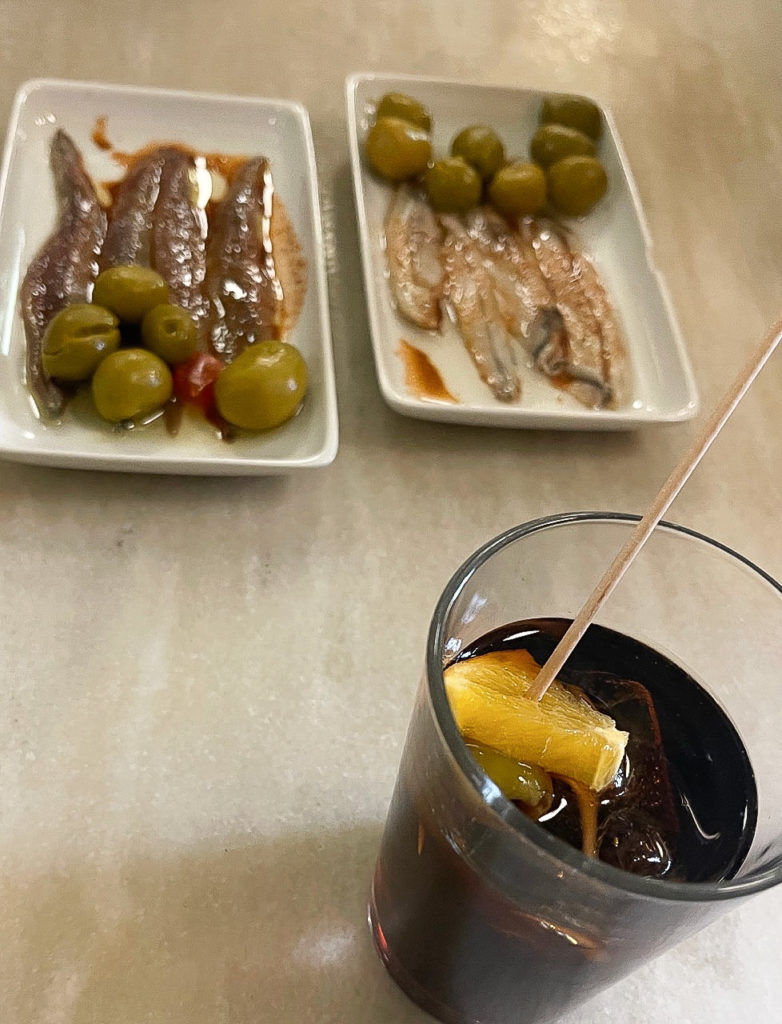
In preparation for lunch, it was time for that most versatile of beverages – vermut. Each vermuteria produces their own Vermut de Casa, a barrel aged infusion that typically begins as white wine with a variety of spices and a bit of sweetner to encourage the development of more alcohol. It’s the perfect accompaniment for tapas, in this case, anchovies and boquerones. Apertif, digestivo, before lunch or after a big meal, this is a most practical indulgence.

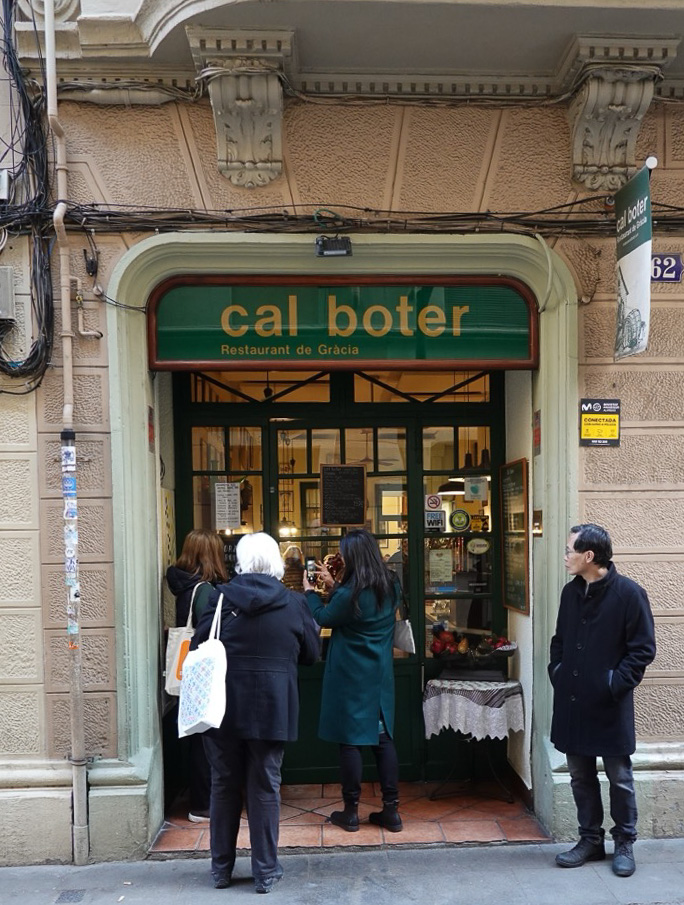
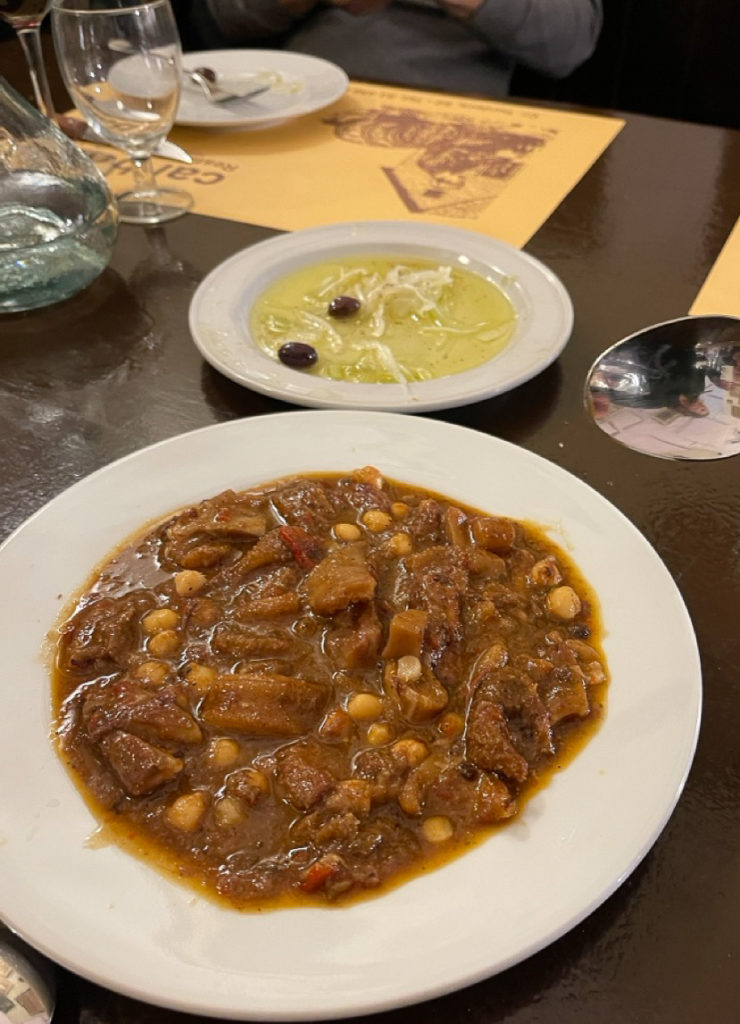
Finally, with appetites well stimulated, we arrived at Cal Boter for lunch and got deep into the spirit of Catalan cuisine. A salad of pickled onions was followed by Callos con Garbanxzos (Tripe with Chickpeas) and Bacalla man Alioli (Cod with aioli) all washed down with a glass of vino tinto (red wine) poured from the traditional Catalan shepherd’s flask. The cod was delicious. The tripe wasn’t my fave – the flavor was OK and the texture was, let’s just say, not crunchy.

The Spanish love their sweets. Our final course, postre (dessert) involved popping into one of the many pastisserias where everything is hand made in house. We sampled several classic Catalan Christmas sweet treats before stopping for churros and chocolate.

A long siesta was just the thing after this marathon culinary adventure. But by 10PM, we were on our way to a sketchy part of town for a feast of vegetable biryani, lamb vindaloo, raita, chicken tandoori, and of course pappadam and naan.

Hoping to walk off some calories, the focus for Barcelona Day #2 was shopping the small artisan shops in the Gothic Quarter.

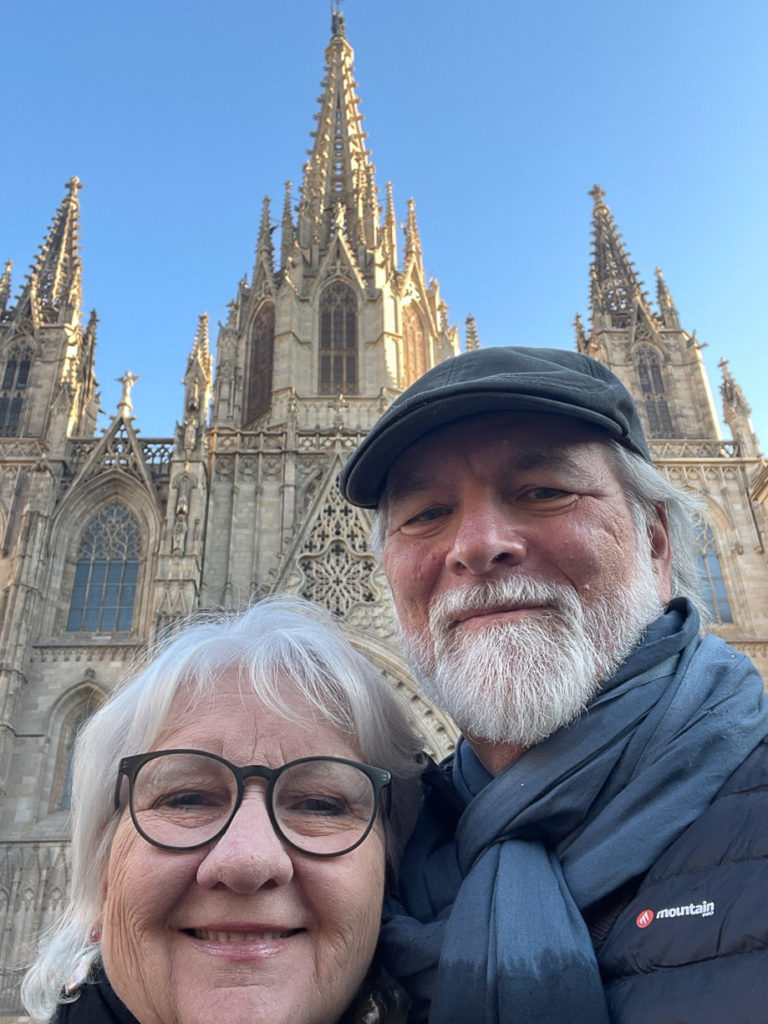
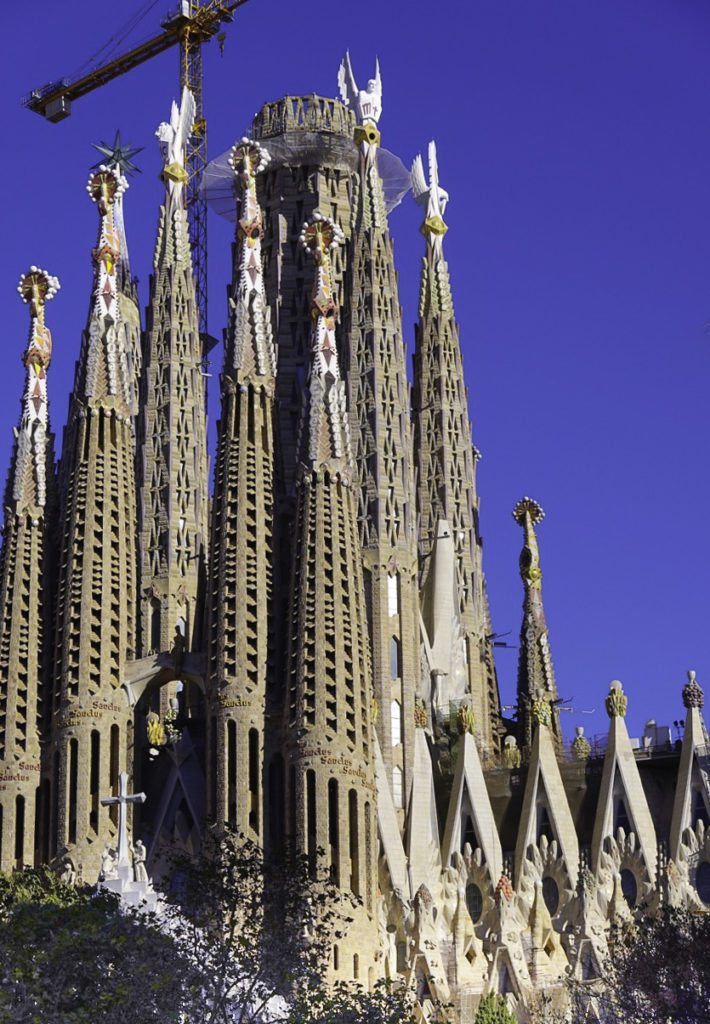
Then, on our last day we walked across the city to check on La Sagrada Familia. Progress has been made since we last visited this most unusual cathedral in 2018, but there is still much to be done. The latest projected completion date is 2026 – 100 years after Antonio Gaudi’s death.

Whew! We’re looking forward to being back in Valencia for the holidays. Christmas celebrations here go through January 6 when the three wiseman arrive, and gifts are exchanged. More on that next time.

Happy Holidays!

Trotters and Tripe Read More »
A QUICK TRIP SOUTH

SALUDOS DESDE VALENCIA!

Typical of us, we only stayed put in Valencia for a couple of weeks after arriving on the first of November. We boarded a train to head south. Our first stop was an overnighter in Madrid to see a special Picasso exhibit at the Reina Sophia – Spain’s national museum of 20th century art. This is one of more than 50 exhibits around the world celebrating Picasso’s work at the 50th anniversary of his death. The exhibit at the Reina Sophia includes only works completed in 1906, a transformational year for Picasso. It was fascinating to see these early works and other than marveling at his (obvious) incredible talent, I loved seeing the early genesis of his influence on modern art.

After a wonderful 24 hours in expansive, bustling, regal Madrid, we boarded a train for Malaga. Sitting on the beautiful Costa del Sol, Malaga is part of the autonomous region of Andalusia. The sixth largest in Spain (Valencia is #3), Malaga is a vibrant port city with a rich history, stunning Mediterranean beaches, and great food. It’s famous for its ancient landmarks such as an 11th century fortress (the Alcazaba https://visita.malaga.eu/es/que-ver-y-hacer/visitas/monumentos-historicos/monumentos/alcazaba-p103303) and a Roman Theater. Malaga also happens to be the birthplace of Picasso.

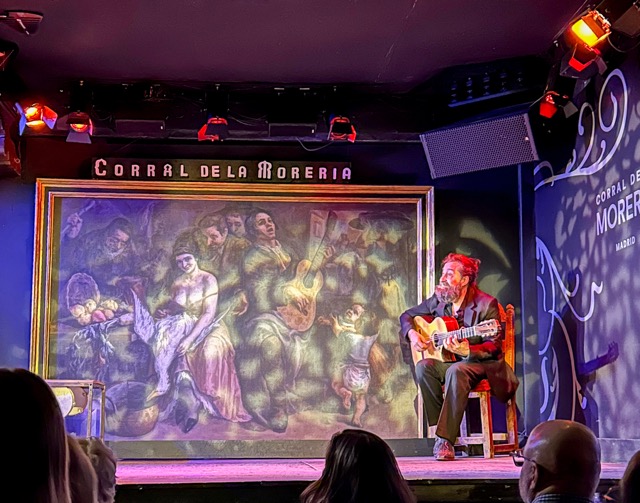
We were delighted to have our dear friend, Susan, join us in Malaga. We spent several days exploring Malaga, hanging out at the beach, enjoying a flamenco show, and spending time talking about life. A day trip by train to Cordoba was a highlight and while it was our second time in Cordoba, and we’d happily go back!

HOLIDAY CHEER

When we arrived back in Valencia, Christmas decorations were everywhere – Christmas trees in the major plazas and lots of lights strung about. Our weather has been a near perfect mid-60’s to low 70’s, although it’s getting cool at night dipping into the 40’s occasionally.

This week we are celebrating two major holidays. Wednesday, December 6 is Spanish Constitution Day. This national holiday marks the day when the country’s constitution was approved by the Spanish people – a crucial step in Spain’s transition to democracy following the death of Franco in 1975.

Friday, December 8, while not a national holiday, is a Christian holiday that commemorates the immaculate conception of Mary. Most people take off the Thursday in between and enjoy a 5-day weekend! It’s a festive time in Valencia!

We’re participating in the IWC Valencia annual “Adopt a Child” program which involves buying Christmas gifts for needy families. We’ve had a great time shopping for gifts for a family with six children (ages 8-15). Interestingly, the Spanish tradition is to exchange gifts on January 6 honoring the arrival of the Magi.

LIFE’S LITTLE DETAILS

Our days are so full that we decided to use a project management app to keep track of all the things we need/want to do. (This might also have something to do with our obsessive personalities.) Daily life here includes lots of walking, but we decided to join a gym to up our game on the fitness front. We’ve been eating at home more (again, trying to be healthier), getting together with expat friends, and doing lots of travel planning.

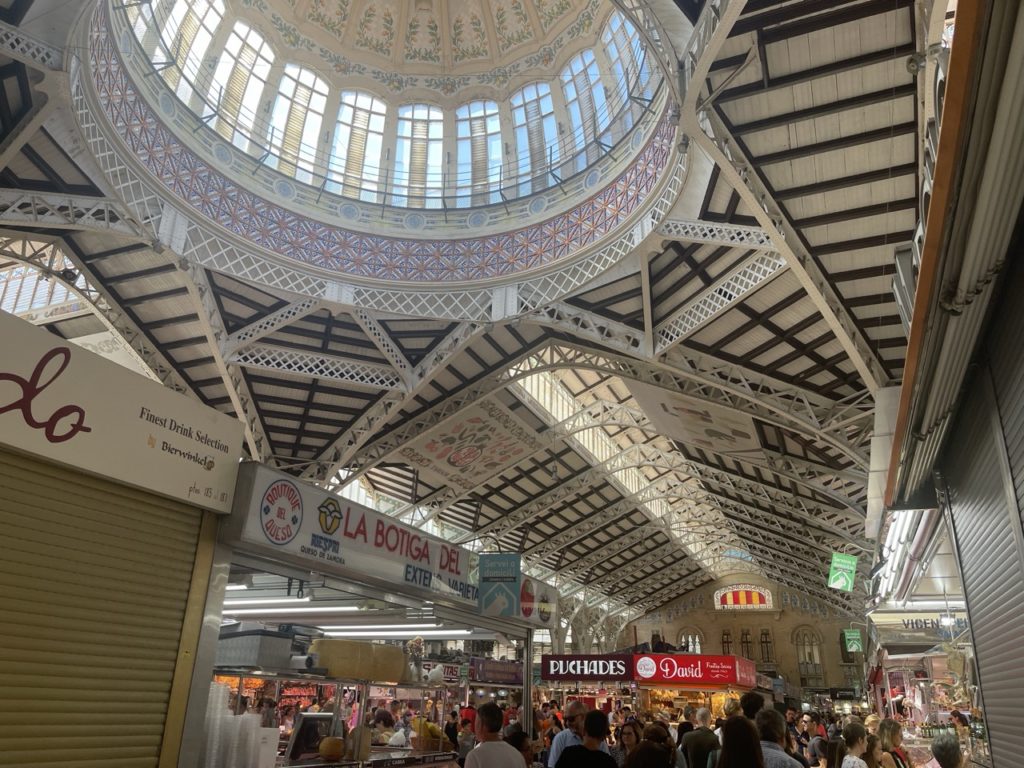
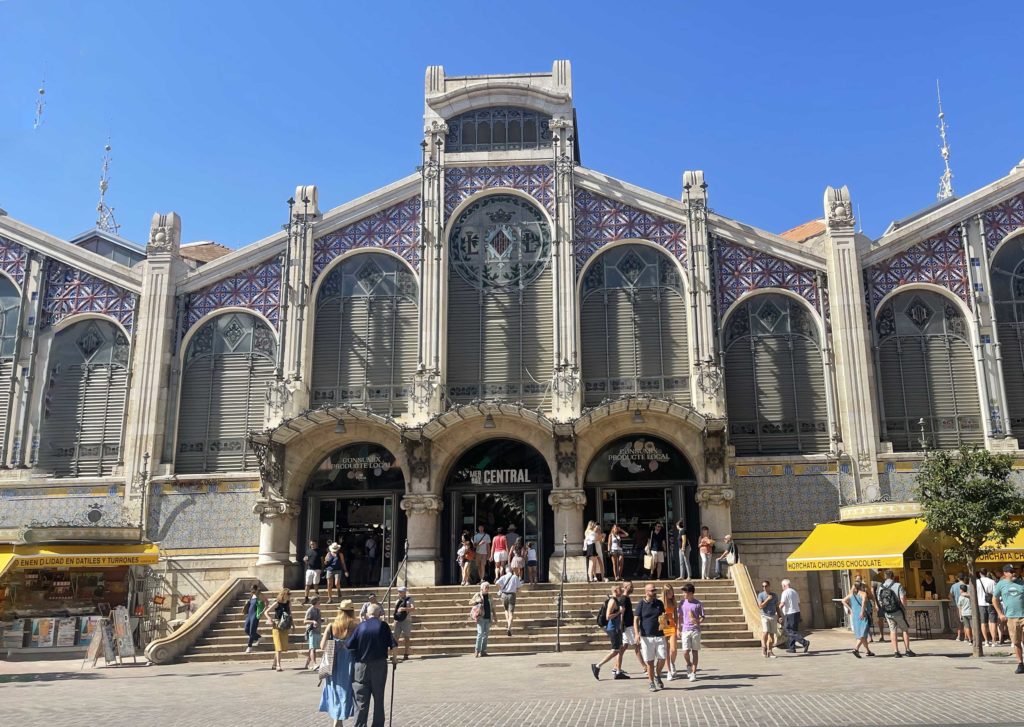
Ed keeps busy too! He’s enjoying shopping for food at our fabulous Mercat Centrale. Just a 5-minute walk from our flat, Mercat Central has an amazing array of fresh produce, incredible seafood, and many other yummy things!  Besides being one of the largest and oldest markets in Europe, it’s also but also a cultural and architectural gem in the heart of Valencia’s old city.

Ed is also busy working on getting a Spanish driver’s license. Since we have been residents of Spain for more than 6 months, we are no longer able to drive in Spain using our International Driving permits. It’s quite a lengthy and onerous process, but he’s making progress. I’m content to be the passenger!

COMING UP

Next up is a 4-day get-away to Barcelona. It’s a 3-hour train ride and we’ll be there from December 20-24. We’ve booked a culinary walking tour in a not-so-touristy neighborhood https://culinarybackstreets.com/tours-food-tours/tours-barcelona/2016/day-sants-feasting-off-grid/ and tickets for a fútbol game the night we arrive. Ed’s very excited about that one.

Happy Holidays!

A QUICK TRIP SOUTH Read More »
WHY SPAIN?

When moving to Spain was in the planning stage, Maggie asked me “Why Spain instead of California?” It was a good question, but my answer was not a good one. I think I said something about the cost of living being less. While that’s true, and an important factor now that we’re approaching Ed’s retirement, there’s much more to say about Spain and about life in Valencia. Reflecting on the experience of living in Valencia for the last three months, these are the things that help me to better answer Maggie’s question.

PEOPLE ARE FRIENDLY

We have found Spanish people to be friendly and welcoming. It’s more than just friendly. They are kind and eager to help, even to strangers. Numerous times we’ve witnessed people coming to the aid of someone who has dropped something. This happened to Ed one day when he was coming home with groceries. A novice at pushing a wheeled cart around cobblestone streets, he lost his grip, the cart tipped over, and produce was scattered about the street. A young woman walking toward him rushed over to help him pick things up. We’ve seen people help a mother trying to carry a stroller up a flight of stairs, strangers on the street always willing to help with directions. Spanish people seem to always have time to help one another.

NO ONE IS IN A HURRY

Spaniards seem to take their time, deliberately, to appreciate the world and people around them. At first, this can be frustrating (e.g., while waiting in line, waiting to be served, waiting for a scoop of gelato), but it hasn’t taken long to adjust. I find myself following their example – take a breath, wait patiently for my turn, prioritize relationships over schedules, take time to help others, relax and enjoy each day. Live to enjoy life.

LA SOBRAMESA

It is considered normal for people to talk with family and friends after a meal, often for hours. If you reserve a table for dinner, it’s yours for the evening. The assumption is that you will spend lots of time during and after the meal talking with one another. This is such an ingrained part of the culture that there’s even a word for it – sobremesa.

LIFE ON THE STREET

People are always out and about. There are plazas, large and small, around every corner. People gather to mingle with neighbors and friends all day and especially in the evening. There are numerous restaurants, cafes, and bars within walking distance of everyone’s home. Socializing outside seems to reinforce an already strong sense of community.

SAFETY

Talking about being out and about, we’re comfortable walking around the city day and night. There’s very little violent crime here and it’s very comfortable to walk about at any hour. Valencia, just like many other cities in Spain, is ranked among the safest cities in Europe.

HAVING FUN

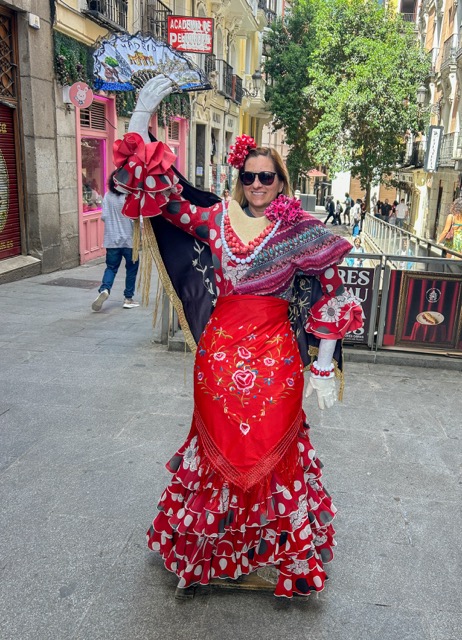
The Spanish love to celebrate. There’s often a celebration going on in the city. Parades, fancy traditional dresses, marching bands, fireworks, and firecrackers are all a frequent occurrence around Valencia. It’s the same everywhere we travel in Spain. There was the Aste Nagusia in Bilbao last August which celebrates Basque culture; the 20th anniversary of a Drag Queen Festival in Las Palmas, Gran Canaria (Canary Islands) in February; the festival of Sant Jordi (Saint George) in Tarragona and throughout Catalonia in April; and the Seville Flamenco Festival last October. It’s all about enjoying life today, together. Carpe diem!  

NOT SO MUCH MACHISMO

If there’s a family walking around the city, it will almost always be the man who is pushing the stroller, holding an infant, and holding hands with young children. Men are openly affectionate, including with one another. Hugs, a kiss on each cheek, and laughter seem to be a part of nearly every greeting. We were sitting in a small sidewalk café one day and a group of young men began to gather at the table next to us. Each time someone new arrived, they all got up and to embrace and kiss the newcomer, sometimes multiple times and with lots of laughter. It turns out it was a group of friends celebrating the marriage engagement of one of them.

A little research on this topic: On Jan. 1, 2021, Spain became the first country in the world to give mothers and fathers the same parental leave: 16 weeks, non-transferable and fully paid. A law passed in 2005 was the start of what one can only call a domestic revolution in the country. Spanish MPs drew up a marriage contract for use in civil ceremonies, which obliges men to share household chores and caring for children and older family members. Failure to do this could affect terms of any divorce settlement, with reduced access rights to children.

DIVERSITY

It may be different in small villages, but in Valencia, it’s a live and let live culture. People here are accepting of people from all walks of life. Just be yourself, relax and enjoy life. We experience that here every day. For example, LGTBQ+ rights are not only practiced in everyday life but also celebrated. Our favorite little sidewalk coffee shop (in the mornings) and bar (at night) is openly gay-friendly (signs on the window) and frequented by all sorts of people – straight, gay, families, elderly.

A little research on this topic: The Spanish equality ministry (yes, that’s for real) recently launched a campaign to combat the beauty ideals that pile pressure on women. The message? Come and enjoy the beach just as you are, however you are.  The campaign slogan is “diverse bodies, free of gender stereotypes, occupying all spaces.”

Changing your gender became legal in 2006. Same-sex marriage has been legal since 2005, making Spain the 3rd country in the world to allow it. Same-sex adoption has been legal in Spain since 2005. Since 1995, prejudice against sexual orientation and gender identity in the housing sector has been illegal. Spain banned hate speech targeting sexual orientation and gender identity in 1995. An act of violence motivated by one’s sexuality and gender identity has been considered a hate crime since 1995. LGBTQ+ discrimination in the workplace due to sexual orientation has been illegal in Spain since 1994. Since 1977, members of the LGBTQ+ community can openly serve in the military.

PRIORITIES

People here just seem happy. I always tell Ed; these Spanish people have a good life. They don’t need a large home (not many have one) or a high-paying job (salaries are low) to enjoy life. Instead, they find happiness in the company of others, enjoying a beer and good conversation as they sit outdoors at a bar or sidewalk café on a sunny day, enjoying sobremesa after dinner, participating in countless celebrations and fiestas. An expat friend went shopping for a new summer wardrobe last year and after buying several items at a small shop in Valencia, the proprietor of the shop closed for the day. Apparently, she was satisfied with the amount of money she’d made that day and opted to spend time with family and friends rather than working for the rest of the day.

FUTURE THINKING

Spain, extremely vulnerable to climate change, is working hard to address this. Most Spaniards see addressing climate change as the biggest challenge facing us today. While this is not something you see every day on the city streets and at the cafes, even a cursory read of the Spanish news and government actions, reveal a strong commitment to sustainability and protecting the environment. These are serious topics in Spain.

A little research on this topic: In Spain, there are over 70 million acres of protected land. That’s nearly a third of Spain’s terrestrial space and about 12% of the marine surface areas. 81% of Spanish people say they are in favor of stricter measures imposing changes on people’s behavior. 89% say they want to replace short-distance flights by fast, low-polluting trains in collaboration with neighboring countries. 70% would welcome a tax on products and services that contribute most to global warming.

It’s not paradise. There are serious problems to address. The 2008 global financial crisis sharply exacerbated both food insecurity and poverty and the impact is still evident today. Also, Spain was no exception to the devastation of the Covid-19 pandemic. There does, however, seem to be a government that is working to address these issues. And people here are happy…happy to be alive, happy to be Spanish.

We are thrilled and honored to be able to live here, to experience Spanish culture, and as always, to learn and to grow. 

P.S. We’re back to the U.S. as of Sunday, May 14 and while it was difficult to leave our new home in Valencia, we’re looking forward to spending time with our stateside family and friends.

WHY SPAIN? Read More »
Scroll to Top