The Cave
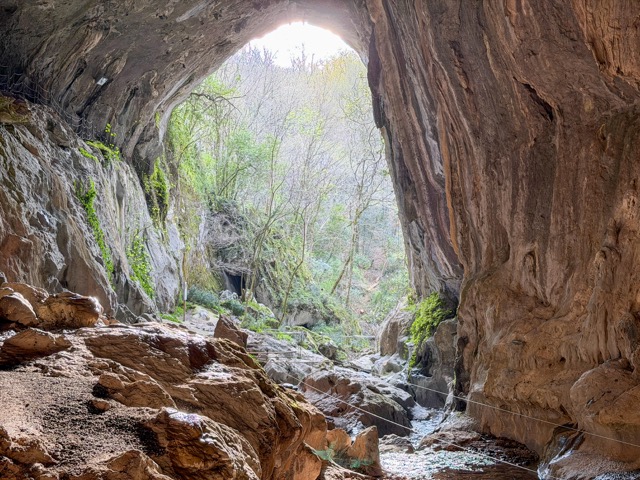
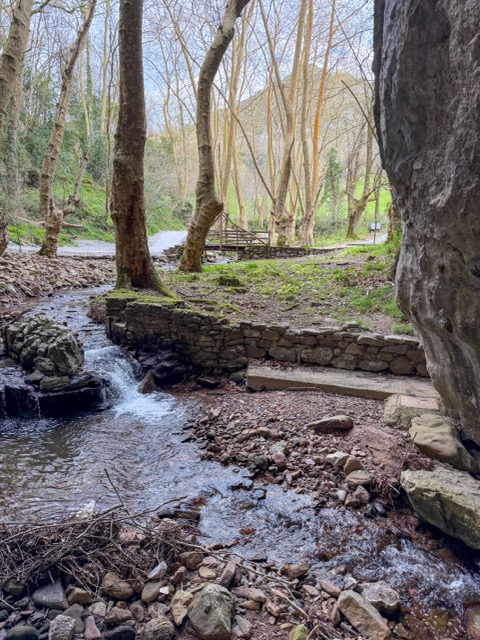
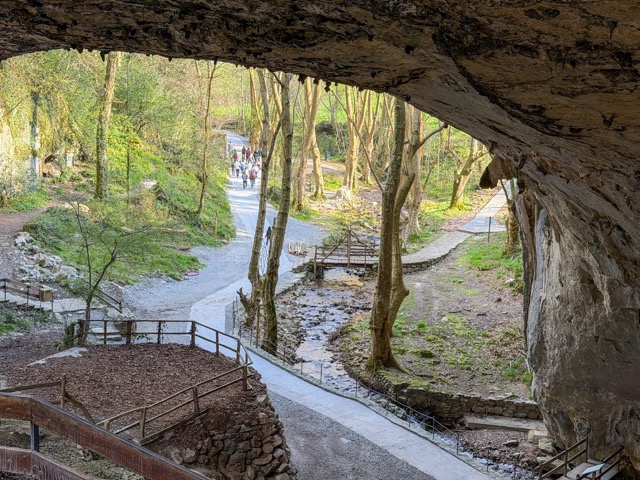
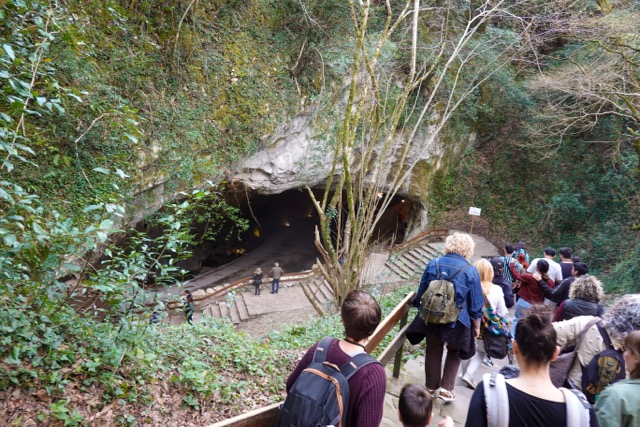
Stepping into the depths of the enormous cavern of rock, dampness and earth filling my nostrils, I was startled by the roar of rushing water. The stream, flowing directly through the cave, seemed entirely innocent and incapable of such sound until I realized that part of this vast stone hollow’s magic was amplification.
Listening intently to our guide, straining to understand the rapid fire Spanish and rueing our lax approach to study of the language, we stood in a small group while she earnestly recounted the events that had taken place here centuries earlier. Brujas. Witches. Akelarries. It was here, in the early 17th century, 11 women were burned at the stake by the Spanish Inquisition. Sentenced to death for practicing their ancient rituals in this ancient place. Unexpectedly, she stopped, looked directly at Bonnie, and in clear English said, “I have been asking the group what the word “witch” means to them. What is your answer?”
Flummoxed for a moment, I watched Bonnie’s face go from slight panic, to confidence. The group fell silent and all eyes turned, waiting to hear how the foreigner would repond. “Someone who worships the natural world,” she stated with calm authority.
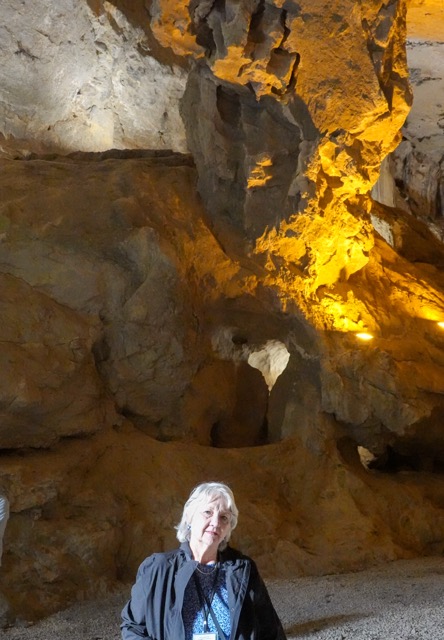
“Perfecto,” declared our guide with a look of quiet satisfaction. She turned and translated Bonnie’s response for the group with the tone of a teacher acknowledging her star pupil’s excellent answer.
It was a moment.
There was my admiration for all that Bonnie expressed with that simple, incisive answer. And then there was the broader implication for all that we were experiencing of Basque culture. Once again, our exploration of Europe and its history had tossed me an intriguing and unexpected aspect of the human experience to chew on. Witches? We were just supposed to be escaping the last few days of Fallas! But here I was again, falling down a new, mysterious cultural rabbit hole: honoring the natural world.
The Escape – Fleeing from Las Fallas
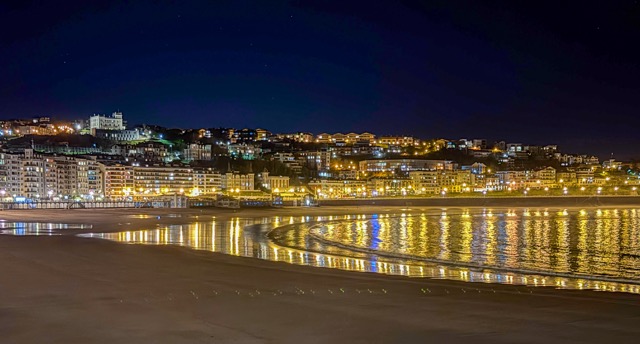
We have previously recounted the joys and challenges of Fallas in Valencia. I will leave it to you to read up (https://edandbon.com/march-madness/ ; or not) but suffice it to say that as much as the Valencianos relish the 19 day festival, we and our expat friends are desperate to escape. It actually becomes a kind of parlor game as March approaches and we all trade stories and ideas about the most appealing destinations for our Fallas break over tapas and vermouth. So, it is now part of our routine to plan a short trip covering the middle of March, allowing sanity to return to the streets of Valencia so that we can as well. We chose a train ride to San Sebastián this year, looking for the perfect combination of coastal relaxation and world class gastronomy.
There was a lot of “slow train” planned into this trip. We have come to savor the languorous nature of trains, reading, gazing at the changing landscape, occasionally visiting the cafe car. Arriving well past dark, we were greeted by an unusually quiet city, not the vibrant restaurant and bar scene we’d been promised. Our carefully planned route through the old city marked, with the best pintxos bars, was suddenly useless as we found silent streets and shuttered businesses. Something was clearly amiss, but what?
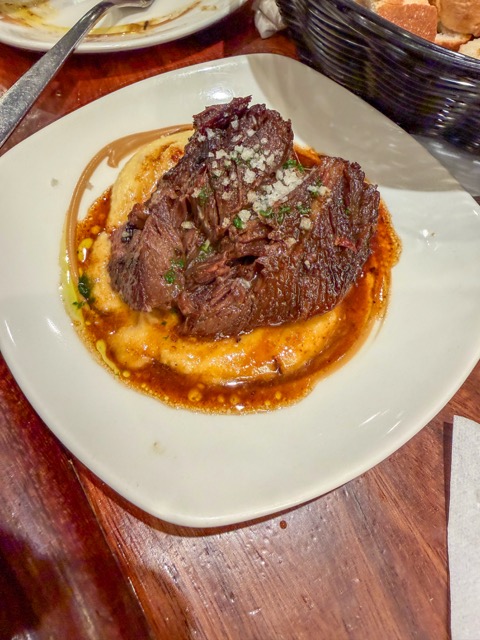
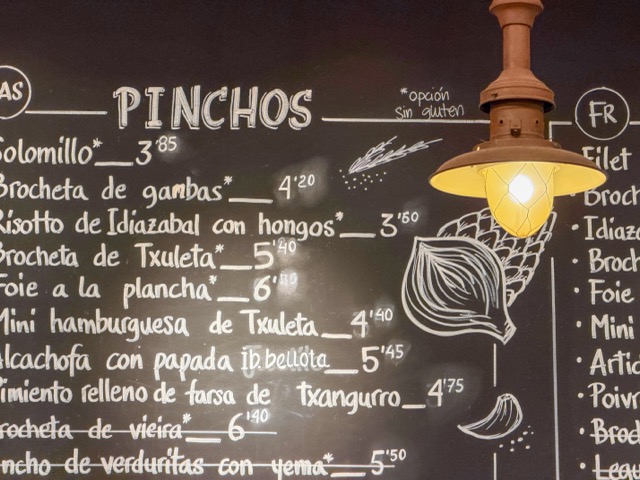
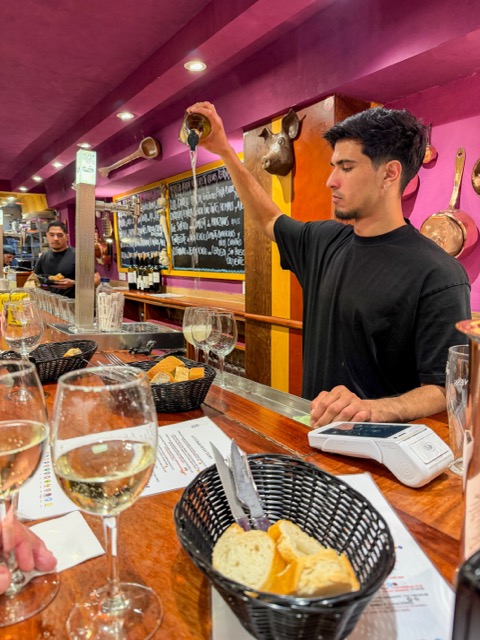
The level of participation by Spanish citizens in their democracy is something we are still adjusting to, and we are often slow to recognize the political elements of life here. What we had unknowingly walked into was a region wide general strike! The day had seen huge demonstrations and protests demanding changes to the minimum wage for the Basque region, notorious for its higher cost of living. And, in solidarity, all the small busineses — including the pintxos bars – were simply closed. A rebel sandwich shop saved us from starvation.
In Quest of . . . Breakfast
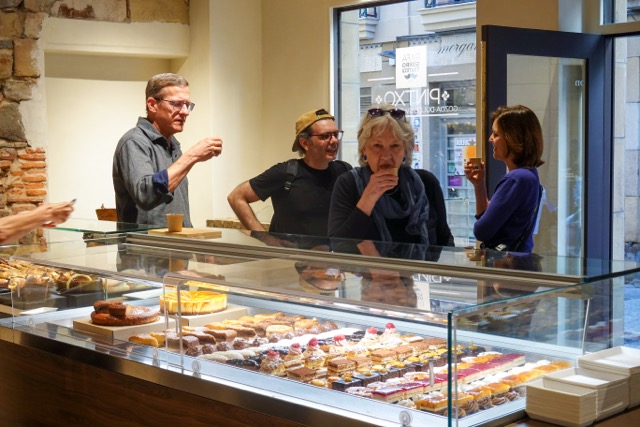
The following day we did what we do: a Culinary Backstreets food tour to learn what we might about the local scene. I’ll not bore you with an account of every step of the walk. However, I do want to say that spending several hours with our young guide, Panos, was one of those travel experiences that gives me hope for the future.
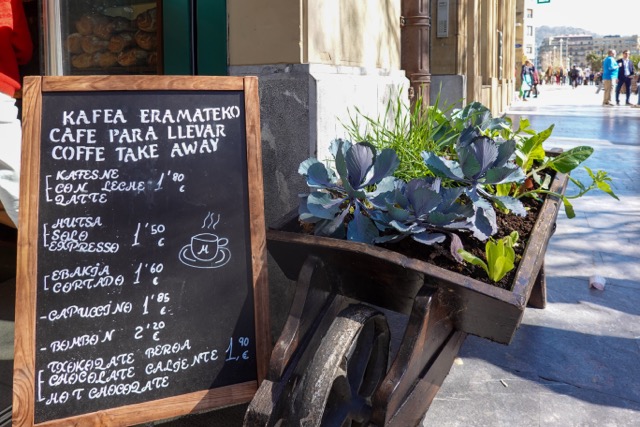
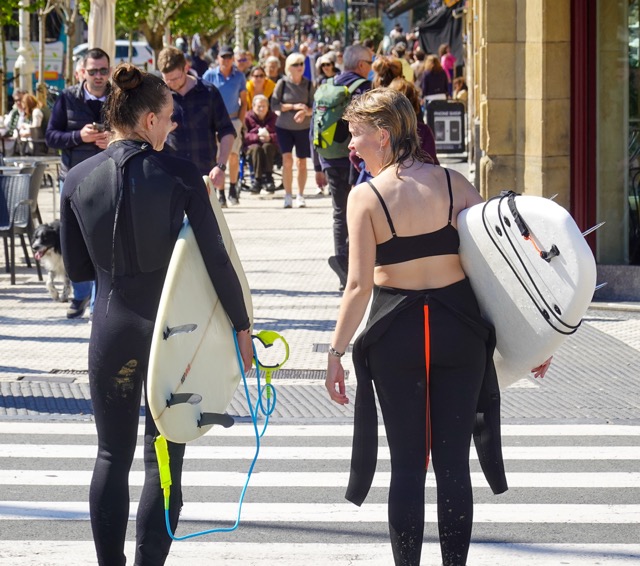
Panos is a native of Athens, Greece. He has a degree in chemistry and another in oenology. He spent several years in Edinburgh where he went to study brewing and distilling. He has been a brewer in the UK, Barcelona, and San Sebastián before deciding with his lovely partner to open a wine shop, Piripi, focused solely on 100% natural wine and beer.
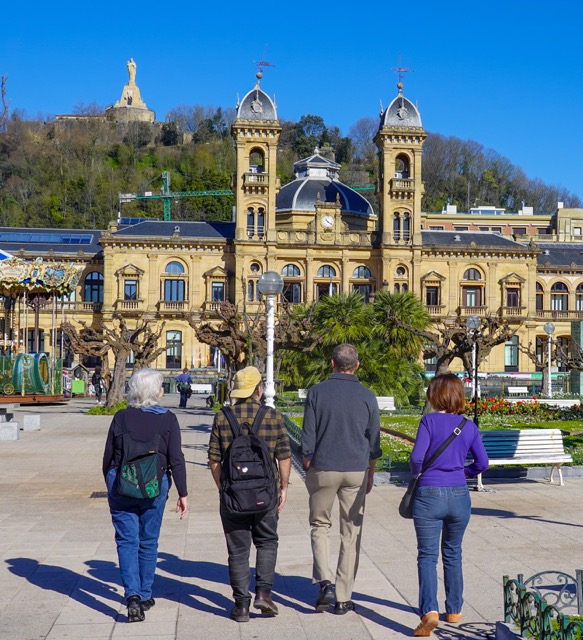
Panos shared with us his experiences as a young professional being sucked into a culture of cut-throat competition inspired by US style capitalism. He was good at it and reached his goal, becoming the master brewer he had set out to become. He realized, however, that he had compromised his values in pursuit of success. Now, his focus is on ensuring that his business practices embody his belief in a communal future – the only sustainable future for mankind – and a full embrace of the natural bounty that the Basque region provides. Yeah, another nature worshipper.
This Epicurean Thing is not New
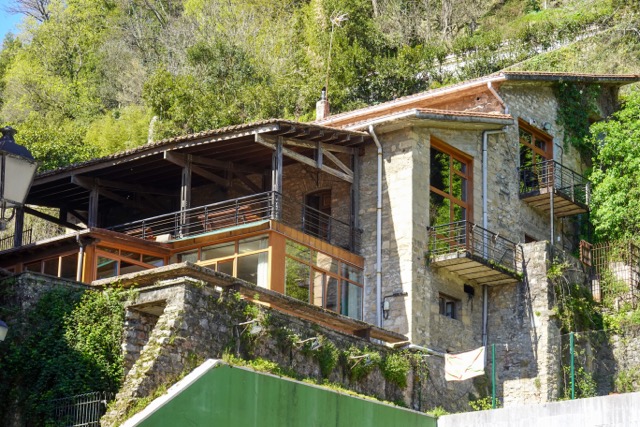
One discovery on the food tour was intriguing to us. Panos pointed out an innocuous looking hillside building that he described as a typical, but exclusive Basque food club. Think golf country club, for foodies. For a not insignificant fee, members are provided access to a fully equipped professional kitchen where one may schedule an evening to create and serve a meal in one of the luxurious, staffed dining rooms. Or, if you would prefer, hire one of the chefs on staff to prepare or assist with your menu. This arrangement allows the members to bring in the freshest and best market products, entertain guests, immerse themselves in the culinary experience of creating a unique dining experience, and leave the cleanup to the club. OMG! Seriously? Why have I never heard of this thing? Most amazing: there are hundreds of these clubs in Basque Country and they have been a tradition going back centuries. For the most exclusive clubs, membership must basically be inherited. This food thing runs deep for these people.
The Bountiful Pyrenees
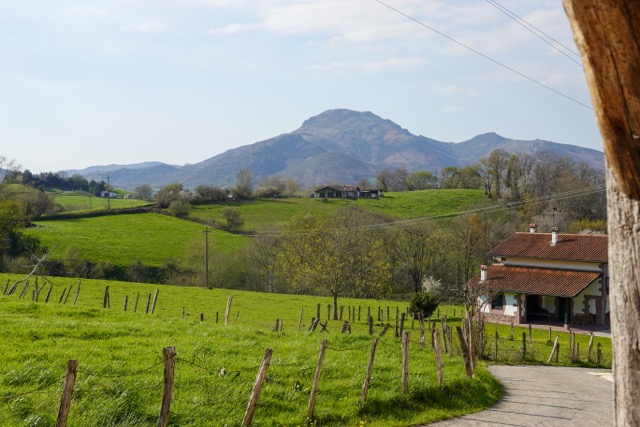
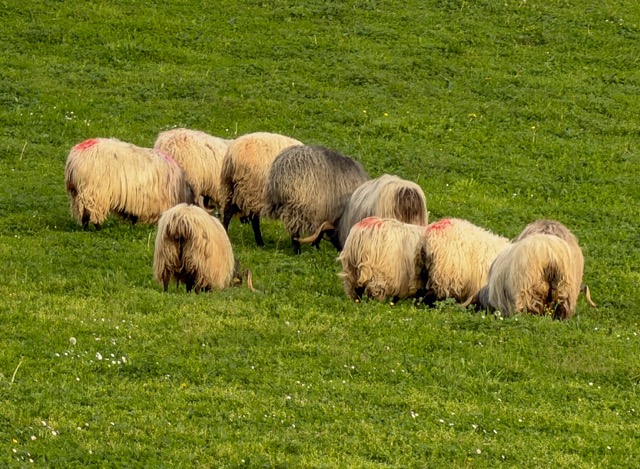
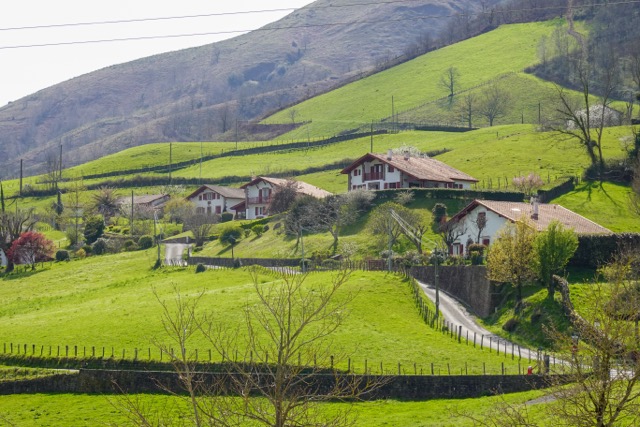
To get a better sense of the natural bounty that has supplied this passion for cuisine, we rented a car the next day, leaving the crystalline bay and its gem-like city to enjoy the early spring countryside. No wonder the early Basque culture was awed by nature. This is the intersection of climate and geology that produces the stuff of poetry. It was a wandering day through the landscape of abundance that is the source material for San Sebastián’s great culinary traditions. The foothills of the Pyrenees Mountains were blanketed with verdant green, trees trembling on the edge of release. To call this land picturesque is to understate significantly. We enjoyed a simple farmhouse lunch, shared a traditional Basque pastry, and wound our way to that infamous cave.
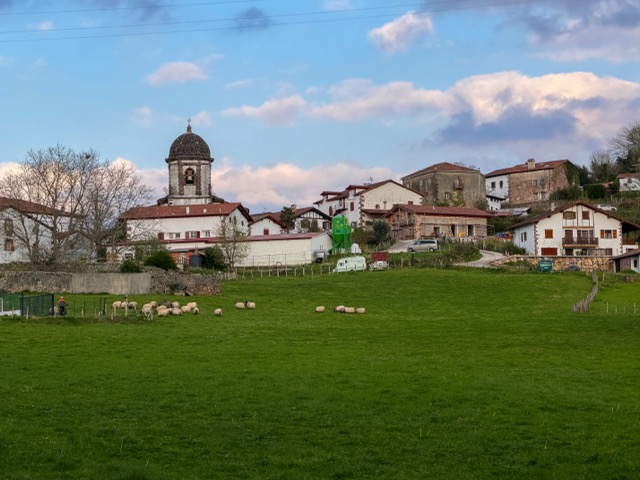
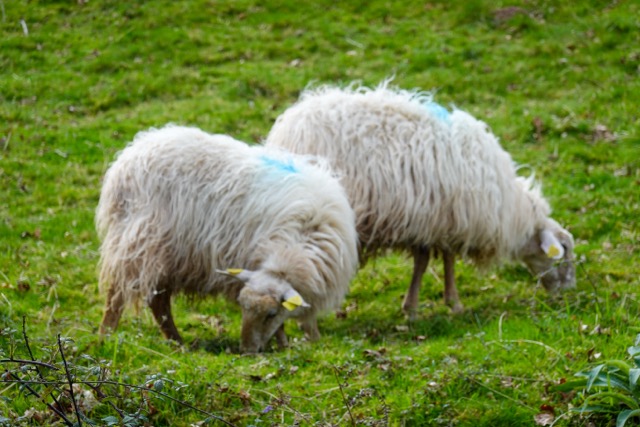
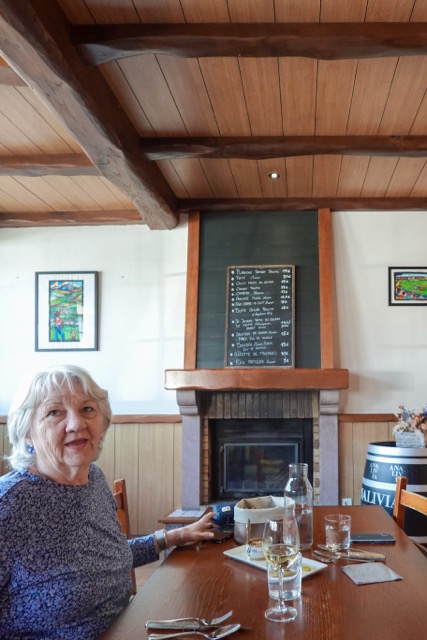
The Zugarramurdi cave is the site of the largest prosecution and execution of witches in history. Some 7,000 people were accused and hundreds executed over the course of the reign of terror known as the Spanish Inquisition, but the largest single case occurred here. The Basques count this story as just one on a list of attempts to conquer or control their homeland and culture – all doomed to fail.
Always Under Pressure
The Romans decided that the cost of subduing the Basques was greater than they wanted to pay, and left them more or less alone. The Visigoths followed the Romans and came up short. The Umayyad, who dominated the Iberian peninsula for 700 years after Rome, tried and failed giving them the nickname “pagan wizards.” And so it has gone down through history including the horrific destruction of the Basque town of Guernica where Franco, frustrated by the region’s resistance during the civil war, invited Hitler to practice his Luftwaffe tactics on them. Today, in modern day Spain, the Basque region is among the wealthiest and most autonomous regions of the country.
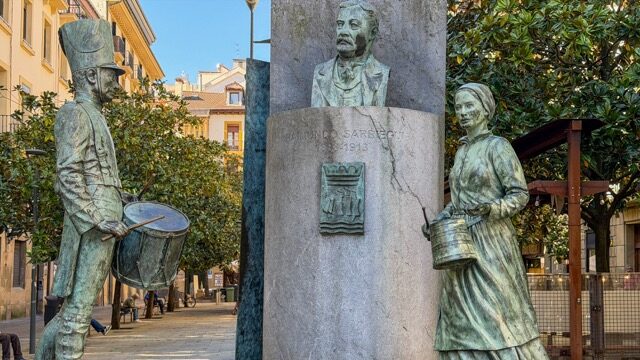
Stories of the defiance of the Basque people to attempts at oppression are seemingly endless. One of the monuments that I most enjoyed in San Sebastián is a life size sculpture of two people apparently playing drums. Upon closer inspection, however, you realize that the woman is drumming the underside of a wooden bucket. The story goes that on the occasion of having been occupied (temporarily, it turns out) by the French, the women of the town marched around beating their wooden buckets to mock the soldiers and show their contempt. This legend is celebrated by the city every year with a 24 hour drumming session at the town square.
A Spiritual Experience
On our last day in San Sebastián we came upon one more manifestation of the Basque embrace and defense of their culture, legends, and myths. We planned a brief visit to the San Telmo Museum. The “brief” part of the plan went out the window as we began exploring this magnificent repository of the regions history and art. It is housed in a 16th century convent that was augmented recently with a steel and glass addition that beautifully mirrors the tug and pull of past and present in the Basque identity. But the moment that brought us to a full stop was walking into what had been the convent’s church. It is a sublimely proportioned, elegantly restrained, space where the walls have been adorned with contemporary impressionistic painting unlike anything we had ever encountered in a church.
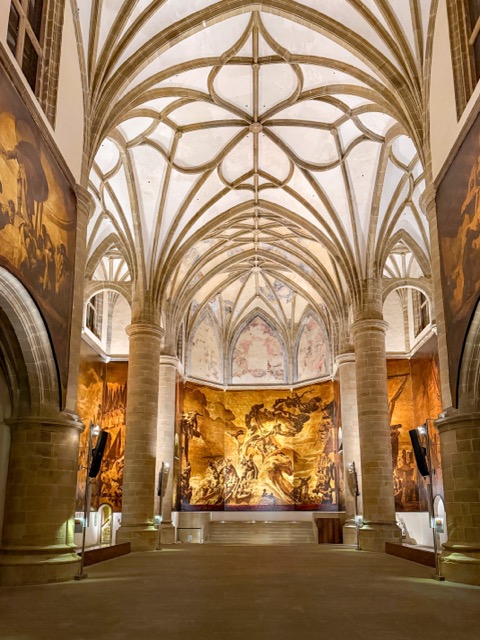
It seems that when the facility was converted to its secular purposes, the town fathers decided that it nonetheless needed the kind of ornamentation and story telling typical of this genre, just not the typical topics. The result are monumental paintings depicting the history and culture of the Basques. And there, on the first panel on the left, are the witches, engaged in their ancient ritual communion with nature.
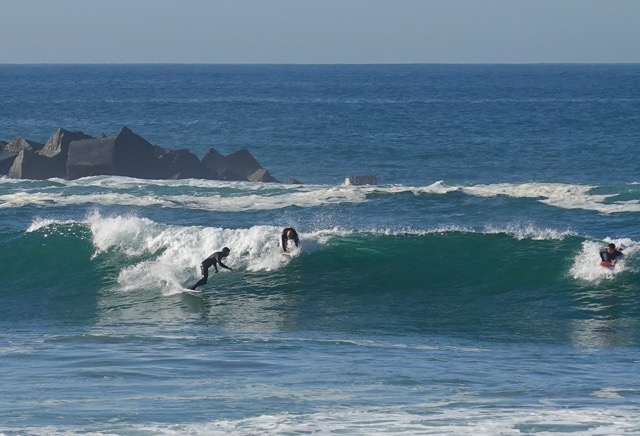
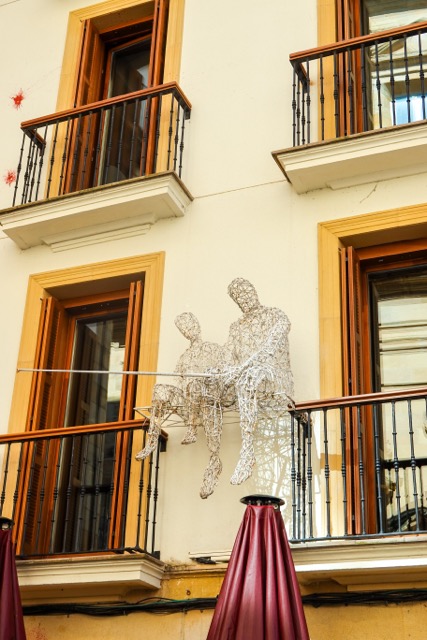
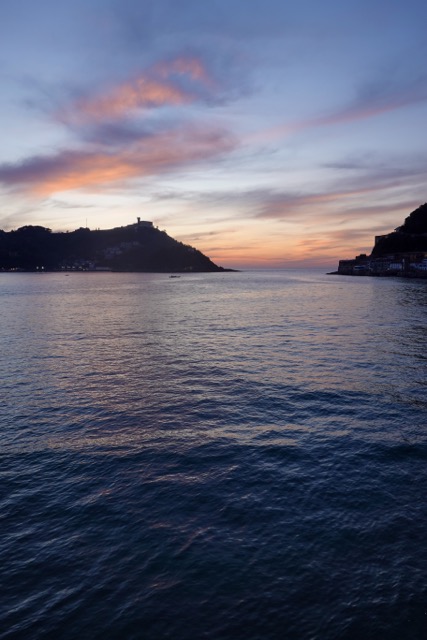
We left San Sebastián in contemplation of a culture that is more nuanced and complex than we could have possibly suspected. They are gifted with amazing natural resources, stunning beauty, rich history, and enormous character. For thousands of years these elements have been placed under enormous pressure and heat by other societies and cultures. When such forces are brought to bear on such elements, the result, of course, is a gem.

About Us
Welcome to our little corner of the world where we invite you to embark on exciting journeys with us!
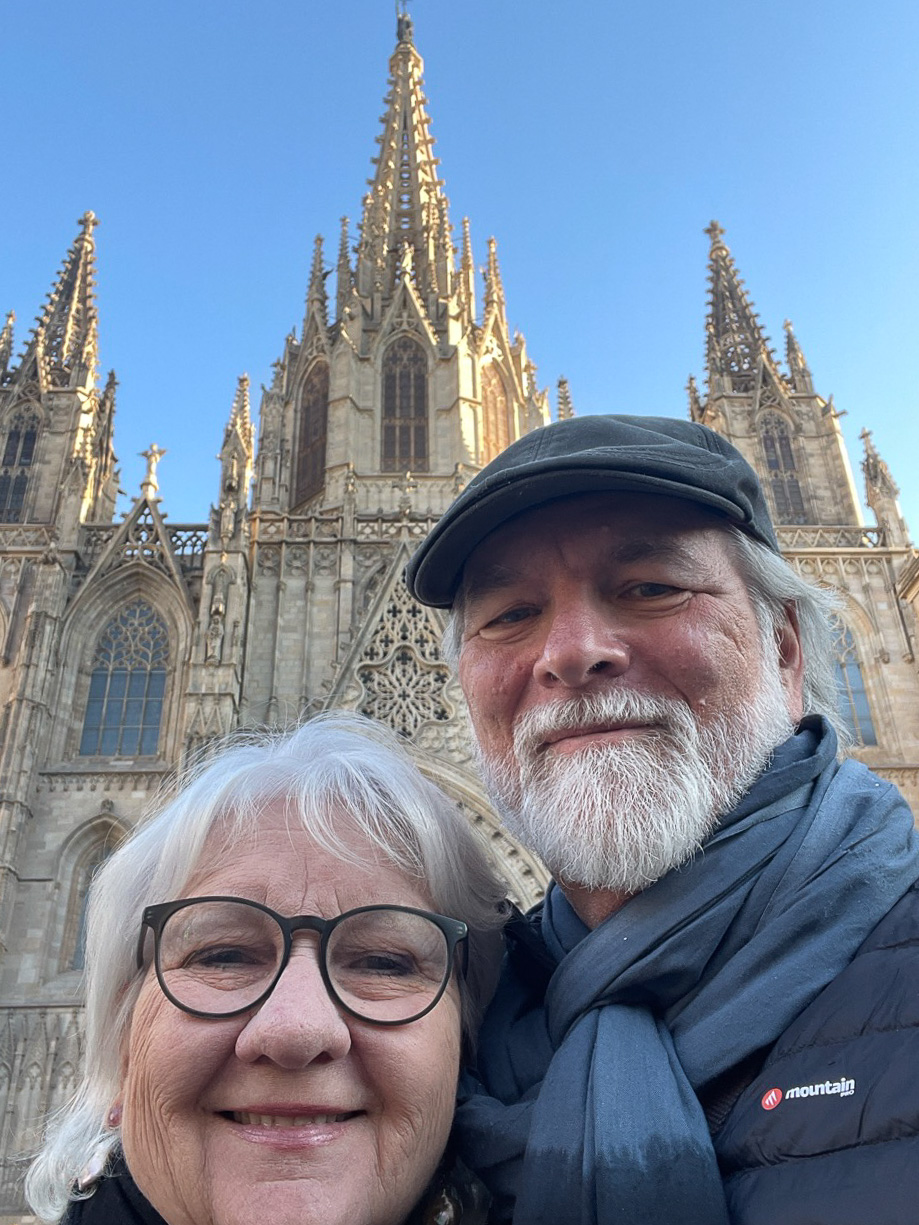
We’re Ed and Bonnie, a duo passionate about exploring the world and experiencing its wonders. Our love for travel isn’t just about discovering new places; it’s about sharing those moments with cherished family and friends like you.
Our hope is that you will feel like you’re right there with us, sharing in the excitement and wonder of each destination. Better yet, let’s plan a rendezvous somewhere wonderful! Learn more