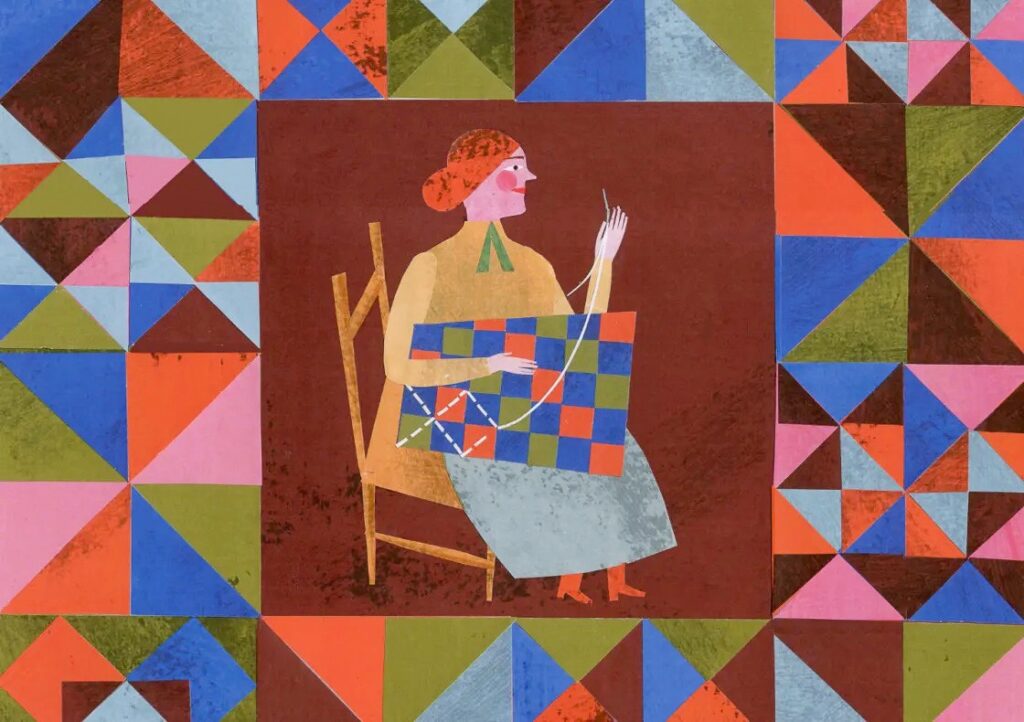
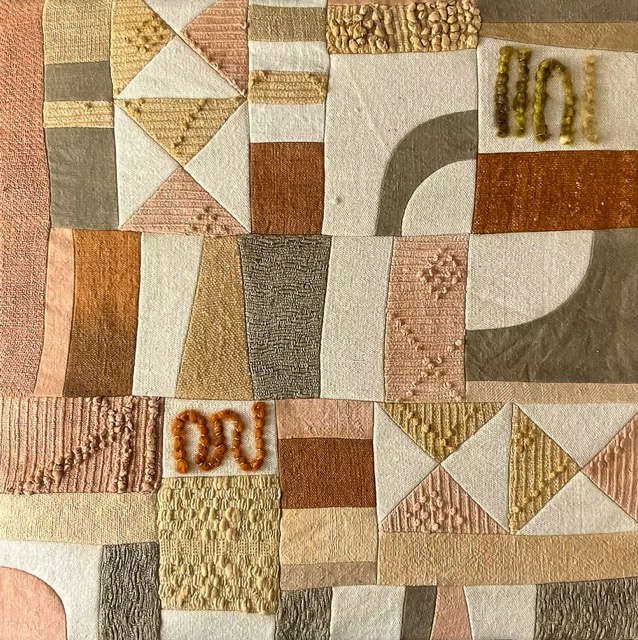
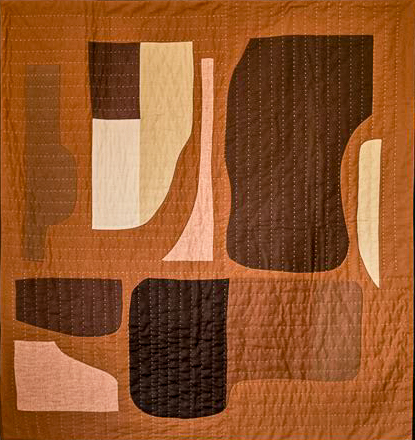
I discovered Selvedge a few months ago, a British magazine dedicated to textiles, craftsmanship, fashion, and global textile culture. It reignited something I’d been missing. I’ve been neglecting my studio lately and a Quilt Jamboree felt like exactly the push I needed. Besides, it was the perfect excuse to escape Valencia’s heat and see live theatre on the West End. Since it’s just a two-hour flight to London, we’ve committed to making that pilgrimage at least once a year.
The East End Calls
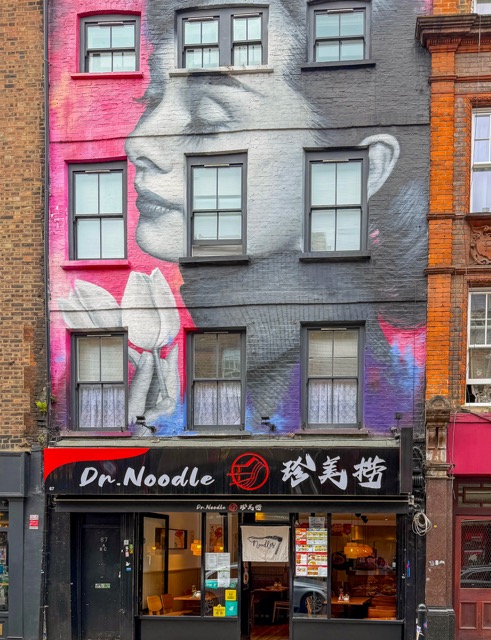
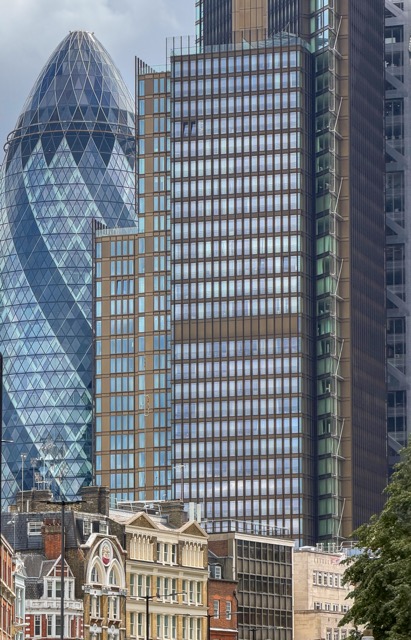
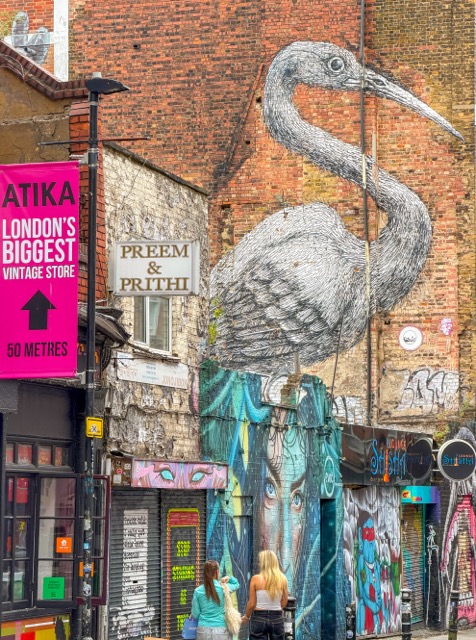
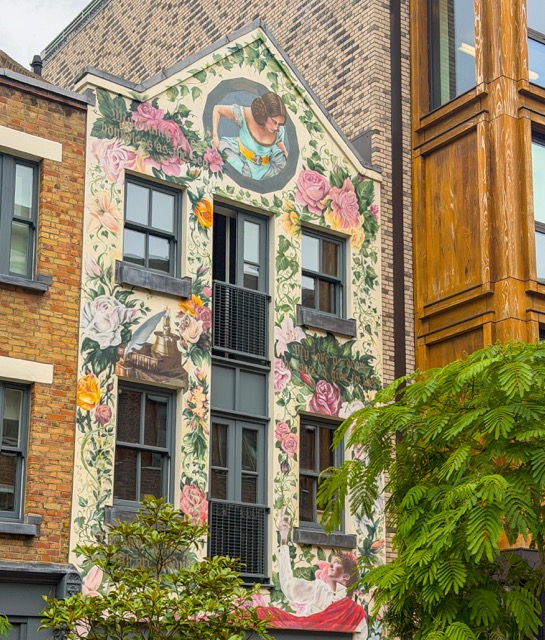
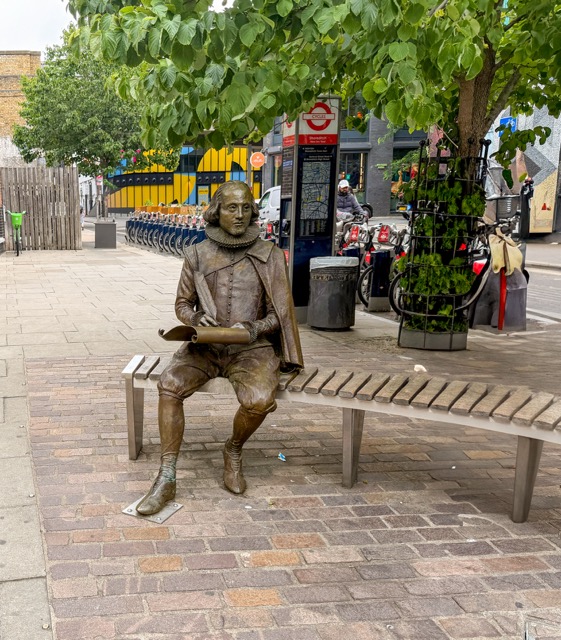
London’s Museum of the Home was the venue for the workshop and that was a bonus. Located in the Shoreditch neighborhood in the East End, this would be a new area of London for us to explore. It did not disappoint. From the moment we arrived, it was obvious: this was a different London. The East End pulses with an energy you don’t feel in Central London. Gritty industrial history—warehouses, railway arches, immigrant working-class neighborhoods—sit alongside a vibrant creative scene.
Stories at the Jamboree
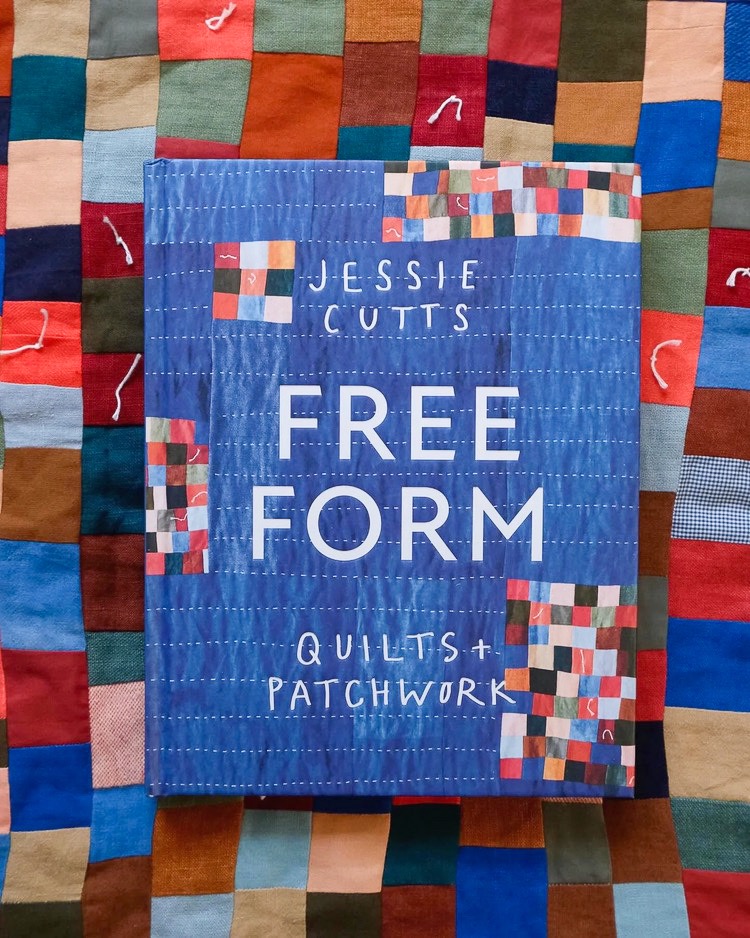
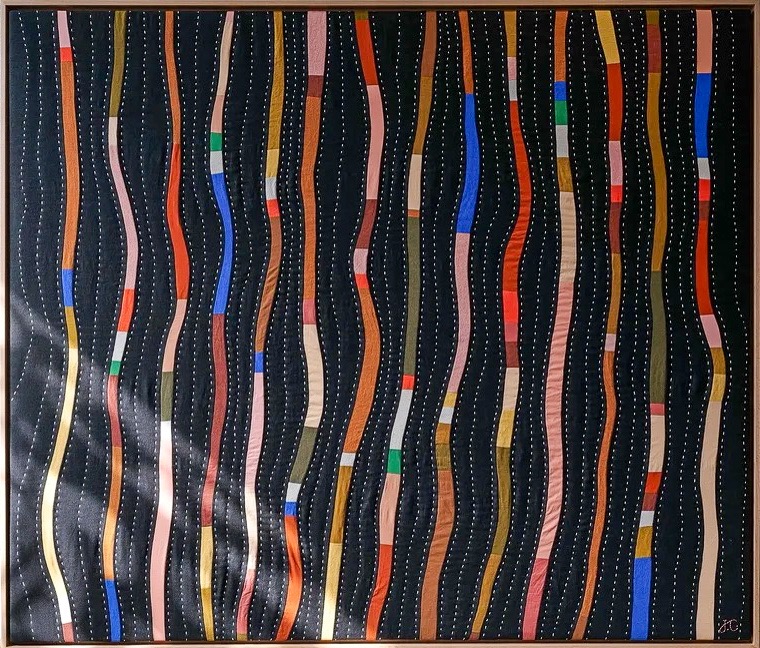
At the Quilt Jamboree, I listened to the stories of several well-known quilters. Jessie Cutts spoke about working intuitively, without a predetermined pattern—an approach that immediately resonated with me. Ellie Beaven described the entire arc: growing plants on her Galician property, extracting natural dyes, and using them in her work. Julius Arthur drew inspiration from growing up in the Cotswolds, landscape informing every design. What struck me most wasn’t just the technical skill—it was the deeply personal way each quilter had found their own entry point into the work. No two approaches were the same.
Ellie Beaven – Whole Cloth StudioJulius Arthur – House of Quinn
After the Quilt Jamboree, we celebrated with dinner at Cinnamon Bazaar; an Indian dining experience is a London ritual we never miss. Then we headed off to the Noël Coward theatre for Cyrano de Bergerac (Ed will tell you about that experience). But a real discovery was waiting for us the next day, in the East End.
Makers & Markets
We spent our second day at Spitalfields Market and Brick Lane. Spitalfields is that rare thing—a market that’s both genuinely local and genuinely polished. You’ve got independent designers and artisans mixed in with mainstream shops and tourist draws, but it works without feeling staged.
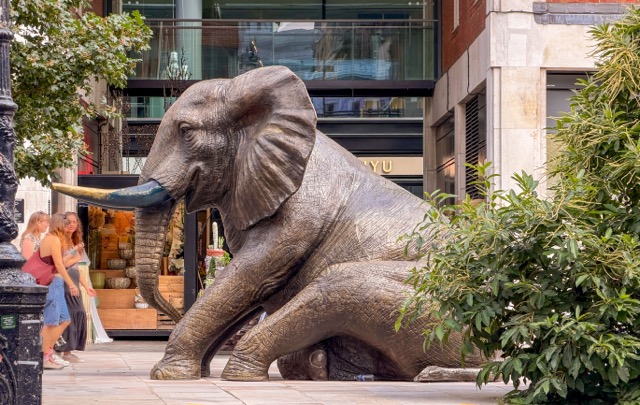
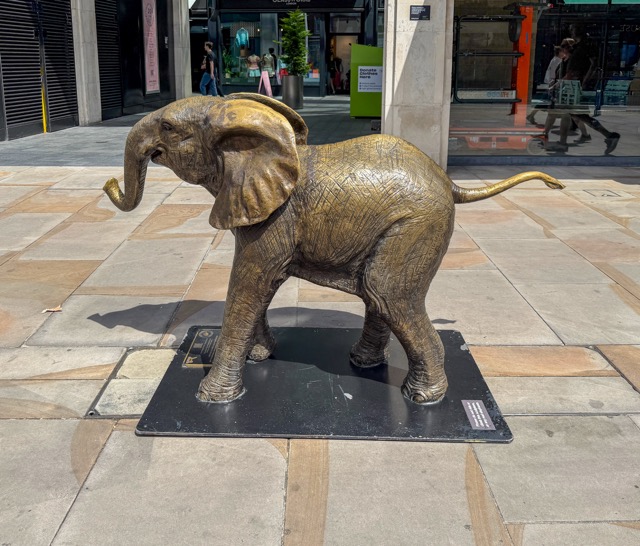
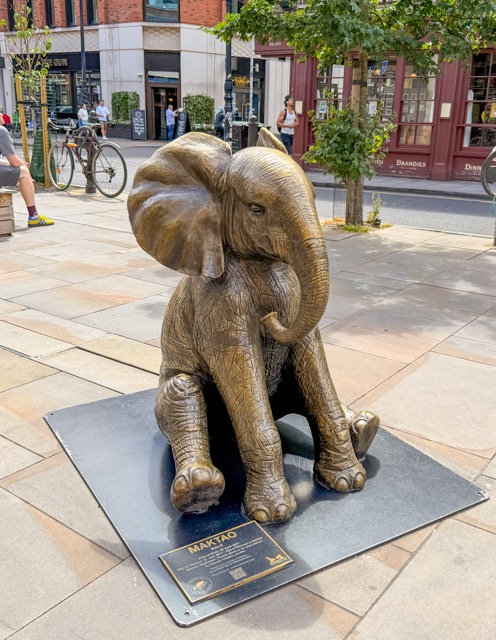
These elephant statues on Brushfield Street in Spitalfields are promoting the Sheldrick Wildlife Trust. The installation, called the “Herd of Hope,” features 21 life-sized bronze elephant sculptures created by artists Gillie and Marc. Each sculpture represents a real orphaned elephant rescued and raised by the Sheldrick Wildlife Trust’s Orphans’ Project.
Ritual and Hospitality
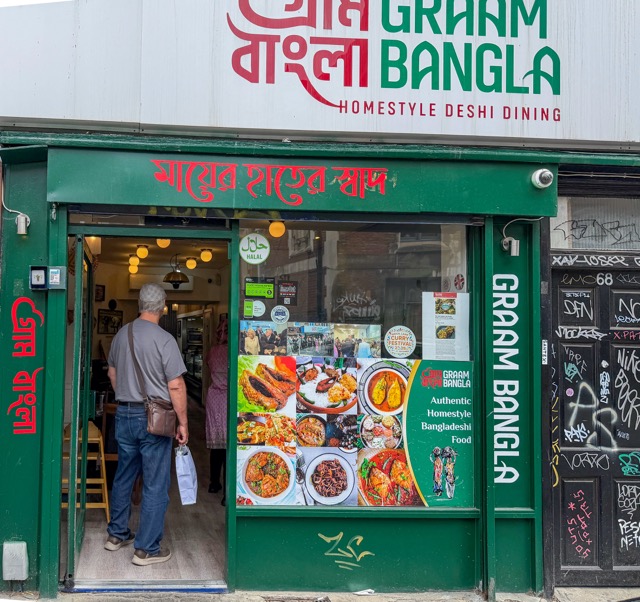
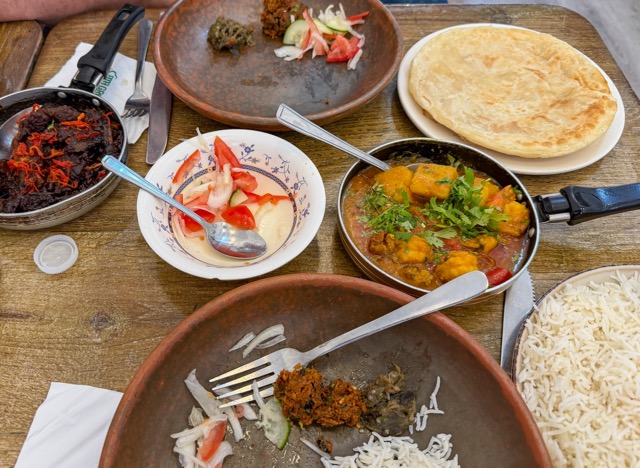
Brick Lane has been a neighborhood of immigrants for centuries and when I learned that there are many people from Bangladesh living there today, I decided we must have a Bangladeshi lunch. On the spot research revealed that one of the best in the area was just a four-minute walk. Graam Bangla is a tiny and humble restaurant on Brick Lane loved by locals. It seems I’d selected the right place for our first Bangladeshi meal.
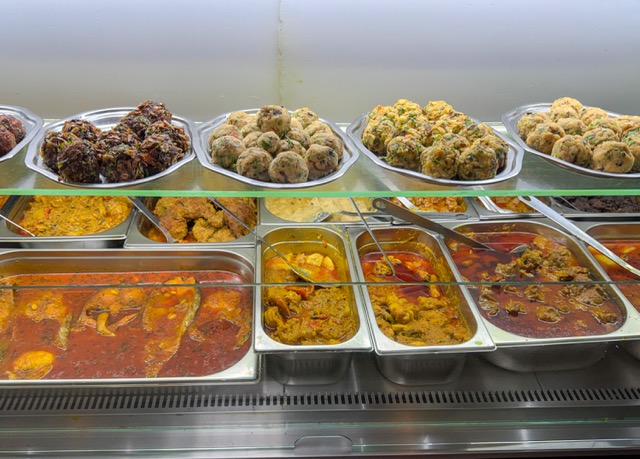
As we were seated, a lovely woman swathed in a pink sari asked if it was our first time. Having answered in the affirmative, she did something I hadn’t expected. She led us to the kitchen counter and asked us to taste—progressively spicier offerings on tiny spoons—to understand not just our tolerance but our worthiness to eat there. This was something deeper than the usual restaurant transaction. We’d been invited into her care.
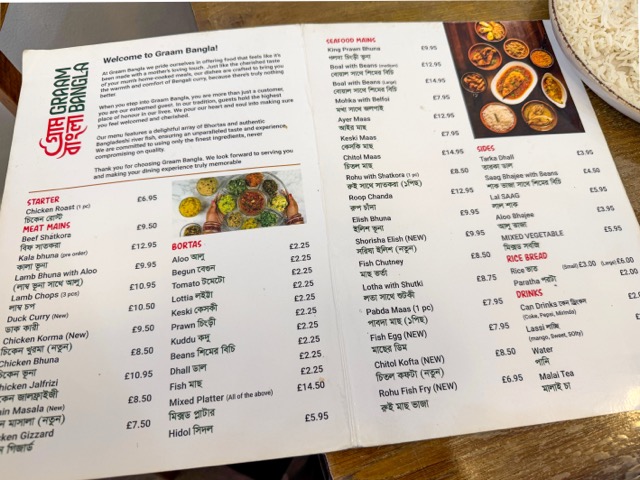
Our hostess guided us through the menu with the thoughtfulness of someone sharing family recipes. Under the Bortas section, she recommended Lottia—a classic Bangladeshi starter of sun-dried fish rolled into piquant balls with aromatic spices and chilies, each bite rich and intensely savory. Then came Aloo Chingri, shrimp and potatoes in a spiced tomato sauce fragrant with turmeric and garlic. And Kala Bhuna, beef that had been braised so slowly the sauce had turned glossy and nearly black, thick and deeply concentrated. Each dish represented hours of technique. Rice and paratha—unleavened, crisp, and flaky flatbread—were our accompaniments.
This was craft—culinary craft—as genuine as anything I’d seen at the Jamboree. I don’t remember seeing a Bangladeshi restaurant in Valencia, but I plan to look for one.
Trading Slow for Intentional
We broke one of our cardinal rules—stay three to four days minimum. Normally this would feel like a failure. But two days in the East End, moving from inspiration to discovery to ritual, compressed something that might have taken twice as long elsewhere.
Sometimes intensity is what you need. Sometimes a city that challenges you to move fast forces you to pay closer attention to what matters—the quilters’ stories, the rituals of hospitality, the creative spirit embedded in every neighborhood. We returned to Valencia with exactly the inspiration I came seeking.
I guess we’ve become seasoned travelers since our first visit to Istanbul in 2012. The magic and energy of this great city straddling two continents still throbs. But there was a qualitative difference in the experience this time. There has been a shift in how we experience the world as we travel, and that was brought home to me on the Bosphorus last week.
The inspiration for this trip was as an adjunct to Bonnie’s adventure in Uzbekistan with her friends. Since her flights to and from Tashkent originated in Istanbul, a couple of extra days there seemed an obvious choice. Bonnie would be off in Central Asia for a week, so I decided it was a great opportunity to have my own mini adventure in Turkey while waiting for her to join me at the end of her tour on the Silk Road. I must admit, it was a little intimidating to find myself alone in an exotic city of 20 million. Many lessons awaited.
Your First Time
It was inevitable that this trip would be somewhat colored by nostalgia. That previous visit had been 11 days of wonder and euphoric discovery. The cacophony of ordered chaos in the Grand Bazaar, the pungent scent and chromatic color of spices mounded into pyramids, soaring domes adorned with scintillating patterns of red, blue, and gold, and everywhere the mark of previous great civilizations we’d only previously encountered in books. We were enraptured. Like any great, first, passionate affair, it was going to be a hard act to follow.
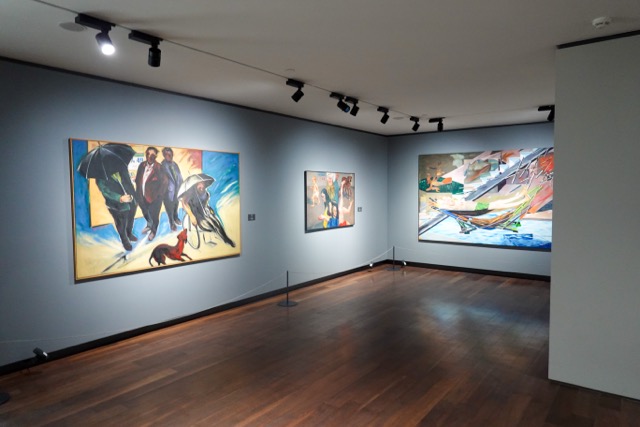
So, I made a calculated decision not to revisit those moments, but rather to scratch a little deeper. In particular, I decided to spend time with Istanbul’s museums and immerse myself in the art scene. Allowed two days to be completely self-indulgent in one of the great cities of the world, I chose to wander through endless galleries of paintings and sculptures. I’m still not sure what that says about me, but no regrets. I was in my happy place.
Modernity on Display
The brand-new Istanbul Museum of Modern Art perches on the waterfront as the anchor of a new, high-end development of hotels, restaurants and shopping known as Glataport. It’s all tied together by a broad promenade perfect for strolling along the Bosphorus and pausing for a coffee. Conveniently, the city’s newest art museum sits not far from its oldest: the Istanbul Museum of Painting and Sculpture, a collection that began with the founding of Turkey’s first institute for art education in 1882. Macerating in these collections for an entire day provided a comprehensive survey of the modern history of art in Turkey and lead me to a couple insights and impressions.
Context
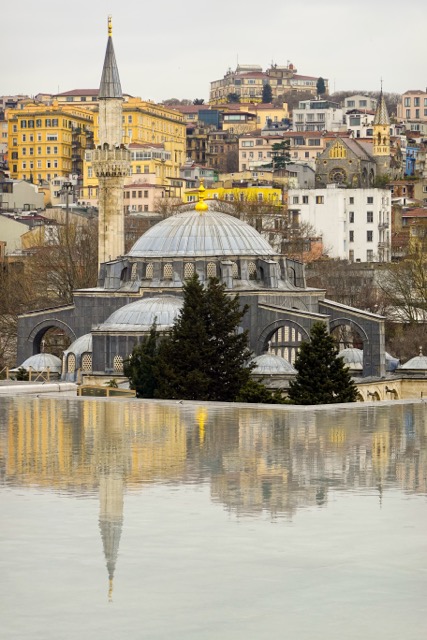
When the Mimar Sinan Fine Arts University was founded, Constantinople (Istanbul) was the center of the Ottoman Empire. It is with extreme self-restraint that I refrain from turning this essay into a history lecture, but in a place that has been at the center of world events for 2000 years, it’s difficult. Suffice it to say that the Ottoman empire was a Muslim caliphate that had replaced the Christian Byzantine empire 600 years earlier when Byzantium (Constantinople; Istanbul) was conquered by Mehmed II in 1453. And one of the strictures of Islamic tradition is the prohibition of any artistic expression depicting living beings. Hence, visual arts in the Islamic world have nearly always been focused on patterns of design and calligraphy, both of which, they have elevated to an astonishing level of exquisite beauty. Therefore, the founding in 1882 of a fine arts institution for the study of painting and sculpture marked a huge shift in the cultural focus for Turkish art. Most importantly, it signaled Turkey’s desire to join with Western Europe in the development of the modern world, a process that was accelerated dramatically with the founding of the Republic of Turkey by Atatürk in 1923.
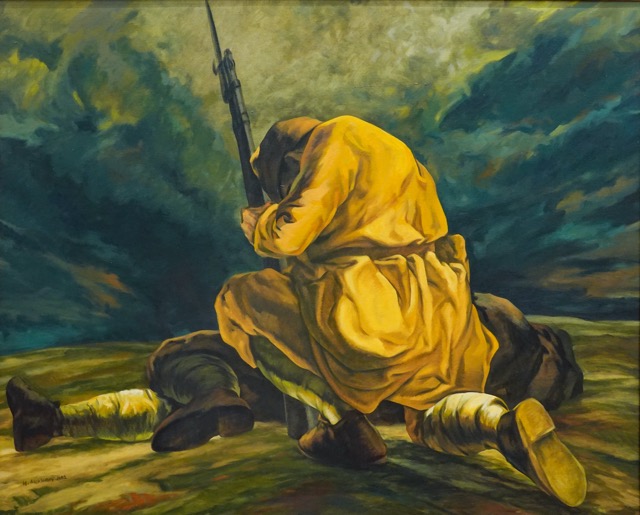
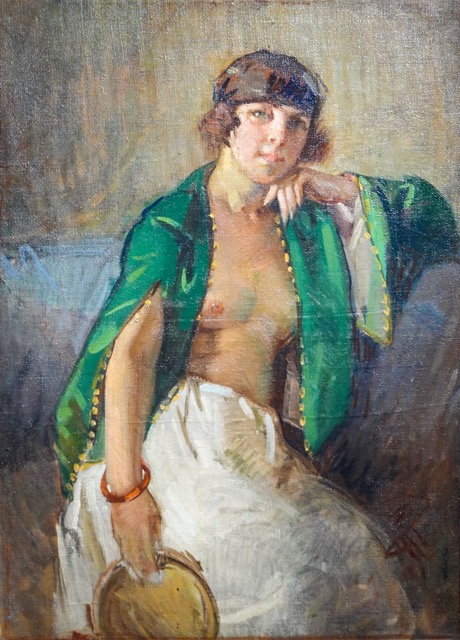
All of that to say that wandering through these museums was to experience, through art, the yearning of a culture to leave its religious past and reach for the secular future envisioned by the west. It was, in some ways, a little heartbreaking to experience the striving of Turkish artists attempting to copy, in some cases literally, the European masters of the time. They had no history of painting and sculpture beyond the caligraphy and design I mentioned earlier, and as I contemplated one modest effort after another, I began to notice the dates on the work. Almost without fail, the style of the work would reflect a European development from a decade or two earlier. Paintings in the collection of Turkish “cubism”, for example, came twenty years after Braque and Picasso originated the movement and even then, they did not really seem to grasp the cubist’s core concepts. I searched all day for a truly original Turkish artist, finding very few.
The collections are comprehensive and I thoroughly enjoyed the paintings, the sculpture, and the setting. I also learned something important that will inform my future visits to such institutions. Great museum collections do not simply display genius or awesome achievement. Sometimes, they simply serve to document cultural history and reflect humanity’s journey. It turns out, there can be a sublime beauty in that.
Reunion
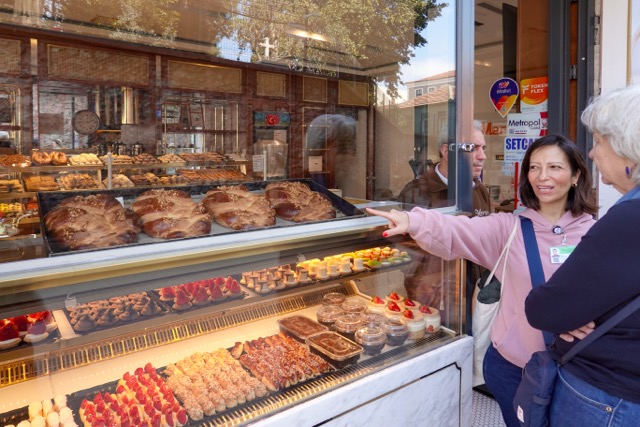
When Bonnie arrived, full of stories and excitement about her time in Uzbekistan, we reverted to form and went on a walking food tour along with Gloria, one of her travel companions. Due to a serendipitous last-minute change, the tour we ended up taking was a perfect fit with our sensibilities around travel these days. Billed by Culinary Backstreets as “far from the tourist trail” we spent the day strolling the streets of a diverse neighborhood where we truly did not see another tourist anywhere. None. All day. It was glorious.
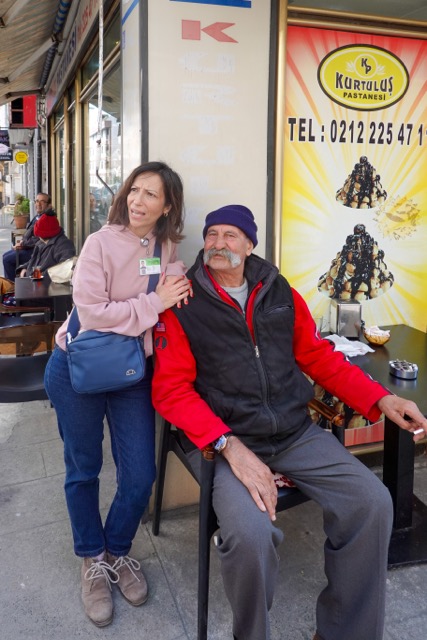
I think it is part of the baggage that comes with being “seasoned” travelers. There’s this nagging thought that you’re not experiencing the real thing. Those handicrafts you’re considering are just created to cater to people like you. Traditional dishes found on restaurant menus are still made mostly to satisfy the tourist experience. The Kurtuluş neighborhood is the antidote for this syndrome. The vendors and cafes here are not catering to anybody except their neighbors, and that knowledge freed us to enjoy every nuance of the culture and people without inhibition or cynicism. These really are the flavors, smells, and textures that define everyday Turkish cuisine and life.
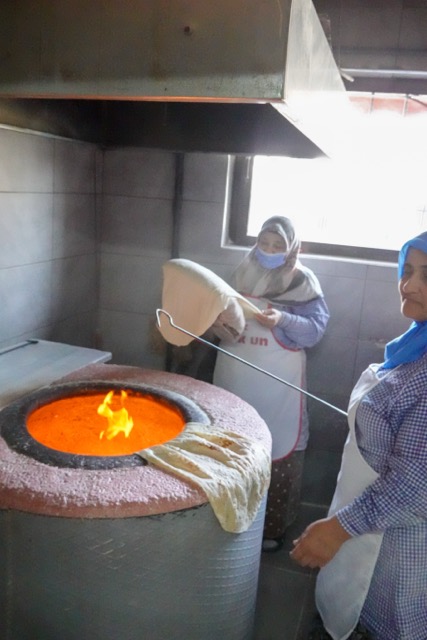
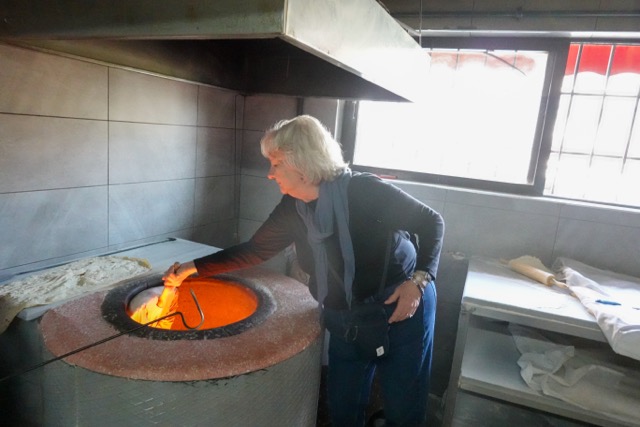
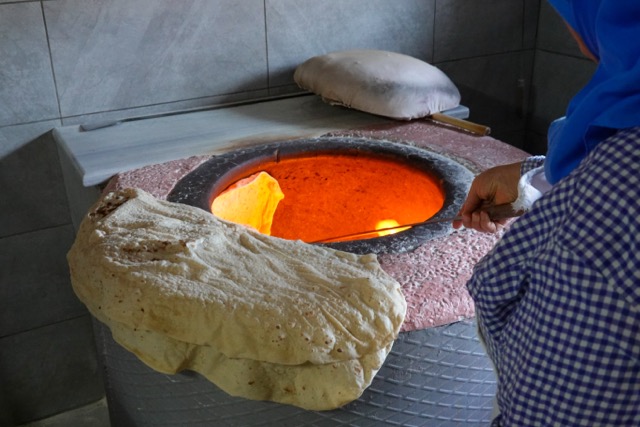
One of my small moments of euphoria came in a café where yufka bread is the specialty of the house. Yufka is an extremely thin flatbread – we might call it lavash – which is cooked in a traditional tandir oven. It’s prevalent in the nomadic tribes of Central Asia because it can be rolled up and stored for travel. The dough is stretched out paper thin, draped across a pillow like implement which is then used to smack it against the inside of the oven where it cooks for a minute or two before being retrieved by a hook. The whole process takes only minutes and is repeated by these artisan bakers hundreds of times a day to supply the demand from their local customers. It’s one of those kitchens you might suspect of existing primarily to entertain the tourists. Except there are no tourists. This is their daily bread, still created the way it has been for millennia. And so it went throughout the day, from chewy ice-cream flavored with mastika to tavuk göğsü, a dessert pudding made with chicken breast, these were the authentic foods of a Turkish neighborhood with not the slightest whiff of commercial tourism. Now we’re traveling!
Back to the Old City
The next day we crossed the Golden Horn to the historic center of empires to revisit some of the most important landmarks anywhere in the world. It was here, ironically, that we met with our greatest disappointment of the trip.
Church to Mosque to Museum to ??
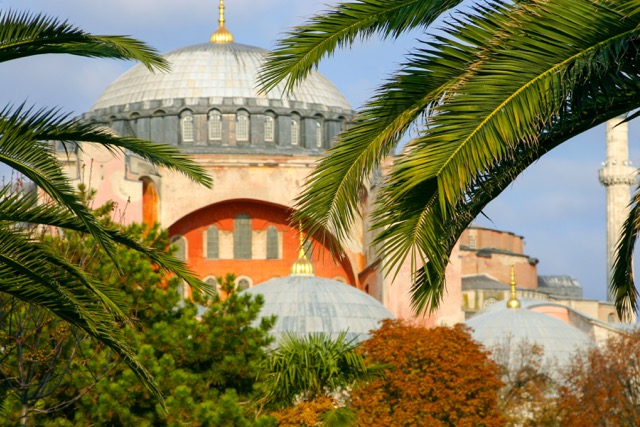
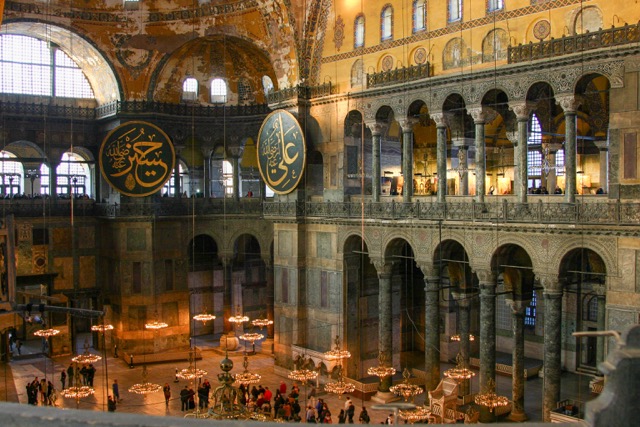
The Hagia Sophia is one of the most remarkable structures anywhere in the world. It was built to be the center of the Christian world in the 6th century by the Roman emperor, Justinian the Great. To my mind, it is the greatest bit of Christian architecture ever constructed. Of course, it’s no longer a church. After eleven centuries of Christendom, Mehmed II turned Christian Byzantium into Islamic Constantinople and with it the Hagia Sophia into a mosque. To their credit, the Ottomans did not tear the thing down and replace it (as is widely practiced by religions of all stripes) but rather recognized the grandeur and beauty they had inherited with their conquest and merely added a few minarets to provide the proper accoutrements. This state of affairs lasted another 600 years until the founding of the republic and the conversion of the church-mosque, into a museum. It was in that state that we first experienced the building back in 2012 and were completely awestruck. And so, it was with great anticipation that we returned.
20122026
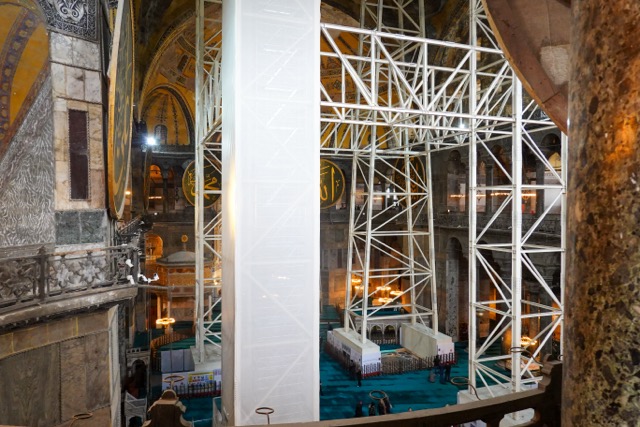
Turkey’s autocratic president, Recep Erdoğan, like the current US president, is determined to roll back history and undo all progress made toward an inclusive, tolerant society. In his case, that means returning to Islamic values and intolerance of others. To that end, he has declared the Hagia Sophia to once again be a mosque, limiting access. In addition, a structural renovation has been undertaken which has no apparent timeline for completion and no clearly defined objective. The result: for 50 euros you are permitted to enter only the upper-level gallery where you may peer into the gloom at enormous steel brace works filling most of the great domed interior. It was a shock. As Gloria, our travel companion said, “they should have just closed it.” I completely concurred and grieved the loss for the rest of the trip.
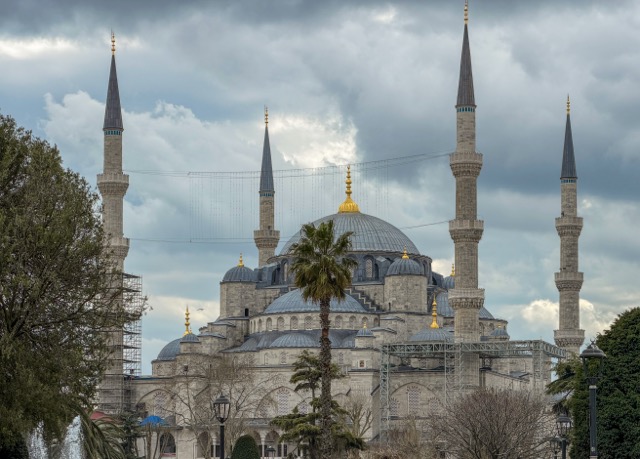
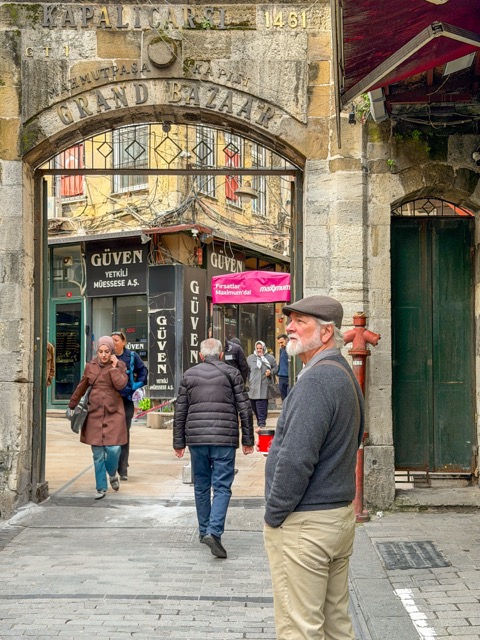
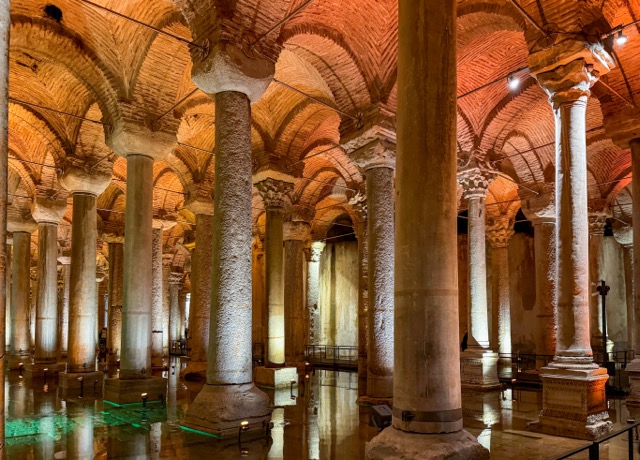
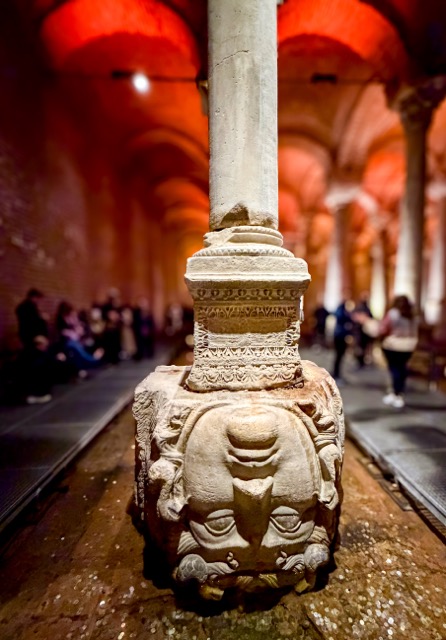
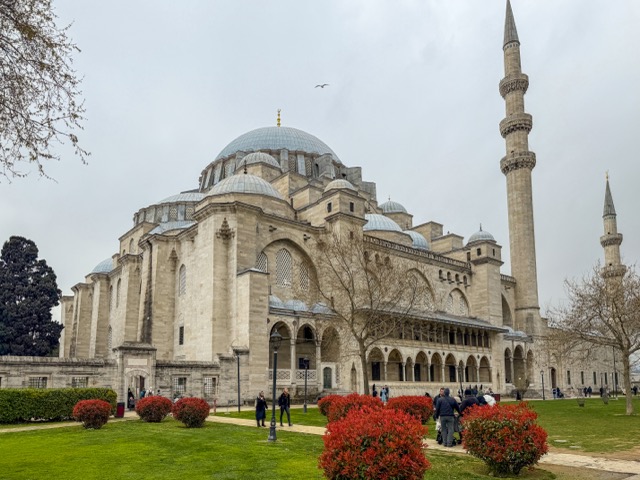
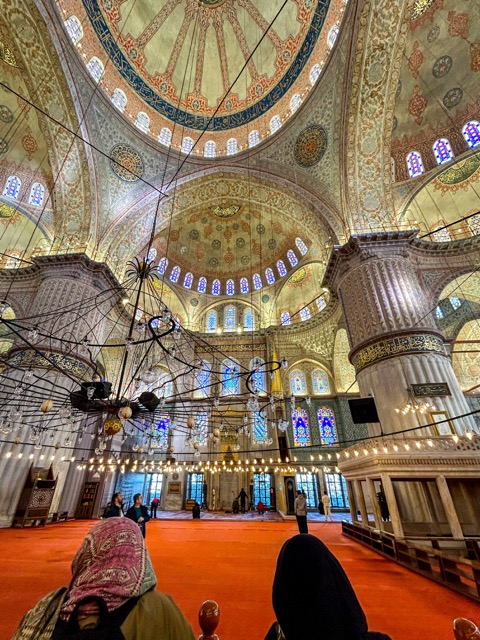
Perhaps that melancholy colored the rest of the sites we visited. The ornamentation of the Blue Mosque felt a little overdone, the awe of the Basilica Cistern faded soon after arrival, the Grand Bazaar seemed surprisingly like a modern commercial mall, and even the great Suleymaniye Mosque while still beautiful, felt a bit anti-climactic.
Had I become jaded by the intervening years of travel? Was I a victim of my own travel successes, or was there a more distressing cause: the need for ever greater stimulus to affect emotion – our addiction to the dopamine hit? I’m still a little unsettled by this, but I’ve adopted the most charitable interpretation for the moment. I think our focus has changed. We travel now more to experience other peoples than to collect images of landmarks. Our most cherished experiences come from time spent in places like the Kurtuluş neighborhood where we are privileged to be briefly immersed in a way of being that challenges our assumptions and comfort with the familiar. A place where we’re able to travel one more step toward a more generous understanding of all people.
The thrill of the unknown gripped me as I arrived in Uzbekistan with the kind of anticipation that comes from venturing somewhere truly off the beaten path. In the months leading up to the trip, I had worked to prepare myself. I read about the history of the Silk Road, traced ancient caravan routes across maps, and watched several Great Courses lectures on Central Asia – but nothing could truly prepare me. There were stories and images that I had never imagined. Yet here I was, touching down in the capital city, Tashkent. How did this happen?
The Message
It started with a message from Maria last September.
“Where are you and Paola going next?” I asked her.
I’d met Maria in Tbilisi in September 2024 on a Culinary Backstreets trip (link) where she was on her annual trip with her childhood friend, Paola. For a week, we explored Georgian food and wine together – bonding over long meals, endless toasts, and conversations that lingered well into the evening. Since then, we’ve stayed in touch through occasional WhatsApp messages, often sharing our mutual disbelief over the political shifts occurring in both Georgia and the United States.
“Uzbekistan,” she replied.
“I want to go!” I replied immediately.
She explained that she was joining a group from the San Diego Diplomacy Council for a weeklong exploration of this Central Asian hub. Visiting Samarkand had been a dream since she was a young girl. It seems a beloved Italian song, Samarcanda by Roberto Vecchioni, was hugely popular in the 1970s and 1980s and remains a classic to this day. Inspired by an ancient Mesopotamian legend, Samarcanda evokes romantic images of distant lands and mysterious journeys. As a young girl, Maria imagined Silk Road caravans, crossing deserts, cities crowned with blue domes, and the legendary trading hub of Samarkand.
A few weeks later, I mentioned the trip to my friend Gloria. Her response was the same as mine, so I shared the itinerary: Tashkent for three days, and a couple days each in Samarkand and Bukhara. I suggested we tack on a few days in Istanbul on the way back to the West, and we were set.
Now here I was stepping out of a Hyatt Regency into the capital city at the heart of Central Asia.
Tashkent: Where Eras Overlap
It’s a modern, evolving capital where everyday life unfolds against a backdrop of Soviet era infrastructure and subtle traces of ancient history. In Tashkent, time doesn’t move in a straight line – it seems to overlap. Centuries exist side by side rather than replacing one another in sequence.
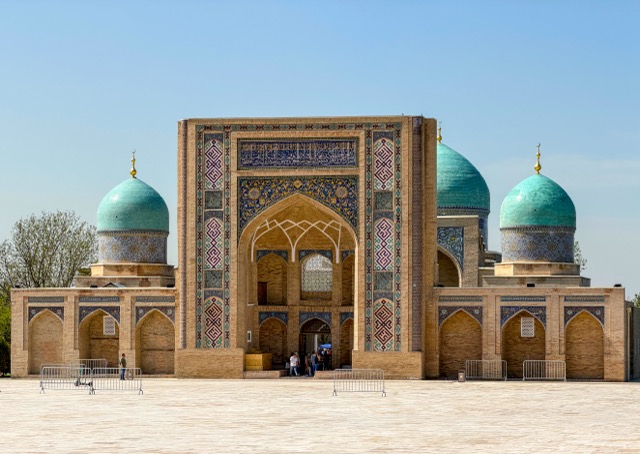
At the Khast Imam Complex, courtyards framed by turquoise domes and intricate tile work create a sense of quiet stillness – ancient and spiritual. Just beyond, the rhythm shifts. Wide avenues and imposing concrete structures, often in the brutalist style, reflect the Soviet rebuilding effort after the devastating 1966 earthquake. And then, without warning, glass towers rise into view and reflect a city that is looking forward as much as it is holding on to its past.
Barat-Khan Madrasah at the Hazrati Imam Complex
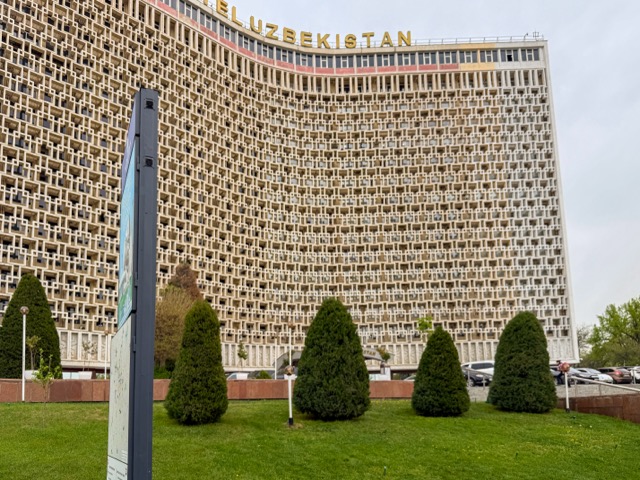
Hotel Uzbekistan, completed in 1974 and showcasing Brutalist architecture, served as the leading luxury hotel during the Soviet era.
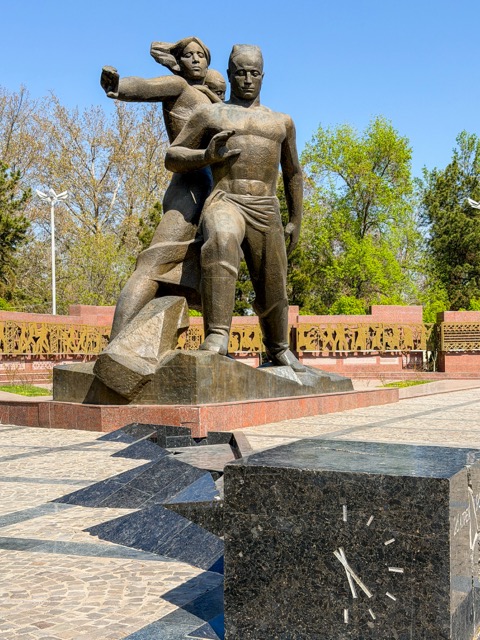
Moment of Courage – this statue commemorates the 1966 earthquake. A black granite cube split by a crack, symbolizing the earthquake, and a bronze sculpture of a man, woman, and child, representing protection and resilience in the face of disaster.
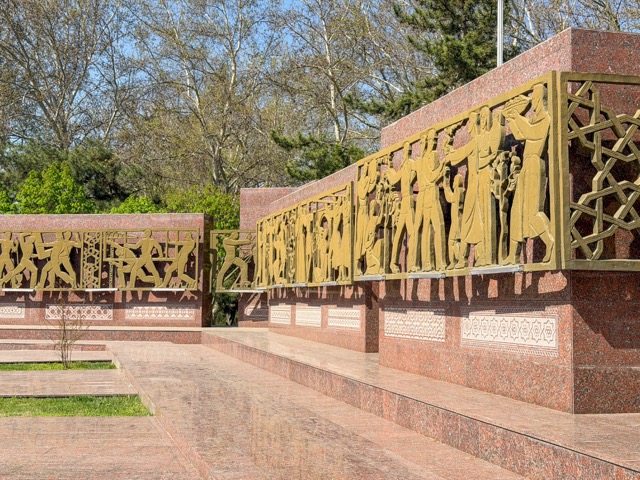
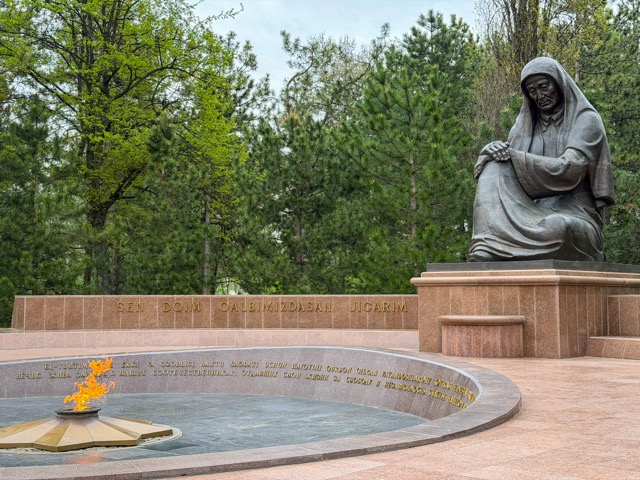
Surrounding this sculpture are 14 bas-reliefs that depict scenes of the reconstruction efforts following the 1966 earthquake, showcasing the unity and labor of various trades involved in rebuilding the city.The memorial to fallen soldiers in Tashkent is known as Memory and Honor Square, dedicated to Soviet soldiers who died in World War II. It features the Tomb of the Unknown Soldier and a statue symbolizing a grieving mother, honoring the sacrifice of over 400,000 Uzbek soldiers.
It’s about coexistence. A brutalist façade doesn’t erase the mosque nearby. A modern business center does not diminish the weight of history underneath it. It’s a layered identity where Islamic geometry, Soviet ambition, and contemporary design all speak at once.
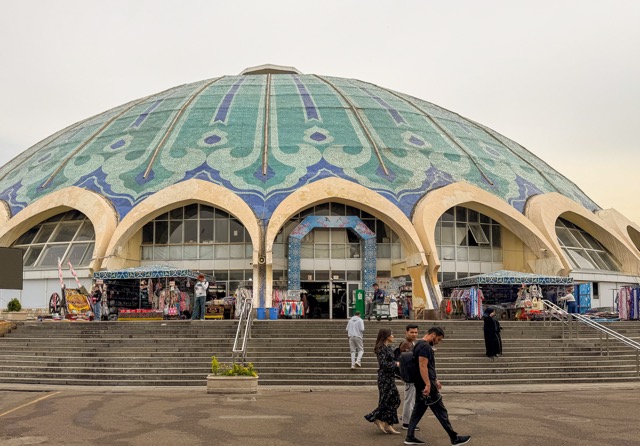
Chorsu Bazaar sits at what was once a key intersection of Silk Road trade routes, making it a natural place for merchants. Today, a massive, blue-domed structure built in the 1980s dominates the site. While the structure is relatively new, the tradition of a market at that location stretches back roughly a thousand years.
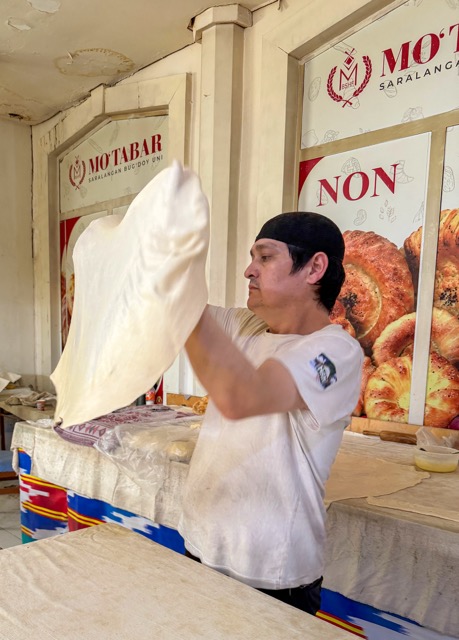
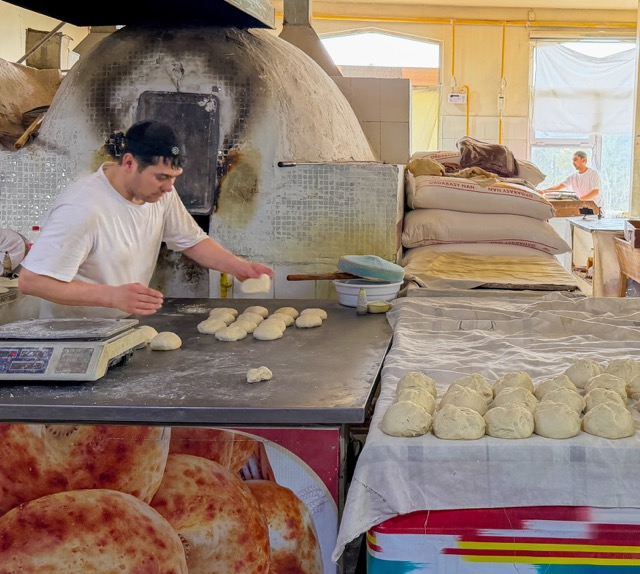
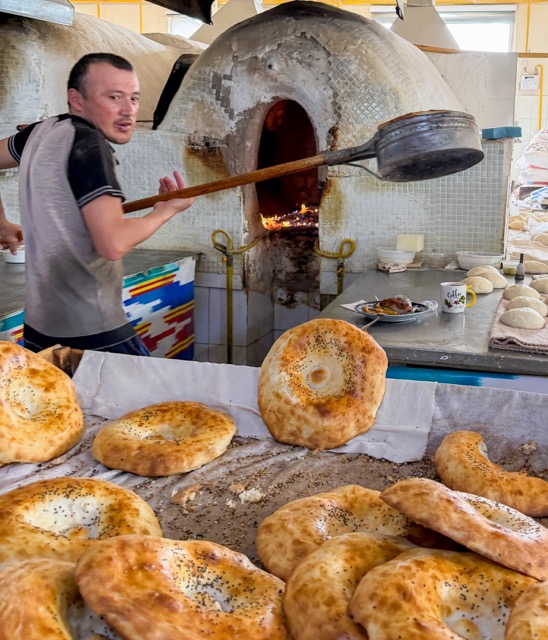
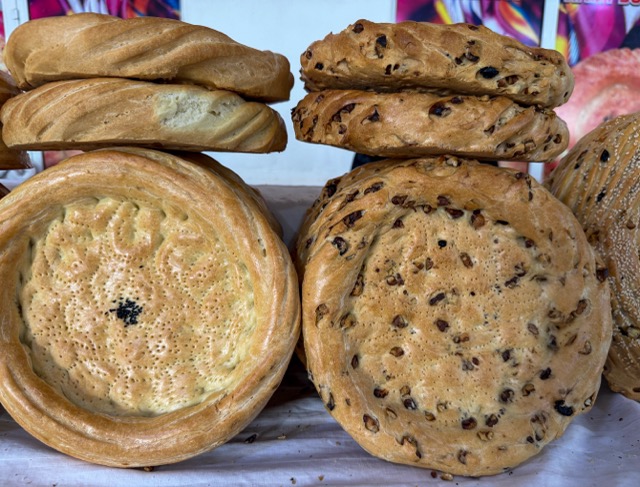
The smell of freshly baked bread is one of the first things I noticed when entering Chorsu Market. Bread is called “non” and is round with a thicker rim and a flatter center that is decorated with traditional patterns.
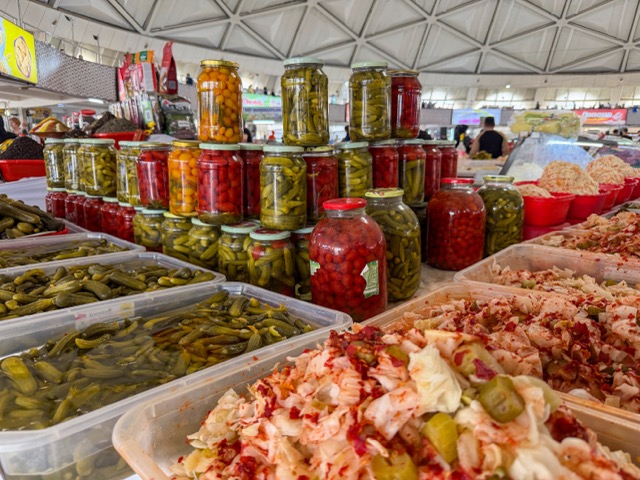
Chorsu Bazaar features pickled foods, particularly kimchi, due to the presence of the Korean community living in Tashkent.
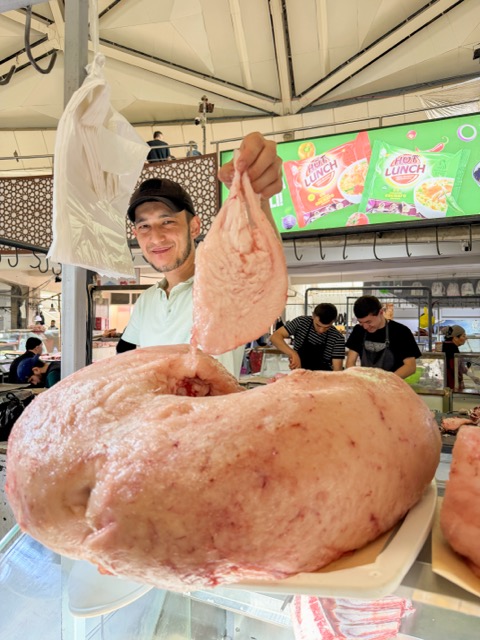
Karakul is a fat-tail sheep that deposits fat in the upper part of its tail as a hedge against starvation, always a possibility in the harsh climate in which it evolved. This tail fat, purchased by the kilogram, is an important ingredient in Uzbek cuisine.
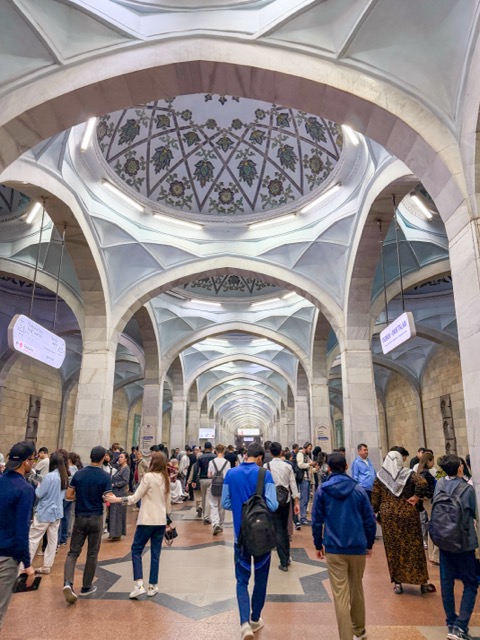
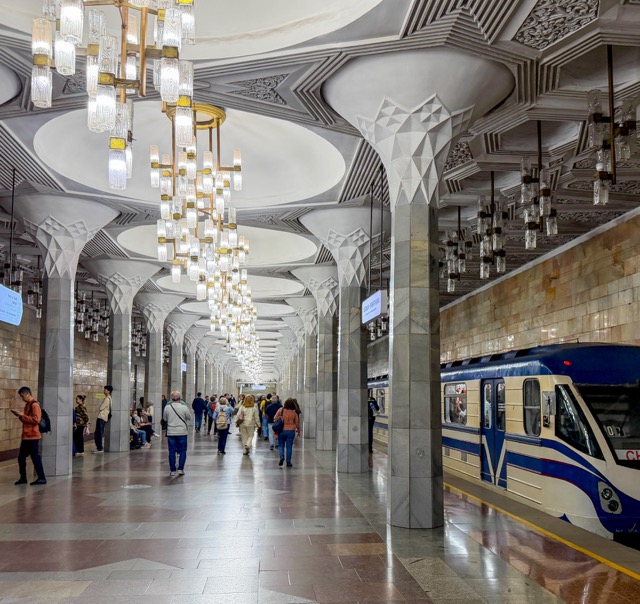
An unexpected highlight was the Tashkent metro. Often described as one of the most beautiful subway systems in the world, each station feels like an underground museum. The stations are visually stunning with marble columns and elaborate chandeliers reflecting Soviet-era artistic ambition. Intricate, colorful mosaics celebrate Uzbek history and culture. Even a short train ride is an architectural tour. It struck me that the Soviets built something beautiful here, even while imposing something heavy. That contradiction kept showing up in Tashkent. It never quite resolved, and I stopped expecting it to.
Samarkand: City of Blue
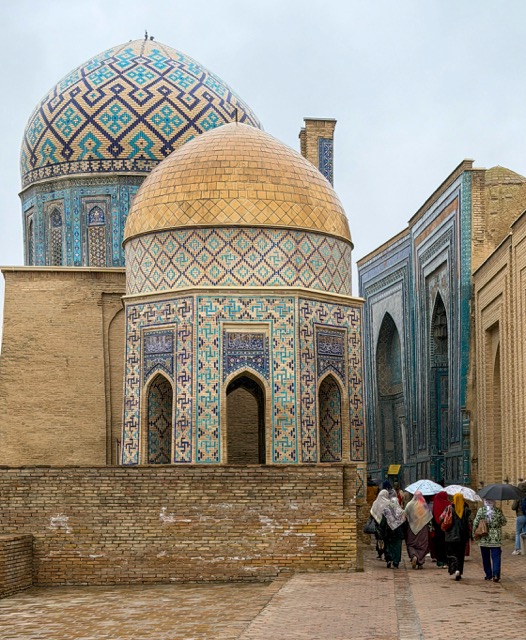
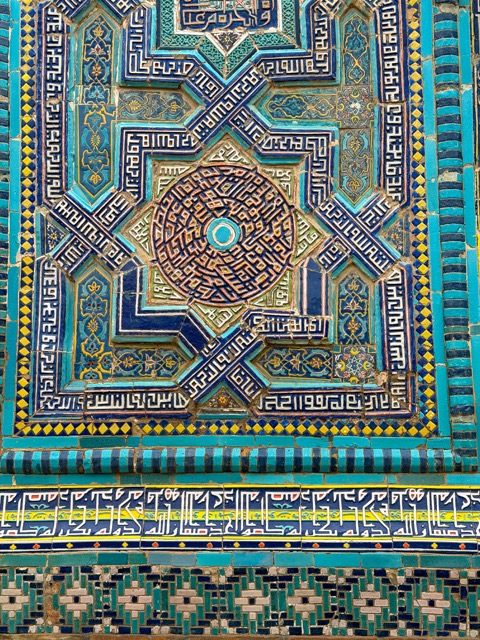
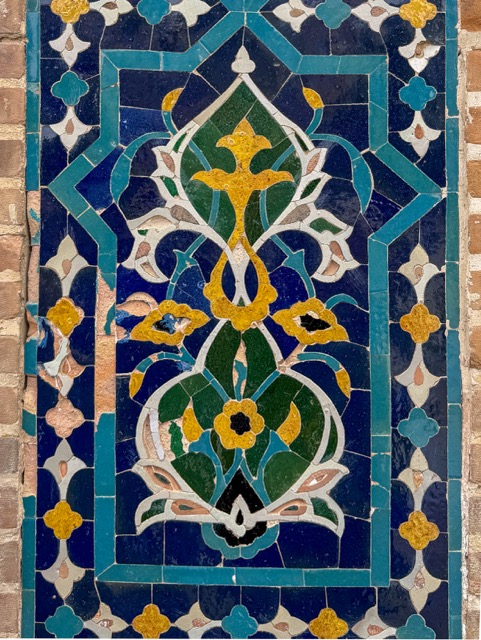
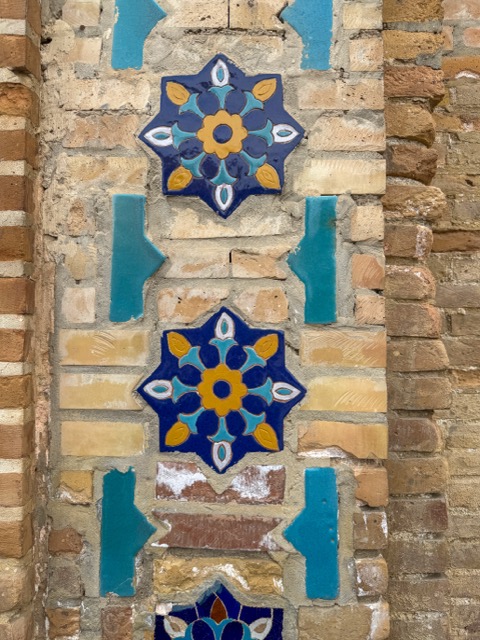
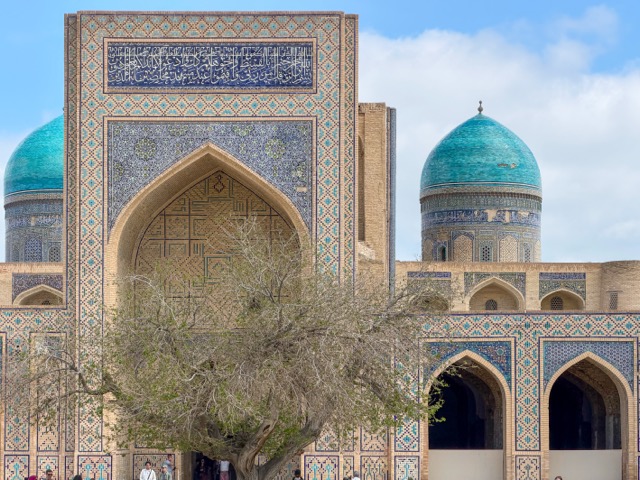
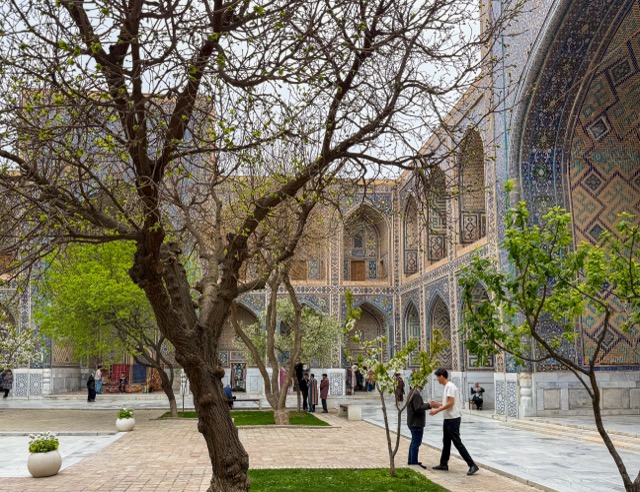
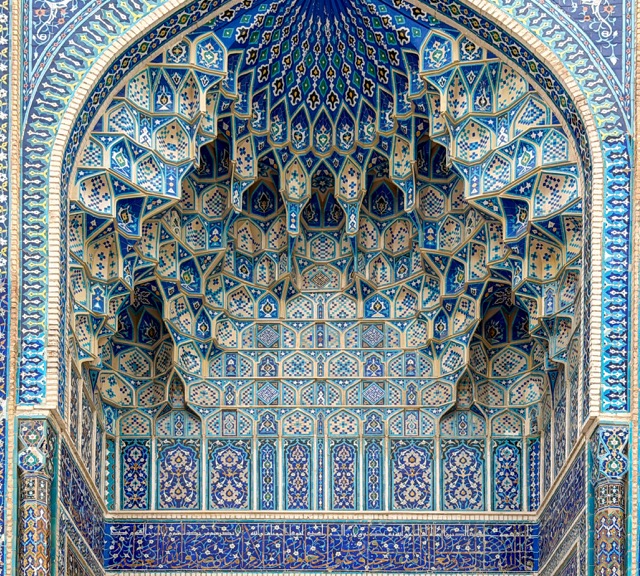
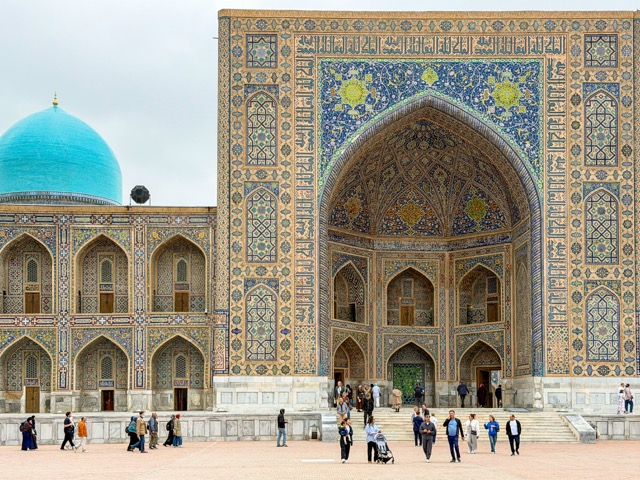
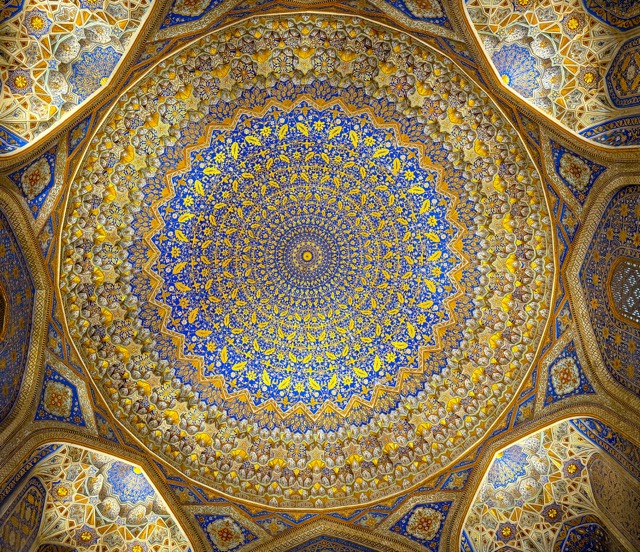
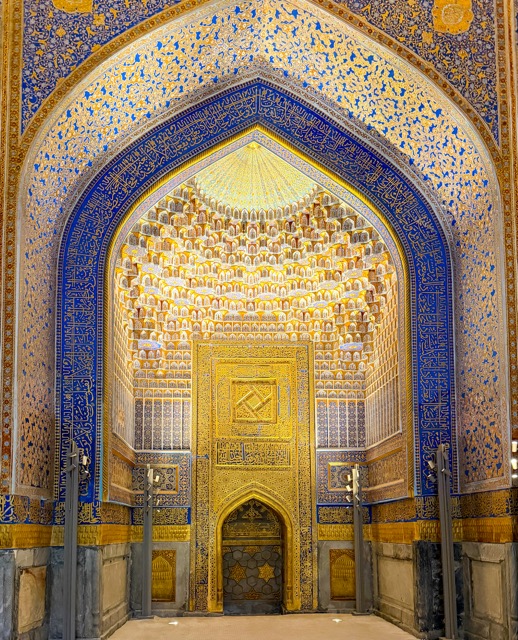
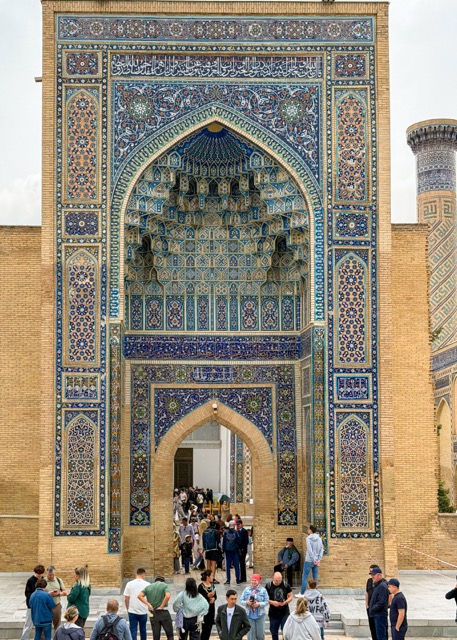
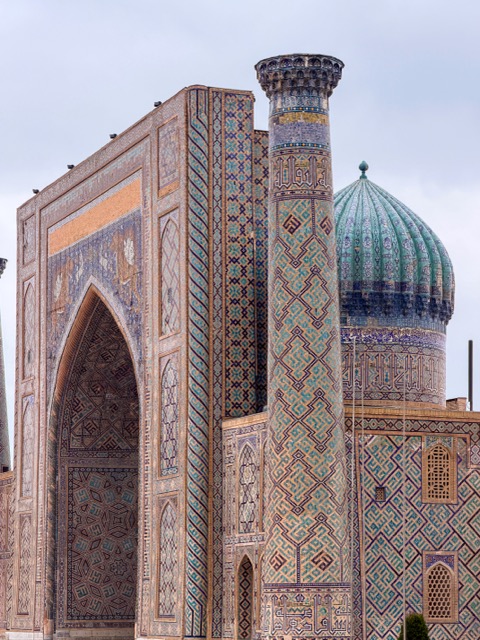
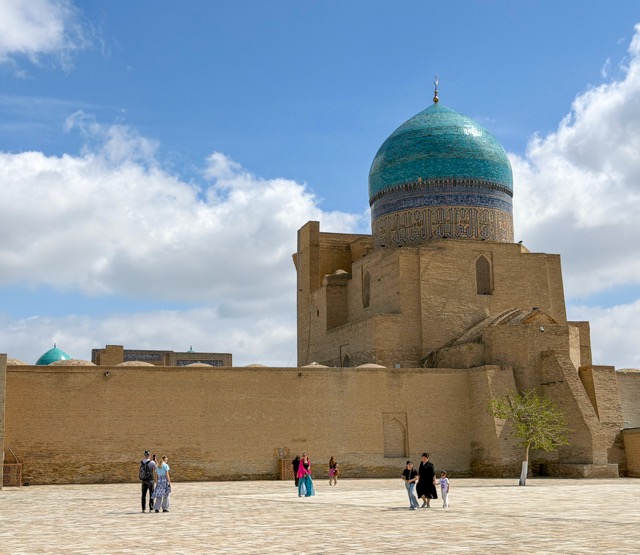
The first sensation is scale. Massive portals that dwarf the human body. Monumental facades feel as if they were built for giants. I found myself slowing down to recalibrate my sense of proportion. Then, there’s the blue. It isn’t a single blue. There is deep lapis to bright turquoise with cobalt lines forming intricate geometric patterns. Up close, I could see the slight irregularities of handmade mosaics. From afar, those same tiles dissolve into vast, unified fields of color. Everything draws your eye upward. Grandeur takes center stage. The unmistakable legacy of empire.
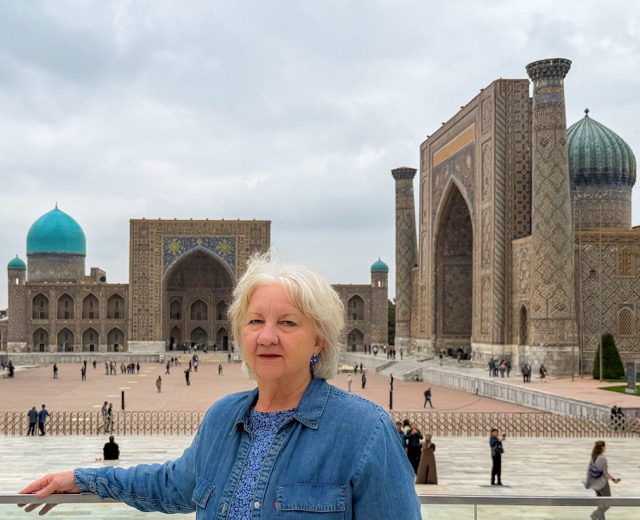
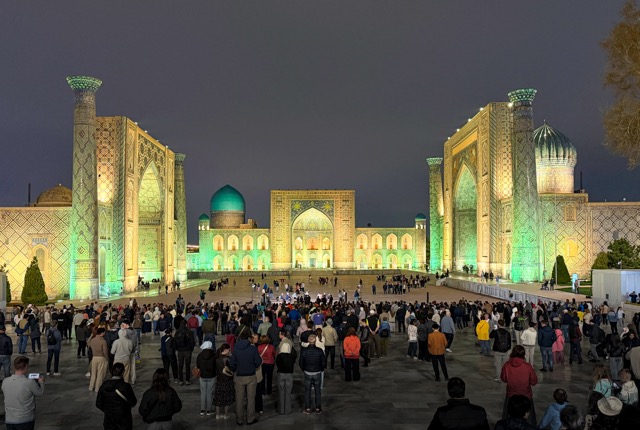
Registan Square in Samarkand is a historic public square renowned for its stunning ensemble of three madrasas.
Legend says Alexander the Great declared Samarkand the most beautiful place he had ever seen. It was the capitol of Timur’s empire in the 14th century and one of the great cities of the Silk Road. Just as Maria had imagined, traders, scholars, craftsmen, and travelers passed through Samarkand carrying goods, knowledge, and ideas between East and West.
Pursuit of Knowledge
Between the 13th and 17th centuries, Samarkand was not only a city of trade, but also a city of intellect. Madrasas formed the backbone of higher education- institutions where students gathered from across Central Asia and beyond. In addition to theology, students engaged with mathematics, astronomy, philosophy, literature, and law. Samarkand became a major center of higher learning.
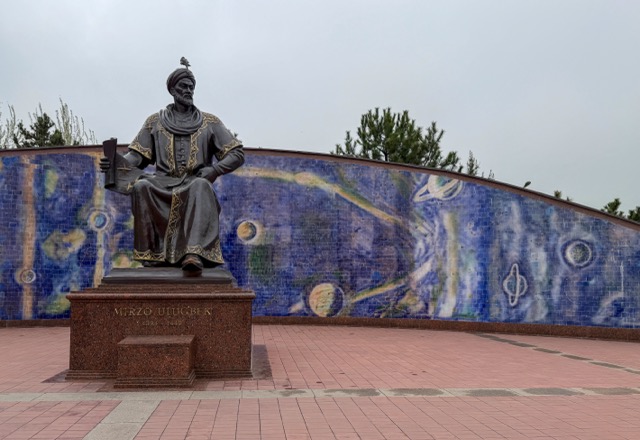
Astronomy reached remarkable heights. Ulugh Beg, grandson of Timur, was not just a ruler of the dynasty his grandfather created, he was one of the most important astronomers and scholars of his time. He founded the Ulugh Beg Madrasa in 1417, the oldest of the three madrasas on the Registan. His observatory, his madrasa, and his scholarly network made Samarkand one of the most sophisticated and intellectual capitals of the 14th and 15th centuries. Europe, by contrast, was experiencing the Late Middle Ages characterized by famine, wars, and the Black Death during this era. With the discovery of the Americas by Europeans, however, the global center of scientific innovation began slowly shifting westward and Central Asia became far less important for trade.
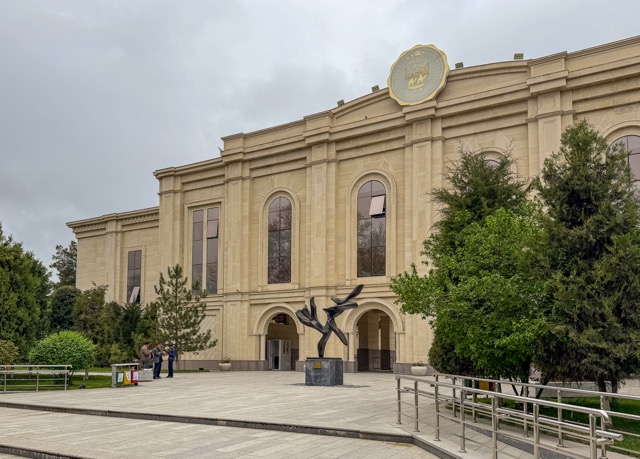
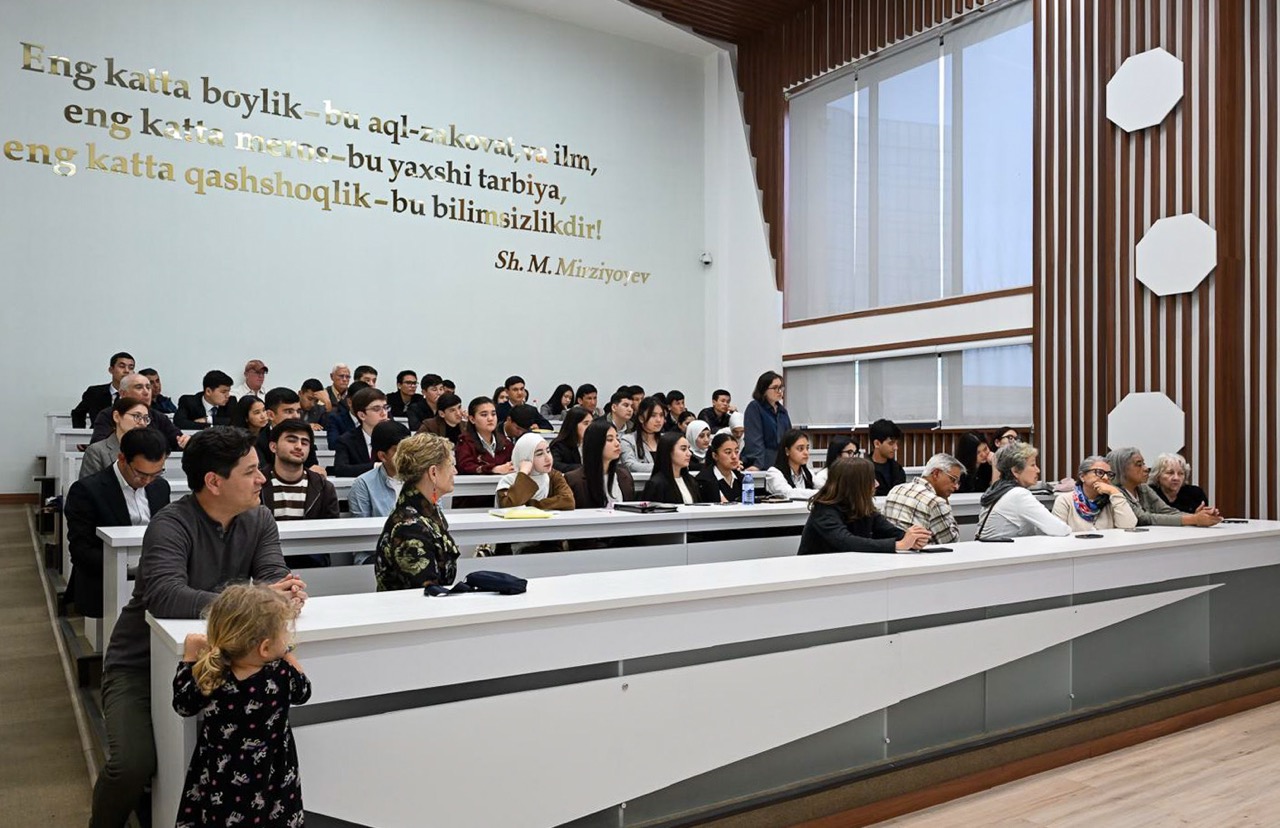
One of the most memorable moments of the trip came during a visit to the Silk Road International University of Tourism and Cultural Heritage with my fellow travelers from the San Diego Diplomacy Council. We spent about an hour with a classroom of students exchanging ideas about tourism, culture, career opportunities, and daily life. Their curiosity and openness made the visit a meaningful cross-cultural exchange. It seems the spirit of the Silk Road isn’t just in the past.
Silk Road International University of Tourism and Cultural Heritage
Surrounded by a sea of blue, confronted by the incredible scale, Samarkand feels otherworldly. It’s not just the beauty that captivates. It’s the expression of a world view in which knowledge was paramount, where learning was public and prestigious. I realized that this city was never just a city to be seen. It was a place designed to shape how people learn and think. It was truly an intellectual capital.
By night, Registran Square transforms into a magical stage, with concerts, light shows and celebrations that echo its past as a gathering place for the city.
Bukhara: A Living Silk Road City
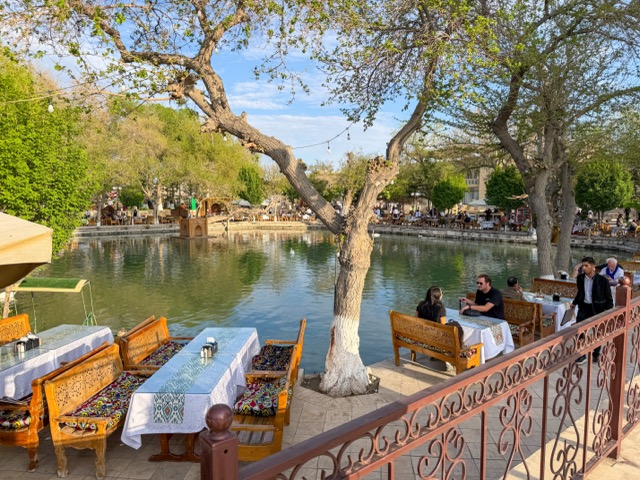
I arrived in Bukhara expecting history. But what I didn’t expect is how alive that history feels. Walking into the old town is less like visiting ancient ruins and more like stepping into a living museum. Lyabi-Houzz, a serene plaza built around a pond and shaded by ancient mulberry trees, is at the heart of the old town. Cafes line the square, and people gather to talk, drink tea, and watch the world go by. Sitting there with my traveling companions, it was easy to imagine merchants and other travelers doing the same centuries ago.
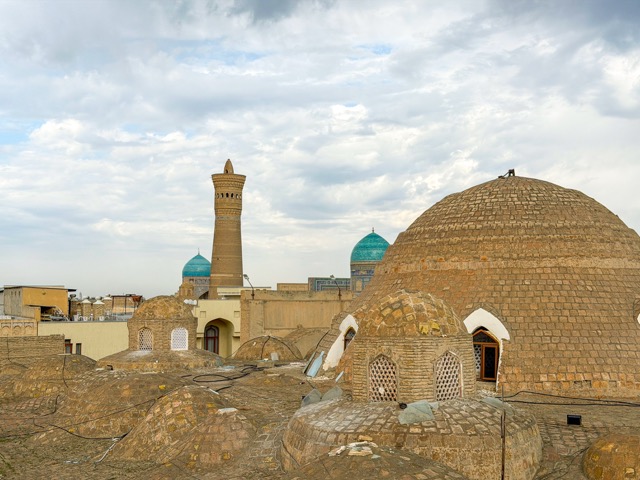
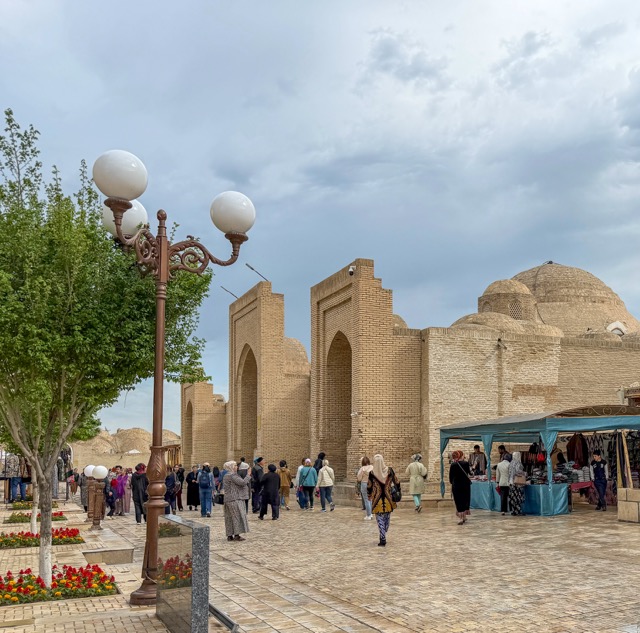
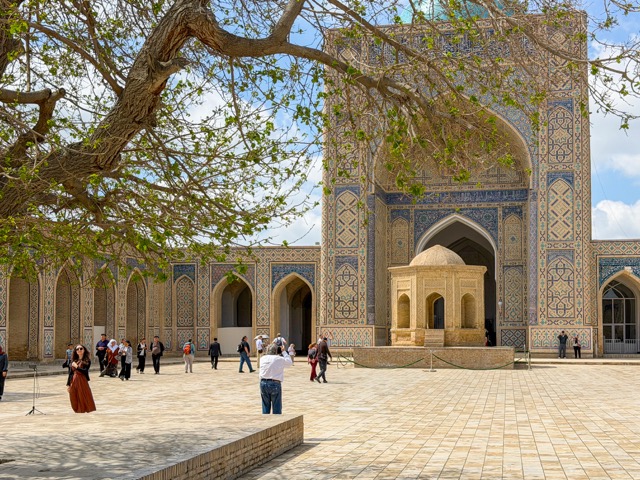
As the city unfolds in warm, sandy hues, narrow alleyways lead to architectural treasures: mosques, madrasas, and hidden courtyards. The Kalyan Minaret, towering above the skyline since the 12th century may have guided caravans approaching the city.
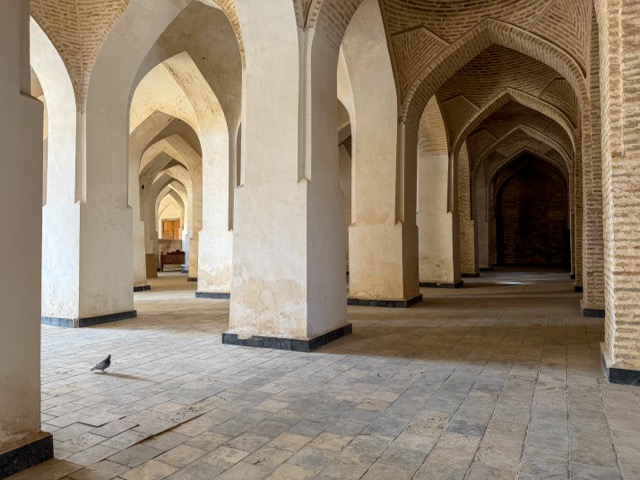
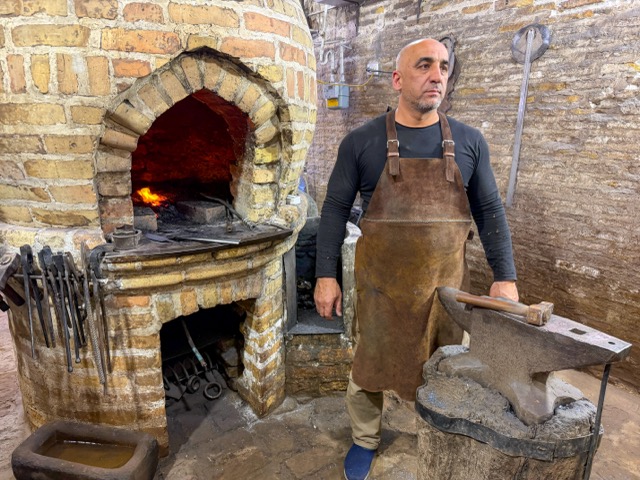
Centuries old workshops house artisans crafting metalwork, textiles, and embroidery and other arts using techniques passed down through generations.
Navrus: A Celebration of Community
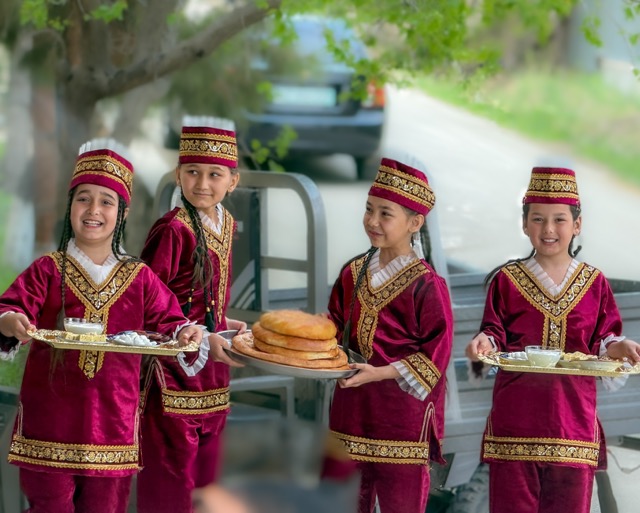
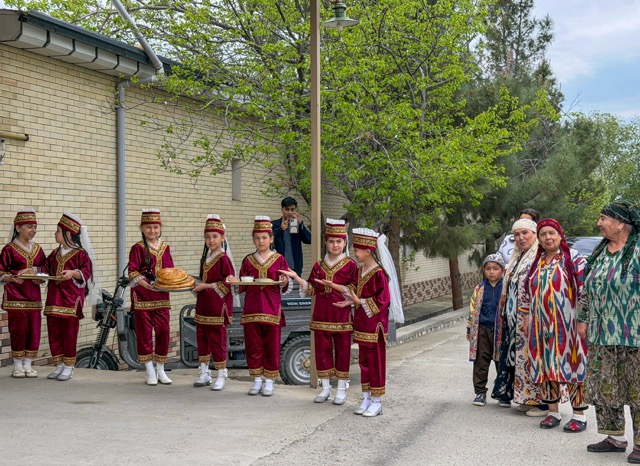
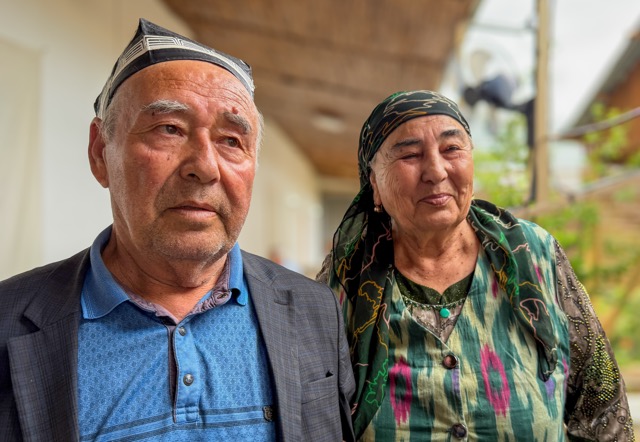
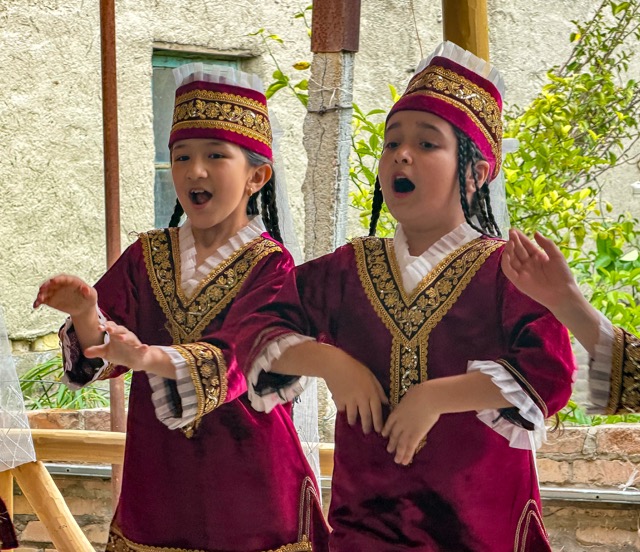
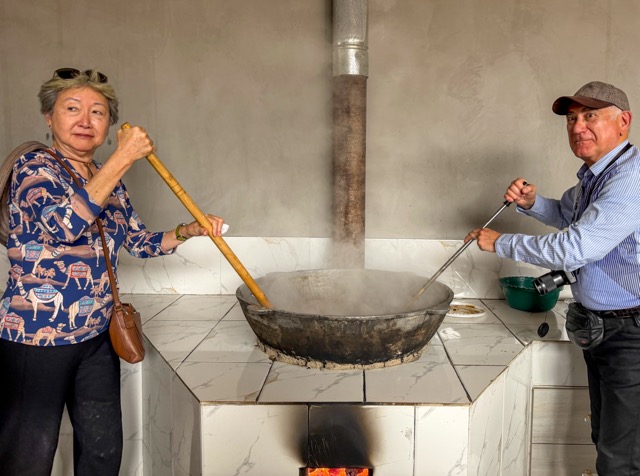
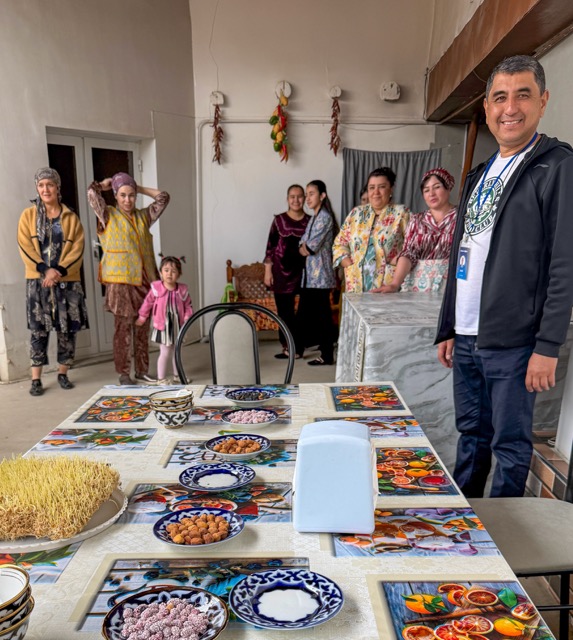
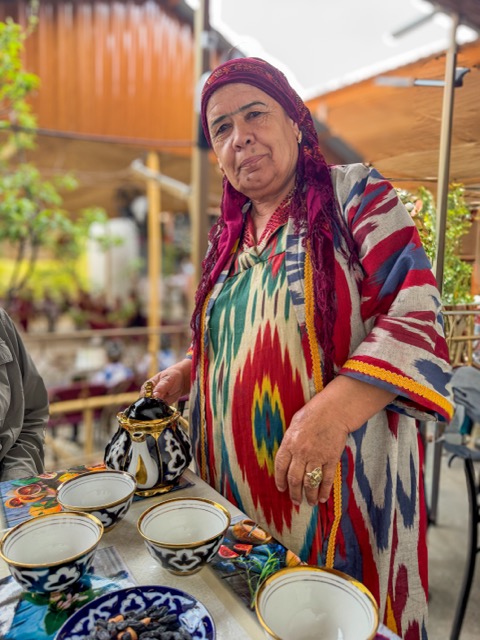
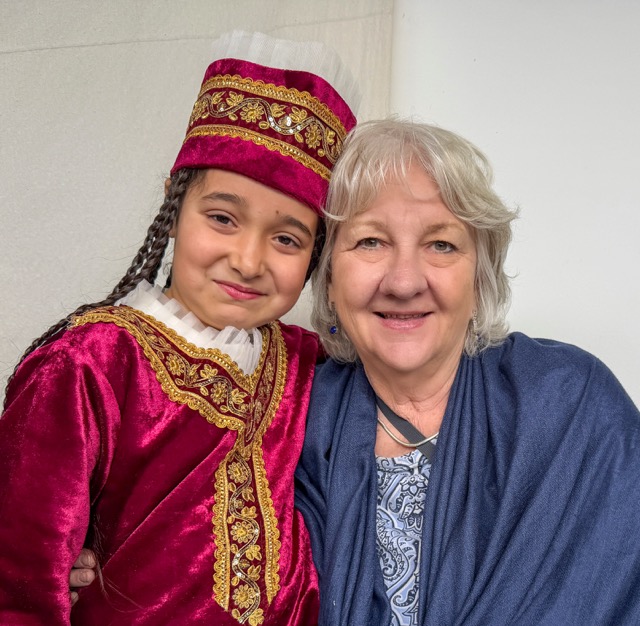
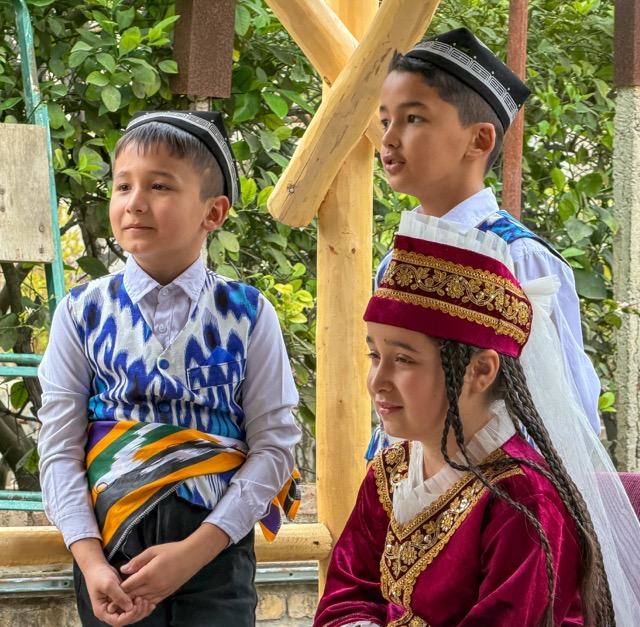
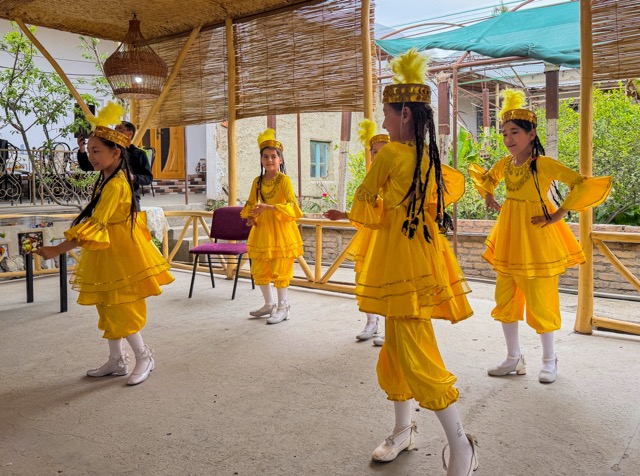
Around the time of the spring equinox, Uzbeks mark the new year with a celebration that predated Islam by thousands of years. Navrus isn’t defined by formal ceremonies. Rather, it’s a time of togetherness. Families and neighbors gather, people dress in colorful clothing, and public squares are full of music and dancing. A highlight of my week in Uzbekistan was joining a Navrus celebration in a small village with a family, their neighbors, and children from the village school. We cooked together, laughed with the children, and shared stories.
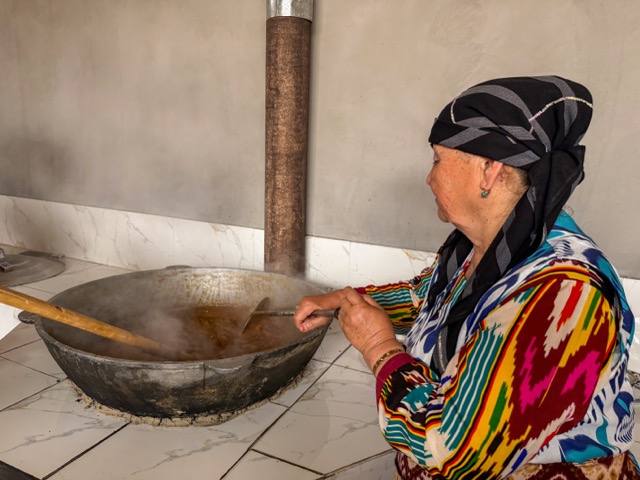
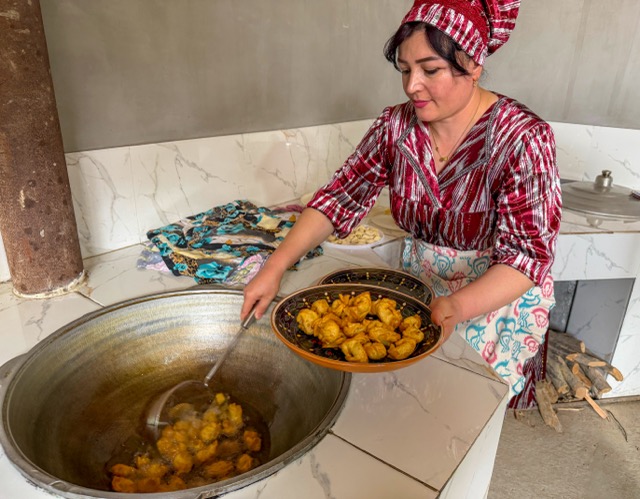
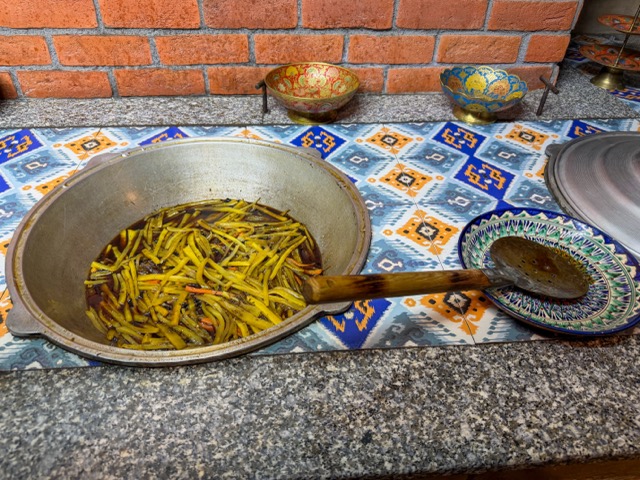
The most iconic Uzbek food prepared for Navrus is sumalak, a dish made from sprouted wheat. Wheat grains are soaked and allowed to sprout symbolizing new life. The sprouts are the crushed to extract a milky juice. This liquid is slowly cooked with flour and oil in a huge cauldron. The mixture is stirred continuously for up to 24 hours. The finished sumulak is thick, smooth, and dark brown with a sweet, malty flavor. The real magic of sumulak is social. Women from the neighborhood gather around the pot and take turns stirring through the night as songs are sung, stories are told, and wishes for the new year are shared.
During the celebration we helped prepare other foods as well—dumpling-like pastries filled with meat and freshly baked bread cooked in a clay tandoor oven. The children performed traditional dances, and before long everyone joined in. Eventually we sat down together for a full meal. It was messy, joyful, and unforgettable.
Plov: The Heart of Uzbek Cuisine
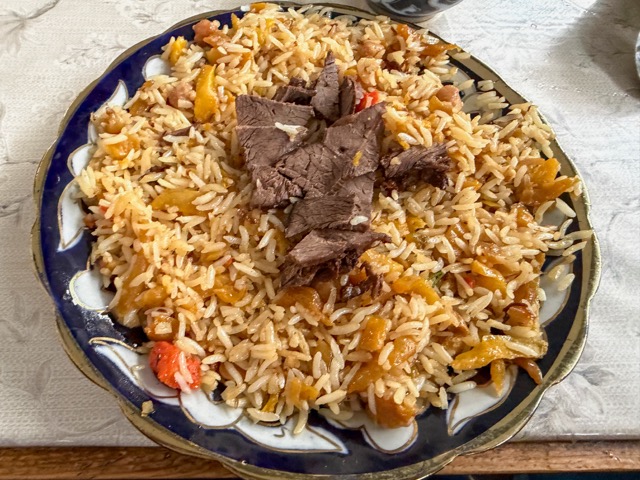
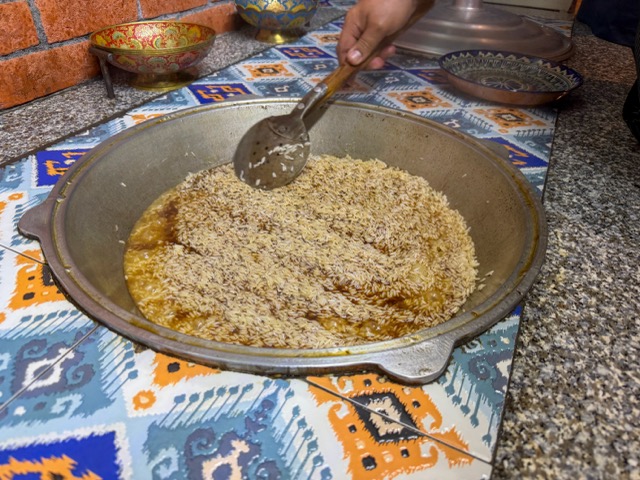
No visit to Uzbekistan is complete without tasting plov, the country’s national dish and culinary heart. Legend traces its origins to the campaigns of Alexander the Great, who supposedly ordered that a nourishing meal of rice, meat, and vegetables be created for his soldiers. Whether or not the story is true, plov today is a symbol of hospitality and community.
In Tashkent, I sampled a few versions at local restaurants. Then, in Samarkand, I joined a cooking class, learning firsthand how to layer the flavors and cook the rice perfectly in a wide pot called a kazan. Plov reminded me of Middle Eastern pilaf, Indian biryani, and even Spanish paella.
At one point, I spotted a t-shirt that said, “All You Need is Plov.” I didn’t buy it, but I secretly wished I had – it perfectly captured the warmth, humor, and pride of Uzbek culture.
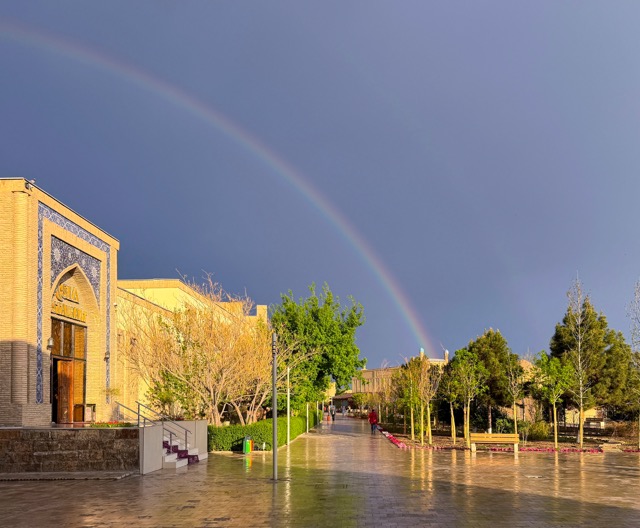
We were treated to a lovely rainbow in Bukhara.
A Different Kind of Muslim Society
Having traveled in other Muslim-majority countries, I arrived with expectations about what I might see and hear. Those expectations were quickly challenged. What I saw instead is a country that is a Muslim-majority society shaped by decades of enforced secularism and a distinct cultural history. For most of the 20th century, Uzbekistan was part of the Soviet Union which officially promoted atheism and tightly controlled religious practice. Even after independence in 1991, that legacy didn’t just disappear. It shaped generations of people who grew up with religion as something private rather than public. Western style clothing is the norm and during my entire visit I never once heard the call to prayer.
Strong pre-Islamic and Silk Road influences are also a factor. Cities like Samarkand and Bukhara were major Silk Road hubs – cosmopolitan and diverse. And Uzbekistan’s modern government actively promotes a secular identity with an emphasis on national culture over religious identity. The result is a society that feels distinct from many other parts of the Muslim world.
What Uzbekistan Left Me With
By the end of my trip, I felt as though I had traveled not just through Uzbekistan, but through time. The mix of history, culture, and food left a mark on me. Like Maria, I came seeking adventure and discovery. I left with something deeper – an appreciation for centuries old stories, warm-hearted hospitality, and the simple joy of sharing a meal – especially if it involves a plate of plov.
Author’s note
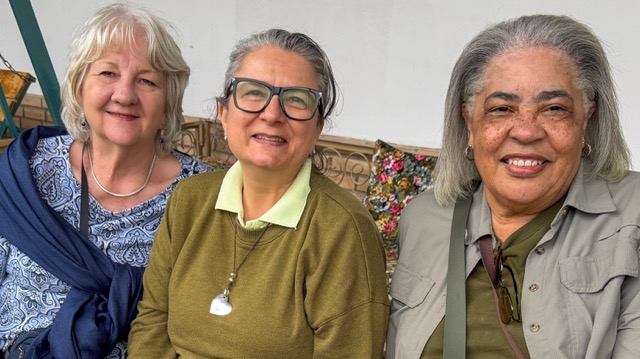
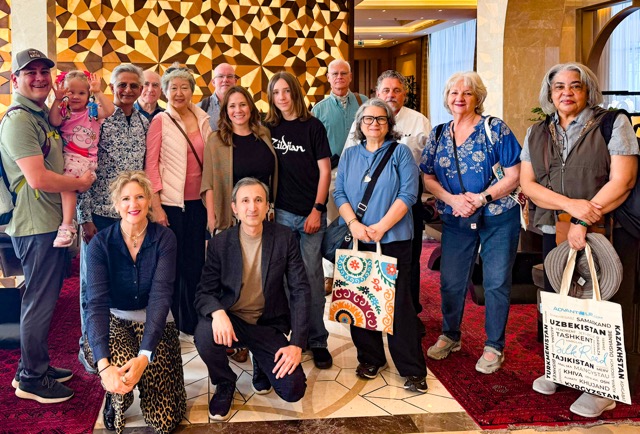
The Silk Road isn’t just ancient history. Connections are still being made today. I want to acknowledge and thank the San Diego Diplomacy Council and my new friends – Lulu and Joel, Tim and Paula, Jeff, Raj, Floyd, Heidi, Ryan, Luca & Pearl, Gloria, and, of course, Maria. And a special thanks to Zahid our amazing guide.
It’s a volcano. A vast undersea mountain with only the top rising from the sea, and like most mountains, it’s a rugged, irregular landscape of peaks and gorges that reach right down to the shoreline. So, our introduction to Madeira began with a minor adrenaline rush. As the plane swooped in low over the Atlantic, it felt like we were landing on a cliff edge – which, it turns out, we were. As the 737 settled into the final approach, we looked out the starboard windows to see a massive cliff streaming by seemingly just a few meters off the wing tip. On the port side, there was nothing to see but the vast blue Atlantic. Later, we learned that the Funchal Airport runway is considered one of the most difficult in the world — pilots need special training to receive certification to land there. Thankfully, that little detail was revealed after landing when it was a bit easier to digest.
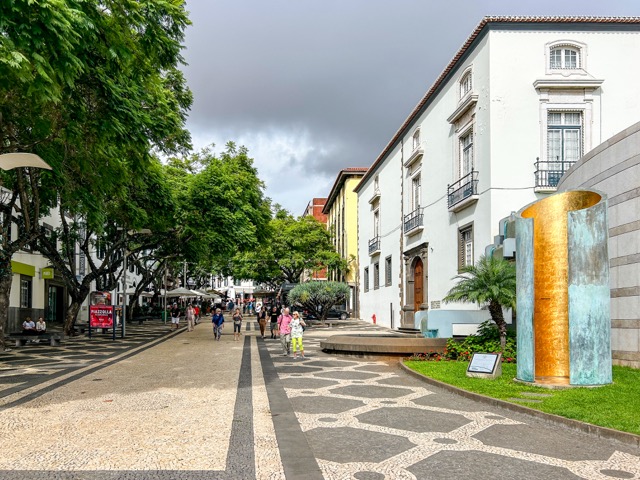
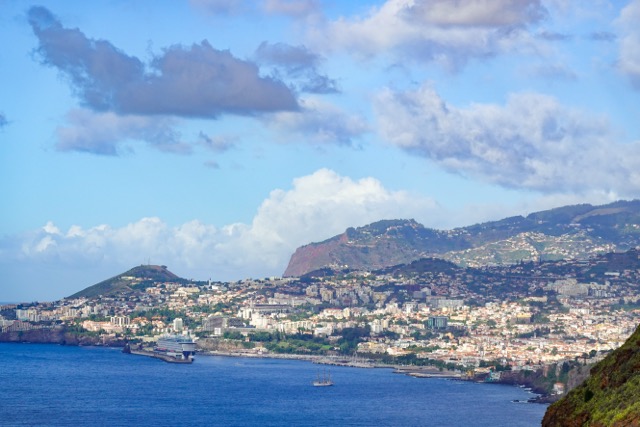
The drama soon gave way to familiarity. Arriving in Funchal (Madeira’s capital city), we stepped out of the taxi into the soft island air and onto that beautiful, patterned black-and-white stone paving we’d loved in Lisbon and Porto. It was a quiet little “welcome back to Portugal” under our feet.
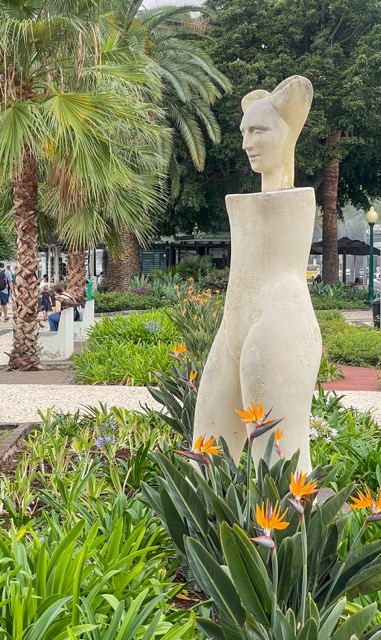
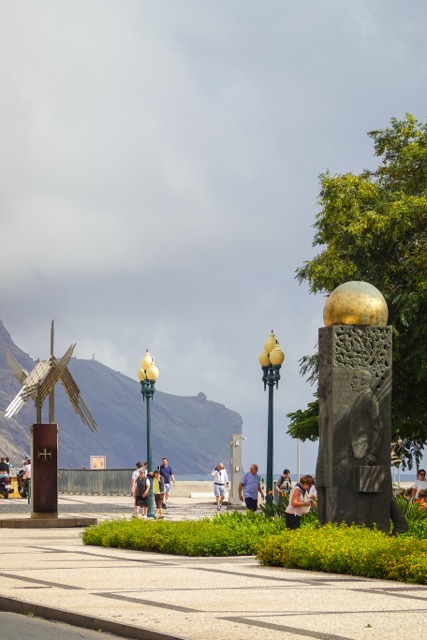
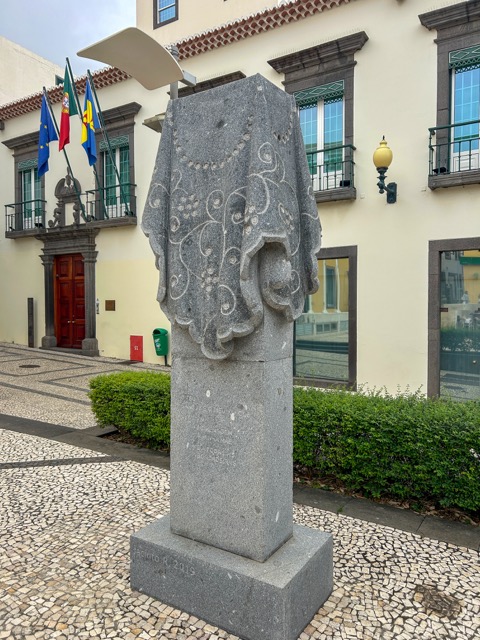
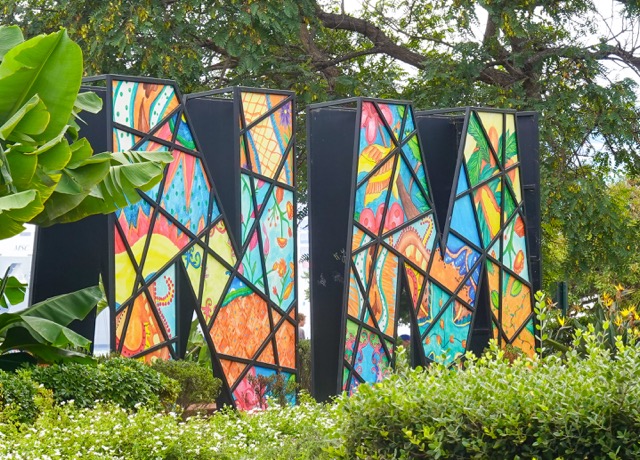
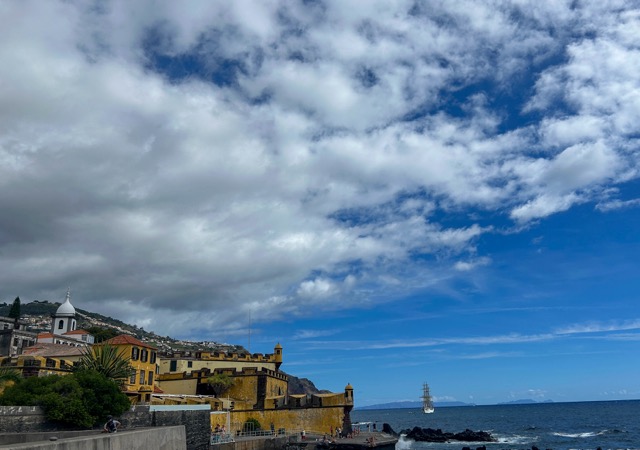
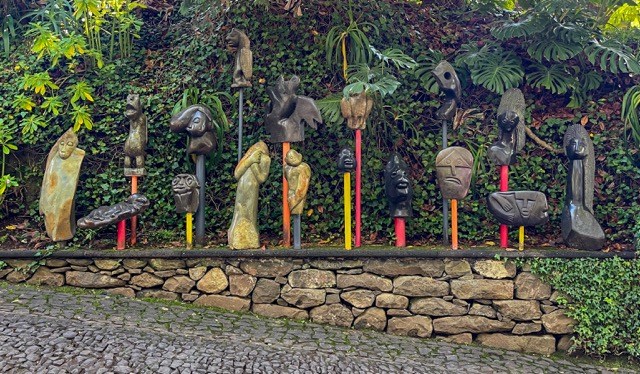
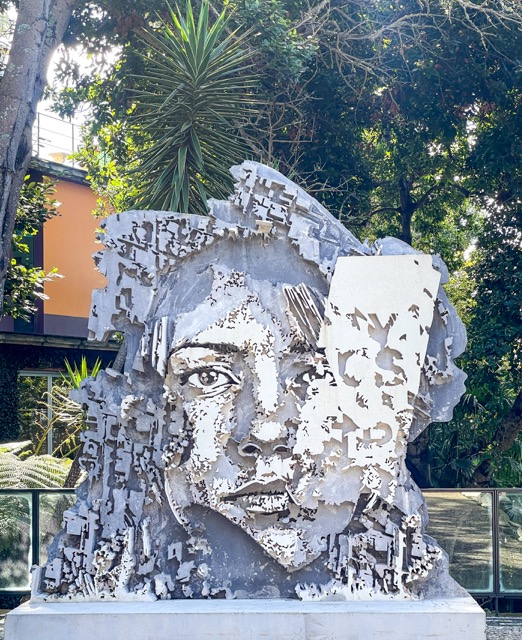
We arrived too early to check in, so we stashed our bags and headed out to explore. Funchal immediately charmed us: cobbled streets, flowering shrubs, the hum of cafés, and a waterfront dotted with public art that felt like an open-air gallery. When we finally checked in later that afternoon, the sea breeze and general vibe of Funchal sealed it: we were going to like it here.
A Tribute to Nelson Mandela
A Market and (of course) a Food Tour
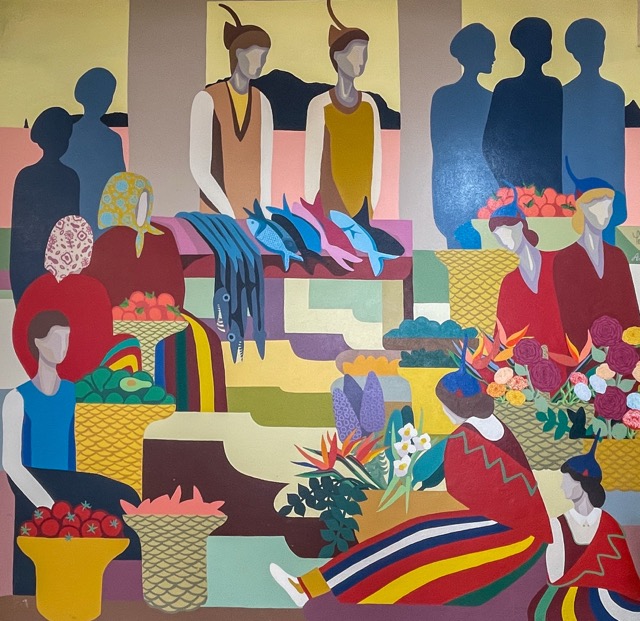
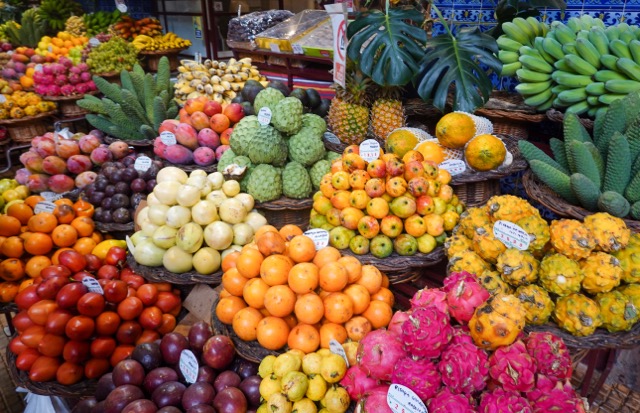
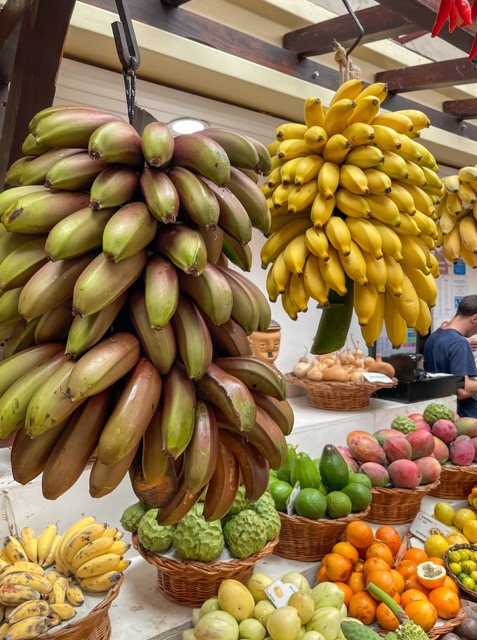
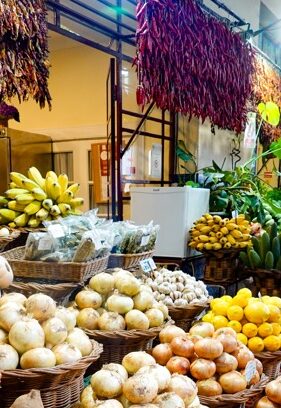
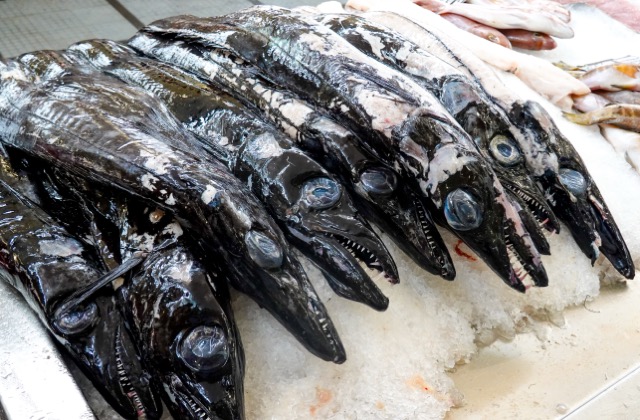
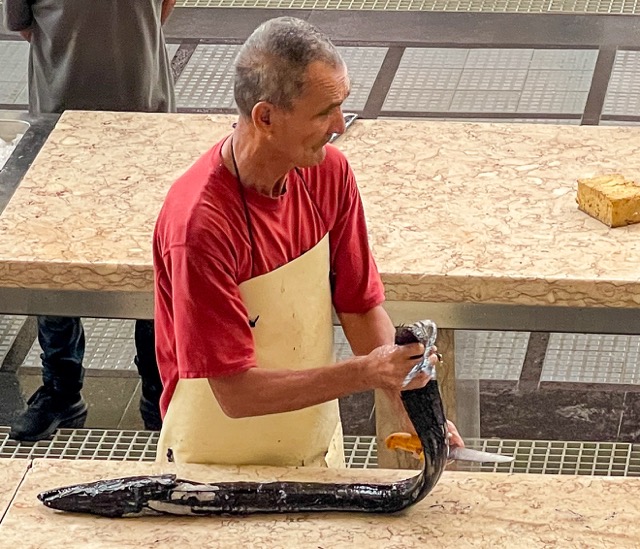
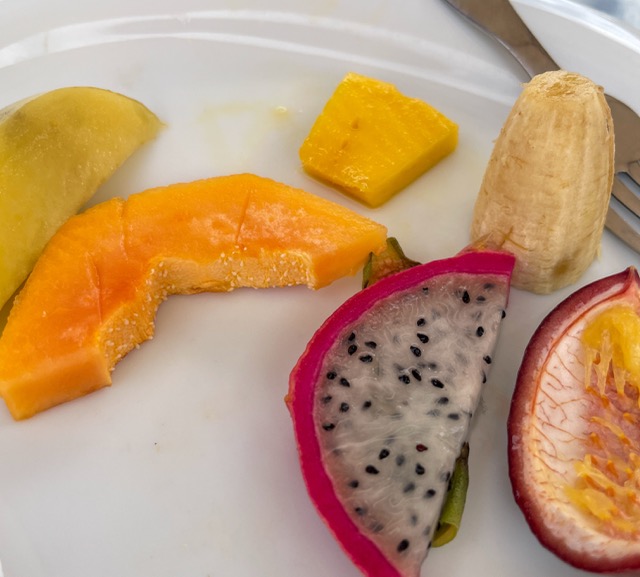
Our first full day in Funchal began at the Mercado dos Lavradores (Farmer’s Market) which turned out to be a feast for the senses in every possible way. Tables overflowing with tropical fruit – bananas, mangoes, dragon fruit, passion fruit, guava, papaya, figs, tangerines, and a few vegetables we couldn’t name. And then, the black scabbard fish (espada) caught us off guard – long, thin, black, and with eyes that looked like a deep-sea monster. The ugliest fish we’ve ever seen. (Also, as we’d soon discover, one of the tastiest.)
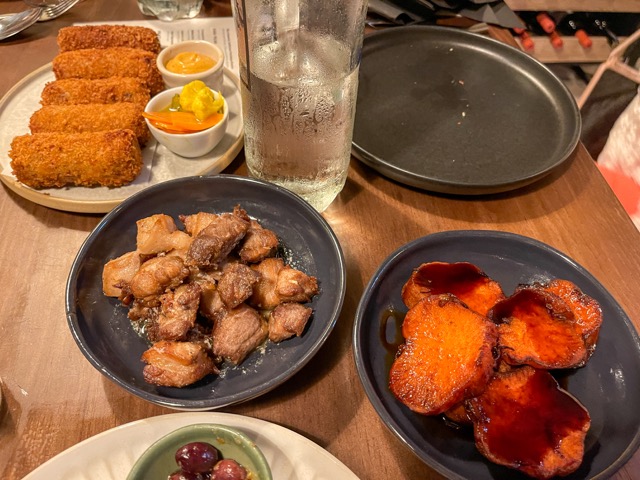
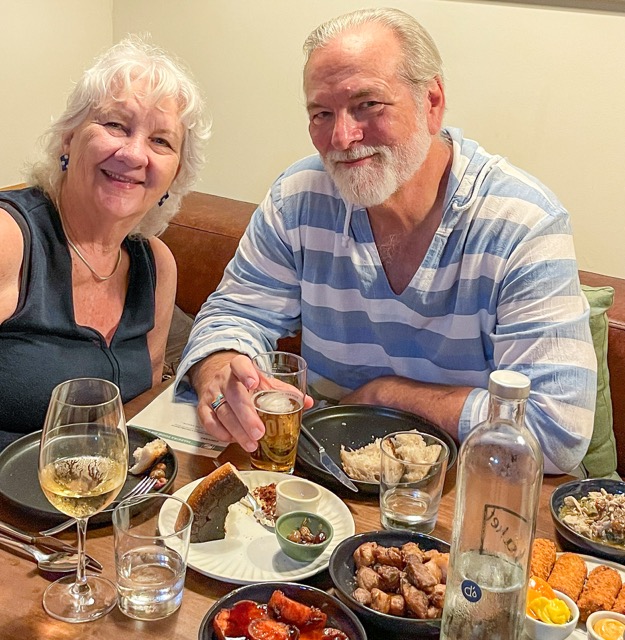
The afternoon was devoted to a food tour that turned into one of the highlights of our trip. It began with a proper lunch:
A perfectly crisp croquet stuffed with savory meat.
Carne em Vinha d’Alhos, tender marinated cubes of pork.
Batata-Doce com Mel de Cana, an addictive sweet-potato and molasses combination.
Atum Salpresado, salty cured tuna with all the rich saltiness of the Atlantic.
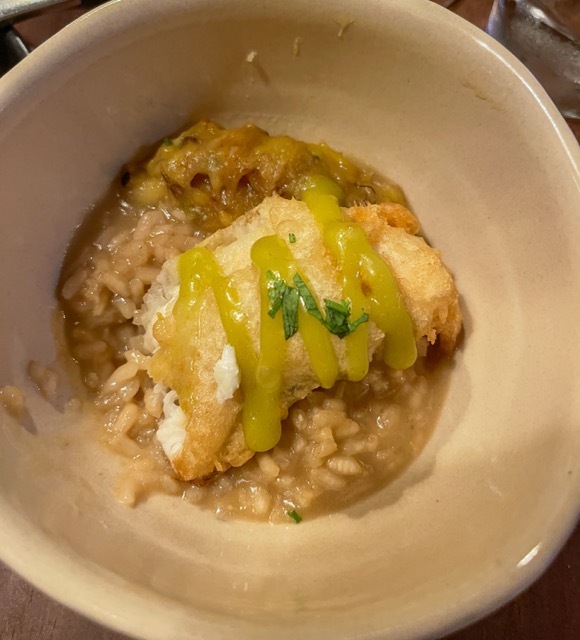
The main course: Arroz de Lima com Espada e Banana — a filet of black scabbard fish over a citrusy rice and topped with a banana concoction. Sounds odd, tastes amazing.
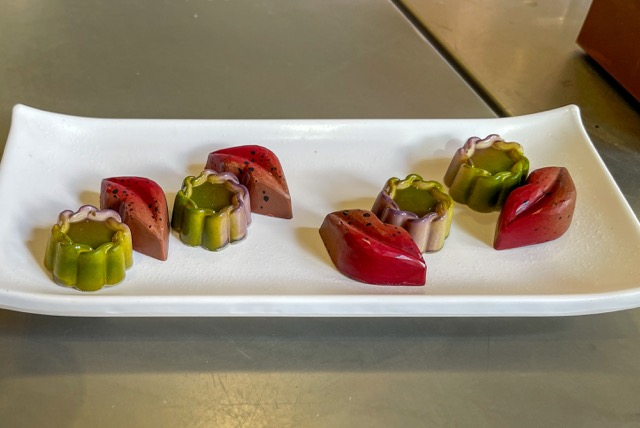
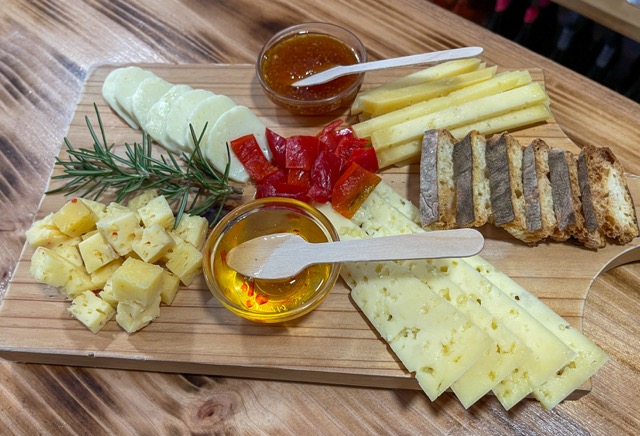
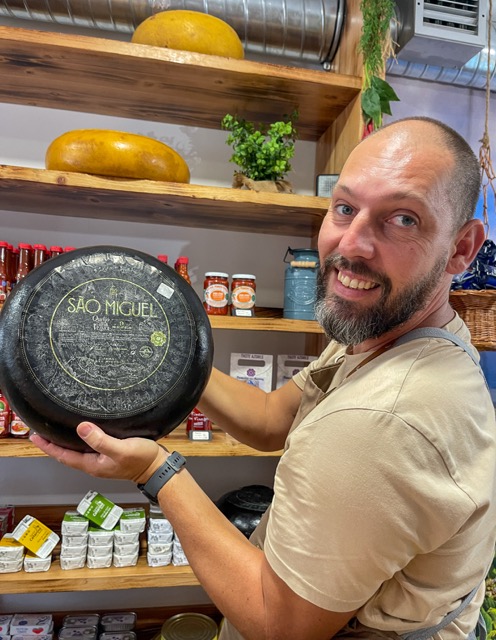
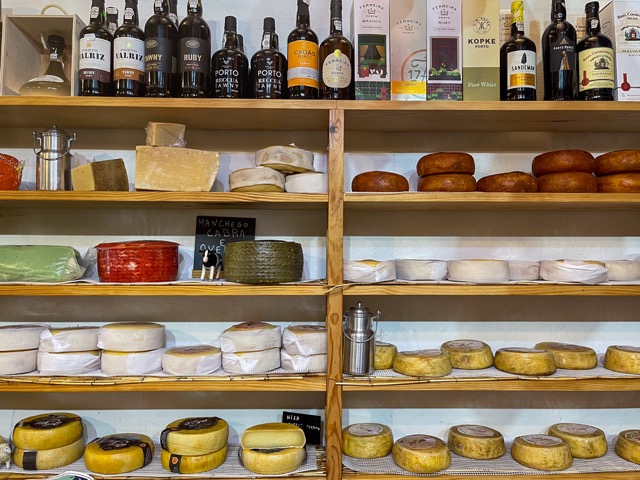
After lunch, we walked (slowly) to our next stop: Uau Cacau, where we sampled artisanal Madeiran chocolates that instantly earned luggage space for the trip home. Then came a tasting of fragrant and colorful tropical fruits and a stop at Fábrica Santo António (a local institution) for traditional Madeiran cookies — crumbly, subtly spiced, old-school good. A cheese and wine tasting at a shop devoted entirely to products from the Azores (note to self: visit the Azores soon!) was our next tasting and that was followed by a final stop for a glass of poncha, the local sugarcane-rum cocktail. By the end of the day, we were equal parts full and blissful — exactly how every food tour should leave you.
The Blandy’s Experience: Stairs and Sips
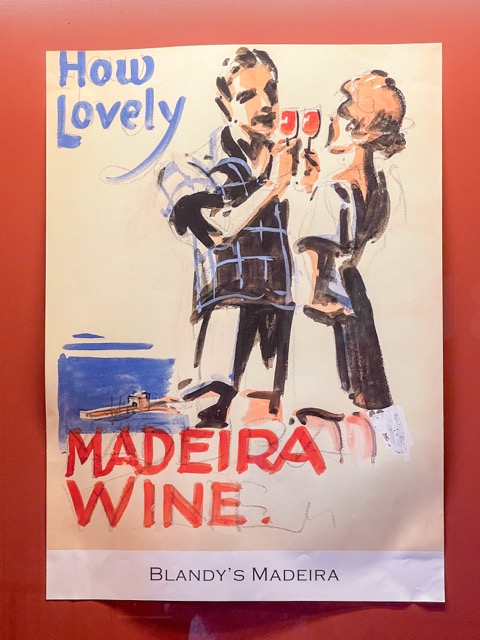
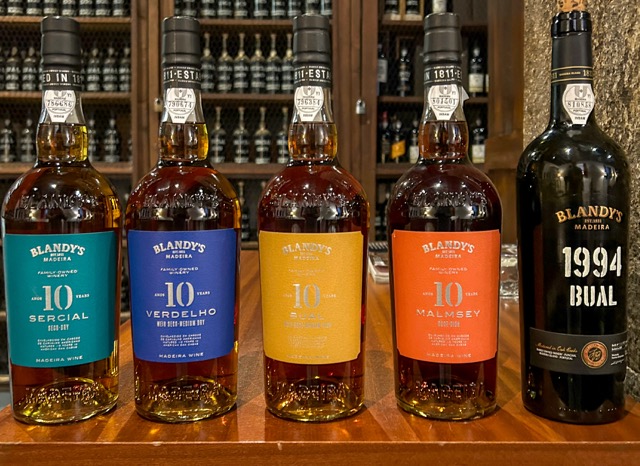
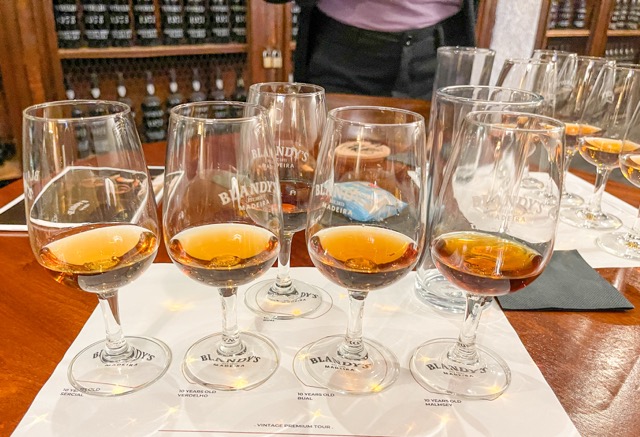
Sticking with the theme of gastronomic self-indulgence, we had booked the Platinum Tour at Blandy’s, the grand dame of Madeira wine for our second day in Funchal. We thought it would be a gentle walk around the winery and a few tastings — you know, the usual. Instead, it was a full-on education (with a cardio bonus).
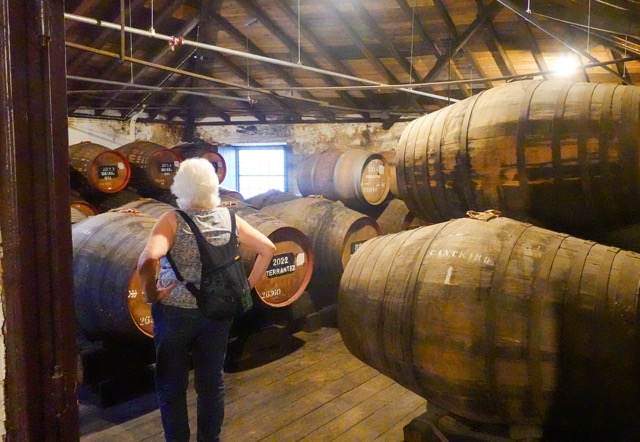
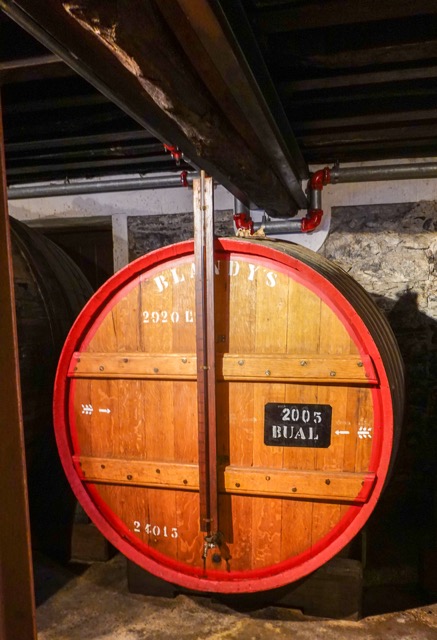
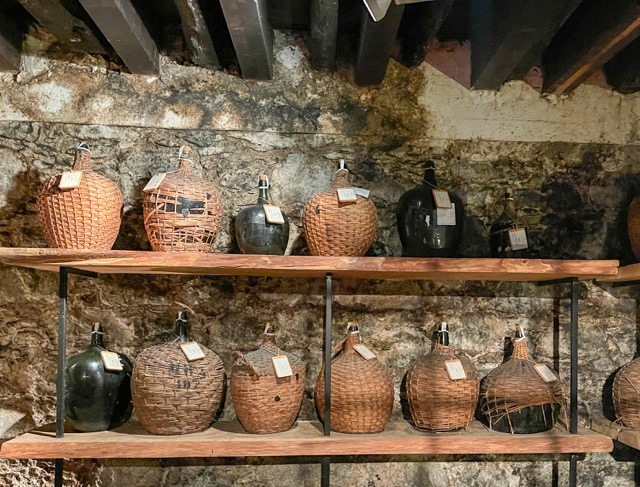
The tour led us up flight after flight of old wooden stairs, each level revealing another layer of Madeira’s winemaking process. Our guide unlocked one after another storage room filled with aging barrels — some decades old, their wood darkened with history and sugar. The air smelled faintly of caramel, oak, and patience.
We quickly realized we’d been underestimating Madeira wine our entire lives. Up to this point, we’d used it for cooking (sorry, Madeira) or occasionally sipped it as a sweet after-dinner treat. But Blandy’s changed that narrative completely.
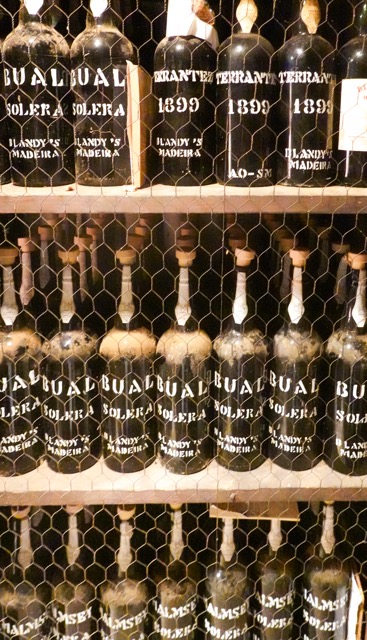
We learned about the different styles of Madeira — from the driest Sercial, served chilled as an aperitif, to the rich Malmsey, that dessert-worthy elixir we already knew. In between are Verdelho and Bual, each with its own unique taste. Who knew there was a whole spectrum of Madeira wines meant to start the evening, not just finish it?
Standing among those timeworn barrels, we could practically taste the island’s story — heat, salt air, and centuries of craftsmanship condensed into amber liquid. By the time we made it back down the stairs (carefully), we had newfound respect for the drink, and a mental note to replace “cooking Madeira” in our pantry with the real thing.
The tasting itself was, naturally, the reward: four glasses lined up from dry to sweet, each one delicious. A fifth glass capped off the experience with one of Blandy’s vintage reserve offerings. We lingered, savoring the shift in flavors — citrus and nut on one end, honey and fig on the other — until we had to leave so the staff could close the place and go home.
The East-Side Trek
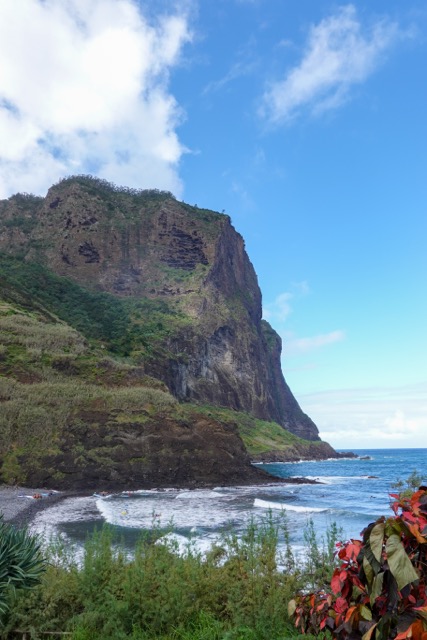
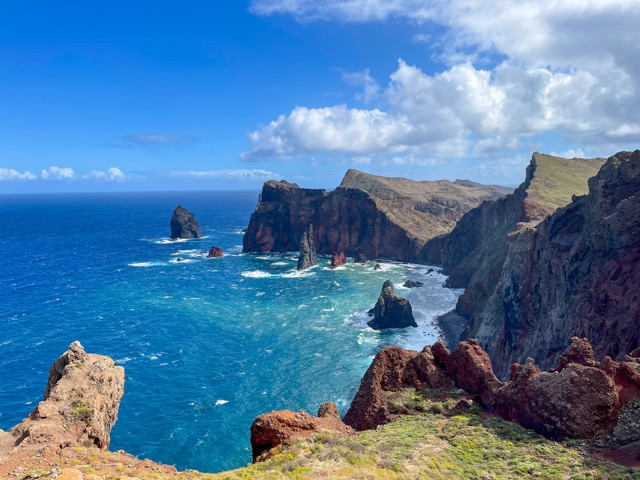
One morning, we set off early to explore Madeira’s east side, a day stitched together by villages, forests, and coastal drama. Our full-day trek around Madeira’s east side took us to ridge lines where the cliffs dropped straight in cobalt water, past waterfalls, and through misty laurel forests. It also highlighted for us one of the wonders of Madeira: the road building. Madeira’s volcanic geology means there are almost no flat surfaces anywhere on the island. A mountain ridge runs through the center of the island with peaks above 6,000 feet. In the face of these challenges, Portugal has built a highway and road network that stitches together the whole island. Some roads seem to spend as much time in tunnels as in the open and there does not seem to be a ridge or valley that they have not found a way to bridge one way or another.
We started the day in Machico, the site where the Portuguese first landed in 1419. It’s a mix of beautiful beaches and lush green mountains.
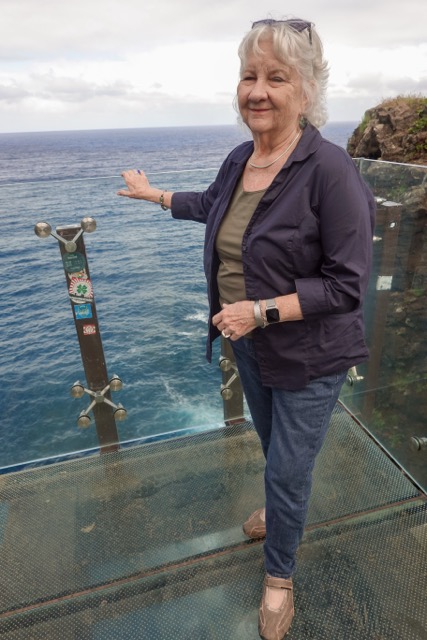
Perched on the island’s north coast, the Faial Glass Walkway offers stunning views of the north coast and the Atlantic Ocean from its two glass walkways that jut dramatically over the ocean.
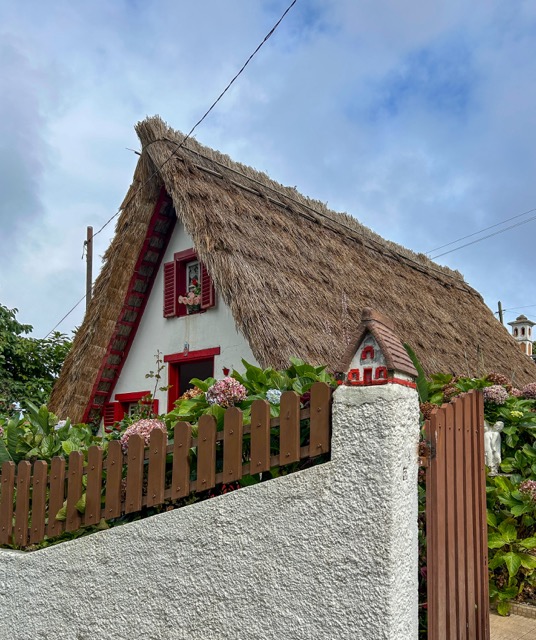
Santana, a postcard village of small, triangular, thatched-roof houses has a quiet and gentle charm with colorful hydrangeas and bougainvillea spilling over stone walls.
In Porta de Cruz we visited a rum distillery where they process the local sugar cane into an award winning Agricole Rum. That designation distinguishes this product as one created directly from the cane syrup unlike more than 90% of the world’s rum which is distilled from molasses. The difference is very distinctive – a smooth, complex, aromatic rum that could become a habit!
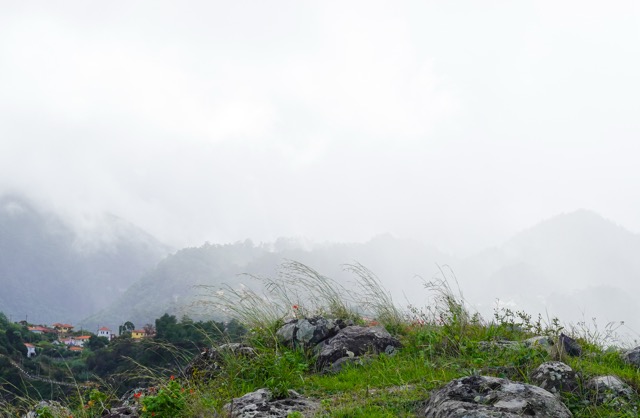
The heart of the Laurissilva forest, a UNESCO World Heritage Site since 1999, has trees that look ancient enough to have seen the first explorers land and the air smells faintly of eucalyptus and rain.
Monte Palace Gardens – Afternoon in the Clouds
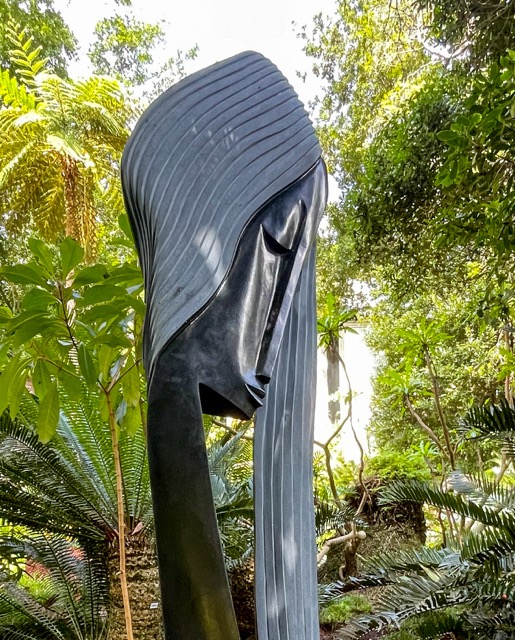
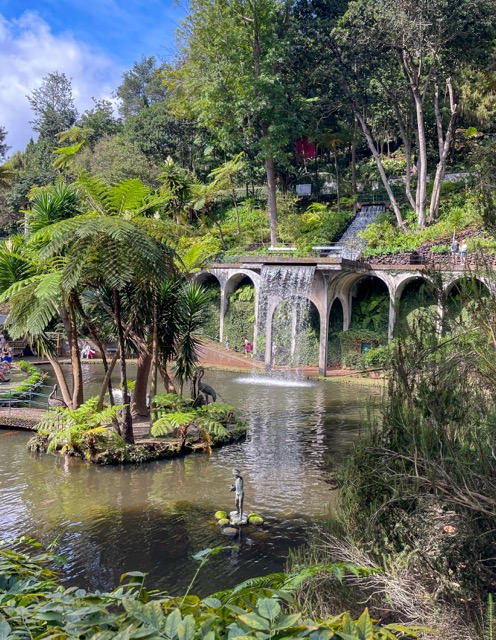
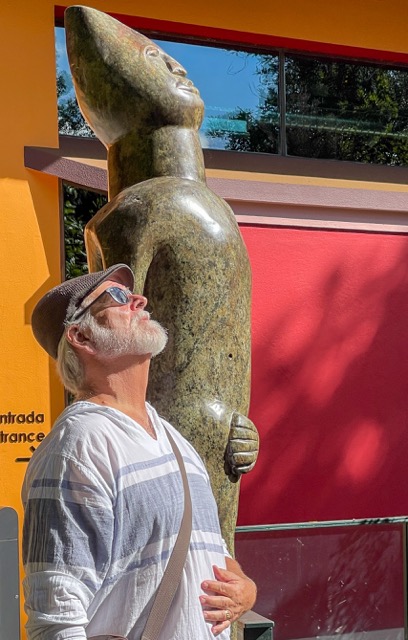
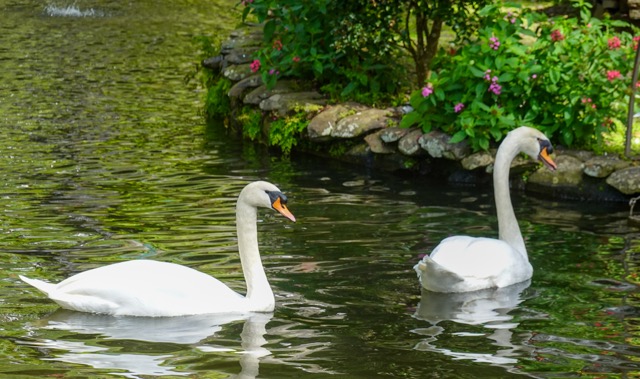
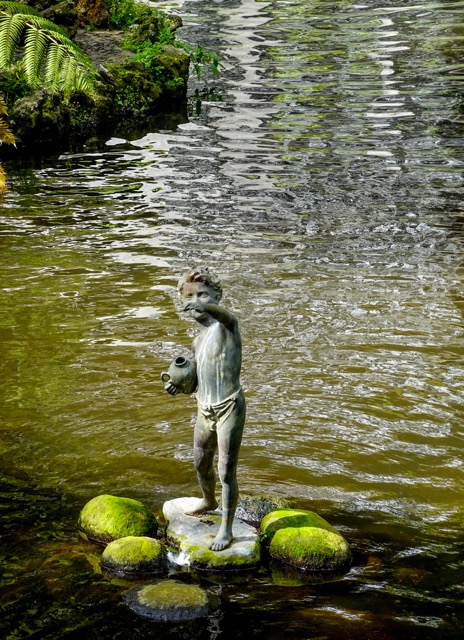
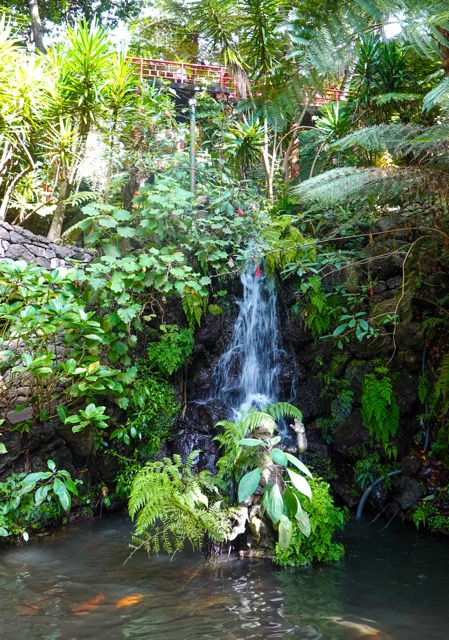
Unfortunately for Ed (but okay by me) the cable gondola was not working for our trip up the hillside the next morning. So, we shared a taxi with a German couple that were heading to the same place. While not high in the air, the on-the-ground approach, turned out to be a windy, twisty, topsy-turvy experience. At the top: the Monte Palace Tropical Garden, a dreamscape of mossy paths, koi ponds, tiled murals, and exotic plants everywhere. The art museum surprised us with contemporary pieces nestled among centuries-old stone. Like all the rest of Funchal, the gardens were created on a hillside with water cascading from all angles and paths that involve steps, switchbacks, bridges and stairways. Everywhere we turned there was art – sculpture, carvings, and ceramic tile panels. The Monte Palace Gardens would be enough to justify a trip to Madeira.
One Last Coffee with the Atlantic
We’d planned to end our trip on the water — a whale-watching excursion to spot the dolphins and pilot and sperm whales that cruise just off Madeira’s coast. But the sea had other ideas: choppy waves, canceled boats, and a brisk Atlantic wind. So, we’ll just have to come back — to finally do that cable-car trek up the mountain, and to set out on calmer seas for a glimpse of those amazing sea creatures. A pretty good excuse, we think, to return to this lovely island that has made our “let’s go back” list. As we looked down from the plane window, the island outlined against the vast blue Atlantic and that infamous runway stretching boldly over the water, we gazed at the green peaks thankful we had been privileged to visit this unique place.
One of the many nice things about living in Valencia is how easy it is to escape for a quick jaunt to exciting destinations. For example, just two hours on a high-speed train, and we can immerse ourselves in the vibrancy of Madrid – a city that feels like it’s always awake and always hungry. So, when our good friends, Richard and Sheila, proposed an overnight adventure in Spain’s capital, we grabbed the morning train to spend 27 hours eating and drinking together.
Hitting the Ground Running
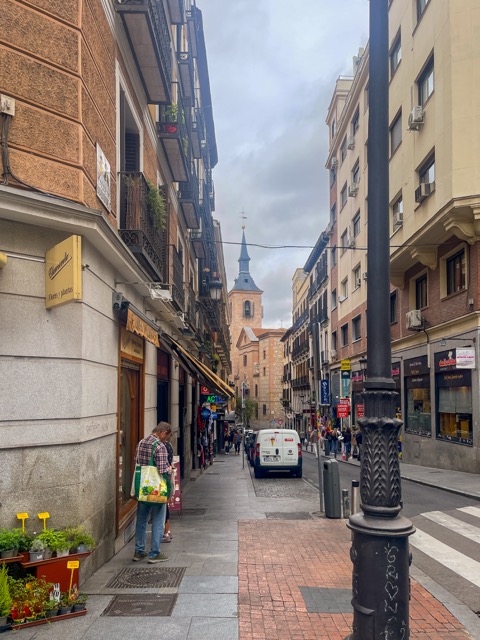
Arriving in Madrid’s Chamartin Station at about noon, we hopped on the Metro which is conveniently located inside the station. Emerging from the Metro a dozen stops later, we were greeted by a lovely treelined plaza in the Sol barrio (neighborhood), the pulsing center of old Madrid. Every street seems to lead to a plaza, lined with bars and cafes. After checking into our hotel, we met up with Richard and Sheila, checked on Traci & Dave’s ETA (they flew into Madrid that morning from the U.S.), and bounced out the door to start our culinary adventure.
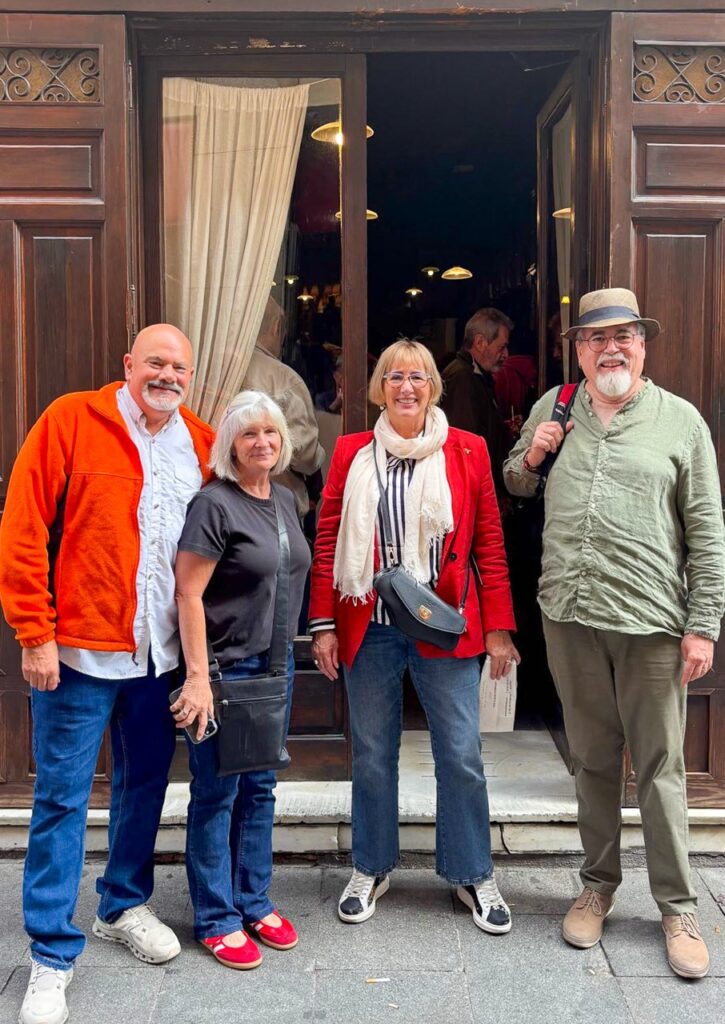
Valencia Friends: Dave, Traci, Sheila & Richard
We split up for lunch. The guys met another friend, Richard (from Malaga), and went for a hearty, old-school experience at Casa Amadeo (https://www.caracolesdeamadeo.com) in the La Latina barrio – a tavern where the menu showcases traditional Spanish dishes. Their signature dish, caracoles, are tender snails served in a rich smoky broth, which one soaks up with chunks of bread. The feast also included small cubes of deep-fried pork belly known as Torezznos, thick slices of Morcilla Burgos, an artisan black pudding sausage, Zarajos Fritos which consists of lamb intestines wrapped around a stick, then marinated and fried in olive oil. Traditional croquetas and patatas bravas rounded out the meal. Everything was washed down with glasses of cerveza, a couple of bottles of Rioja Crianza, and finally, a glass of orujo blanco (a pomace brandy from northern Spain) to settle their stomachs.
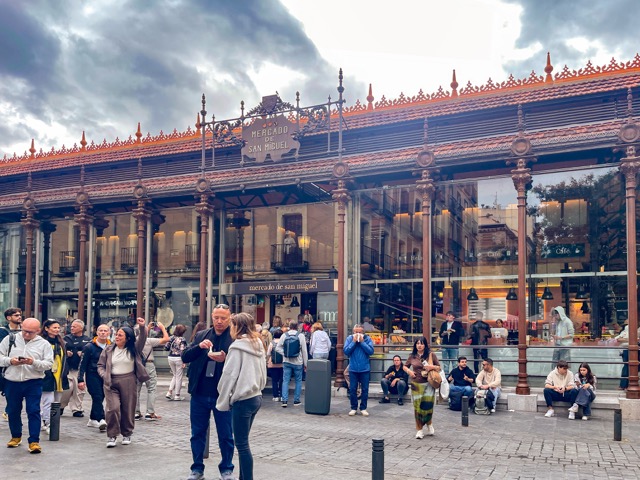
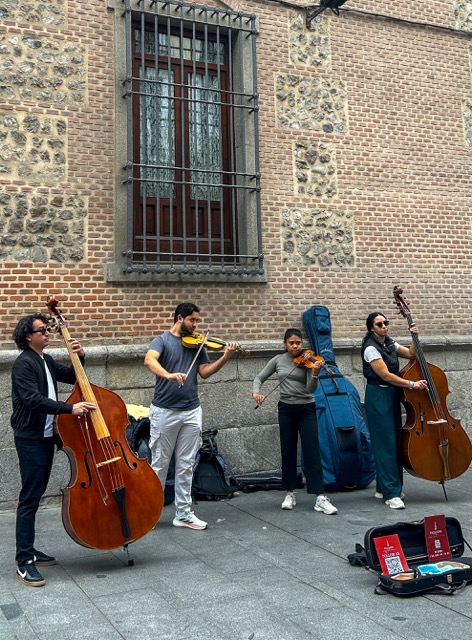
Meanwhile, the girls wandered over to Mercado de San Miguel, (https://mercadodesanmiguel.es) the famous food market just off Plaza Mayor. Originally built in 1916 and known for its stunning cast iron and glass architecture, a diverse array of Spanish cuisine is offered in more than 30 stalls. As always, the mercado was full of tourists snapping photos of every tapas plate in sight. We sampled a few as we balanced our tiny plates and soaked up the chaos. Afterwards, we strolled through Plaza Mayor where musicians played, kids chased pigeons, and plenty more tourists snapped photos.
A brief siesta was just what was needed to prepare for the evening ahead.
Vermouth and Dinner Like Locals
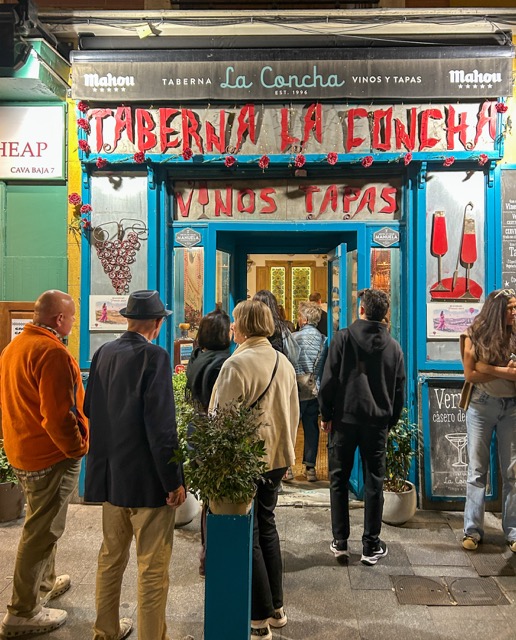
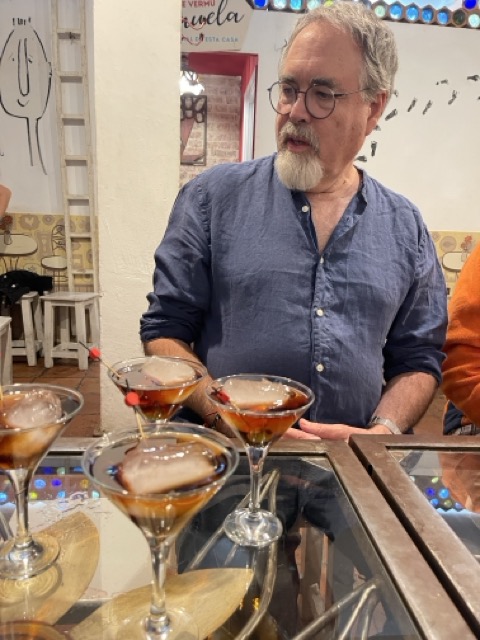
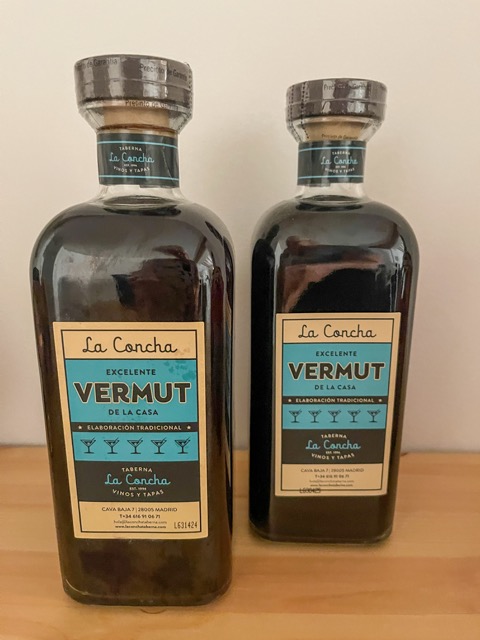
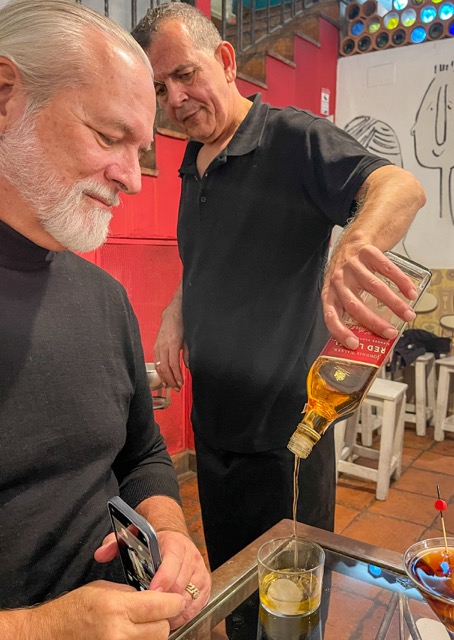
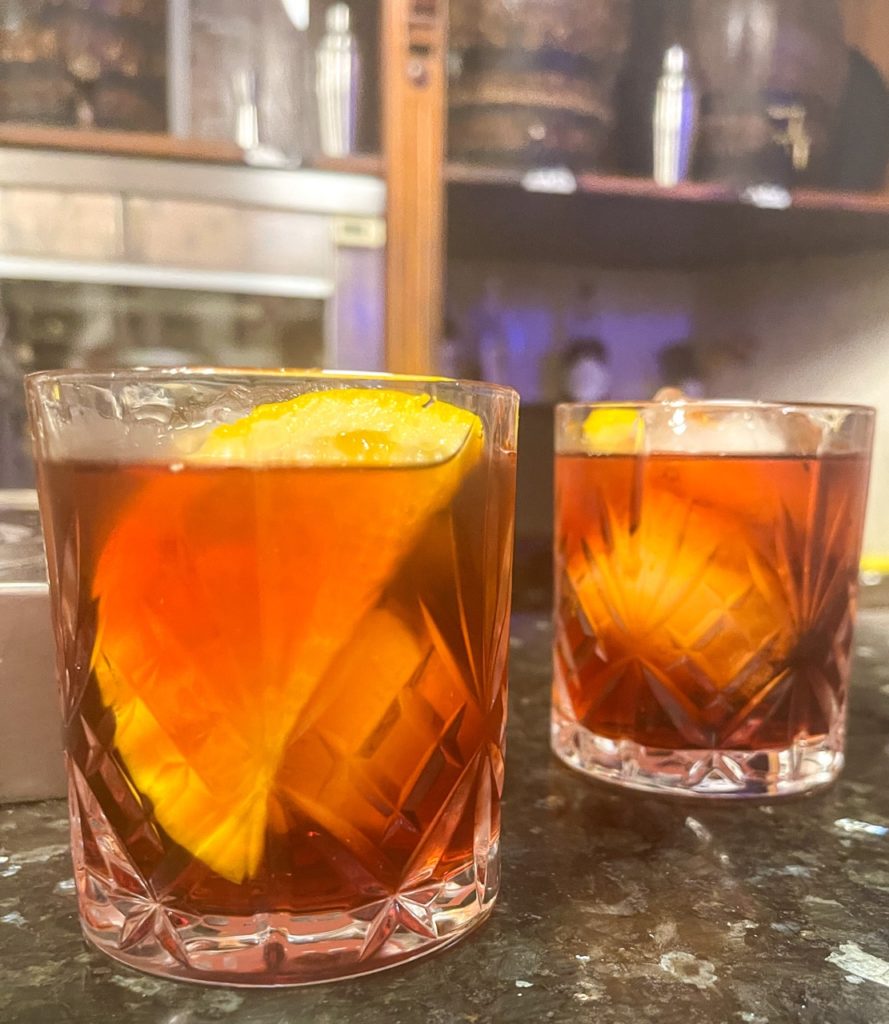
La Concha (http://www.laconchataberna.com), a cozy bar tucked into Calle de la Cava Baja, was our meeting spot for a pre-dinner aperitif. Everyone except Ed ordered vermouth which was prepared at the table by first spritzing some gin into our ice filled martini glasses. The house-made vermouth was poured over the ice, and this delicious concoction was topped off with a drizzle of Campari. Sweet, spicy and perfectly Madrid.
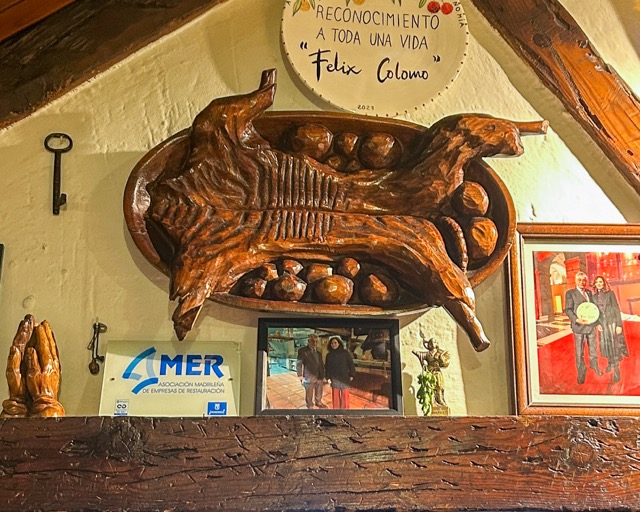
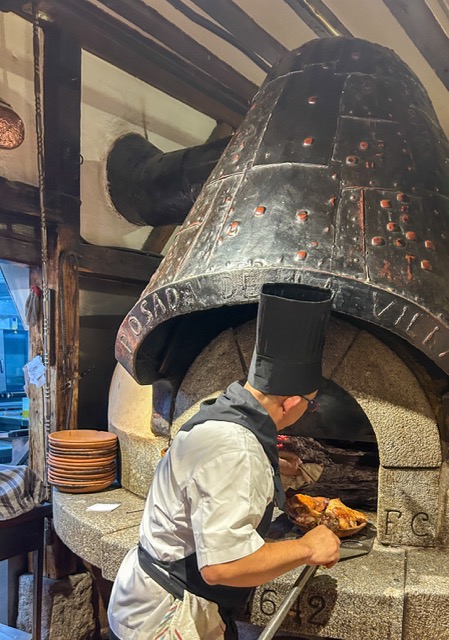
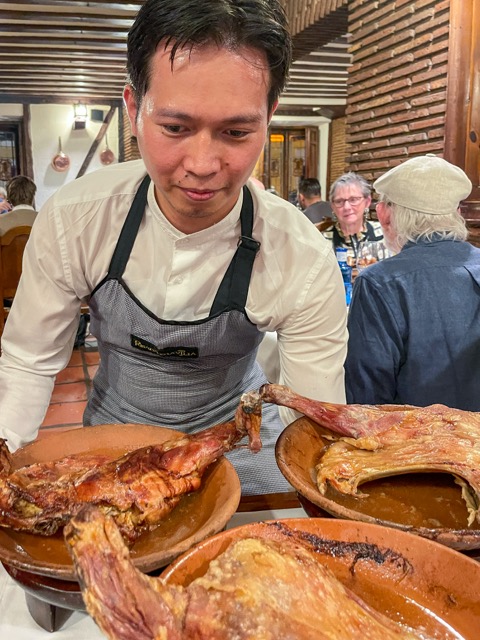
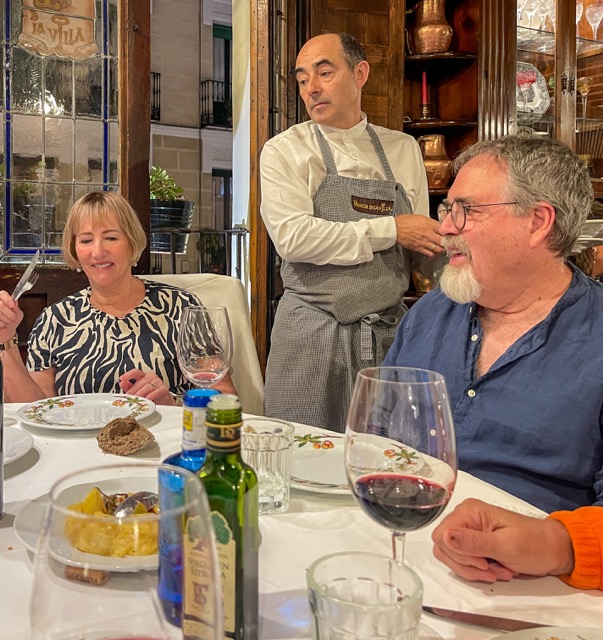
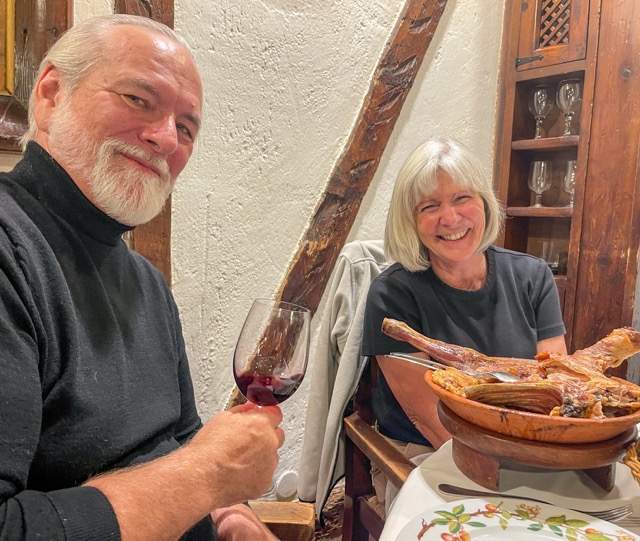
Feeling refreshed and relaxed, we headed to dinner at Posada de la Villa (https://www.posadadelavilla.com), a historic restaurant that has been feeding locals for centuries. Inside, the smell of roasting lamb fills the air, thanks to the wood-fired oven that has been burning since the 1600s. We feasted like kings: crispy-skinned suckling lamb that fell apart with the touch of a fork, golden croquetas, grilled vegetables, delicious bread, and a couple of bottles of Ribero del Douro Tempranillo from Pradorey Winery (one of Spain’s best red wine regions). It was nearing midnight by the time we made it back to our hotel for a good night’s sleep – feeling a bit more like Madrileños.
Slow Morning
Day two involved a cup of coffee with our friends before Ed and I took a leisurely walk through the neighboring barrios of Gran Via and Malasaña. We met up once more for a quick lunch at an Asian fusion restaurant before heading to the train station for our return to Valencia.
More Madrid is Needed
After just 27 hours, we were sated, tired, happy, and a little more in love with Madrid. The beauty of being just two hours away is that we can come back anytime. And the next time? We just might stay a little longer. Come on over to España and we’ll explore Madrid together!
There’s something magical about arriving in a new country for the first time. Something unexpected appears around every corner – the sound of a foreign tongue, the smell of unfamiliar food, the gleam of buildings from another era. Belgium had not been particularly on our radar. But our youngest son, Michael, visited last year with his partner, Charlotte, and after hearing their reports, we decided on a meet-up with Mark in Belgium (not far from Mainz, Germany where he is currently residing). Nestled between France and Germany, this small nation makes an impression far beyond its size. We explored Brussels, Gent, Bruges, and Antwerp. It was a bit much to squeeze into just five days, but we were delighted by the combination of old-world charm and modern vibrancy.
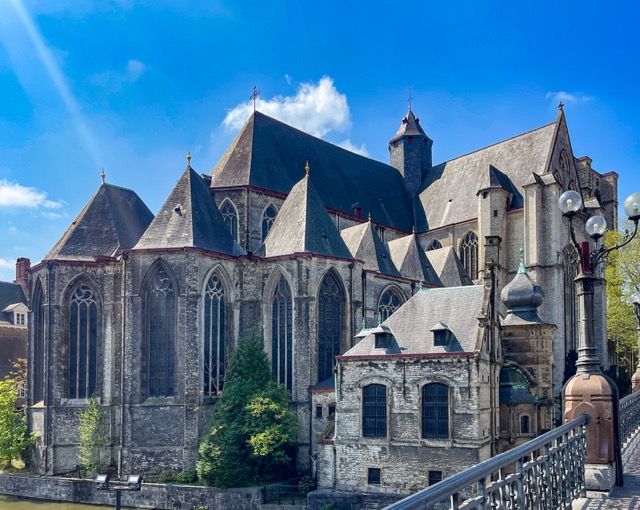
Gent’s Saint Michael’s Church dates back to 1105 when a chapel dedicated to Saint Michael was first documented on the site. The current late Gothic church began construction around 1440.
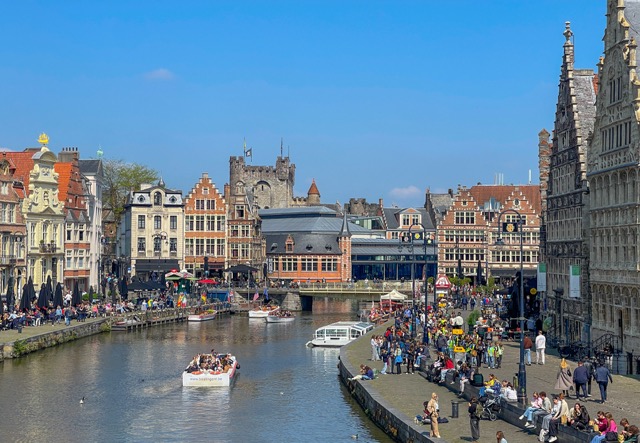
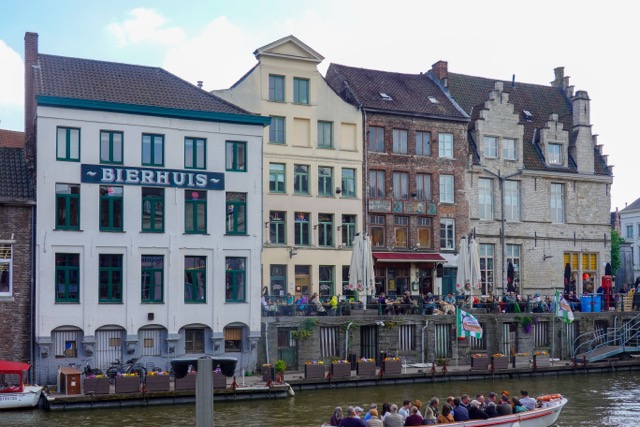
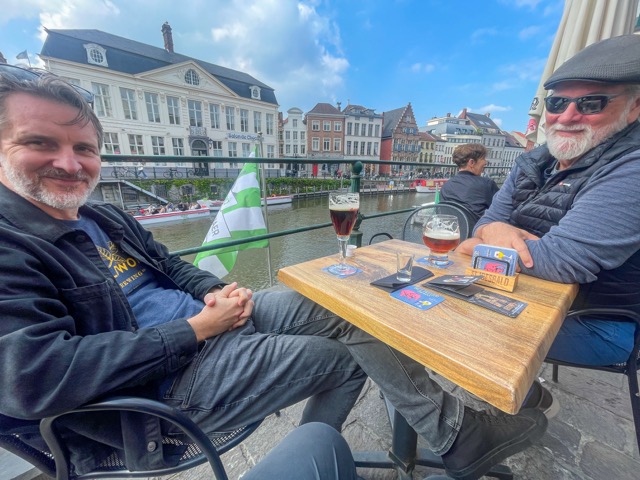
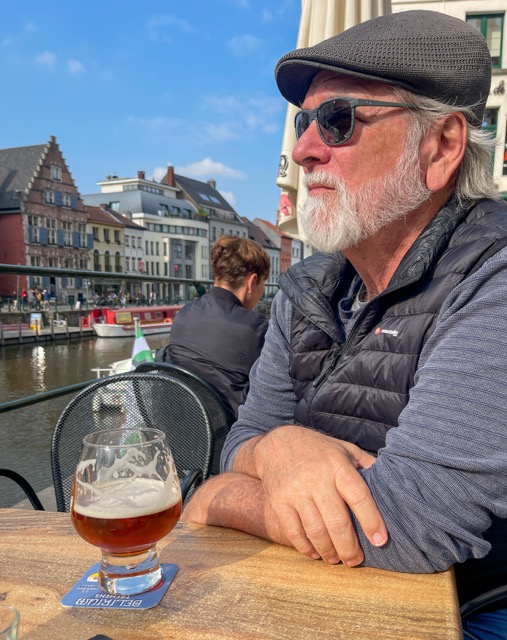
Gent is at the confluence of two rivers – the Scheldt and the Leie and there are some great spots on the river to enjoy a beer.
An Art & Poetry Lesson
We had just one day to spend in Brussels before hopping on a train to meet Mark in Gent for dinner. Our plan had been to join a walking tour of the city followed by lunch at a small estaminet (a small café selling alcoholic drinks) featuring Belgian cuisine. However, the cold rainy day we woke up to was less than ideal for a walking tour of the old city. So, after getting a late start, we wandered over to a small café, enticed by the wafting odors of fresh coffee and pastries.
The late start was due to a bit of insomnia on my part. I woke up about 4AM and couldn’t get back to sleep. That’s when I read a message posted on our blog by our dear cousin Nayan.
“When you are in Brussels, you will most likely remember Auden’s poetic comment on Brueghel’s Musee de Beaux Arts, I believe to be one of the greatest poems in Western literature. (I have committed it to memory.) Nayan xo”
For those of you who don’t know Nayan, she graduated from Cal Berkeley in 1955 with a double master’s degree in English and Rhetoric and then in 1988 with a PhD in Educational Philosophy. She taught college for decades and served as the Dean of the English Department at a Bay Area community college before retiring and becoming ordained as an Episcopal priest in 2002. Nayan turned 94 as I was finishing this blog post, and she continues to amaze and inspire me.
I must admit, I was not aware of either Auden’s poem or Brueghel’s painting. But I am always eager to learn and was inspired by Nayan’s message. So, while Ed slept, I spent a couple early morning hours reading. One internet search led to another, and I learned much about W.H. Auden, Pieter Brueghel the Elder, ekphrastic poetry (when a poem is written in response to another work of art, such as a painting or sculpture), a poem by William Carlos Williams about the same Brueghel painting, a refresher on the Icarus myth, and modernism vs. postmodernism. Whew! It was quite a morning!
Musée des Beaux Arts By W. H. Auden, 1938
About suffering they were never wrong, The Old Masters: how well they understood Its human position; how it takes place While someone else is eating or opening a window or just walking dully along
How, when the aged are reverently, passionately waiting For the miraculous birth, there always must be Children who did not specially want it to happen, skating On a pond at the edge of the wood: They never forgot That even the dreadful martyrdom must run its course Anyhow in a corner, some untidy spot Where the dogs go on with their doggy life and the torturer’s horse Scratches its innocent behind on a tree.
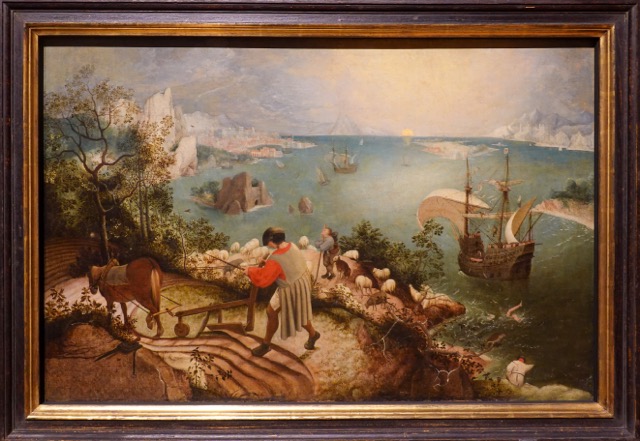
In Brueghel’s Icarus, for instance: how everything turns away Quite leisurely from the disaster; the ploughman may Have heard the splash, the forsaken cry, But for him it was not an important failure; the sun shone As it had to on the white legs disappearing into the green Water; and the expensive delicate ship that must have seen Something amazing, a boy falling out of the sky, Had somewhere to get to and sailed calmly on.
As we sipped our coffee and tea that morning, I shared what I had learned with Ed. I also told him that we were a mere two blocks from the Musées Royaux de Beaux-Arts de Belgique (Royal Museum of Fine Arts of Belgium) where the “Old Masters Museum” proudly displays the Brueghel painting that inspired Auden’s poem. We had a new plan for the day!
We arrived at the museum, stood in line for tickets, and as soon as we were inside, made a beeline for the Brueghel room. There it was!
Landscape with the Fall of Icarus – Pieter Brueghel, c. 1560
Landscape with the Fall of Icarus William Carlos Williams, 1960
According to Brueghel when Icarus fell it was spring
a farmer was ploughing his field the whole pageantry
of the year was awake tingling near
the edge of the sea concerned with itself
sweating in the sun that melted the wings’ wax
unsignificantly off the coast there was
a splash quite unnoticed this was Icarus drowning
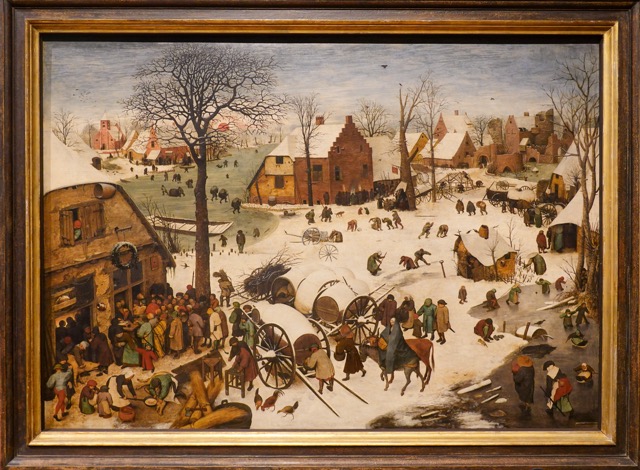
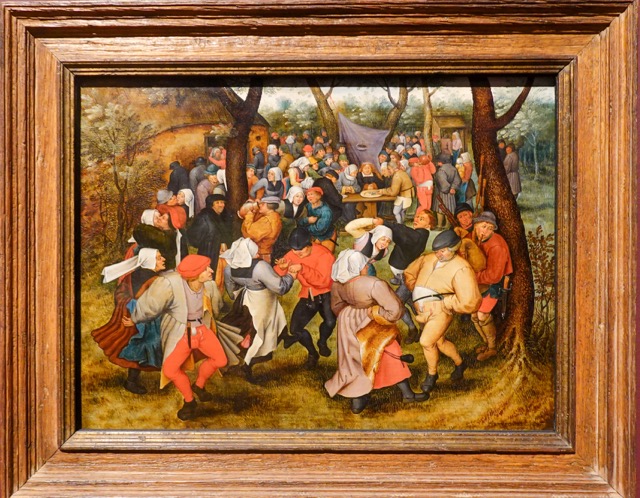
The Census at Bethlehem is another Pieter Brueghel the Elder masterpiece. And, his son painted Peasant Wedding Dance.
I Had Some Questions
What the heck does all this mean? Why is the mythological tragedy of Icarus barely noticeable in the corner of the canvas? Why are the shepherd, the farmer, and the fisherman, all absorbed in their work, seemingly unaware of the boy’s demise? Brueghel, Auden, and Williams all seemed to be saying that the fall of Icarus was just another unnoticed event in the rhythm of everyday life. They describe the isolation of individual pain in a world that neither pauses nor offers consolation. Pretty dark, right? Can this be true?
We had a long conversation with Mark over dinner and then I read what a few art and literary critics had to say about all of this.
“The painting is about the invisibility of suffering. It is not seen. It happens while the sun is shining and the ploughman is at his work.” John Berger (art critic), Ways of Seeing, 1972.
“Auden’s insight is that suffering is always private, while indifference is public and communal.” Edward Mendelson (literary critic), Later Auden (an Auden biography), 1999.
“Williams’s sparse diction and flat tone reflect the painting’s quiet irony, refusing to elevate Icarus’s death above the seasonal rhythms of peasant life.” Marjorie Perloff (literary critic), The Dance of the Intellect, 1985.
Is it true? Do we, more often than not, look away? We are, of course, overwhelmed by a 24/7 news cycle describing countless tragedies – wars, humanitarian crises, environmental disasters – many of which barely sink in beyond the fleeting headlines.
Collective Indifference
Perhaps the COVID-19 pandemic is an example of our collective indifference. As we all recall, there was a moment in early 2020, when the streets cleared, cities quieted, and our fear turned to expressions of solidarity. But that didn’t last. Before long, the American creed of individualism and productivity reemerged. Masks became a political statement, reopening was seed as liberation, and the dead began to accumulate quietly, mostly out of view. More than 1.2 million Americans perished from Covid-19, many of them in isolation. Nursing homes turned into morgues and hospital workers buckled under the pressure. Yet, the national mood increasingly mirrored Brueghel’s painting – a slow turning away. The suffering became background noise.
We can see this turning away today in the ongoing global refugee crisis. With millions of people being forcibly displaced, the response is often apathy and political posturing rather than meaningful action. As Auden wrote: “They never forgot…That even the dreadful martyrdom must run its course…Anyhow in a corner, some untidy spot…” Border crossings, overcrowded boats, and refugee camps have become today’s “untidy spot.”
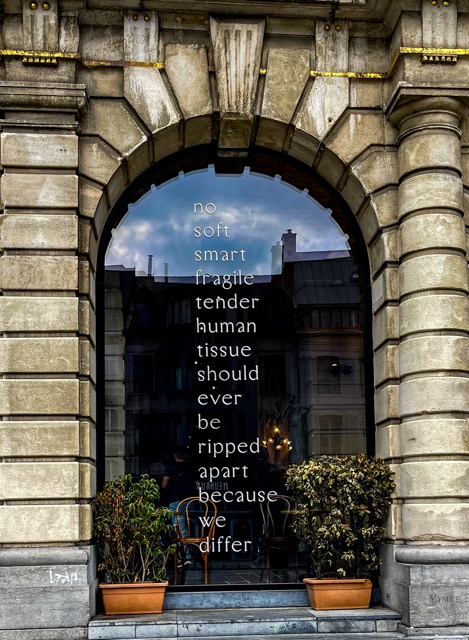
Gent
Climate change is another slow-motion Icarus tragedy. Scientists warn of rising temperatures, ecosystem collapse, and mass displacement, yet our consumer culture, economic systems, and political timelines continue mostly undisturbed – plowing ahead, like Bruegel’s farmer. William Carlos Williams’s line—“a splash quite unnoticed”—feels distressingly prophetic. Catastrophes like wildfires, floods, and droughts strike with increasing regularity, but then fade quickly from media attention.
Today’s tech oligarchy aims to “fly” ever higher through space colonization, artificial intelligence, and biotechnology. Their oversized ambition seeks to outrun any attempts at restraint, embracing economic inequality, digital surveillance, and exploitation of workers. Yet, we avert our gaze from the human suffering their “disruptions” create, blithely accepting the growing crisis our planet is facing. Just as the plowman in Brueghel’s painting keeps working while Icarus drowns, people around the world continue their routines while others suffer. As writer Rebecca Solnit puts it, “The failure to imagine a world in which everyone matters is a kind of moral failing—but also a failure of imagination.” (Hope in the Dark, 2004).
Our first day in Brussels was, for me, an encounter with Brueghel’s message and to understand it as an ethical imperative. Of course, making sense of this is deeply personal. Neither the painter nor the authors offer easy answers. Perhaps all I can do is avoid the temptation of hopelessness and rather than despairing about indifference attempt to break it, in small quiet ways. Brueghel’s painting, and the poems it inspired reveal to us what is, so we can determine what ought to be.
Another Surprise
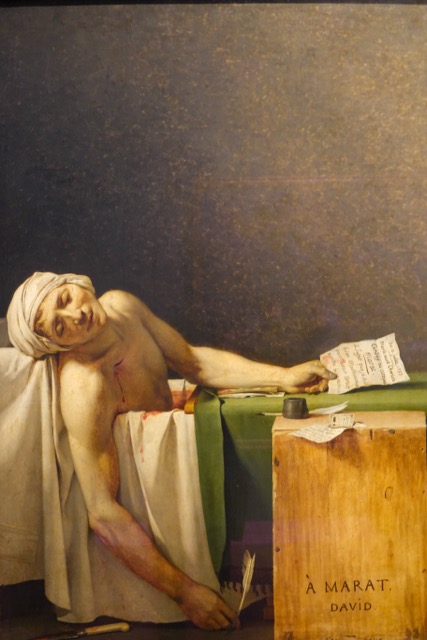
The Museé Oldmasters Museum was not through surprising us, however. As we strolled through one gallery after another of amazing paintings, Ed stopped with a gasp, staring across the room. “Oh my god, they have David’s masterpiece! ” He took me by the hand, and we slowly approached the piece as he began to explain its significance.
Ed: The Death of Marat is a painting that has long haunted me. Jacques-Louis David created the painting in 1793 basically as a propaganda piece for the radicals of the French Revolution. It depicts the assassination of a leading revolutionary figure, Jean-Paul Marat, who was stabbed to death by a woman from the French nobility while sitting and working in his bath. David was a passionate supporter of the revolution and had become a key voice in rallying the people of France. He created The Death of Marat in just three months following Marat’s murder with the full intention of giving the revolution an image of martyrdom that would incite support. It worked.
For me, it is one of the most challenging paintings ever produced. On the one hand, it could be said to be the first modernist painting ever created. David looks humanity in the eye and renders an unflinching image of contemporary reality, challenging the viewer, forcing you to confront the moment. And yet it is executed with the glowing, flawless beauty of an old master.
And yet, this painting came to represent all the horror and death of the Reign of Terror. The ten years that followed its unveiling saw thousands murdered in the streets of Paris touching off a cataclysm that did not end for decades.
And yet, this is the revolution that truly put the western world on a course for democracies to flourish. It is truly the dawn of modernity.
Unsettling, disturbing, luminous, surreal, it is the kind of profoundly moving work that could only be produced from the confluence of factors it embodies – David’s passion, the urgency of the moment, the pressure to work quickly – all conspiring to extract the artist’s greatest achievement. And yet . . .
Our first day in Brussels had taken us on a wholly unexpected journey and it wasn’t even cocktail hour! Still animatedly discussing all that we’d seen in the museum, (thank you, Nayan) we collected our bags and headed for the train to Gent, anticipating dinner with Mark. We enjoyed a couple of days exploring Gent and Bruges with Mark, checked in on Antwerp, and spent our final day back in Brussels before returning to Valencia.
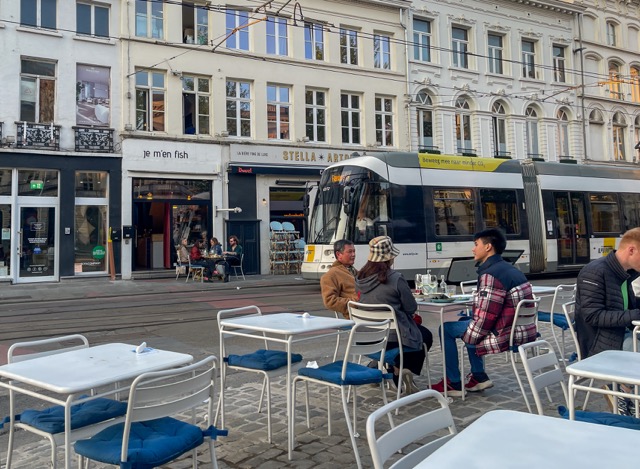
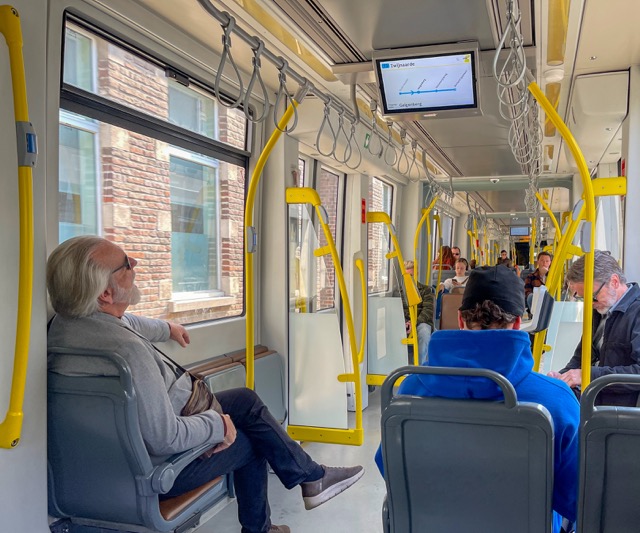
There was lots of train and tram time during our visit to Belgium. One evening we had dinner al fresco at a table across the street from the restaurant and tram track. A delightful urban experience!
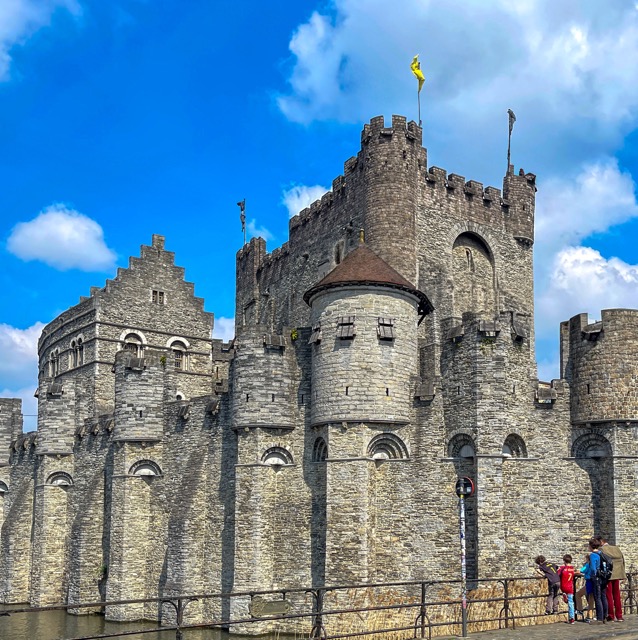
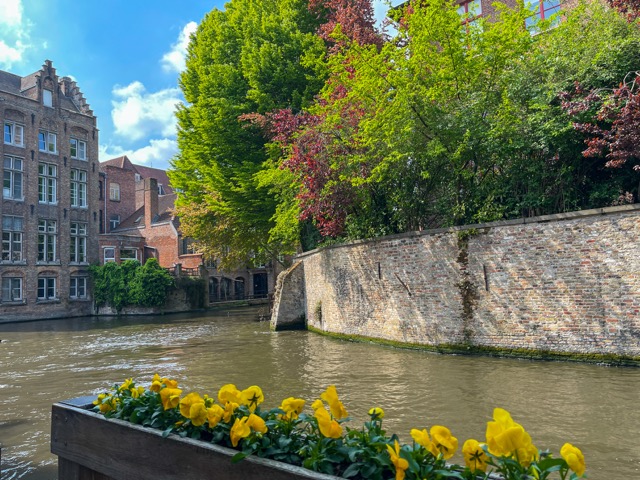
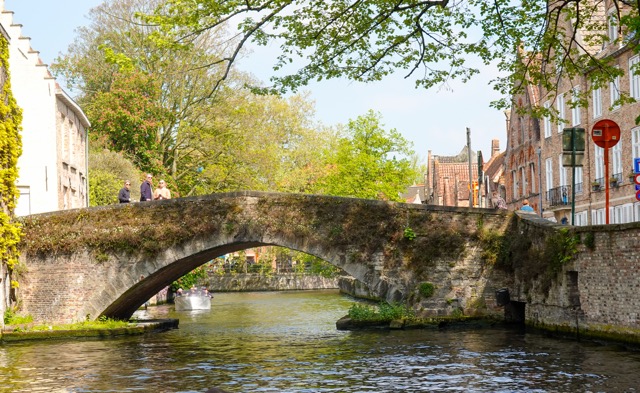
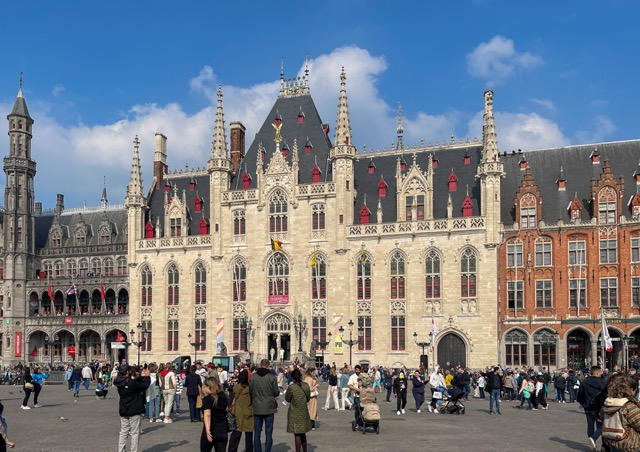
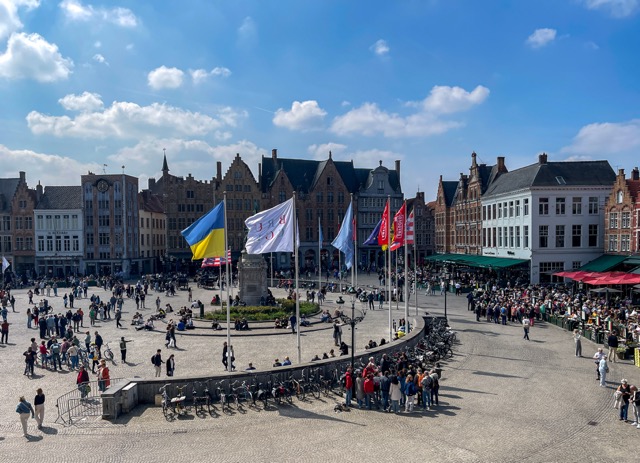
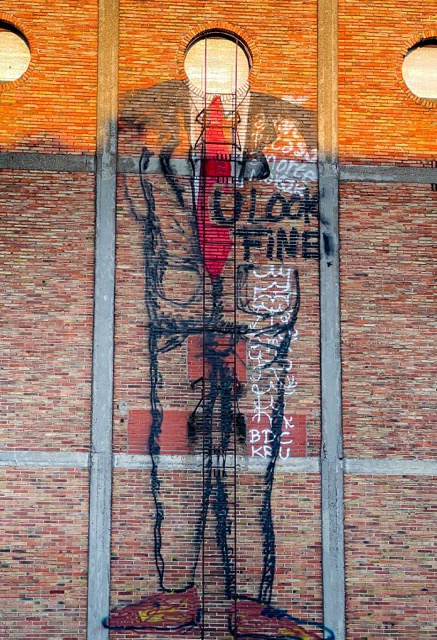
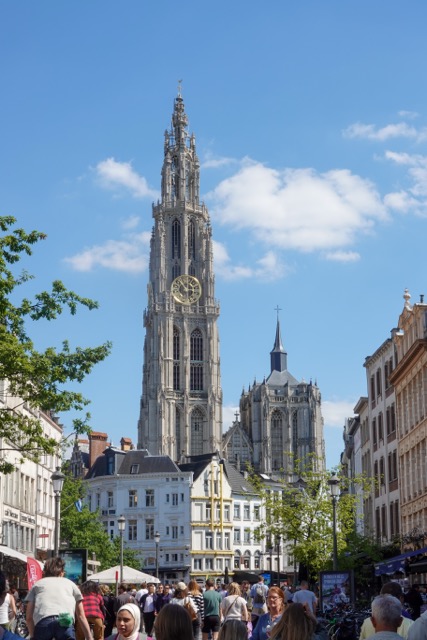
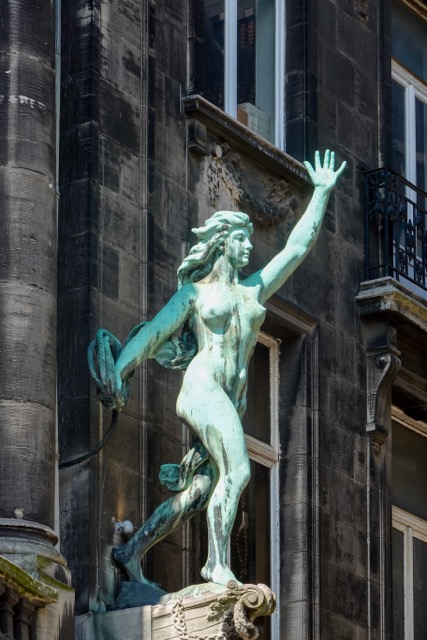
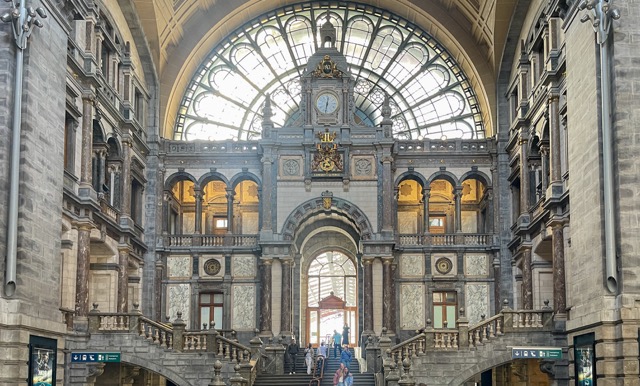
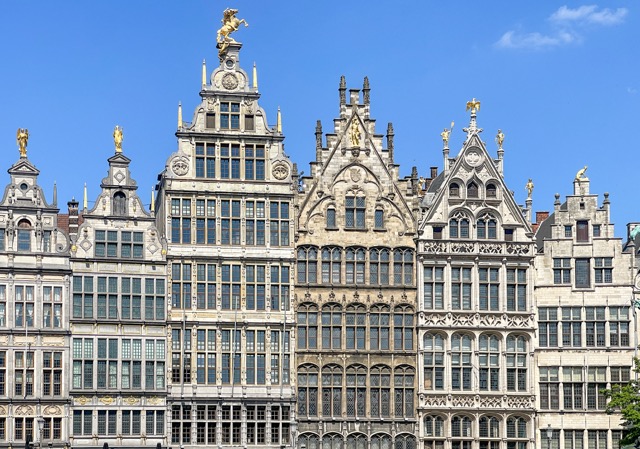
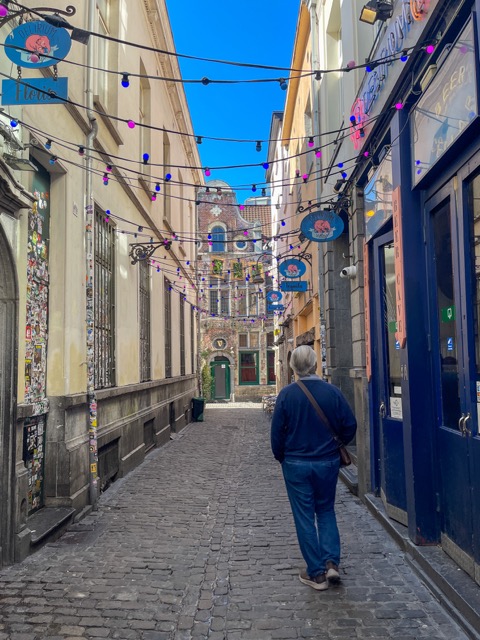
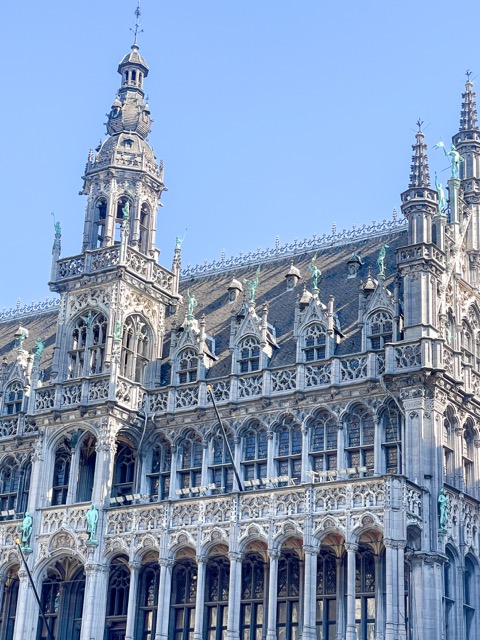
Castle of the Counts, Gent Saint Michael’s, Gent Canals of Brugge (Venice of the North)Brugge Town HallBrugge Market SquareGent Street ArtCathedral of Our Lady, AntwerpAntwerp Train Station – Wow!Guild houses on Brussels’ Grand SquareWalking about BrusselsBrussels City Museum
Belgian Culinary Adventures
Belgium is a small country (about the size of the state of Maryland), but its culinary reputation is anything but modest. In Belgium, food isn’t just about sustenance. It’s about heritage, indulgence, and joy. And, food can be a powerful salve for human suffering offering a tangible form of care, presence, and connection. Bon Appétit! Smakelijk! (Dutch)
Waffles and Chocolates and Beers, Oh My!
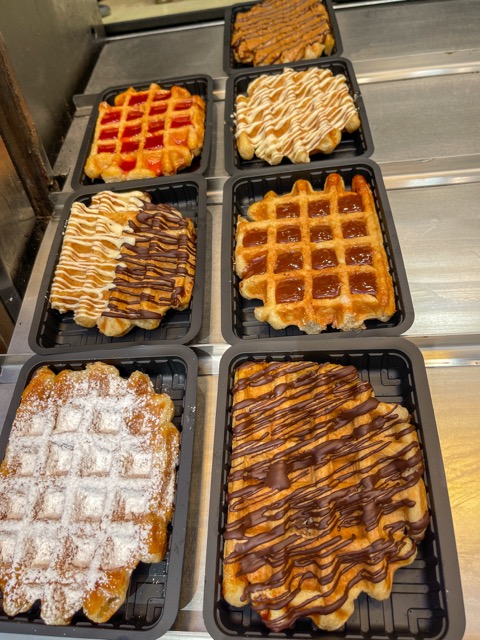
Waffles aren’t what you think. In Belgium, they’re an anytime indulgence, not just a breakfast treat. The two types of Belgian waffles, Liège and Brussels are both are delicious. A Liège waffle, dense and chewy, has a sweet, crunchy glaze that is created with caramelized embedded pearl sugar. A Brussels waffle, light, airy, and crisp, is typically dusted with powdered sugar or topped with whipped cream and berries. Whichever you choose, a warm waffle eaten on the go is one of Belgium’s most satisfying pleasures.
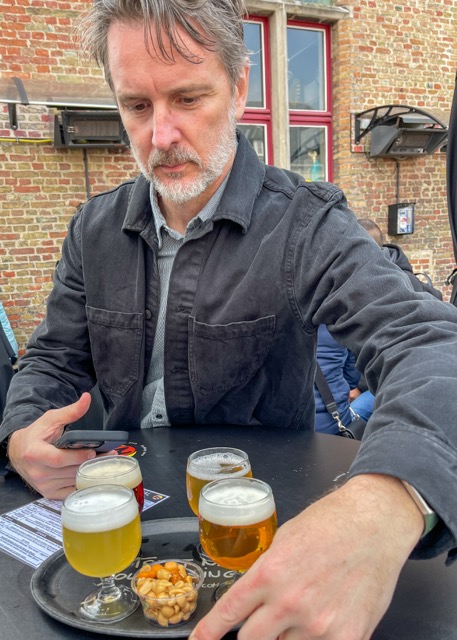
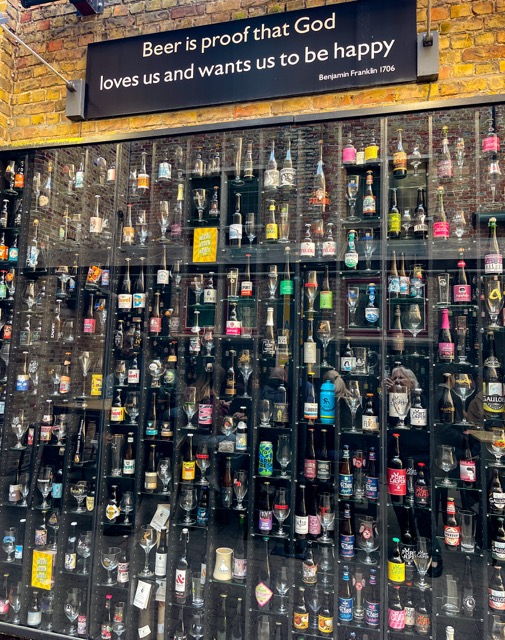
2Be Wall of Beer – Brugge
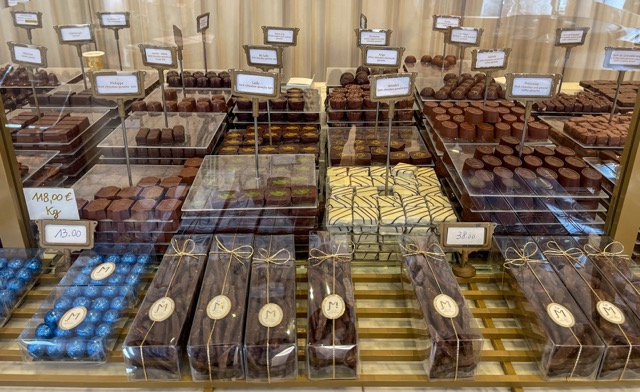
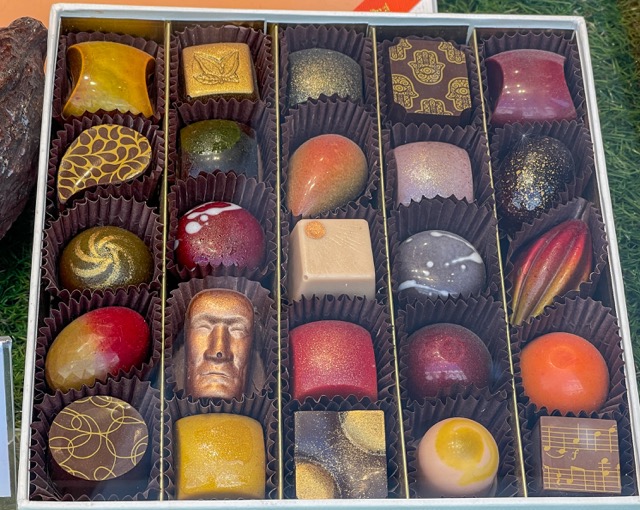
Luxuriously Chocolate
Few things feel more quintessentially Belgian than chocolate. But why is Belgian chocolate so good? It starts with selecting high-quality cocoa beans from specific origins. Three West African countries – Côte d’Ivoire, Ghana, and Nigeria – are the key suppliers of cocoa beans to Belgium. Next, the exceptionally fine grind of the cocoa beans results in a very smooth, melt-in-the-mouth experience. Then, there’s the higher percentage of cocoa compared to other chocolates, contributing to a richer, more intense flavor and the use of pure cocoa butter which enhance the smooth texture. Each bite feels like a little moment of luxury.
A Sacred Craft
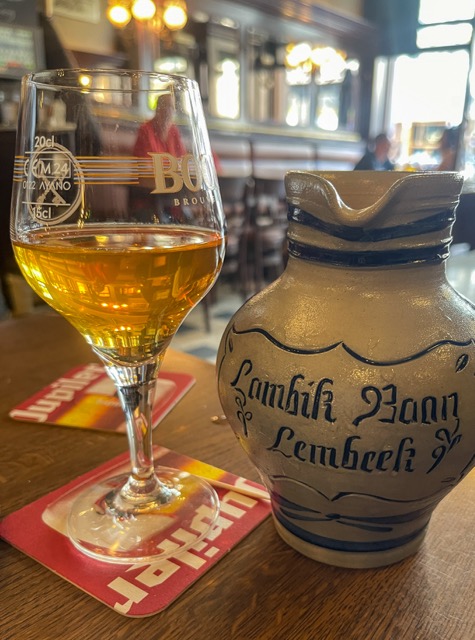
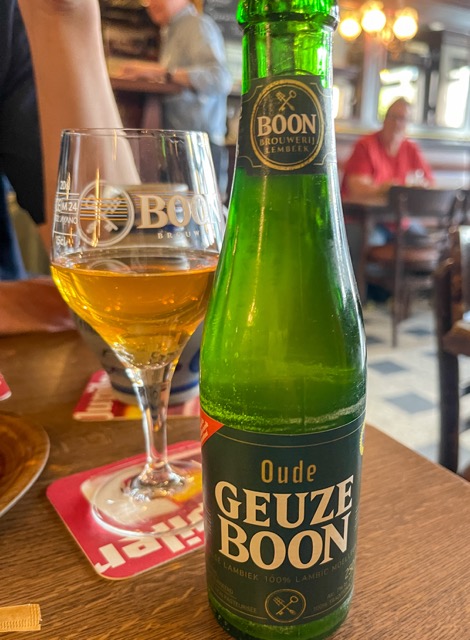
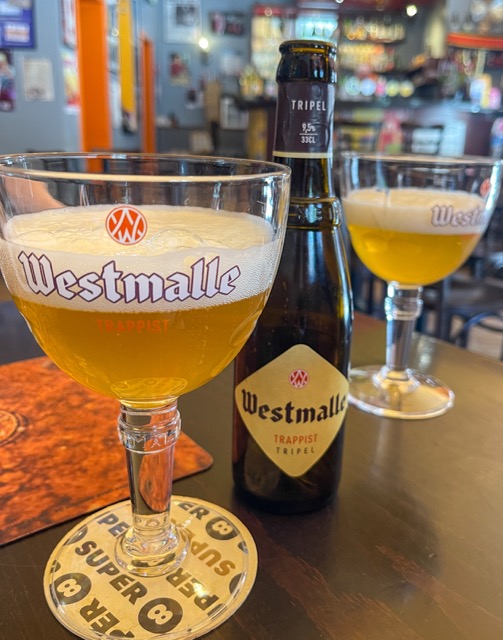
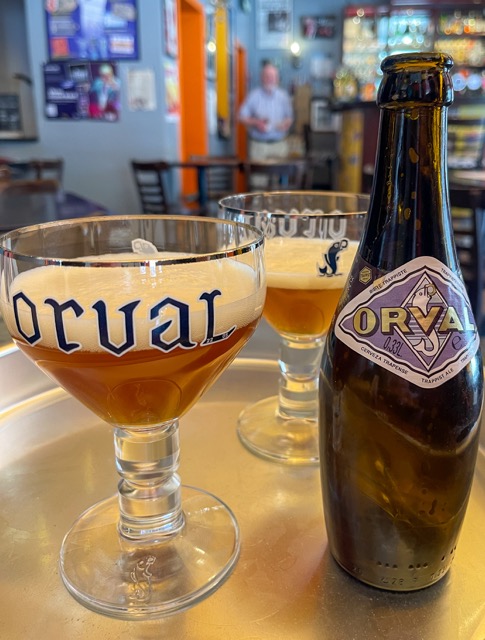
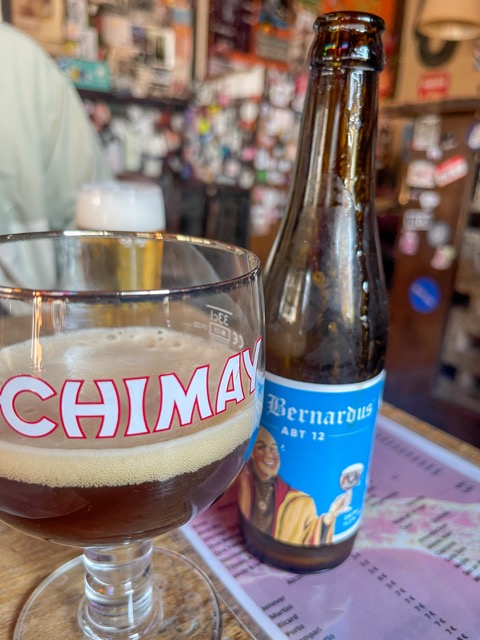
The beer culture in Belgium is world-renowned. With over 1,500 varieties and a brewing tradition dating back to the Middle Ages, Belgian beer not just a drink, it’s an art form. Each beer style has its own unique character—and often its own specific glass to enhance the experience. The Trappist beers, brewed by monks within abbey walls, are particularly revered. We did our best to sample as many as possible over our five-day visit and were fortunate to have the guidance of our youngest son, Michael (via text messages) and Mark’s good company, as we tasted our way through Gent, Bruges, and Brussels.
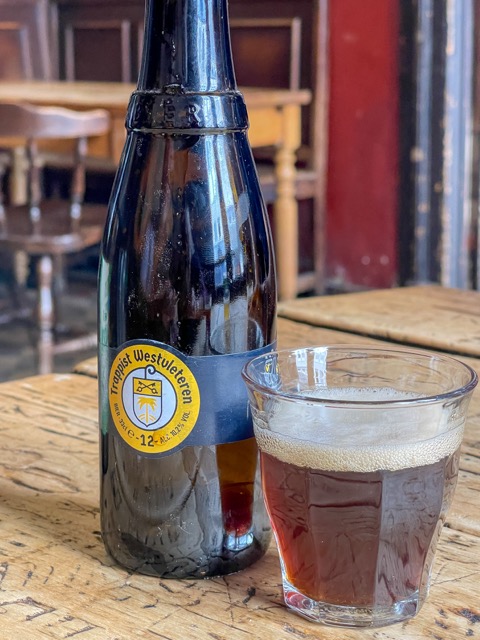
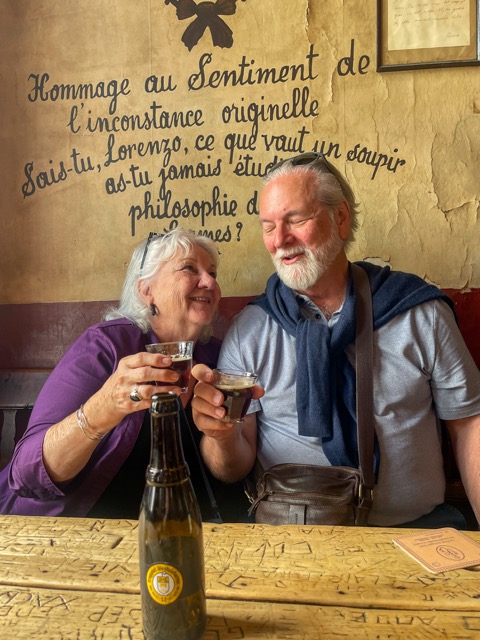
On Michael’s recommendation, we were fortunate to taste what some consider to be the best beer in the world. Westvleteren 12 is a Trappist ale, brewed by monks at the Saint Sixtus Abbey in western Belgium. There are just five monks who oversee the production of this beer which is very low because the monks only brew as much as they need to maintain their quiet lifestyle. After shelling out a mere €17, we split a small bottle with our guide for the day. It was delicious!
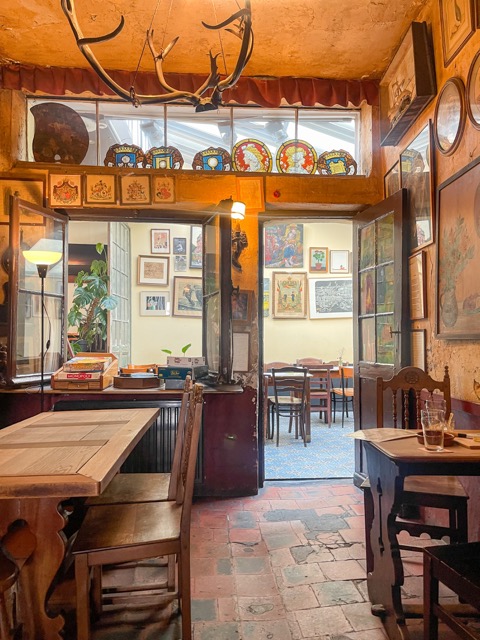
Vieux Spijtigen Duivel (the “Vieux Spijt” or “the Spijt” to its regulars) is the oldest surviving estaminet in Brussels – opened , between 1726 and 1741. However, legend has it that the Vieux Spijt has actually existed since 1500. This is where we had the “world’s best beer” (for €17 a bottle). This is where we sampled the World’s Best Beer – Westvletern 12.
Moules-Frites: The National Dish
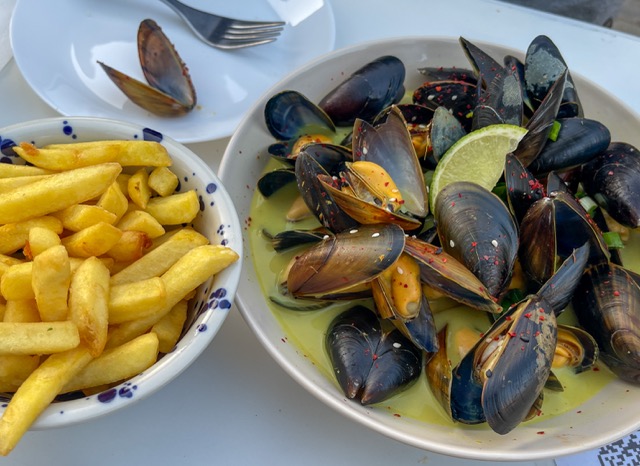
Few dishes capture the soul of Belgian comfort food like moules-frites—steaming mussels served in a fragrant broth with a side of golden, double-fried Belgian fries. Belgian mussels have a particular taste, reflecting the blend of North Sea nutrients they feast on during their 18-month growing period. Strong currents carrying plentiful nourishment mean Belgian mussels grow more quickly and become plumper than those grown in calmer waters, Cheap and plentiful, they were originally considered food for the poor, and they’ve long been paired with fried potatoes at the country’s famous fry shops, known as friteries in French and freetkoten in Dutch, the language of Flemish Belgium.
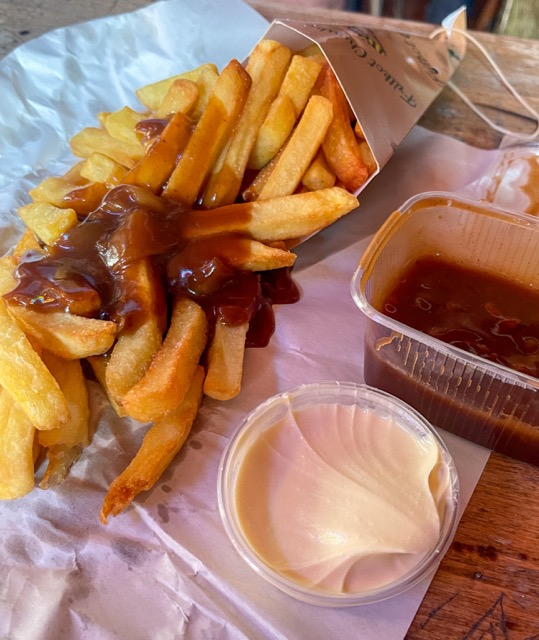
Frites are taken seriously by Belgians. They are fried twice for a perfect crispy exterior and fluffy interior and are served with homemade mayonnaise or a variety of gravy-like sauces. Belgians will tell you that Belgium, not France, is the true home of fries. The earliest recorded history of fries is in Belgium, specifically in the region of Wallonia (the southern area bordering France), in the late 17th century. Nearly three centuries later, American soldiers stationed in Belgium during World War I encountered the dish and because French was the dominant language in that area, the soldiers mistakenly believed the dish was French. And so, the name “French fries” stuck.
A Lifestyle to Envy
Belgians seem to enjoy a high standard of living. We noticed well-maintained infrastructure, excellent public transportation, and bicylces everywhere. We sensed a mix of traditional values and progressive ideas as well as multi-cultural diversity (especially in Brussels). The people we interacted with were reserved but always polite, and they switch effortlessly between Dutch, French, and English. When making a dinner reservation by phone on our last evening in Gent, the person answering the phone initially spoke in Dutch. When Ed asked, “Is English possible?” the response was “Of course, we speak English!” We always felt welcomed whether asking for directions, ordering a beer, or talking with a chocolatier. While Belgium may not shout for your attention like other European destinations, that is a part of its charm.
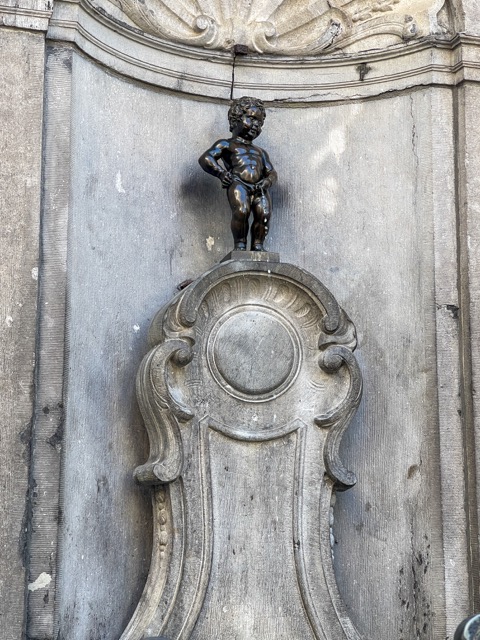
Manneken Pis (Dutch for Little Pissing Man) is a landmark bronze fountain sculpture in central Brussels.
We’d come to Belgium with the expectation of sampling world class beer. We found that, of course, but were also far more deeply affected and accumulated a new trove of experiences to ponder and assimilate into our world view. To this end we travel.
After enjoying warm and sunny Oman we returned to a cool and rainy Valencia. It has been unusually chilly in our lovely Mediterranean city (it’s barely above the mid 50s most days). When I can’t escape the cold, I resolve to find ways to embrace winter. Once again, Spain has provided.
It’s Calçot Season!
After just a few days back in Valencia, we joined our good friends, Sheila and Richard, for a unique Catalan food experience – calçots (pronounced cal-shots). On the recommendation of a cab driver, they had trekked out to Asador Monte Mayor last year and were eager to return. A forty-minute metro ride followed by a fifteen-minute walk led us to this lovely restaurant in Manises, a small-town northwest of Valencia. It was a wintertime culinary adventure!
What is a Calçot?
A cross between a spring onion and a leek. Sweet, tender, and delicious. Calçots come into season in November and are available until March or early April. They are beloved in Catalonia and there’s more than a century of tradition celebrating this gastronomic treat. In fact, calçots have earned a Protected Geographical Indication (PGI) label from the European Union. (Products with a protected geographical indication have a particular quality, reputation or other characteristic attributable to a geographical origin.) Along with this designation, there are rules, of course. For example, to comply with regulations, each calçot must measure between 15 and 25 centimeters long.
Our good friends…Richard & Sheila
How to cook calçots?
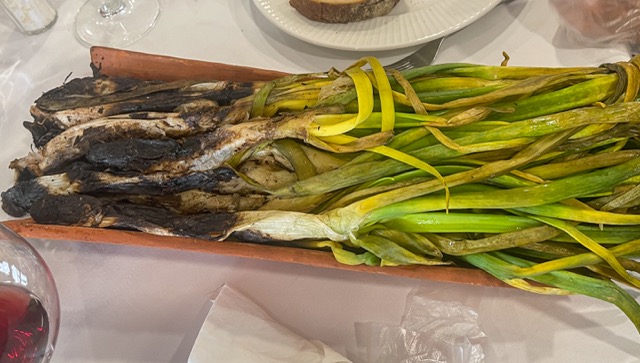
Grilled over a wood fire – not embers – the outer layer is charred by a full flame. When removed from the grill calçots are wrapped in newspaper, which makes them sweat, and therefore become even more tender.
How to Eat a Calçot?
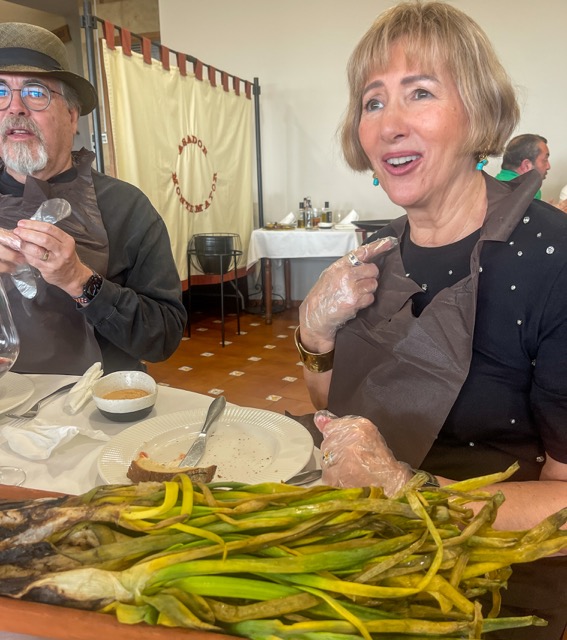
Hold the calçot by the green tops with one hand and peel off the outer layer of charred skin with the other hand. Dip the calçot into the special sauce called Salvixada (like Romesco). Lift the calçot over your mouth, and bite off the white part – the green tops are discarded. Sip some red wine or sparkling cava. Repeat. It’s customary to wear a large bib and gloves to prevent going home with stained clothing.
The feast doesn’t end with calçots. After piles of calçots come all types of grilled meats—like Botifarra, the traditional Catalan sausage, lamb, rabbit, and more. These are all delicious when dipped in Romesco sauce as well. And of course, it’s all washed down with plenty of local wine.
An Excuse to Gather!
The mosttraditional way of eating calçots is at a Calçotada, a gastronomic celebration where barbecued calçots are consumed in massive quantities. The most famous Calçotada is in the town of Valls (where calçots originated) during the last week of January. These are calçot eating parties – the Spanish love to gather to enjoy a meal with family and friends. We’ve agreed to make an annual pilgrimage to Asador Monte Mayor for calçots with Sheila and Richard. Maybe we’ll even head up to Valls to experience a calçotada next year. Would you like to join us?
Enjoying calçots will hold me over until those months without a “R” in their name when Valencia’s amazing mussels, Clochinas al vapor (steamed mussels), are back in season.
It’s wonderful to be back in Valencia! With barely three weeks to enjoy our adopted city before leaving on a monthlong adventure, we’re focused on savoring things that are uniquely Valencian.
Clóchinas (Mejillones aka Mussels)
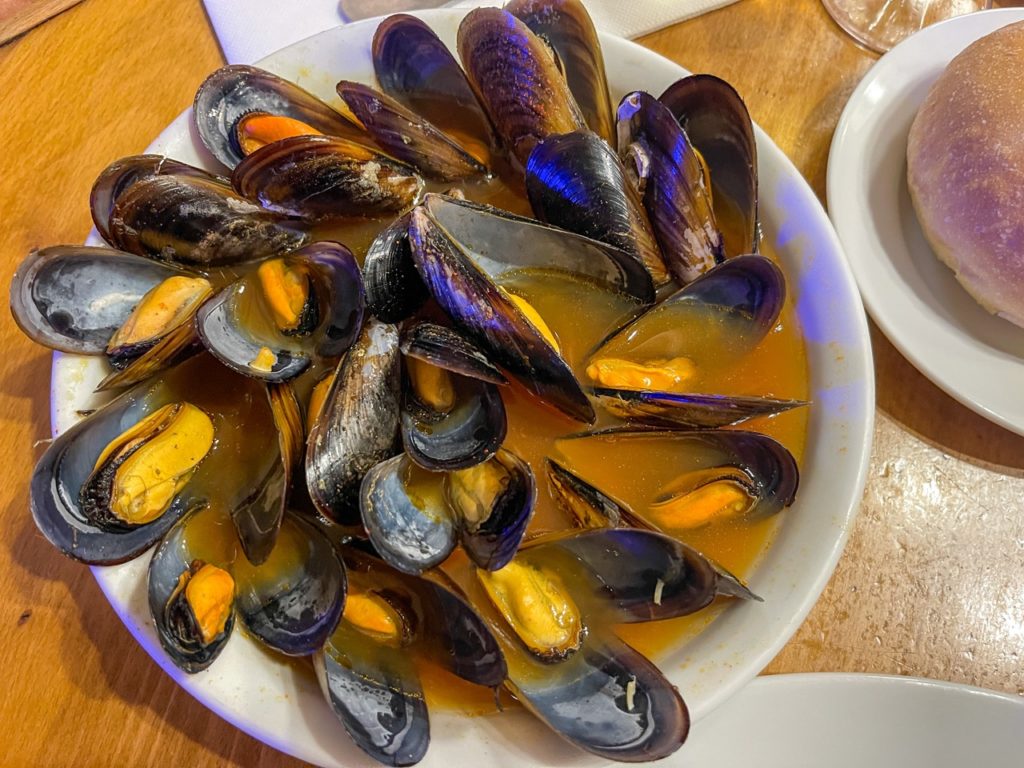
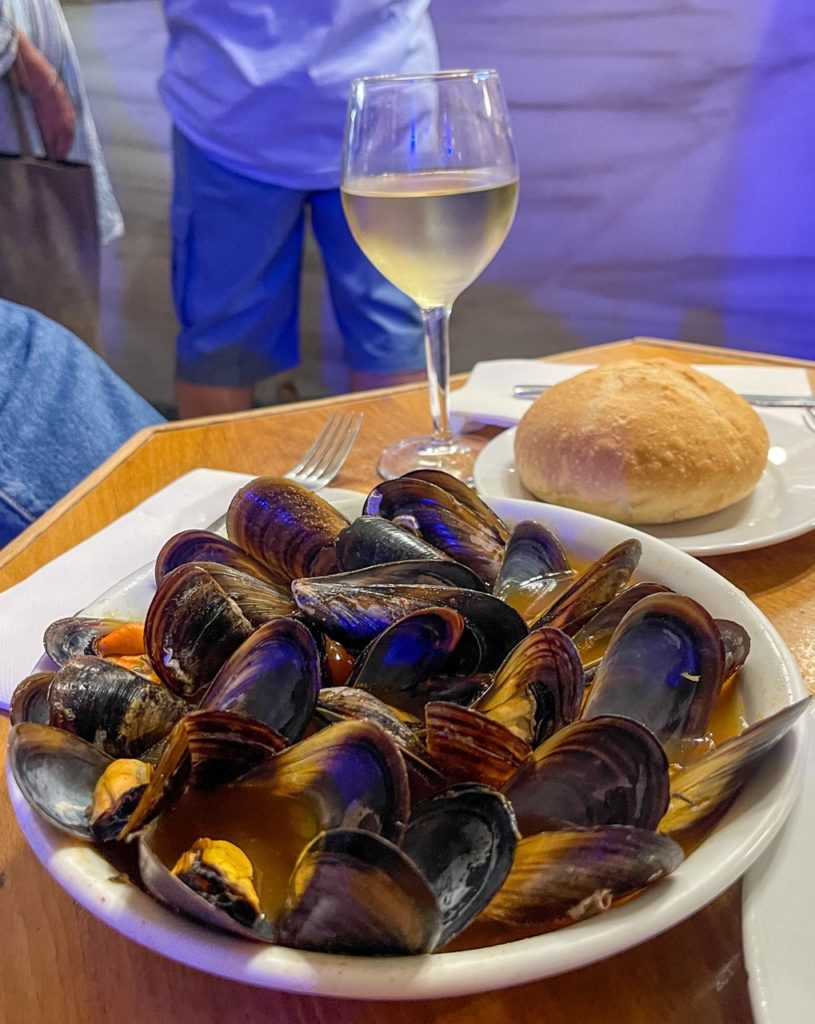
During the months without an “R” in the name (May through August), clóchinas are on restaurant menus all over Valencia. These aren’t the mussels we’ve always known and loved. Rather, clóchinas are smaller, sweeter, and have a robust flavor that comes from the Mediterranean Sea. The Mediterranean water has a high salinity and is said to be rich in nutrients and minerals, contributing to the amazing flavor of these special mussels. In addition to being smaller, and more flavorful, clóchinas are a beautiful orange color. Any Valenciano will tell you, clóchinas are far superior to the larger mejillones.
Simply Delicious – since 1890
Clóchinas are cultivated on floating rafts located just off the coast of Valencia. Their harvest follows the cycles of the moon, beginning with the full moon at the end of April and ending with the waning moon of August. Then, new embryos are seeded for next year’s crop as soon as the water begins to cool a bit in September. The first clóchina rafts were placed in the port of Valencia in 1890 and the “Association of Clóchineros of the Port of Valencia” is responsible for protecting the right to call a mussel a clóchina and guaranteeing their authenticity. The traditional way to prepare clóchinas is to steam them in their own juices, which releases a rich salty broth, and season with lemon, garlic and olive oil. That’s what much of the food in Spain is like – simple.
A Barrio Bar
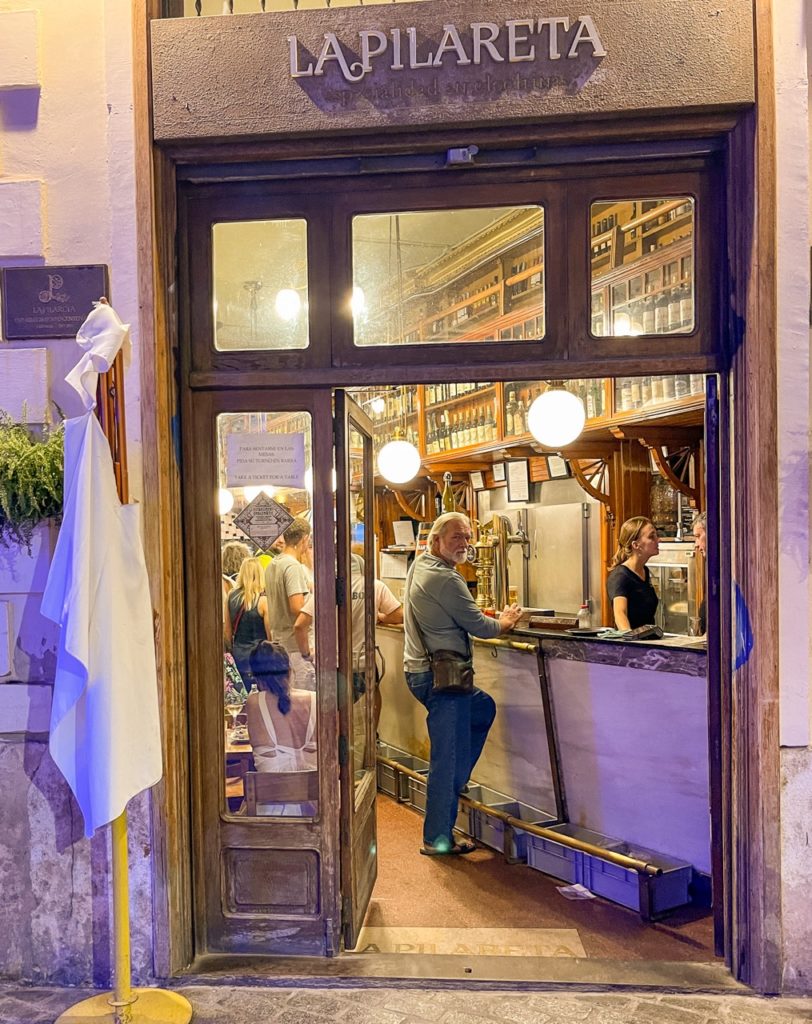
La Pilareta, just a five-minute walk from our apartment, is a great place to enjoy clóchinas. Very much a barrio bar, the food and ambience are delightful. A true Valencian treasure, La Pilareta opened in 1917 and the founder, Mrs. Pilar Contell, ran the place until 1983. There’s often a line to get a table, but you take a number from José and look for a spot at the bar to get a glass of house vermouth while waiting. Sometimes it’s impossible to wait, so we often enjoy a first bowl of clóchinas while standing at the bar, throwing our shells in the buckets at our feet.
We eat at La Pilareta often, even when clóchinas are not in season. It’s a pleasant (and inexpensive) way to spending time enjoying good home-cooked Spanish food. Most of the menu items are around 5-7 Euros and a glass of wine will set you back about 2 Euros. Nothing fancy, just quality tapas the way they have been serving them since 1917.
Paella
Everyone knows about paella and many think of it as Spain’s national dish. However, paella originated in the Valencian region.
“Paella is not just a dish, it’s a way of life in Valencia; everything revolves around the paella pan … around rice culture. It’s 10 or 12 ingredients transformed through fire into a really beautiful and cohesive dish.”
Matt Goulding, “Grape, Olive, Pig”
Lunchtime for Farmers
There’s a long history of rice in Spain – Muslims in Al-Andalus began rice cultivation around the 10th century. Since Valencia’s climate is perfect for growing rice, locals have enjoyed paella in one form or another for centuries. It all started when farmers working the fields of Valencia’s inland areas would cook rice in a flat pan with whatever vegetables and meat they could find. Healthy, hearty and easy to make, it was perfect after a long morning of hard manual labor.
Traditional Paella
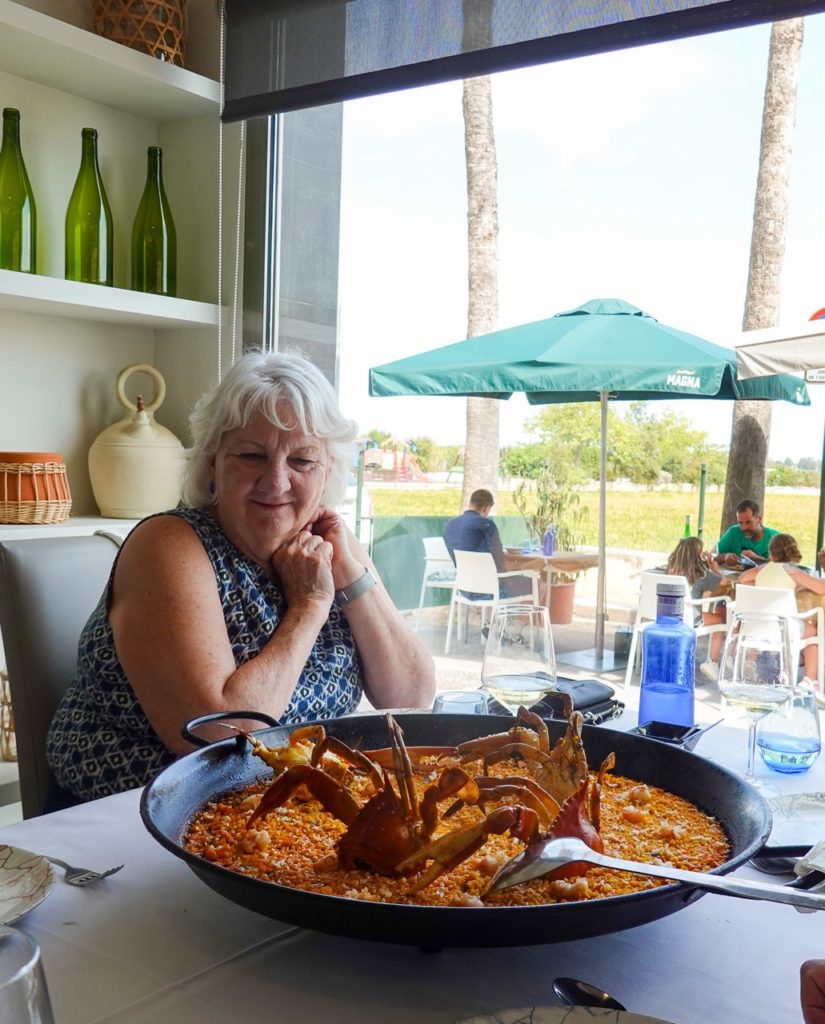
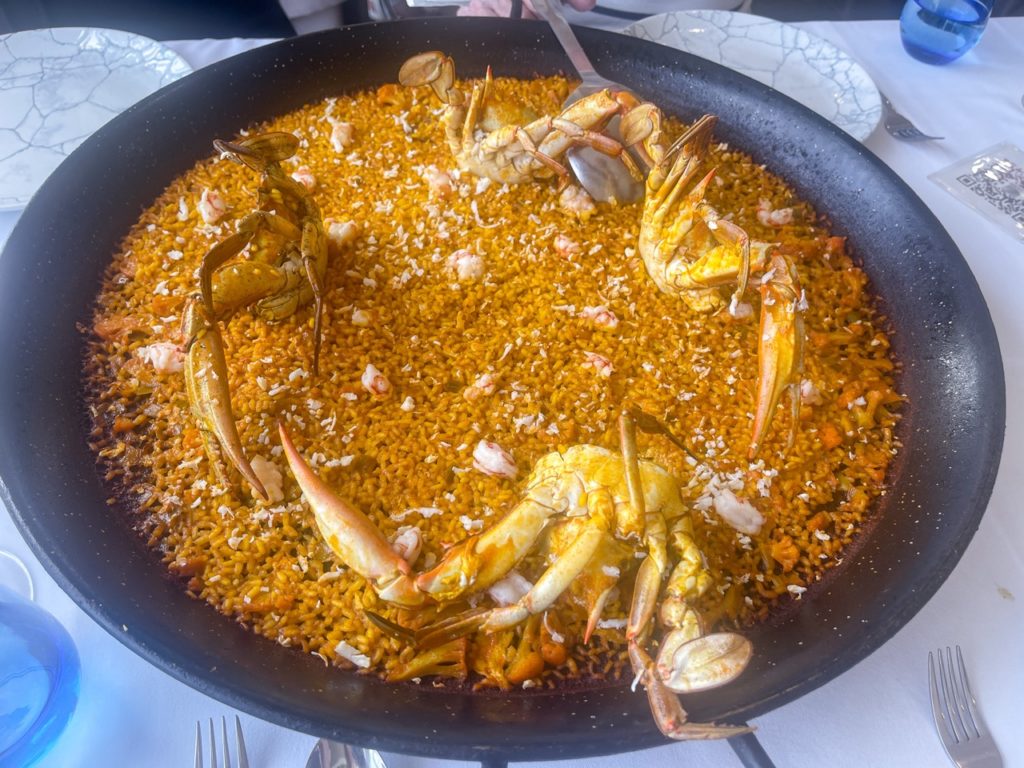
Early recipes had some variations, but true Paella Valenciana is made with chicken, rabbit, snails, green beans, and local garrofó beans (similar to lima beans). Together with a slow-cooked sofrito, saffron, and rice, this is Valencian paella in its purest form. Many Valencians insist that no more than these ingredients should go into making paella. Finally, there’s the fire and smoke. Some say the smoke is probably the most important ingredient in a paella. While seafood paella is very common (and delicious), many Valencians consider fish and shellfish to be out of the question. Being Northern Californians, we were recently tempted by a Dungeness crab paella. I know, what in the world are Dungeness crabs doing in Spain?
The Rice is Key
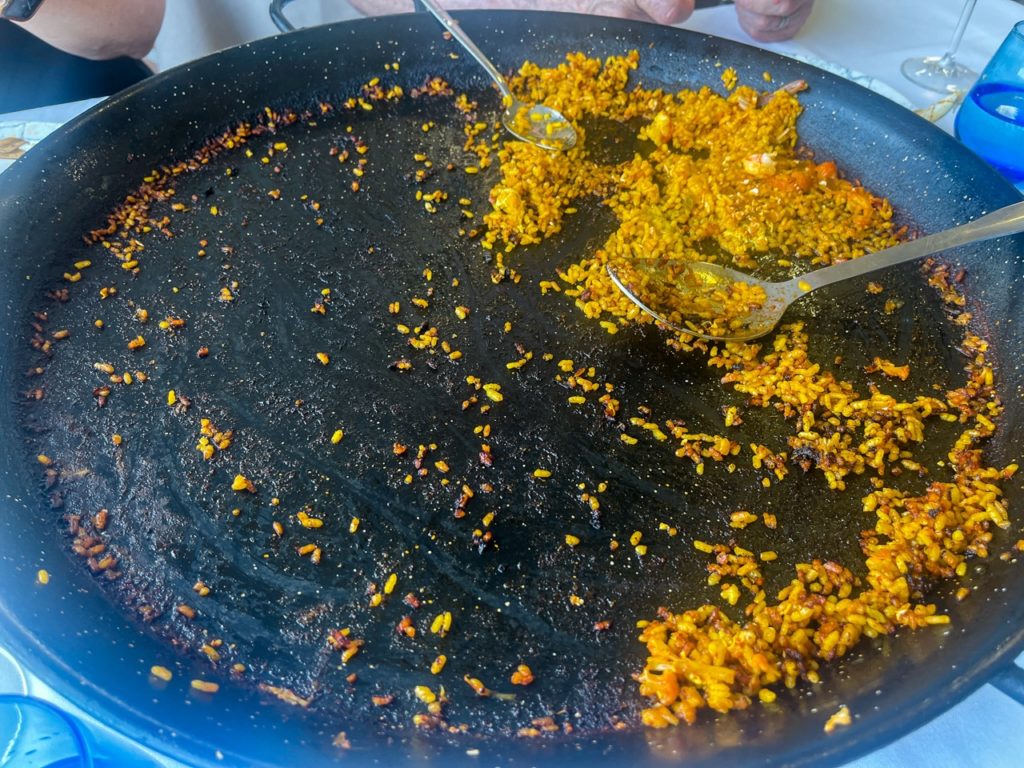
Bomba rice, introduced along the Mediterranean during the Middle Ages, is a type of pearly white short grain rice that Spaniards use exclusively in making paella. Bomba is perfect for soaking up flavors and it’s critical to “burn” or “scorch” the rice on the bottom of the pan. This is called “socarrat” and refers to the well-done caramelized crust layer that clings to the bottom of the pan.
“It means that the rice loves the paella pan, and the paella pan doesn’t want the rice to leave, and they bond together into one perfectly nice brown color — crispy, beautiful love between the rice and the paella pan.”
Chef José Andrés
Parque Natural de L’Albufera de València
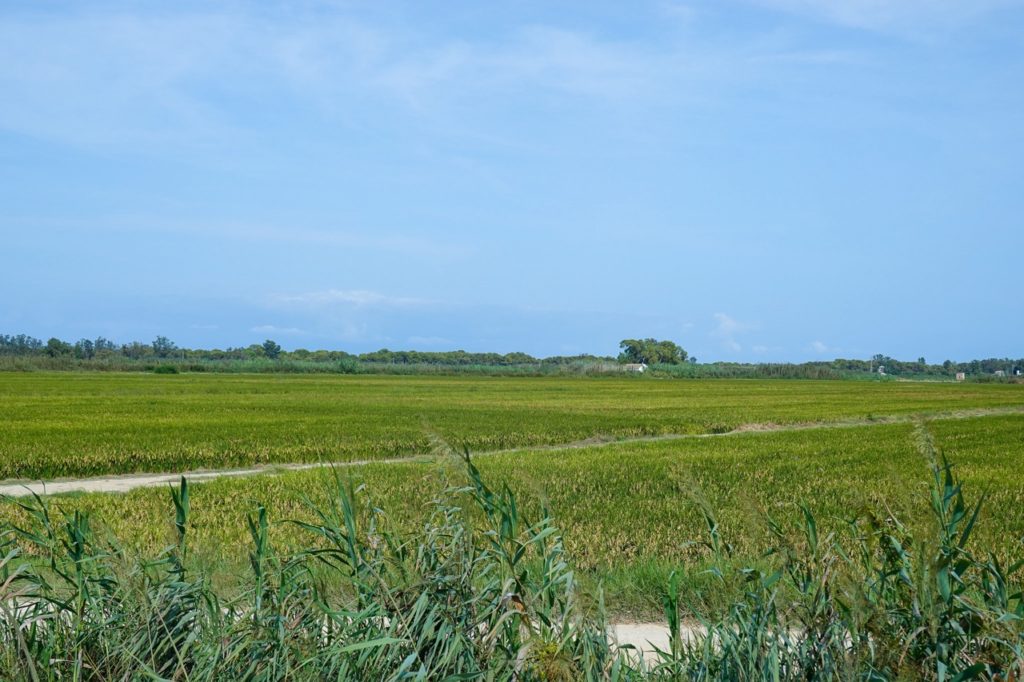
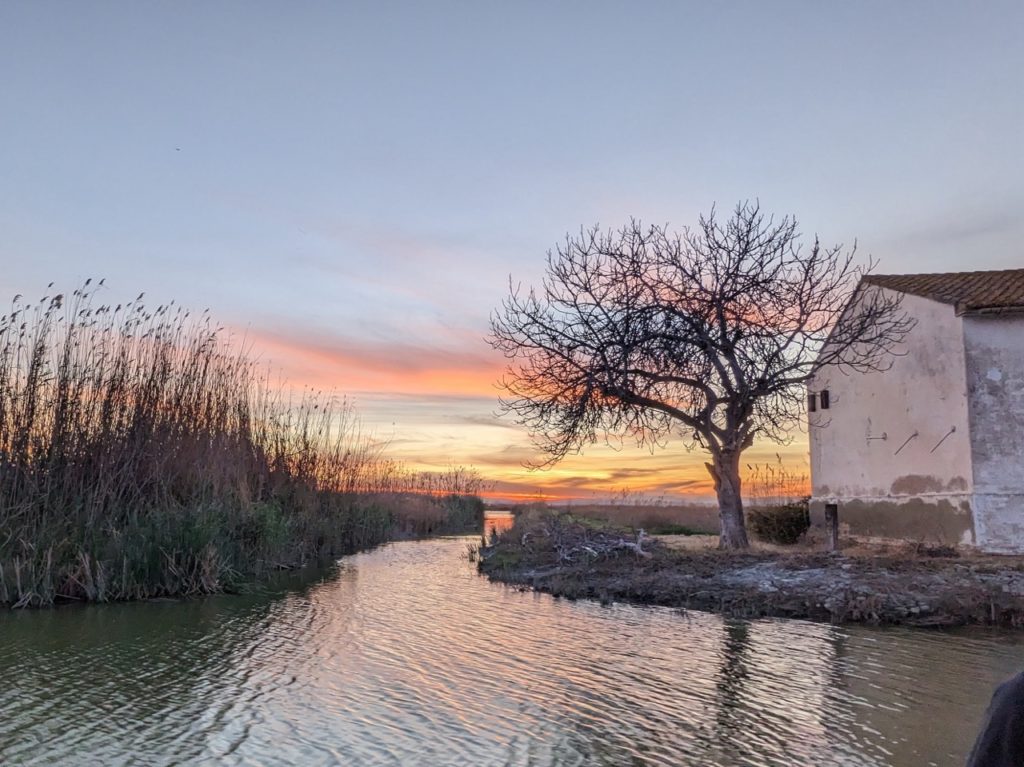
Albufera Natural Park is the true home of paella. Albufera is an Arabic word, “al-buhayra” meaning small sea and was known by the Romans as Nacarum Stagnum. One of the most important wetlands in Spain, this coastal lagoon sits between the sea and rice paddies and includes estuaries and the mouths of the Turia and Jucar rivers. Several foot and bike trails are a wonderful way to investigate the local flora, landscapes, and history. The lagoon provides shelter for up to 300 different species of birds throughout the year, especially the waterfowl that winter there, including flamingos. There are also boat tours through the waters of the lake of l’Albufera and its channels between rice fields. Located about 10 km south of the city of Valencia, it takes about 40-minutes to get there by bus from the city center.
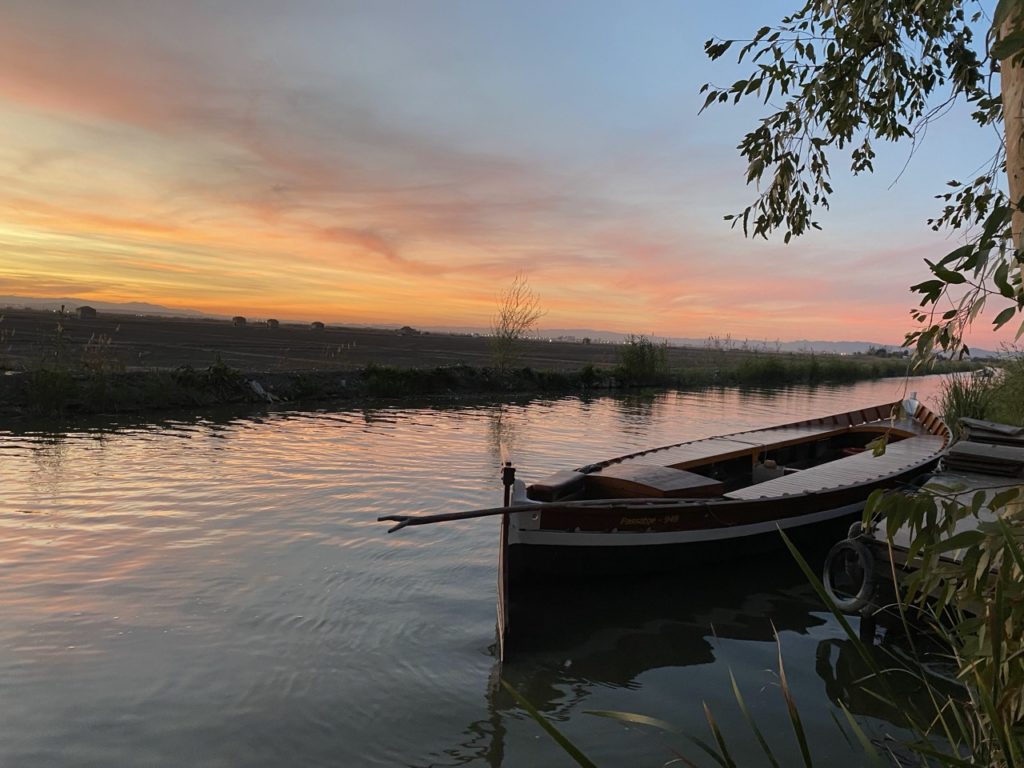
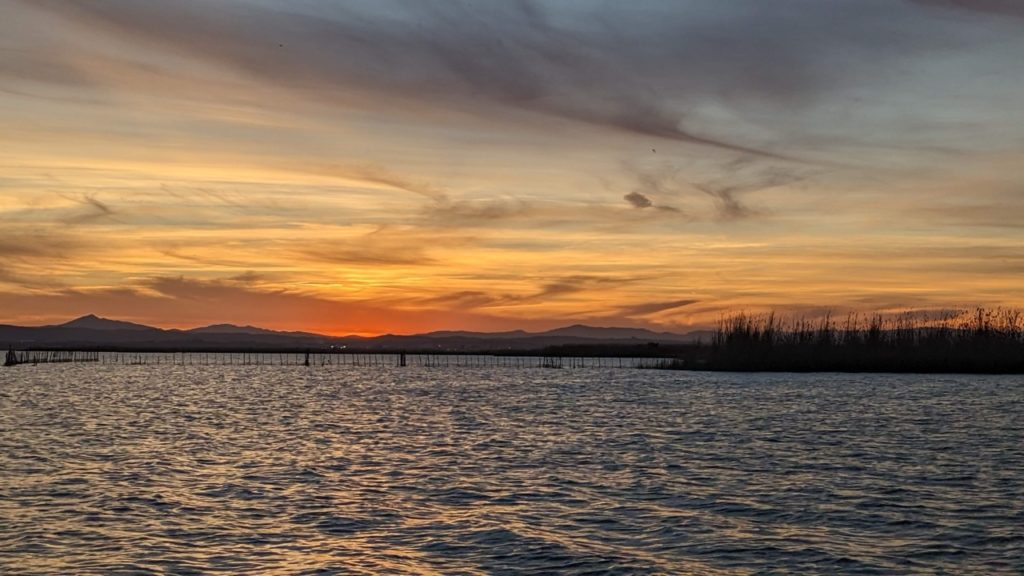
Mark and Shannon enjoyed a beautiful sunset boat ride when they visited Valencia in March 2023.
In addition to enjoying nature, there are dozens of restaurants serving paella, particularly in the small town of El Palmar. We had a wonderful time making the trek to El Palmar with our good friends, Heather and Jim.
On the Road Again Soon
Nourished by our time in Valencia, we’ll be on the road again in just a few days (September 14, to be exact). Our first stop is Tbilisi, Georgia where we’ll join a few other adventurers for a weeklong food and wine focused tour (you can read about it here: https://culinarybackstreets.com/trips/2019/harvest-time-in-the-cradle-of-wine-a-georgian-culinary-adventure-tbilisi-trip/). This was a last minute addition to the Greek Islands trip we already had on the calendar. We’d been on a waiting list for this trip and two spots opened up just before we left the U.S. It took an hour of semi-serious discussion to make the decision to go for it.
Our time in Georgia will be followed by three weeks exploring just a few of the nearly 6,000 Greek Islands. We’ll be in Crete, Santorini, Paros, Naxos, Antiparos, and 2-3 others depending on which ferry, catamaran, or sailboat we happen to hop on. This retirement thing is really working out!
Here’s the previously promised (and long awaited?) chapter on our foodie adventures in Lisbon and Porto. We hope you enjoy it. Bom Apetite!
BACALHAU
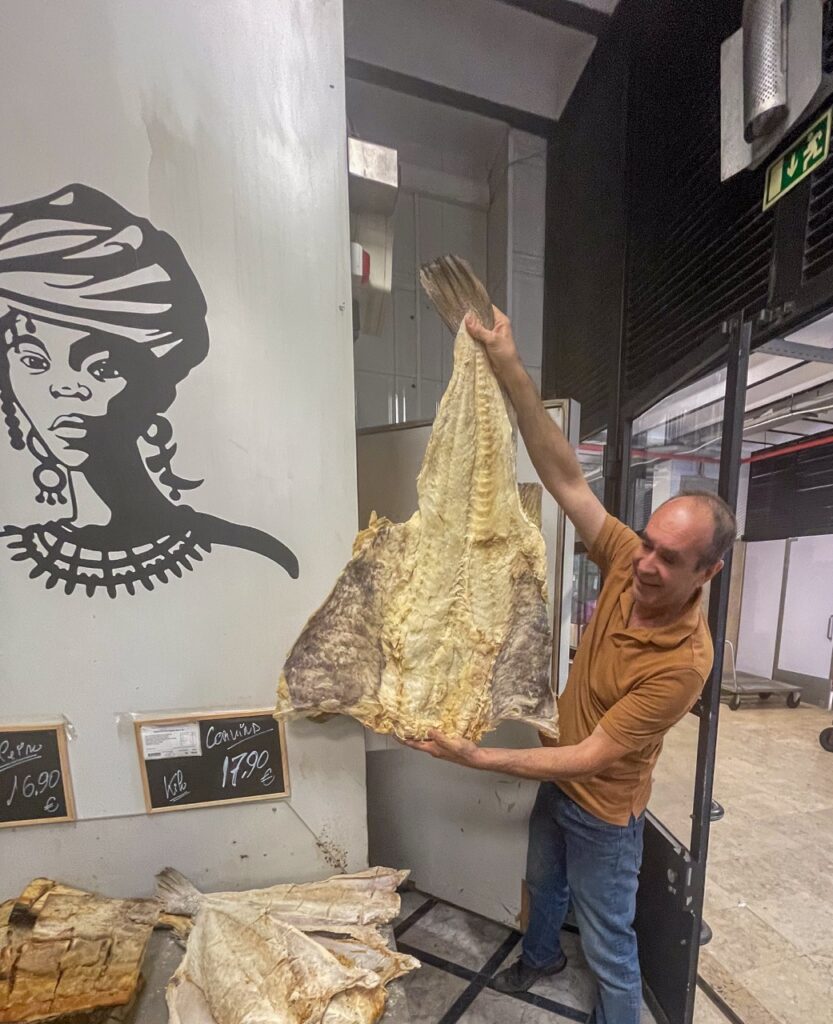
The story of Portuguese culinary traditions must begin with Codfish (Bacalhau). Cod is a big deal in Portugal. It is called “fiel amigo” (faithful friend) and I’ve read that every Portuguese restaurant has at least one dish made of codfish. (I can attest to this based on my limited sample size.) I’ve also read that 20% of all cod caught around the globe are eaten in Portugal – an average of 35 kilograms (77 pounds) per person, per year. That’s about 1 ½ pounds of cod every week!
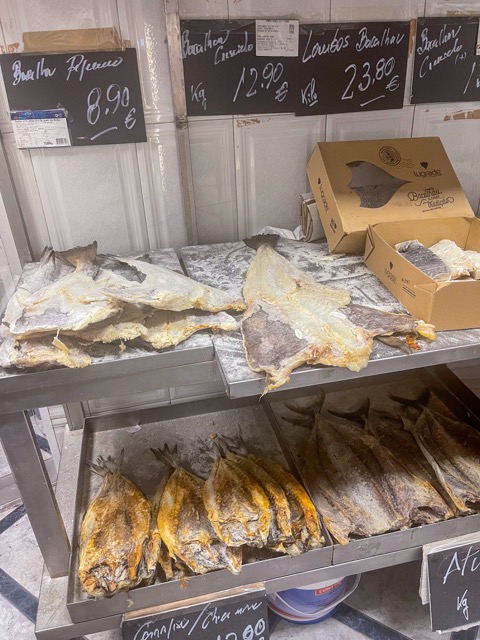
What the Portuguese call “bacalhau” is North Atlantic cod that has been salted and dried. 95% of the 77 pounds per person referenced above is in this form – salted and dried. Fresh cod is a relatively new thing in Portugal. Seems crazy, right? Here’s the story…
• There are no cod off the Portuguese coast. All the codfish eaten in Portugal is caught in the cold waters off Norway, Newfoundland, Iceland, etc.
• Portuguese have been fishing cod off the coast of Newfoundland since the sixteenth century during the Age of Discoveries.
• To preserve the cod for the long trip home, salt was used. By the time it arrived in Lisbon, it was salted, dried, plentiful, and cheap – known as “the meat of the poor.”
• The resulting bacalhau is so well preserved by the salting and drying that it will literally keep for years, making it the perfect food stuff for long sea voyages. Remember that “age of discovery” stuff? It turns out dried cod played a key role.
• To prepare it for cooking, it’s sliced into filets, washed, covered with water and/or milk and kept in the refrigerator for 2-3 days (changing the liquid every 6 hours). This soaking and rinsing re-hydrates the fish and rinses out most of the salt.
• Finally, we’re ready to cook.
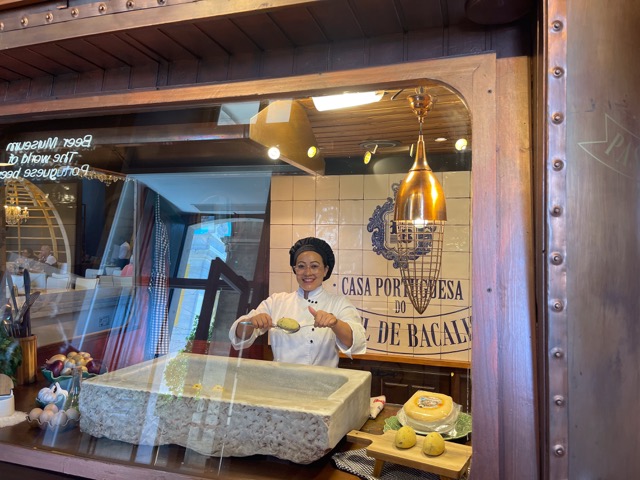
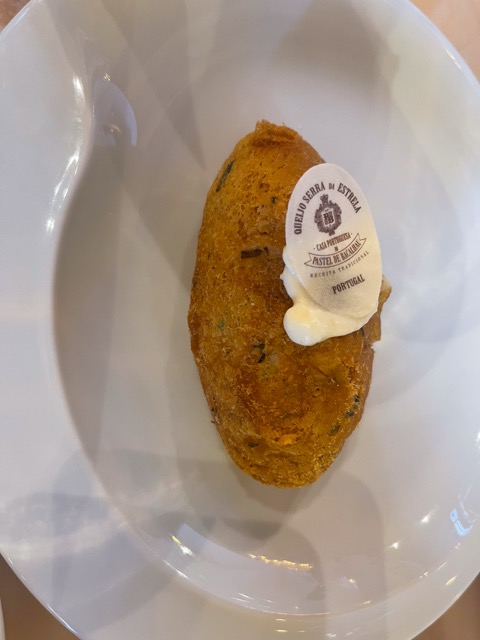
There are hundreds of recipes for cod but one of the most famous is Lisbon’s Pastéis de Bacalhau – codfish cakes. This recipe involves creating a mash by mixing the rehydrated cod fillets with potatoes, garlic, and herbs, and then forming the mash (with 2 spoons) into a special oval-ish shape before finally frying or baking them.
SARDINES!
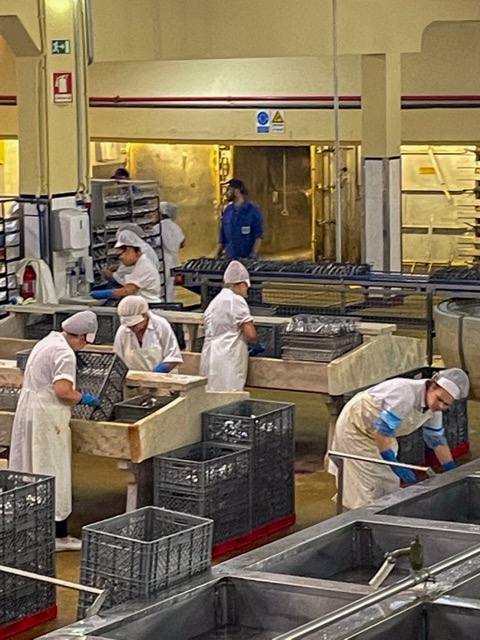
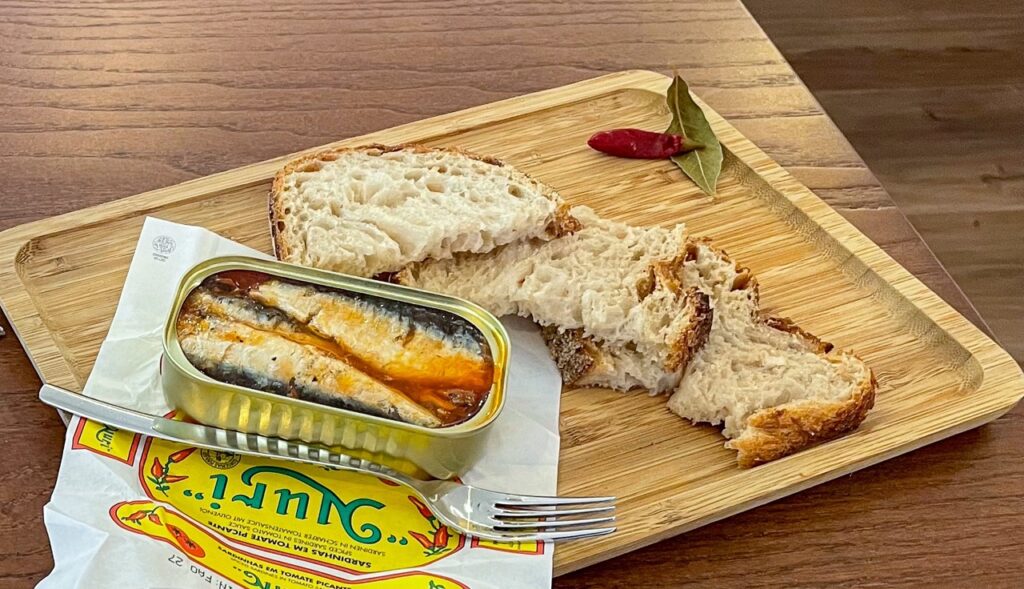
Another important preserved seafood in the Portuguese diet is Sardines (sardinha). The Portuguese LOVE their sardines and Ed has enthusiastically embraced this little fish as well. These fish are caught all along the coast of Portugal but are especially important in the Porto region. Before we left home, Ed booked a tour of a sardine factory in Porto and ordered a few tins to have at home for sampling before leaving on our trip. (I’m not so much a fan.) I didn’t join him for the sardine factory tour (giving my hip a rest), but he seemed to thoroughly enjoy this culinary adventure.
BARNACLES (that’s right, barnacles)
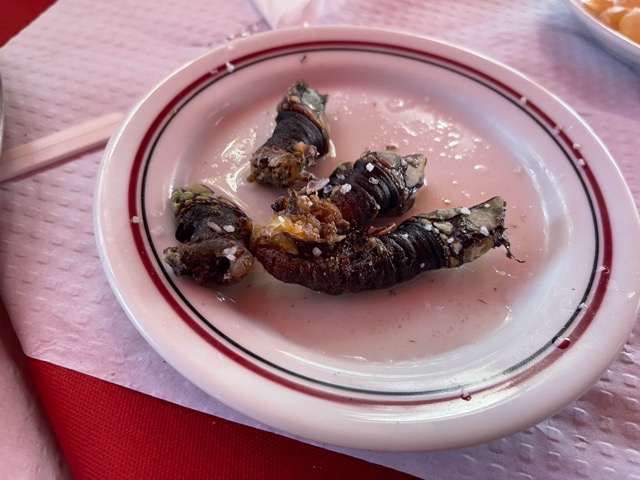
Goose Barnacles (cracas de ganso). It’s true, sardines are not so exotic. But have you tried barnacles? Goose Barnacles are an expensive treat in Portugal. These little treasures are a claw-shaped crustacean that live attached to rocks in the ocean. Eating them means fully enjoying the flavor of the sea. They’re expensive because harvesting them is a risky business because that involves using ropes to climb down rocks and cliffs while the waves of the North Atlantic are crashing about. It’s all worth it because not only are they delicious (so say the Portuguese and Spanish), but they are incredibly good for you – low fat and cholesterol content and zero carbohydrates. The perfect diet food! They’re fully cooked and filled with juices inside. When you open a goose barnacle, you might even splash yourself.
HAMBURGERS
After several days of eating so much delicious seafood, we decided it was time for a hamburger! We found a charming little restaurant in Lisbon called “To. B” which is short for “To Burger or Not to Burger.” In addition to the owners being wonderfully friendly and interesting, the burgers were absolutely delicious! Carlos, the owner, proudly told us that that, all the beef comes from the Azores where the cows are fed on the lush grasses of the island. This wasn’t the first time someone mentioned “The Azores” to us, so we made a note to learn more about this place (an archipelago of nine islands in the middle of the North Atlantic – just a 2 ½ flight from Lisbon). It turns out that the highest quality dairy products are made with milk from the Azores, also because of the wonderful quality of the island grasses the cows graze on.
Carlos grinds the meat fresh every day. We were enjoying our burgers so much that we forgot to take a photo! Want to meet us in the Azores someday?
SANDWICHES
In addition to fish, the Portuguese also love sandwiches. These are some of the favorites that we had a chance to sample.
Francesinha
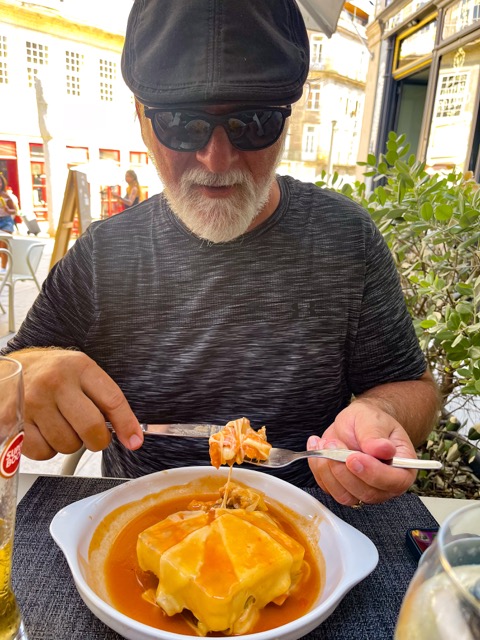
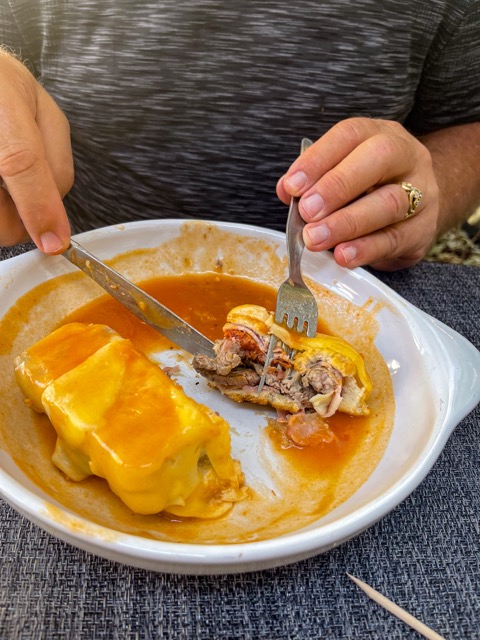
Wow! What sandwich! Order a Francesinha and here’s what you’ll get: thick slices of white loaf bread layered with ham, sausage, and steak. The whole thing is wrapped in melted cheese and then put swimming in a slightly spicy beer and tomato sauce. It’s usually served with French fries and often has a fried egg on top. A carnivore’s delight! Ed ordered a Francesinha at a late lunch on our last day in Porto and he had no desire to eat another bite until the next day.
Bifana
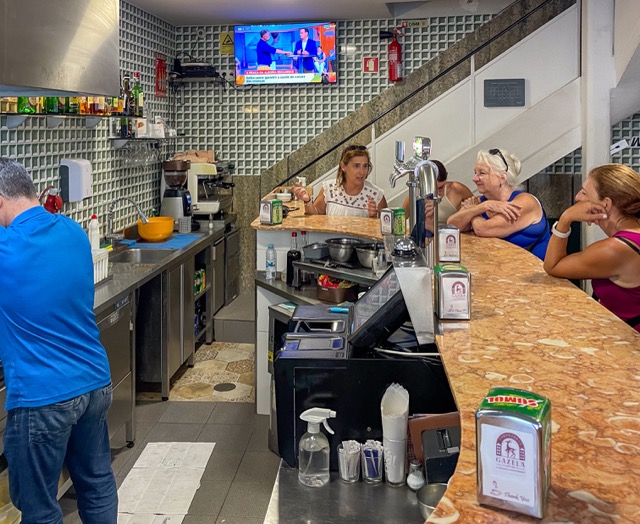
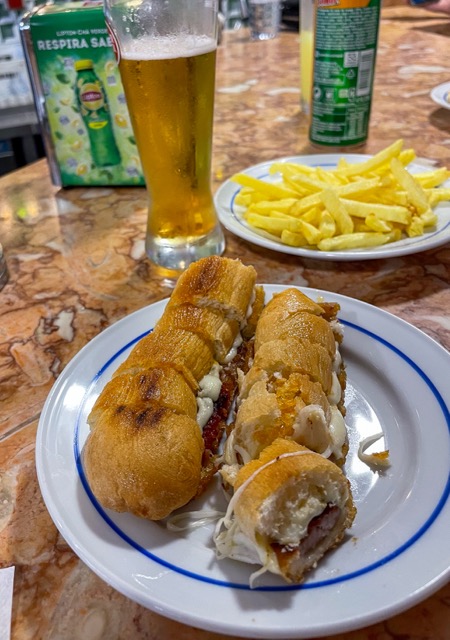
While Ed was eating his Francesinha, I had a wonderful piece of grilled sea bass. So, I did have a desire to eat again that day and a Bifana was on the top of my list. We arrived at an off-the-tourist-beaten path about 10PM on Friday night and joined the long line of locals at the door. A Bifana sandwich is basically bread and slices of pork. I know that doesn’t sound particularly unique or interesting, but it’s delicious and worth the wait. The thinly sliced meat is cooked by immersing it into a just simmering sauce with various spices and secret ingredients that vary from chef to chef. After waiting in line for about 30 minutes, we figured out that we didn’t need to wait for a table but could stand at the counter for our Bifana experience – also pairs nicely with beer!
Puppies (aka Hot Dogs)
Portuguese Hot Dog (Cachorros). In Porto, hotdogs are not what you think. Cachorros (translation is “puppies”) are made with a thin sausage brushed with butter and cooked on a sort of panini grill, then placed on a thin French roll, cheese is added, and then another generous brush of butter before grilling again, with more butter. Just before serving, they are brushed with a another secret spicy sauce and cut into small pieces. Did I mention they use a lot of butter? Wow are they good!
Gazela is the name of the cachorros shop where we stopped on our Culinary Backstreets walking tour. We got there about 15 minutes before they opened and soon after a line started to form. We were the first in the door and took six of the 12 seats and the U-shaped bar. The staff were very friendly and told us about a regular customer who eats four of these hot dogs every day. Yikes! A signed photo of Anthony Bourdain on the wall attests to how wonderful these little puppies are.
LOVING PORK
Black Pork (Porco Preto). The Portuguese love their pork, and the most highly regarded is porco preto. It’s called black pork because the pigs are a gray to black (and sometimes red) skin color. These little piggies gorge themselves on acorns from oak trees that give the meat a sort of nutty flavor. While this pork is higher in fat than many other pigs, the Portuguese insist that its actually healthier than other pork, because of the acorn-only diet. (Something to do with the idea that acorn fat is similar in chemistry to olive oil.) So, it seems this is heart-healthy pork. Hmmm. No photos to share, but black pork is also very popular in Spain, so we still have time to sample and snap some shots.
ARE YOU READY FOR DESSERT?
Pastéis de Nata
Wow! These little pastries are SO delicious. Pastéis de nata are a traditional Portuguese pastry that consist of a flacky, buttery shell with a filling of rich yellow custard. The top of the custard is caramelized, and once out of the oven, they’re dusted with cinnamon and powdered sugar. Like I said, DELICIOUS! While they have just a few ingredients and look pretty simple, apparently they take a bit of experience and effort to get right. (I’m pretty sure Ed can figure this out!) They are ubiquitous in both Lisbon and Porto and can be found warm from the oven at any time of day.
These little treasures were invented – or at least perfected – in the Belém area of Lisbon. As the story goes, the monks at the Jerónimos Monastery in Belém were the first to make and distribute the iconic egg tarts. Egg whites were used in the convents and monasteries to starch clothing such as the nun’s habits which meant they were tons of unused egg yolks. Instead of wasting them, they often used them to make cakes and pastries.
OPORTO
Of course, no trip to Porto is complete without imbibing in some Oporto – that most delicious fortified wine from Portugal’s Douro Valley. There are several port wine cellars located in Vila Nova de Gaia, just across the Douro River from the city of Porto. Tastings of different styles of port wine, often including Ruby, Tawny, and White ports was delightful!
The Douro River Valley…an amazing place to grow grapes!