
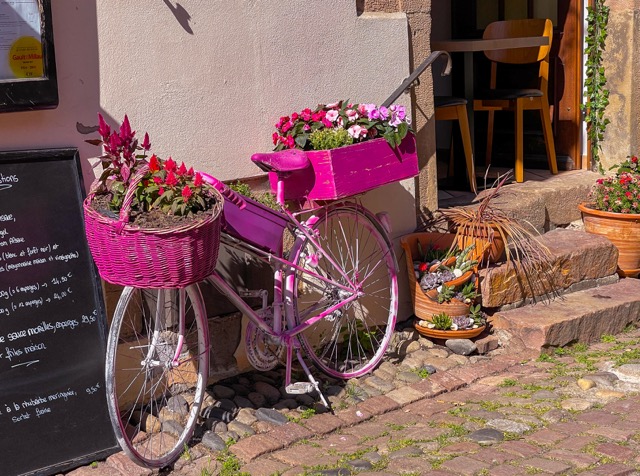
. . . Ahlz-sahss Loor-rahn . . . Simply pronouncing the name conjures visions of fairytale castles, enchanted forests, lush valleys, gently flowing rivers, and idyllic vineyards. When Mark & Shannon announced that they would be spending several months teaching in Mainz, Germany, a visit to the nearby Alsace-Lorraine region of France suddenly rose to the top of the list!
France meets Germany
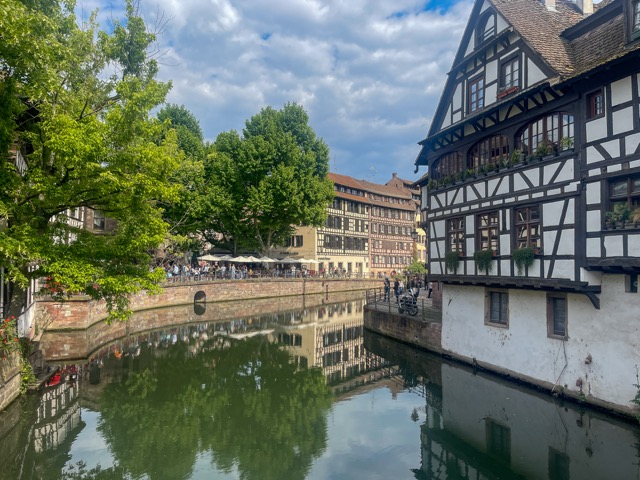
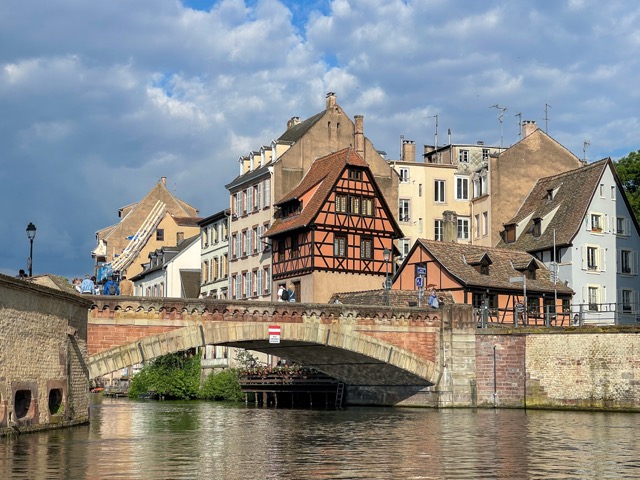
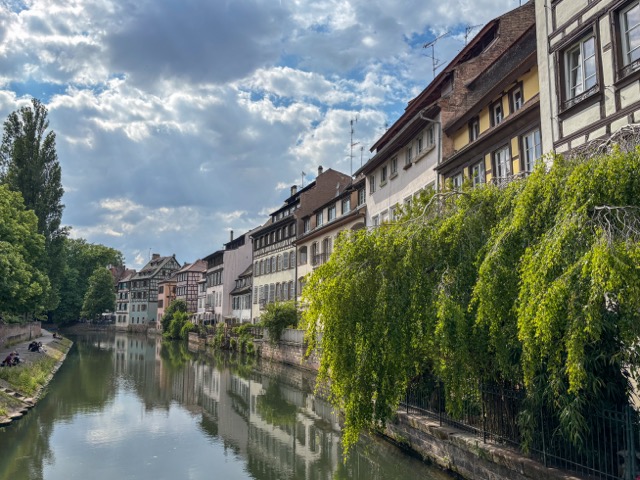
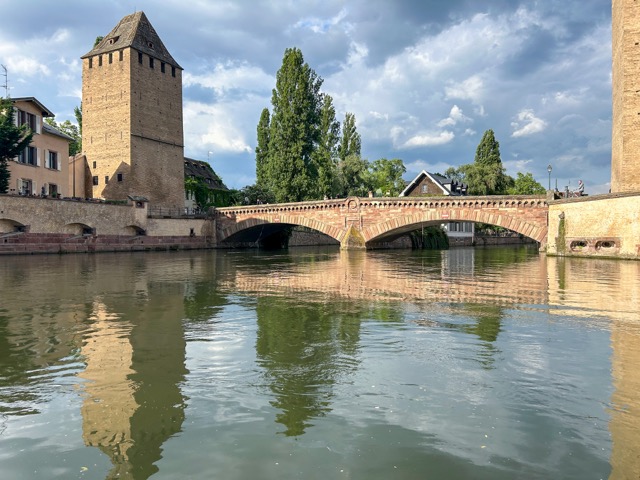
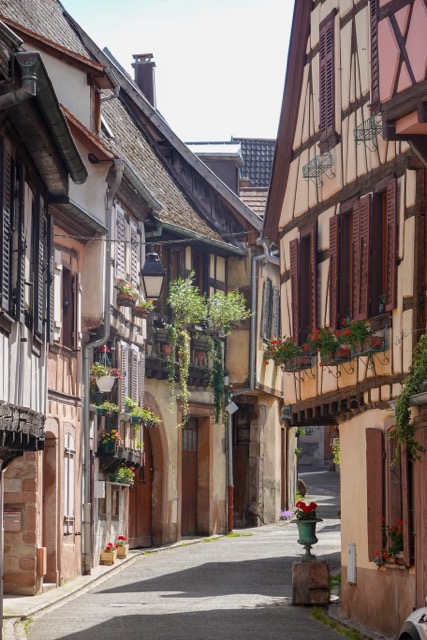
Geographically, Alsace occupies a long, narrow plain that lies between the Vosges Mountains on the west, and the Rhine River to the East, also defining the border between France and Germany. A tributary of the Rhine (the Ill River) flows around the center of Strasbourg forming the Grande Île (Large Island) that is the historic heart of the largest city and economic hub of Alsace. Strasbourg was designated a UNESCO World Heritage site in 1988, the first entire city center in France to receive the honor. It’s easy to see why. As the seat of the European Parliament, it is alive with the present yet rooted in history. During our visit the word “charming” was repeated over and over. It’s like finding yourself in a fairytale with timber-framed houses, winding canals, cobblestone streets, and sidewalk cafes at every turn. It’s a magical confluence of French elegance and German tradition.
High Church
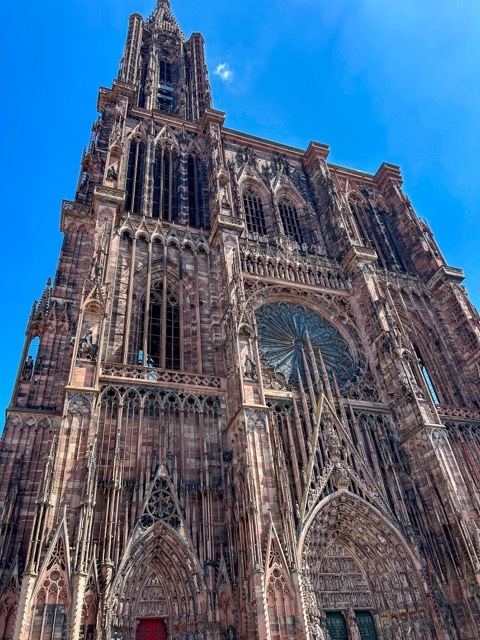
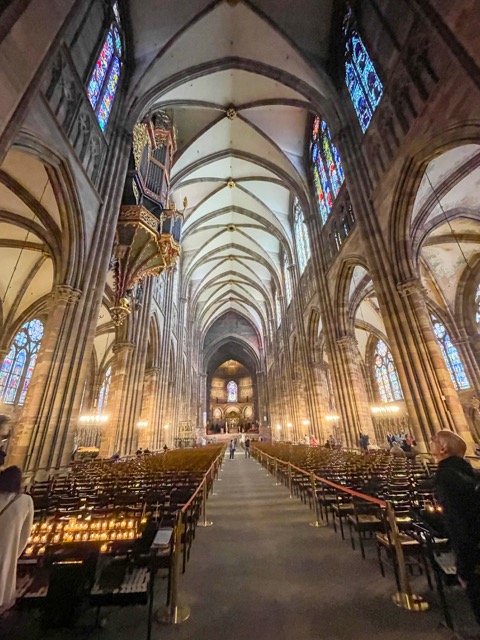
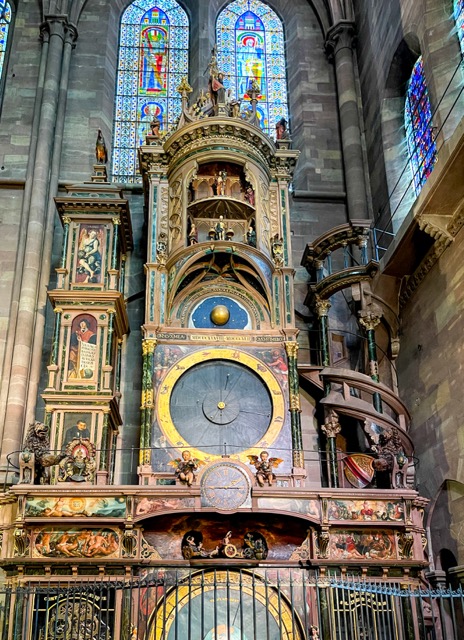
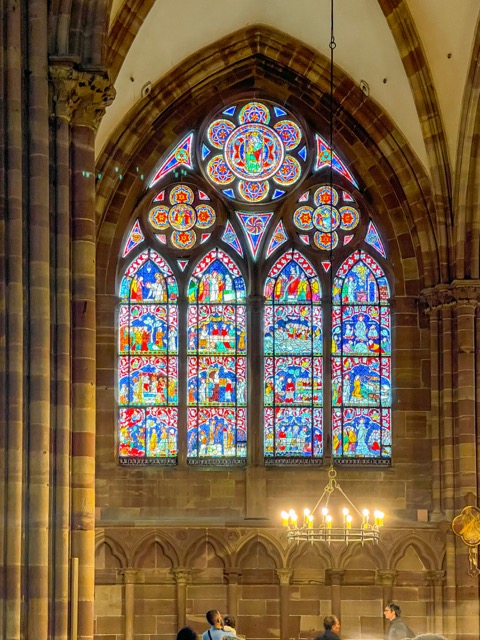
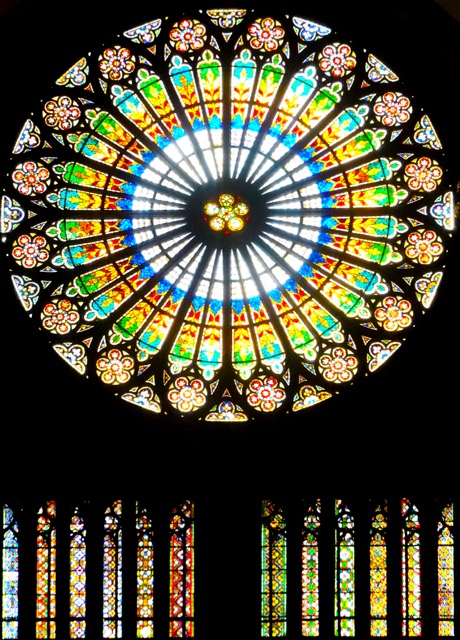
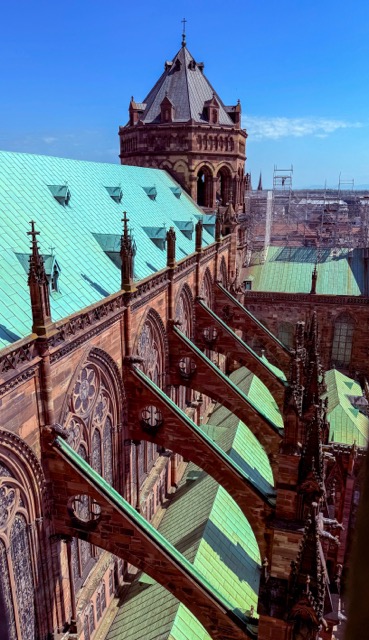
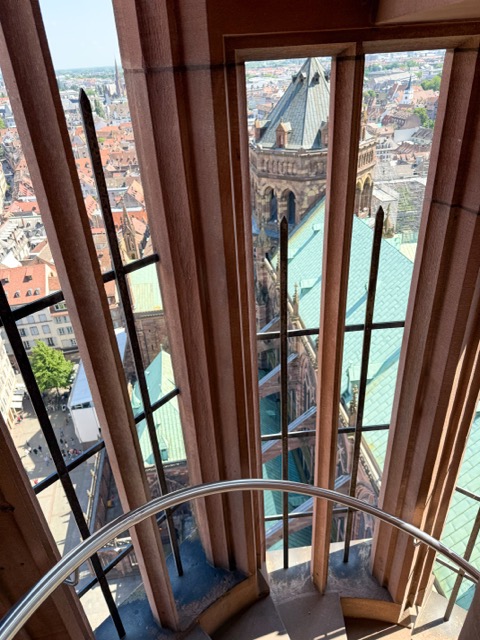
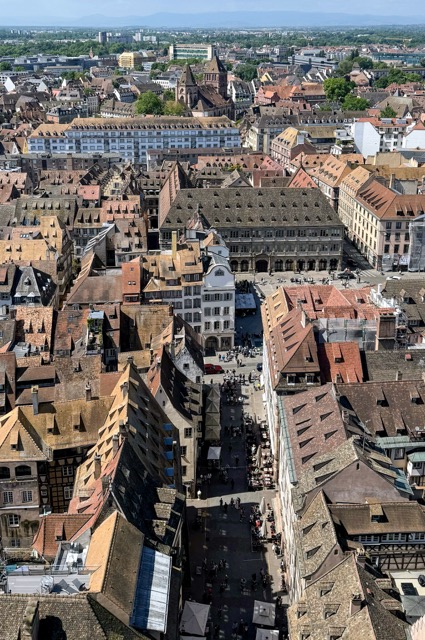
At the heart of this fairytale land sits a masterpiece of High Gothic architecture – the Cathédral Notre-Dame de Strasbourg. Intricate stone carvings, enormous stained-glass windows, a spire that can be seen for miles, and an amazing astronomical clock all feature in this great construction. The exterior sandstone, sourced from the nearby Vosges Mountains, renders the cathedral an attractive reddish-brown tone that has a gentle, comforting appeal. The interior is dazzling. Slender ribs soar upward and outline an impossible quantity of stained-glass windows sparkling with intricate designs in brilliantly saturated colors. Among the great achievements of our visit was Mark and Shannon’s ascent of the tower’s 332 steps to take in the panoramic views from the church’s roof – the web of narrow medieval streets and picturesque squares radiating out from the cathedral square far below.
A Fowl Waterway
Wherever we find ourselves, Ed looks for ways to be on the water. So, it didn’t surprise any of us to learn that he had booked a boat rental. We’re talking a small electric boat that you drive yourself around Strasbourg’s Ill River. When we arrived at the dock, we were given two options for our route: cityscapes or nature. Ed and I had been on a one-hour (touristy) river cruise the day before Mark and Shannon arrived and we were eager for them to see Strasbourg’s architecture from the river, especially the impressive European Parliament building. But the nature route proved too difficult to refuse when we were told we’d see animals. Indeed! It turned out to be quite the birdwatching adventure. Shannon is a bird enthusiast and was a great guide.
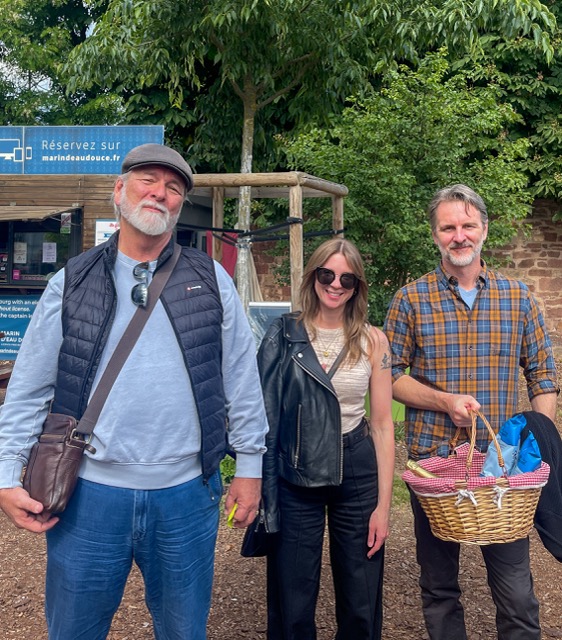
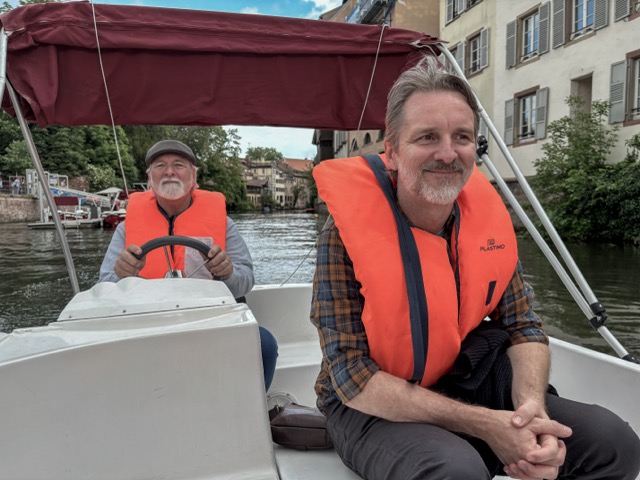
Within in few minutes from leaving the dock, a swan and her nine chicks were swimming across the river just in front of our boat. Ed was at the helm, and we all hollered at him to stop. When we were very close to the swans (a near collision), the parent began hissing in displeasure. This species of swan, the Mute Swan, is one of the most aggressive in the world. They are particularly belligerent in defense of their nests and the cygnets. They start with loud hissing, then strike using the spurs on the wings or bite with their formidable beak. Fortunately, the boat protected us from being struck, but it was very clear that she found our close proximity to be an unacceptable violation of her space!
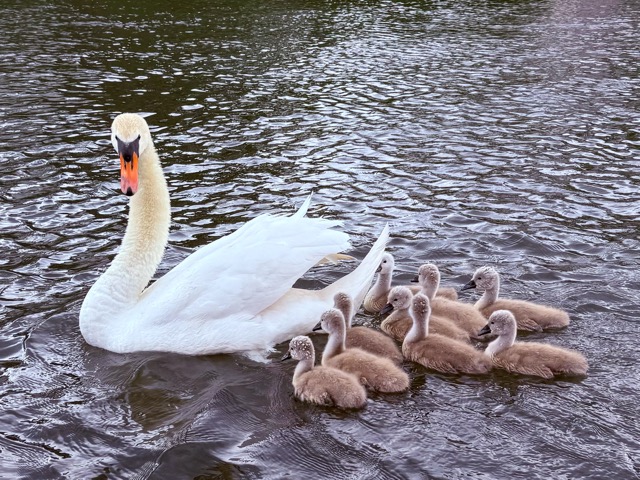
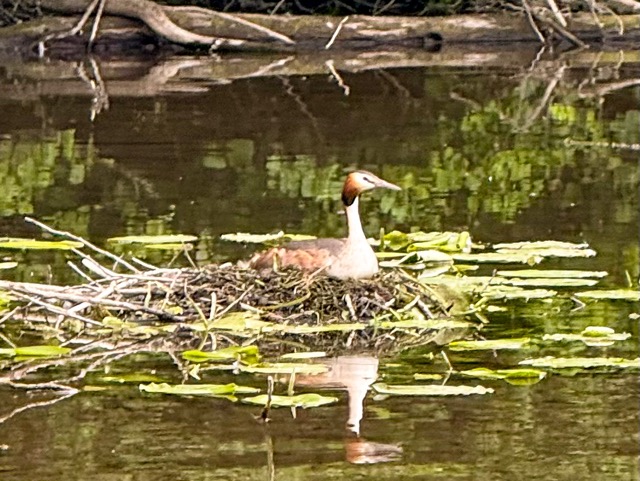
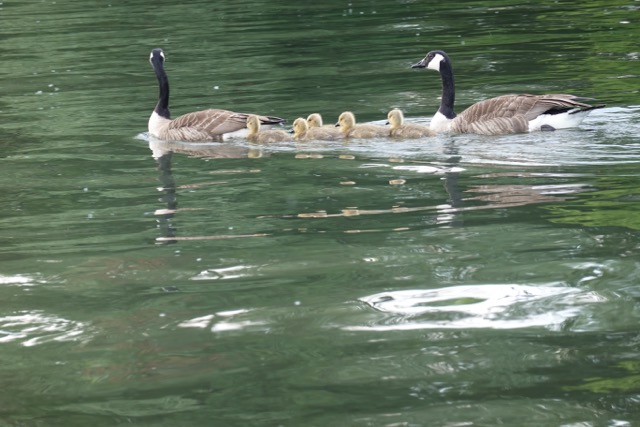
The were many more bird sitings over the next two hours: Great Heron, Great Gray Grebe (nesting), Egyptian Geese (with chicks), Canada Geese, Mallard Ducks, Cormorant, Carrion Crow, Mud Hens, and Kingfishers. When we had reached the limit of our journey, Ed turned the helm over to Mark to steer us safely back to the dock. There was some melancholy that our nature experience extraordinaire was over.
A Long & Winey Road
The Alsace region is synonymous with crisp, fresh, dry white wine. A day spent wandering through the vineyards and sampling this tradition was, of course, essential to our visit. Nestled between the Vosges Mountains and the Rhine River, the Route des Vins d’Alsace (Alsatian Wine Route), is 170 kilometers (105 miles) that winds through more than 70 wine producing medieval villages, vineyards, and beautiful countryside.
The Stately Birds of Alsace
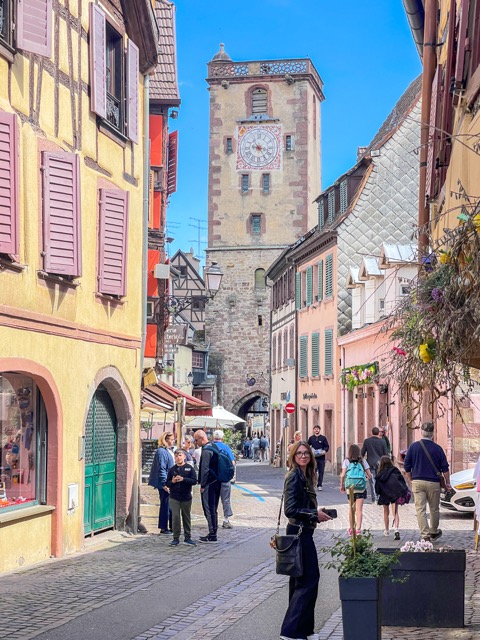
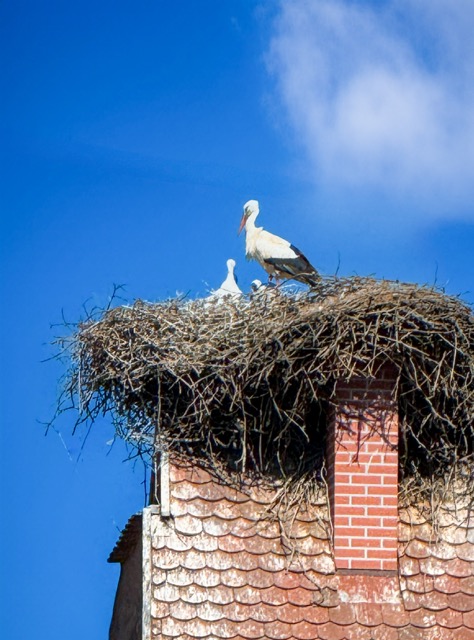
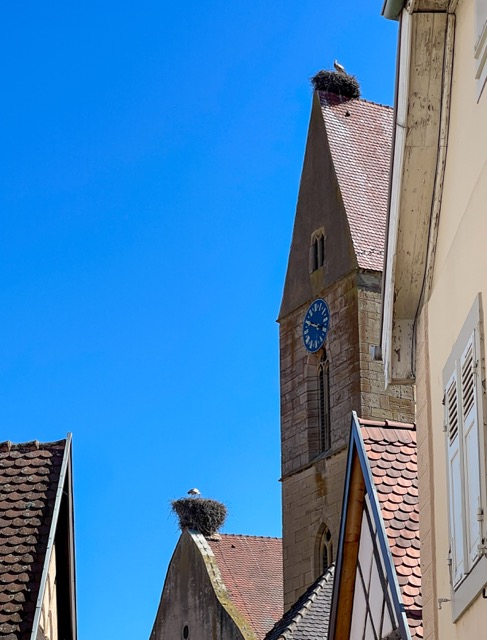
We started our wine tasting adventure in the small, picturesque village of Equisheim, about an hour’s drive from Strasbourg. After parking the car, we started the short walk to the first winery of the day. Within a minute or two, we spotted a large white bird in a giant nest on the top of the church spire. A quick internet check told us we were looking at a stork and another glance at the nest revealed that baby storks were being fed as we watched from far below. In a moment or two, we were delighted to spot another giant nest with a stork atop. It turns out almost every village in Alsace has stork nests on rooftops and church towers. These Mute Storks migrate from Africa to spend the hot spring and summer months in Europe, nesting and raising their chicks. They mate for life and return to the same nest every year, generation after generation. Like the groundhog in the U.S., storks are seen as oracles by local farmers. An abundance of storks signifies a good harvest to come.
Legend and Myth
Alsatians believe that a nest on top of their home will bring good fortune, so it is common to have steel baskets installed for the storks to use as secure nesting sites at the peak of steep roofs. We were delighted to see many more of these majestic birds sitting gracefully and proud on their nests. A few times, we saw a stork silently gliding on the wind above us with their distinctive long red beaks and black-tipped wings making them easy to identify. Mute from birth, storks communicate by body language and clapping their beaks.
There is an Alsatian folktale that dates to 817 CE about why the storks are mute. It seems Louis the Pious, Emperor of the Carolingian Empire, concerned for the future, had carefully created a plan to divide his land among his three sons. The plan was upended when his first wife died, and he took a second wife who soon had a son of her own. When Louis began trying to squeeze this newest heir into the succession plans, the empire fell into civil war with each heir accusing the others of treachery. The peaceful storks observing the devastation and bloodshed that followed were horrified and traumatized. It is said that their beaks and feet were stained by the blood that covered the land. In a display of mourning, they dipped their wing tips in black and took vows of silence. And so, the storks have remained mute ever since in protest of the barbarism of humanity.
There is a Quiet Place . . .
There are moments in travel that feel like a postcard you never want to end. A leisurely lunch in a quiet garden is one of those moments. Mark, Shannon and I knew Ed had arranged for us to have lunch at Maison Hélene Huttard, an award-winning winery in Ribeauville, but had no idea what we might expect. When we arrived at the winery, our host led us to a charming table set just for us with china and crystal in their private garden. Surrounded by a bucolic landscape of grape vines, warmed by the sun, a gentle breeze swaying the irises arrayed in the garden around us, we enjoyed the contents of three large picnic hampers. We started with a wonderful salad of spring vegetables topped with burrata cheese and a light dijon dressing paired with a crisp, cold Crémant (Alsace’s sparkling wine). Our second course was poached chicken breast and vegetables in a rich tuna basil sauce, paired with a minerally, dry Riesling. Finally, we made our way through an Alsatian tart with fresh local strawberries. We could have spent the rest of the day in that wonderful idle except that Ed had booked several more picture-book locales for our wine tasting pleasure. Before moving on, however, we stopped to purchase a few bottles to be sent home, hopeful of rekindling the moment again someday soon.
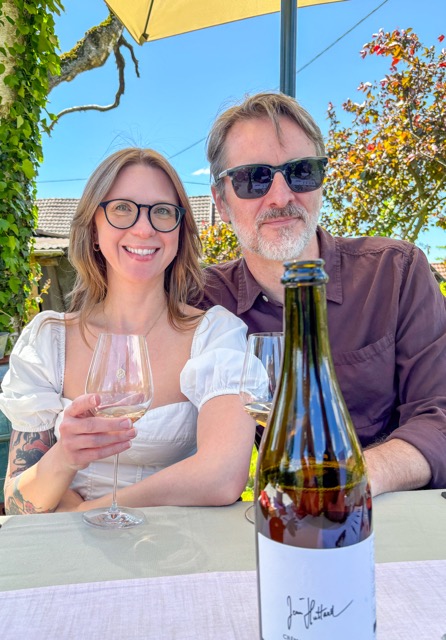
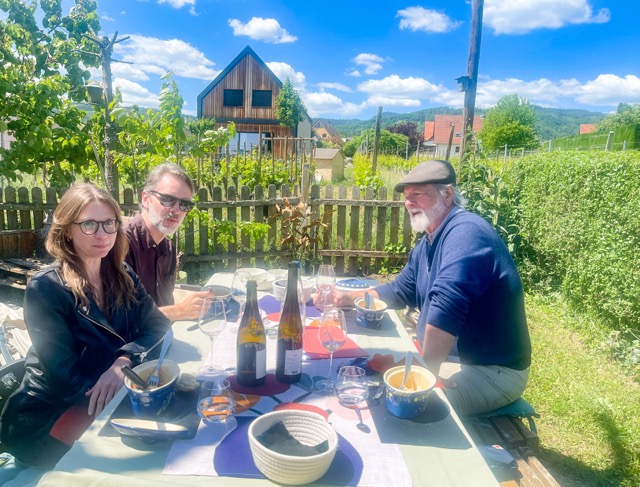
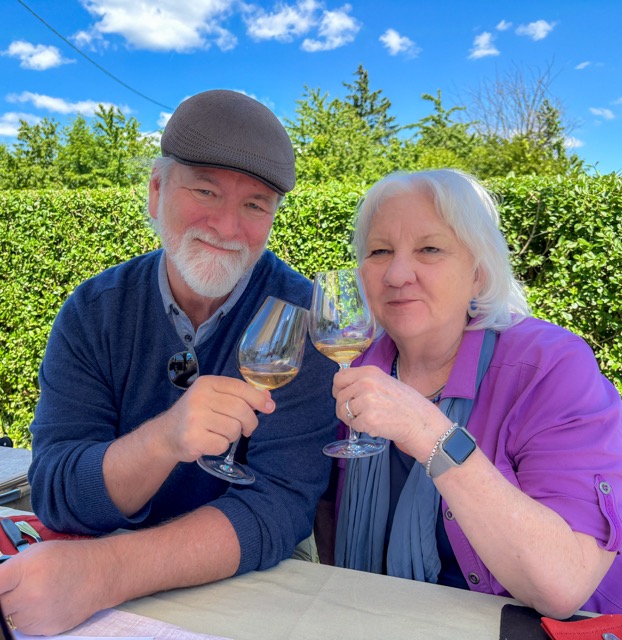
More than just a meal, our garden lunch at Maison Hélene Huttard was a pause, a deep inhalation of life, and a reminder that sometimes the finest experiences happen not in grand restaurants, but in quiet gardens, with good wine, good food, and a sense of place you never want to leave.
Castles in the sky
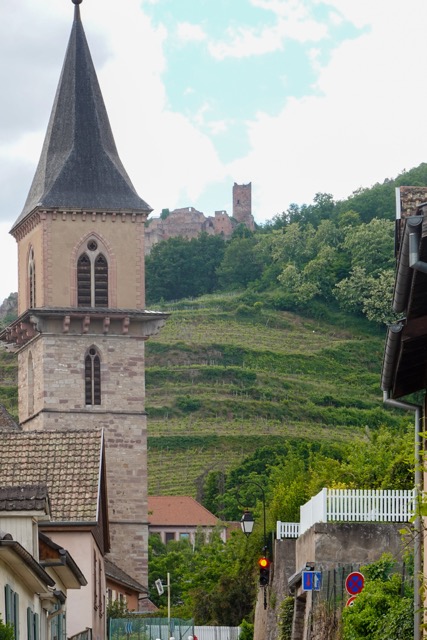
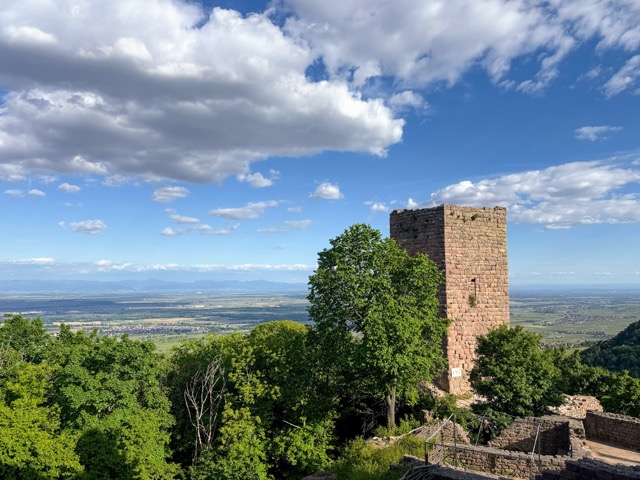
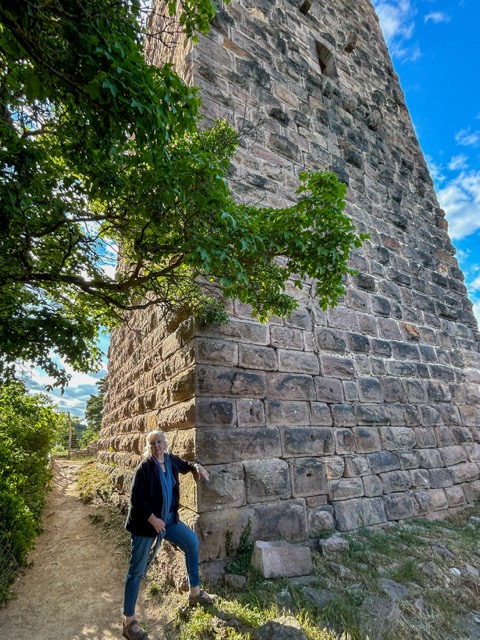
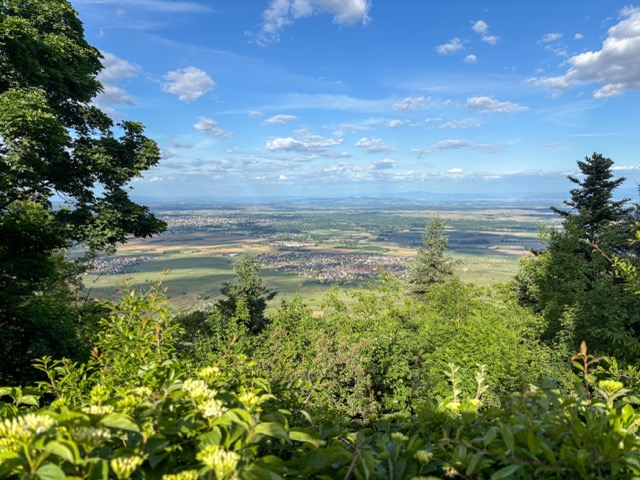
At the next tasting, and a walk around the village of Ribeauville, we noticed a castle on a nearby hill. We wandered about trying to get a good angle to photograph the castle, which turned out to be challenging. So, we decided to drive up the hill for a closer look. As we were pulling out of the winery parking lot, the owner called out to us to offer directions for getting out of the village. When I explained that we were planning to drive to the castle, he exclaimed, “Oh Madame, that is not possible!” It turns out there are no roads to this castle ruin and the hike would be a very vigorous three hours. Having now caught the old castle bug, a quick internet search for some other castle that we might be able to drive to, revealed the Route des Cinq Châteaux (Five Castle Road). This is a scenic drive through the stunning foothills of the Vosges mountains, with stops at five medieval castles – some well preserved, others in ruins. Carpe diem! We decided to forgo our last wine tasting and take on the castle drive instead. It was mid-afternoon and we had an 8PM dinner reservation in Strasbourg. So, after some more deliberation, we determined that our adventure could include just one stop for a castle. We chose a location high above the town of Eguisheim. It turned out to be three castles in one – The Three Castles of Eguisheim. The largest, Wahlenbourg castle, built in 1006, is perched on a rocky outcrop with breathtaking views of vineyards, forests, and rolling hills of the Alsace plain.
So, About the Wine – Ed’s report
This seems to be happening with regularity, now. One of the factors that gets heavily weighted in our decisions about where to travel is the fame of a region’s wines. So it was with Alsace. Just the thought of all those wonderful Rieslings makes my mouth water. Visiting the region’s best wineries and tasting their best wines was a top priority for me. However, once the trip is underway, the stories, beauty, charm, people, and culture all overtake fine wine as a priority. Or perhaps the wine is simply entwined with, and enriches, all these things. In any case, I did love the Riesling.
Several things caught my attention regarding the Alsace wine industry. First, despite the majority of the wineries existing as small holdings with relatively limited production, this is not farm wine. These are sophisticated, state-of-the-art operations with the latest equipment and technology. The second thing that surprised me was the varietal wines. Nearly every winery produces all six of the white grapes commonly grown here as varietal bottlings – i.e., a Pinot Blanc is called Pinot Blanc on the label. This is in stark contrast to the rest of France where, for example, a white wine from Burgundy may contain 100% Chardonay, but will be called Chablis on the label. Riesling, Gewurztraminer, Pinot Blanc, Pinot Gris, Sylvaner, and Auxerrois Blanc are all grown and bottled in significant quantities. I was startled by this diversity and failed to give anywhere near enough attention to the all of this bounty. It’s clear that a return trip will be required.
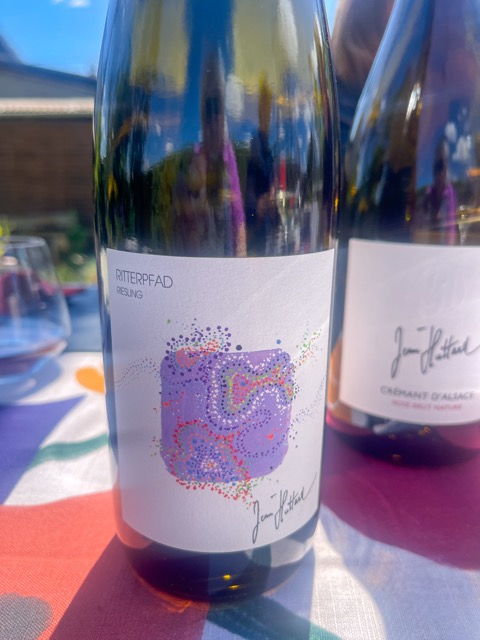
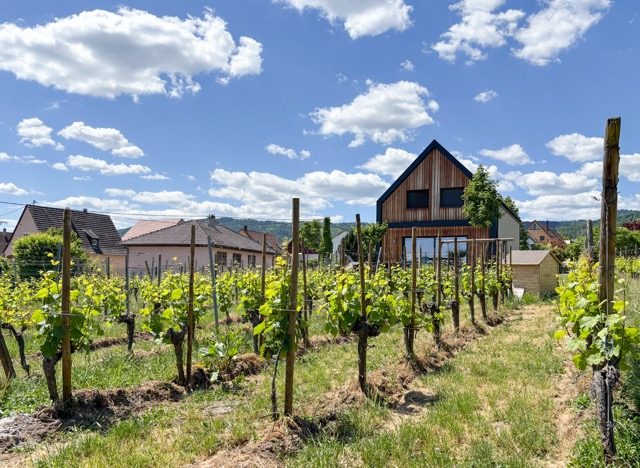
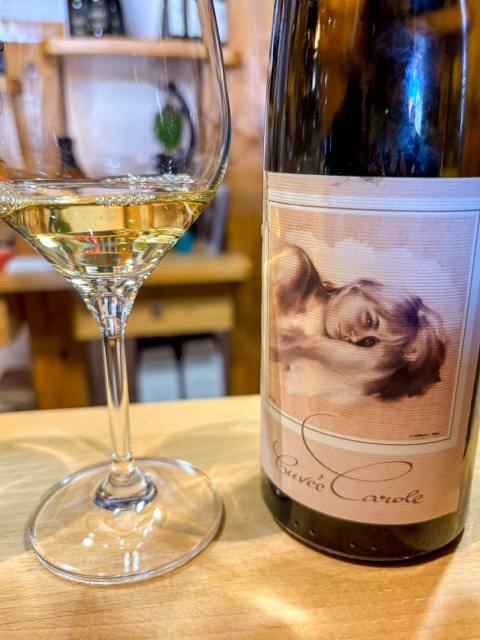
As for the wines we tasted, I was unsurprised to find that the French make Riesling that is dry, crisp, slightly acidic, well balanced, and not too fruity. In other words, a delicious accompaniment to food! This is what I count on from French wine and it rarely disappoints. It was very interesting to contrast this with a recent tasting Bonnie and I enjoyed of Riesling from Germany’s Moselle Valley which was also delicious but much more in the vein of an apéritif or casual sip with friends – a little lost when the main course comes out.
The Gewürztraminer was floral and spicy, and the Crémant d’Alsace, bubbly and bright. Pinot Noir is the only red grape in the area and is made primarily into a very dry rose with a nice minerality and very lightly balanced tannins. Again, a wine meant to cut through the rich sauces and compete with the bright flavors that are typical of the food in Alsace. There was not enough time to really appreciate the other varietals. A single day of tasting is not enough for Alsace, but it’s more than enough to fall in love—with the wine, the landscape, and the magic tucked into every turn.
So Much Cabbage!
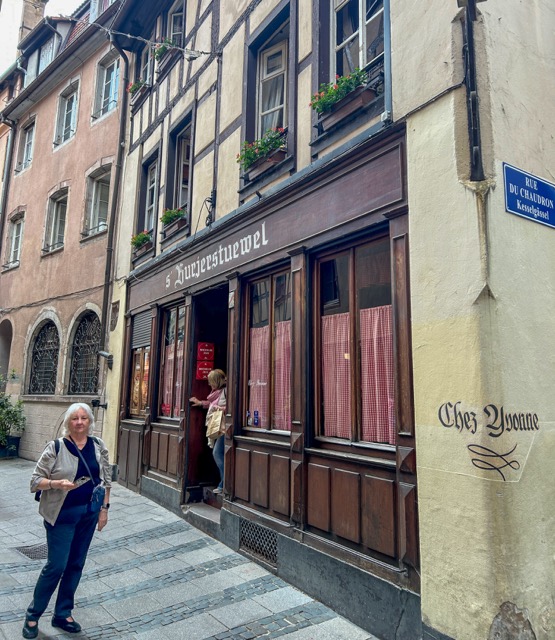
Our travels around Europe have offered an education on various restaurant types, each providing a different dining experience. In Italy there are trattorias, osterias, ristorantes, pizzerias, and bars. France offers the option of dining at a bistro, brasserie, bouchon, café, or a creperie. In Greece, we dined at tavernas, estiatorios, and sampled street food at souvlatzidikos. In Alsace, we discovered the winstub (pronounced veen-stoob). Imagine wood covered walls, red-and-white checked tablecloths, vintage décor, and flickering candles. Warm, welcoming, and cozy, this is where one finds classic Alsatian cuisine.
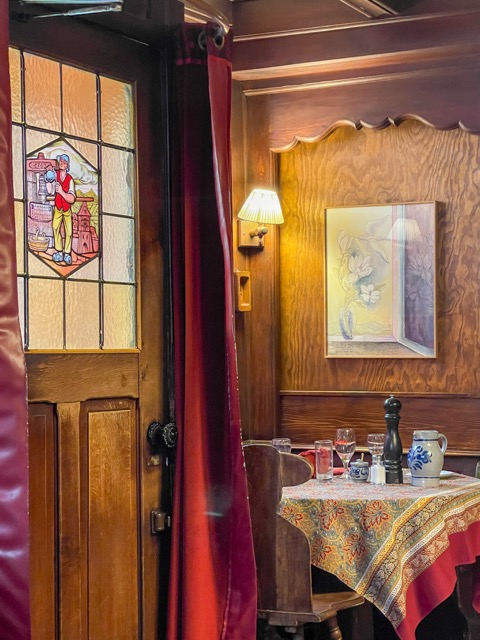
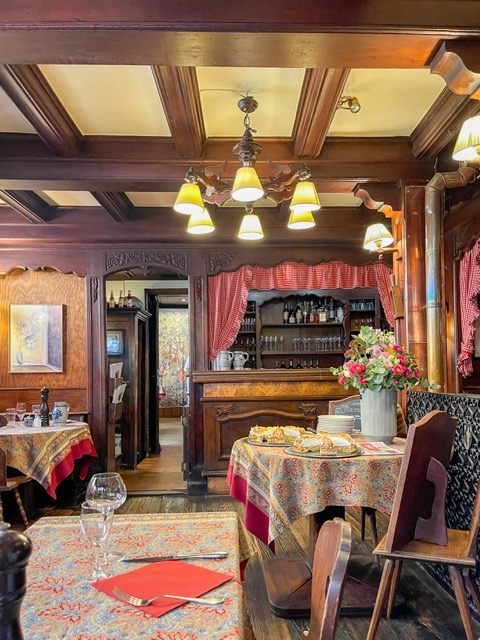
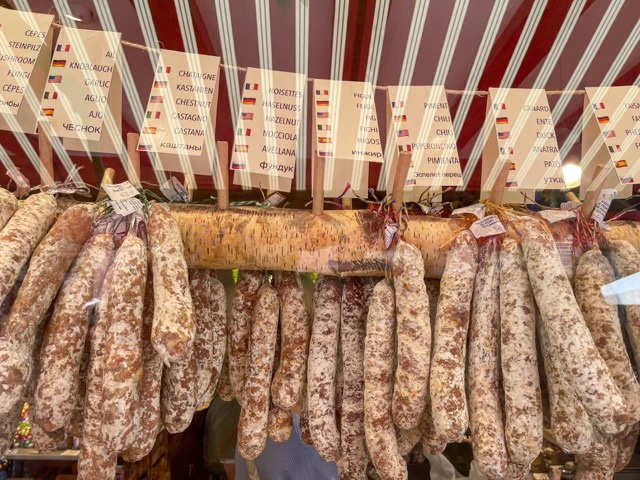
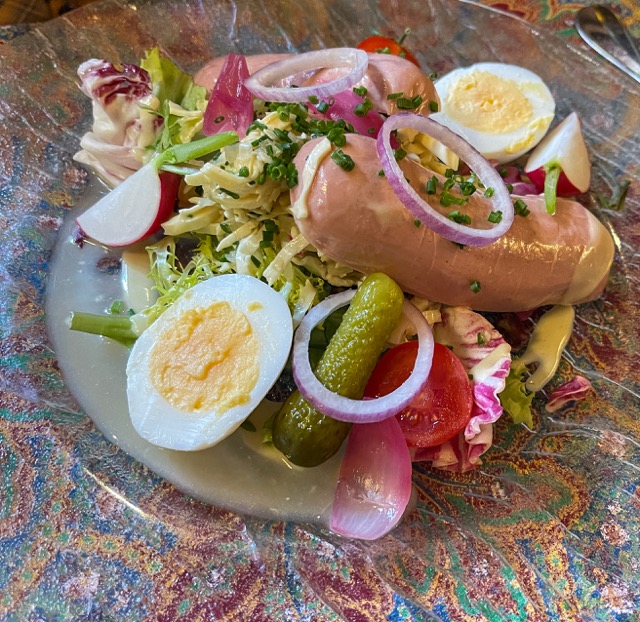
A delicious reflection of the region’s unique Franco-German heritage, sausages play a starring role in Alsatian traditional cuisine. Saucisse de Strasbourg (referred to as “knack” by locals) is a bright red, smoked sausage like a frankfurter. It is served warm with mustard and sauerkraut. Delicate and tender, the Saucisse Blanche (White Sausage) is made from pork and veal and is poached rather than grilled.
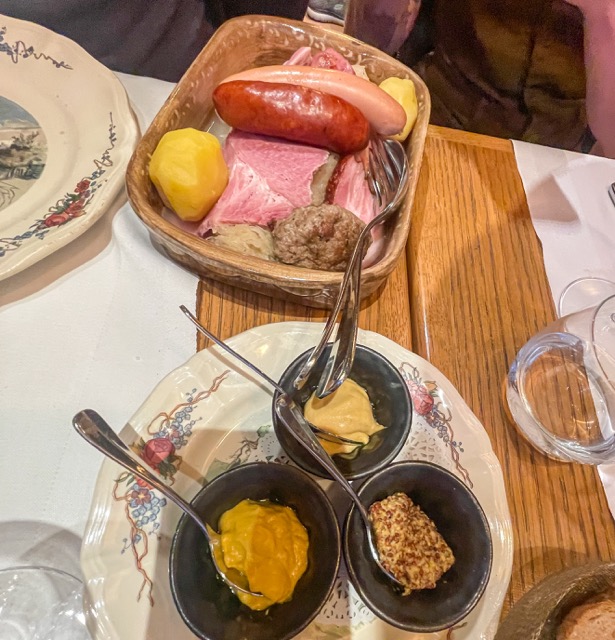
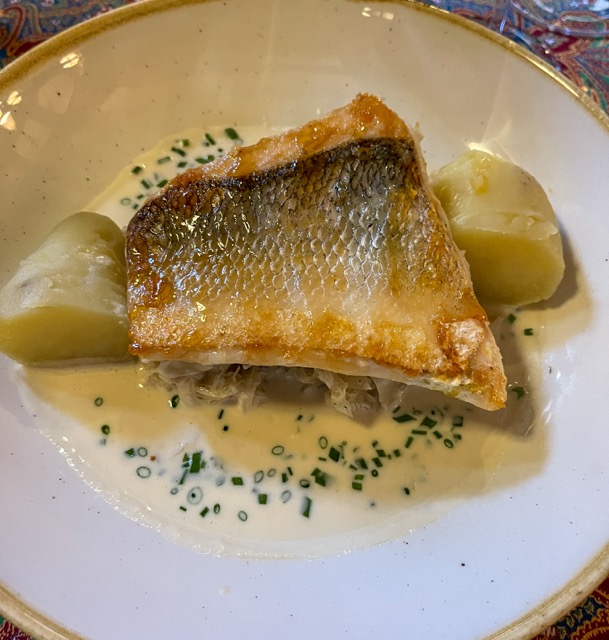
Alsatian Choucroute Garnie is a hearty, traditional dish that perfectly reflects the region’s blend of French and German culinary influences. Start with a heap of sauerkraut (fermented white cabbage) slow-cooked with white wine (Riesling), juniper berries, and aromatic spices; then pile on a generous assortment of meats – smoked and cured pork cuts, such as sausages), salted pork belly, ham hocks, and sometimes smoked bacon or pork shoulder, add boiled potatoes. The sauerkraut can also be paired with fish (lunch at Chez Yvonne) for a lighter version, paired with a crisp local Riesling
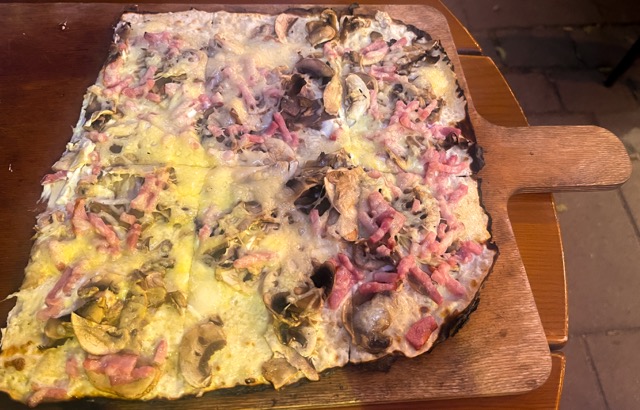
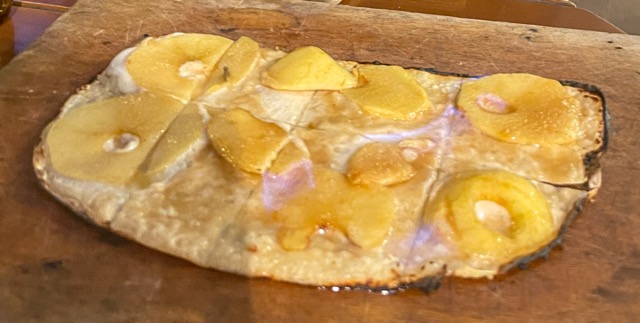
Tarte flambée, an Alsace specialty, bread dough rolled out cracker thin in the shape of a rectangle or oval, which is covered with fromage blanc or crème fraiche, thinly sliced onions and lardons (bacon). There are many variations. A couple of the standard ones are gratinée (add Gruyère cheese) and forestière (add mushrooms). On our last day in Strasbourg, we enjoyed a sublime sweet version with perfect slices of apples dusted with cinnamon. The whole tarte was then sprinkled with Calvados and flambéed at the table. Magical!
Another European Cultural Moment
Just before we left for Strasbourg, Mark told us that Shannon is big a fan of the Eurovision music competition. The final was being televised on Saturday night, right in the middle of our time together in Strasbourg. OK, we had some homework to do on this.
The Eurovision Song Contest was first held in 1956 with the mission of bringing together European nations after World War II by promoting unity through music and cultural exchange. That seemed like a worthy cause to support, so we watched the first round a couple of days before we left Valencia to get a sense of what it’s all about. We missed the second round, but with the help of our hotel concierge, we found a Strasbourg bar that would be showing the contest on a large screen. We booked a table for 8:30, 30 minutes before the start of the final competition at Tres Tigres. It was just what we expected – very loud, mediocre food, and lots to drink. When our first round arrived, I made a toast to “being the oldest person in the room.”
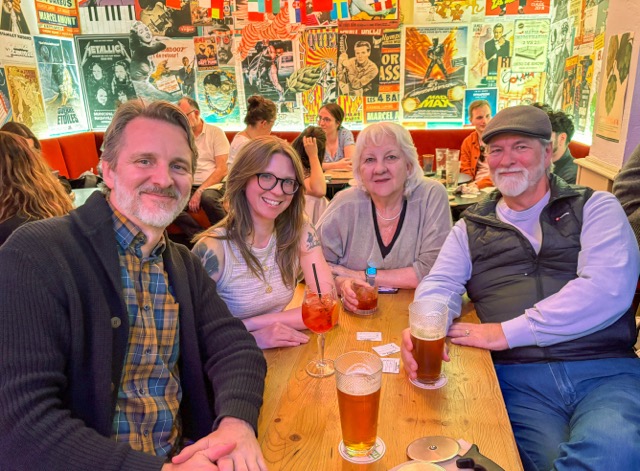
It was great fun. Diverse musical styles, extravagant stage design, technical theatrics, and over-the-top costumes is what the Eurovision competition is known for and that’s what we spend over three hours watching as the 26 final contestants performed. Exhausted by a long, wonderful day, at around 12:30AM we excused ourselves and walked back to our hotel to watch the voting and announcement of this year’s champion.
The winner, stage name JJ, is a 24-year-old Austrian Filipino, who was born in Austria, grew up in Dubai, and moved back to Vienna with his family as a teenager. He is a countertenor (a male singer who sings in the alto, mezzo-soprano, or even soprano range) and his song, “Wasted Love” is described as a fusion between pop and opera. What an amazing place this is…Europe!
The City of Light and Love and Art
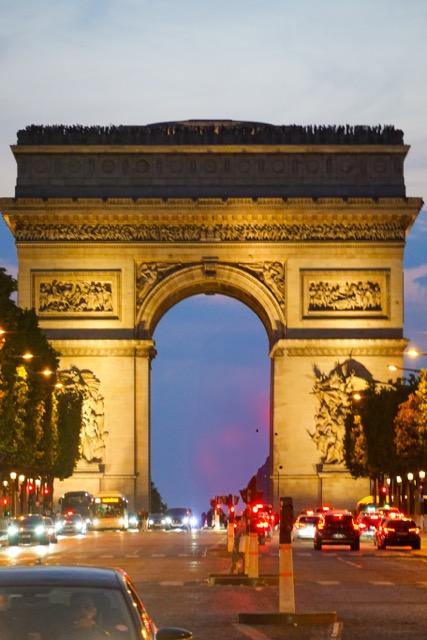
We have evolved a strategy for tackling the great European capitals. Rome, London, Madrid, Paris, these are enormous, sprawling, complex, intimidating cities to visit with thousands of years of history and culture to unpack. Attempting to “see” Rome in a week, for example, is a fool’s errand in our opinion. Impossible. So, borrowing from the old adage about how to eat an elephant, our approach is to take one bite at a time. We now deliberately seek to travel through one of these cities on our way to somewhere else, stopping for a few nights to enjoy another small mouthful. On this trip, we treated ourselves to two bites of Paris.
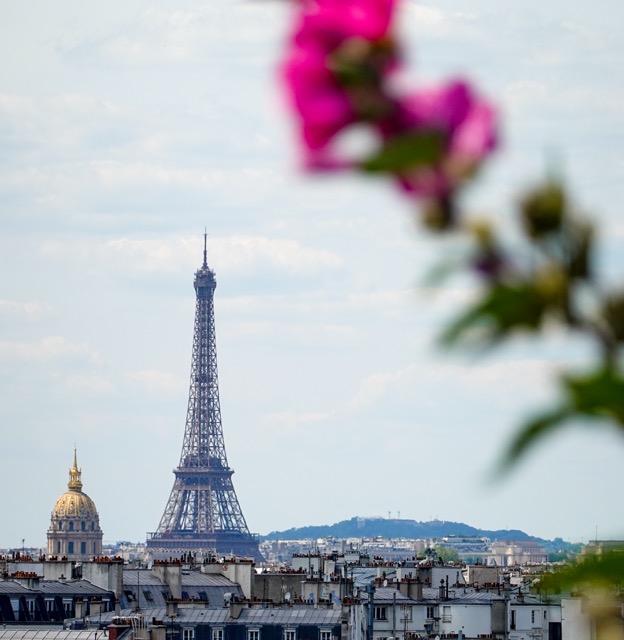
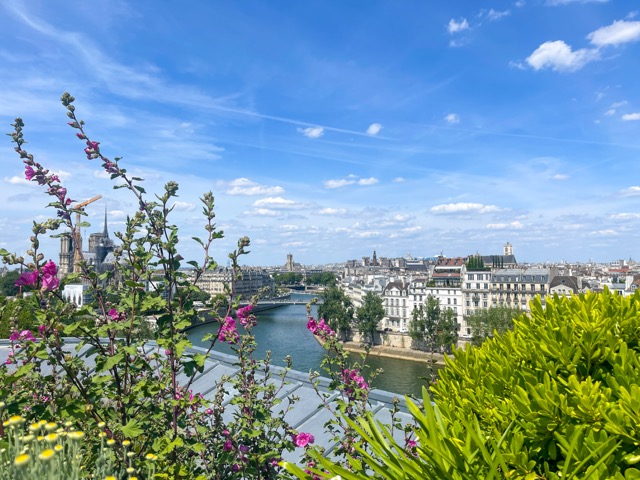
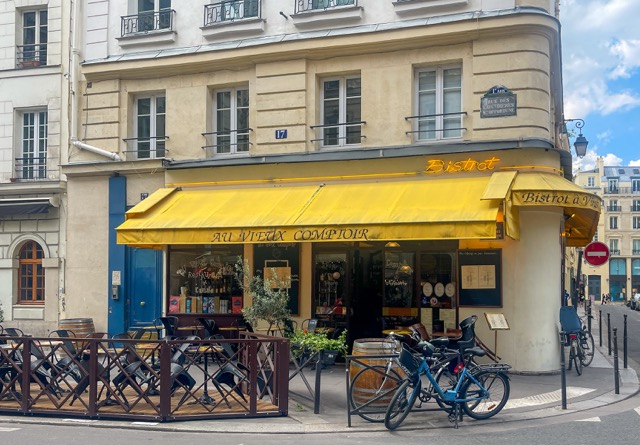
We booked a morning flight from Valencia to Orly to begin this trip, planning to cross Paris on the Metro to catch a train to Strasbourg. But, with a few hours between plane and train, why not a bistro lunch? As we climbed up the steps out of the Metro station into the heart of the city, we were enchanted once again. As you might expect in Paris, our lunch was a long, leisurely affair. Au Vieux Comptoir, a timeless small bistro in the Saint-Germain-l’Auxerrois district of Paris, was the perfect place for a classic French meal.
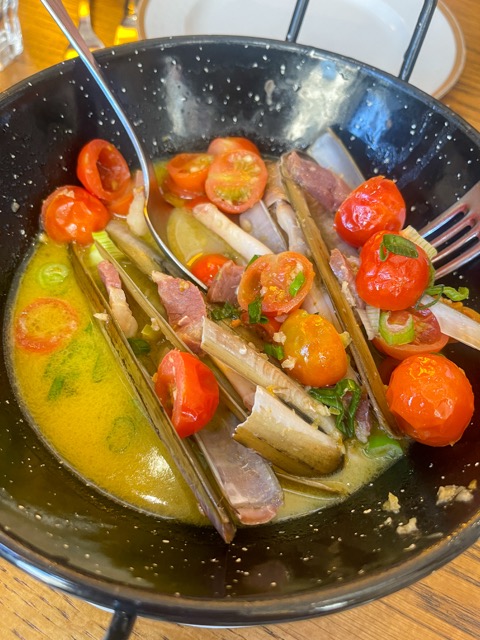
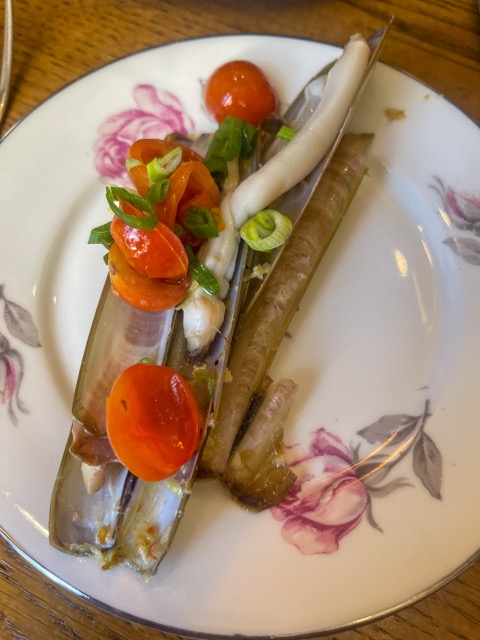
As I often do, I had perused the menu ahead of time and while my French isn’t good at all, I can usually manage a menu. There was, however, one starter, – “Couteaux Poêlés” that stumped me. The description included – “Tomates cerises, ail frais, piment et jambon de parme” which was not too difficult to grasp – cherry tomatoes, fresh garlic, pepper, and prosciutto – nothing wrong with those ingredients. But what is a Couteaux Poêlé? First, I turned to Google Translate (which often gets me into trouble) and was offered “frying pan knives.” What? I was distracted from doing further research, so I showed up at the restaurant still puzzled. I asked the server about this menu item, she enthusiastically recommended it, and I ordered it. Google’s knives – “couteaux” – turned out to be razor clams! And it seems “poêlé” might refer either to a stove or a frying pan. The specific meaning depends on the gender: “le poêle” means stove (masculine), and “la poêle” means frying pan (feminine). Wow, what a language to master! The clams were a delicious first course.
Art Immersion
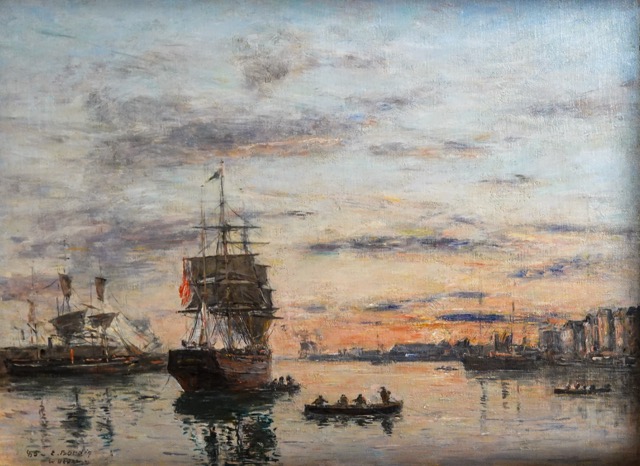
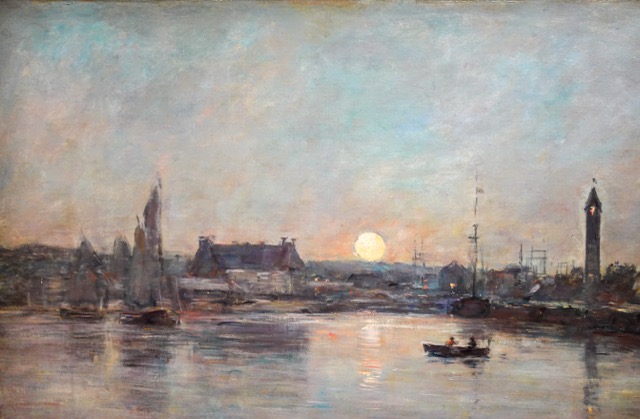
For our return from Strasbourg, we booked a couple of nights in the Latin Quarter to explore another small area in the City of Light. After booking, I discovered a special exhibit at the Musée Marmottan Monet of works by Eugéne Boudin who many consider to be the father of French Impressionism. He was also a teacher and mentor to a young up and coming Claude Monet whose work makes up the bulk of the permanent collection here. Since I know Monet is probably Ed’s favorite artist, a visit to this museum rose to the top of the list.
Boudin, who Ed was only vaguely familiar with, and I couldn’t easily recall either, was one of the pioneers of Plein Air painting in the middle of the 19th century. As we wandered through the collection, I was struck by how similar his work feels to the early California artists that we have loved and enjoyed all our lives in museums and galleries in La Jolla, Laguna Beach, and Carmel. How at home Boudin would have been there!
An entire floor of the museum is dedicated to Claude Monet and is based, primarily, on the donation by his son, Michel, of all the paintings that had been held by the artist’s family. The result is the most comprehensive and unique collections of Monet’s work anywhere in the world. Ed observed that the student had surpassed his teacher by an extraordinary margin. It is a sublime experience to be immersed for a couple of hours in Monet’s rendering of the beauty he found in the world.
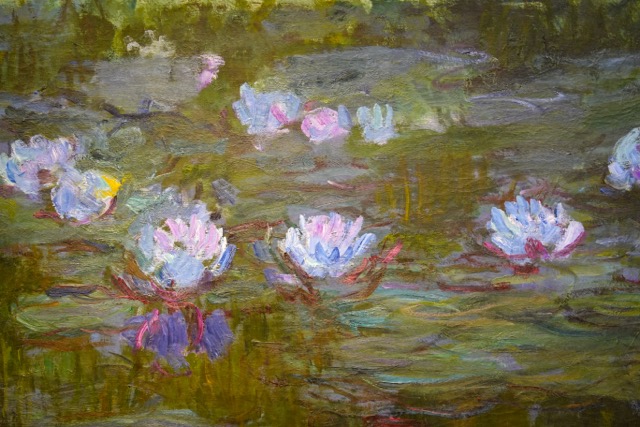
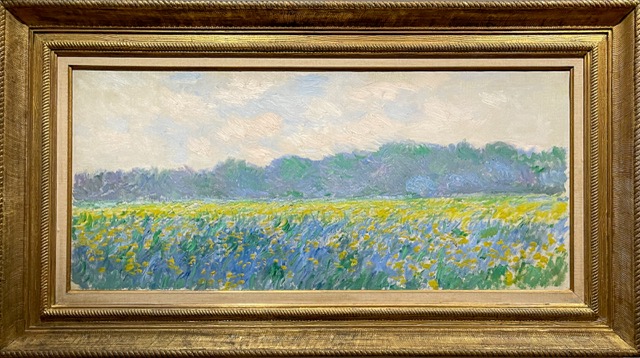
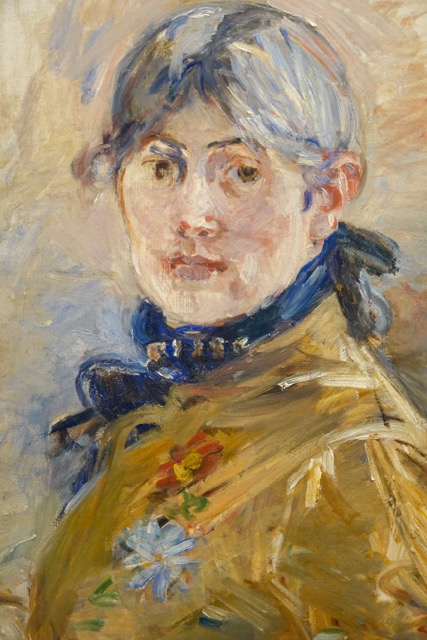
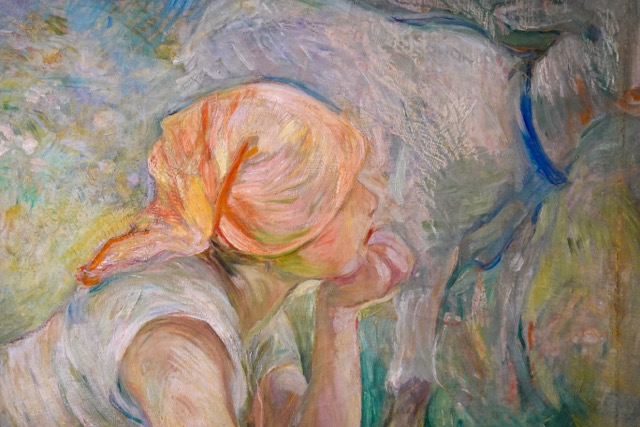
As a special bonus, we also discovered a room dedicated to Berthe Morisot’s work. Morisot was the first woman impressionist painter. A contemporary of Monet, Renoir, Pisarro, and the rest of the gang, she more than held her own with the boys, despite the extreme prejudice of the public toward a female artist. The misogyny she faced meant few of her works were sold or survived by comparison with her contemporaries. The Marmottan, however, holds the largest, most complete collection of her work in the world. It was a joy to see! Berthe has now joined the others on my wall of amazing women in history.
We have one more travel adventure with Mark and Shannon before we before we head back to the U.S. for the summer. Stay tuned!
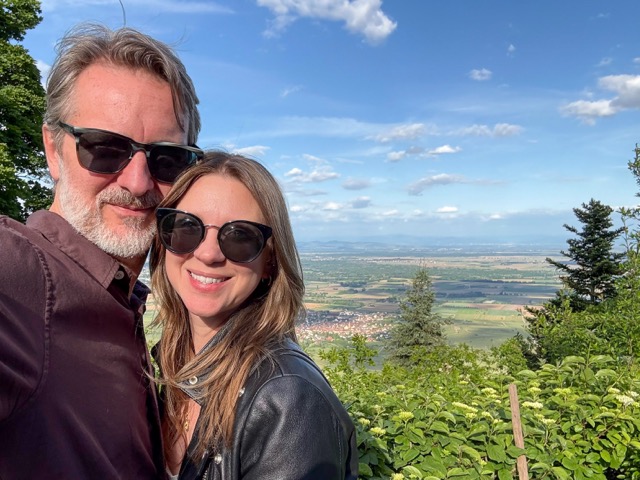
A special Thanks to Mark & Shannon for sharing their wonderful photos with us.

About Us
Welcome to our little corner of the world where we invite you to embark on exciting journeys with us!
We’re Ed and Bonnie, a duo passionate about exploring the world and experiencing its wonders. Our love for travel isn’t just about discovering new places; it’s about sharing those moments with cherished family and friends like you.
Our hope is that you will feel like you’re right there with us, sharing in the excitement and wonder of each destination. Better yet, let’s plan a rendezvous somewhere wonderful! Learn more
“…a postcard you never want to end.” What a gorgeous way to capture your experience in Alsace-Lorraine. YES, we will meet you there someday too, hopefully. Although all your travel essays make me want to say that.
We were in so much more swan danger than we realized!
What a weekend that was!