
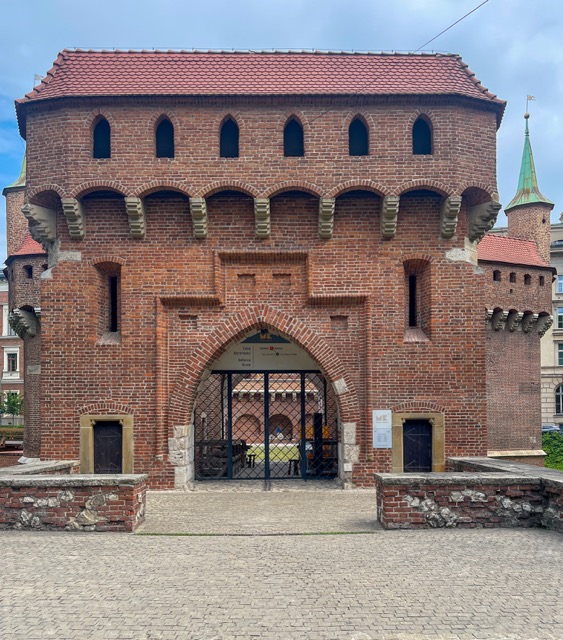
Sandy Beaches to City Streets
After an idyllic week of sun, sea, and Greek salads on the island of Kefalonia, we exchanged the relaxed warmth of sandy beaches for bustling city streets as we flew north to meet friends in Kraków, Poland. Our good friends from Sacramento, Debby and John, were planning to spend a few days in Kraków after finishing up a Budapest to Prague river cruise. And our Valencia friends, Mary and John, were also going to be in Kraków the same week. Admittedly, Kefalonia to Kraków is an unusual itinerary, but when it comes to spending time with good friends, we’re always ready for an adventure.
A Brief Slovakian Stop
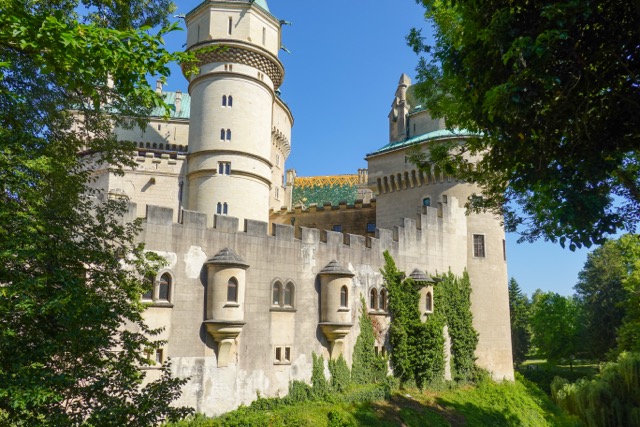
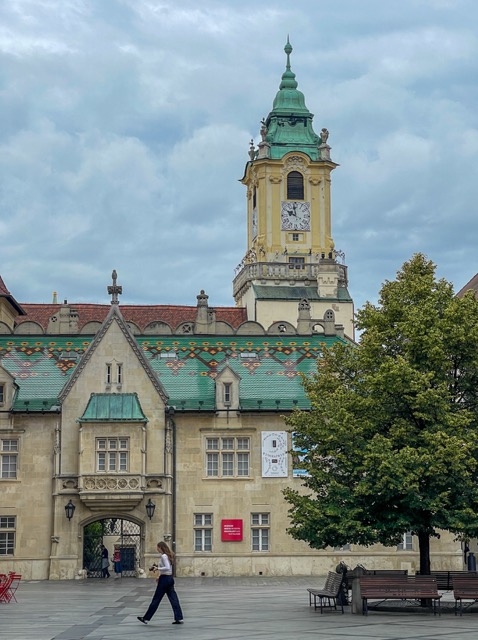
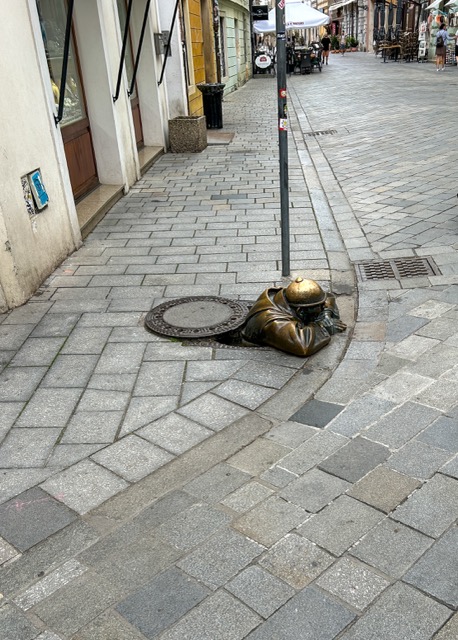
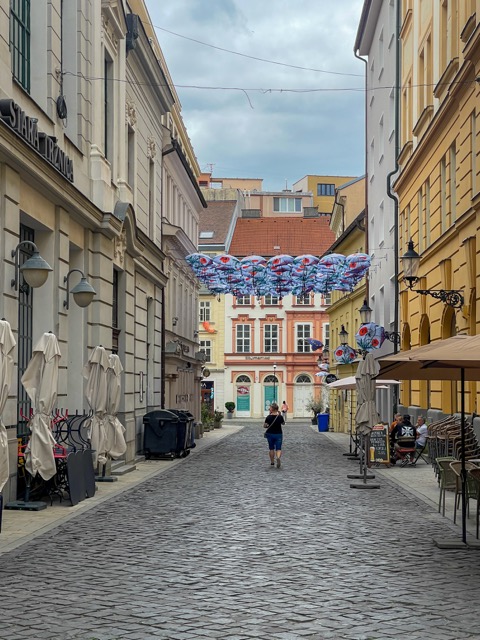
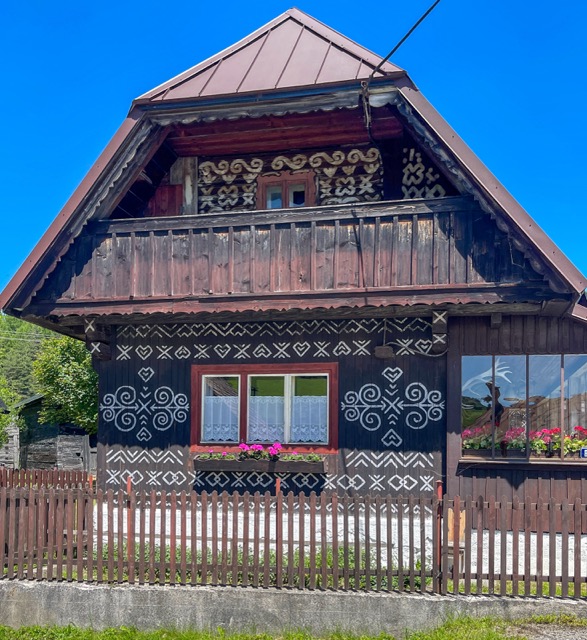
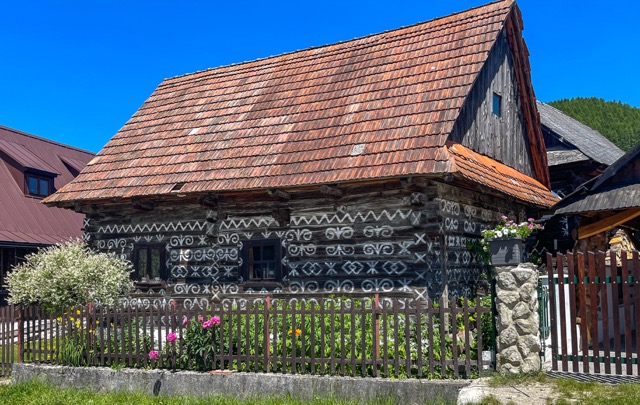
The first leg of our journey began with a two-hour flight from Kefalonia to Vienna. Tempting as it was to stay a few days in the Austrian capital, our curiosity got the better of us and we hopped on a bus to cross the border into Slovakia. We had just one full day to spend in Slovakia and made the mistake of booking a “five castle tour” in the countryside outside of Bratislava, Slovakia’s capital city. While Slovakia boasts more castles per capita than anywhere in the world, we were disappointed with the tour (beginning with the fact that our guide had laryngitis). Nevertheless, Bratislava has captured our interest, and we’ve added it to our “we need to go back there” list. We’re thinking two weeks split between the urban delights of Vienna and Bratislava as well as some down time in the villages and towns of the beautiful Carpathian Mountains, along with a bit of cruising on the Danube. Maybe three weeks!
One of Travel’s Greatest Gifts
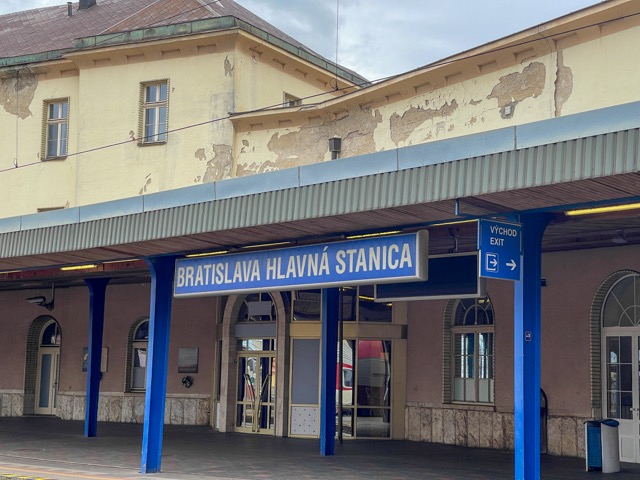
After two nights in Bratislava, we boarded a six-hour train bound for Kraków which turned out to be a highlight of the trip. We struck up a conversation with Matthew, an American who has called Poland home for the past three decades. A luthier by trade, Matthew shared stories of his four-year apprenticeship with an Italian master in Rome and his decision to specialize in crafting instruments for Medieval, Renaissance, and Baroque music (https://www.earlymusicinstruments.com/main). The hours flew by as we chatted—a perfect reminder of one of travel’s greatest gifts: the people you meet along the way.
The Square at the Heart of Krakow
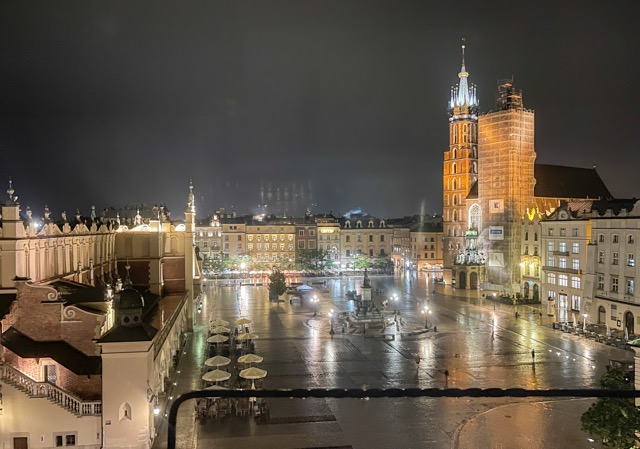
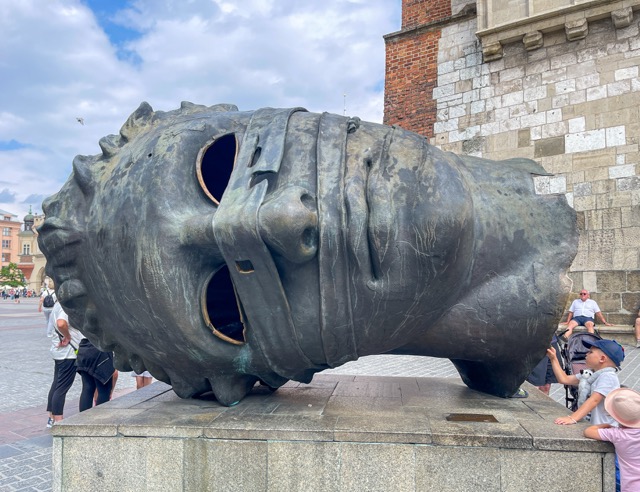
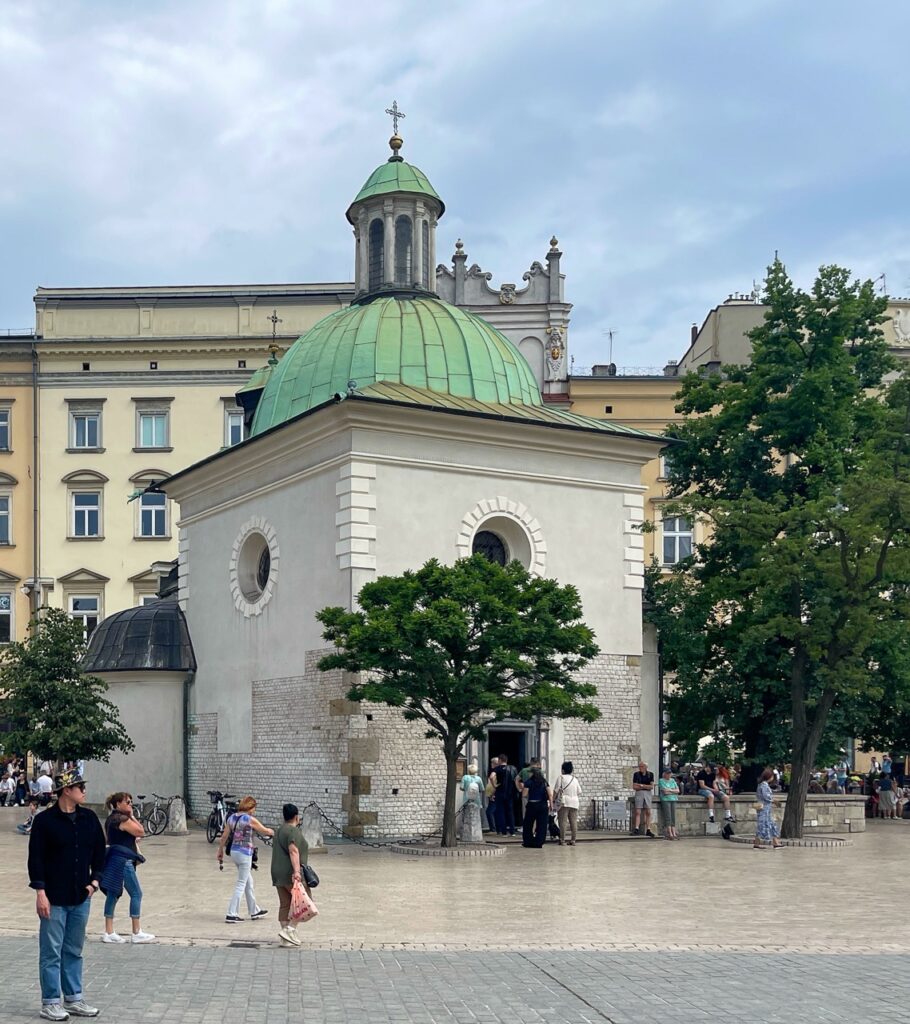
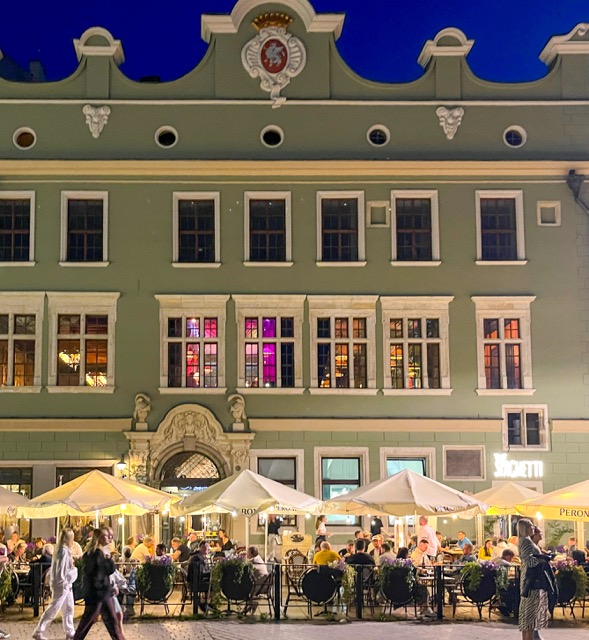
Dating back to the 13th century, Rynek Glówny, the main square at the center of Kraków’s old town, is the largest medieval square in Europe. Laid out in 1257, the square was designed to be the hub of the city, and it serves this same purpose today. Filled with medieval era buildings, horse-drawn carriages, a 14th century brick gothic church, and more sidewalk cafés than one can count, its vibrancy feels timeless.
A Medieval Masterpiece
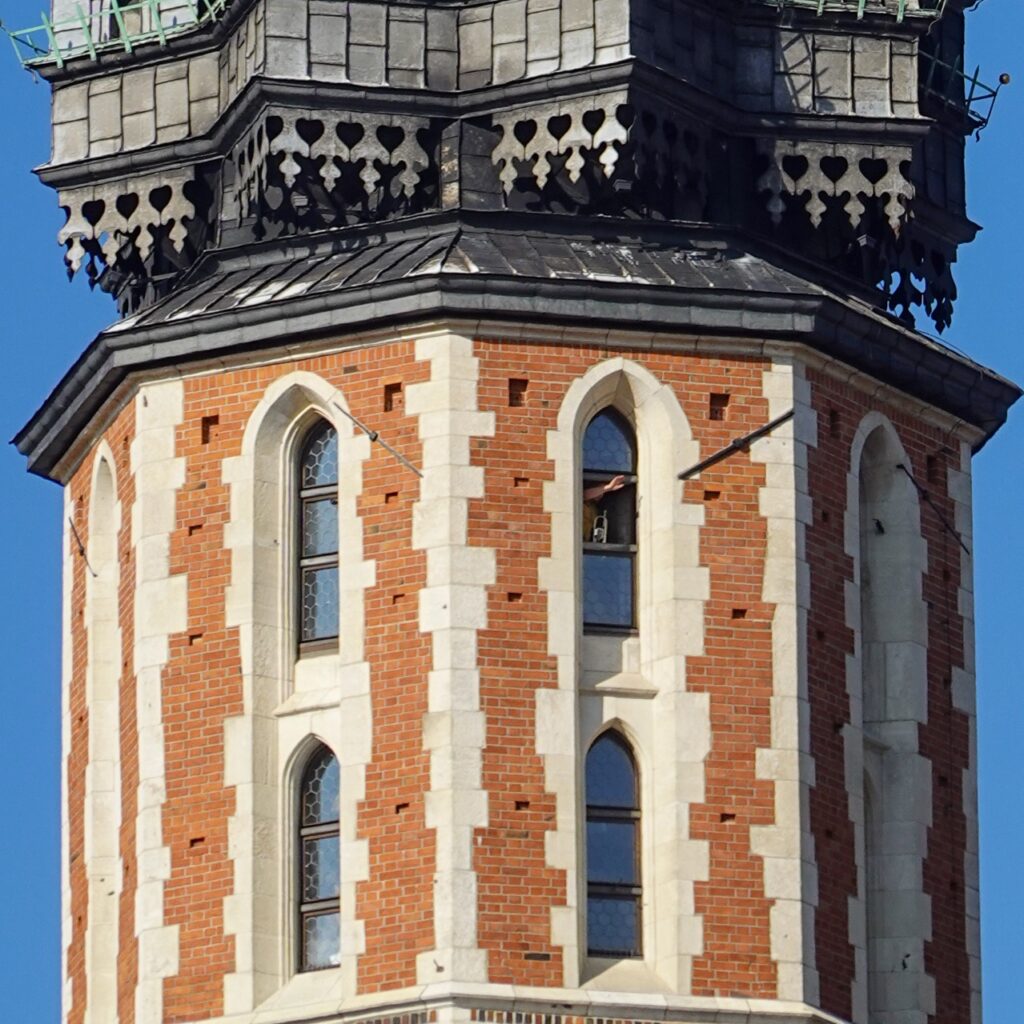
St. Mary’s Basilica, a masterpiece of medieval architecture, dominates the square and the surrounding skyline. The asymmetry of the two towers catches your eye. The taller one, at 80 meters, is almost double the height of the shorter one and the explanation for this goes back to the Middle Ages.
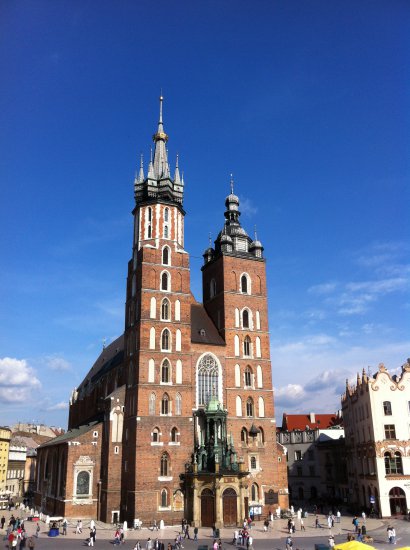
Under the reign of Duke Boleslaus the Modest (Bolesław Wstydliwy, 1243-1279) a decision was made to add two towers to the body of the church standing by the Main Market Square. Soon two brothers embarked on the task. When the younger realised that his tower was much shorter, he murdered his brother out of envy, and the construction stopped. However, the murderer was wracked with remorse: on the day when the church was to be consecrated, he pierced his heart with the same knife he used to kill his brother, and dropped dead from the top of his tower to the ground below.
https://krakow.travel/en/artykul/117/legend-of-the-two-towers-of-st-marys
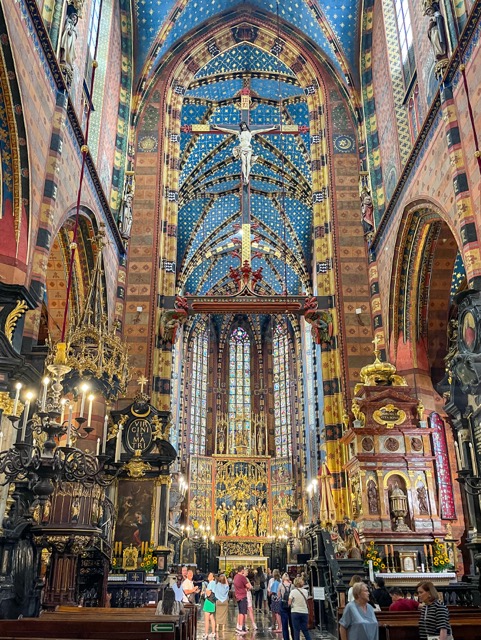
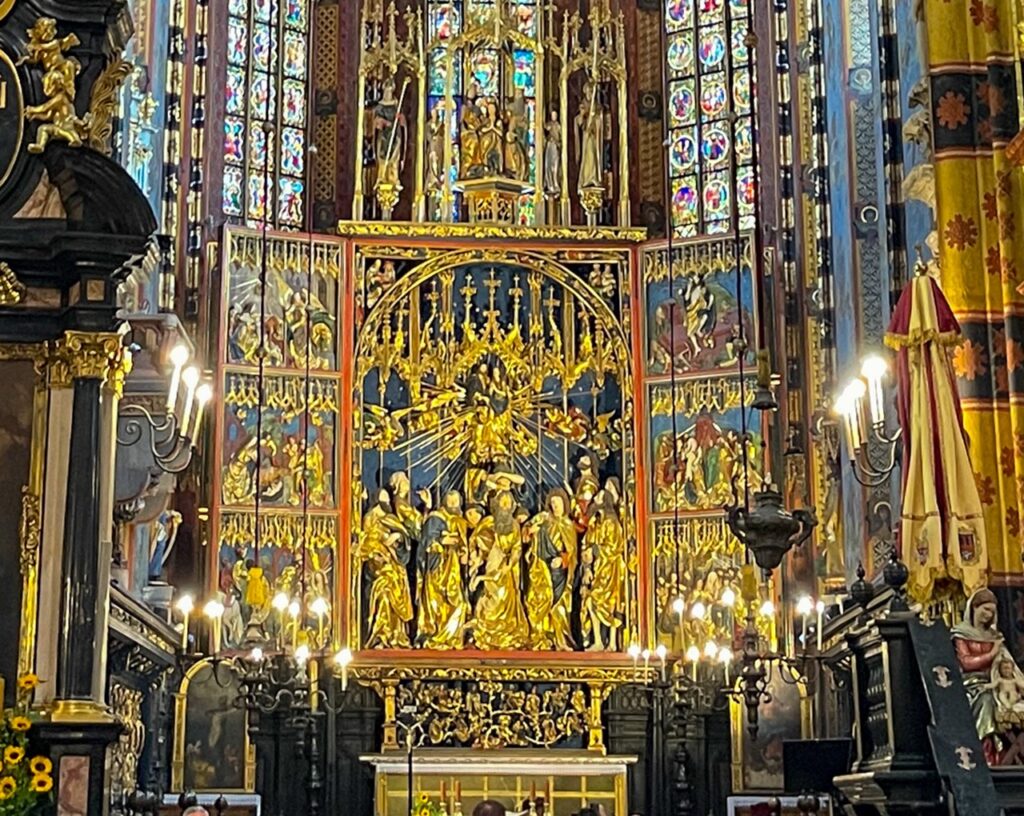
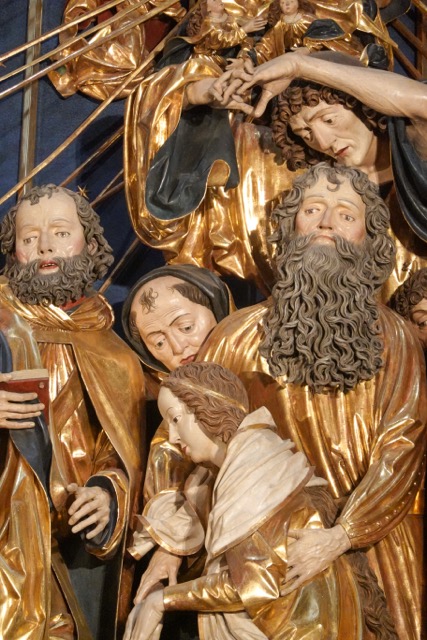
Gory legend aside, the interior of St. Mary’s Basilica, a striking example of Polish-Gothic architecture, is filled with beautiful stained-glass windows and intricate carvings. The altarpiece is one of the great masterpieces of European wood sculpture. It spans the entire length of the church’s altar and took the German artist Veit Stoss 12 years to complete in the late 15th century. The intricately carved panels, gilded in gold leaf, depict scenes from the life of the Virgin Mary. Medieval art typically displays flat, static figures but Stoss’s carvings provide a sense of movement and life that was revolutionary for its time. It is believed that the artist used local Krakow citizens as models for the piece which contributed to the rich, detailed facial expressions that communicate a depth of emotion not generally seen in his era.
Bugle Time
Every hour, on the hour, a bugle player appears at the top of the taller of St. Mary’s Basilica towers and plays the Hejnał – a beautiful, haunting sound that echoes across the square. The tune is played four times, once in each direction, so that every corner of the city can hear it. Of course, there’s a great story behind this unusual tradition.
In the 14th century, during a Mongol invasion of Poland, a trumpeter was stationed in the tower of St. Mary’s Basilica to watch for any approaching enemies. When the Mongols began appearing at the walls of the city, the trumpeter began sounding the alarm to the four corners of Kraków. The attackers, recognizing the bugler was warning the city, began firing arrows at the tower. One found its mark piercing the bugler’s throat and cutting off the tune mid-note. In honor of his bravery and sacrifice, the Hejnał is played every hour, but the music stops mid-note, just as the trumpeter was silenced. This unfinished tune serves as a solemn reminder of that moment in history. It was moving every time we heard it and particularly poignant at the moment it stops. The music, sounding a bit like taps, is simple yet it seems to fill the city with pride.
A Neighborhood with a Long Memory
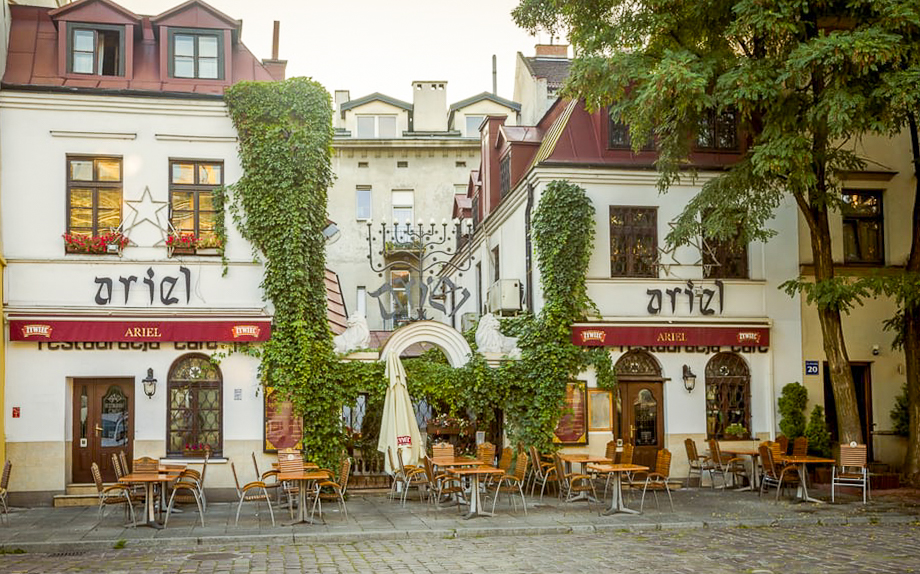
Tucked just south of Kraków’s Old Town lies Kazimierz, the historic Jewish Quarter – a neighborhood that echoes with history and hums with creativity. While the Main Square is Kraków’s heartbeat, Kazimierz seems to be its soul. It feels lived-in and deeply human. Founded in the 14th century as a separate town, Kazimierz became home to Kraków’s thriving Jewish community for hundreds of years. By the 16th century, it was one of the most important centers of Jewish life in Europe and it flourished with synagogues, schools, kosher bakeries, and bustling marketplaces.
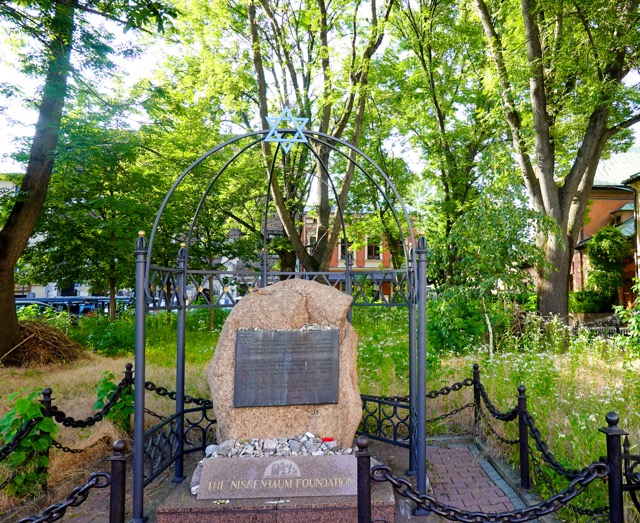
That vibrant life came to a devastating halt during World War II. Under Nazi occupation, the Jewish population was forcibly relocated to the nearby Podgórze ghetto, and much of Kazimierz was emptied and left to decay. But in recent decades, the neighborhood has undergone a quiet revival that honors its history while breathing new life into its streets.
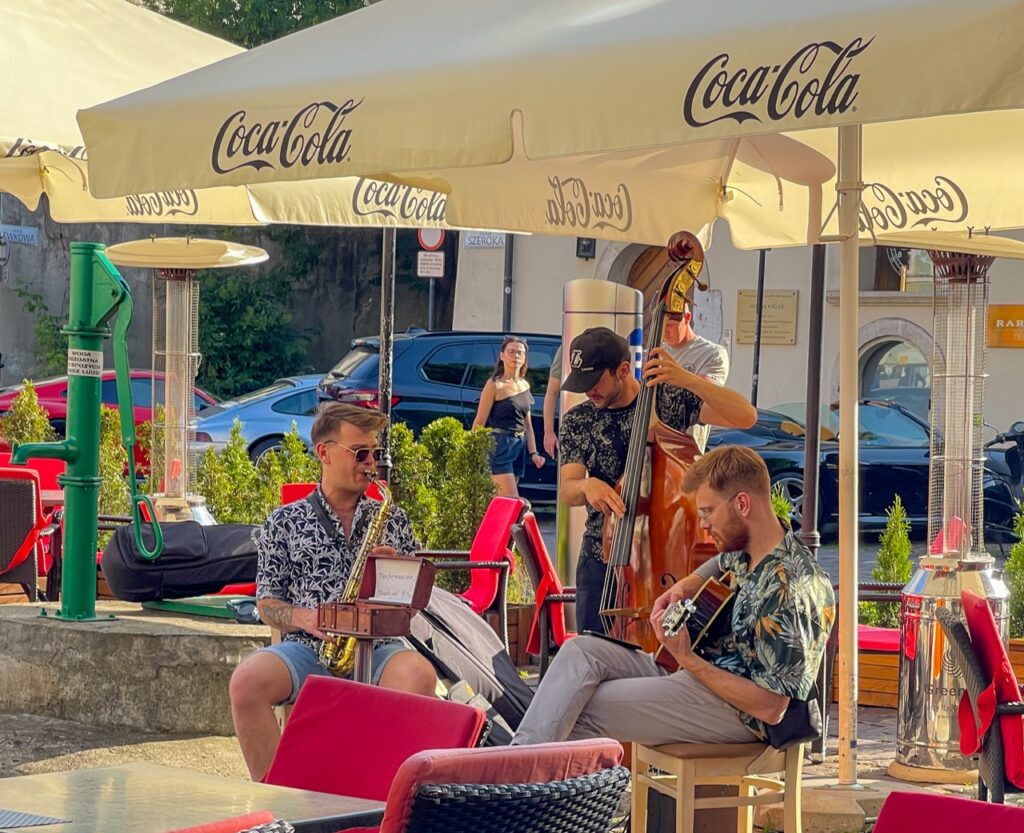
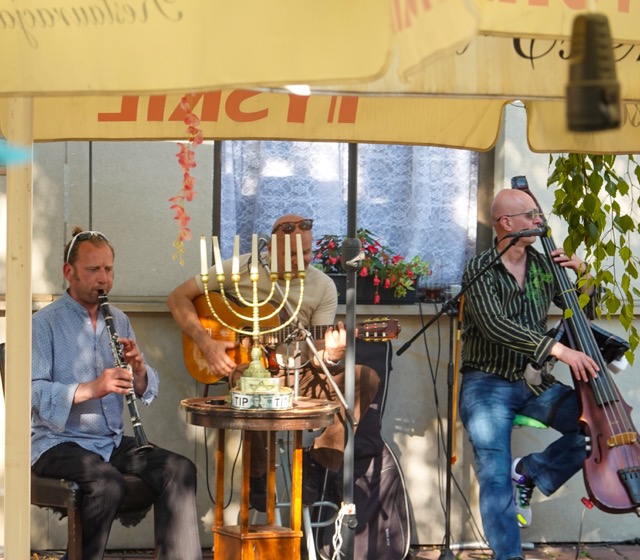
A neighborhood that’s seen it all and is still standing, there’s both a grittiness and a warmth to be felt here. Crumbling tenement buildings sit next to hipster cafés. Both modern jazz and Klezmer music can be heard in the plazas and outside the sidewalk cafes. Menorahs and Hebrew signs are etched into old walls and street art covers the alleyways. There are seven historic synagogues in Kazimierz, including the Old Synagogue, dating back to the 15th century. Moss-covered gravestones lean gently in every direction in the old Jewish cemeteries.
Across the River – Kraków’s Jewish Ghetto
A thirty minute walk across the river from Kazimierz, is a museum on the site of Oskar Schindler’s Factory. As you likely remember for Steven Spielberg’s movie “Schindler’s List” this is where more than 1200 Jewish workers were employed and protected during the Nazi occupation in WWII. The museum is dimly lit with many immersive exhibits that transport visitors into the daily life of Kraków under the Nazis.
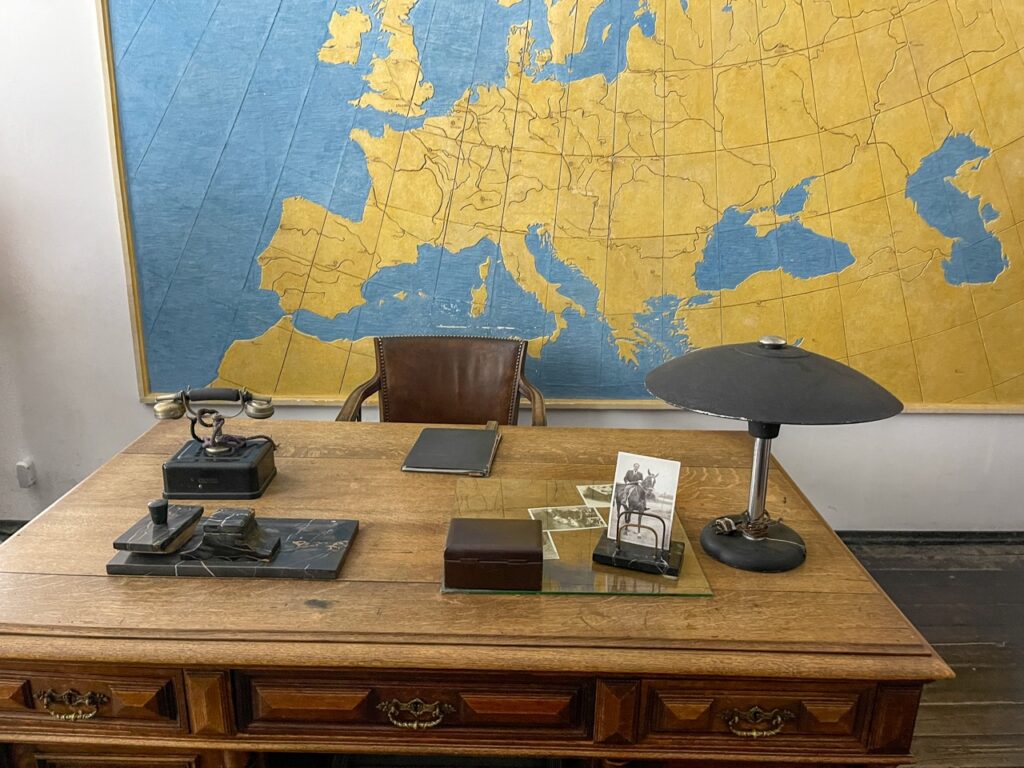
In 1941, the Nazis moved Kraków’s Jews from Kazimierzi to an area near Schindler’s factor where they set up a ghetto in the Podgórze District of Kraków. As we walked through this area, we often felt the weight of history along with a reminder of the difference one person’s actions can make in the darkest times.
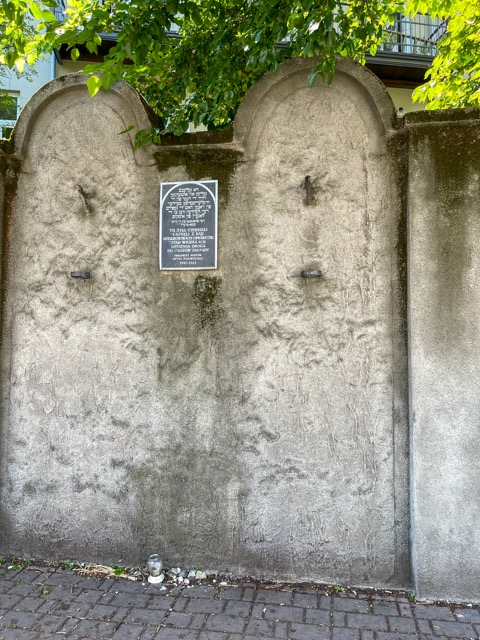
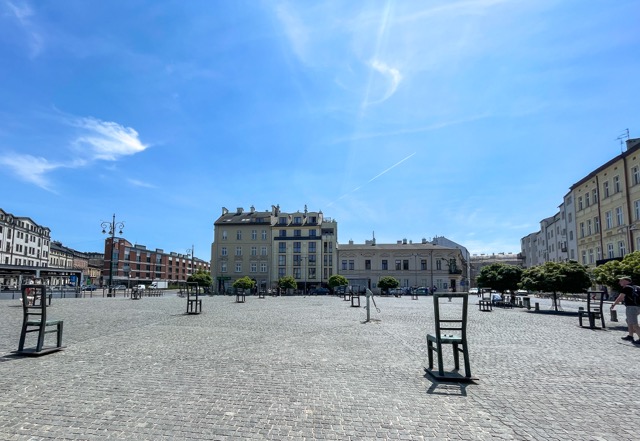
The heart of the Jewish ghetto established by Nazi Germany in March 1941, this square was used for deportations. Victims assembled in its western part, while looted property was stacked in the center. Executions occurred in the square and nearby courtyards. During the ghetto’s liquidation in March 1943, many elderly, sick, and unemployed residents – along with children – were shot on-site.
In 2005, the city commissioned a monument inspired by Tadeusz Pankiewicz’s memoir, The Kraków Ghetto Pharmacy. He wrote: “In Plac Zgody, an incalculable number of wardrobes, tables, sideboards and other furniture was rotting.” These words inspired an installation of oversized metal chairs, symbolizing what was left behind – and the absence of those who once sat there.
https://krakowbooking.com/blog/empty-chairs-ghetto-heroes-square
Castle on a Hill
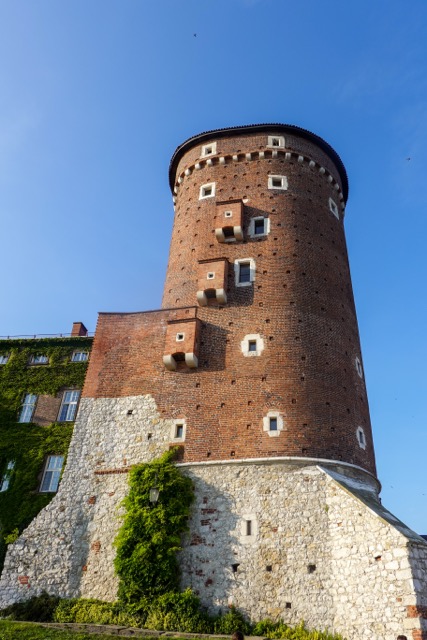
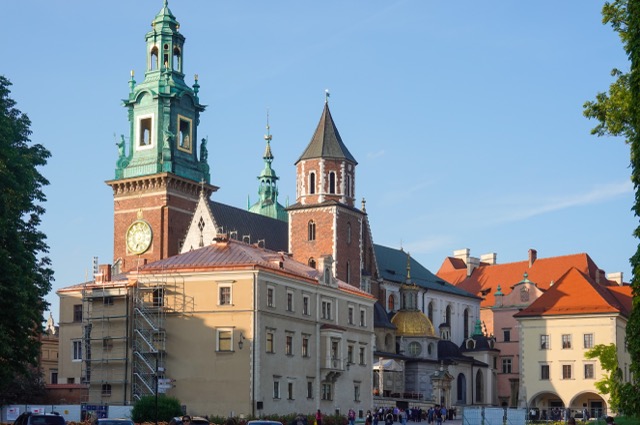
For more than 500 years Wawel Castle was the seat of Polish royalty. Perched above the Vistula River, its blend of Gothic, Renaissance, and Baroque styles is a walk through history. The castle has been invaded, plundered, rebuilt and restored over several centuries making it a symbol of Poland’s resilience.
A Place Beyond Words
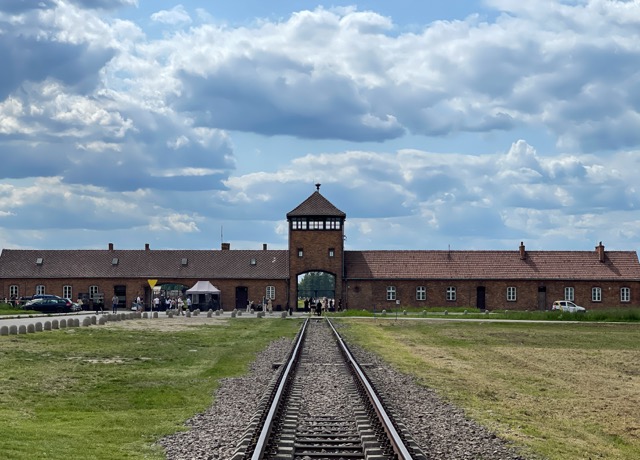
On our last day in Kraków, Debby and I took a day trip from Kraków to visit Auschwitz-Birkenau, the former Nazi concentration and extermination camps. Of course, this was a solemn, heavy, and profoundly moving experience. We walked through rows of brick barracks, stood beside barbed wire fences, and saw rooms filled with the belongings of victims – eyeglasses, shoes, suitcases, photographs.
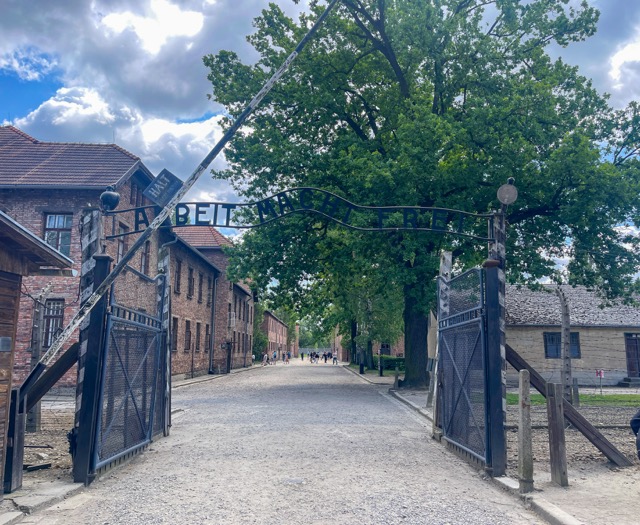
The scale of the tragedy is overwhelming. I found myself listening, absorbing, and trying to make sense of something that defies understanding. At the end of the tour, as we walked through the vast, open space of Birkenau, I knew there was nothing to say. No right words. Only the promise to remember.
Salt Mine – Ed’s Experience
With the ladies off on their guided tour of Birkenau and Auschwitz for the day, John and I arranged a little excursion of our own to a location not far outside of Kraków – the Wieliczka Salt Mine. Now, I don’t know what you think of when you hear the term “salt mine,” but I am pretty sure whatever you’re imagining will fall short of this place.
First, you must understand that salt is a mineral, meaning it can form rock like any other mineral. The resulting rock is relatively soft, but stable, nonetheless. So, imagine a salt mountain – maybe the size say of Mount Tamalpais – except below the earth. And when I say a salt mountain, I mean solid salt – not veins of salt through granite, not pockets of salt, solid salt. There is apparently nothing like it anywhere else in the world.
Sometime in the 11th century, people began to mine this underground salt mountain. That is, they began chipping away at it, pulling up big, huge chunks of salt rock to process into smaller crystals of salt for all the typical uses – preserving food, seasoning, etc. This was an extremely valuable commodity. By the 14th century, the saltworks at Wieliczka had become such an important part of the Polish economy that King Casimir the Great began to take a very active interest, building a hospital for the miners and generally providing for their care. To be a salt miner became a revered and honored trade. Kraków became a wealthy and prosperous city.
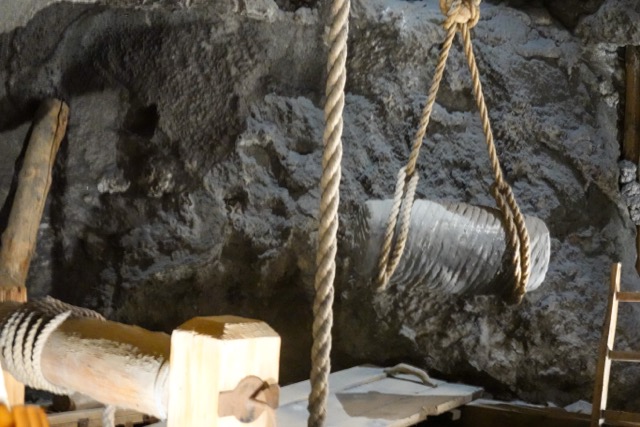
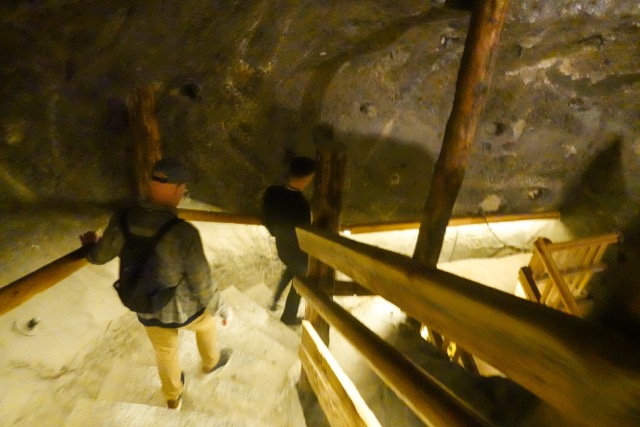
Now imagine the network of tunnels, chambers, and caverns that would result from 900 years of continuous labor, invention, and technological development. Trust me, you can’t. Nine centuries of digging and hauling, non-stop. The mine reaches a depth of almost 1100 feet with 178 miles of tunnels and passages. And everywhere it is solid salt. John and I walked 2 ½ miles of tunnels and descended almost 800 steps to a depth of 450 feet over three hours. We covered less than 2% of the mine. It is an unimaginable labyrinth.
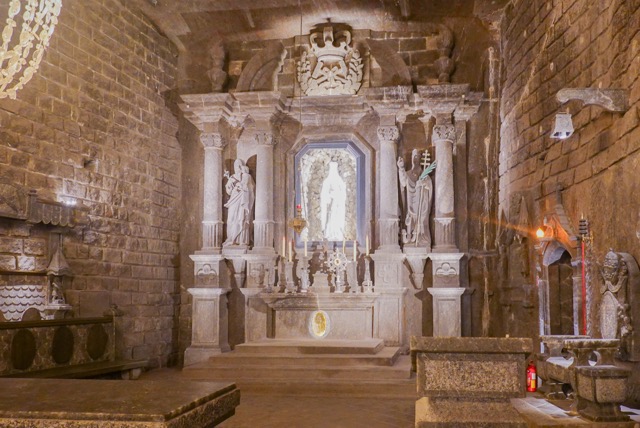
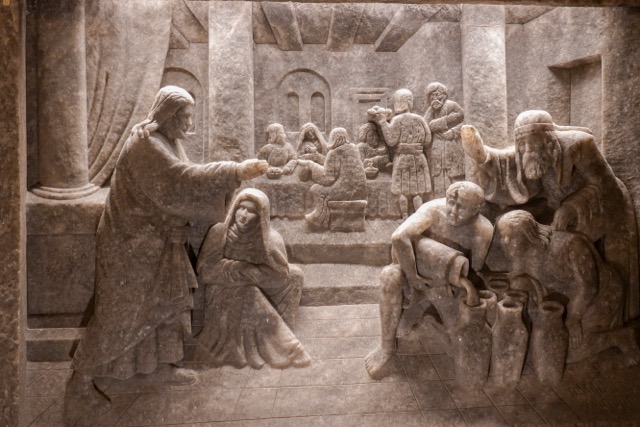
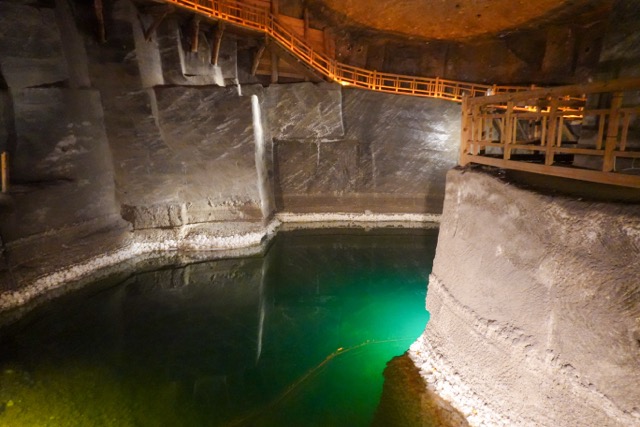
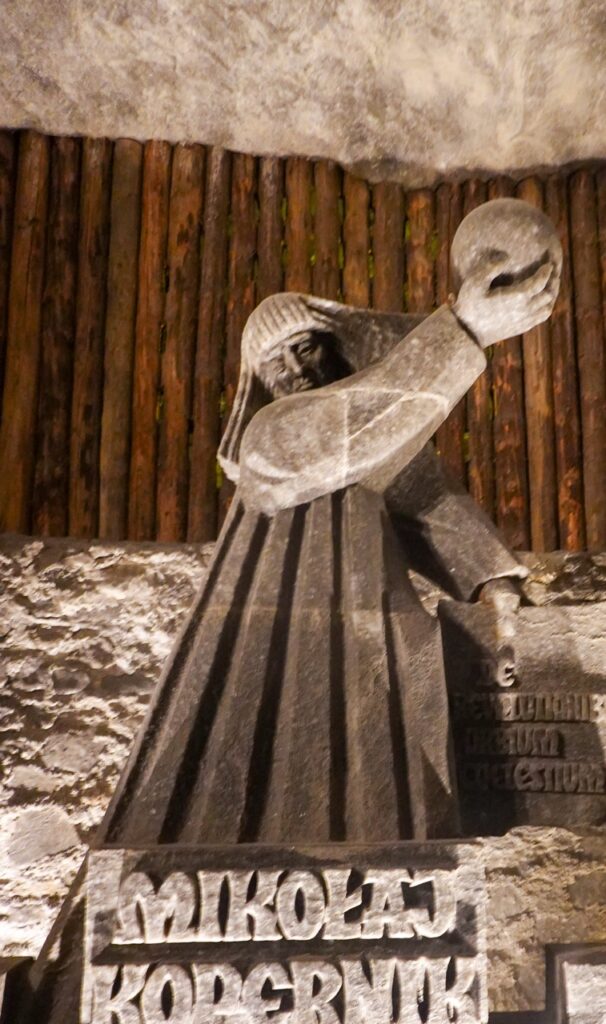
Down in the mine, it’s a fairytale land of exotic caverns, underground lakes, and salt sculptures. It seems that as the mine became more and more celebrated, the miners began to decorate their pride and joy. Eventually, the mine came to include chambers for music, for worship, a tavern, and a theater – all carved from the salt. Crystal chandeliers hang in some caverns; the crystals all made of pure salt. The floors of formal spaces are polished salt, carved to resemble floor tiles.
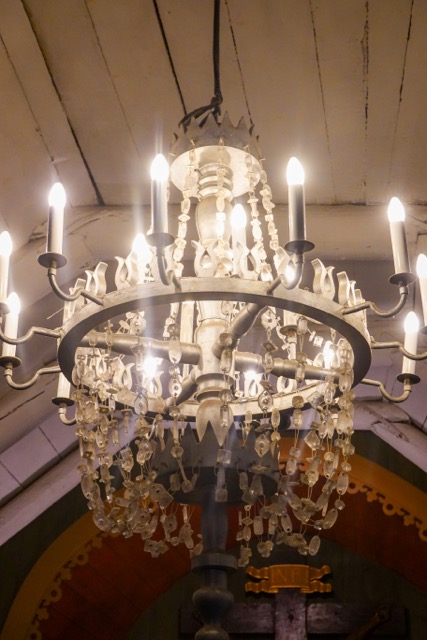
In 1978, when UNESCO began attempting to identify and preserve the world’s great heritage sites, this mine was on the first page. Very appropriately so.
Kielbasa and Much More
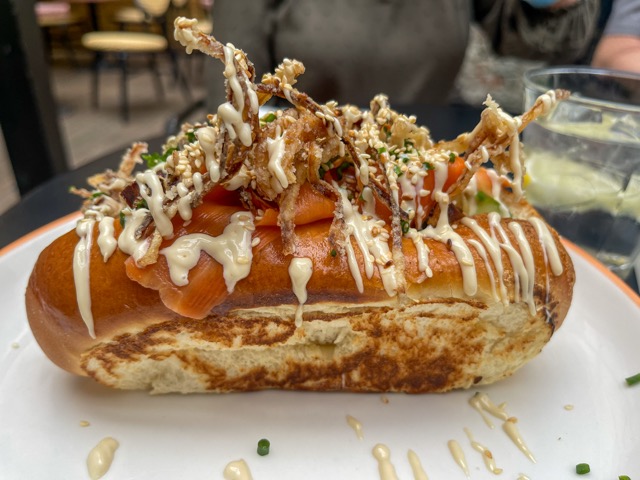
Other than kielbasa, I didn’t know what to expect when it came to food in Kraków and I was pleasantly surprised. Every meal felt like a discovery and while Polish cuisine is rooted in tradition, in Kraków it’s served with creativity, care, and more than a few delicious surprises.
Pierogi: Poland’s Most Beloved Dumplings
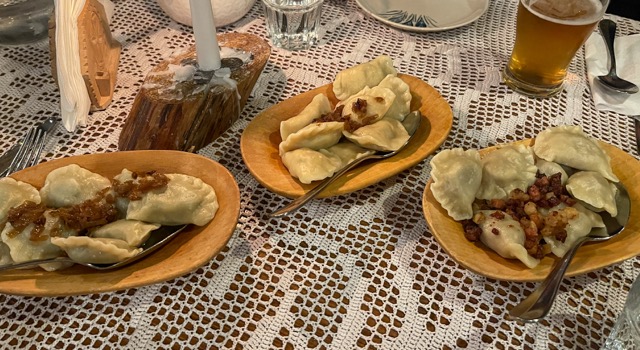
Let’s start with the star of the show – pierogi. These half-moon dumplings are Poland’s comfort food. The classics are Pierogi Ruskie (filled with potato, twaróg – white cheese, and sautéed onion), Pierogi z Mięsem (filled with minced pork or beef, often with onion and spices), Pierogi z Kapustą i Grzybami (filled with sauerkraut and mushrooms), Pierogi z Szpinakiem i Serem (filled with spinach and cheese pierogi). We ordered pierogi several times and found them all to be delicious. Who doesn’t love dumplings?
A Splurge
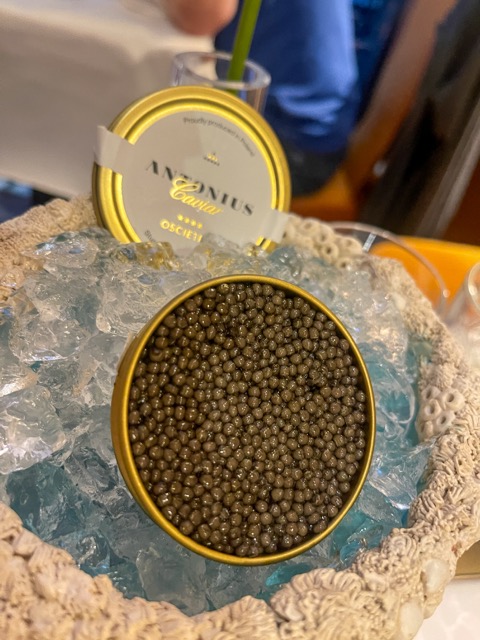
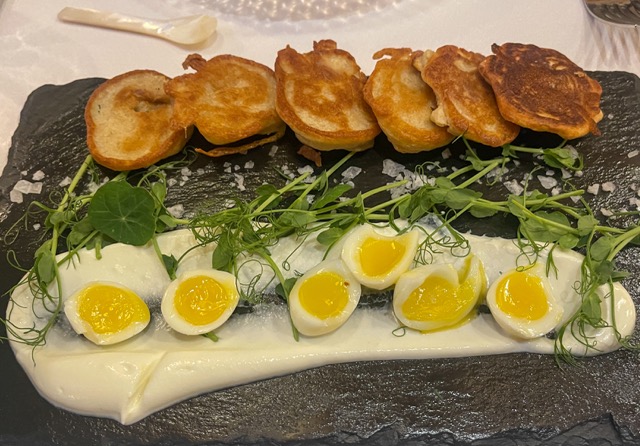
Our first night in Kraków, we treated ourselves to dinner at a Michelin starred restaurant – Pod Noseum (https://kanonicza22.com/restauracja/). We splurged on the starter, sharing a tin of Oscietra (also called Ossetra), one of the world’s most prized (and expensive) Russian caviars served with blini, quail egg, and crème fraîche. While champagne or vodka are the traditional pairings for caviar, we enjoyed it with a smokey Islay whiskey. Disclaimer: I did confirm that it is now harvested sustainably from sturgeon who are raised in wild river fields and aquacultures.
Pink Soup – Hot or Cold?
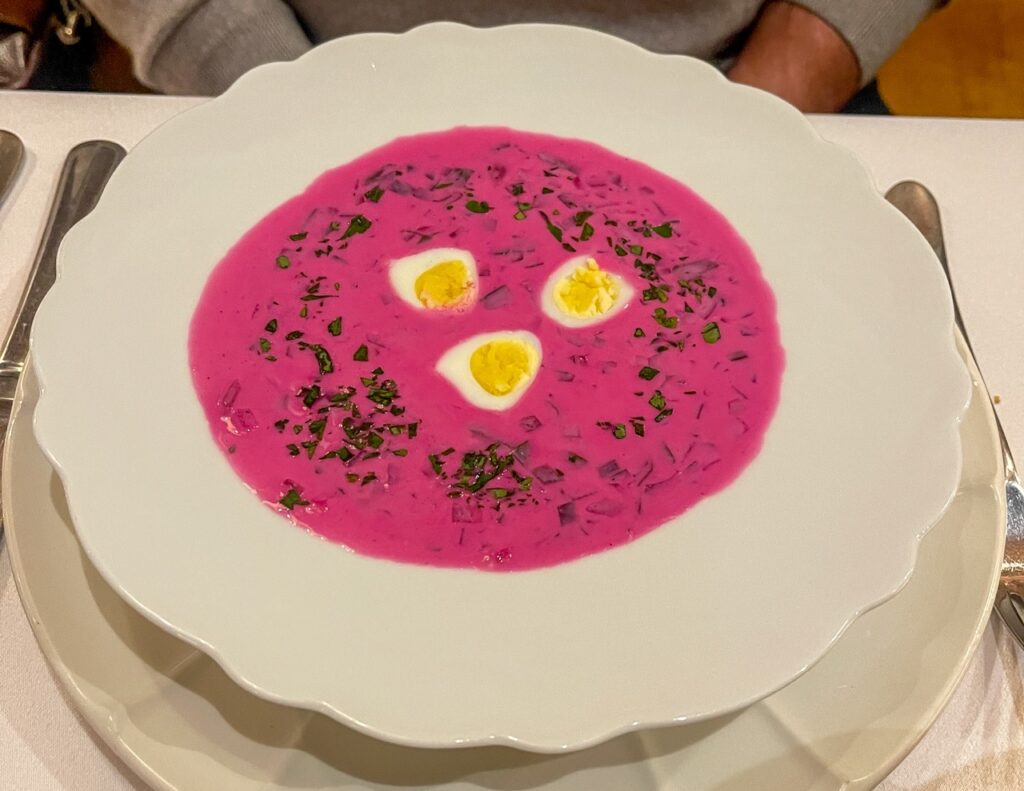
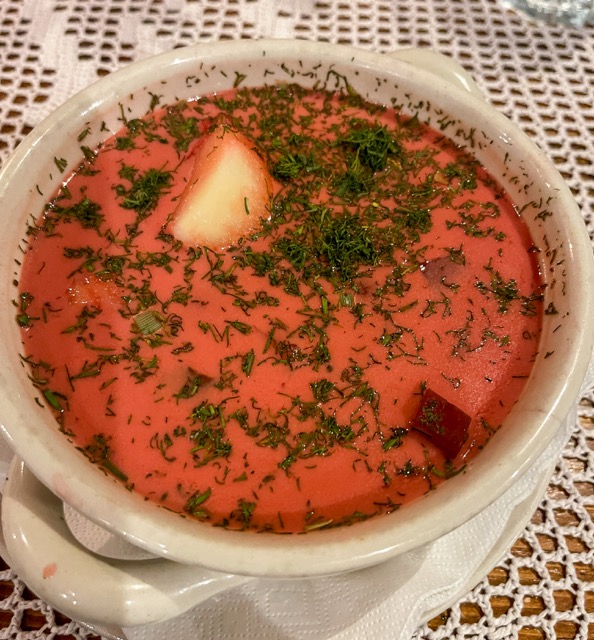
Ed’s first course at Pod Noseum was Chłodnik, Poland’s cold beet soup. It was a vibrant magenta color dotted with herbs and a halved quail egg. The next day, on a walking food tour, we were served Barszcz which is a warm beet soup that’s earthy and slightly sweet. Hot or cold, both were delicious!
Street Food
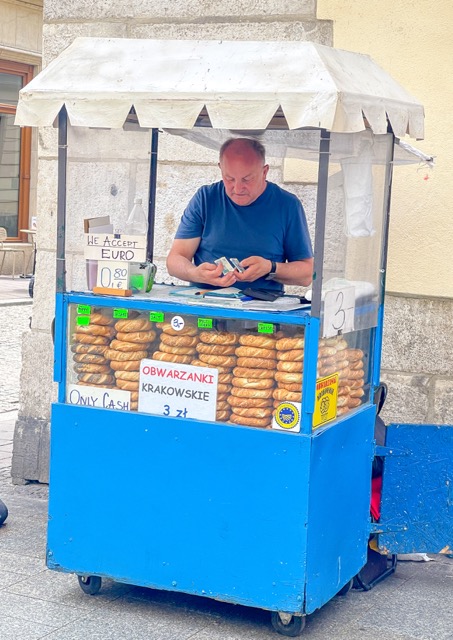
Sold on Kraków’s main square for well over 600 years, obwarzanek is a sort of bagel meets pretzel. A chewy, braided dough ring sprinkled with salt, poppy or sesame seeds, obwarzanki are sold from blue rolling carts on street corners all over Kraków. Claimed to be the predecessor of the bagel, it was invented by Cracovian Jews. With a sell-by-date of about three hours, the bakers of Kraków are kept busy producing up to 200,000 obwarzanki per day in the summer.
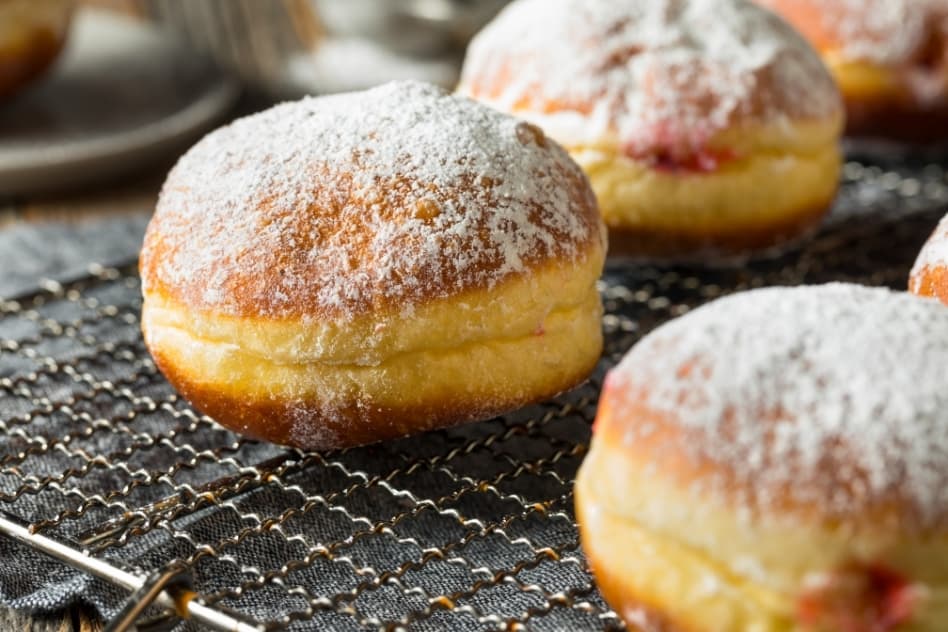
Pączki are plump, pillow soft donuts that are traditionally filled with rose petal jam. Yum! This wonderful Polish pastry is so popular it has its own holiday (Tłusty Czwartek or Paczki Day) which is celebrated before Lent and involves binge-eating paczki in the company of family and friends. Using up all the ingredients that can’t be eaten during Lenten fasting – lard, sugar, eggs – provides a reasonable excuse for this madness.
Papal Cake
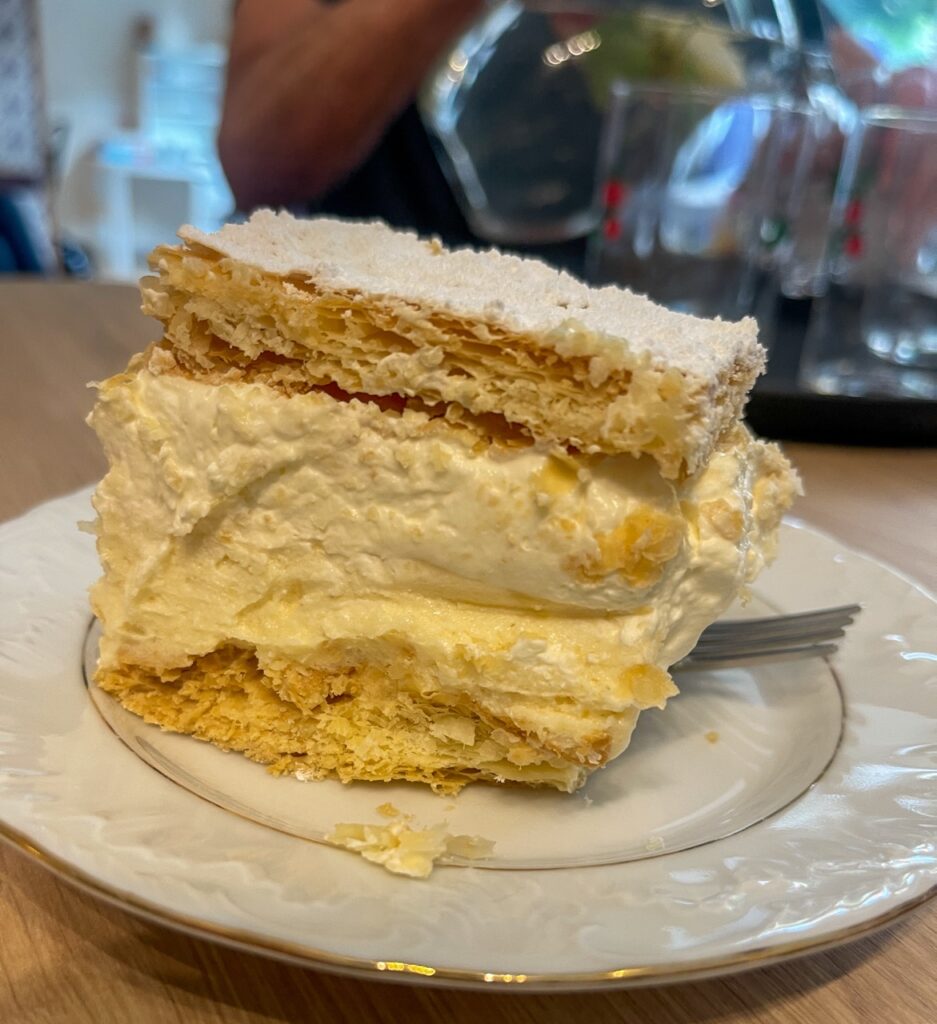
The famous Kremówka, also known as Papal Cake, was a favorite of Pope John Paul II who was born and spent his childhood in a small town near Kraków. This “cake” is actually a dense block of vanilla cream custard sandwiched between layers of pastry and sprinkled generously with powdered sugar. Amazing!
Too Many Vodkas, Not Enough Time
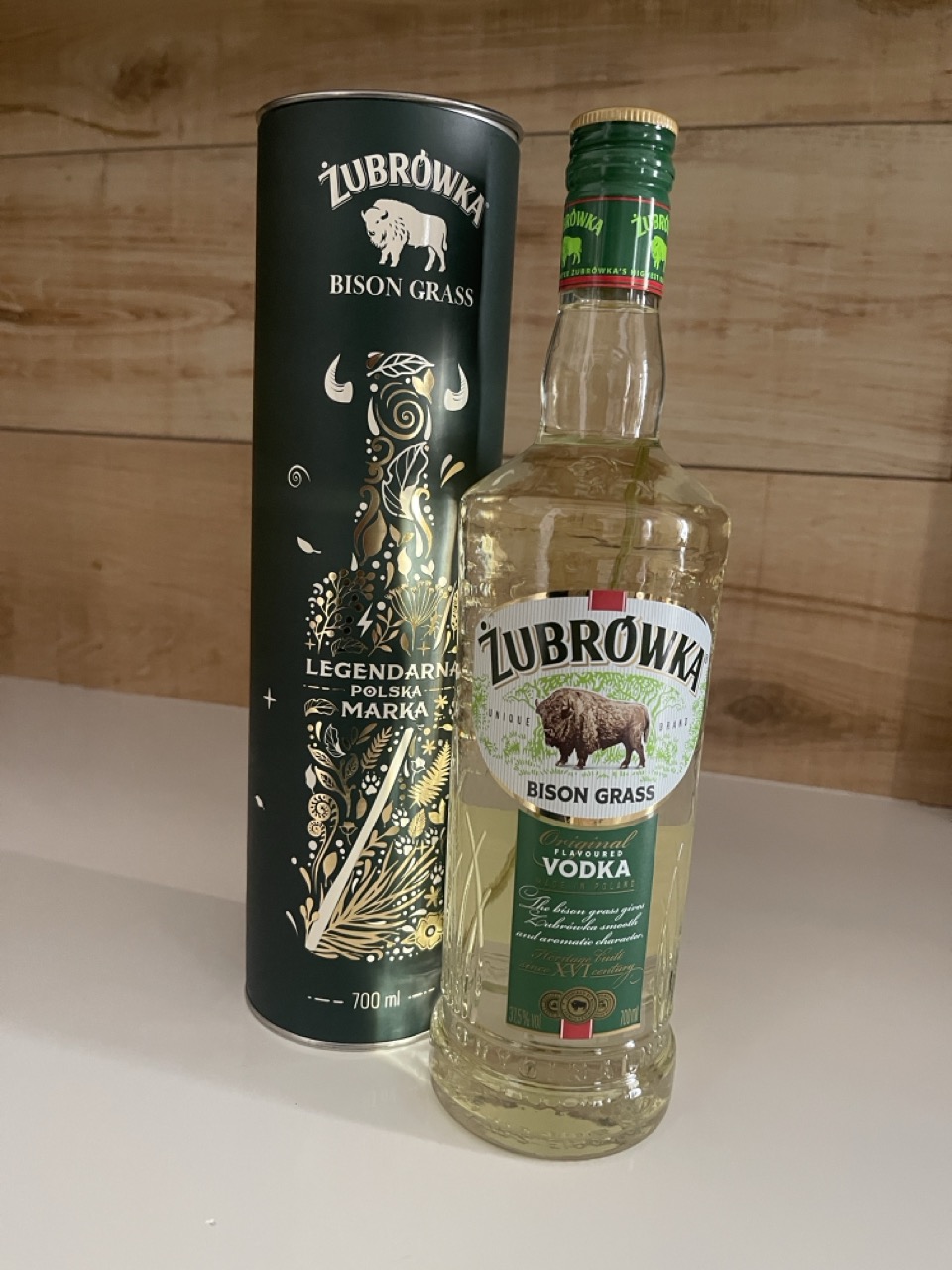
Poland takes vodka seriously. There are dozens of different types, each with unique flavors and ingredients. There is traditional plain vodka made from grains (rye or wheat) or potatoes. Flavored vodkas are infused with herbs, fruits or spices with the most famous being Żubrówka or Bison Grass Vodka (our favorite!). You can also find small-batch artisanal vodkas and premium aged vodkas. With so many to try, it looks like we’ll have to return for another round or two.
Na zdrowie!
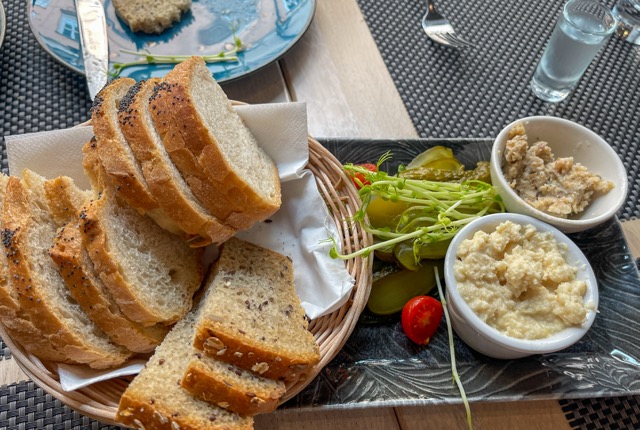
One of our favorite rituals when we travel is learning how to say “cheers” in the local language. It’s a small gesture, but it always makes a toast feel more meaningful—and more connected to where we are. In Poland, the word is “Na zdrowie!” (pronounced nah ZDROH-vyeh), which literally means “to your health.” In addition to raising your glass, the Polish toasting etiquette includes making eye contact with each person. The clink of glasses, the warmth of the spirit, sharing a table, all bring us closer to one another and remind us to live in the moment. To your health!
Holding on to Hope
Poland in the 20th century is a compelling narrative of resilience. After literally being wiped off the map for 123 years by the Prussians, Hapsburgs, and Russians, Poles regained their independence as a nation in 1918 after WWI. Then, less than 20 years later, Poland was the first country in Europe to experience World War II and suffered the heaviest proportionate human losses – nearly 20% of its population. Of course, Poland’s occupation didn’t end when the war did. Beginning in 1945, the Soviet Union’s Red Army occupied Poland, along with much of Central and Eastern Europe, installing an authoritarian system of government. Like other Eastern Bloc countries, Poland only became a free nation again in 1989, as the fall of the Soviet Union began. The adoption of a fully democratic system, integration with NATO, and the embrace of the European Union have sparked the regeneration of a thriving Polish economy and culture that perhaps hasn’t been seen since its heyday as a salt empire.
Reflecting on all of this has helped me place our despair over the current ascendency of brutal authoritarians into some context. There is hope. Poland’s current renaissance gives testimony. The darkness is not permanent.
There will be light again, someday.

About Us
Welcome to our little corner of the world where we invite you to embark on exciting journeys with us!
We’re Ed and Bonnie, a duo passionate about exploring the world and experiencing its wonders. Our love for travel isn’t just about discovering new places; it’s about sharing those moments with cherished family and friends like you.
Our hope is that you will feel like you’re right there with us, sharing in the excitement and wonder of each destination. Better yet, let’s plan a rendezvous somewhere wonderful! Learn more
You have ventured into territory for us untraveled and we appreciate your insight into history, architecture, culture, language, and food and drink: Here”s To YOUR health!
Once again, we will be sharing this valuable blog filled with wonderful photos with family and friends, near and far! J&N
You have ventured into territory for us untraveled and we appreciate your insight into history, architecture, culture, language, and food and drink: Here”s To YOUR health!
Once again, we will be sharing this valuable blog filled with wonderful photos with family and friends, near and far! J&N
You have ventured into territory for us untraveled and we appreciate your insight into history, architecture, culture, language, and food and drink: Here”s To YOUR health!
Once again, we will be sharing this valuable blog filled with wonderful photos with family and friends, near and far! J&N