
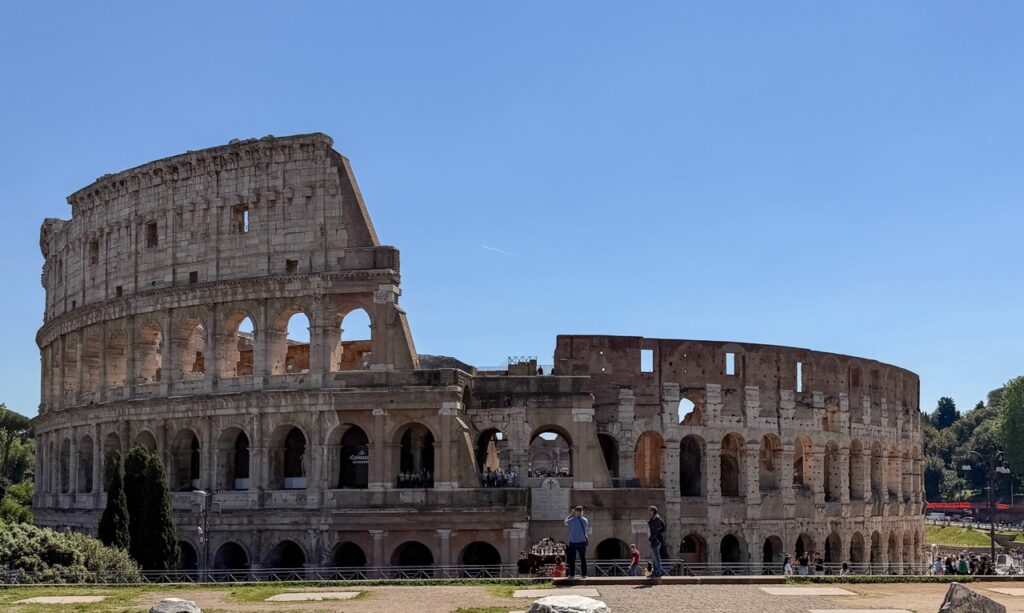
Reflecting on our recent brief sojourn in Rome and Tuscany, Bonnie and I sat down to discuss the approach we’d take to writing a blog post about it. We’re feeling a need to change it up a bit. Maybe go a little deeper or find a fresh angle on our travel experiences – not just recount what impressed us in chronological order. So, we decided we would tell this story with overtourism as the major theme – “Rome – The Weight of the Past, and The Weight of the Crowd” and “Tuscany – Beauty Under Pressure” (cute, right?) – because, well Rome and Tuscany are overwhelmed at times by tourists. And yes, we had some miserable experiences – particularly in Tuscany – where the crush of people literally prevented us from keeping both a lunch and a dinner reservation in two different hill towns.
Then, I sat down and began reviewing the photos, remembering and reliving precious moments, and I couldn’t do it. Maybe in the future there’ll be a rant about the scourge of overtourism. But today, I just want to bask in the beauty and joy of Italy.
Only a Few Steps Off the Beaten Path
Yes, Rome is crowded with tourists – hordes of people massed around the Colosseum, the Spanish Steps, and the Trevi Fountain in a forest of selfie sticks. And the Vatican? Fuhgeddaboudit. And yet, it requires only a minimal amount of initiative and curiosity to step out of the crush into quiet spaces of sublime beauty. For example, The Museo Nazionale Romano, Palazzo Massimo alle Terme became one of our sanctuaries on this visit. It sits across the street from Rome’s main train station, just 1500 meters from either the Colosseum or the Trevi Fountain. In other words, in the middle of what Google Maps identifies as “Centro Storico” – tourist central.
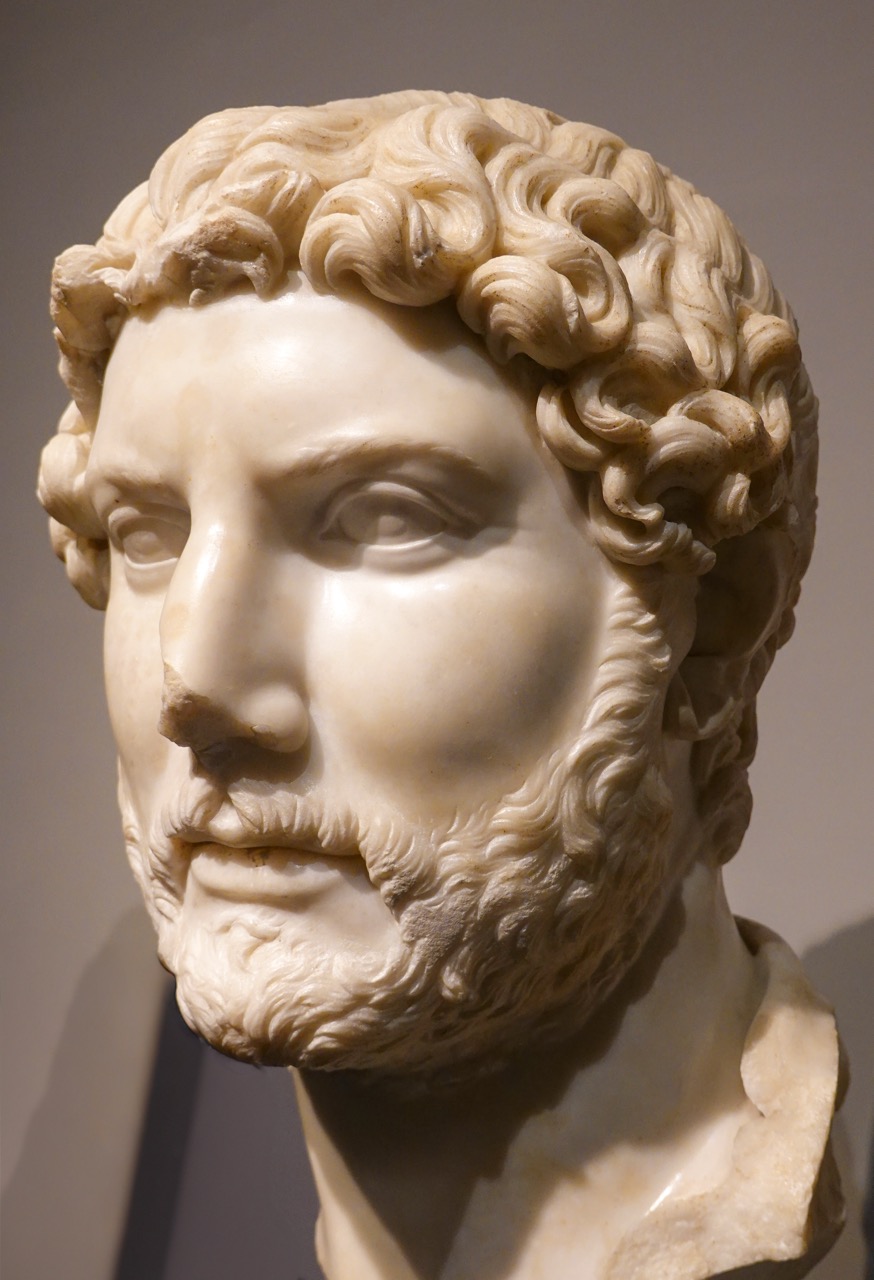
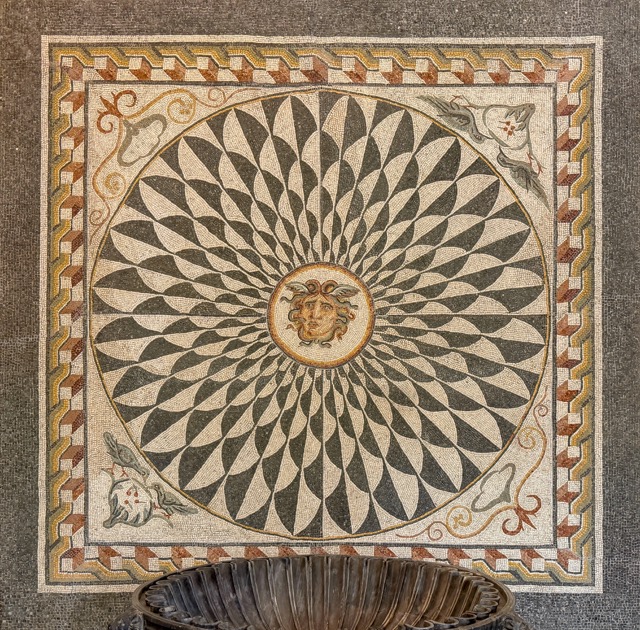
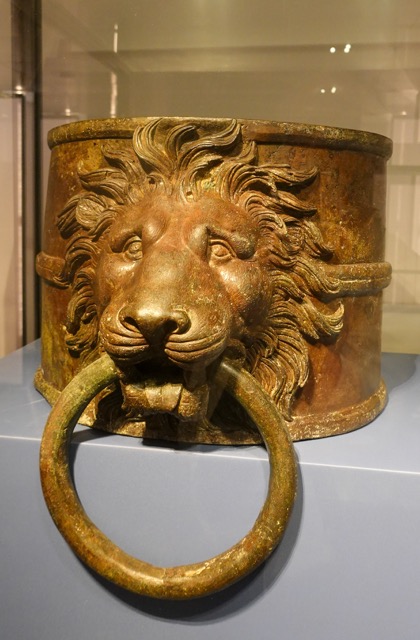
Maybe the name is too long for the average visitor to grasp what is on offer here. Or perhaps the notion that the National Museum of Rome is spread among four different sites is simply too confusing. Or maybe our thirst for a deeper understanding of the places we visit is just weird in this go fast, digitized age. Whatever the case, we stepped away from the hordes around us, approached the front doors and walked straight in without queuing. It felt like we’d discovered some sort of secret cheat code to Rome. Stepping inside we were suddenly immersed in a cool, hushed ambient of ancient beauty and priceless treasures with perhaps a couple dozen other like-minded souls. Truly surreal.
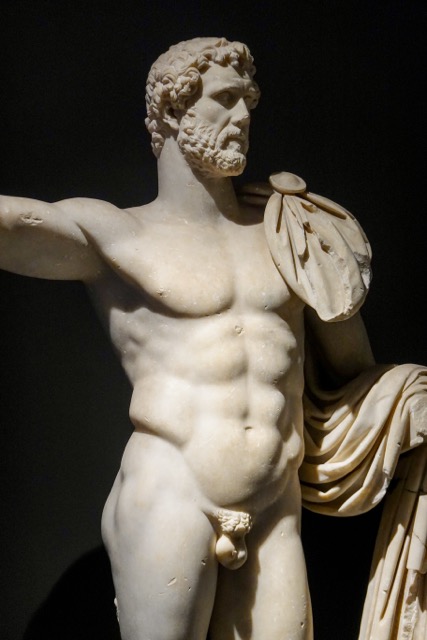
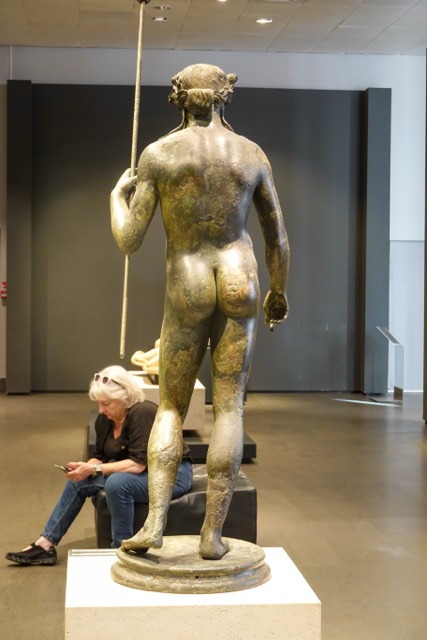
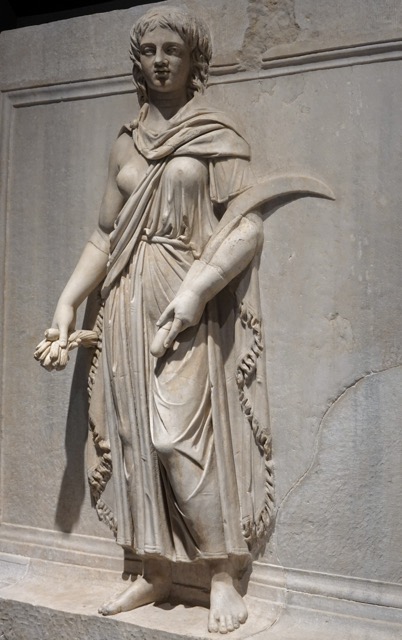
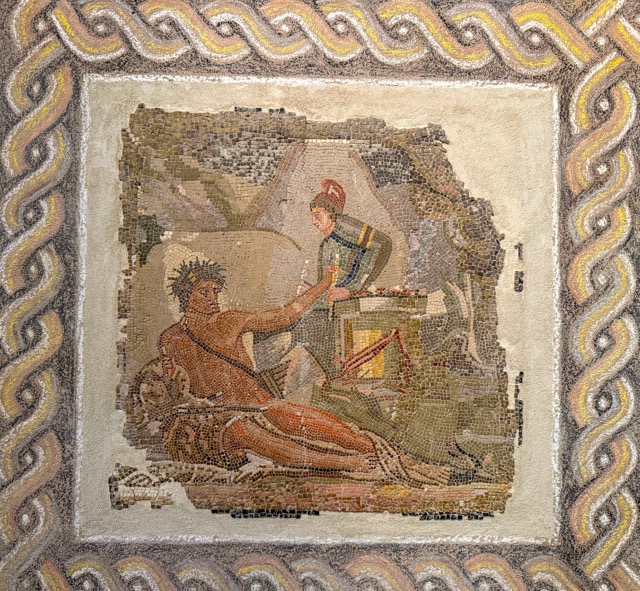
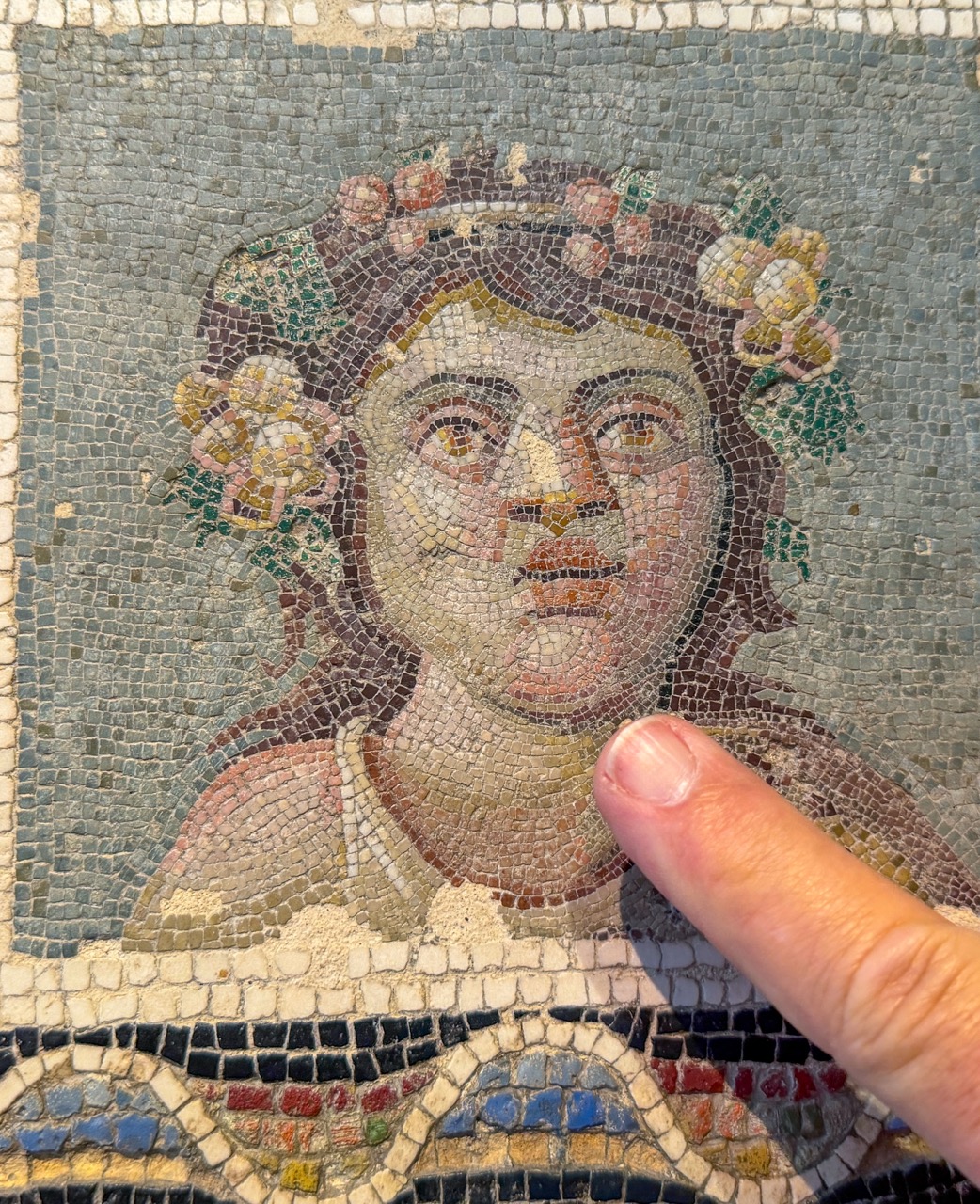
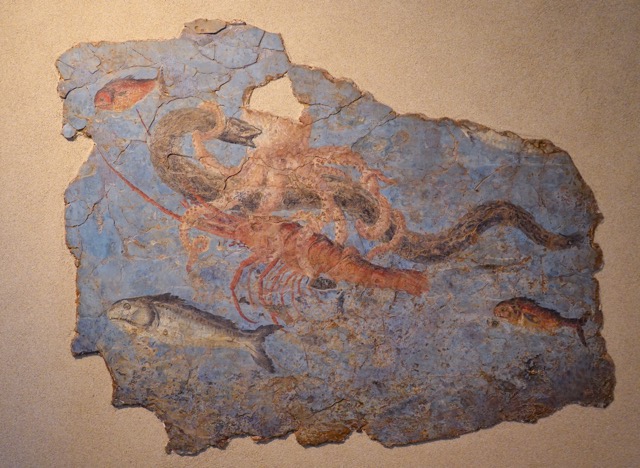
Each room of the Massimo Palace is filled with the art and treasure of empire that has been uncovered by the excavation of ancient Rome since the 19th century, or claimed from the collections of Rome’s medieval elites. We were overwhelmed by the fully intact floor mosaics, wall frescoes covering entire rooms, countless portraits in marble and bronze, and a collection of coins that spans a thousand years of history. There were two moments, however, that really took my breath away: entering the garden room from Livia’s Villa and standing in front of the Lancellotti Discobolus.
The Unnatural Natural World
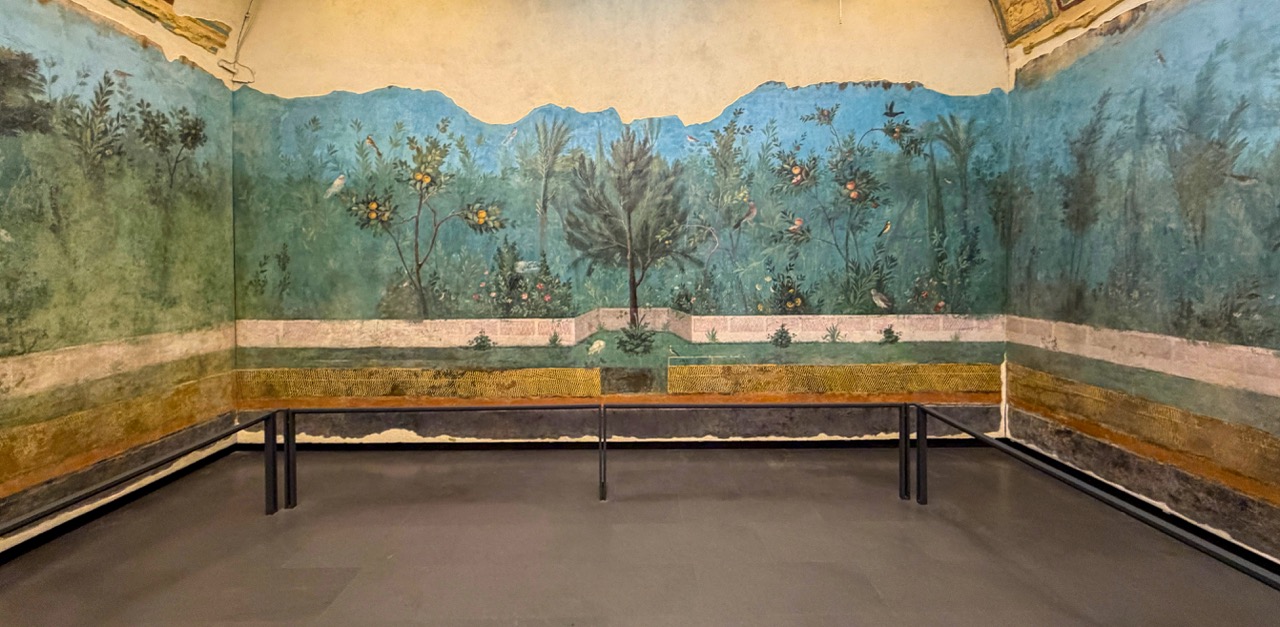
Livia married Octavian (Caesar Agustus) in 39 BC. It was her second marriage, and she came to the arrangement with her own wealth which included a property on the outskirts of Rome – a country house – where she lived for much of her life. It was a lavish estate where Livia could entertain and enjoy life as a woman at the pinnacle of power and status. In a world where her every move was subject to comment by the Roman elite, she created a space in the villa, known today as “The Garden Room,” which has been reinstalled, intact as part of the National Museum at the Massimo Palace. We literally walked alone into the room where Livia served refreshments to her guests 2,000 years ago, lounging on chaises, admiring the recreation of a garden world perfected by the imagination of the artist. The original room was, in fact, built below grade, accessed from the rest of the house by a short tunnel. So, the illusion created was of a wondrous, temperature controlled, subterranean garden where nature could be enjoyed sheltered from the intense heat of summer or the icy cold of winter.
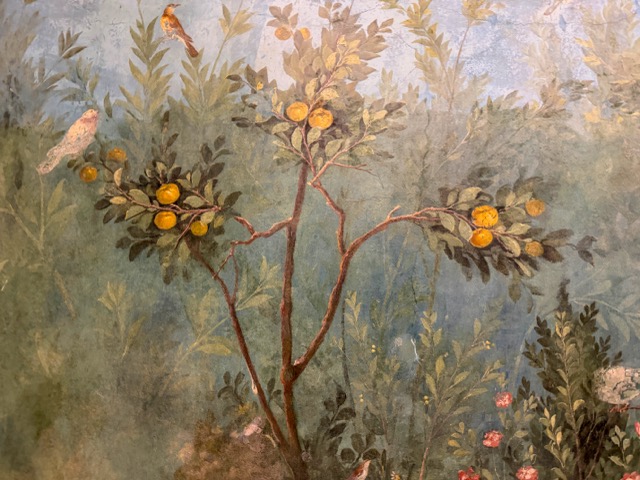
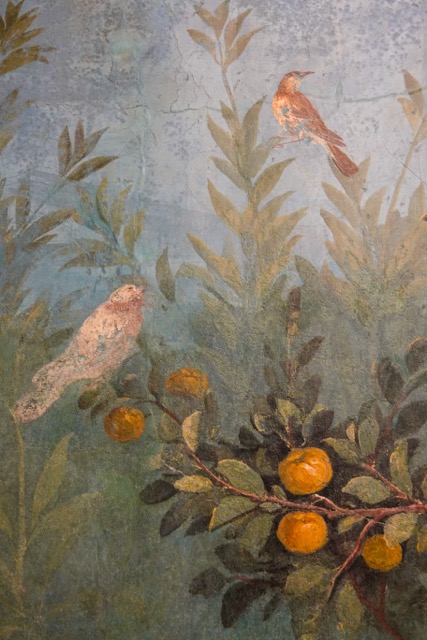
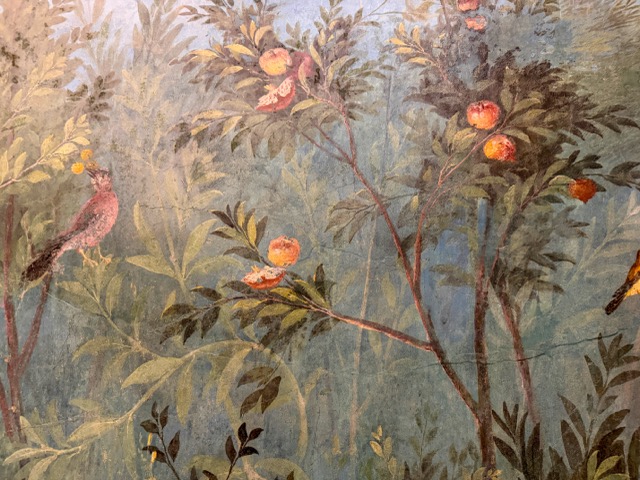
It was with a sense of wonder that I felt the calming power of the room. Somehow the color palette, the sense of depth, and the uncluttered composition combine to provide a balm to the senses that invites you to sit and contemplate the joy of being in a garden despite it being an entirely enclosed, indoor space. Even with our jaded, overloaded senses, where we expect our daily media to immerse us in the impossible and awe us with the fantastic, this is a magical experience. I can only imagine what the effect must have been on Livia’s innocent visitors two millennia ago.
My Copy’s Better than Your Copy
The Romans were obsessed with Greek art. No self-respecting patrician Roman could do without a collection of sculptures, either captured or copied from the great Greek masters. Among the hundreds of examples assembled at the Palazzo Massimo, one of the most iconic, the discus thrower, caught my imagination. Did you know I threw the discus in high school? So did my brother! Here I found myself standing in front of a figure first created by the Greek sculptor, Myron, around 450 BC depicting an activity linked to my own youth 2,500 years later. And with the idealized physique captured by Myron, it was of course, like staring in the mirror. No really. This a chunk of marble so beautifully fashioned that as you stare you find your own humanity cast before you. You hold your breath waiting for the flesh to pink up, for the muscle to tremble, anticipating the explosive, graceful movement that will launch the elegantly shaped missile into the sky – an athletic game, idealized, timeless, and purposeless. Human.
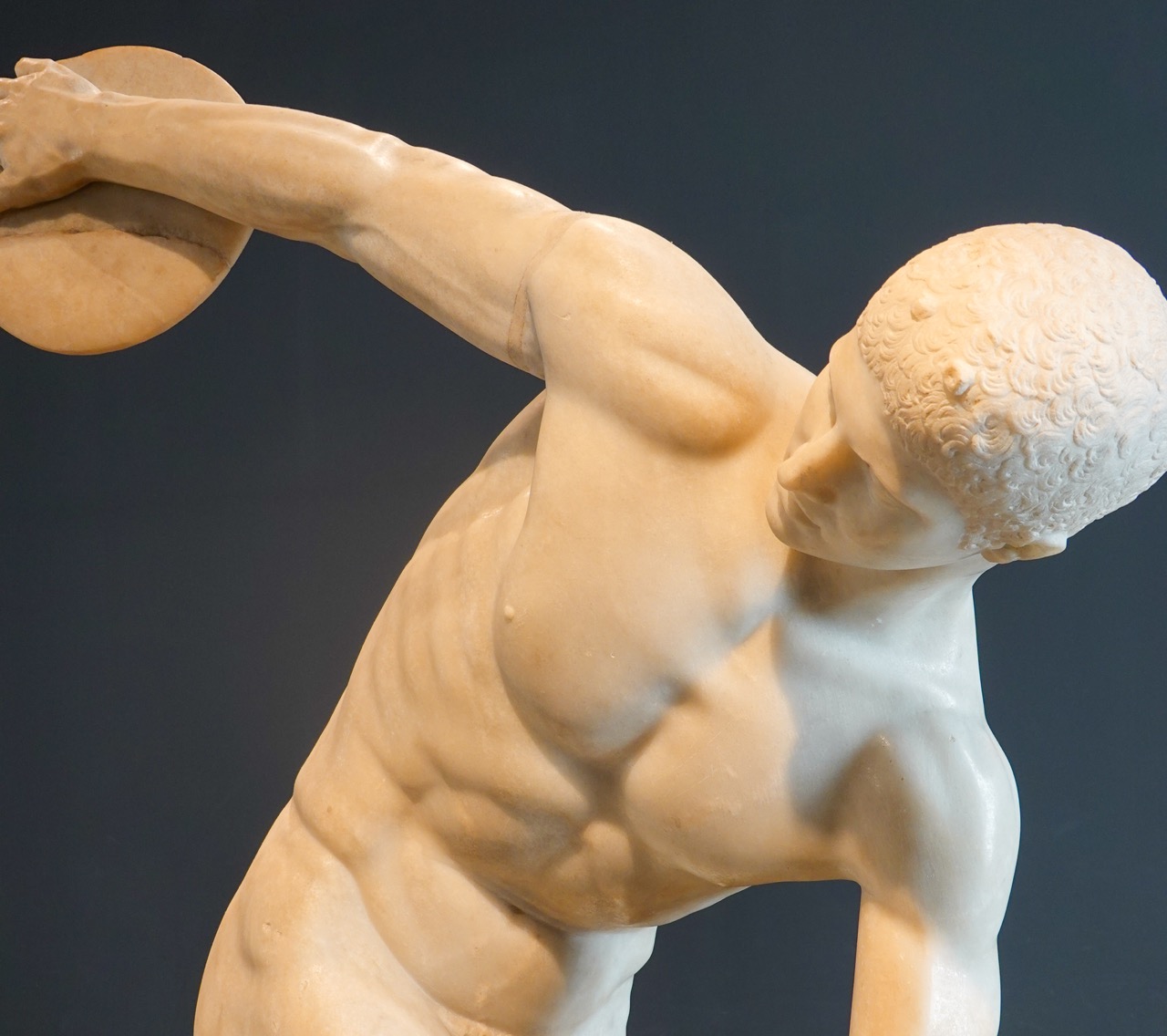
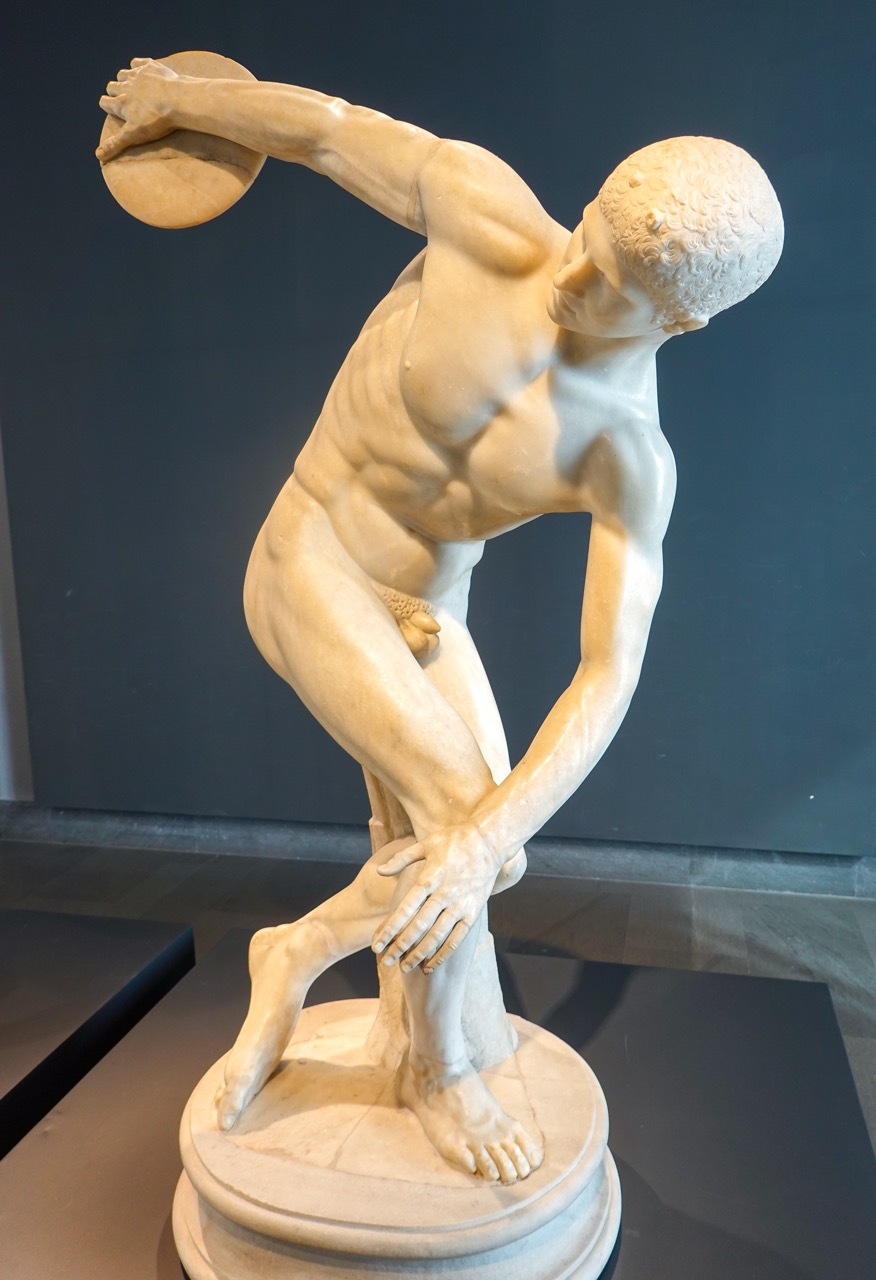
The glowing white figure I found myself admiring was a copy of Myron’s original bronze, which has been lost. However, thanks to the Roman’s obsession with Greek art, there are lots of copies in both bronze and marble, spanning hundreds of years. This particular copy is considered to be the finest in existence and I am certainly in no position to argue the point. As I turned away from my youthful alter ego, I found one more startling moment of beauty awaiting me.
Emotion and Ambiguity
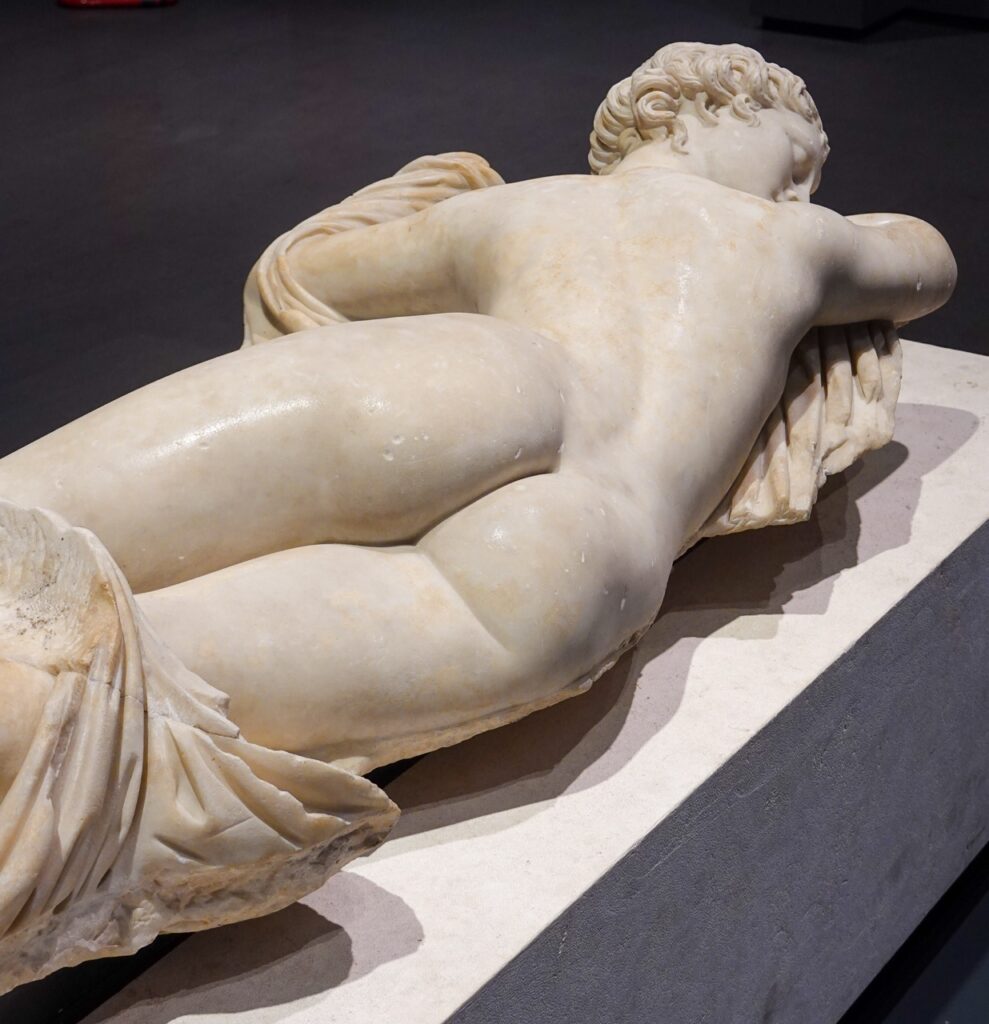
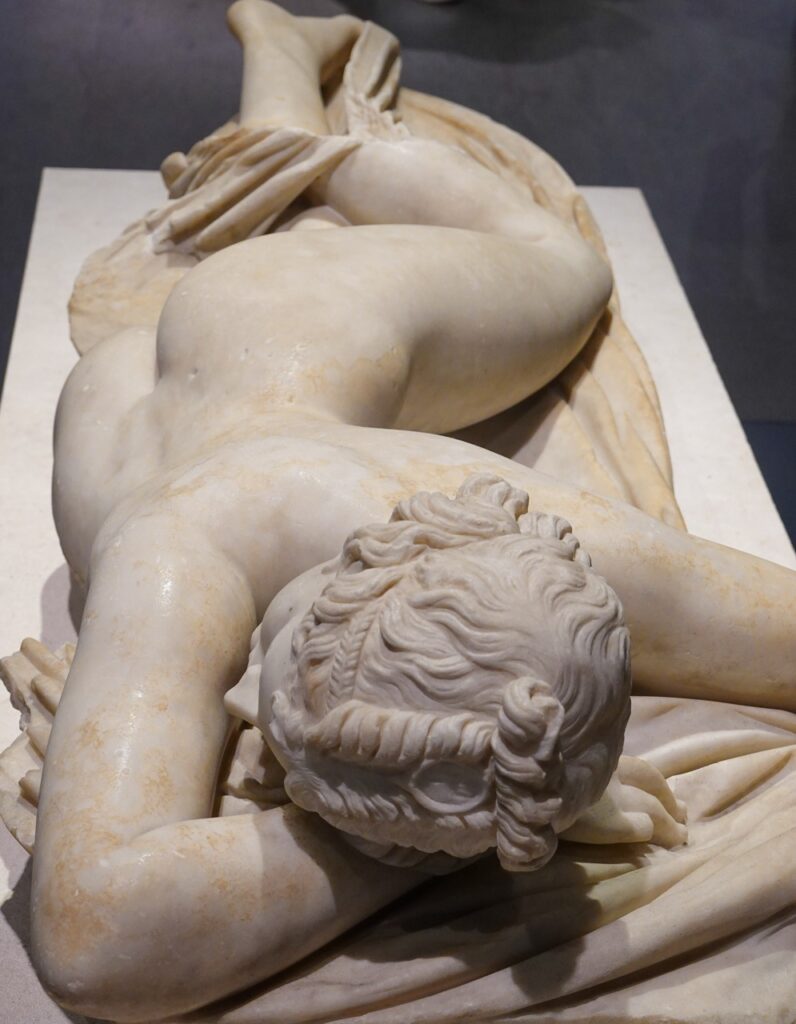
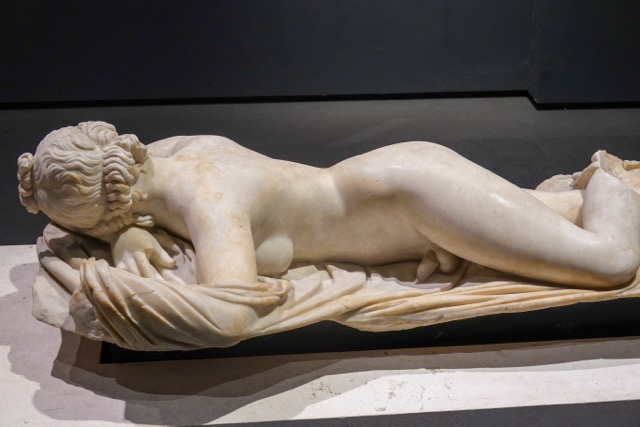
Among all of the sculpted figures standing upright about the gallery, a single prone figure lies at the center of the room. It is a form created to be as alluring and seductive as the artist’s imagination and talent would allow. Its beauty is such that you experience a confusing ache of wonder and desire. Then, slowly moving around the sculpture, another shock – she is, rather obviously, actually a he! The original Sleeping Hermaphroditus was created by a Greek named Polycles around 155 BC in bronze and I would love to have a conversation with the artist. Just like the Discus Thrower, there are copies all over antiquity and in museum collections around the world. Still, there should be a warning sign – “gender bending, emotional confusion ahead.” Or something.
Structural Engineering – Humbled by Antiquity
The other major event of our Roman holiday was an in-depth visit to the Colosseum and Palatine Hill area of the ancient city. Over the last couple of years, I’ve found it very difficult to sort out the jumble of ancient, old, and recent constructions at the center of Rome. One manifestation of its nickname, “The Eternal City,” is that it has been continuously occupied for almost three thousand years, nearly always as the capital of one kingdom or another. As a result, it has been built and rebuilt, over and over, century after century, remodeled, repurposed, and rediscovered endlessly. Then, in the last two hundred years or so, it has been excavated to uncover and preserve the remodeled, repurposed, and rediscovered buildings from the Roman Republic and Empire. As you gaze at the Centro Storico district you are confronted with a smorgasbord of buildings, monuments, and ruins seemingly smashed together with no delineation between millennia, era, or architectural style. Can someone please bring some order to this chaos?!
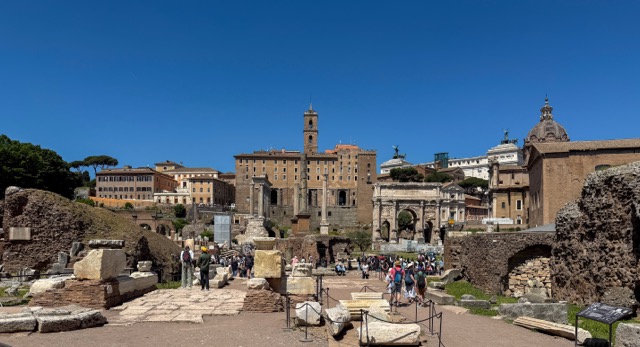
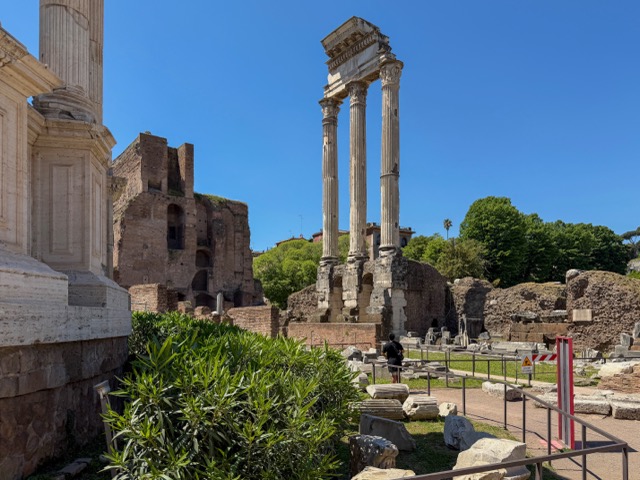
Enter Paolo Gardelli, PhD, archaeologist and history professor, moonlighting as our guide to the heart of Rome. It was a big splurge, hiring a private guide with the credentials of Paolo, but it turned out to be one of the true highlights of all our travel adventures in Europe. The three of us wandered about the ancient city for almost five hours, during which Paolo lectured, explained, clarified, answered our questions, and entertained us without a pause. He displays total mastery of the subject while managing to tell story after story in an engrossing and illuminating monologue.
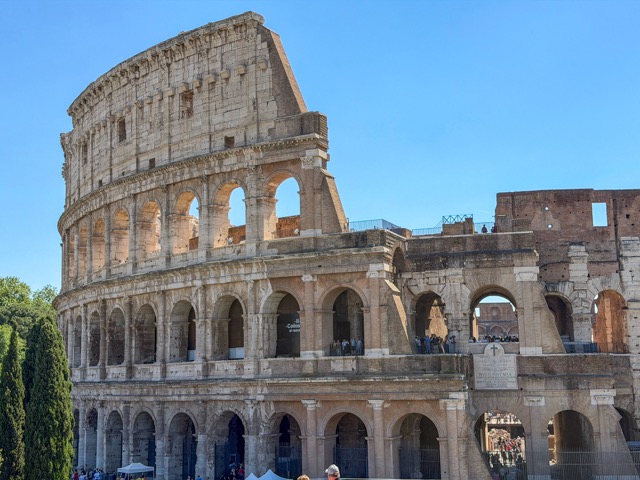
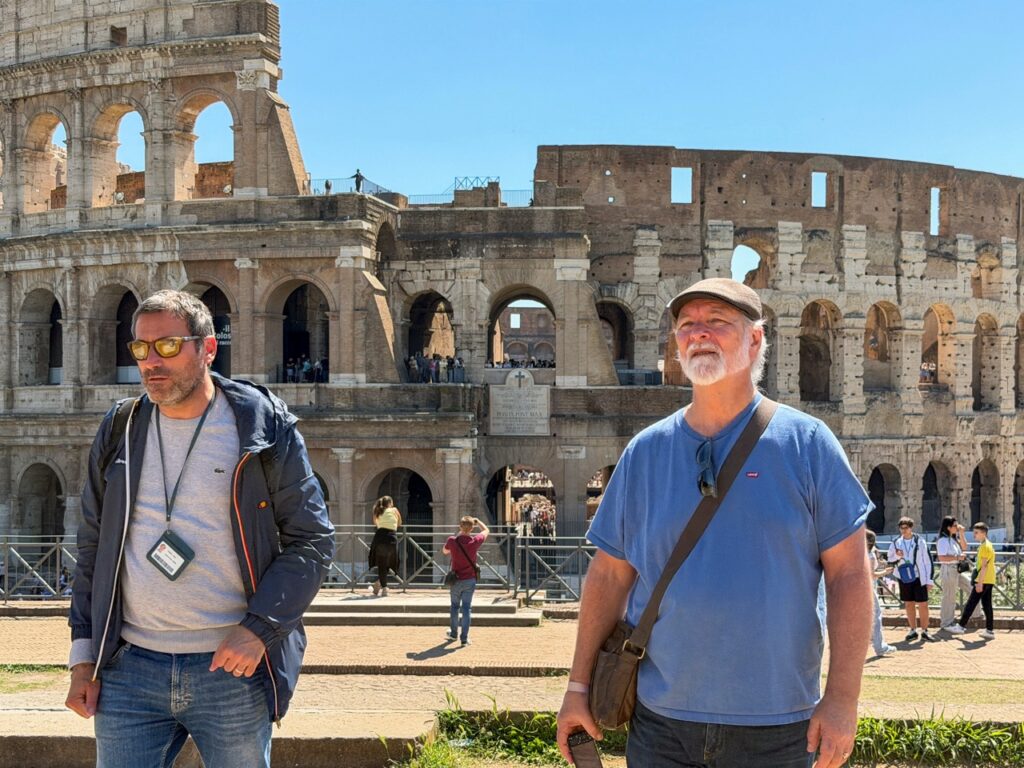
In addition to being a working archaeologist with an active site in Pompeii, Paolo has a particular expertise in ancient structural engineering and design which was an especially good fit with my interests. We spent a considerable amount of time discussing the innovation and expertise of the Romans, particularly during the era of the Colosseum’s construction. For me, it was particularly jaw-dropping to hear that this incredible building, sitting on a mat slab foundation more than 20 feet deep, was completed in just 8 years of intense work. I won’t bore you with all of the technical construction stuff but let me simply say that I could not get enough. I was spellbound. When it came to building, the Romans were sophisticated and advanced in ways that we are still just beginning to understand. And the comparisons to the modern era does not end with construction technology.
The History & Politics of the Colosseum
It turns out that “cancel culture” was institutionalized by the Romans two thousand years ago. At the death of an emperor, the Senate and Consul would debate the merits of the recently deceased to determine if he had been a worthy ruler. If he was found to have achieved the goals of the empire, he was deified and a temple for worshipping him erected. If he was found inadequate, he would be erased – literally. His buildings torn down, palaces replaced or repurposed, engravings scratched off stone monuments: he was totally canceled.
I’m sure many of you know that the brutal, matricidal emperor Nero famously presided over the greatest conflagration ever to strike Rome, a fire that burned down roughly two-thirds of the city in 64 AD. Being a certified sociopath, Nero had a keen eye for real estate development and saw the great fire as a wonderful opportunity to pick up a few choice parcels on the cheap. (Any similarities to recent events in Gaza are purely coincidental, of course.) Among them was a nice flat site at the south end of the Forum that he decided to turn into a lovely water feature (no word if the bottom was painted blue) to enhance the monumental palace he was also constructing from the ashes of his city. Nero eventually met his end in 68 AD, and after a year of chaos, Vespasian came to power and commenced the evaluation of Nero’s rule to determine his qualification for God status. Uh, no. Definitely not up to standards.
And so, Nero’s water feature was drained, and the foundation for the great Colosseum was laid on the lake bottom, thereby erasing part of Nero’s legacy. My favorite part of Nero’s canceling is how they managed the “Colossus.” Nero had ordered a giant hundred-foot-tall bronze statue of himself that he placed at the center of Rome to celebrate, well, himself. (Again, I disclaim any similarity to current events.) Vespasian, being the practical sort, decided that it would be a shame to waste this massive piece of metal, so he simply had the thing relocated, and the head on top replaced with a likeness of the sun god. No more Nero.
The Greatest Show on Earth
It wasn’t until the 1930’s that the “basement” level of the Colosseum was excavated to reveal the complex warren of rooms and stage equipment that made it possible to provide the citizens of Rome with the greatest spectacle on earth. The entire floor of the arena was a wood structure covered by at least a foot of soil and sand serving as a battle ground capable of soaking up the various organic residues produced by carefully staged blood sport contests that made up the typical Roman games. As many as eighty shafts penetrated the arena floor from below with an array of lifts, ramps, pulleys and cages arranged to allow the producers and directors of the games to have props, actors, animals, and gladiators suddenly appear in the arena through trap doors. Tunnels connected the subterranean level of the arena to the nearby gladiator training grounds and animal enclosures.
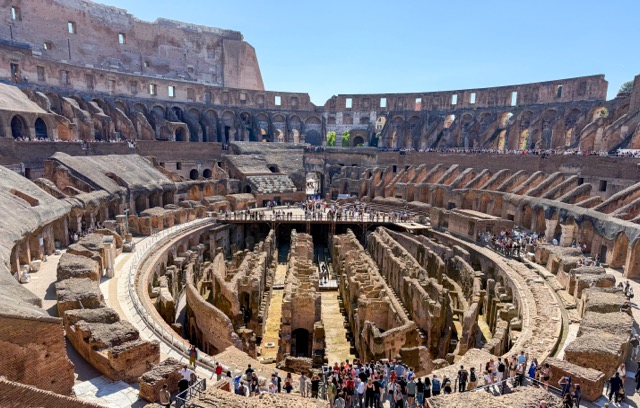
The games were designed and choreographed as elaborate shows recreating a romanticized version of Roman power projected to the ends of the earth – the more fantastical the better. The opening games, when the construction was completed, witnessed the deaths of between 6,000 and 8,000 exotic animals of all descriptions, primarily captured and transported to Rome from North Africa. Paolo informed us that for every animal transported in serviceable health to the Colosseum games, three or four died in transit, meaning that the opening games alone required the death of at least 30,000 animals. Such was the thirst of Romans for this bizarre entertainment that, over the centuries of the empire, North Africa was left barren of all such species and remains so today. It is a striking example of how capable humans are of destroying the earth’s eco-systems, when incentives align.
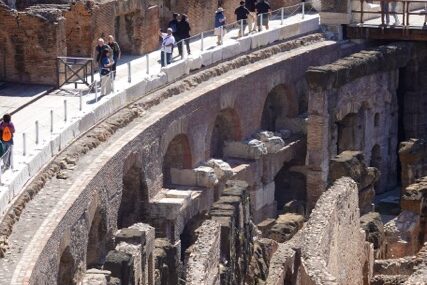
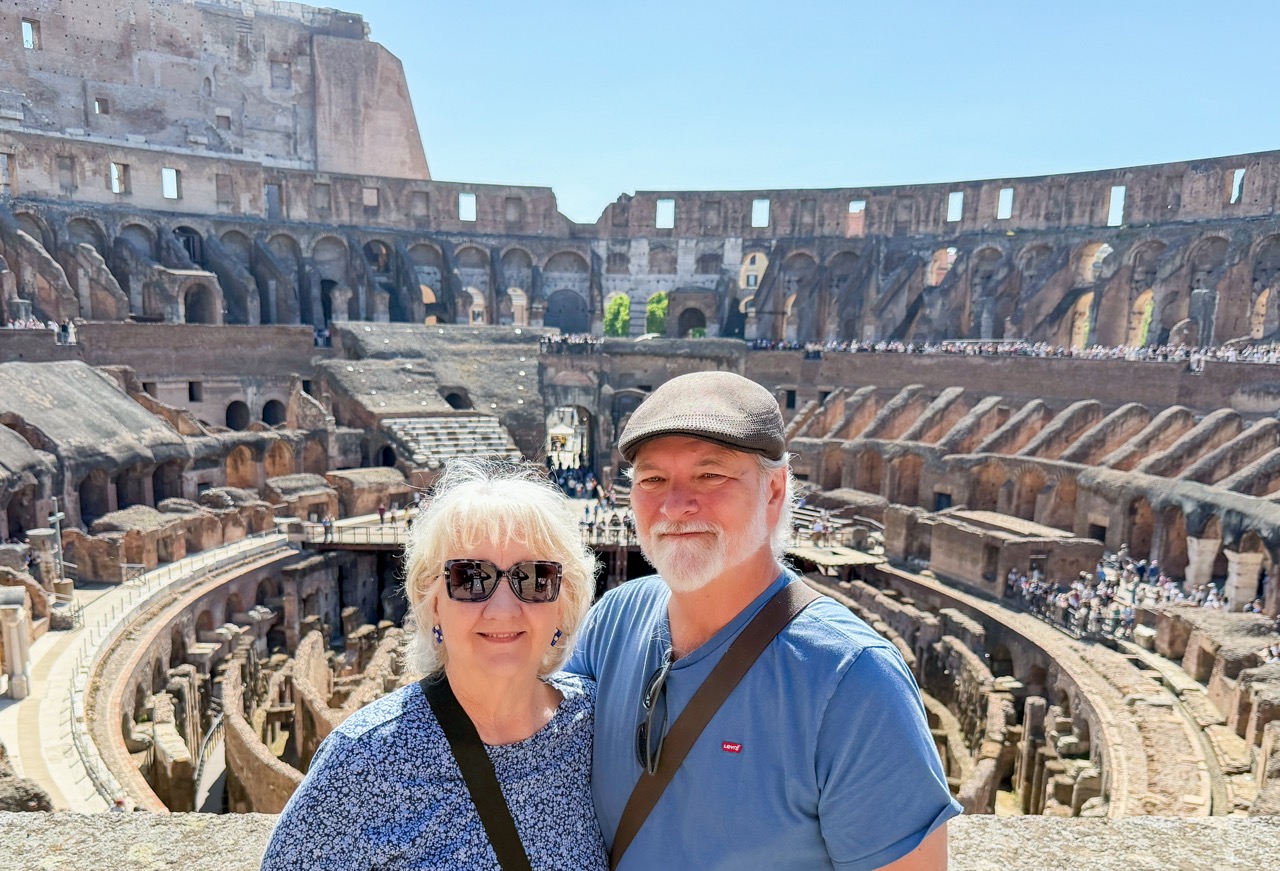
In fact, one of my greatest takeaways from the time we spent with Paolo was a new appreciation for the massive scale and power, not of Rome’s military, but of their logistics and transportation systems. The sheer volume of stone, timber, and other construction materials imported from around the Mediterranean is mind boggling. Just the outer wall of the Colosseum required 3.5 million cubic feet of travertine marble, quarried, cut, shaped, shipped, and placed in the wall. Another example Paolo gave of their logistics ingenuity related to the various obelisks around Rome. The largest of these is the Leteran obelisk which was removed from Alexandria, Egypt and shipped to Rome as a decoration for the Circus Maximus. Here’s the thing – the largest stones shaped and placed at the base of the great Giza pyramids weighed around 8 tons each, an impressive bit of engineering that we still marvel at today. The Leteran obelisk originally weighed 455 tons! The Romans shipped it across the Mediterranean in two pieces and reassembled it in Rome without damage. Mind blowing.
Another Quiet Respite
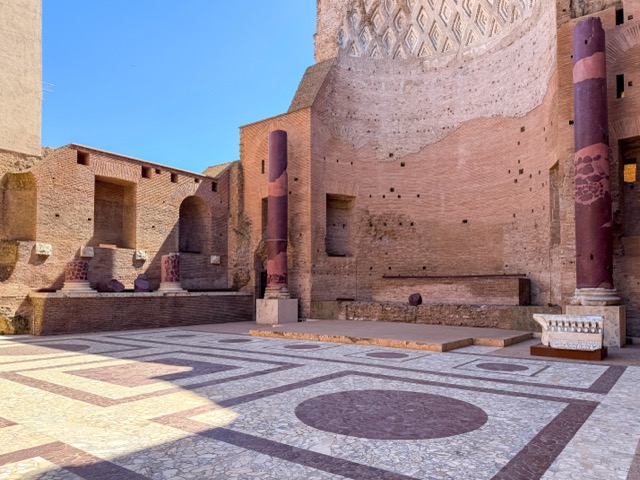
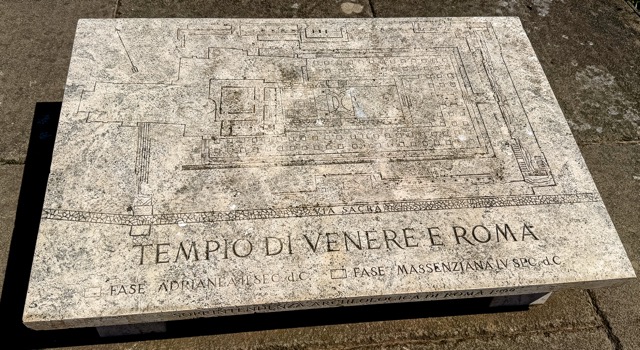
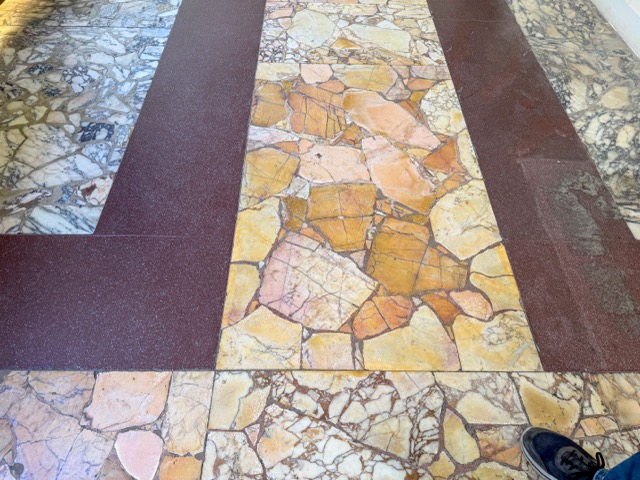
As we wandered about the Palatine and Forum areas, Paolo continued to provide an enlightening and entertaining explanation of the key features. Of course, throughout the day, we were accompanied by a few thousand of our fellow sightseers. Yes, there are lines, and security checks, and it is genuinely distressing to realize that this greatest of all tourist sites may ultimately be too popular for anyone’s good. Then Paolo quietly directed us off to one side of the Forum and through a doorway marked “Tempio de Venere e Roma.” Once again, I had the strange feeling of having used a cheat code to unlock a piece of Rome for us alone. Just a few hundred feet away, the crowds hurried by, but we found ourselves alone in Hadrian’s temple of Venus, walking across polished marble placed 2,000 years ago. Paolo smiled at our obvious delight and directed us around the back-to-back cellae that once housed the images of the goddesses. “I want to show you my favorite view of the Colosseum,” he said, as the courtyard opened up to reveal the Arch of Constantine and the great arena beyond. We left Paolo at the site of Julius Caesar’s murder, and the small, ruined temple built to mark the moment. And we left with a profoundly improved understanding and appreciation of this most Urbs Aeterna.
A Most Ambitious Project
There was one last stop we wanted to check out before moving on to Tuscany for a few days. Once again, a construction related item had caught my attention: the crazy Romans are building a new subway line . . . straight through the heart of the ancient city! As you can easily imagine, this turns out to be at least equal parts construction project and archaeological dig. While modern tunneling equipment allows the actual track to be located well below any of the ancient artifacts of the city, each location where a station is constructed must be excavated with painstaking care and full archaeological recovery of the city’s heritage. So, the crazy Romans hit upon a brilliant scheme: each metro station is also a museum displaying the finds from that location. Off we went to get our metro tickets for a ride on Line C with stops at the two most recently completed archaeostations – Porta Metronia and Colosseo.
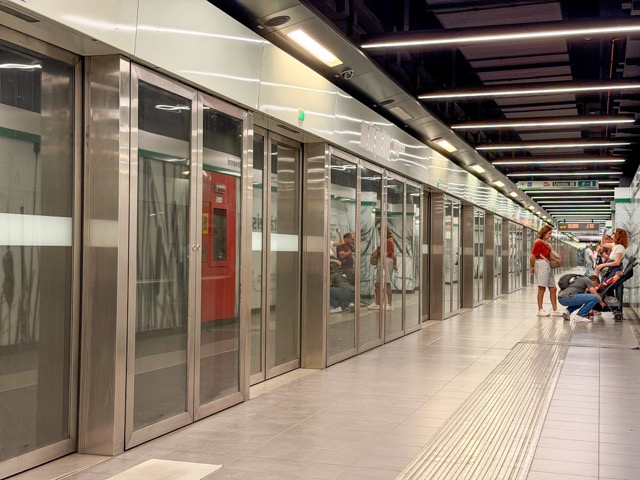
In the excavation of the Porta Metronia stop, the crews uncovered an entire military barracks complex complete with mosaic floors, frescoed walls, and the commander’s house. These treasures were either left in situ, or reinstalled, integrating the museum directly into the metro station. We were disappointed to find the exhibits closed when we arrived but still enjoyed wandering around the five levels of the station, marveling at the wall graphics detailing the geologic and archaeologic eras as you descend down to the platforms. On to Colosseo.
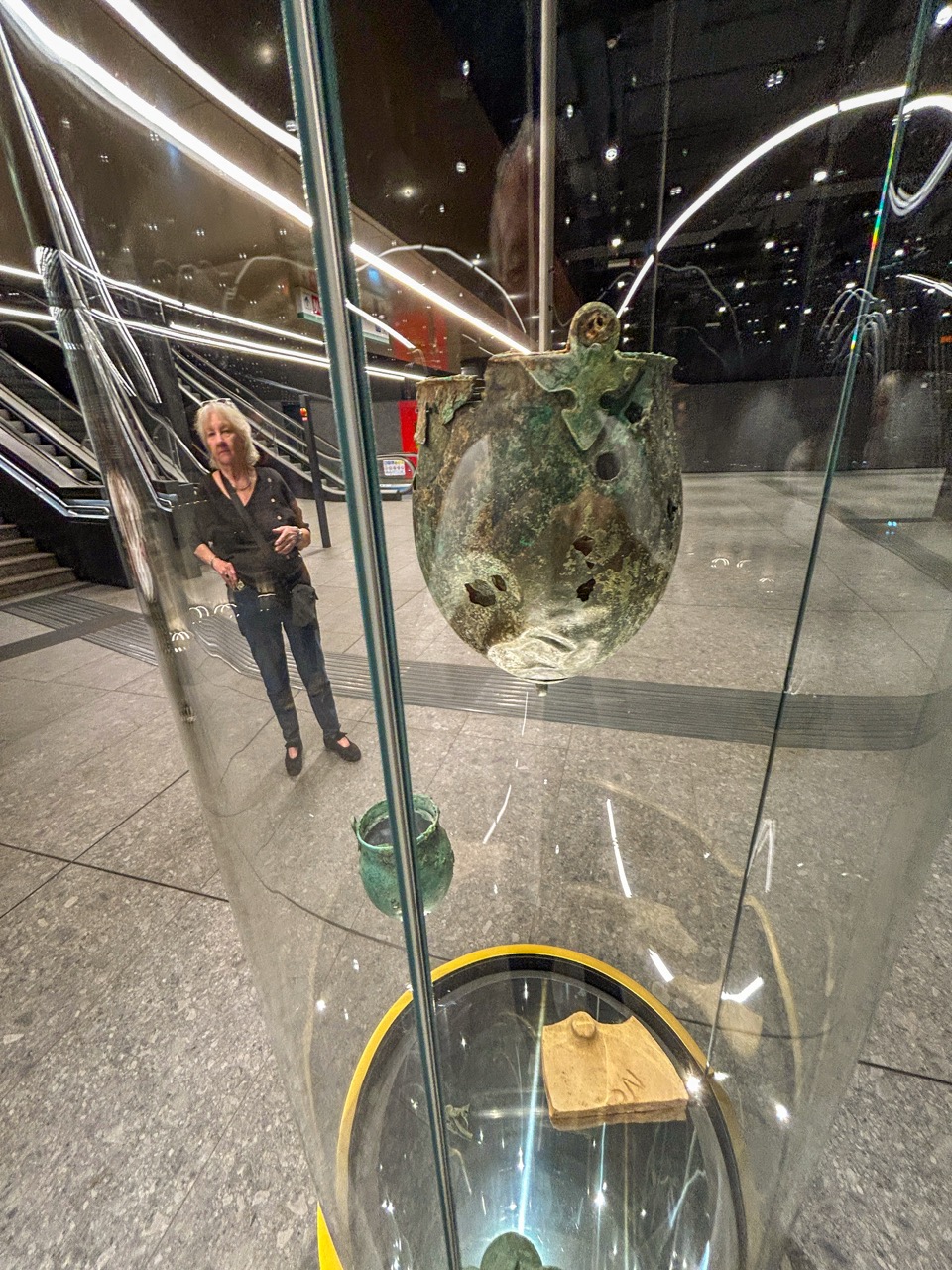
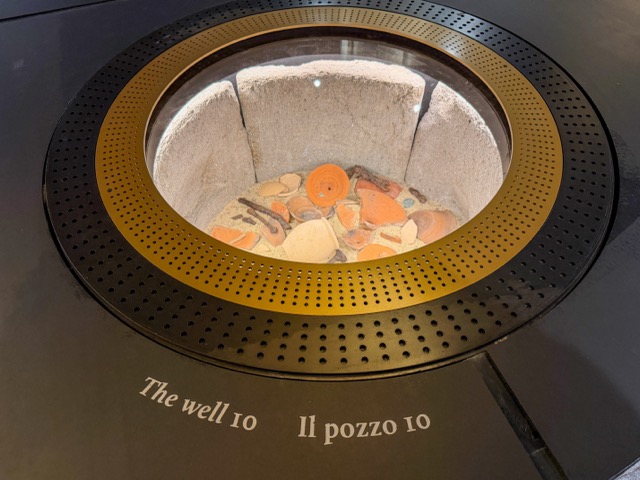
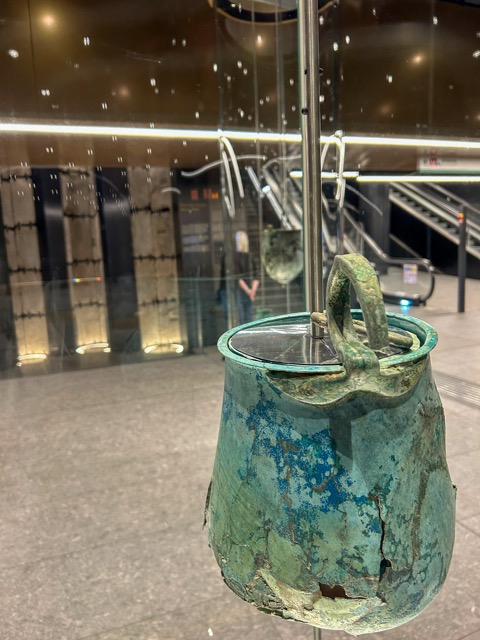
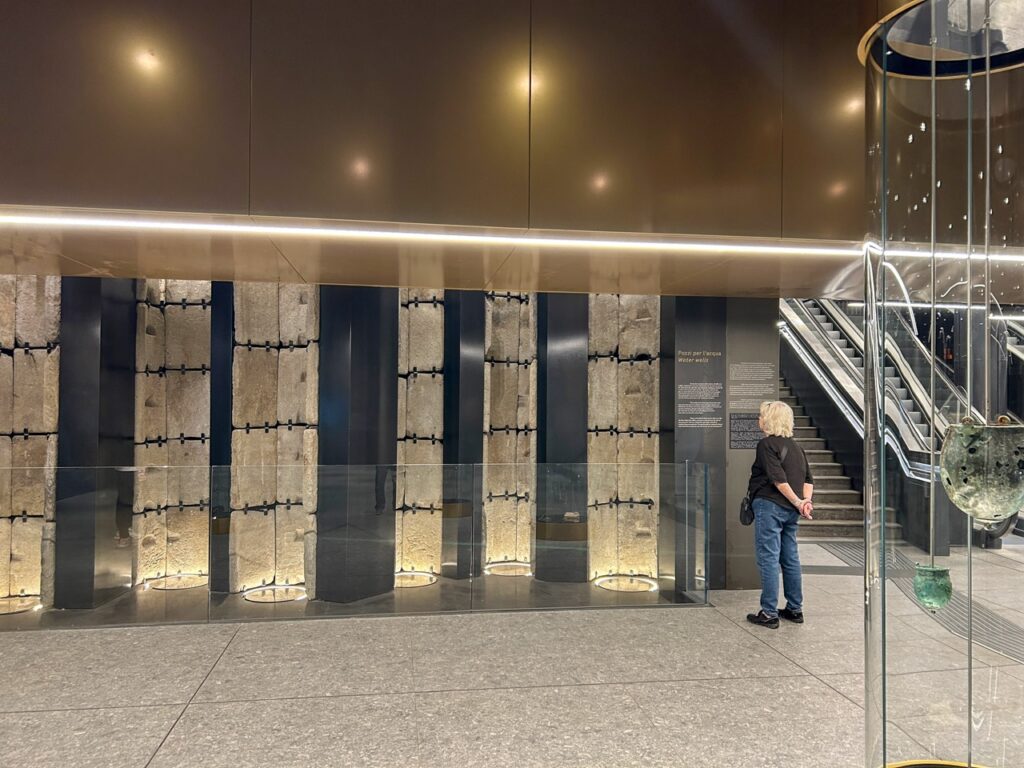
Here we were more fortunate. The excavation in this area uncovered 28 ancient water wells from the era of the Roman republic – before the age of empire and aqueducts – when the city was still forming and water was sourced from the water table. The result is another small museum displaying the related artifacts and discussing the unique religious and cultural practices related to these water wells – the source of life in that ancient time. And, here again, we found ourselves enjoying a remarkable space, practically alone, in a city that welcomes more than 16 million visitors per year, for the price of a metro pass.
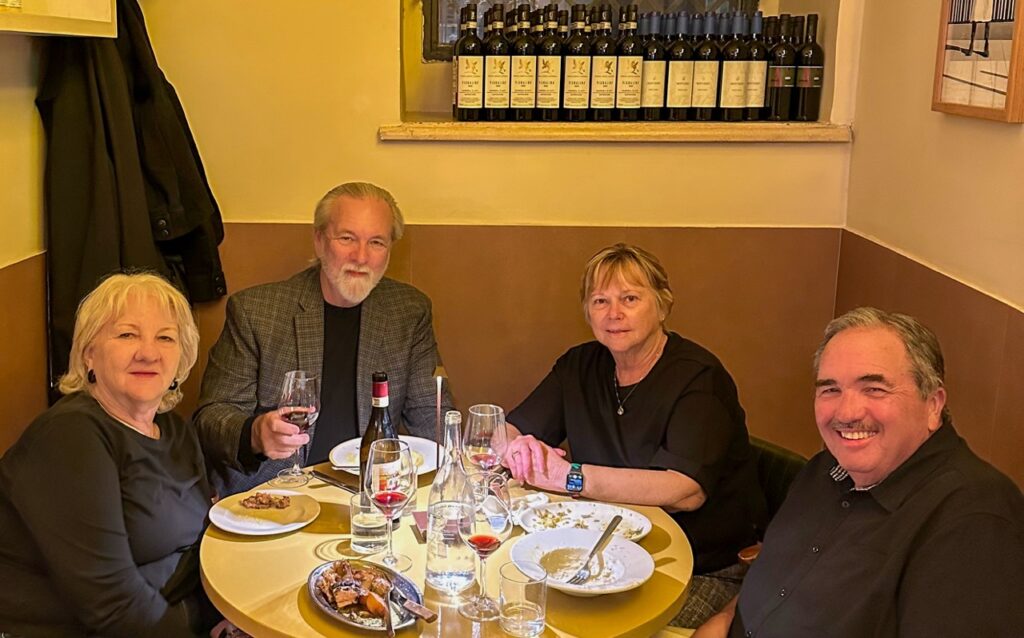
Our excuse for this visit was the arrival of Mark and Kathy in Rome, two life-long friends from our SoCal days, at the end of a Mediterranean cruise. We met at a trattoria, that final night, filled with stories of our discoveries and delight in having had our lives enriched by a deeper understanding of the civilization that begat western culture and society. And we were reminded of how precious it is to have close friends to share it with.
On to Tuscany.

About Us
Welcome to our little corner of the world where we invite you to embark on exciting journeys with us!
We’re Ed and Bonnie, a duo passionate about exploring the world and experiencing its wonders. Our love for travel isn’t just about discovering new places; it’s about sharing those moments with cherished family and friends like you.
Our hope is that you will feel like you’re right there with us, sharing in the excitement and wonder of each destination. Better yet, let’s plan a rendezvous somewhere wonderful! Learn more
Am in AWE of your ability to capture the complexity of Roman history , art, architecture, and culture with such intricacy and enthusiasm! This is the Best lecture on the subject I have yet read or experienced! It truly all comes ALIVE even as you are talking ancient history! And the fact that you were able to Escape the Madding Crowd to do so is a miracle!\
Your photos are sharper than ever and convey so much of the richness of which you share. Will be sending this one out to others who have been to Rome, but never quite like this:
GRACIE MILLE, Ed! Jo Greiner
Wow, this post was an art history class