
He Basked. I Filed the Report.
We agreed, Ed and I, that we would write about overtourism. It was going to be thematic, maybe even brutally honest. We had the titles ready: Rome: The Weight of the Past, and the Weight of the Crowd; Tuscany: Beauty Under Pressure. Cute, right? We had the evidence. We had, in fact, been traumatized by the crowds in Tuscany — turned away from not one but two restaurant reservations in two different hill towns, which is either a travel disaster or at least a feat of impressive logistical failure, depending on how you look at it.
Then Ed sat down with our photos. And he blinked. One look at Livia’s garden room and the whole overtourism thesis evaporated. “I just want to bask in the beauty and joy of Italy,” he wrote. So here we are. Someone must file the actual report.
More Than One Kind of Friction
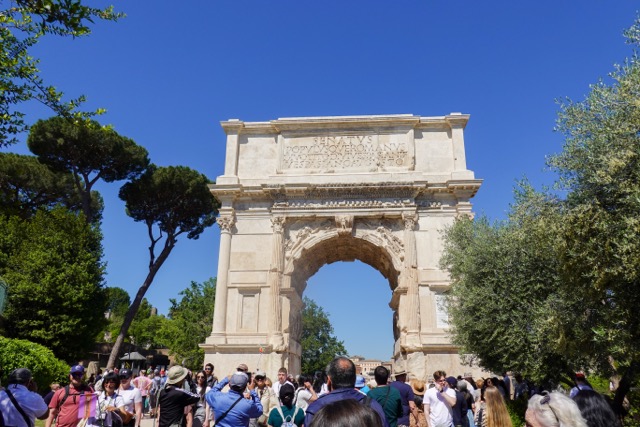
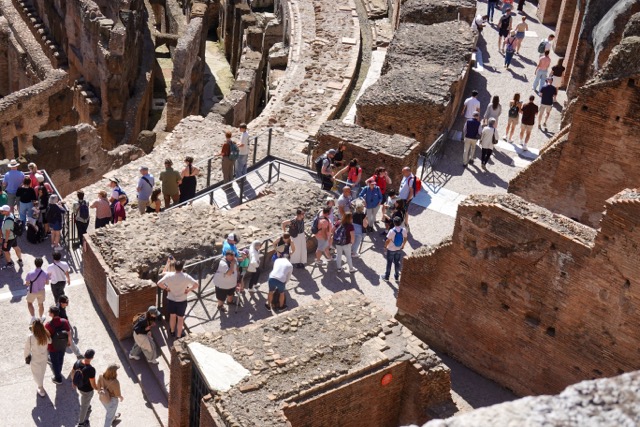
Rome was magnificent and full — full in the way that a container is full when someone keeps adding things to it anyway. There were queues that had been there long enough to develop their own social dynamics. Piazzas where the crowd itself had become the attraction. Monuments visible primarily through a forest of raised phones. At some point you stop asking whether something is worth seeing and start asking whether it is worth seeing right now, alongside everyone else who had the same idea at exactly the same moment. The answer, more often than not, is yes — but you need to brace for impact.
The crowds, though, were only one kind of friction. Not every moment of wonder landed the same way for both of us. Ed was moved by the Sleeping Hermaphroditus in ways he describes with considerable feeling. I stood there thinking about who made it, who it was made for, and what exactly was supposed to be surprising. Ed was also captivated by Livia’s garden room — and honestly, so was I. But where he felt the calming beauty of the space, I kept thinking about the woman herself: powerful, strategic, influential, and still remembered primarily as someone’s wife. But that’s a different essay.
The Cheat Codes, Demystified
It feels a bit unfair to complain about overtourism while actively participating in it — like criticizing traffic from inside your rental car. But the difference between Ed’s account and mine is that he found the cheat codes (his words — used twice) while I was busy wondering what he meant by cheat codes. In practice: a nearly empty courtyard directly across from the Colosseum that almost no one finds, and a museum Ed had identified doing his pre-trip research. I don’t play video games, but I believe a cheat code is supposed to feel like cheating. This felt like being organized.
This is, roughly speaking, the dynamic of our relationship: he’s the romantic who tears up at a perfectly thrown discus frozen in marble, and I’m the pragmatist wondering whether I’d applied enough sunscreen, whether the Palatine Hill is ever not crowded, and whether anyone was going to suggest a cold drink soon. After more than fifty years together, we’ve, more or less, stopped trying to fix this.
Prati: The Illusion of Being a Functional Adult in Rome
While in Rome, we stayed in Prati, a neighborhood near the Vatican, which has the distinct quality of feeling like the Rome where Romans actually live. Orderly, residential, refreshingly short on selfie sticks. Just far enough from the Vatican that you can almost convince yourself you are not, in fact, part of a global migration pattern of people following umbrellas held aloft by someone walking too fast.
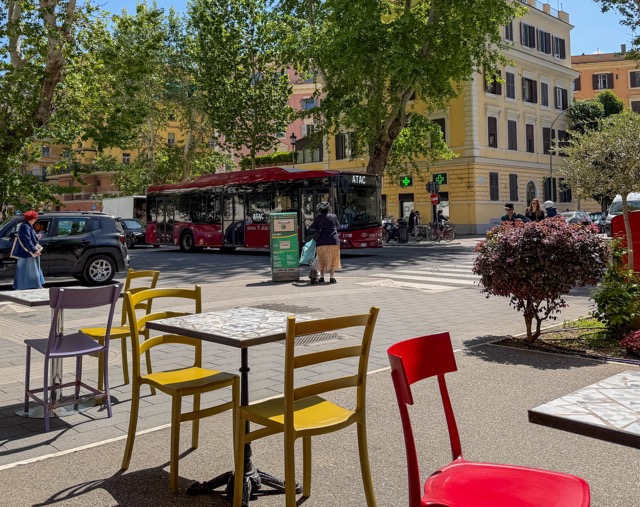
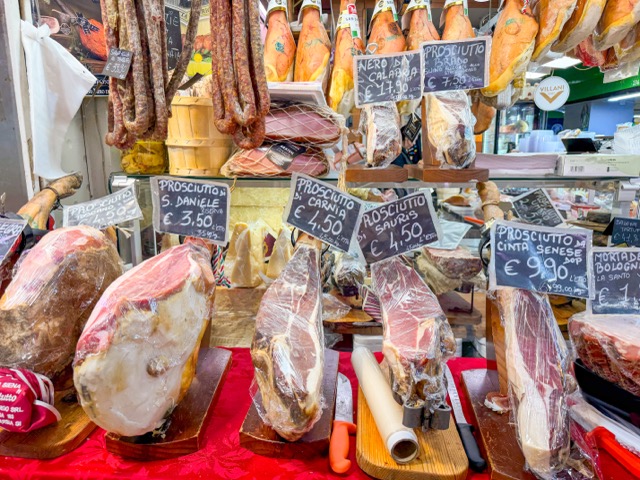
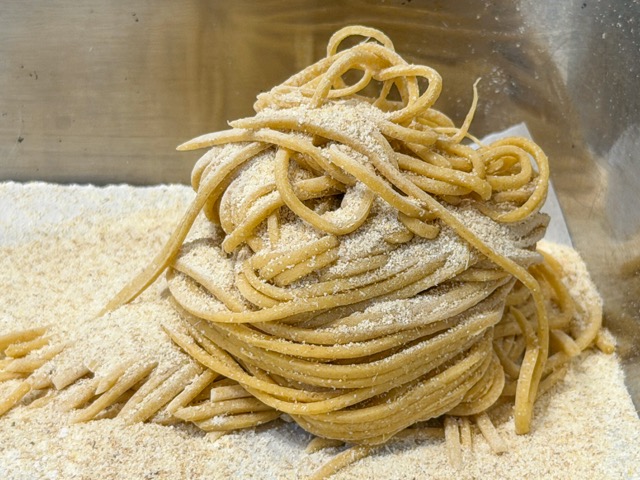
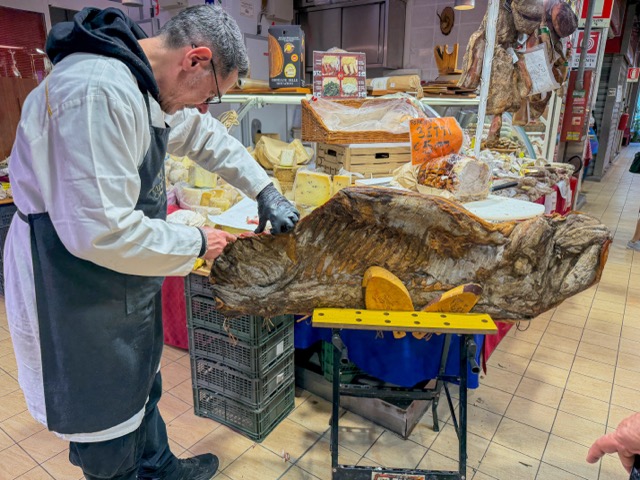
Prati’s local market, Mercato Trionfale, is known for its vast selection of fresh foods and local products.
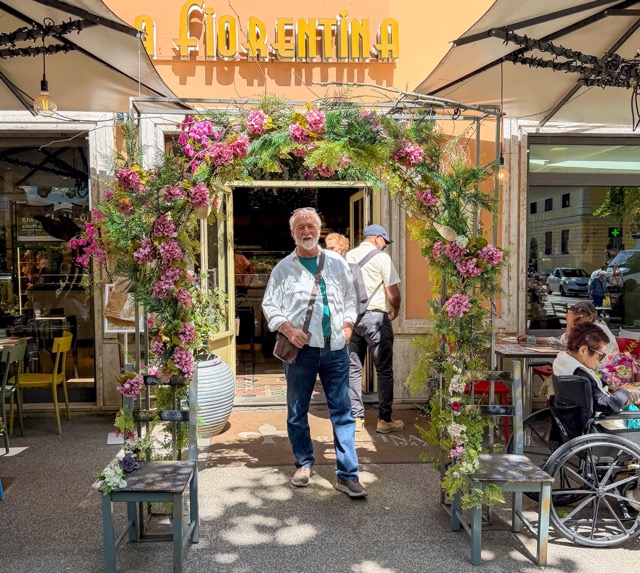
Prati is where dangerous thoughts come to mind. Specifically, “We could live here.” Ed said this on day two, with the confidence of a man who had found excellent coffee within a two-minute radius of our hotel. I did not point out that this is how he felt about Lyon, Porto, and that neighborhood in Istanbul. Rome, to its credit, did not discourage this fantasy.
Tuscany: Beauty Under Pressure (We Were Right About the Title)
We headed north into Tuscany with considerable optimism. The rolling hills, the medieval towns, the famous light. We were ready to be charmed again. What followed was a comprehensive lesson in the difference between a place’s reputation and its current operating capacity. To be fair, much of it delivers. Just not always where — or when — you expect it.
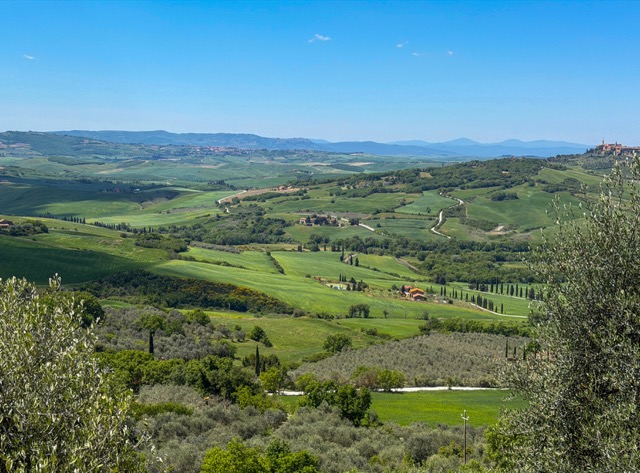
Our first full day in Tuscany was May 1st. Italian Labor Day. Which means the crowds were not merely international tourists doing their scheduled appreciation of timeless beauty — they were also several million Italians who had the day off and the same idea. Montepulciano and Pienza, two of the most beautiful hill towns in a region built entirely of beautiful hill towns, were operating at a capacity I can only describe as festive gridlock.
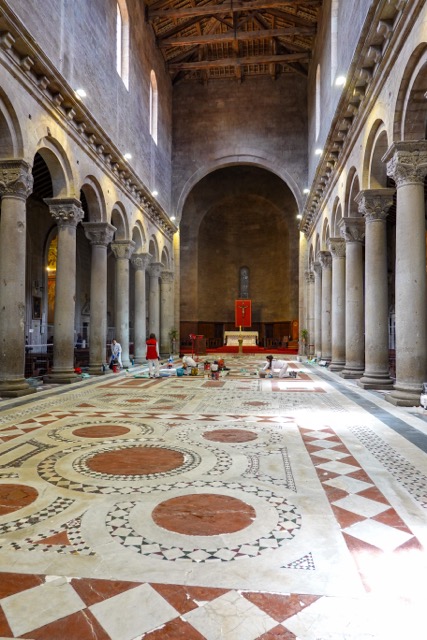
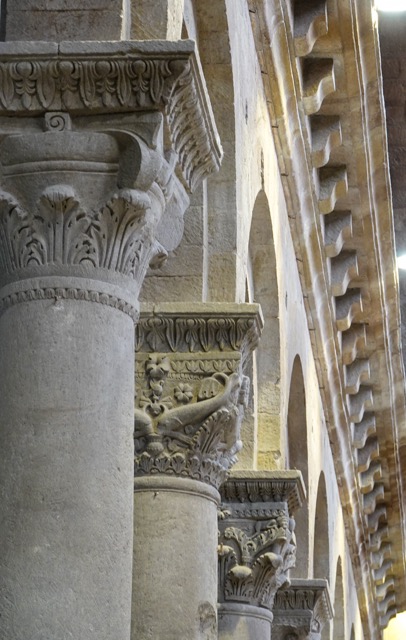
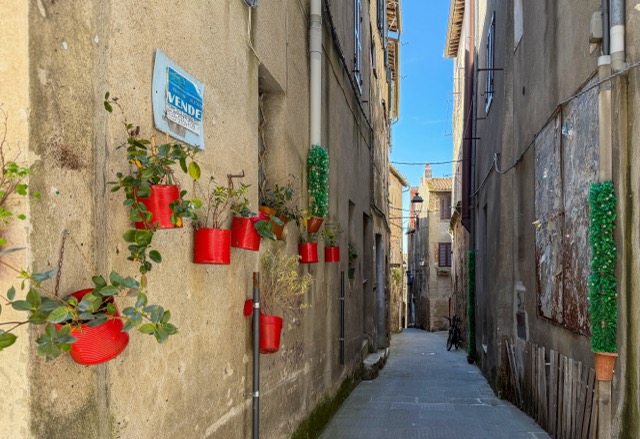
One of ours stops was the small village of Viterbo where the longest papal conclave in history took place –from December 1, 1268, to September 1, 1271, totaling nearly three years.
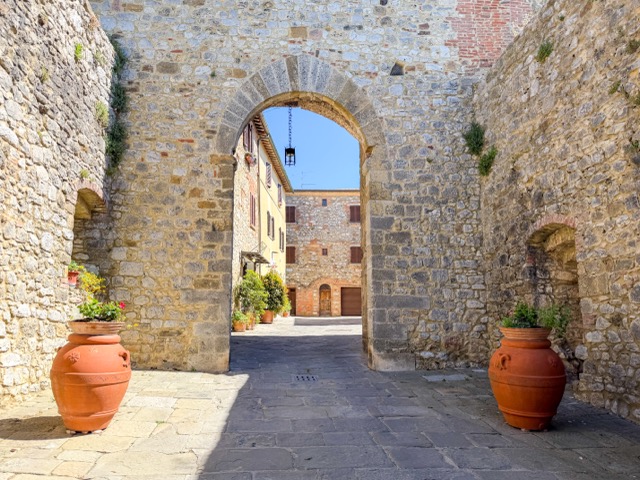
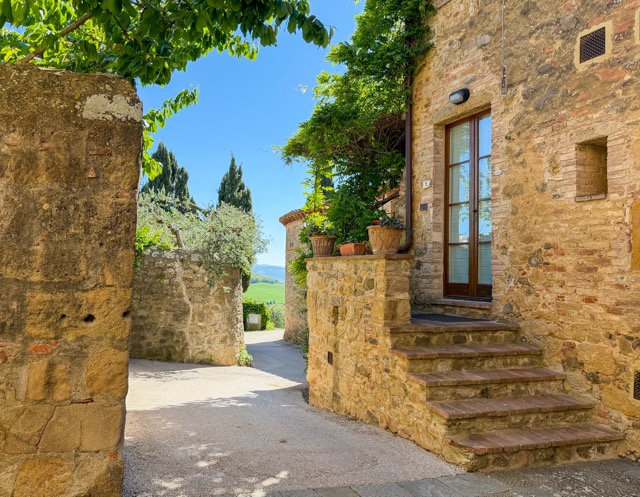
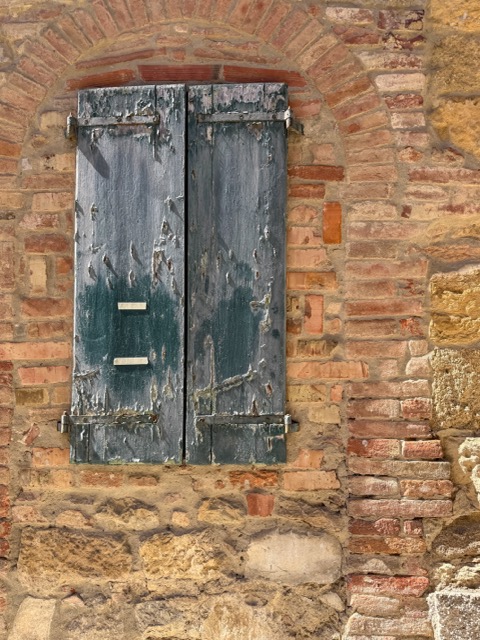
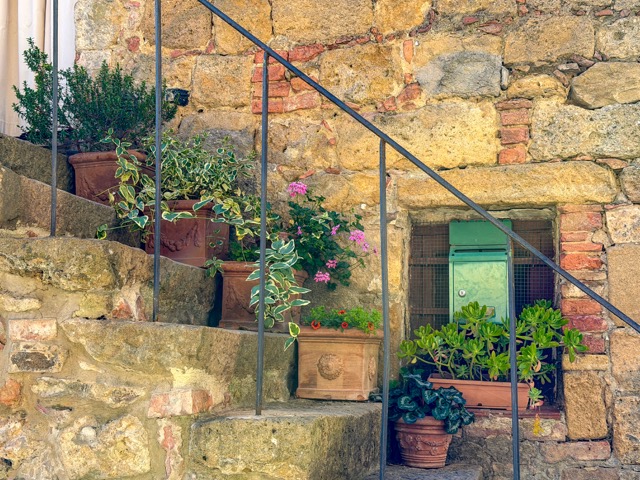
There was no place to put the car that wasn’t a hike several kilometers uphill. Narrow medieval streets were filled with people sharing the collective understanding that everyone was here at the same time to experience something timeless. The effect: history was currently hosting a queue.
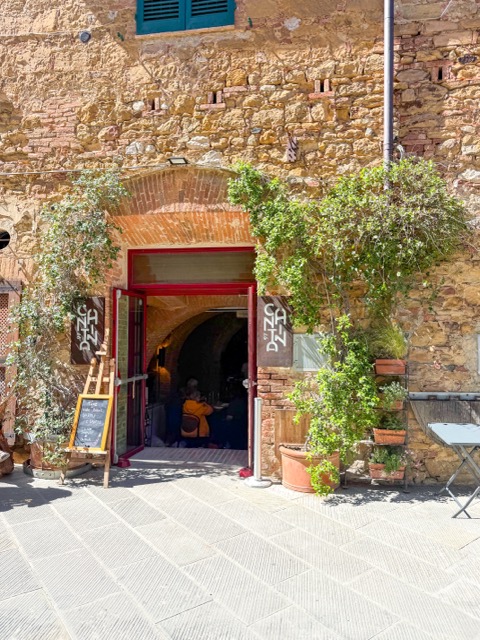
This was also where the reservations died. Lunch in Pienza was not happening — we couldn’t get the car within reasonable walking distance. Montepulciano for dinner: same outcome, different piazza. At the suggestion of a local, we found a tiny hill town with almost no tourists and one café on a narrow street. The chef was running the whole operation — seating guests, taking orders, cooking, serving — with the calm of someone who had decided this was exactly enough. It turned out to be one of the better meals of the trip. This is either a useful lesson about travel or a very specific argument for always having a backup restaurant. Probably both.
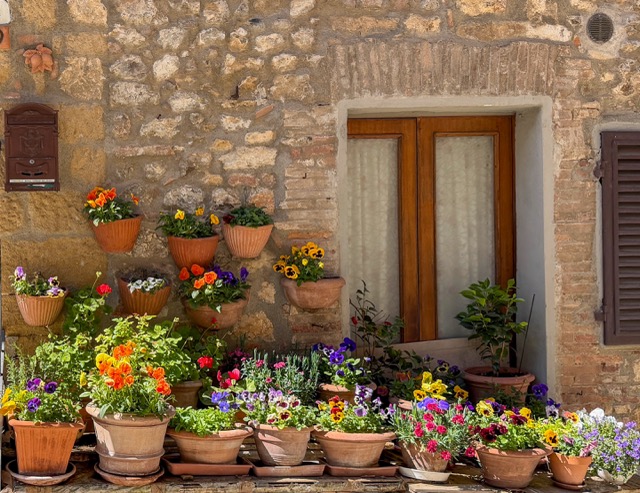
Follonico: Twelve Guests, One Pond
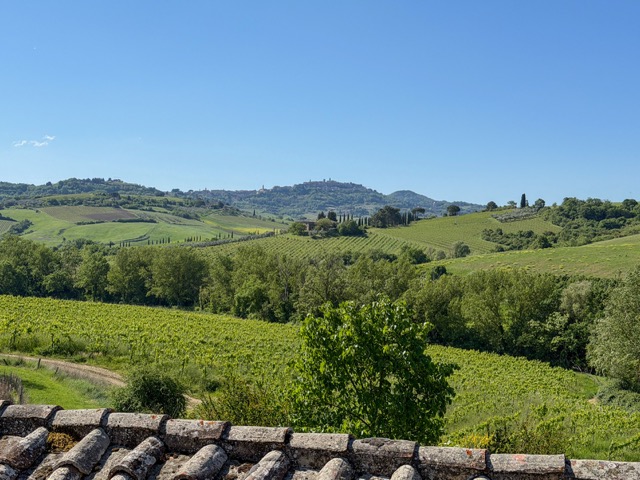
Tuscany, like most places that survive on tourism, has a quieter side. You just have to want it more than you want the famous version. We stayed at Follonico, an agriturismo near the village of Montefollonico — six guest rooms, a garden, a pond, vineyards on the surrounding hillsides, and a couple who had built something genuinely lovely and wanted to share it. Breakfast was unhurried. Dinner, when we stayed for it, felt like eating at someone’s table rather than in someone’s restaurant. The wine was theirs. The olive oil was theirs. The view was, improbably, also theirs. Compared to the festive gridlock of May 1st in the hill towns, the scale of it was the thing. Twelve guests. One pond. A pace that had no interest in competing with anything. We both exhaled.
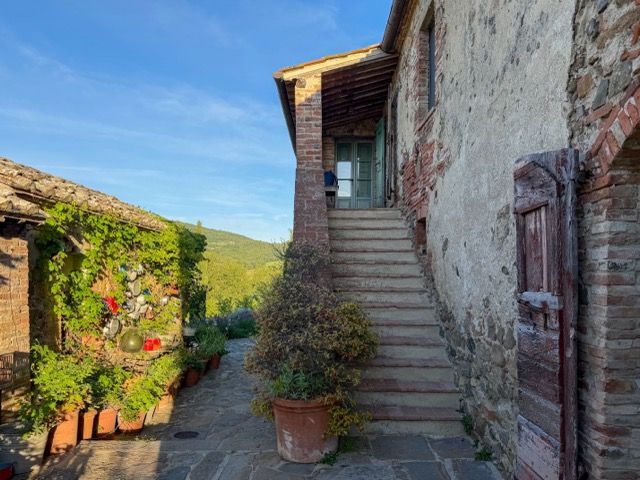
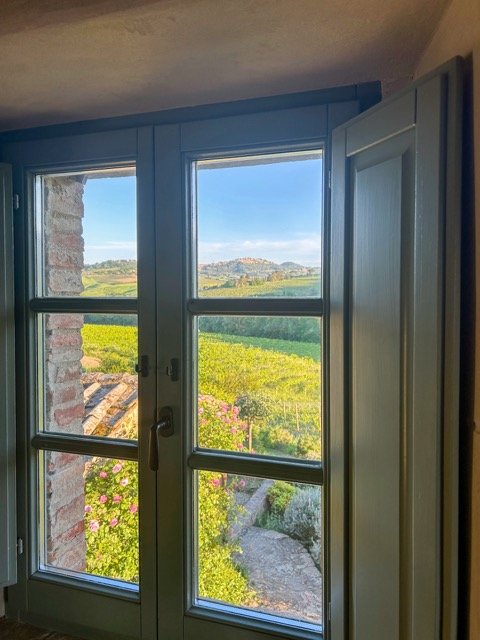
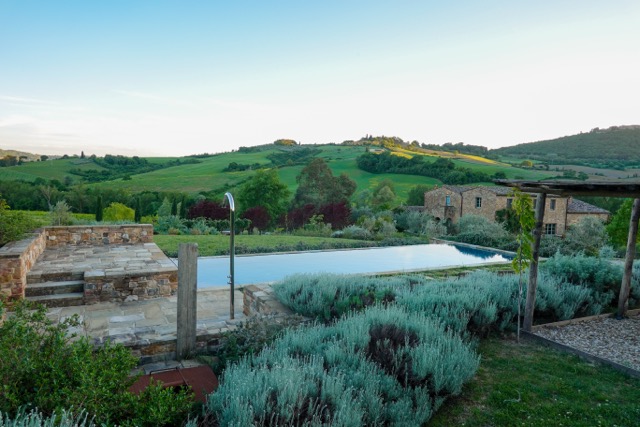
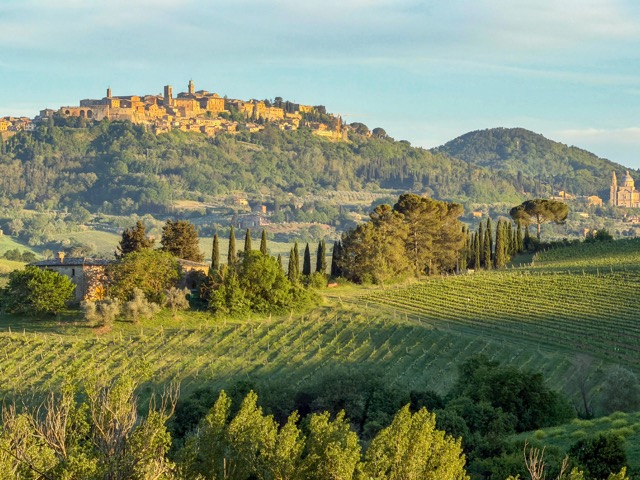
There is a particular adjustment period in places like this where you realize: nothing is curated for you in the commercial sense — it is simply someone’s life, and you are briefly, gratefully, a guest in it. We both found this deeply restful. Here, Tuscany stops being a place to pass through and becomes a place to simply be. This is a meaningful difference.
One Bite at a Time
Tuscany did not simplify itself for us. We simplified ourselves for it — smaller towns, fewer plans, one meal at a time. We got bad logistics and sublime beauty, sometimes on the same afternoon. We got turned away from two restaurants and found an unexpected one. We got overtourism and one pond. The philosophy we’ve earned is that travel works better when it is reduced — not in ambition, but in scale. One bite at a time.
Filed. Report complete. Findings: Italy is worth it. Have a backup restaurant. Ed will bask regardless.

About Us
Welcome to our little corner of the world where we invite you to embark on exciting journeys with us!
We’re Ed and Bonnie, a duo passionate about exploring the world and experiencing its wonders. Our love for travel isn’t just about discovering new places; it’s about sharing those moments with cherished family and friends like you.
Our hope is that you will feel like you’re right there with us, sharing in the excitement and wonder of each destination. Better yet, let’s plan a rendezvous somewhere wonderful! Learn more
More than Two decades ago, after exploring crowded Rome and Firenze, we rented a car and trekked all over Tuscany and Umbria , staying at small inns and B&B’s, most of which were off the beaten track and wonderful. Crowds were rarely an issue, but parking in the hill towns often was even then. Recommend a small car! All So Worth it!
It was as close to idyllic as we had hoped. But you have shown that would Not be the case today, unless willing to explore the quietest hill towns and hidden gems, like the one you discovered. That is the authentic Tuscany we remember!, the the pasta and gelato are just the Best ever! Jo xo